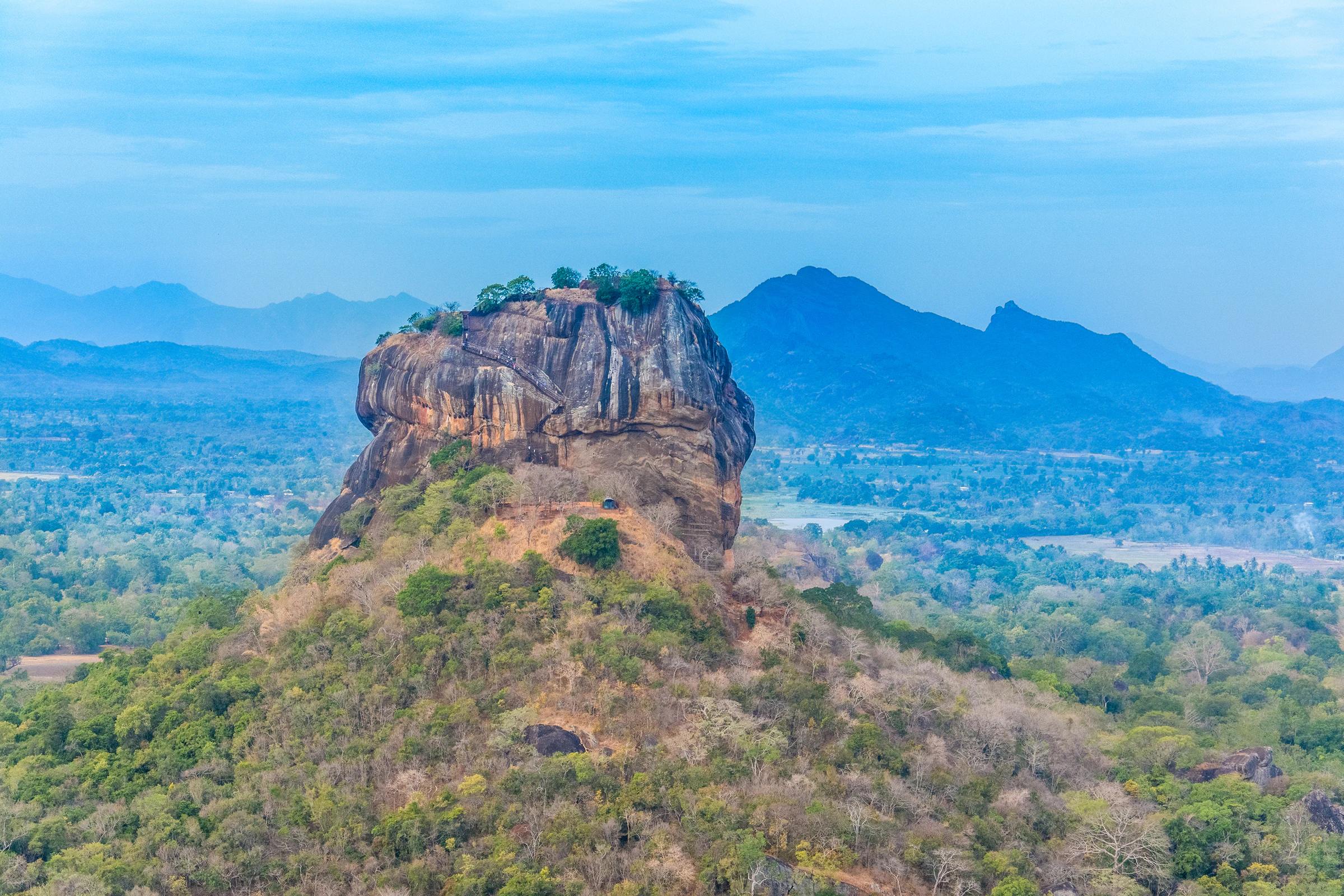
Where Sigiriya is one dramatic rock and Polonnaruwa is a compact royal city, Anuradhapura is bigger and older again: Sri Lanka's first capital, and the site most Sri Lankans point to as the country's spiritual heart. Its ruins spread across several square kilometres of parkland, dotted with stupas that once ranked among the tallest structures anywhere in the ancient world, built around a tree that pilgrims still queue to visit today. This guide covers the ticket, the Bodhi tree, the great stupas, cycling the site, Mihintale nearby, dress and etiquette, Poson Poya, and getting there.
How much does it cost to visit Anuradhapura?
The Central Cultural Fund's price page lists a foreign adult ticket at US$30 and a half ticket at US$15. The same page prices Sigiriya and Polonnaruwa, which the Fund also runs. Prices are set in US dollars and charged in rupees at that day's exchange rate, so the rupee amount shifts slightly day to day. The ticket page describes the ticket as single entry and lists the site as open 7am to 5pm. Other sources quote different hours, so check on the day.
As with the rest of the Cultural Triangle, there's no combined ticket covering Sigiriya, Dambulla, Polonnaruwa and Anuradhapura together, so budget for each one separately.
The sacred Bodhi tree: Jaya Sri Maha Bodhi
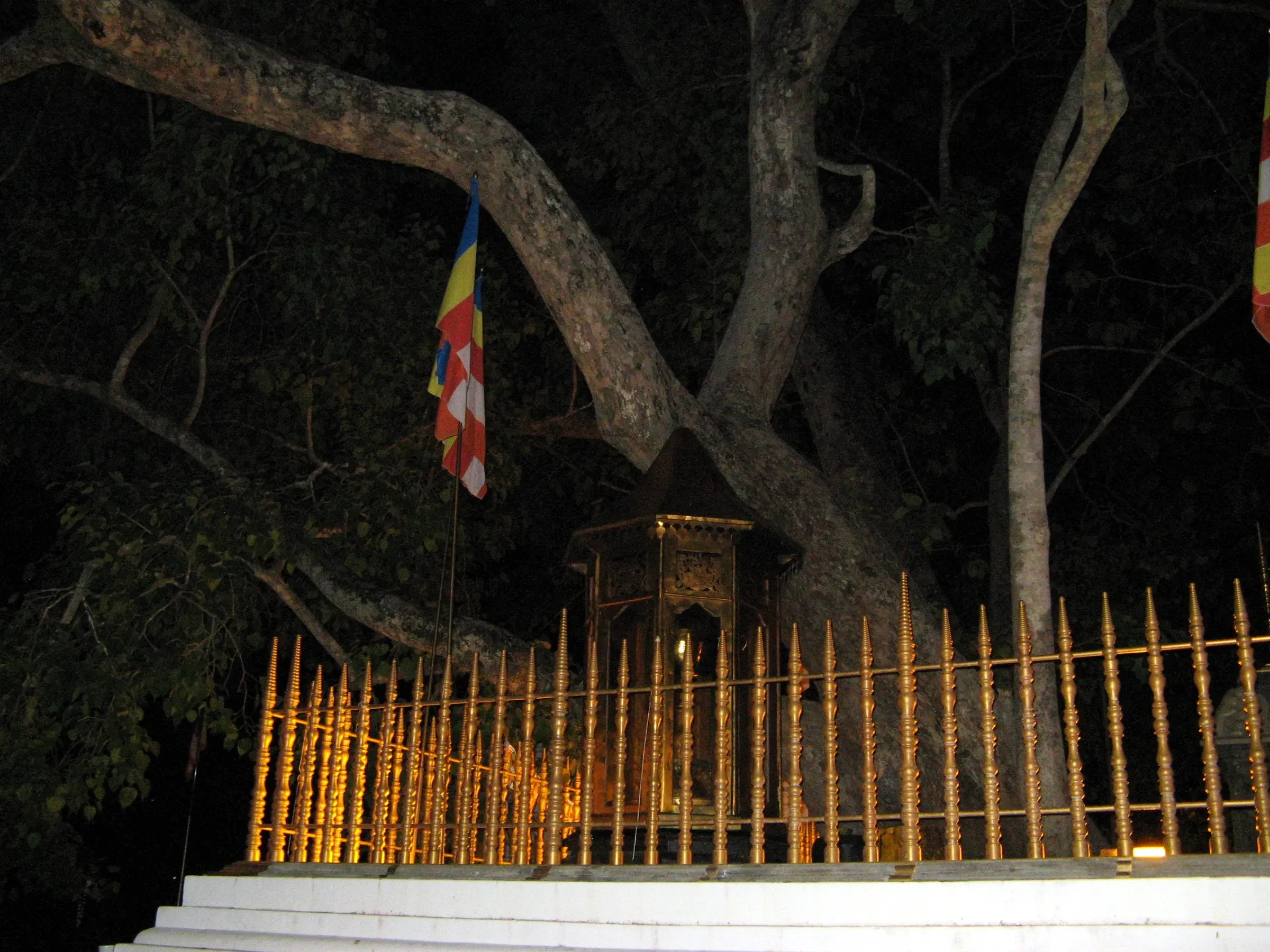
The Jaya Sri Maha Bodhi is Anuradhapura's most visited single site: a sacred fig tree said to have grown from a sapling of the original Bodhi tree in Bodh Gaya, India, under which the Buddha attained enlightenment. By Sri Lankan tradition it was planted in 288 BC, and Wikipedia calls it the oldest living human-planted tree in the world with a known planting date. It is fenced by gold railings, with a steady stream of pilgrims in white making offerings on the terraces below it. Access to the uppermost terrace, where the tree itself stands, is restricted, so you see it from the lower levels. Shoes come off before you approach the terraces, and it's worth arriving early or late in the day, both to avoid the heat and to see it at its most peaceful rather than at its most crowded.
The great stupas: Ruwanwelisaya, Jetavanaramaya and Abhayagiri
Three stupas anchor the rest of a visit, each a short ride apart on the cycling loop below:
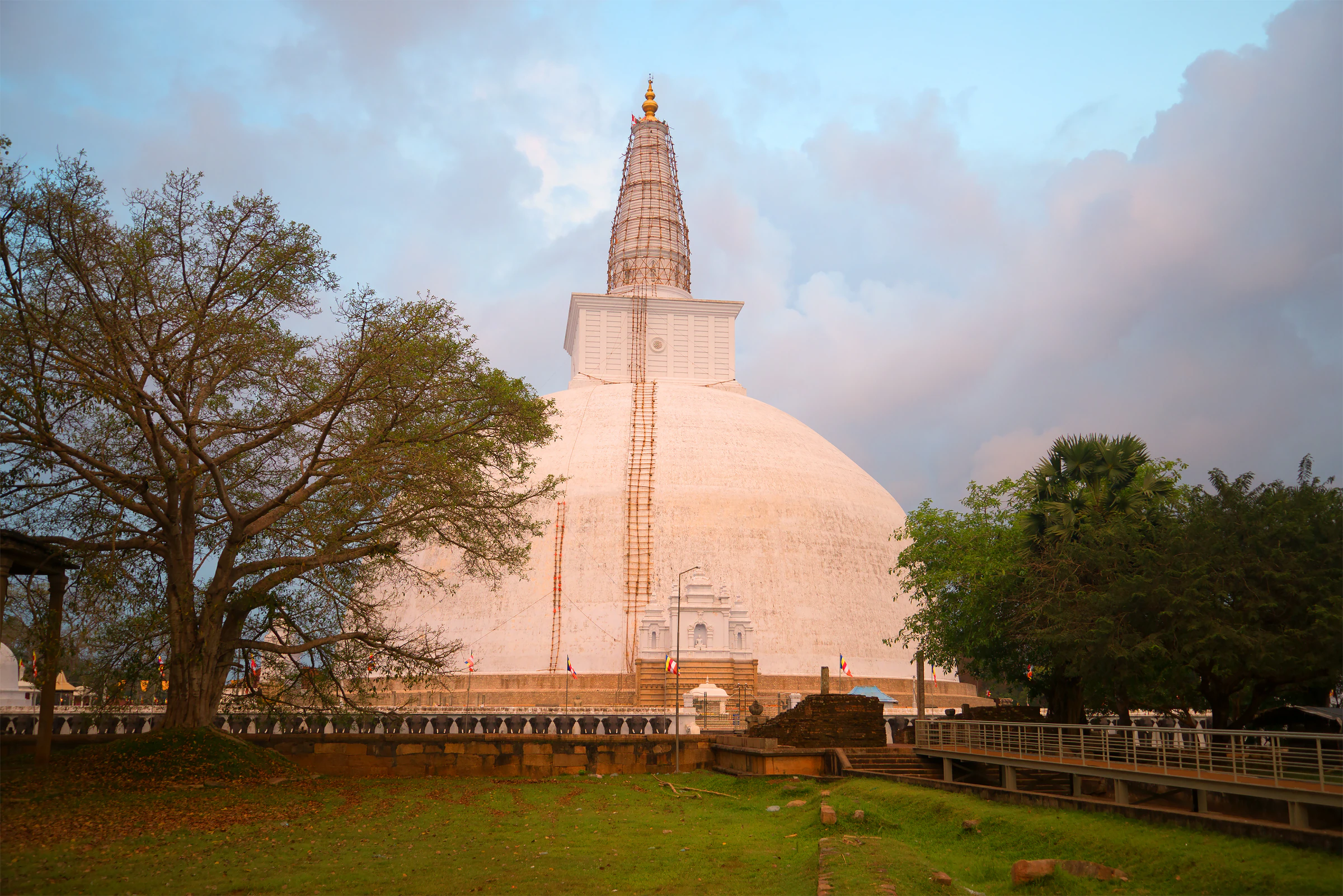
- Ruwanwelisaya, built in the 2nd century BC by King Dutugemunu, is the oldest of the three and still an active place of worship, its bell-shaped white dome ringed by a wall of carved stone elephants.
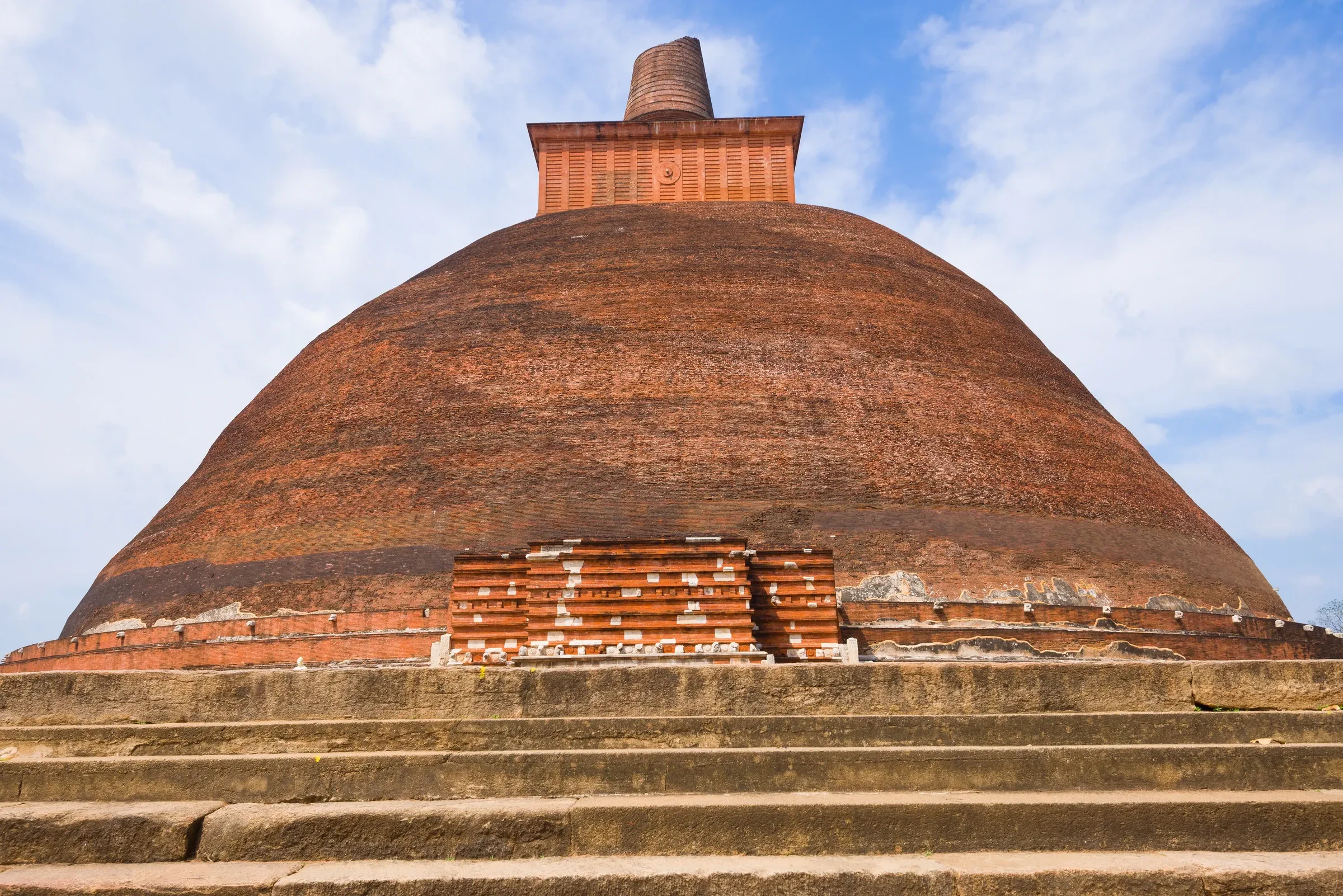
- Jetavanaramaya, raised in the 3rd century AD, was once well over 100 metres tall and ranked among the largest brick structures anywhere in the ancient world. Weathered red brick has replaced its original white plaster, but the scale still overwhelms up close.
- Abhayagiri, a monastery complex whose great dagoba dates to the 1st century BC, includes a carved "moonstone" threshold that Wikipedia calls the best example of the craft.
Thuparamaya, generally considered the oldest stupa on the site, is said to enshrine one of the Buddha's collarbone relics and makes a natural stop on the same loop.
Cycling the ancient city
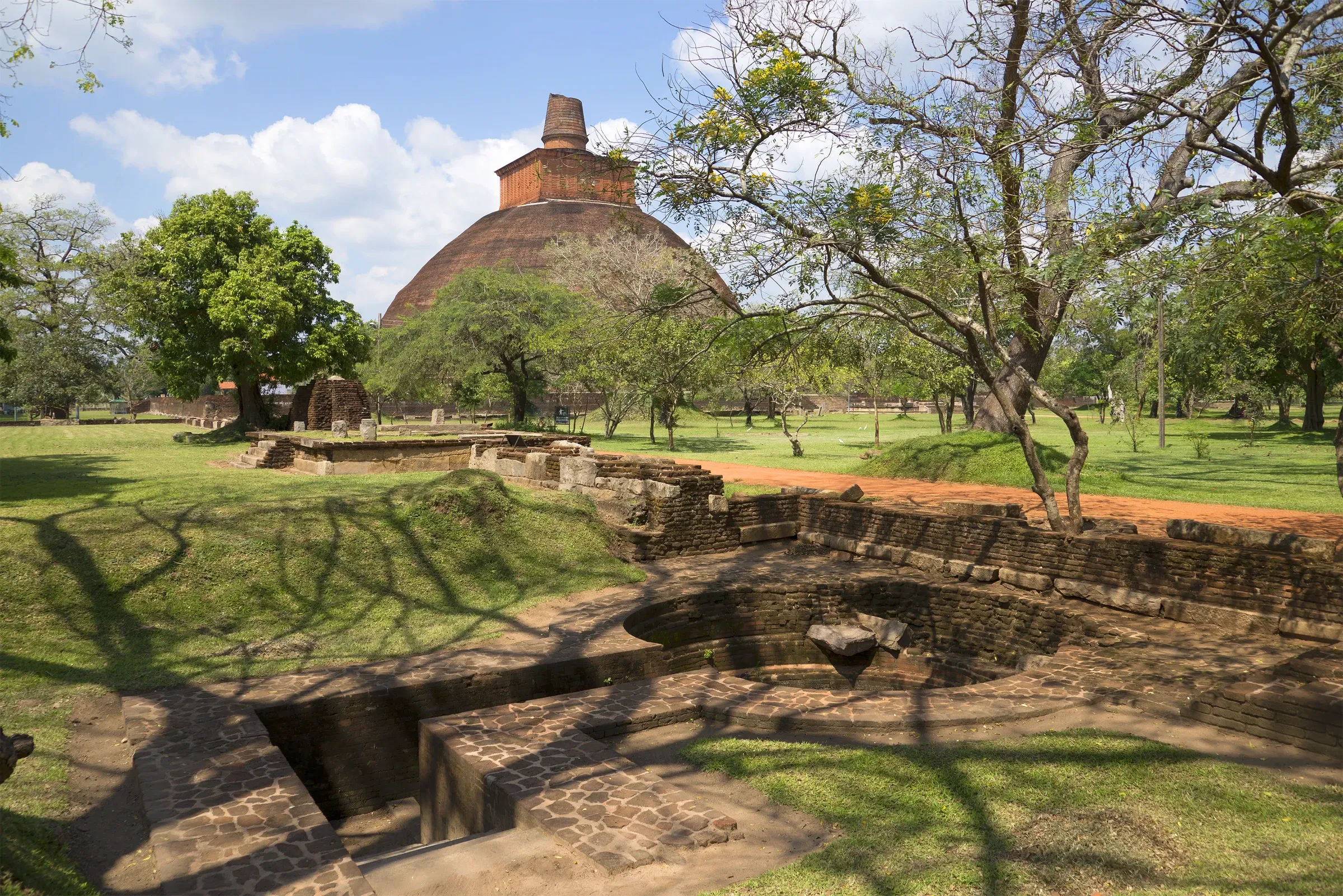
Anuradhapura's sites are spread far enough apart, across roughly 40 square kilometres of parkland, that cycling is the only realistic way to see more than one or two stops without exhausting yourself in the heat. Bikes can be hired near the entrance or through your guesthouse; agree the price before you set off, as we found no dated rate. A full loop taking in the Bodhi tree, Ruwanwelisaya, Thuparamaya, Jetavanaramaya and Abhayagiri, with time at each, takes most of a morning or an afternoon. The roads themselves are flat and often shaded, so it's a relaxed ride rather than a workout, best started early before the heat builds.
Mihintale: where Buddhism reached Sri Lanka
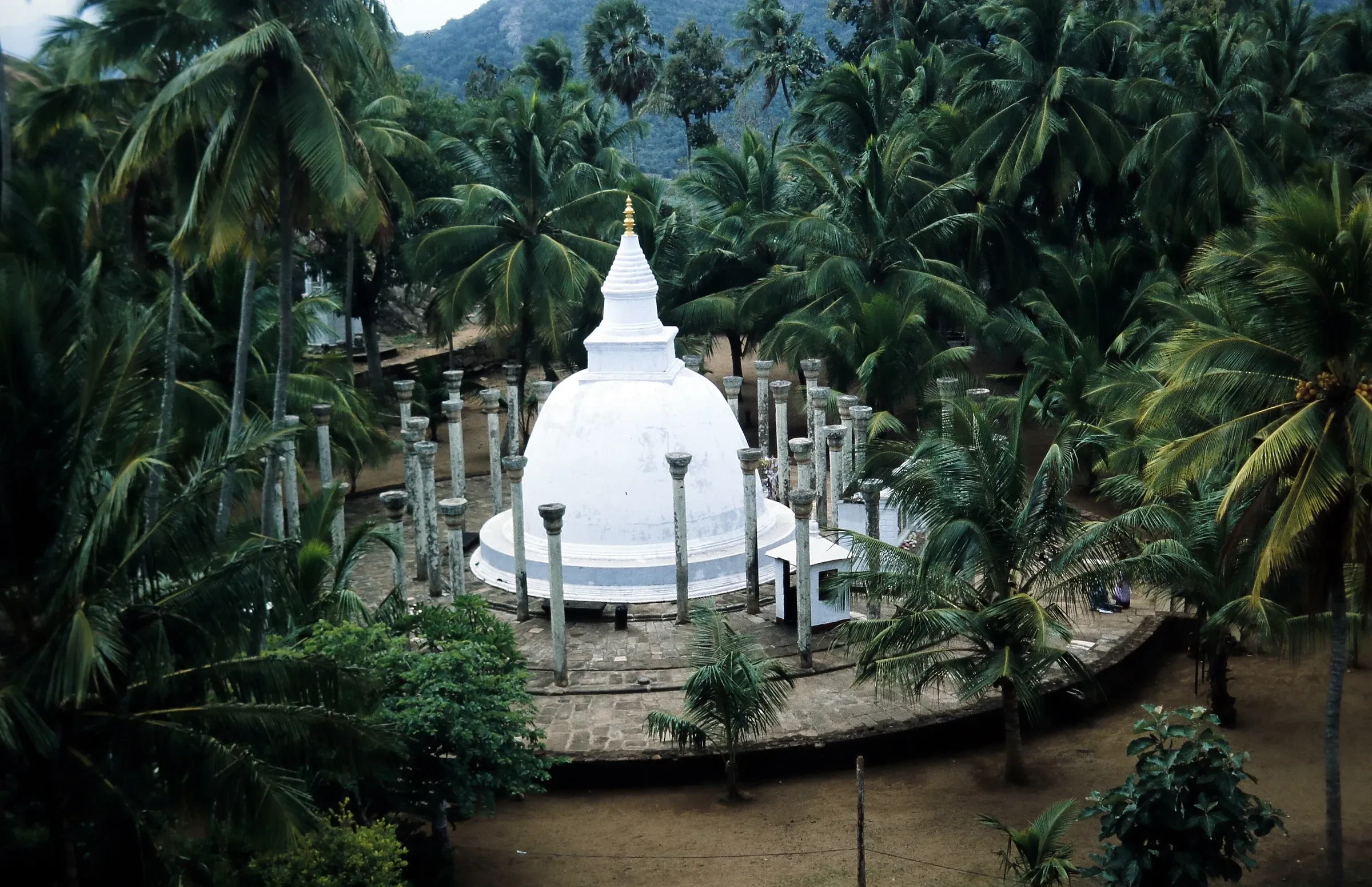
Mihintale is the hillside, about 12.5km (roughly 30 minutes by tuk-tuk or bus) east of Anuradhapura, where Buddhism is traditionally said to have reached the island in the 3rd century BC, when the monk Mahinda met King Devanampiyatissa here while out hunting. A flight of around 1,840 worn granite steps climbs the hill past shrines and viewpoints to the summit stupa, taking about 30 to 35 minutes from the main car park, or as little as 15 minutes if you start from the closer temple car park higher up the hill. Mihintale isn't on the Central Cultural Fund price list we read, and published entrance fees for foreign visitors differ from source to source, so check the rate at the gate. Most people combine Mihintale with Anuradhapura as a half-day add-on rather than a separate overnight stop.
Dress and etiquette
Most Sri Lankan pilgrims wear white here. Travel guides describe it as customary rather than a rule for foreign visitors, and we found no official dress code. What does matter, as at any Sri Lankan religious site: cover your shoulders and knees, and take your shoes off (and any hat) before stepping onto a shrine terrace or approaching a Buddha statue. Stone underfoot gets hot fast in the middle of the day, so a pair of socks in your day bag is worth having for the longer barefoot stretches. Never pose with your back to a Buddha image, and don't climb on or touch one.
Poson Poya in June
Poson Poya, the full moon marking Buddhism's arrival in Sri Lanka at Mihintale, is the biggest festival at both sites. The 2026 Poya day was 29 June, and the next is gazetted for Friday 18 June 2027. Expect large crowds of pilgrims, food and lantern stalls, and a more festive but far busier atmosphere than an ordinary visit; if you'd rather see the ruins quietly, plan around that date rather than into it. Our Poson guide has the detail.
Getting to Anuradhapura
By train. Anuradhapura has a railway station on the Northern Line, a separate railway from the hill-country line damaged by Cyclone Ditwah in November 2025. One online timetable, trainschedule.lk, listed four Colombo Fort services for 6 October 2026, taking roughly 3.5 to 4.7 hours depending on the train. Services on the northern line have been cut back at times, so check the day's trains before you plan around one.
By bus. Government and private buses run from Colombo, and they are cheaper than the train but usually slower. From Dambulla, direct buses to Anuradhapura run roughly hourly and take about 1 hour 45 minutes, according to route-planner listings.
By road from Sigiriya or Dambulla. The roughly 60 to 70km from either town takes a private car or driver around 1.5 hours or a little more, depending on traffic and stops. It's the most practical option if you're basing yourself in the Cultural Triangle rather than starting from Colombo.
Where to stay
Anuradhapura's New Town, around the bus and train stations, has the widest choice of guesthouses and small hotels, along with most of the restaurants and shops within walking distance. A handful of options sit closer to the Sacred City itself, in a quieter, greener setting, but with less within walking reach. Most independent travellers visit as a day trip from Sigiriya, Dambulla or Habarana rather than changing accommodation for it.
How many days do you need in Anuradhapura?
A day, or a long half-day, covers the main stupas and the Bodhi tree at a comfortable cycling pace. Add Mihintale and it's worth the better part of a full day, or an overnight in Anuradhapura itself if you don't want to double back to a Cultural Triangle base the same evening.
Anuradhapura isn't currently a stop on either of our Sri Lanka trips, both of which base themselves at Sigiriya for the Cultural Triangle rather than pushing on to the older, more spread-out capital. Independent travellers with the extra day often add it as a side trip from Sigiriya or Dambulla, or in place of a second day cycling Polonnaruwa if you'd rather see the older ruins than a second day of similar ones. For the route our trips do cover, see our Sri Lanka travel guide or compare departures on our Sri Lanka group trips page.
Anuradhapura and the rest of the Cultural Triangle
Anuradhapura is usually treated as the fourth Cultural Triangle stop, after Sigiriya's rock fortress and Polonnaruwa's more compact ruined city, for travellers with a day or more to spare. Most people base themselves in Sigiriya, Dambulla or Habarana and visit Anuradhapura as a day trip from there, the same way they'd visit Polonnaruwa, rather than moving accommodation specifically for it.