The base: rice and curry, everywhere
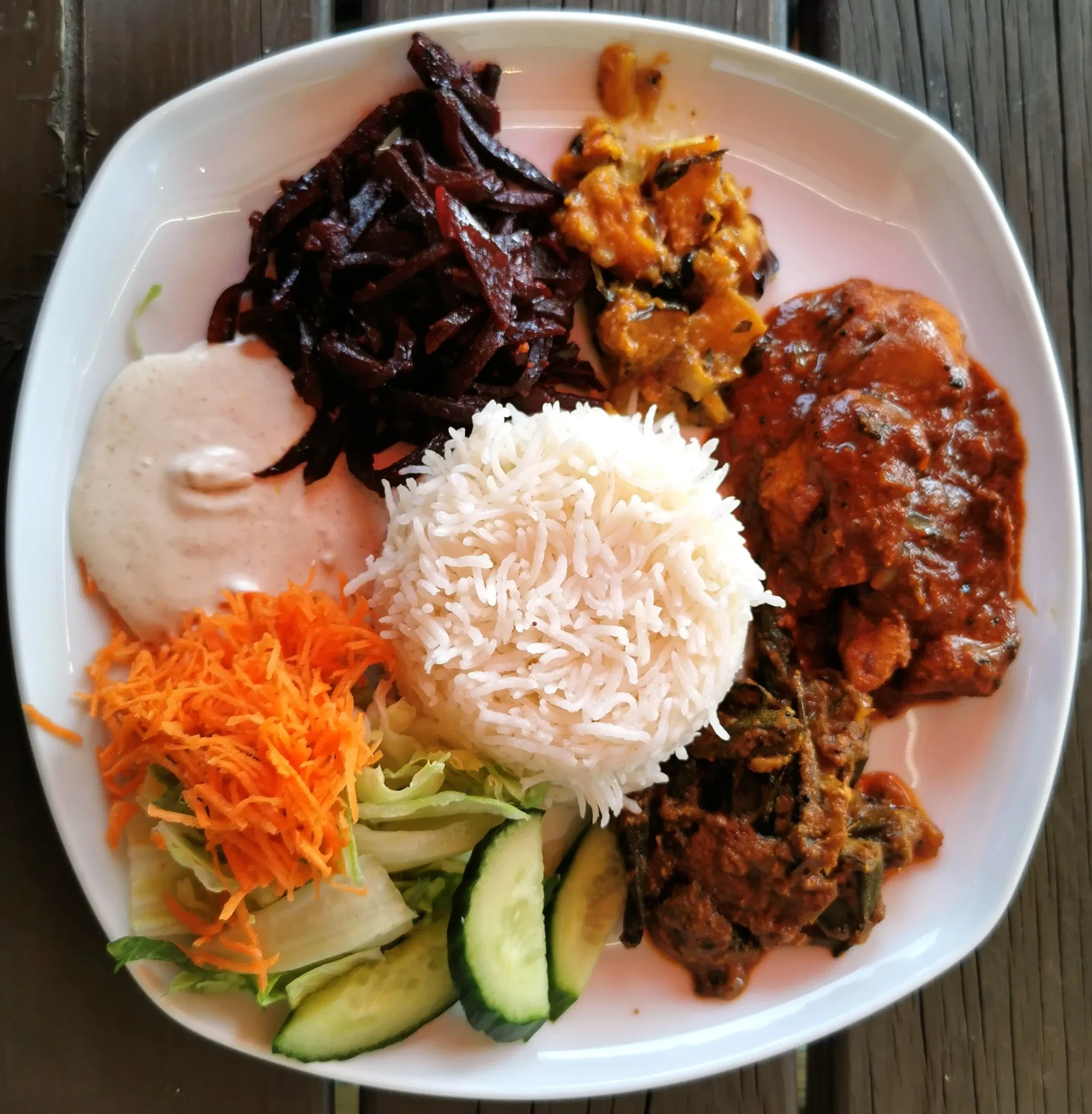
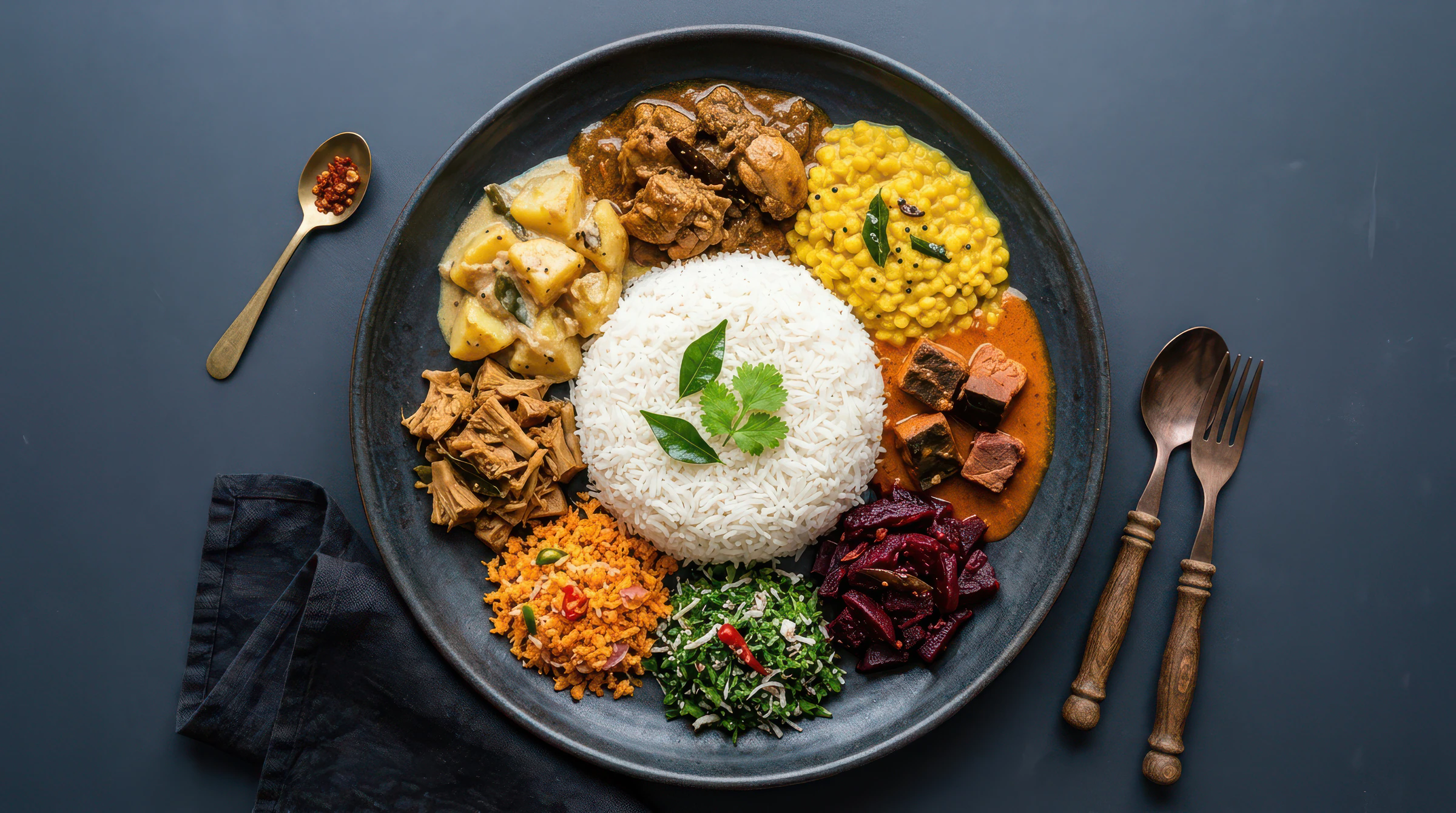
Rice and curry isn't one dish, it's a small spread: a mound of rice with three or four vegetable curries (jackfruit, pumpkin, beans, dhal), a fish or chicken curry, and a coconut sambol on the side, usually eaten with the hands. It's sold at simple "hotels" (the local word for a canteen-style eatery, not somewhere to sleep) and at tourist-facing restaurants, with the restaurants costing more. The curries on the plate are the best day-to-day clue to where you are: coconut and fish-heavy on the coast, a wider spread of vegetable curries around Kandy, plainer and more village-style around the Cultural Triangle.
Pol sambol, a relish of scraped coconut, chilli, lime and often dried fish (Maldive fish), sits on almost every rice and curry plate and most breakfast tables too. It's the fastest way to gauge how hot a curry is going to be, since cooks vary the chilli a lot from one kitchen to the next.
Hoppers and string hoppers
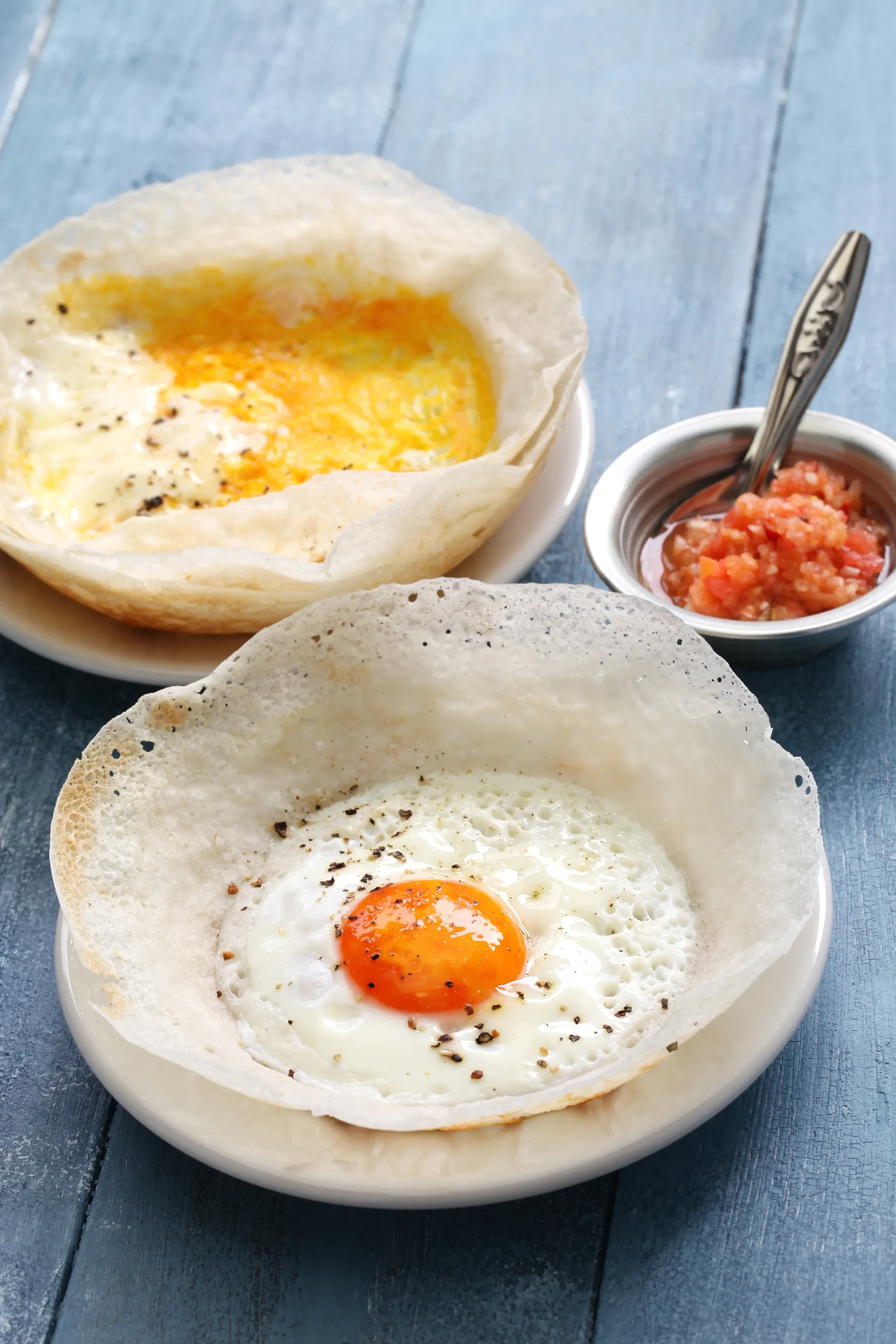
Hoppers (appa) are bowl-shaped pancakes made from a fermented rice-flour and coconut-milk batter, cooked in a small curved pan so the edges turn thin and crisp while the base stays soft. An egg hopper, with an egg cracked into the centre as it cooks, is the classic breakfast order. String hoppers, steamed nests of thin rice noodles, are the other big breakfast option, usually served with a curry or sambol. Both turn up at breakfast across the island, from the Cultural Triangle's guesthouses to Ella's cafes.
Kottu roti
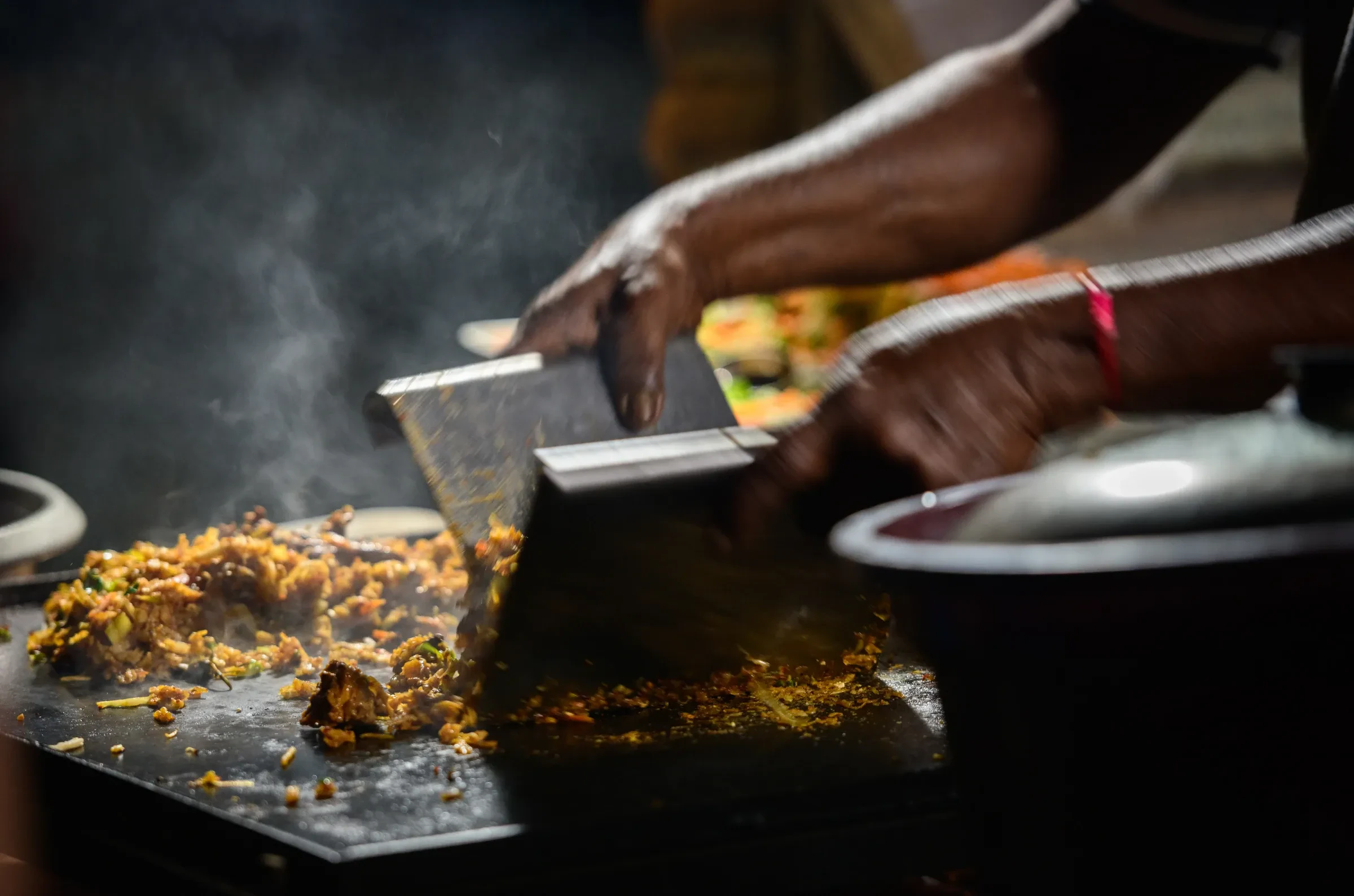
Kottu roti is chopped roti (flatbread) stir-fried on a hot griddle with vegetables, egg, and often chicken or cheese, cooked with two metal blades in a rhythmic chopping motion you'll usually hear before you see the stall. Think of it as Sri Lanka's answer to fast food. You'll find it at street stalls and restaurants in towns across the island, Ella and Kandy included.
Short eats and lamprais
Short eats are the small savoury pastries sold in cases at bakeries and cafes across the island: vegetable rolls, fish patties, samosas and cutlets, an easy way to snack through a hill-country afternoon between tea-estate stops. Lamprais, a Dutch Burgher dish from Colombo, wraps rice cooked in stock with a mixed-meat curry, a spiced aubergine dish, a meatball and a chilli sambol in a banana leaf, then bakes the whole parcel in the oven. It's less common outside Colombo, but worth trying once if you pass through.
The south coast: fish ambul thiyal
The south coast's signature dish is fish ambul thiyal, a "sour fish curry" that started as a way of preserving the day's catch before refrigeration. Cubes of fish (usually tuna) are cooked dry with black pepper, cinnamon and goraka, a sour dried fruit that gives the dish its dark colour and tang, rather than the coconut-milk base used in most other Sri Lankan curries. Order it alongside a plainer rice and curry in Mirissa, Weligama or Galle, and it pairs well with fresh grilled seafood from the day boats.
Kandy and the hill country: tea and cool-climate food
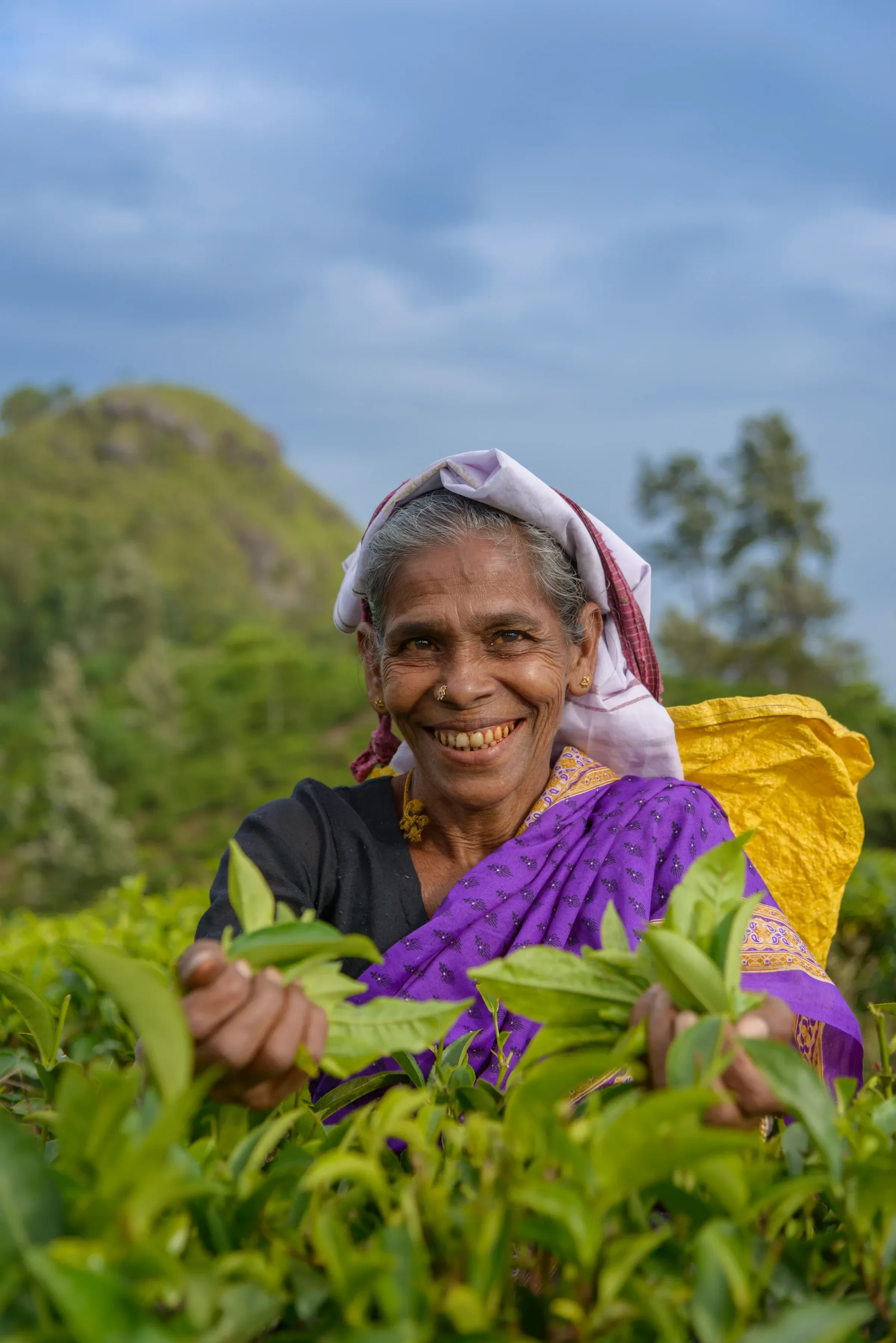
Kandy's rice and curry spreads tend to run to more vegetable curries than the coast, and the cooler air around Nuwara Eliya and Ella shifts what fits it: short eats and a hot cup of tea replace an ice-cold drink as the afternoon default. Nuwara Eliya sits at the centre of Sri Lanka's high-grown Ceylon tea country, and a tea-estate tour is a good way to taste it where it's grown. Our hill country guide covers Kandy, Nuwara Eliya, Ella and Adam's Peak in full, including a section on what to eat there.
The Cultural Triangle: simple and village-style
Around Sigiriya, Dambulla, Polonnaruwa and Anuradhapura, the food is generally plainer than the coast or Kandy: village-style rice and curry with fewer, simpler curries, since the region's restaurant scene is smaller outside Sigiriya's tourist strip. For dessert, look for wattalapam, a coconut and jaggery custard with roots in the island's Malay and Muslim communities; you'll find it across Sri Lanka, not just here. See the Cultural Triangle guide for the sites, tickets and how long to spend.
The north: Jaffna crab curry and odiyal kool
Jaffna's food is Tamil, with more seafood than most of the island and a spicier hand. Jaffna crab curry is made with a spice blend heavy on black pepper and dried chillies. Odiyal kool, a thick, tamarind-based seafood stew thickened with palmyrah-root flour, usually holds prawns, crab, fish or cuttlefish, whatever is fresh, and it comes from the Jaffna peninsula. Our Jaffna guide covers Tamil culture and food in more depth, alongside the temples, the fort and the islands.
Drinks: king coconut and arrack
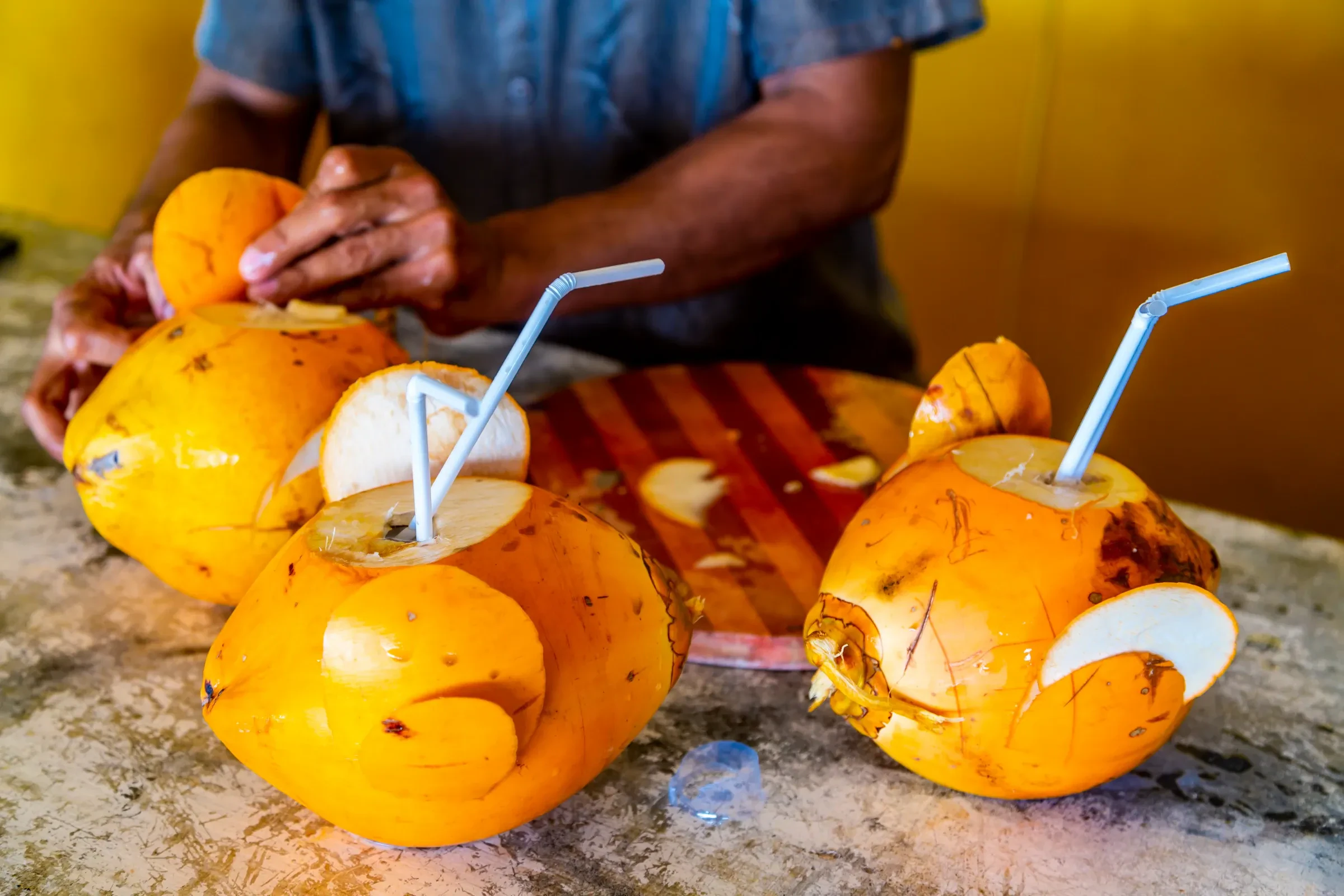
King coconut (thambili) is Sri Lanka's default street drink: a whole young orange-husked coconut, hacked open in front of you with a straw, from a roadside stall (tourist areas can charge more, so it's worth agreeing the price first). Once you've finished the water, hand the nut back and the seller will split it open so you can scoop out the soft flesh inside. Arrack, a spirit distilled from the sap of the coconut flower, is the local spirit to try, in a shot or a mixed drink.