Trincomalee sits on a natural deep-water harbour on Sri Lanka's east coast, a mix of a working town, a Hindu temple on a dramatic clifftop and two beach areas a short ride north that most visitors actually base themselves in. It runs on the opposite season to the south coast circuit most Sri Lanka trips follow, which makes it either a deliberate detour or, for anyone travelling between May and September, the better-weather option. This guide covers Nilaveli and Uppuveli, Pigeon Island, whale watching, Koneswaram temple and Fort Frederick, the season, getting here and where to stay.
Trincomalee at a glance
- Where: Sri Lanka's east coast, about 260 km from Colombo
- Known for: Nilaveli and Uppuveli beaches, Pigeon Island snorkelling, whale watching and the clifftop Koneswaram temple
- Season: roughly May to September, driest June to August (whale watching can start in April), opposite the south coast's December to March window
- How long: 2 to 4 days covers the beaches, Pigeon Island and the temple at an easy pace
Nilaveli and Uppuveli: which beach to pick
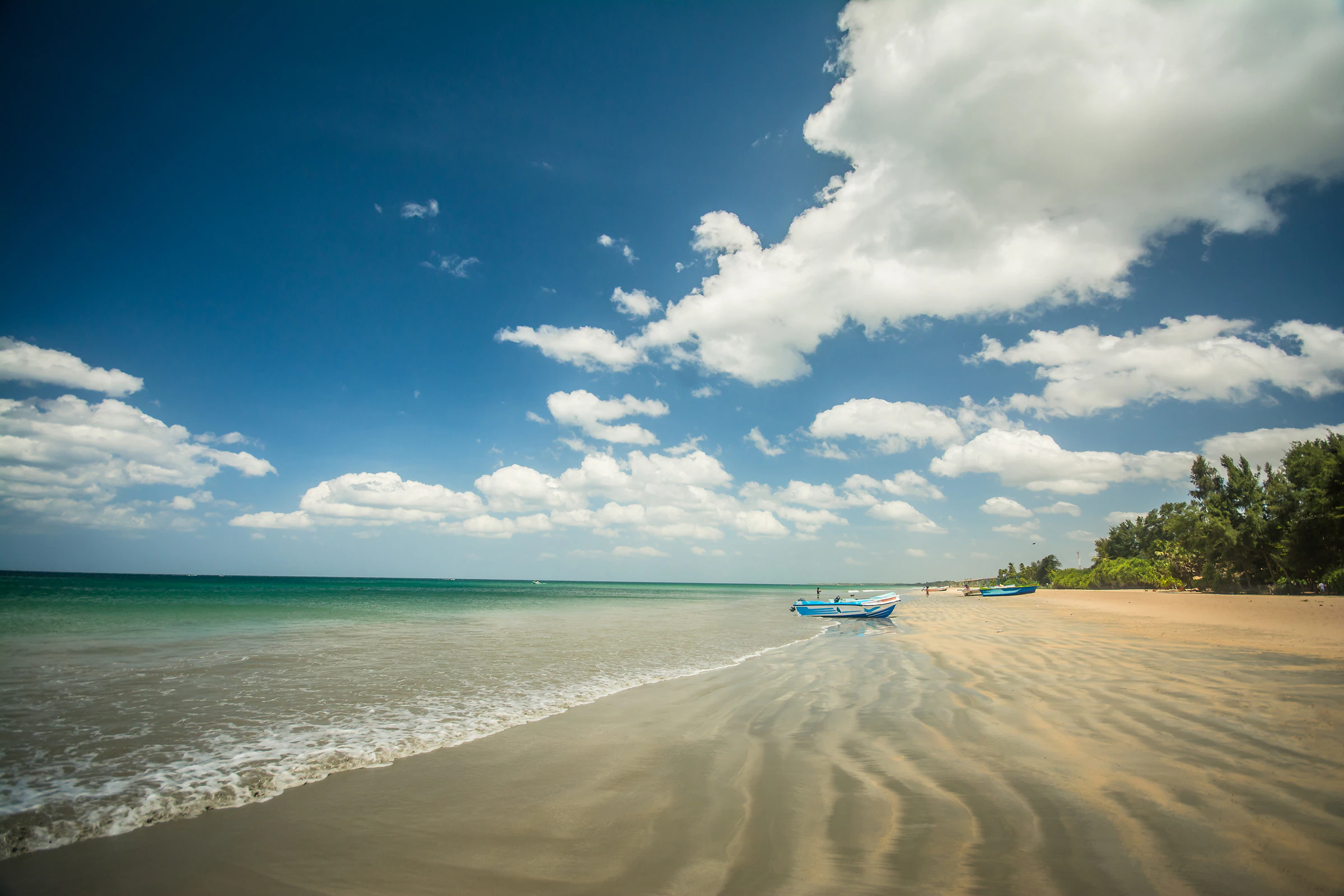
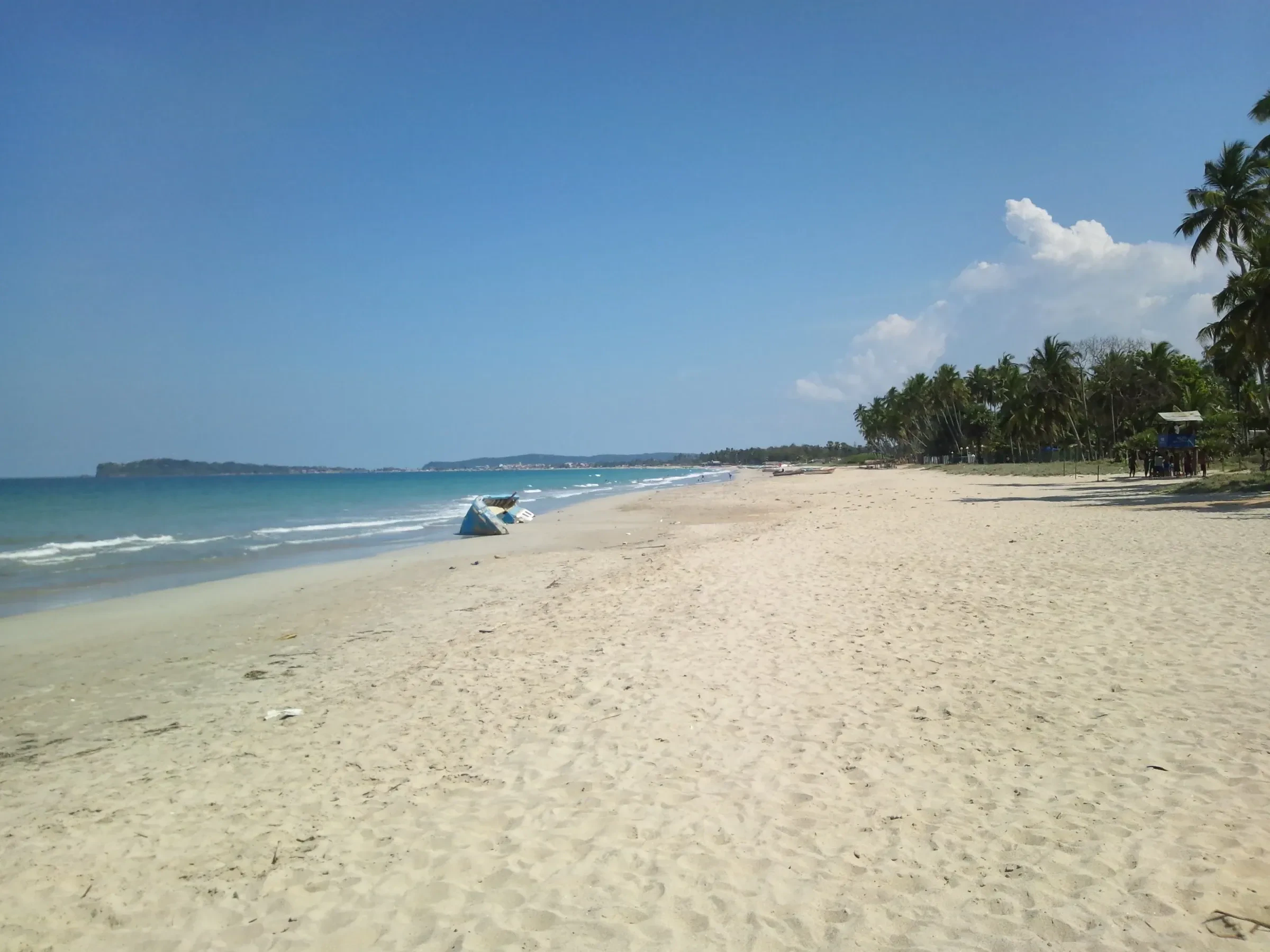
Most visitors don't stay in Trincomalee town itself but in one of two beach areas just north of it. Uppuveli is the closer of the two, an easy few minutes from town, with the wider choice of restaurants, guesthouses and a livelier evening scene. Nilaveli, a further 15 to 20 minutes on, is longer and quieter, with whiter sand, and it's the usual base for a Pigeon Island trip since most boats leave from there. Neither is wrong: Uppuveli suits travellers who want to walk to dinner and a bit of life in the evening, and Nilaveli suits anyone who'd rather have a quieter stretch of beach and doesn't mind a short tuk-tuk into town.
Pigeon Island snorkelling
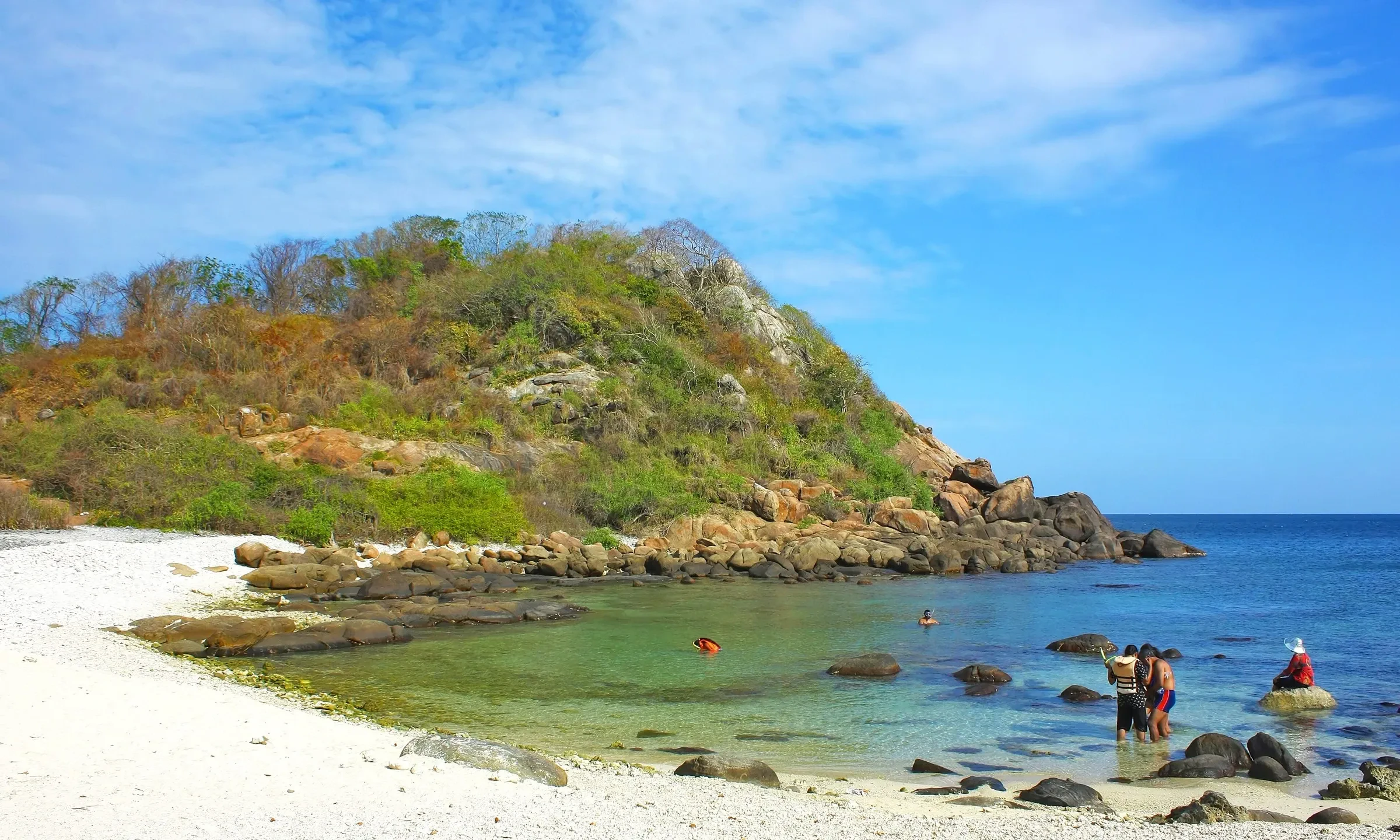
Pigeon Island National Park sits about 1 km offshore from Nilaveli, a boat ride of roughly 15 to 30 minutes, and it's the main reason many people build Trincomalee into their route at all. The reef here holds well over 100 species of coral and around 300 species of fish, and it's one of the more reliable places in Sri Lanka to snorkel alongside sea turtles and reef sharks in shallow, clear water. Boats and snorkel gear are arranged from Nilaveli beach, though bringing your own mask is worth it if you have one, since rental gear can be scratched or leaky. The park is at its best in the dry months, roughly May to September. It is typically closed to visitors during the rougher seas of the north-east monsoon, so check it is open before you plan around it. Foreign visitors pay a per-person park fee in US dollars (or the rupee equivalent) at the Wildlife Department hut on Nilaveli beach, with the boat and gear on top; operators' quotes for the full trip vary widely, so ask for the all-in price before you book. For a wider look at snorkelling and diving elsewhere in the country, see our Sri Lanka snorkelling guide.
Whale watching off Trincomalee
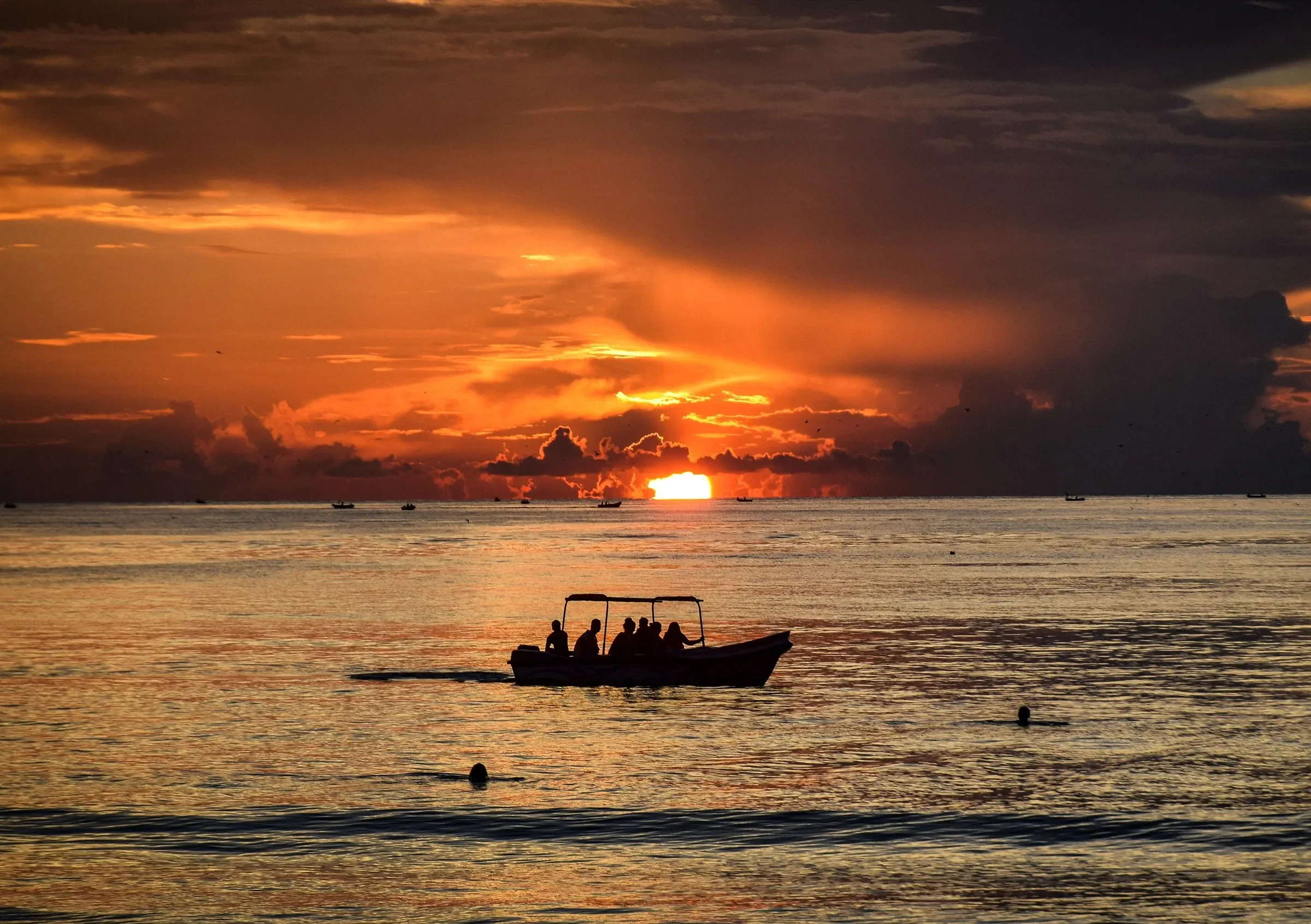
Trincomalee has its own whale-watching season, running roughly April or May to September, with May and June often cited as the most reliable months for calm seas and sightings of resident sperm whales a short way offshore. Blue whales pass through too, seen most often in the earlier part of the season, March and April. Boats leave from Nilaveli or Uppuveli, and prices vary widely by operator and boat, so ask what a shared seat and a private charter cost before you book. Sri Lanka's tourism authority guidelines keep boats at least 100 metres from whales, so choose an operator that sticks to that and doesn't crowd the animals. That's close to the opposite of Mirissa's own season on the south coast, which runs November to April; see our whale watching in Mirissa guide for the contrast if your dates don't line up with one coast or the other.
Koneswaram temple and Fort Frederick
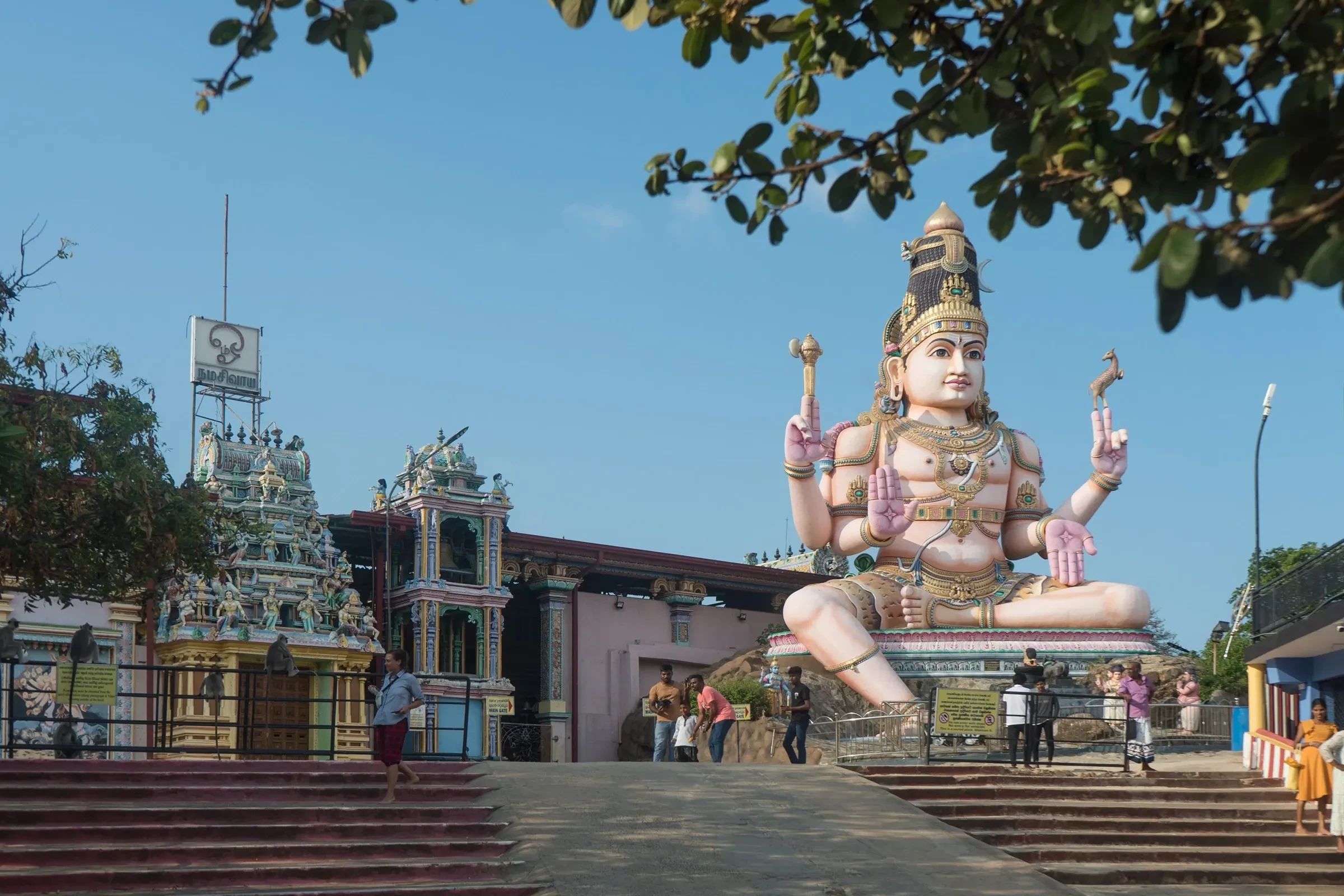
Koneswaram temple stands on Swami Rock, a cliff at the tip of the headland, and it's one of five ancient Shiva temples in Sri Lanka collectively known as the Pancha Ishwarams, with a history running back over a thousand years. The current structure is a 20th-century rebuild after Portuguese colonists destroyed the original, and the walk out to it takes you through Fort Frederick, a colonial-era fort. You pass a security check at the gate on the way to the temple, and some areas stay closed to visitors because the fort is still partly in military use. Cover your shoulders and knees and remove your shoes before entering, and expect sarongs available to rent nearby if you turn up under-dressed. The clifftop view back over the harbour and out to sea is worth the visit on its own.
Best time to visit Trincomalee
The best months are roughly May to September, the same window that suits Pigeon Island, with June to August typically the driest stretch. Whale watching can start a little earlier, in April. This is the mirror image of the south coast's December to March season, driven by the same north-east monsoon that makes the east coast wetter from roughly October to February. Our best time to visit Sri Lanka guide covers how the two coasts' seasons fit together for a longer trip.
Getting to Trincomalee
By train: Sri Lanka Railways runs a direct service between Colombo Fort and Trincomalee. Cyclone Ditwah damaged the line in late November 2025, and it reopened fully in December 2025 after repairs. It is a separate line from the hill-country railway to Ella, which is still reopening in stages. Journey times vary by service, roughly 7 to 9 hours, and some services run overnight. Frequency changes through the year, so check the current Sri Lanka Railways timetable for days and times.
By bus: A frequent air-conditioned coach service covers the roughly 260 km route in about 7 hours, running via Kurunegala, Dambulla and Habarana, with departures throughout the day and fares in the region of LKR 1,800 to 2,270.
By car: A private car or taxi covers the same route in a similar 6 to 7 hours, useful if you want to break the journey with a stop at Sigiriya or Dambulla along the way, both roughly on the route.
Where to stay
Uppuveli has the wider spread of guesthouses and small hotels, most within walking distance of the beach and its restaurants, while Nilaveli's options run from simple guesthouses to a couple of larger resort-style hotels directly on the sand. Either works well as a base for Pigeon Island and the temple; book ahead for July and August, when the east coast is at its busiest.
How many days do you need in Trincomalee?
Two to four days covers the beaches, a Pigeon Island trip and Koneswaram temple at an easy pace, with an extra day if you want to add whale watching or simply want more time in the water.
Trincomalee isn't currently a stop on any SoloNomads trip. Our multi-stop 12-Day Sri Lanka Tour and Sri Lanka Express both finish on the south coast instead, and Sri Lanka Surf Camp is based at Weligama and Hiriketiya, all on the opposite December to March season. For the routes we do run today, see our Sri Lanka travel guide or compare dates on our Sri Lanka group trips page.