Why the Cultural Triangle is worth the detour
The four sites sit in a loose triangle rather than a line, which is where the name comes from. The drives look short on the map, roughly 1 to 2 hours between neighbouring sites, but the roads are slow. That's why a comfortable pace means one site, or one site plus a safari, per day, rather than squeezing two ancient cities into one. It suits history fans, photographers and first-time visitors for whom Sigiriya is a genuine must-see rather than a niche interest. If you're after beaches or nightlife, this isn't the region for it; a short visit here pairs well with the south coast or hill country instead.
Sigiriya: the rock fortress everyone comes for
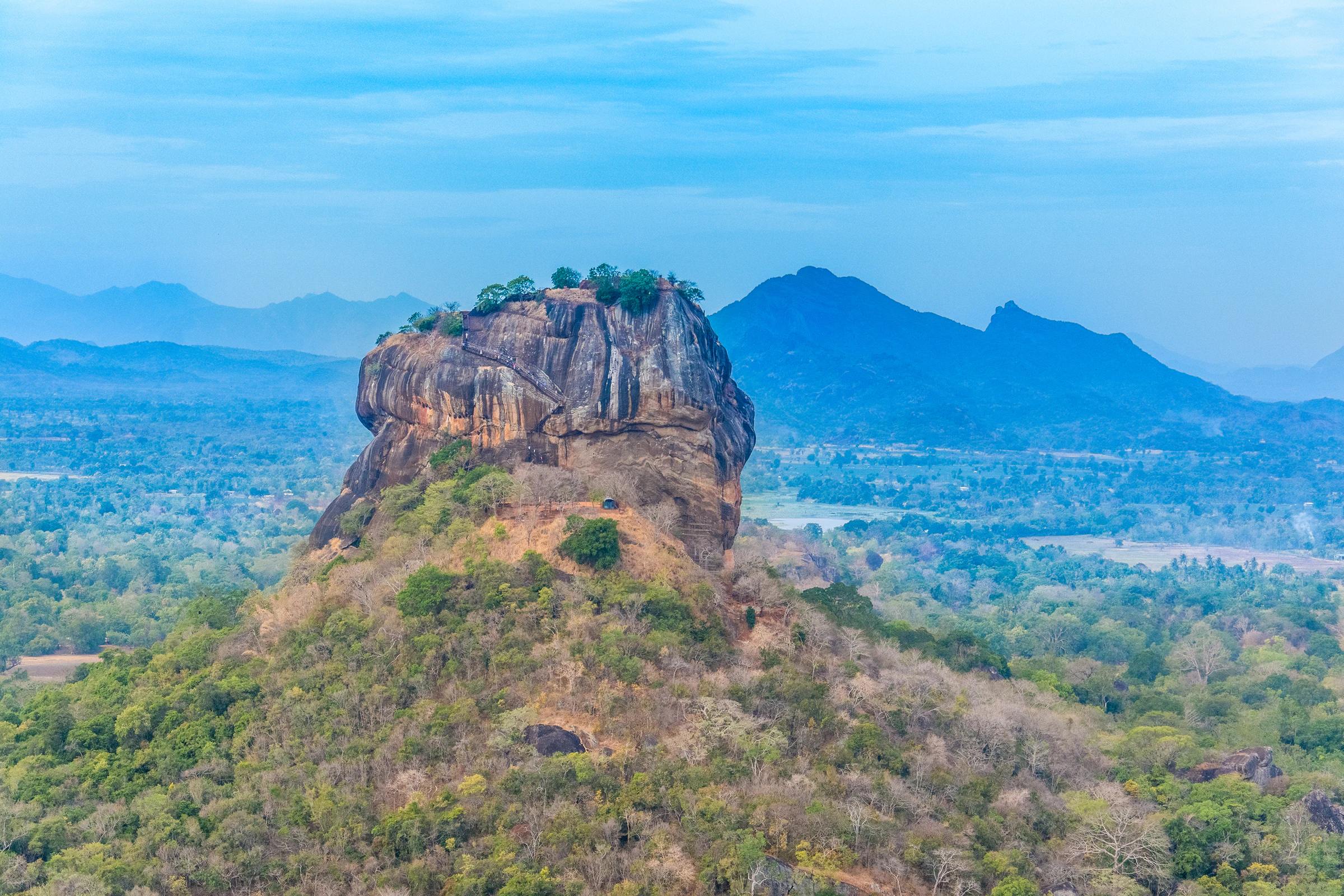
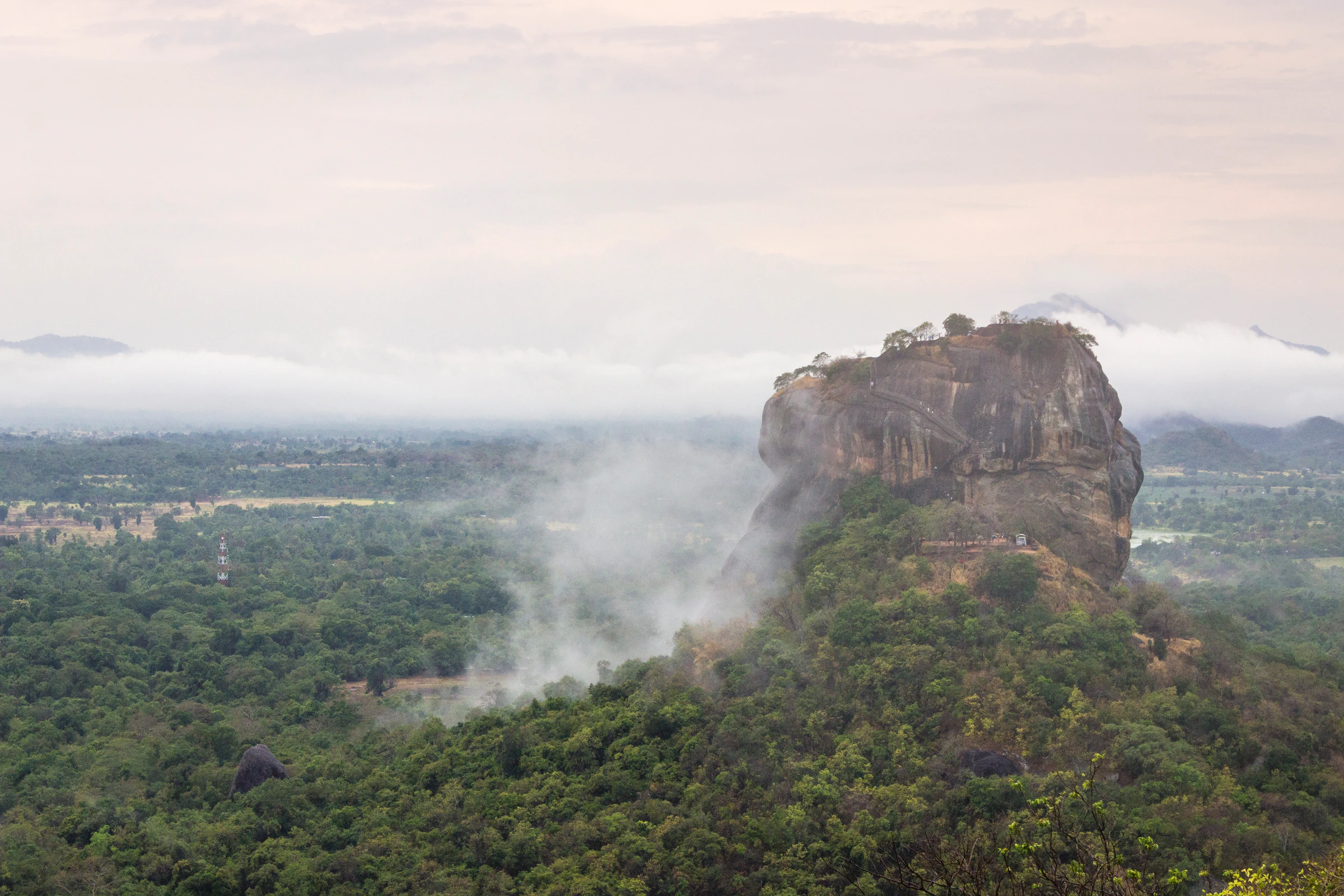
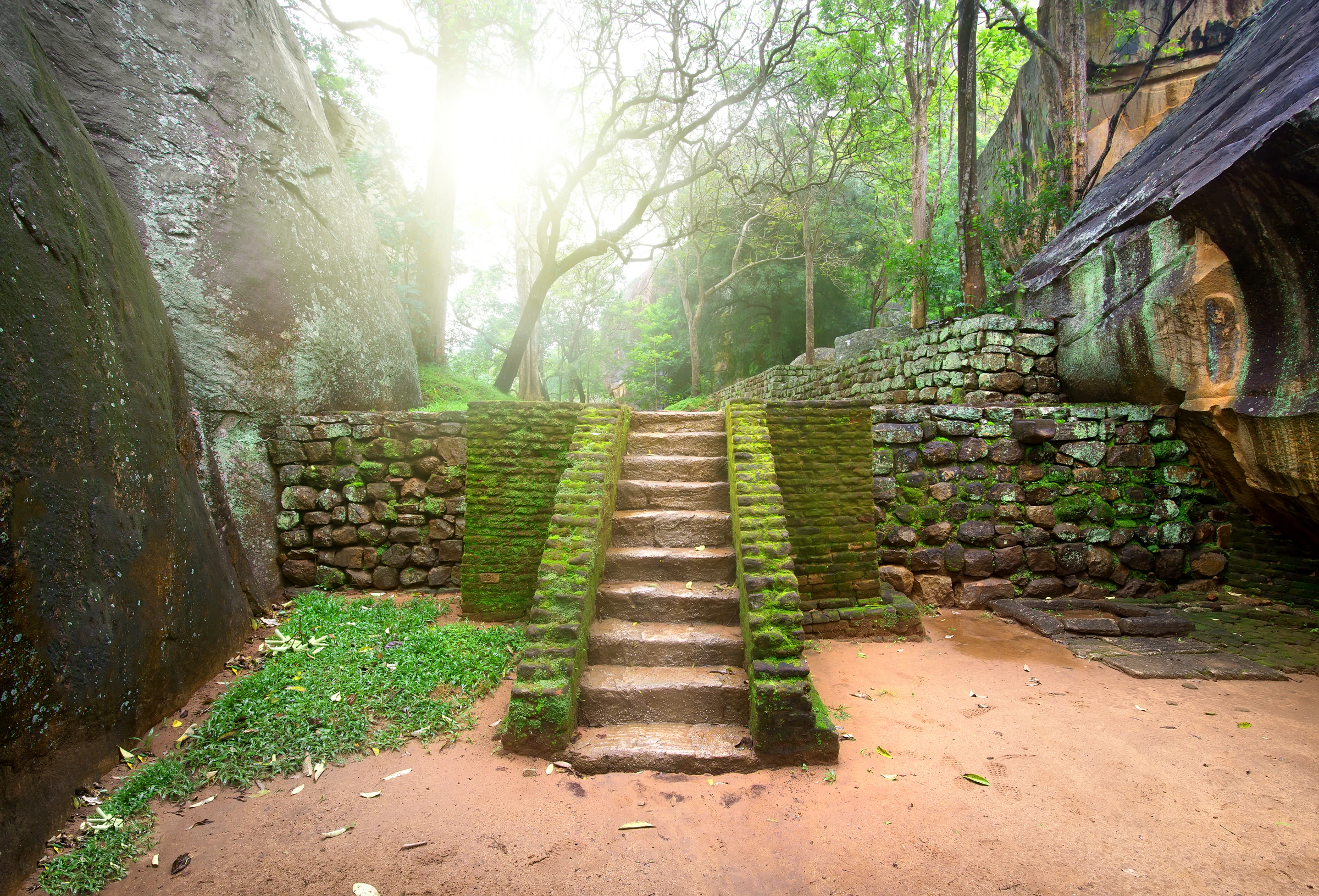
Sigiriya is a 5th-century rock fortress, built as a royal palace by King Kasyapa on top of a single column of rock rising out of flat jungle. A foreign adult ticket costs US$35 (SAARC nationals pay US$20), and the climb covers about 1,200 steps, taking 1.5 to 2 hours up and down past the Mirror Wall, the surviving frescoes and the Lion's Paw gateway to the summit ruins. Some sections use open metal stairways, worth knowing if you're not comfortable with heights. Go early to beat both the heat and the coach groups. Full detail on the ticket, the climb and where to base yourself is in our Sigiriya guide.
Pidurangala: the same view, without the crowds
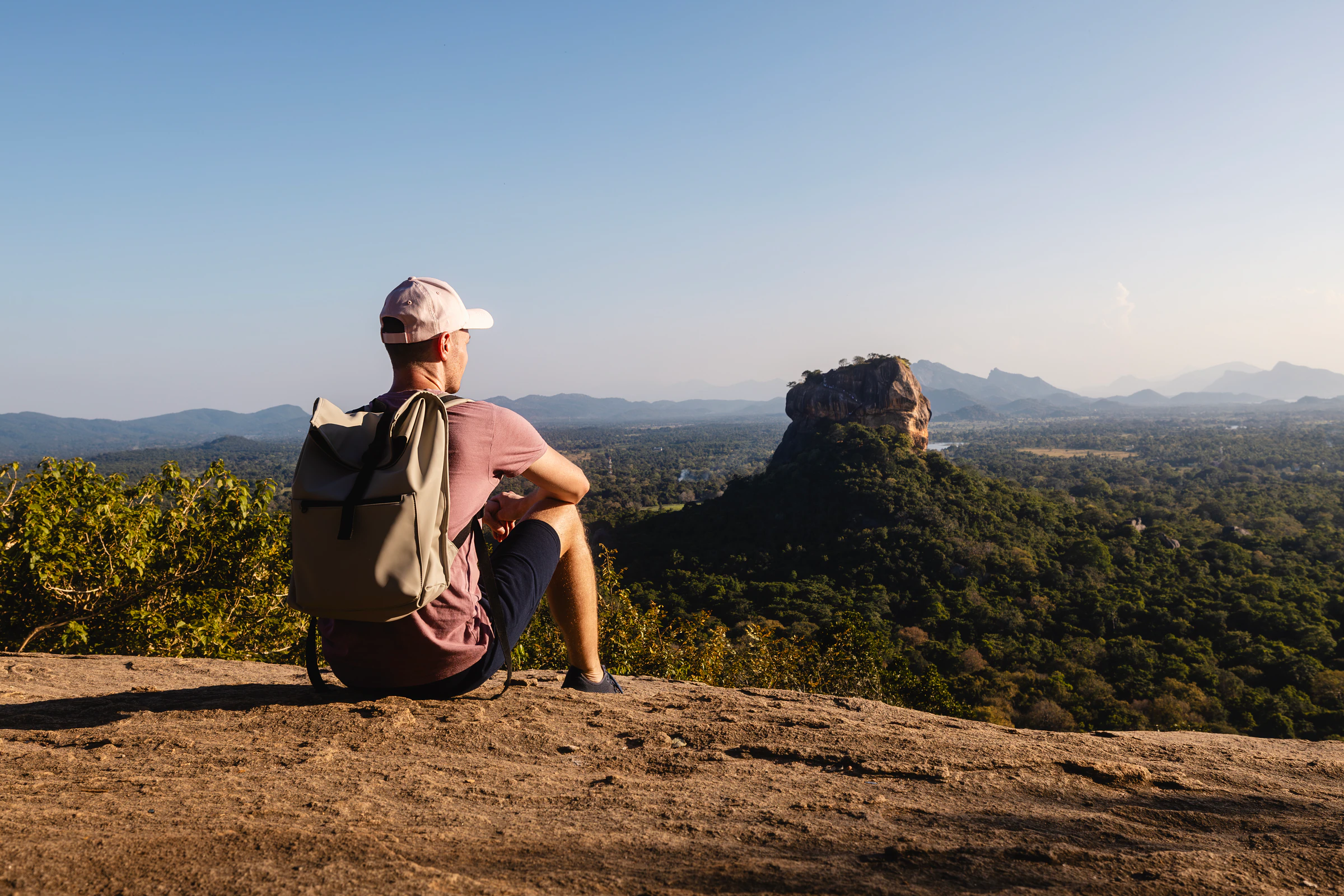
Across the valley from Sigiriya sits Pidurangala, a lower, rougher climb that gives the view most people are actually chasing: Sigiriya itself, rising out of the jungle. Entry costs a fraction of Sigiriya's, around LKR 1,000, paid at the temple you pass through on the way up. It's the usual choice for a sunrise climb, though opening times vary between sources, so ask your guesthouse. Most people do both rocks on the same trip rather than picking one over the other; if you're short on time, our Sigiriya guide's Pidurangala section covers fitting both into one day.
Dambulla Cave Temple: 2,000 years of murals
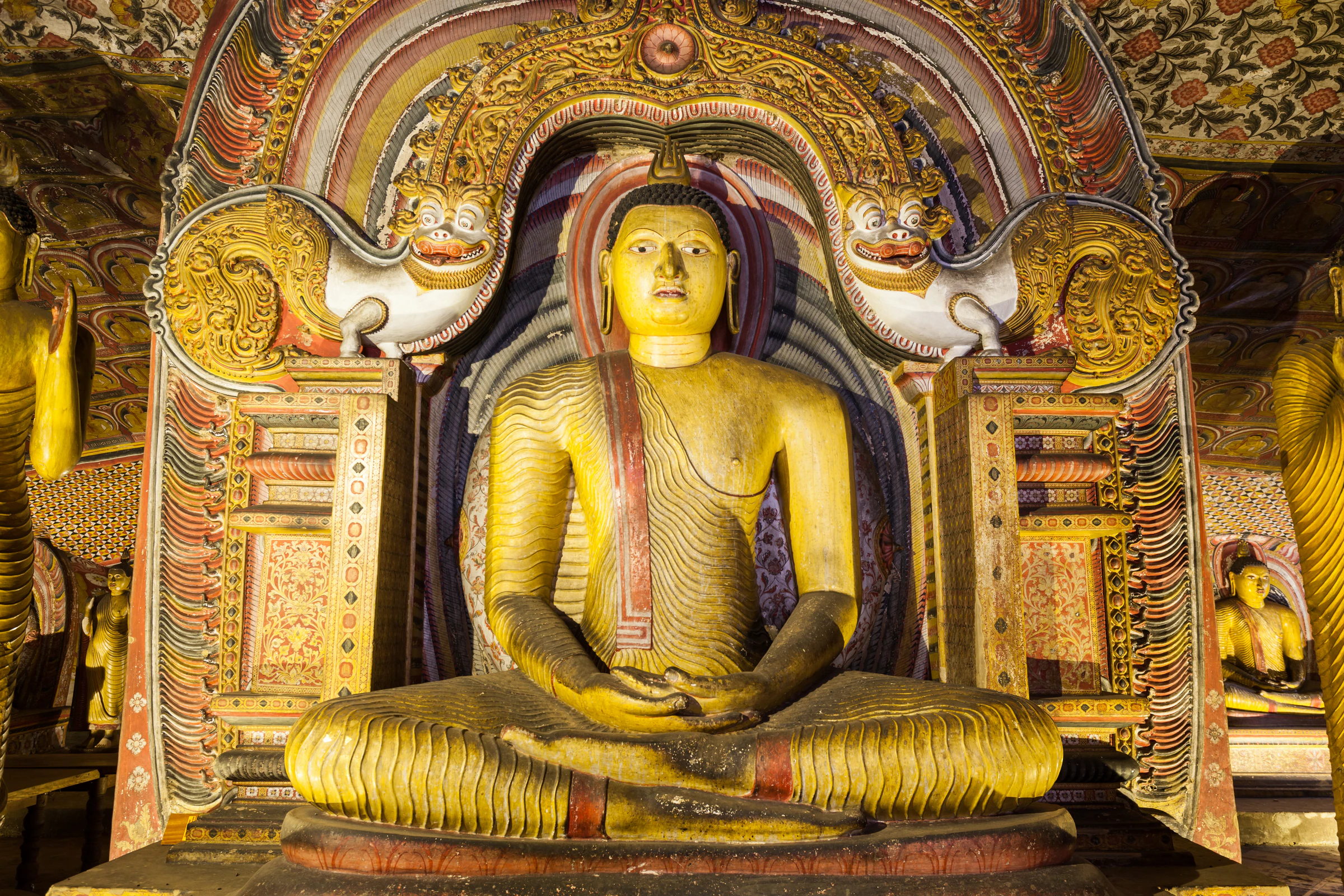
About 20 minutes from Sigiriya by road, Dambulla's cave temple complex has been a working Buddhist shrine for over 2,000 years: five caves carved into a cliff face, holding statues and ceiling-to-floor murals of the Buddha's life. Sources disagree on the ticket price: the Central Cultural Fund's price list shows US$3 for Dambulla, while other 2026 listings give US$5 or about LKR 3,000, so check at the ticket window rather than rely on one figure. Cover shoulders and knees, and take your shoes (and any hat) off before entering, as at any Sri Lankan temple. Early morning or the last couple of hours of the day, when the light through the cave entrances turns gold, are good times to go.
Polonnaruwa: the medieval capital, best seen by bike
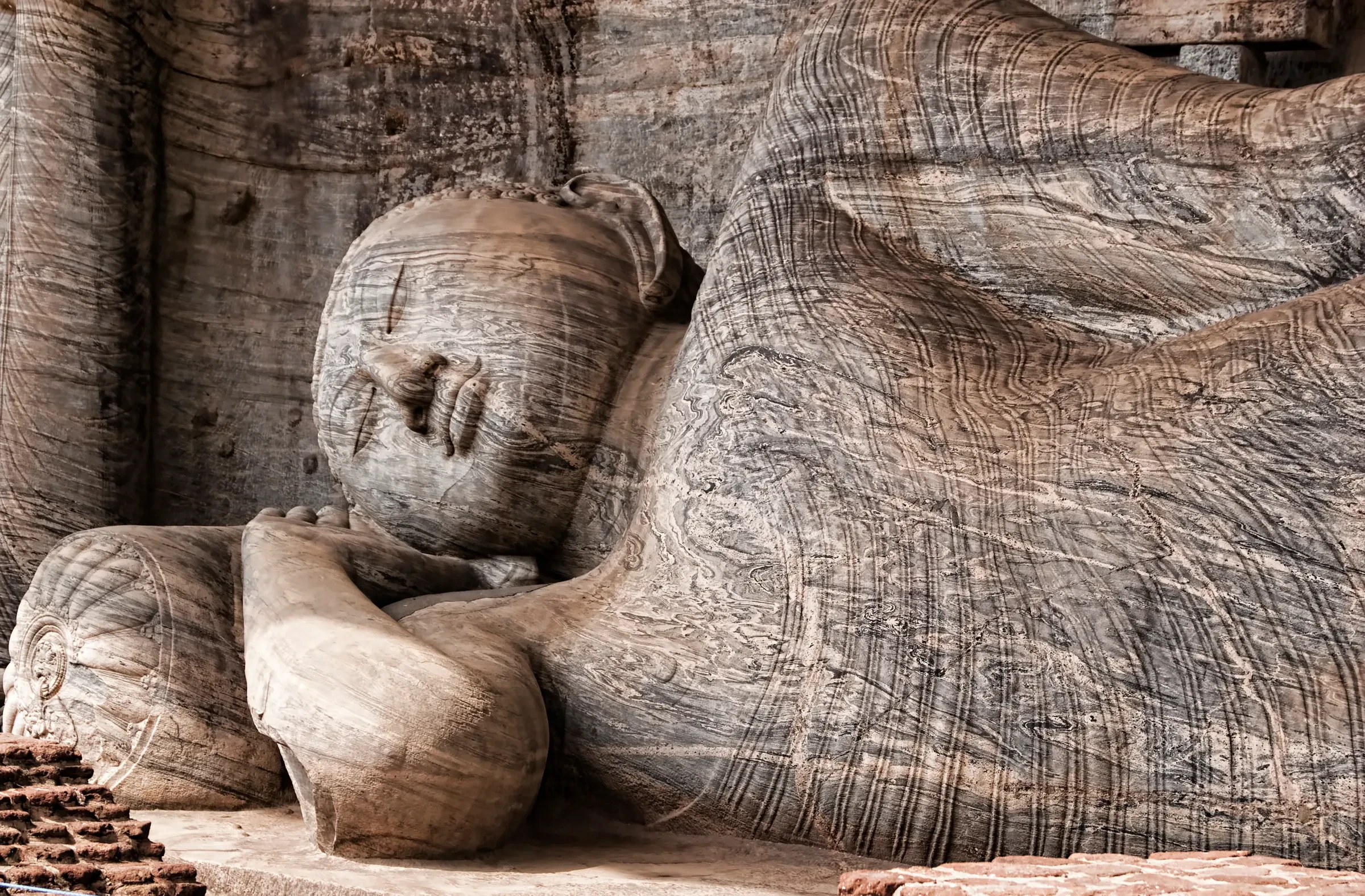
Polonnaruwa is Sri Lanka's second ancient capital, a compact archaeological park within roughly 1 to 2 hours by road of Sigiriya, Dambulla or Habarana. A foreign adult ticket costs US$30 on the Central Cultural Fund's price list (quoted in dollars, paid in rupees at the day's rate). A loop on a hired bike takes in the Quadrangle, the Gal Vihara's monumental Buddha statues carved from a single granite face, and the vast Parakrama Samudra reservoir, and takes a few hours at an easy pace. It pairs naturally with a morning safari at nearby Minneriya. Our Polonnaruwa guide covers the cycling route and getting there from each base town.
Anuradhapura: the older, sacred first capital
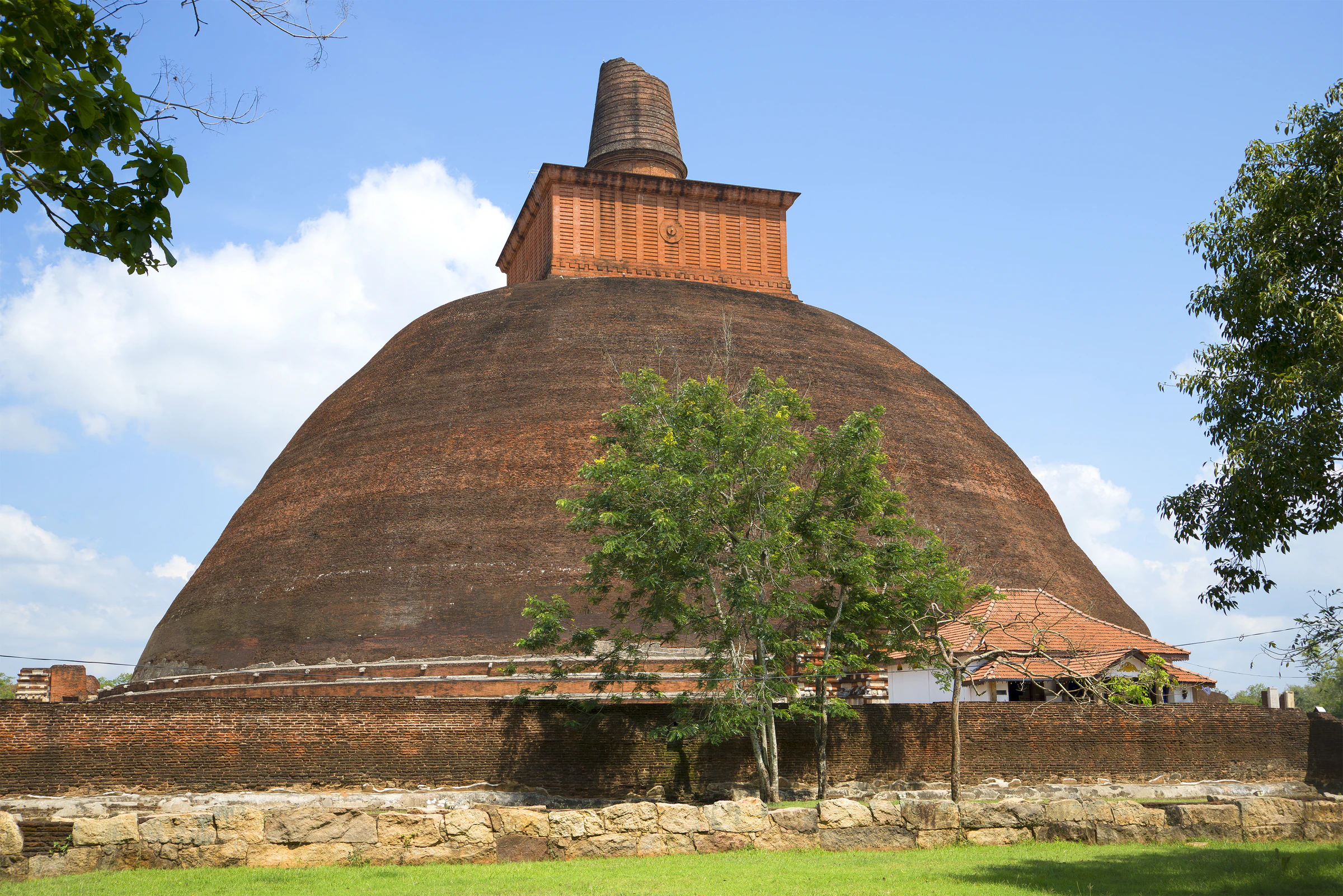
Anuradhapura is Sri Lanka's ancient first capital and the region's most spread-out site, a longer drive from Polonnaruwa than from Sigiriya. A foreign adult ticket costs US$30 on the Central Cultural Fund's price list, covering the main stupas and monastic ruins. Dress modestly here: white clothing is customary at this sacred city, and you'll remove your shoes at the shrines. The Jaya Sri Maha Bodhi, a sacred fig tree said to have grown from a cutting of the original Bodhi tree in India under which the Buddha attained enlightenment, and the giant Jetavanaramaya stupa are the two unmissable stops. As with the other three sites, there's no single ticket covering all of them, so budget for each separately. A day, or a long half-day, is enough at a comfortable cycling pace; see our Anuradhapura guide for adding on Mihintale, the hillside nearby where Buddhism is traditionally said to have reached the island.
Minneriya and Kaudulla: the elephant gathering
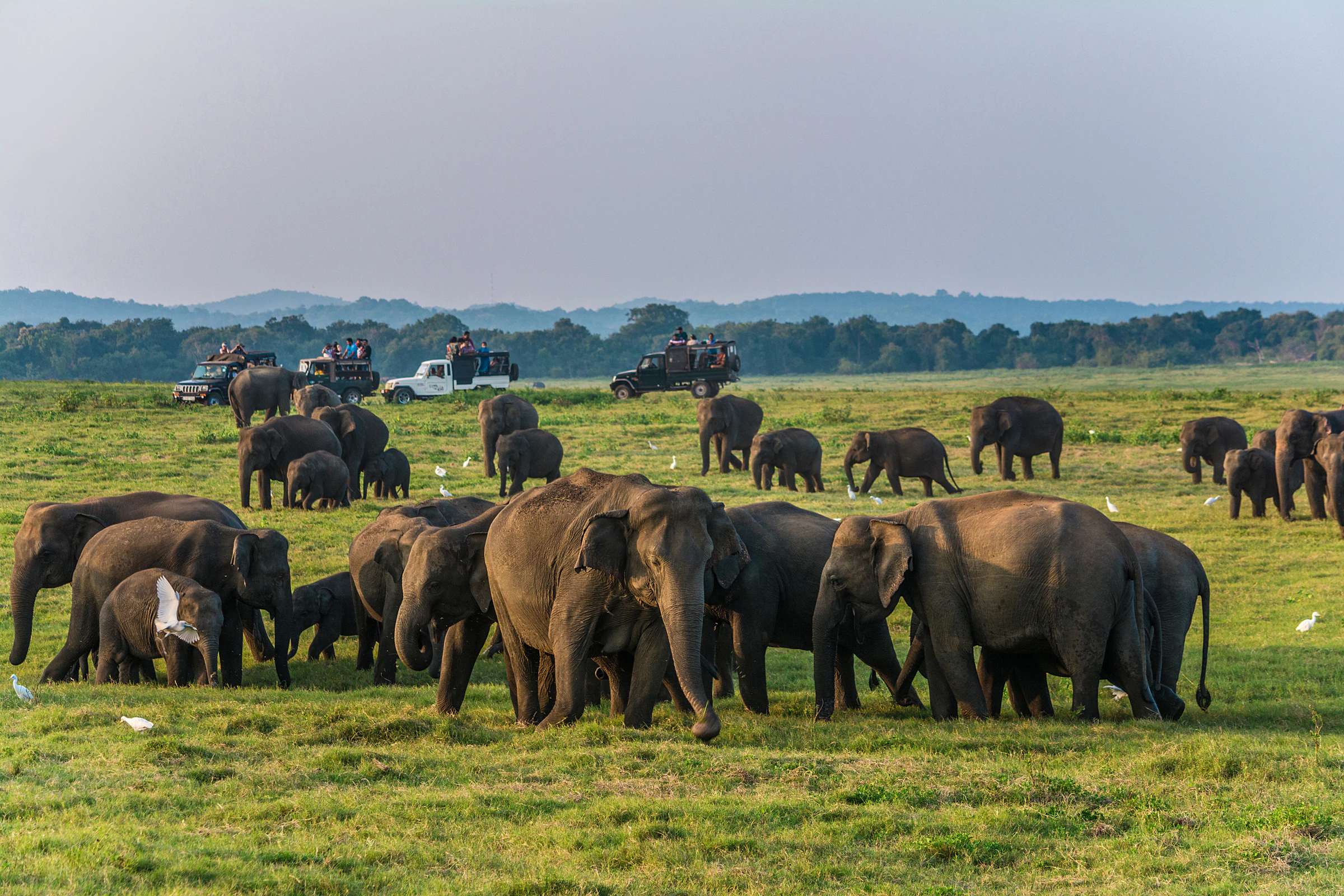
Minneriya and Kaudulla National Parks, a short drive from Habarana, host what's often described as the largest gathering of Asian elephants in the world. As the dry season lowers the water level, elephants from a wide area converge on the reservoir shoreline to drink and bathe. One travel site, updated in March 2026, puts the season at July to October, with the peak from late August to mid-September, when 200 to 300 elephants at once aren't unusual; other guides name August and September as the best weeks. Outside the season elephants are still around in smaller numbers, but the big gathering isn't guaranteed. Which park has more elephants changes with the water level, so ask your driver or guide on the morning of your visit which one is the better bet. As with every safari in Sri Lanka, elephants here are watched from a jeep, never ridden. Our safari guide covers fees, jeep costs and how to pick an operator that keeps a respectful distance.
What to eat in the Cultural Triangle
Start with rice and curry, Sri Lanka's default meal: several small vegetable curries plus a protein curry, rice and a coconut sambol. Kottu roti, chopped flatbread stir-fried with vegetables, egg and often meat, is best ordered somewhere you can hear the chopping from the street. Hoppers, bowl-shaped fermented rice-and-coconut-milk pancakes crisp at the edges, are a breakfast staple, especially as an "egg hopper" with an egg cracked into the centre. Look out too for string hoppers (steamed rice-flour noodle nests, eaten with a curry or sambol), pol sambol (coconut, chilli and lime, on almost everything) and wattalapam, a coconut-and-jaggery custard dessert with roots in Sri Lanka's Malay and Muslim communities. Sigiriya and Dambulla have the widest choice of restaurants in the region; Anuradhapura's dining scene is more modest and village-style.
Best time to visit
January to March is the most reliable window, sitting outside the worst of both monsoons. The heaviest rain here falls from October to December. If catching the Minneriya or Kaudulla elephant gathering at its peak matters more to your dates than avoiding rain, aim for late August to mid-September instead.
Getting there and around
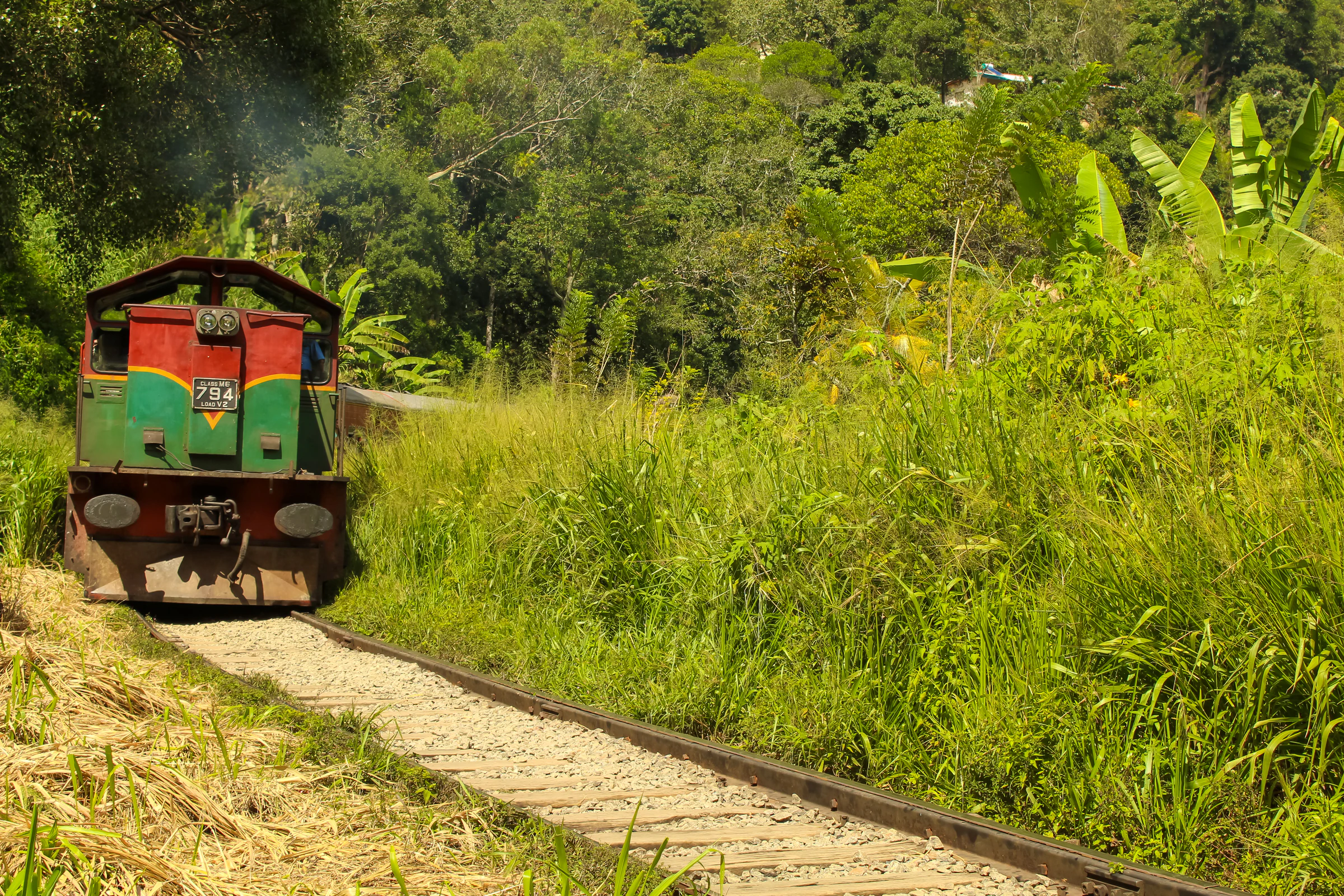
Most international flights land at Bandaranaike Airport near Colombo and Negombo, and from there it's a private van or car to Sigiriya, Dambulla or Habarana, roughly 3 to 4 hours depending on traffic. Anuradhapura and Habarana have railway stations, so a train can take you to the edge of the region, but the sites are spread out, so getting between them means a private driver, a hired tuk-tuk, or public buses, which are cheaper but slower and sometimes need a change at Dambulla or Inamaluwa junction. Base yourself in one town for 2 to 3 nights rather than moving each night: Sigiriya puts you closest to the rock itself, Dambulla is the region's transport hub with the widest choice of guesthouses, and Habarana sits more centrally if you're also covering Polonnaruwa or Anuradhapura from the same base.
How long to spend, and which route to use
Three days covers Sigiriya and Dambulla only, with one safari, if you're tight on time. Four to five days is the ideal length: all four headline sites plus a Minneriya or Kaudulla safari, without rushing two ancient cities into one day. Six to seven days adds Mihintale and Ritigala, a lesser-visited forest-monastery ruin, plus a second safari at the other reservoir for a better shot at the full elephant gathering. Most travellers use this region as the first stop in a longer loop: see our 10-day Sri Lanka itinerary for how it runs into Kandy, the hill country and the coast, or our Sri Lanka itinerary overview for every length from 1 week to 1 month.
Keep planning
See the Sigiriya, Polonnaruwa and Anuradhapura guides for each site in full, or our safari guide for Yala, Udawalawe and the Minneriya gathering. For what comes next on the road, see the hill country guide, or head back to the Sri Lanka travel guide for every region and route length.