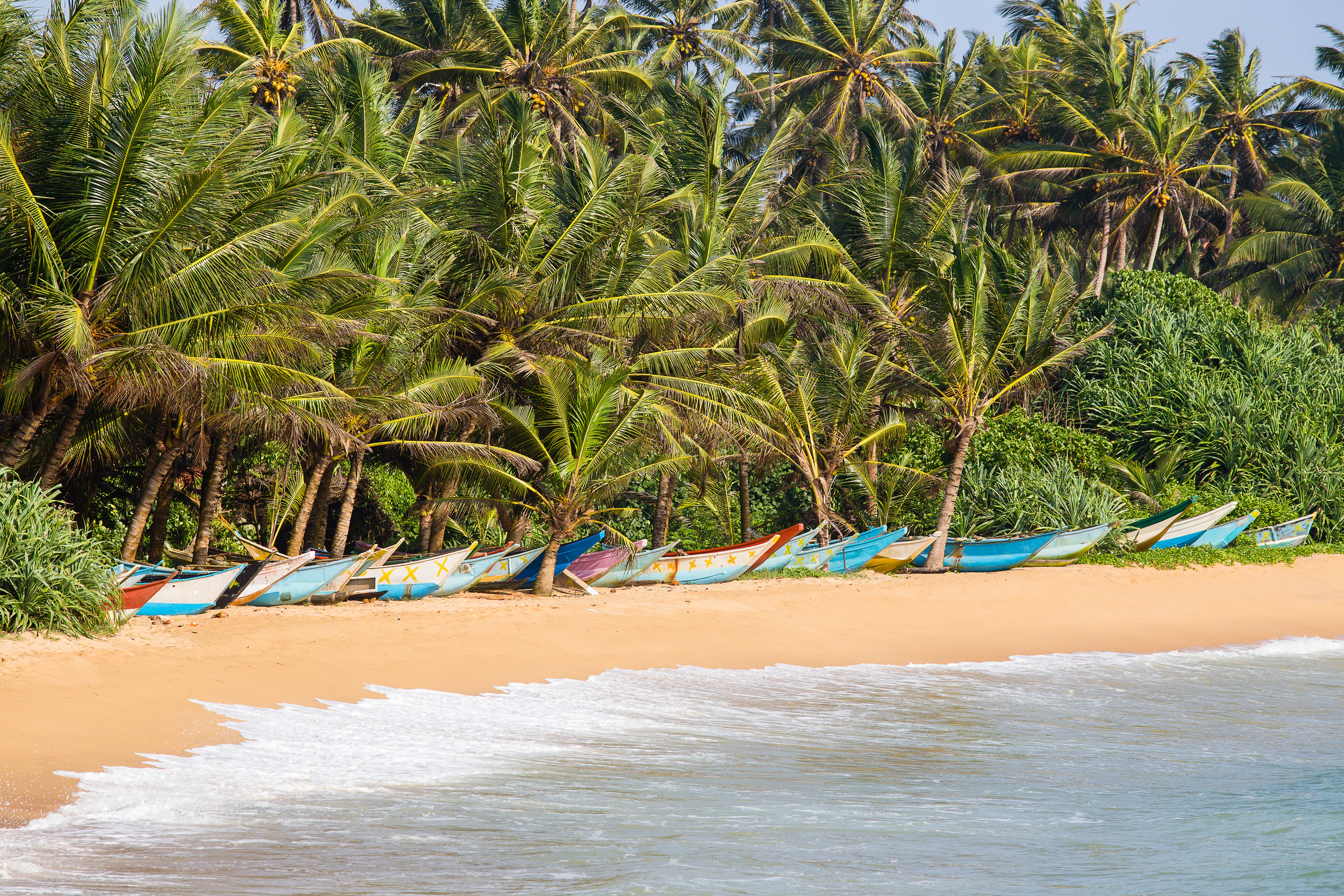
Mirissa is small enough to explore on foot, and that's most of the appeal. The harbour where the whale-watching boats leave, a curve of palm-backed sand and a handful of viewpoints all sit within a short walk or tuk-tuk ride of each other. It suits a few slow days rather than a rushed one, whether you're stopping for the beach alone or using it as a base for a whale-watching morning. This guide covers the beaches and viewpoints, whale watching, nightlife, surfing nearby, turtles, getting there, where to stay and how many days to give it. For the rest of the coast, see our Sri Lanka travel guide.
Mirissa at a glance
- Where: Sri Lanka's south coast, about 150 km from Colombo
- Known for: whale watching, Coconut Tree Hill, Secret Beach and a small, sociable strip of guesthouses and cafes
- How long: two to three nights covers the viewpoints, a beach day and a whale-watching trip; four if you want a slower pace or a side trip to Weligama or Galle
- Best months: roughly November to April, driest and calmest December to March
- Getting there: the coastal train, or a car or bus on the Southern Expressway, from Colombo
Coconut Tree Hill, Parrot Rock and Secret Beach
These three spots are close together around Mirissa's main beach, and many people see them on one outing. Parrot Rock sits directly in front of the main beach, Coconut Tree Hill is on the east side of the beach strip, and Secret Beach is about 1 to 2 km from the middle of town.
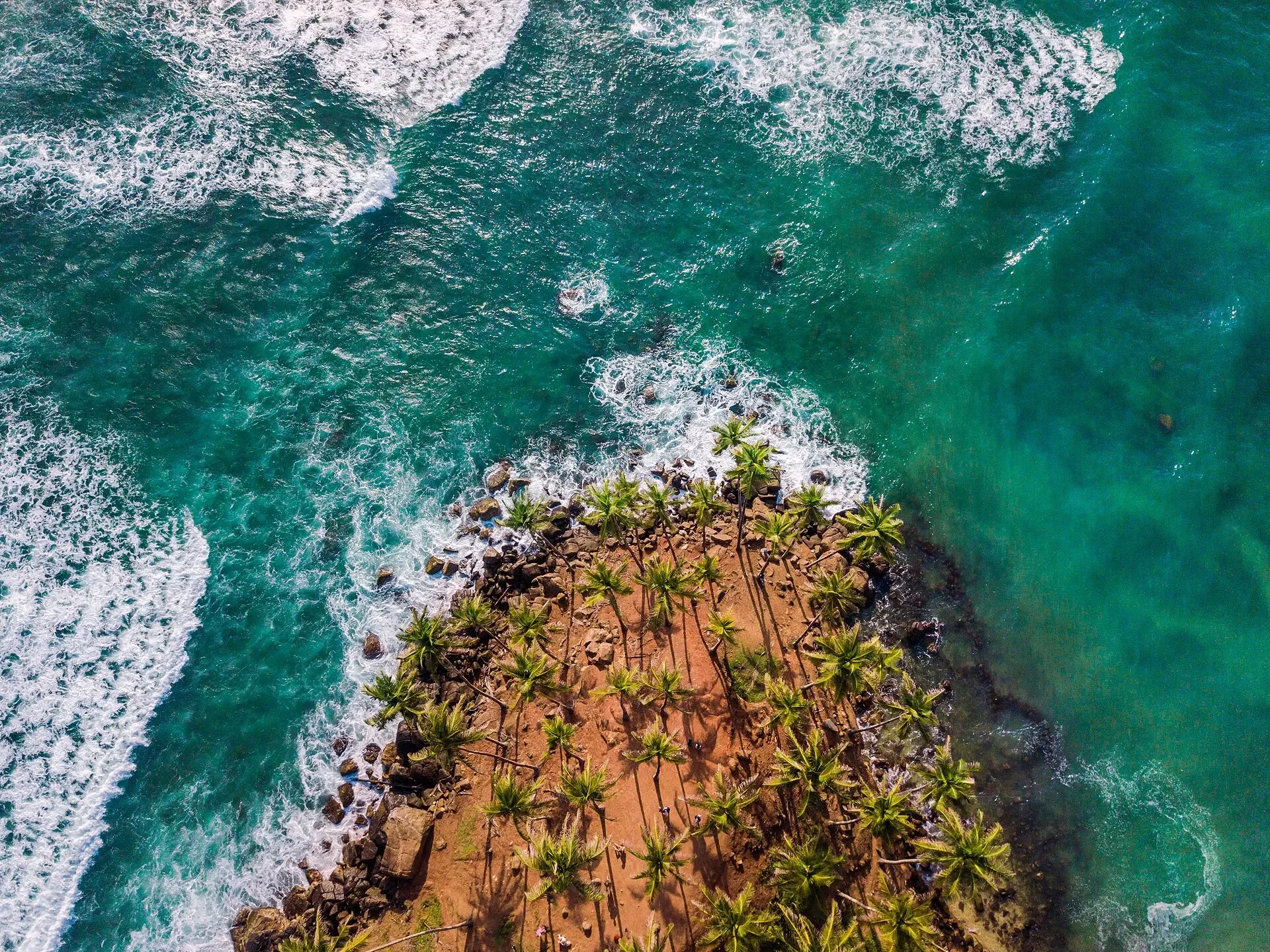
Coconut Tree Hill is a small red-earth headland covered in leaning coconut palms, with the sea on three sides. It's one of the most photographed spots in Mirissa, and also one of the busiest, so go around sunrise if you want it to yourself. Entry has been free, and it's about 10 to 15 minutes on foot from the main beach. The path up can be muddy or gravelly, so wear shoes with grip. Reports describe the land as privately owned, so access arrangements could change.
Parrot Rock is a large rocky outcrop just off the shore, reached by wading through shallow water at low tide, with steps up to the top. It's a good sunset spot and doubles as a small viewpoint over the bay. Check the tide before you set out, since low tide is the safest time to cross.
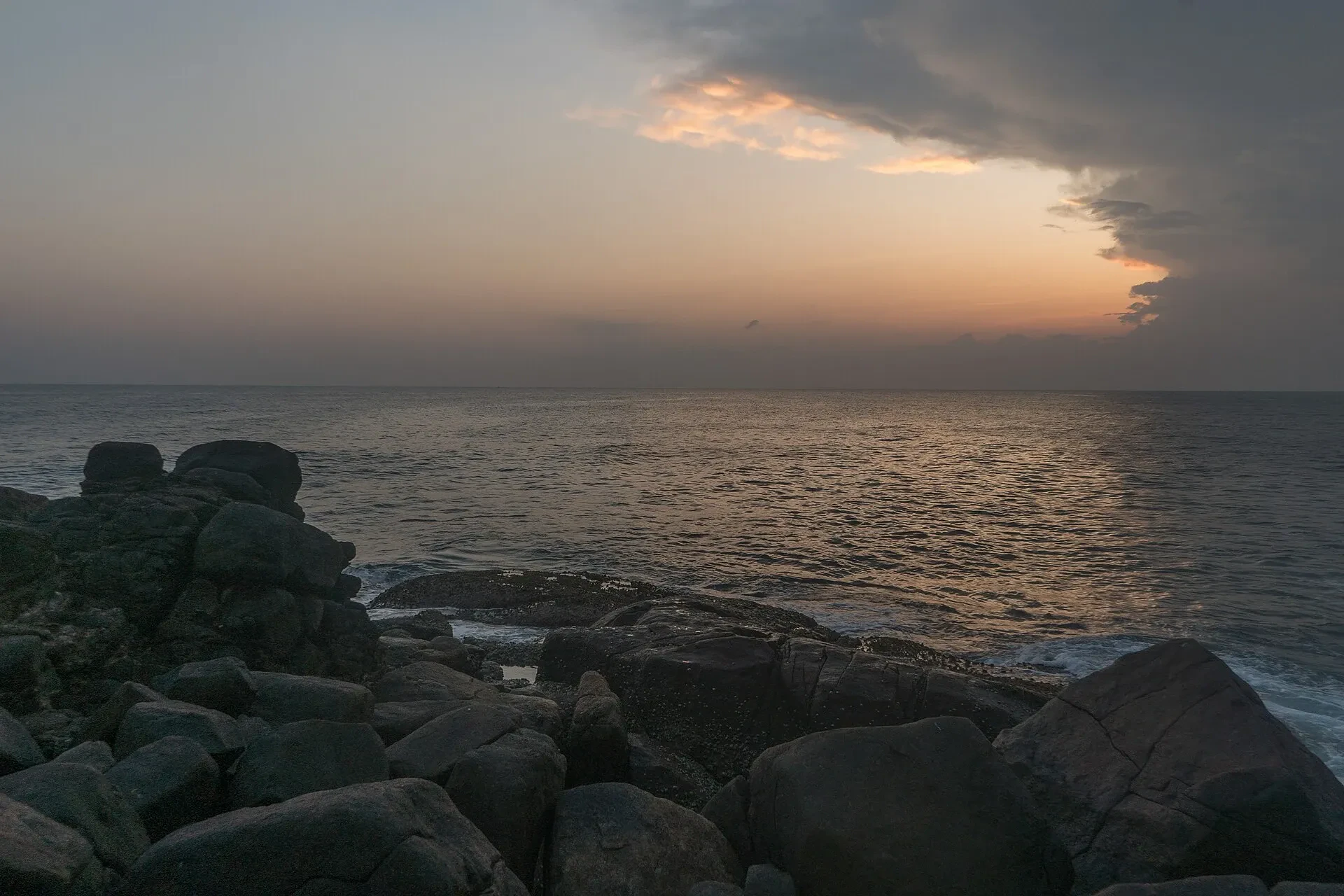
Secret Beach is a small, sheltered cove. Tuk-tuks can't take you all the way because the last stretch is steep, so expect a walk of around 10 minutes down to the sand from where you're dropped off. It's no longer much of a secret, but it's quieter than the main beach.
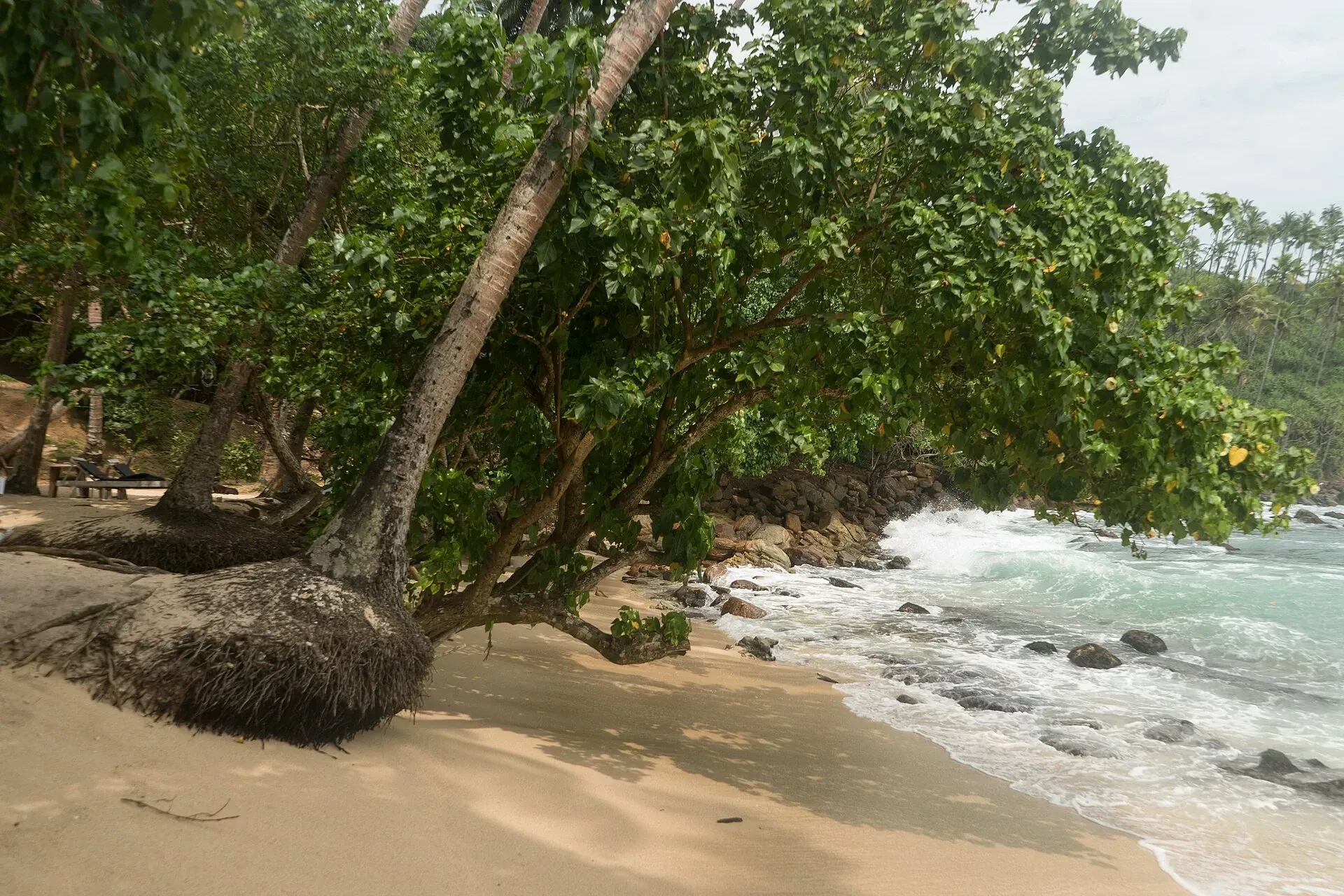
We found no entry fee for any of the three. They're easy to combine into one outing, ideally starting early before the heat and the crowds build.
Whale watching from Mirissa
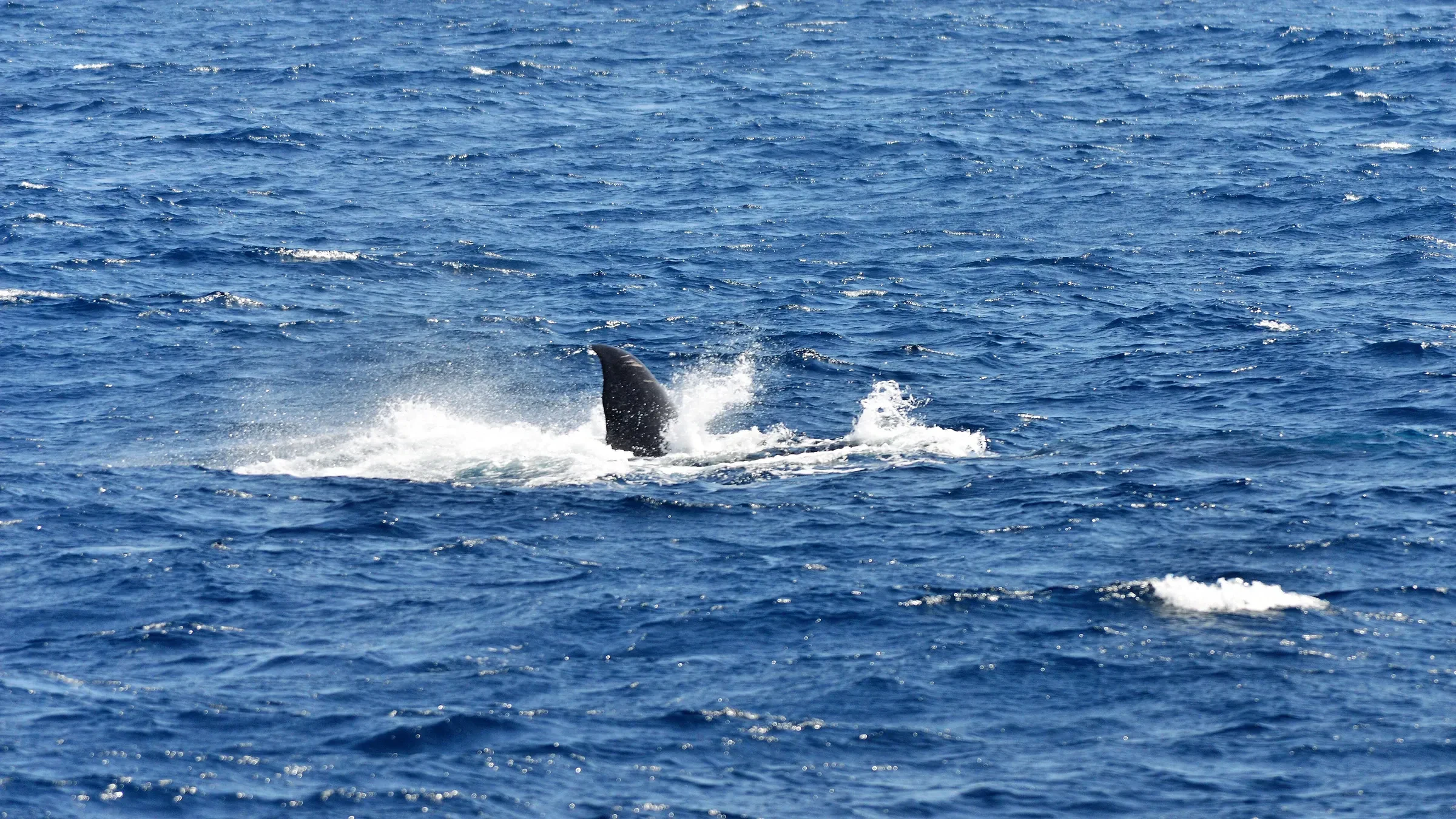
Mirissa is Sri Lanka's main base for whale watching, with boats leaving the harbour most mornings in season to look for blue whales, sperm whales and pods of dolphins. It's enough of its own topic that we've written it up separately: our Mirissa whale watching guide covers the season, the rules boats must follow (engines off and no closer than 100 metres to a whale), how to pick a responsible operator and seasickness. It doesn't quote a trip price, because the 2026 figures we found disagree.
Nightlife in Mirissa
Mirissa's nightlife is low-key rather than a party scene: barefoot beach bars along the sand with fire performers, live music or a DJ some nights, especially in the December to April season when the town is busiest. It's sociable without being loud, and most bars wind down well before the small hours. If you want an actual club night, Sri Lanka's south coast doesn't really have one; the closer options are a beach bonfire or a bar crawl between a handful of spots along the main strip.
Surfing near Mirissa
Mirissa has its own small beach break, sandy-bottomed and forgiving enough for beginners and early improvers, with a couple of local schools renting boards and running lessons. It works in the south coast's November to April surf season. It's a reasonable place for a first go, but Weligama, a short ride along the coast, is the coast's dedicated learn-to-surf town, with more schools, gentler water and a longer stretch of beach to spread out on. Our surfing in Sri Lanka guide covers both, plus the opposite-season east coast at Arugam Bay.
Turtles at Mirissa
Green turtles are a regular sight for snorkellers around Parrot Rock and Turtle Bay, a short walk from the main beach. Snorkelling is best from roughly November to April, when the sea is calmer and the water clearer. Don't touch or chase the turtles, and keep off the coral. For a closer, guided look at hatchlings, the best-known option is the Kosgoda turtle hatchery. Kosgoda is on the south-west coast between Colombo and Galle, so it fits better as a stop on the way down from Colombo than as a trip from Mirissa. Hatcheries are debated on welfare grounds, so be wary of any that let you handle hatchlings, and ask how and when animals are released before you book.
Where to stay in Mirissa
| Area | Best for | Good to know |
|---|---|---|
| Around the harbour and main beach | First-timers, whale-watching pickups | Closest to the boats and the busiest strip of restaurants and bars |
| Toward Coconut Tree Hill and Secret Beach | A quieter stay, walkable to the viewpoints | A bit further from the main beach's restaurants |
| Inland, off the main road | Value, guesthouses and homestays | A short walk or tuk-tuk ride to the beach, usually cheaper |
Guesthouses and small hotels are the standard here rather than big resorts. Book ahead for December to March, when Mirissa is at its busiest and its best.
How many days do you need in Mirissa?
Two nights covers the viewpoints and a beach day, though you'll need a spare morning free if you want to fit in whale watching, since trips are weather-dependent and sometimes cancelled at short notice. Three nights is more comfortable and leaves room for both. Four or more suits anyone using Mirissa as a base for day trips to Weligama's surf or Galle Fort, which is about 34 km away: roughly 45 minutes to an hour by car, or about an hour by train.
Getting to Mirissa
From Colombo. The coastal train runs from Colombo Fort down the coast to Mirissa's own station, about 148 km by rail. This is a separate railway from the hill-country lines that Cyclone Ditwah damaged in November 2025, and the coastal line came through it largely intact. One-off accidents did halt services for a time in February and April 2026, so check the day's status before you travel. Allow roughly 3 to 4.5 hours depending on the service; only a few direct trains run each day, so check the timetable on the railway's site. By road, the Southern Expressway covers most of the distance, and a car typically takes about 2.5 to 3 hours depending on traffic. Expressway buses reach Matara in about 2.5 hours on the listings we found, then a local bus covers the last stretch, so allow 3 to 4 hours door to door.
From Ella. There's no useful rail link, since Ella sits on the separate hill-country line and the two railways don't connect without a long detour back through Colombo. It's about 175 km by road, and taxi listings put the drive at roughly 2.5 to 3.5 hours. The public bus takes 5 to 7 hours with at least one change, and isn't worth it for the time saved.
From Weligama. About 7 km: a short tuk-tuk or bus ride, and an easy half-day trip in either direction.
Best time to visit Mirissa
Mirissa follows the south coast's season: driest and calmest from December to March, with the whole window from November to April workable for a beach stay and reasonable for whale watching. May to September is the south-west monsoon, with rougher seas and more rain, and whale-watching boats don't run reliably in that window. See our best time to visit Sri Lanka guide for the wider picture.
Both of our multi-stop Sri Lanka trips spend time on this stretch of the south coast, with a free day on which whale watching is an optional add-on you book yourself.
If surfing is the main draw, our dedicated surf trip is based further along the coast at Weligama and Hiriketiya instead.