Jaffna is Sri Lanka's Tamil-speaking capital, a city with its own cuisine, its own festival calendar and a more recent history shaped by the civil war that ended in 2009. It sits a long way from the standard south coast and hill country loop most Sri Lanka trips follow, which is exactly why most visitors treat it as a dedicated trip in its own right. This guide covers the food and culture, Nallur temple and its festival, Jaffna Fort, the islands, Point Pedro, the city's history and getting here.
Jaffna at a glance
- Where: the northern tip of Sri Lanka, on the Jaffna peninsula
- Known for: Tamil culture and cuisine, Nallur Kandaswamy temple, Jaffna Fort and the surrounding islands
- How long: 3 to 4 days covers the city, Nallur and one island trip at an easy pace
- Best time: outside the October to December rains; see below
- Getting there: by train or bus from Colombo (about 7 to 8 hours by train), by flight from southern India, or by ferry from Nagapattinam if it's sailing
Tamil culture and food in Jaffna
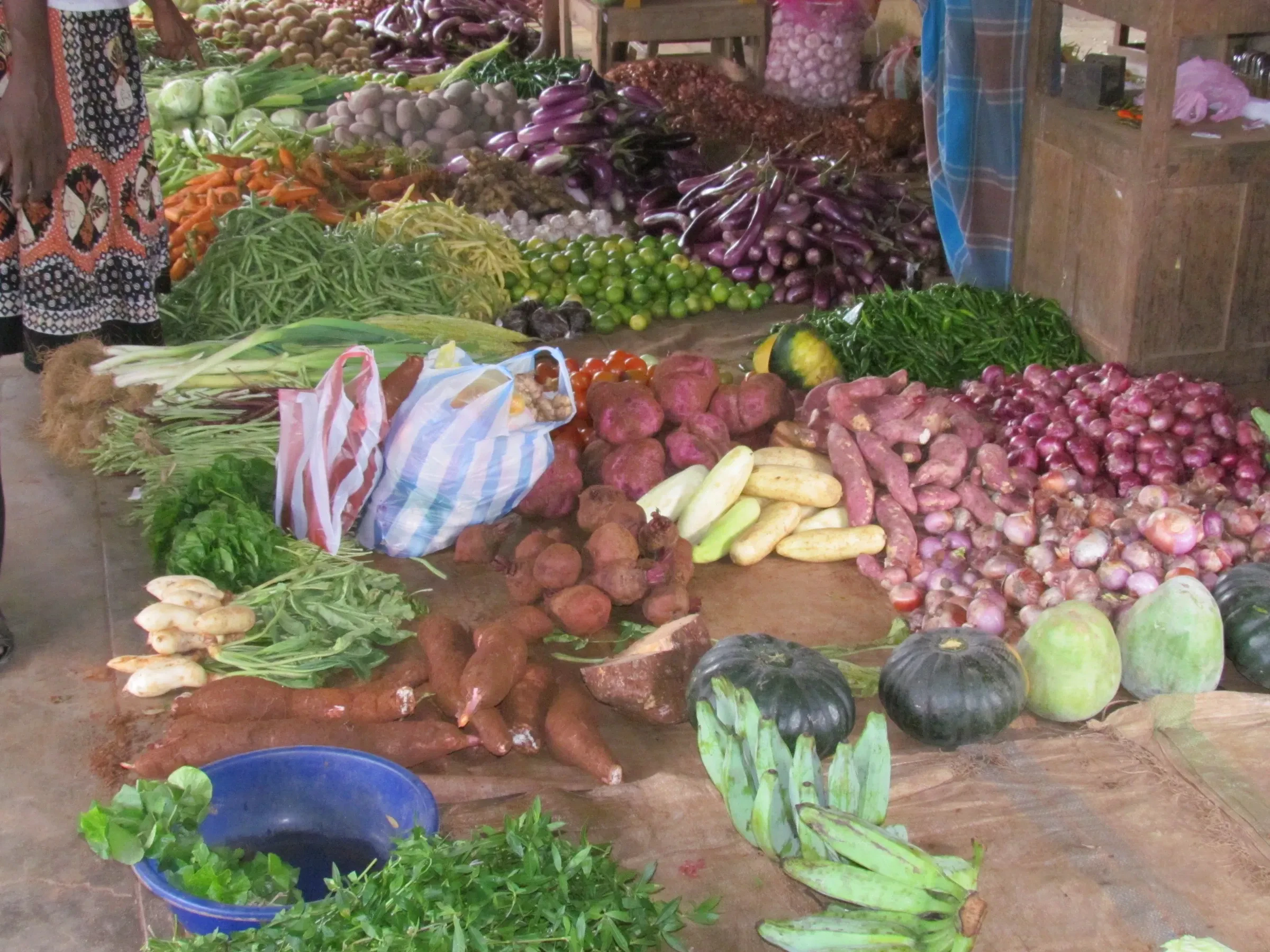
Jaffna's culture and cuisine are distinctly Tamil, shaped by the peninsula's long connection to South India and set apart from the Sinhalese-majority south of the island. The food leans spicier and more coastal than curries elsewhere in Sri Lanka: Jaffna crab curry, made with mud crab simmered in a deep red spice paste with coconut milk, tamarind and curry leaves, is the dish most associated with the city, alongside a rich, spiced lamb curry. Markets and small eateries around town are the best way into this food, and it's worth trying both dishes while you're here rather than sticking to the milder curries served further south.
Nallur Kandaswamy temple
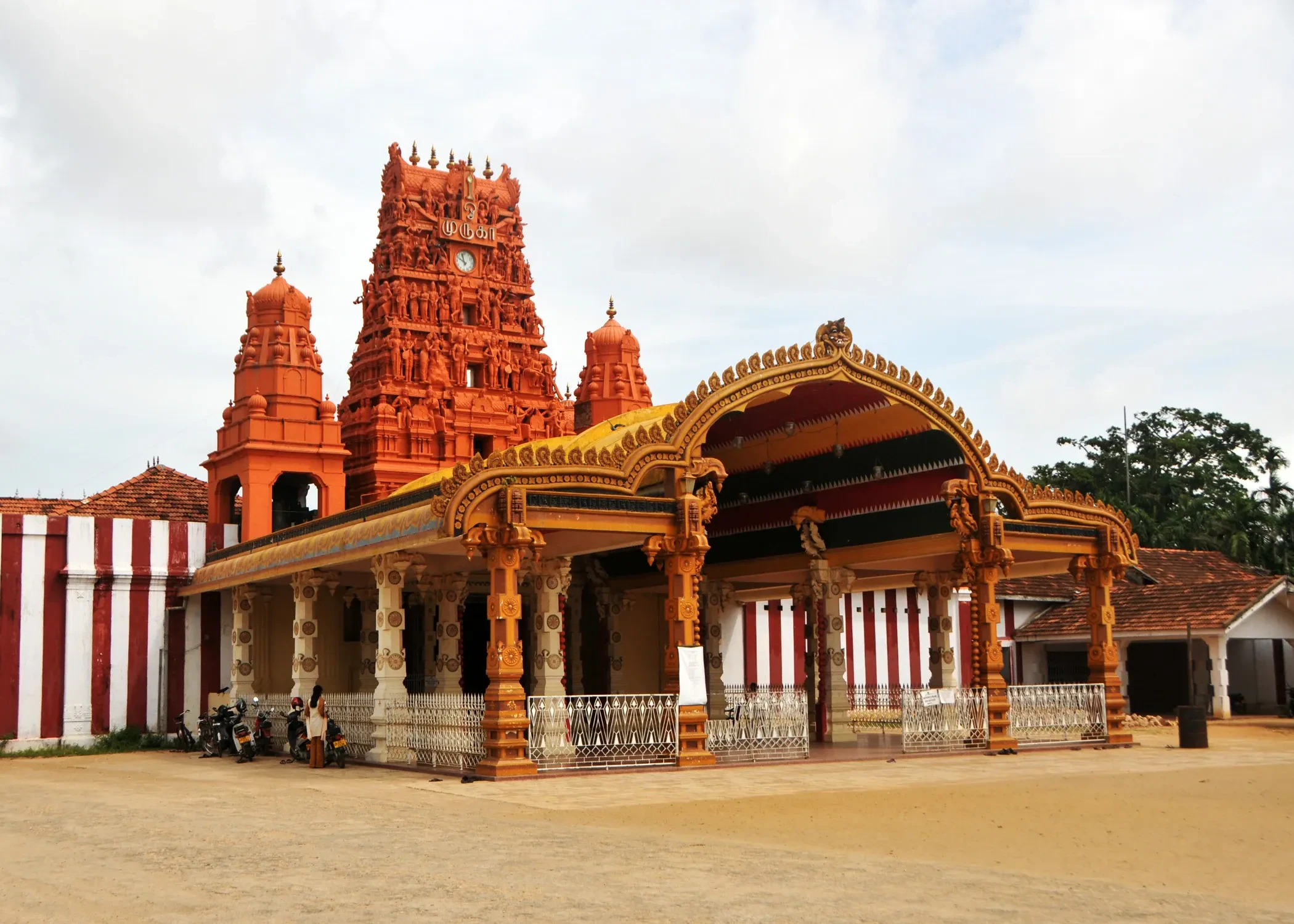
Nallur Kandaswamy Kovil, in the Nallur suburb just outside the city centre, is Jaffna's most important Hindu temple, dedicated to Murugan, and sits in the old capital of the Tamil Jaffna Kingdom. Dress rules are stricter than at most temples in Sri Lanka. Men cover their legs but take their shirts off to go in. Women wear clothing that covers the shoulders and legs. Shoes come off for everyone.
The temple's annual festival is Jaffna's biggest event and one of the largest Hindu festivals anywhere in Sri Lanka. It's often described loosely as a July or August event, but its dates follow the Tamil lunar calendar and shift each year. The 2026 festival ran from 17 August to 10 September, twenty five days, opening with the flag hoisting on 17 August and building to the chariot procession on Wednesday 9 September, with the water-cutting ceremony closing it on 10 September. Tourism sites disagree by a day or two on the 2026 dates. The 2027 dates are a rough estimate (the chariot falls around 29 August); the temple announces exact dates closer to the time, so check them before you build a trip around it.
Jaffna Fort
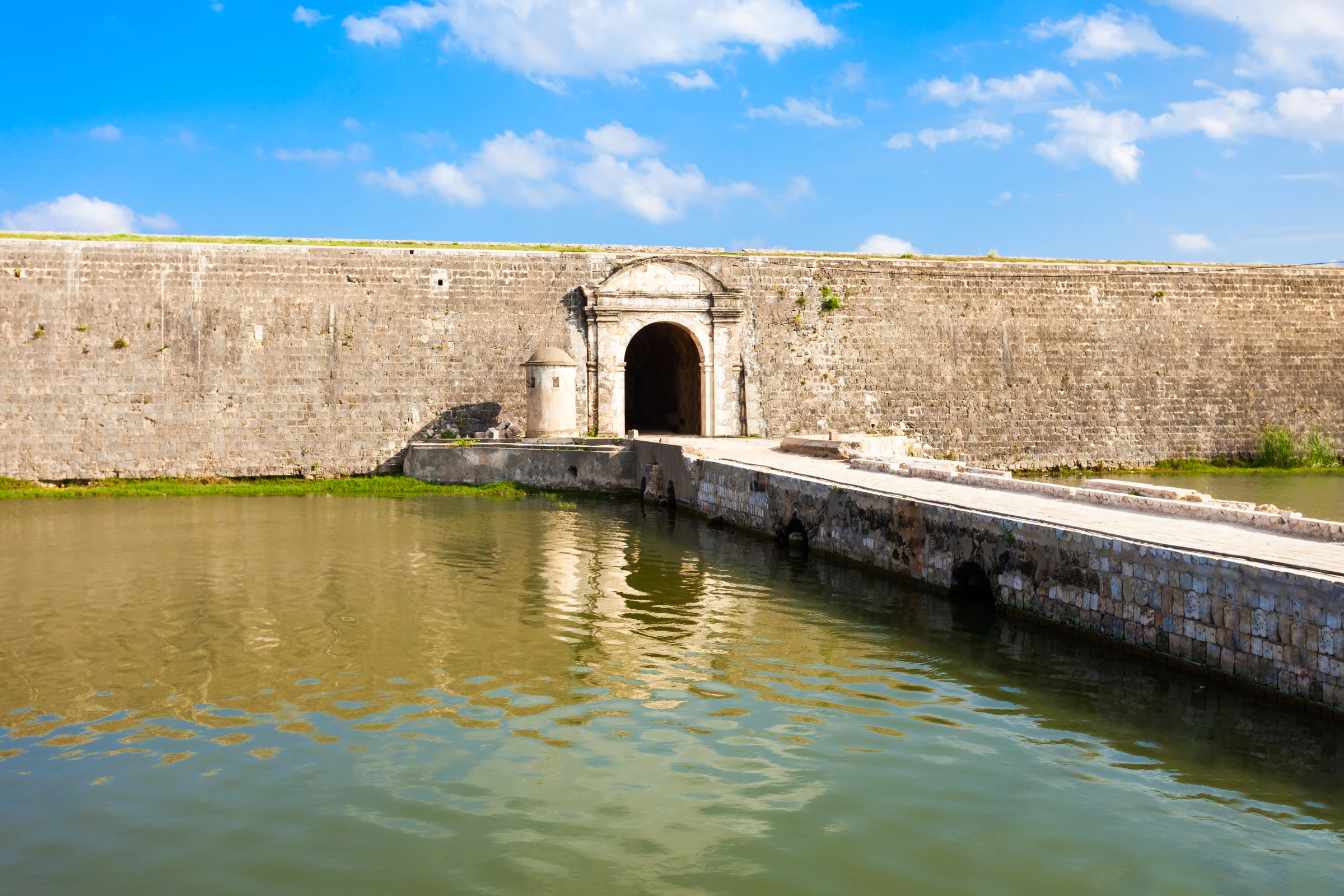
The Portuguese built Jaffna Fort in 1618. The Dutch captured it in 1658 and expanded it, and the British later used it until Sri Lankan independence in 1948. It's one of the country's best-preserved colonial ramparts, and its military role, including through the civil war years, gives it a heavier history than most of Sri Lanka's other forts. From the walls you can see how much of the surrounding lagoon it commands. Sources disagree on whether there's an entry fee and on opening hours, so check at the gate.
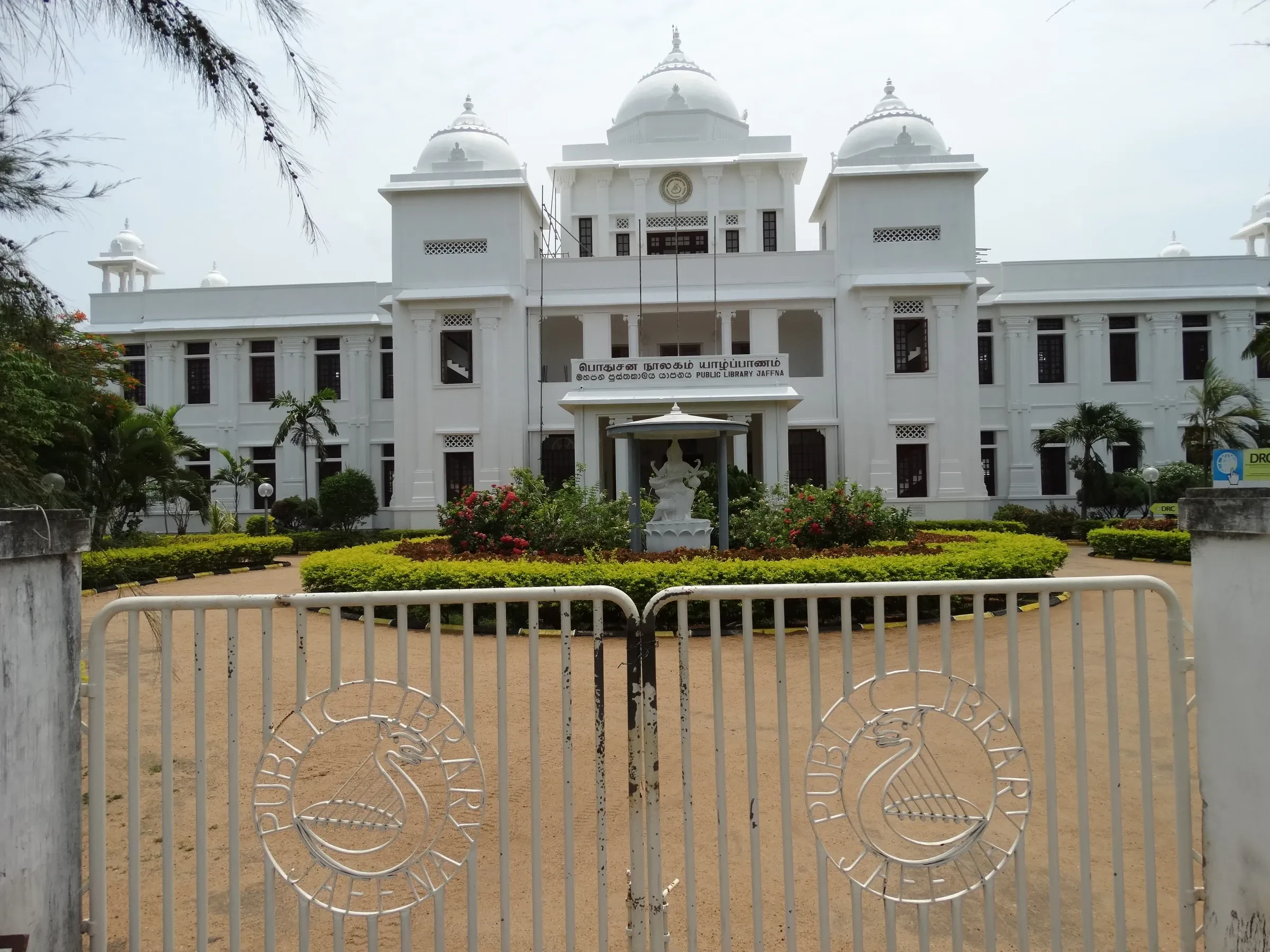
The Jaffna Public Library was set on fire in 1981, which destroyed tens of thousands of books and manuscripts. It was rebuilt and reopened in the early 2000s.
The islands: Delft and Nainativu
A scatter of islands sits off the Jaffna peninsula, two of which are regularly visited. Boats leave from Kurikadduwan jetty. The Sri Lanka Navy runs the larger vessel on the Delft route, and timetables in the sources we found disagree and none is dated 2026, so ask at the jetty before you plan the day around a departure.
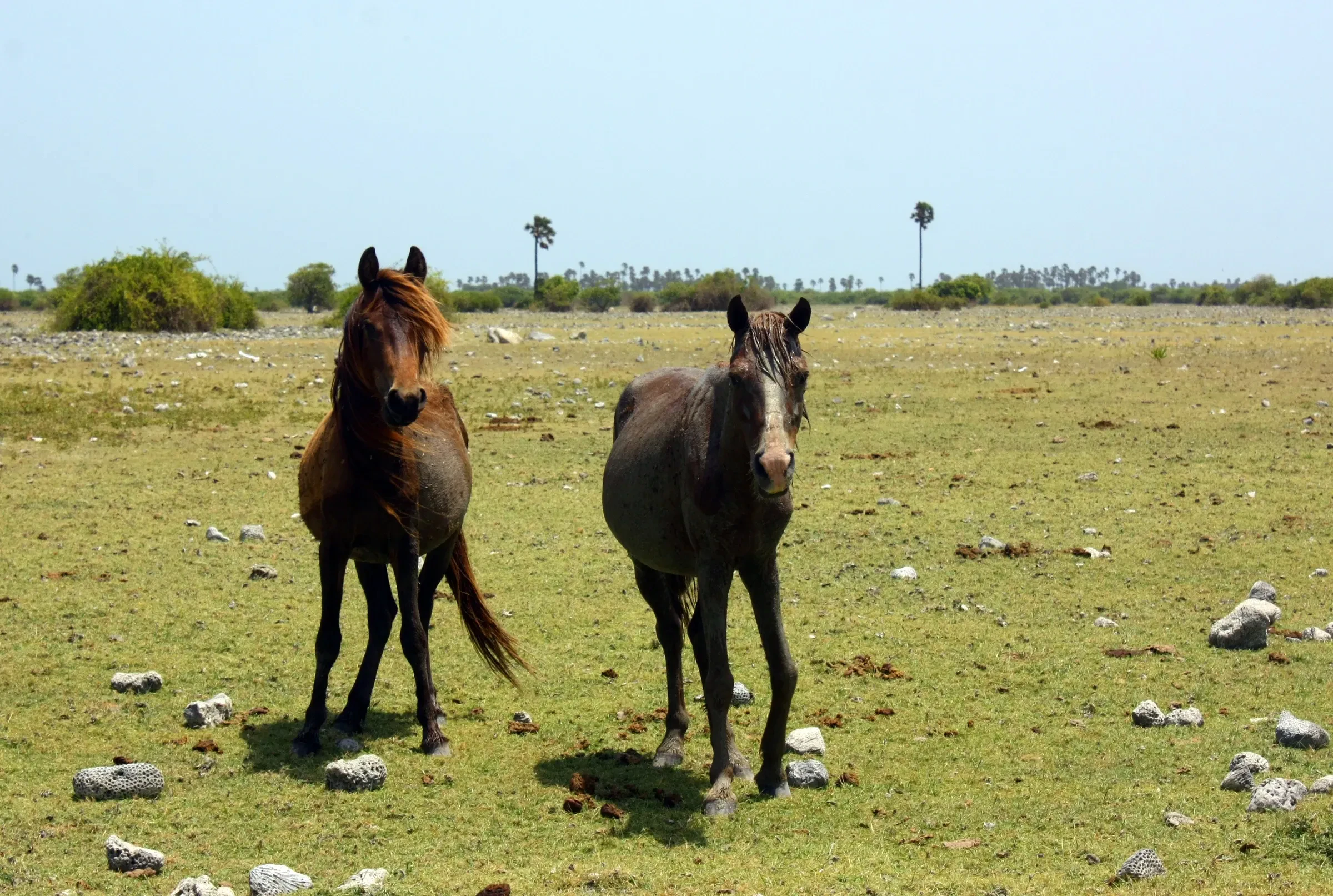
Delft (Neduntivu) is known for wild horses roaming its coastal plains, the ruins of a Dutch-era fort built largely from coral, and an old baobab tree. It's best explored by tuk-tuk once you arrive, and most visitors make it a full day out from Jaffna.
Nainativu (Nagadeepa) holds sites sacred to both Buddhists and Hindus: the Nagadeepa Purana Viharaya, one of Sri Lanka's most revered Buddhist temples, and the Nagapooshani Amman Kovil, a major Hindu shrine, sitting close together on the same small island. Boats to Nainativu also leave from Kurikadduwan.
Point Pedro
Point Pedro, at the very northern tip of Sri Lanka, is a quieter stop of fishing villages and open ocean views, with a lighthouse worth timing a visit to for dusk. It's a straightforward day trip from Jaffna town.
Jaffna's history, briefly
Jaffna was the capital of the medieval Tamil Jaffna Kingdom for four centuries, and before Sri Lanka's civil war it was the country's second-largest city after Colombo. The war was fought between government forces and the Tamil separatist Liberation Tigers of Tamil Eelam. It brought heavy fighting and military occupation to the peninsula through the 1980s and 1990s, displaced much of the population, and ended in May 2009. Reconstruction has continued since, with returning residents and both government and private investment rebuilding parts of the city, though recovery has been uneven and villages around Jaffna are still working through it. Many local families lived through it, so let people raise it themselves rather than asking.
Landmines and unexploded ordnance from the war remain in parts of the north and east, and the UK FCDO names the Jaffna Peninsula among the affected areas. The FCDO says not to leave roads or cleared footpaths there and to take warning signs seriously. Stay on roads and marked paths, and ask local security officials if you're unsure. Our Sri Lanka safety guide has the current advice from the UK, US, Australia and Canada.
Getting to Jaffna
By train: Trains run from Colombo Fort up the Northern Line to Jaffna and on to Kankesanthurai. Seat61 (page updated 10 June 2026) lists the Yal Devi at about 7.5 hours to Jaffna, with first, second and third class reserved seats and unreserved seats sold at the station on the day; other sources give 7 to 8.5 hours. Morning departures from Colombo Fort have been reported at 5:45 am and 6:40 am, depending on the service, and there is an overnight night mail leaving Colombo at 8 pm (Daily Mirror, 7 July 2026). Timetables have changed before and services have been cut at short notice: in July 2026 the Colombo to Kankesanthurai intercity express was cut to four days a week from 10 July because of a shortage of power sets and restored on 14 July, and the Yal Devi was reported running on alternate days. Confirm the day's trains with Sri Lanka Railways or at the station before you plan around one.
By bus: buses run between Colombo and Jaffna along the A9 road. One route guide (undated) puts tourist coaches at about 7.5 to 8 hours and local buses at about 11 hours.
By air: we couldn't confirm any scheduled flight from Colombo for 2026. Cinnamon Air's own website lists Jaffna as a charter-only destination, with no scheduled flights (checked 6 October 2026). Other carriers have come and gone on this route, so check what's actually flying when you plan your trip. From southern India, IndiGo said in March 2026 that it ran 10 flights a week from Chennai and Tiruchirappalli to Jaffna.
By sea from India: a passenger ferry links Nagapattinam in Tamil Nadu with Kankesanthurai, near Jaffna. It was sailing in May 2026, but it has stopped for monsoon weather before, and we couldn't confirm whether it's running in October 2026 or what the fares are. Check with the operator before you plan around it. Our Sri Lanka from India guide covers what we know.
Best time to visit Jaffna
Jaffna's rain is concentrated from October to December, with about 235 mm in October, 435 mm in November and 275 mm in December on climatestotravel.com's averages, and June to August are the driest months. Our best time guide puts the north-east monsoon at December to February, with October and November the wettest months across the island.
Where to stay
Jaffna's accommodation runs from simple budget guesthouses around the town centre and market to a handful of smarter, modern hotels closer to the fort and the main streets. Most visitors base themselves in town, within reach of Nallur, the fort and day trips to the islands and Point Pedro.
How many days do you need in Jaffna?
Three to four days covers the city, Nallur temple, the fort and one island day trip at an easy pace. Add a day if you want both Delft and Nainativu, since each is its own half or full day out given the ferry timings.
Jaffna isn't currently a stop on any SoloNomads trip. Our multi-stop 12-Day Sri Lanka Tour and Sri Lanka Express both cover the Cultural Triangle, the hill country and the south coast instead, well south of Jaffna, and the distance involved makes it a dedicated trip of its own rather than an add-on to a shorter route. For the routes we do run today, see our Sri Lanka travel guide or compare dates on our Sri Lanka group trips page.