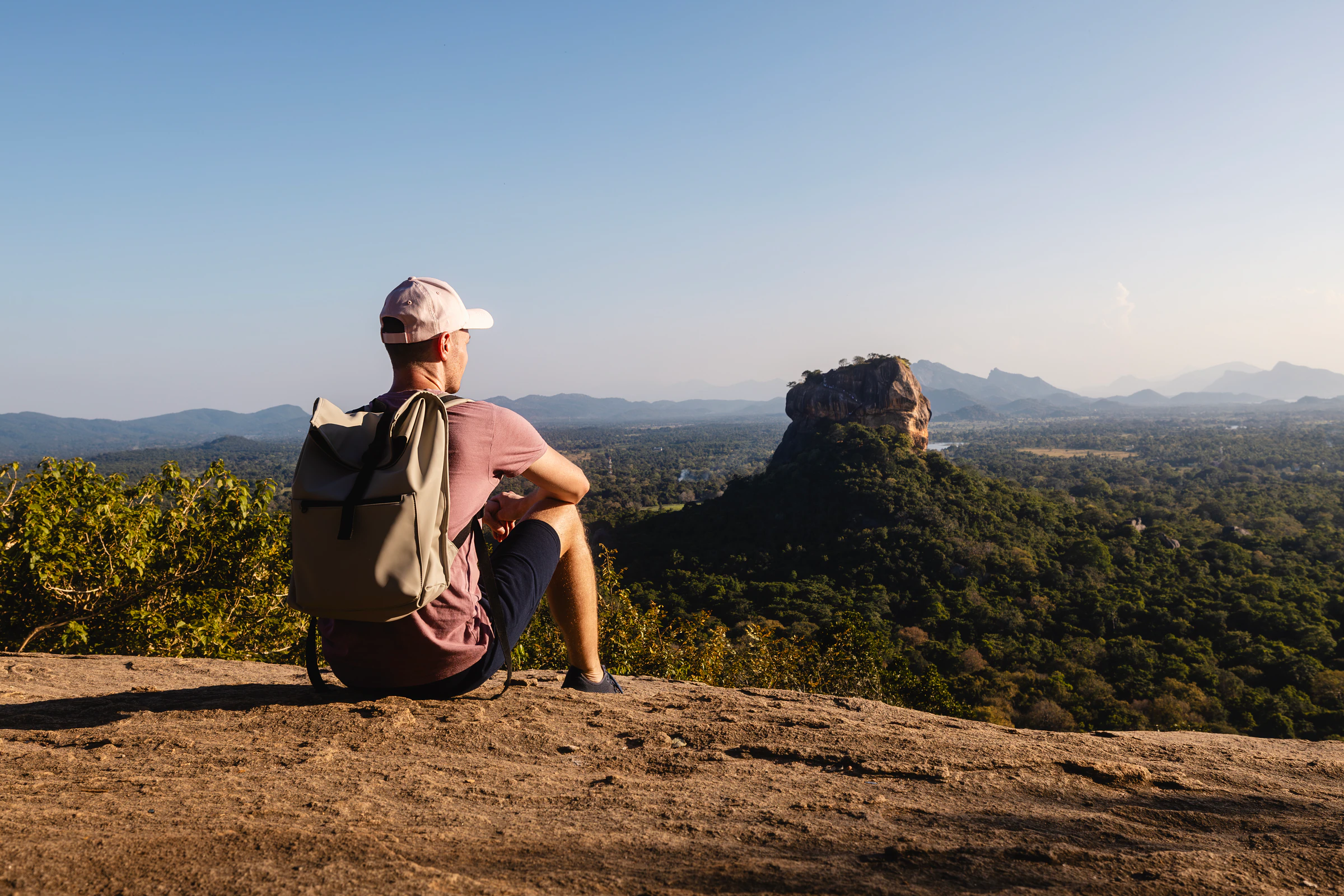
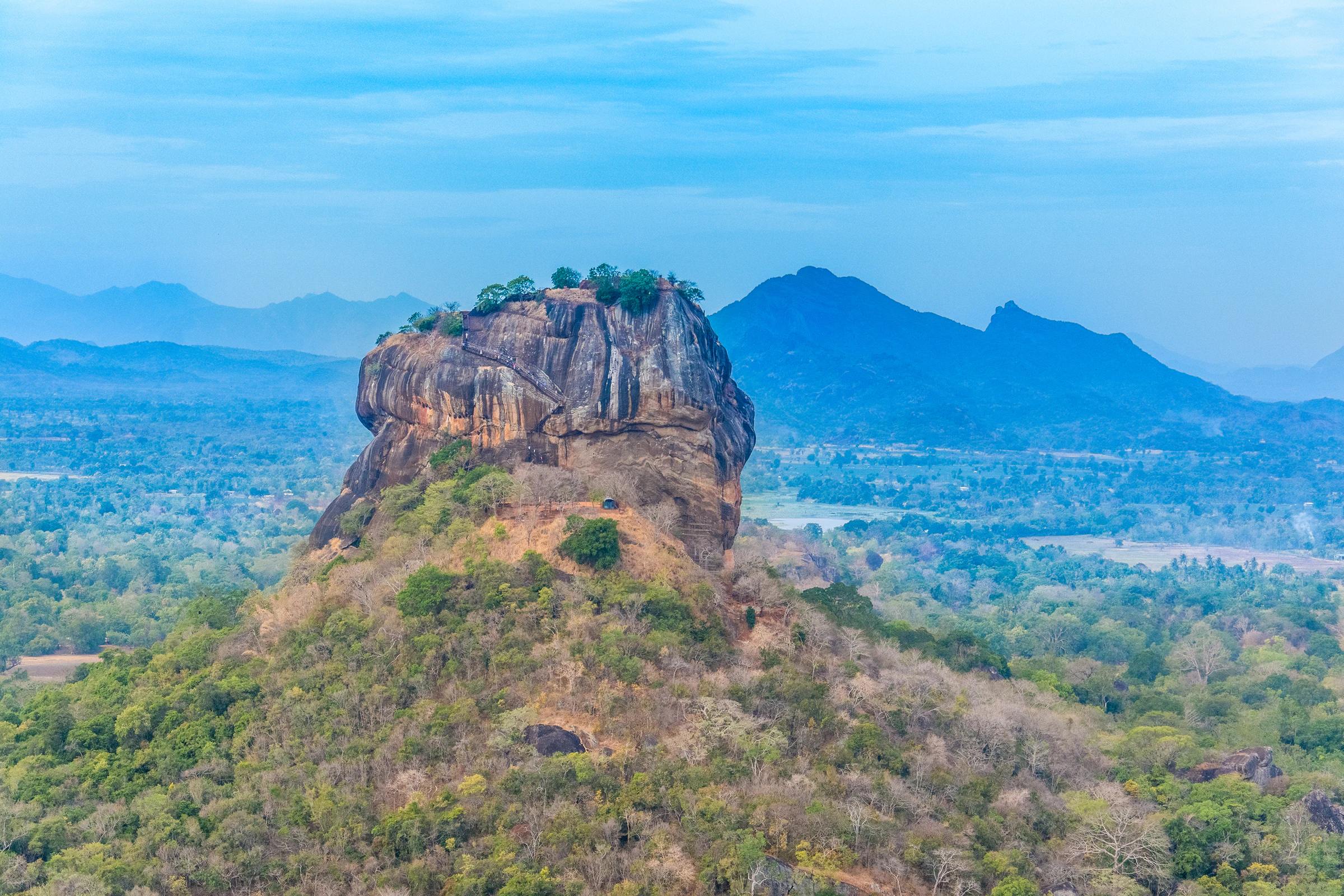
Hiriketiya is a fraction of the size of Weligama or Mirissa, and that's the point: a single curved bay, ringed by jungle and a handful of guesthouses, small enough that you can see the whole thing from the beach. It's quieter and more deliberately laid-back than the bigger surf towns further up the coast, which is exactly why it's become the place people extend a two-night stay into a week. This guide covers the surf, the cafes and yoga scene, Dickwella and the Hummanaya blowhole nearby, where to stay, how many days to give it and getting there. For the rest of the coast, see our Sri Lanka travel guide.
Hiriketiya at a glance
- Where: Sri Lanka's south coast, just outside Dickwella and roughly 170 to 195 km by road from Colombo (sources differ)
- Known for: a horseshoe bay with two different surf breaks, cafes, yoga studios and a slow pace
- How long: two to four nights, though the bay has a habit of turning a short stop into a much longer one
- Best months: roughly November to April, best December to March
- Getting there: road from Colombo or Galle, or the coastal railway's Beliatta extension to Wewrukannala
Surfing at Hiriketiya
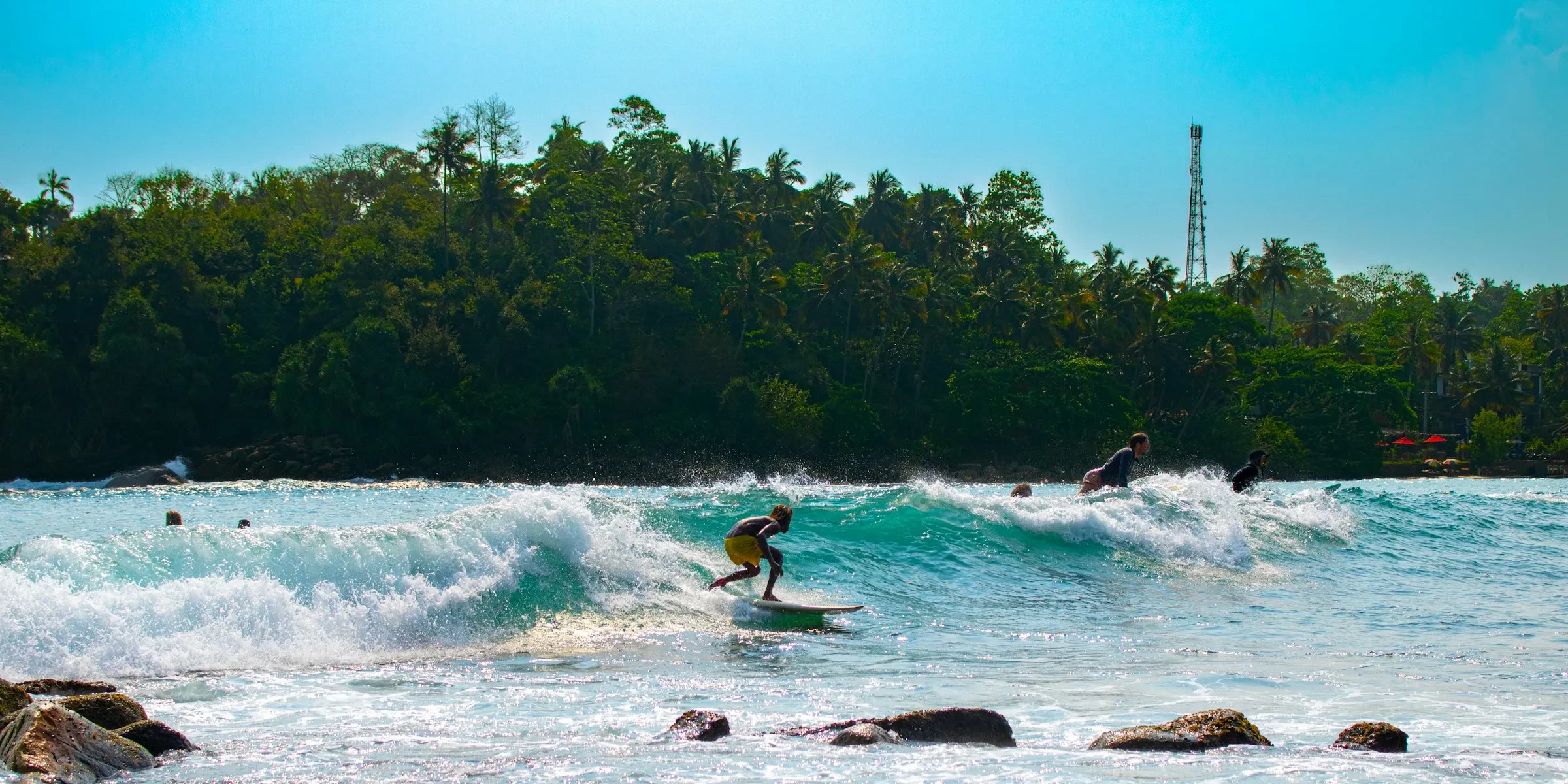
Hiriketiya's bay has two distinct waves, which is unusual for such a small stretch of sand. On the western side, a sandy-bottomed beach break gives soft, forgiving waves that suit beginners and anyone still finding their feet, with a handful of surf schools and board rental shacks set up right behind it. On the eastern side, a reef point break peels left off the headland, faster and more consistent, rewarding surfers with some experience rather than a first-timer; the reef here is shallow in places and known for sea urchins, so reef boots are worth having and a bad fall is best avoided by choosing your tide and skill level honestly.
Lessons and board hire are available from the same shacks, and prices vary by school, group size and what's included, so ask before you book. Our surfing in Sri Lanka guide has price ranges for the south coast. Weligama, the coast's main learn-to-surf town, is about 40 minutes back up the coast. It has more schools and a longer, gentler beach to spread out on if you want to start there before working up to Hiriketiya's reef side. The bay's small size means it gets properly crowded in the main December to March season, especially by mid-morning, so an early session is worth the alarm.
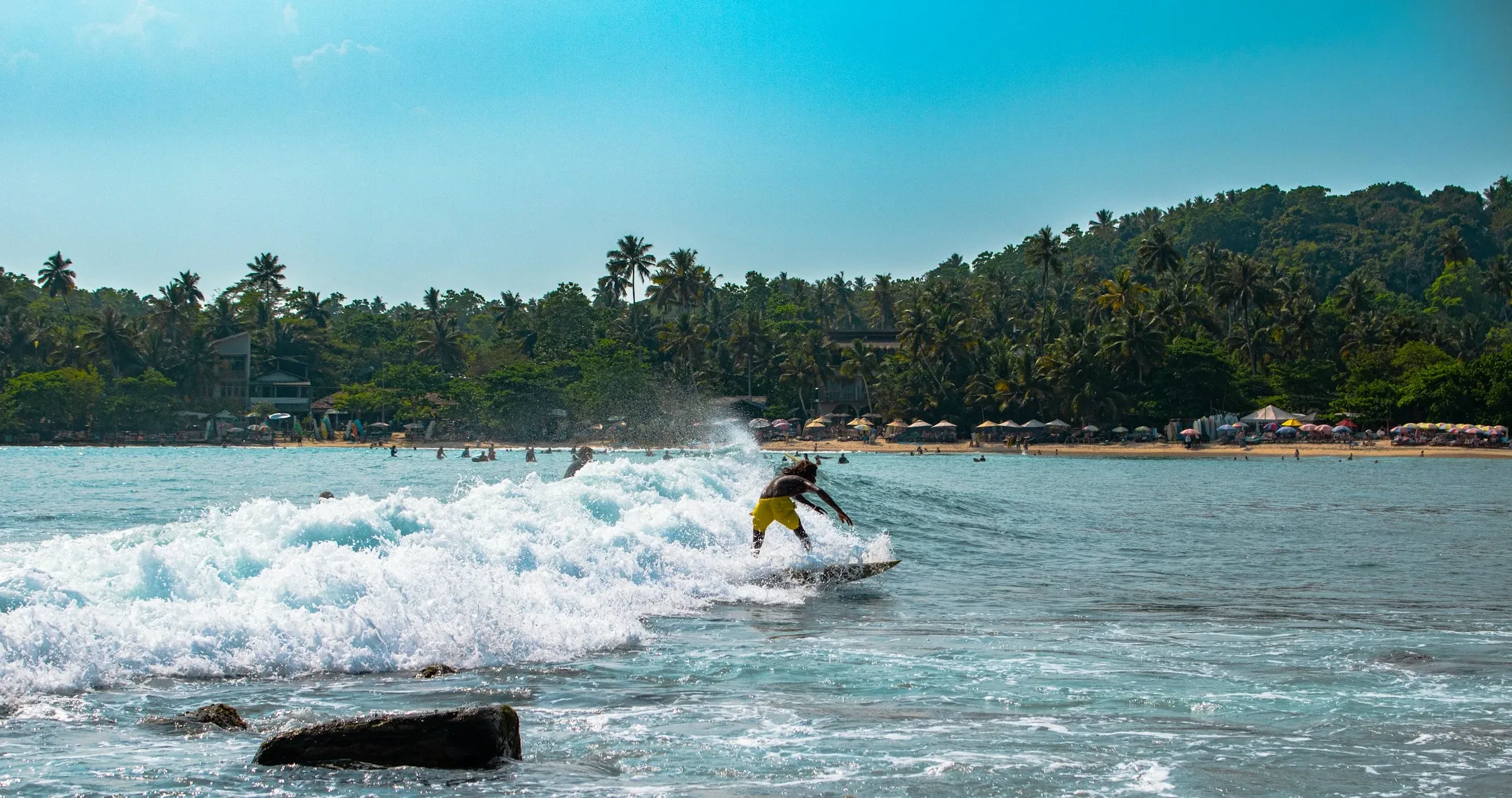
Our surfing in Sri Lanka guide covers Hiriketiya alongside the rest of the south coast and the opposite-season east coast at Arugam Bay, and the broader surf camps in Asia guide sets it against Bali and Lombok.
Cafes, yoga and the slow pace
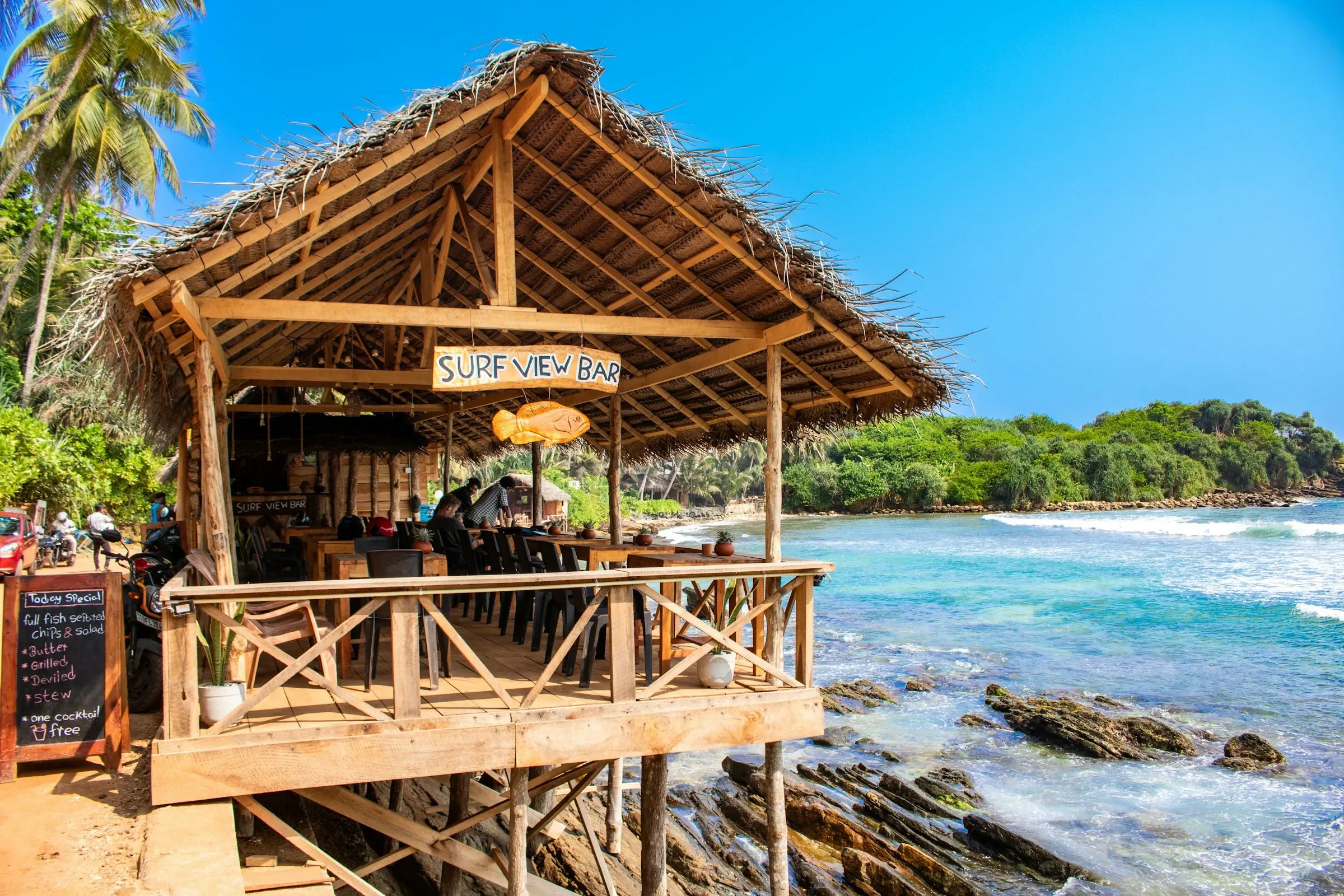
Behind the sand, Hiriketiya has built up a strip of cafes and small yoga studios well out of proportion to its size, serving smoothie bowls, fresh juice and good coffee alongside Sri Lankan rice and curry. A few guesthouses run their own yoga classes, and there are dedicated studios too if you want a proper course rather than a single drop-in class. Prices vary, so ask at the door. None of it is loud: most people's day here is a surf session, a slow breakfast, some time in a hammock or at a class, and another swim before sunset.
Dickwella and the Hummanaya blowhole
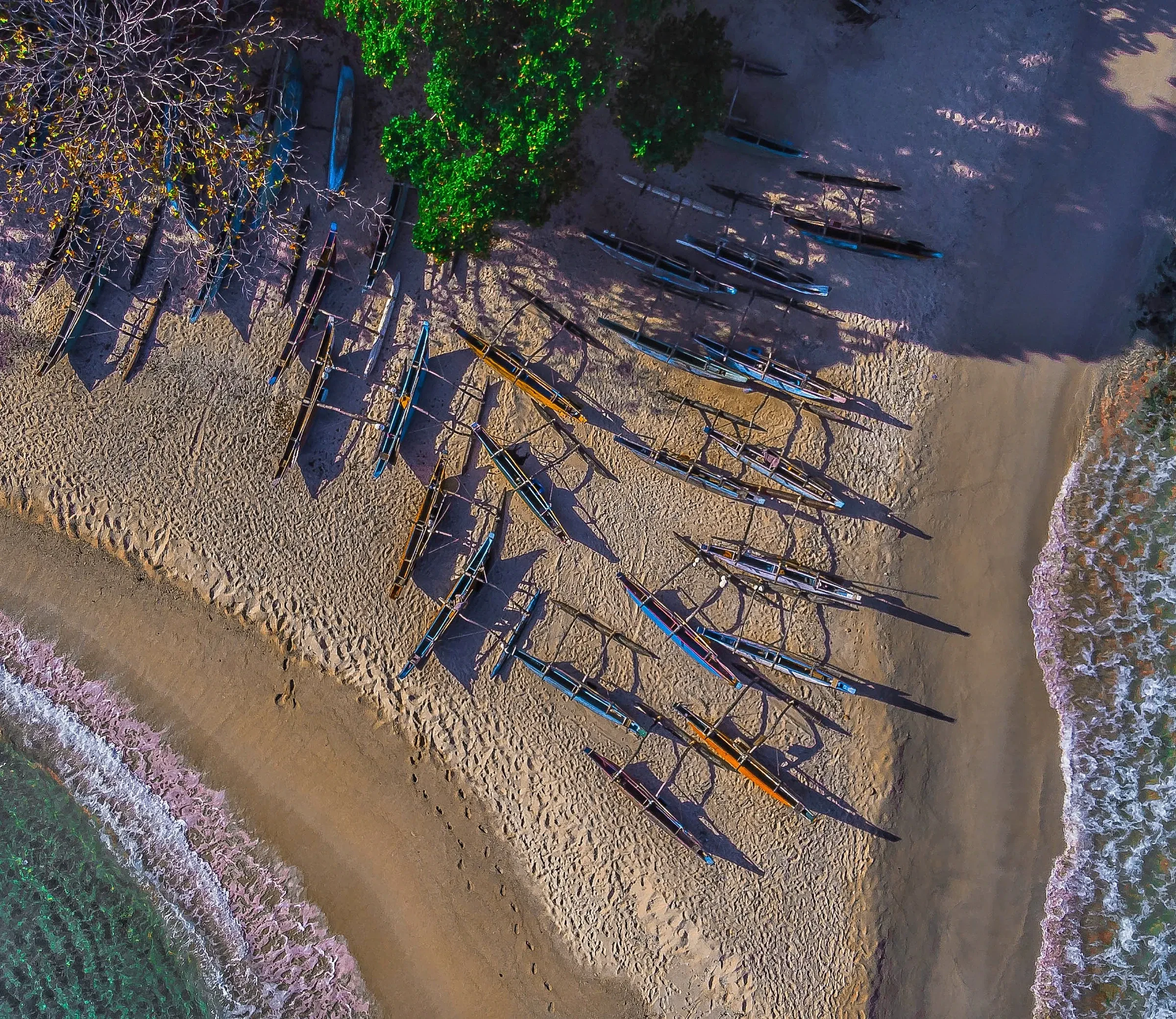
Dickwella itself, a couple of kilometres away, is a working town rather than a resort strip, with a market and the everyday services Hiriketiya's small bay doesn't have. Traditional fishing boats are drawn up on the beaches nearby.
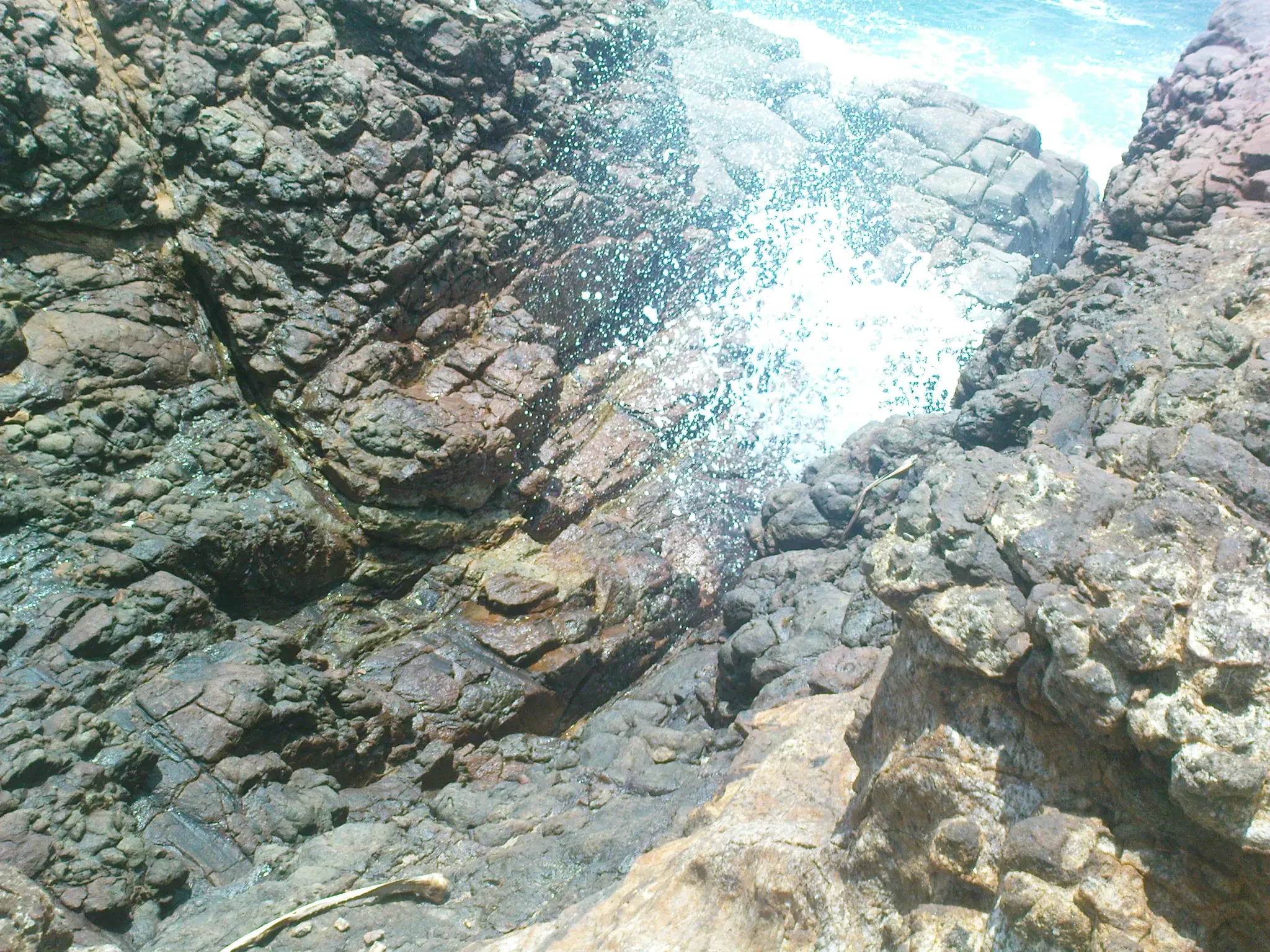
The area's standout sight is the Hummanaya blowhole at nearby Kudawella, described as Sri Lanka's only known blowhole. Waves force seawater up through a narrow sea cave and out through a hole in the cliff, sometimes several metres into the air. Sources say it is most dramatic when the sea is rough, so mornings and the south-west monsoon months are best, and the interval between jets is roughly ten to twenty minutes. Foreign visitors pay a small entry fee. It's a short tuk-tuk ride from Hiriketiya and an easy half-hour stop rather than something that needs a full day.
Where to stay in Hiriketiya
| Type | Best for | Good to know |
|---|---|---|
| Beachfront hostels and guesthouses | Budget stays, easy access to the water | Dorm beds and simple private rooms right behind the sand, the most sociable option |
| Jungle-set guesthouses | A quieter night's sleep | A short walk from the beach, often cheaper than a beachfront room |
| Boutique guesthouses and small hotels | A bit more comfort | Pool or garden setting, still walkable to the bay |
Guesthouses and small boutique stays are the norm here rather than big hotels, and the bay is small enough that nowhere is really far from the water. Book ahead for the December to March peak, when Hiriketiya's limited number of rooms fills up fast.
How many days do you need in Hiriketiya?
Two to four nights is a sensible plan on paper, enough for a couple of surf sessions and time to enjoy the cafes without rushing. In practice, Hiriketiya has a habit of stretching a short stop into a much longer one, since there's rarely a reason to move on once you've unpacked. If you're on a wider south coast route, one or two nights is enough to see the bay and try a session, pairing naturally with a stop in Weligama or Mirissa nearby.
Getting to Hiriketiya
By road. From Colombo, it's roughly 170 to 195 km (sources differ), about 3 to 4 hours by private car or taxi on the Southern Expressway as far as Matara, then local roads for the final stretch. From Galle or Weligama, tuk-tuk, taxi or local bus covers the rest of the coast road; our surf trip's own route puts Weligama to Hiriketiya at about 40 minutes by van.
By train. The coastal railway's Beliatta extension opened in 2019 and continues past Matara to Beliatta, a little further down the coast than Hiriketiya itself. There's no station in Hiriketiya or Dickwella, so get off at Wewrukannala, the nearest stop, then take a tuk-tuk for the final stretch into the bay. A few trains a day, including an intercity express, run from Colombo Fort, and the full journey takes about 4 hours (the Colombo Fort to Beliatta listings give just under 4 hours), so check the day's timetable before you go.
Best time to visit Hiriketiya
Hiriketiya follows the rest of the south coast's season: best from November to April, driest and calmest from December to March, which is also when the surf here is most consistent and the bay is at its busiest. The south-west monsoon, roughly May to September, brings rougher water and less reliable weather, and October and November are the rainiest months across the island. See our best time to visit Sri Lanka guide for the wider picture.
Our dedicated surf trip closes here after coached lessons at Weligama, using Hiriketiya's quieter pace and its own break for anyone who wants to keep practising.