Most of Sri Lanka's south coast is about the beach, but Galle Fort is the one stop on that stretch built for a wander rather than a swim: a walled Dutch colonial town where people still live, work and run cafes inside the same granite ramparts that have stood since the 1600s. It's compact enough to see in half a day and interesting enough that most visitors end up staying for a full one. This guide covers the ramparts and the lighthouse, the museums and their fees, the cafes and shops, where to stay inside or outside the walls, getting there and how long to give it. For the rest of the coast, see our Sri Lanka travel guide.
Galle Fort at a glance
- Where: Sri Lanka's south coast, about 115 km and 2 to 3 hours from Colombo
- Known for: the UNESCO-listed ramparts, the 1939 lighthouse, colonial architecture and a walkable strip of cafes and boutiques
- How long: half a day for the ramparts and the streets; a full day if you're adding a museum, shopping or a meal
- Getting there: the coastal train, or a bus or car on the Southern Expressway, from Colombo (about 2 to 3 hours either way)
- Cost: free to enter the fort itself; museums inside charge a small separate fee (check the amount at the door)
The history behind the walls
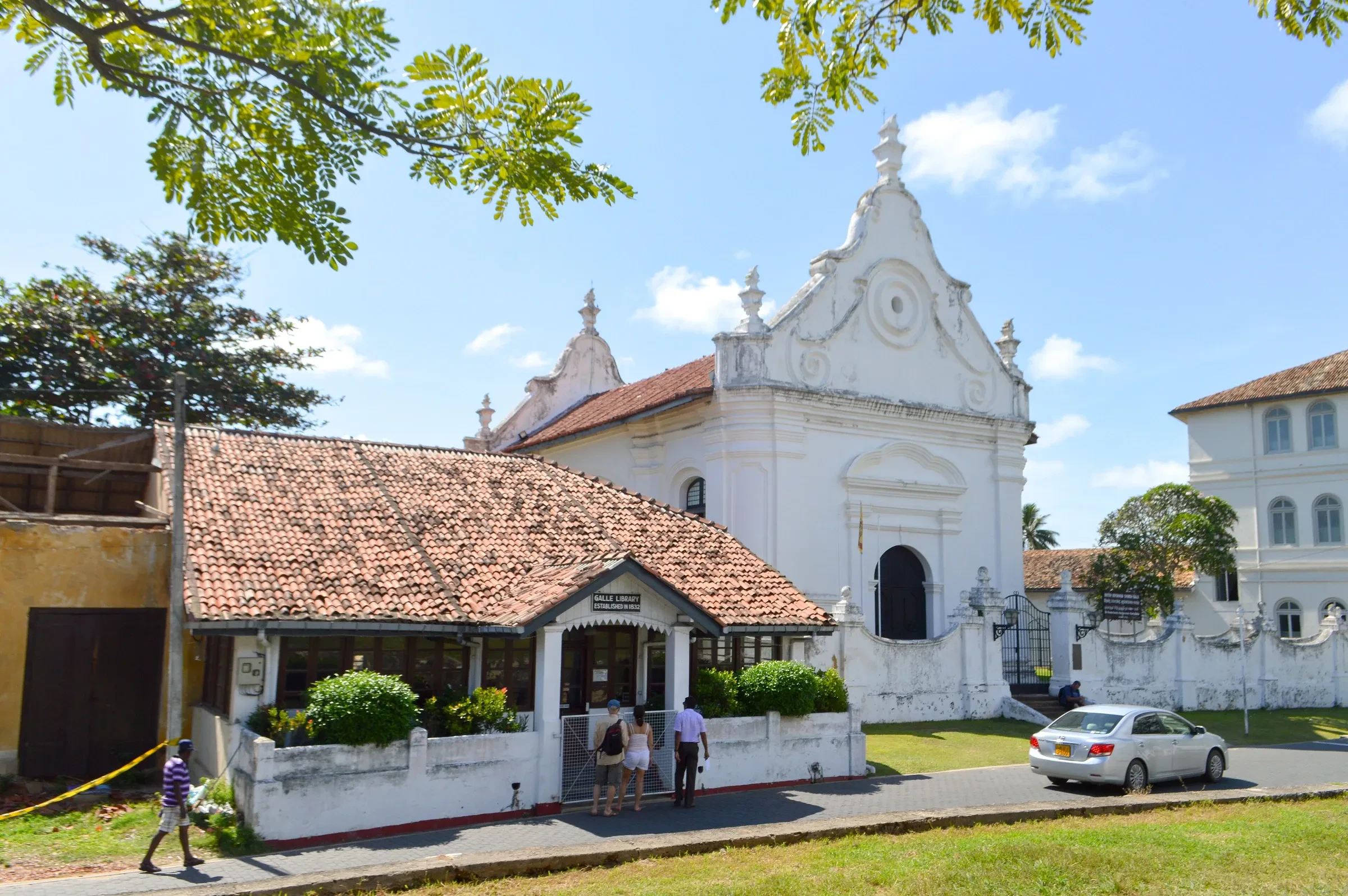
Portuguese traders built the first small fort here in 1588. When the Dutch East India Company captured the town in 1640, they tore most of it down and rebuilt on a far bigger scale, laying out the granite ramparts, bastions and grid of streets that still define the fort today. The British took over in 1796 without much further rebuilding, which is why the fort still reads as a Dutch colonial town rather than a British one. UNESCO listed it as a World Heritage Site in 1988, and it's an unusually well-preserved European fortified town in South Asia, still lived in rather than kept as a museum piece. The Dutch Reformed Church, from 1755, is one of the Dutch-era buildings still standing.
The ramparts walk and the lighthouse
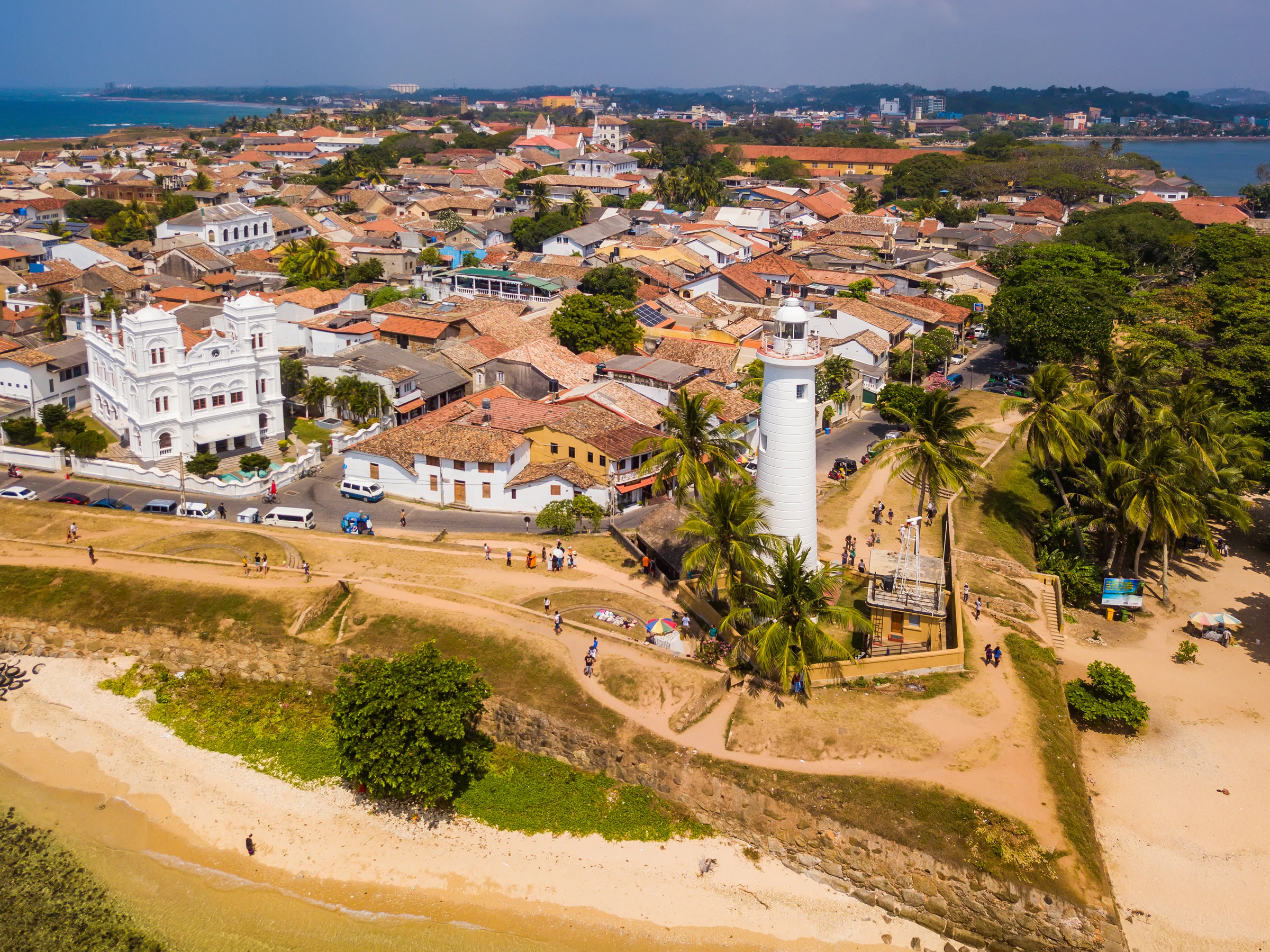
The rampart wall has 14 bastions of different shapes and sizes, built to cover the approaches from the water, and sources put the circuit at roughly 2.4 to 3 km. A leisurely lap takes about 45 minutes to an hour, longer if you stop to watch the sunset from Flag Rock Bastion, one of the most popular spots on the wall, or take in the harbour views from Point Utrecht Bastion at the south-east corner.
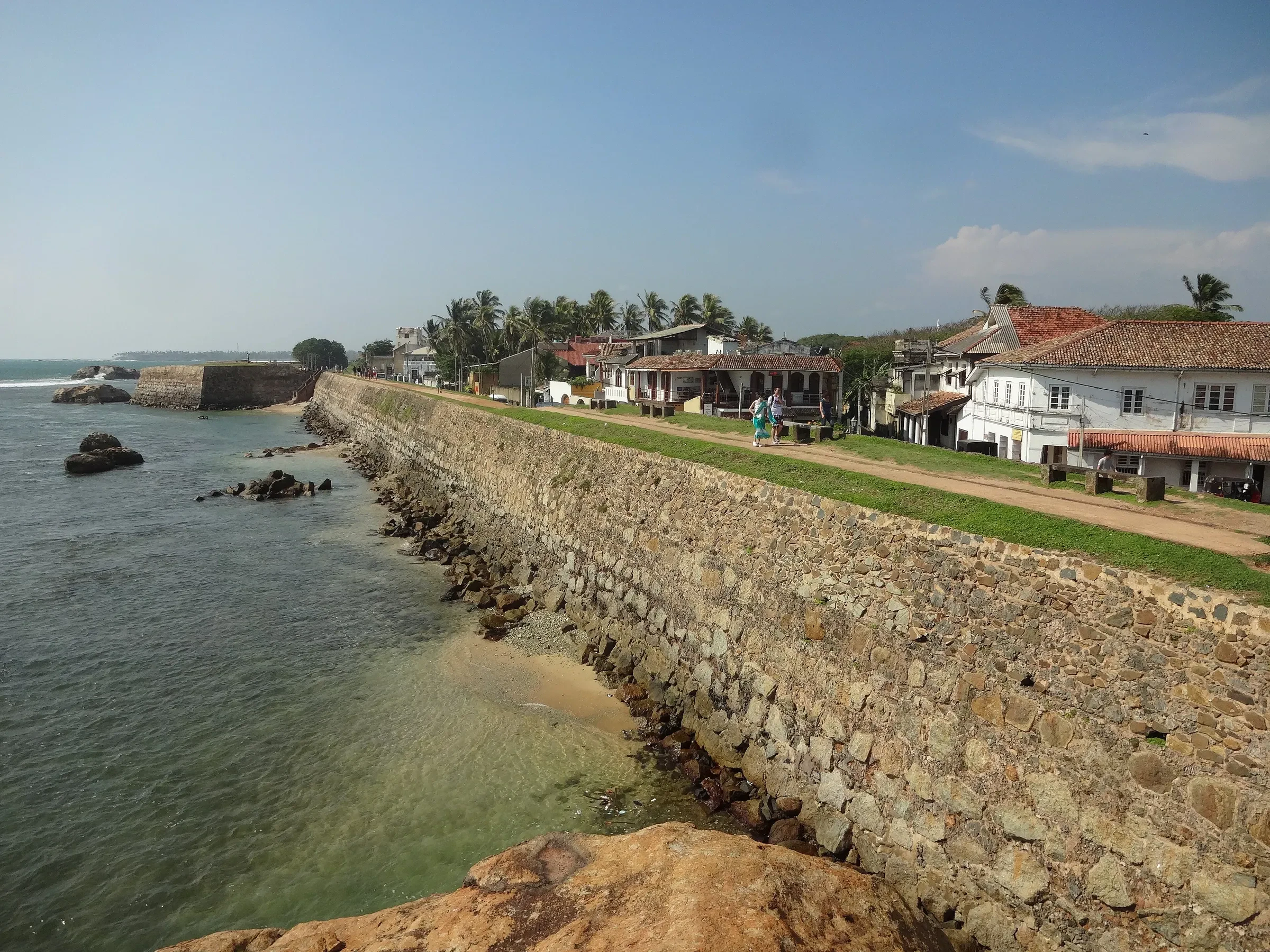
The white lighthouse at Point Utrecht Bastion, was rebuilt by the British in 1939 and is the fort's most photographed landmark. It's a working lighthouse, so you can't go inside, but the ground around it is part of the ordinary rampart walk and free to enjoy.
Museums and 2026 entry fees
Getting into the fort itself doesn't cost anything, but a handful of museums and sites inside charge their own small fee, and the amounts quoted for foreign visitors vary between sources, from a few hundred rupees up to about LKR 1,000 depending on the site. We found no official price list, so check the amount at the door.
- Galle National Museum, in the old Dutch government building, covers the town's history and the fort's own story. Listings give opening hours of 9am to 5pm, closed on Sundays, Mondays and public holidays.
- National Maritime Museum, housed in a Dutch warehouse from 1671 above the Old Gate, covers Sri Lanka's maritime history, from traditional fishing methods to shipwrecks off this stretch of coast.
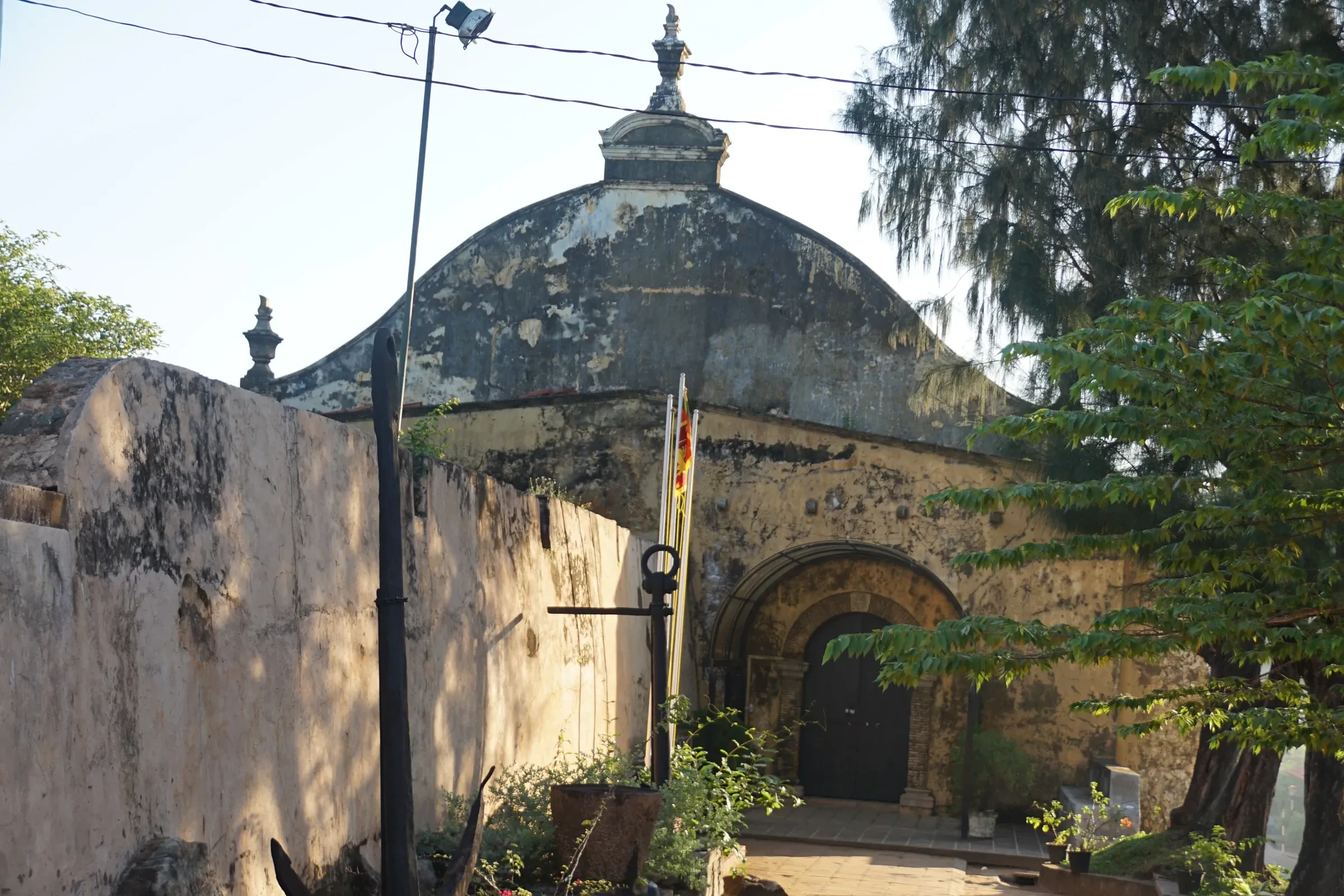
- Dutch Reformed Church, dating to 1755, has a floor set with old Dutch tombstones and is usually free to look around, though a small donation is appreciated.
Cafes and shops
Lighthouse Street, Church Street and Pedlar Street hold most of the fort's cafes, galleries and boutiques, many of them set inside restored Dutch merchant houses with a courtyard hidden behind an unassuming front door. The Old Dutch Hospital, a Dutch-era building near the harbour, has been restored as a shopping and dining complex and is worth a look even if you're not buying anything. This site doesn't rate or review individual businesses, but between the three streets and the old hospital, you'll find handicrafts, sarongs, gemstones and a decent range of places to stop for a coffee or a meal as you walk the grid of streets inside the walls.
Where to stay in Galle Fort
| Area | Best for | Good to know |
|---|---|---|
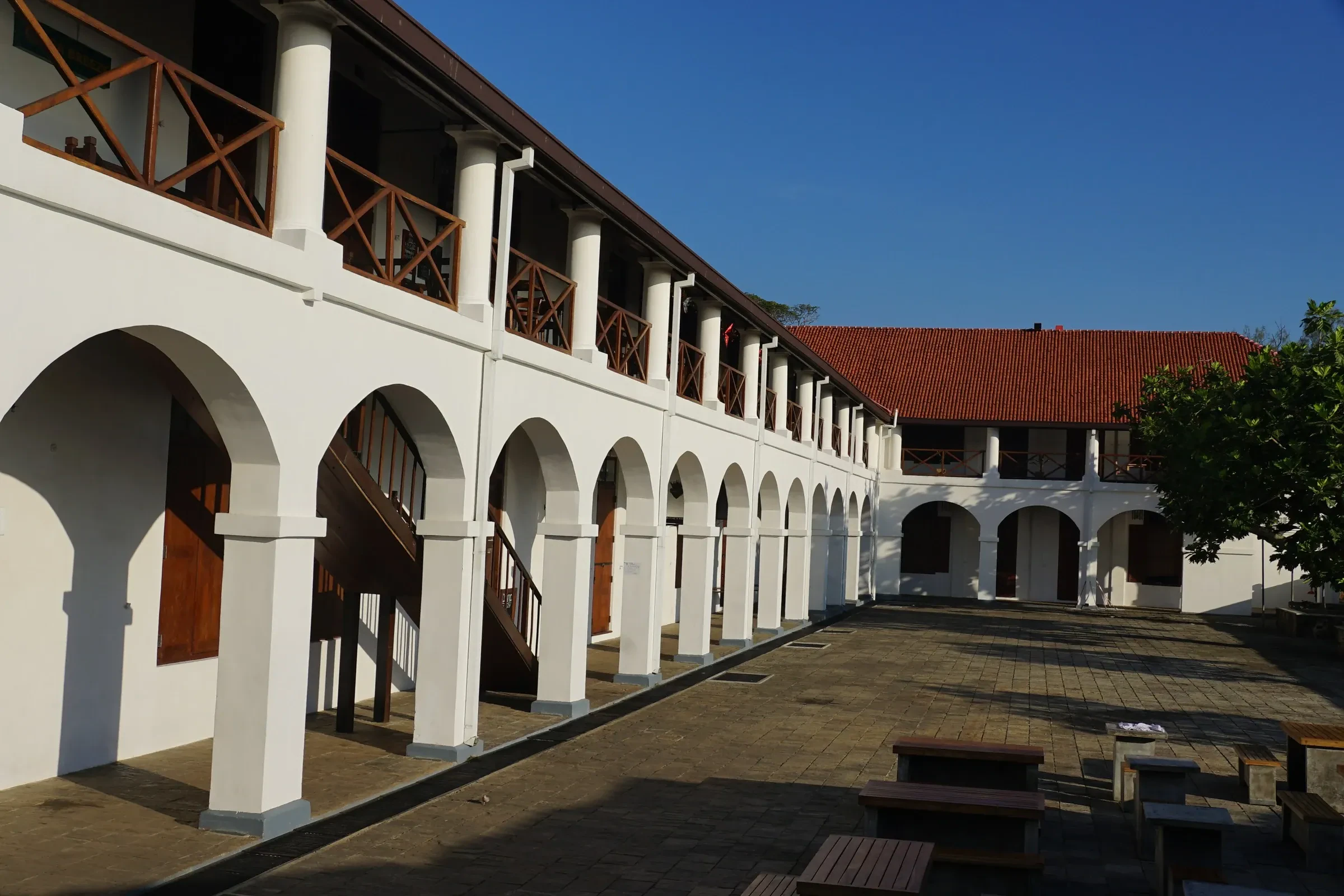
| Inside the fort walls | The full atmosphere, walking distance to everything | Restored merchant houses turned into small boutique hotels; rooms book up and cost more than the same standard outside |
| Outside the walls, in Kaluwella and nearby | More space and a quieter night | A short walk or tuk-tuk ride back into the fort for sightseeing, cafes and the ramparts |
Galle itself is a day-trip town for most visitors on a wider south coast route, so plenty of people see the fort without staying the night at all. If you do stay, book ahead, since the inside-the-walls options are limited and popular.
How long do you need at Galle Fort?
Half a day, three to four hours, covers the ramparts walk and a wander through the main streets. A full day is worth setting aside if you also want to visit a museum, shop without rushing or linger over a meal, especially if you're timing your visit to catch the sunset from the ramparts before heading back to your base for the night.
Getting to Galle Fort
From Colombo. The coastal train runs from Colombo Fort down to Galle's own station, beside the fort, on a different railway from the hill-country line to Kandy and Ella. The journey takes roughly 2 to 3 hours depending on the service, so check the day's timetable at the station or on the Sri Lanka Railways site before you go. By road, the Southern Expressway covers most of the distance, and a car or bus takes about 2 to 3 hours depending on traffic.
From the south coast towns. Galle Fort is an easy day trip from anywhere along this stretch: about 5 km from Unawatuna, and 45 minutes to an hour from Mirissa (about 34 km), with Weligama in between. All of it is doable by tuk-tuk, taxi or local bus.
Best time to visit Galle Fort
Galle follows the south coast's season: roughly November to April is the main window, and December to March is driest and most comfortable. May to September is the south-west monsoon, with more rain, though the fort's covered cafes and museums make it a reasonable wet-weather stop even then. See our best time to visit Sri Lanka guide for the wider picture.
Galle Fort is a built-in day trip on two of our Sri Lanka group trips, timed for a farewell walk on the ramparts before dinner.