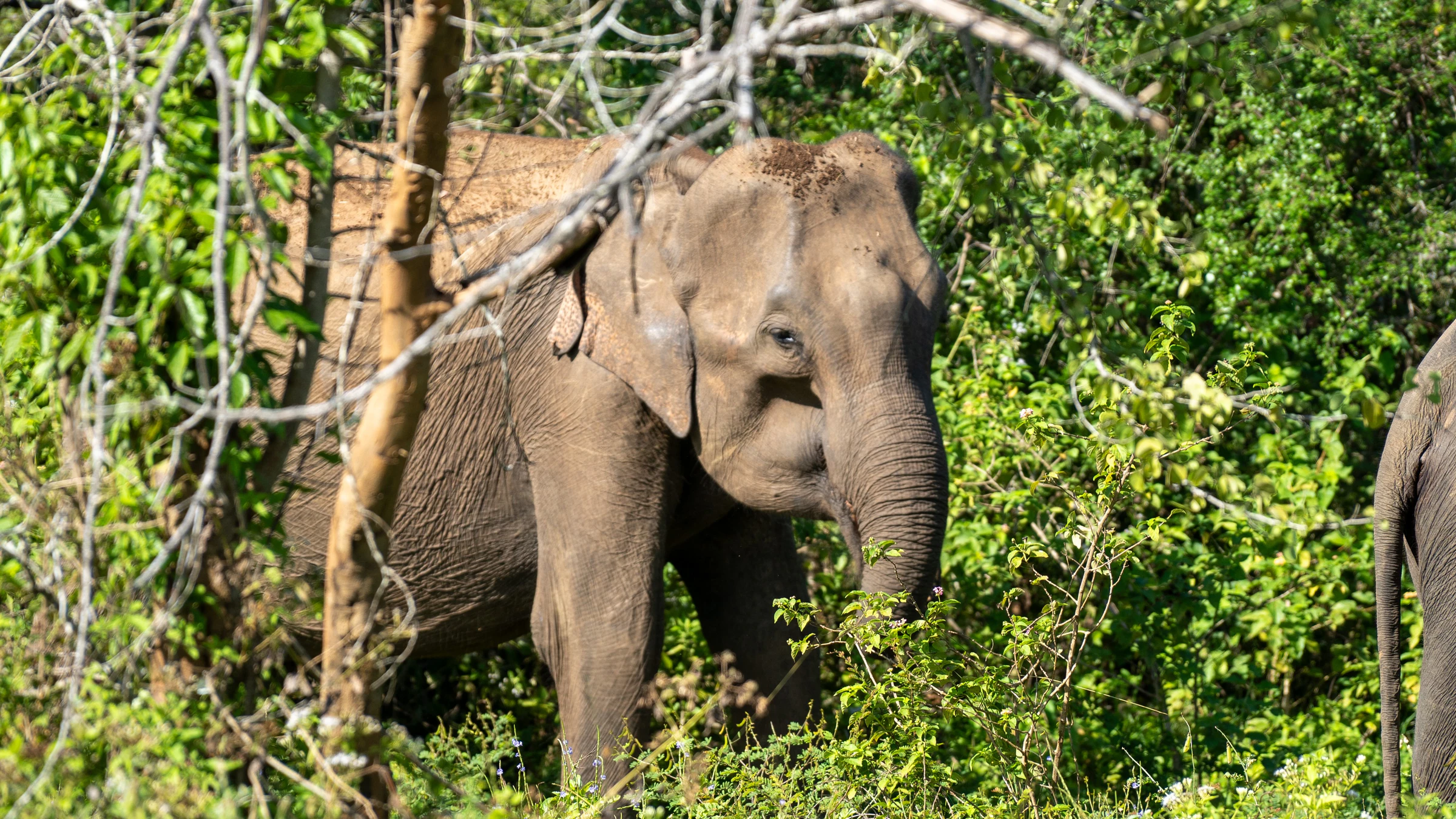
Sri Lanka's surf splits cleanly across two coasts and two seasons, which is the first thing to plan around rather than a specific break. The south coast is where most people learn, with a long run of beginner-friendly sand and a few sharper reef breaks worked in among the resort towns. Arugam Bay, on the east coast, is a different kind of trip: a run of right-hand points that reward some experience, working on the exact opposite calendar. This guide covers both coasts break by break, what a lesson costs in 2026, and the reef safety and etiquette that matter on either one. For the broader country picture, see our Sri Lanka travel guide, and for how Sri Lanka compares with Bali and Lombok, see our surf camps in Asia guide.
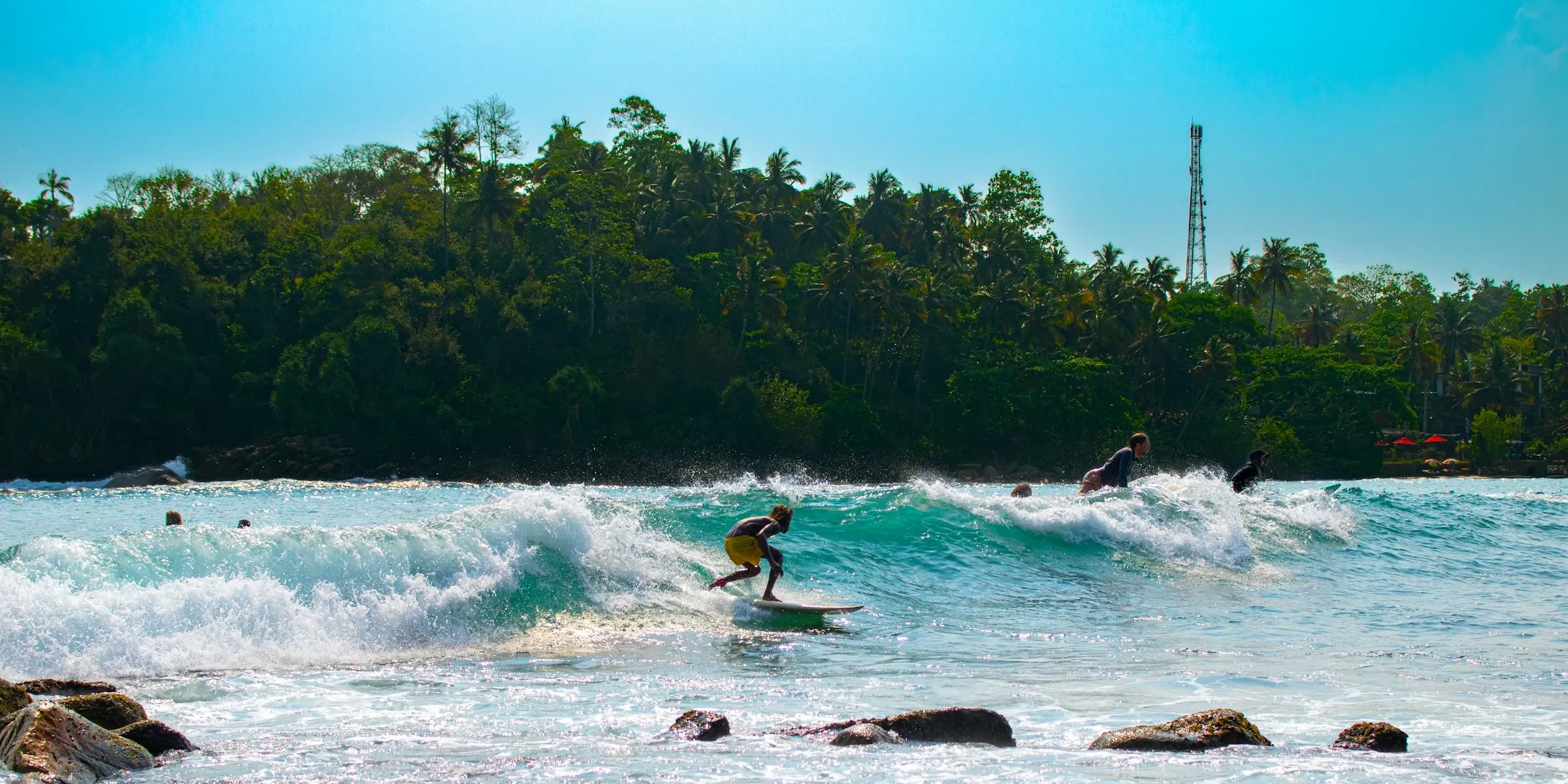
Sri Lanka's two surf seasons at a glance
- South coast (Weligama, Midigama, Ahangama, Hiriketiya, Mirissa, Hikkaduwa): best November to April, driest and calmest December to March
- East coast (Arugam Bay): best April or May to September, peaking July and August
- The monsoon months: from May to September the south coast gets rougher water and more wind, though Weligama's sheltered bay still gives gentle beginner waves on many days
- A single trip usually means one coast, matched to your dates, rather than trying to combine both in a short visit
The south coast, break by break
The south coast's breaks sit within about an hour of each other, so it's realistic to base yourself in one town and try a few.
| Break | Character | Level |
|---|---|---|
| Weligama | Long, sandy, gentle beach break, the country's standard place to start | Beginner |
| Midigama | Five reef breaks packed into a short stretch, including Coconuts and Lazy Left, often called the south coast's first real reef break | Intermediate |
| Ahangama | A dozen or so spots between sandy learner swells and rockier reef points and A-frames | Beginner to intermediate |
| Hiriketiya | A sandy beach break on one side of the bay, a faster reef point on the other | Beginner (beach side) to intermediate (reef side) |
| Mirissa | A small, forgiving, sandy-bottomed beach break, secondary to Weligama | Beginner |
| Hikkaduwa | Sandy beginner break at the Narigama end, shallow coral reef breaks such as Main Reef and Benny's further along | Beginner (Narigama) to advanced (the reefs) |
Weligama is the coast's main learn-to-surf base, with the most schools and the longest stretch of beginner-friendly sand. Hiriketiya and Mirissa both have their own smaller breaks worth knowing about if you're staying in either town anyway. Midigama, Ahangama and Hikkaduwa's reef breaks are better suited to surfers who've already got the basics down, since shallow coral and rockier bottoms punish a bad fall more than sand does.
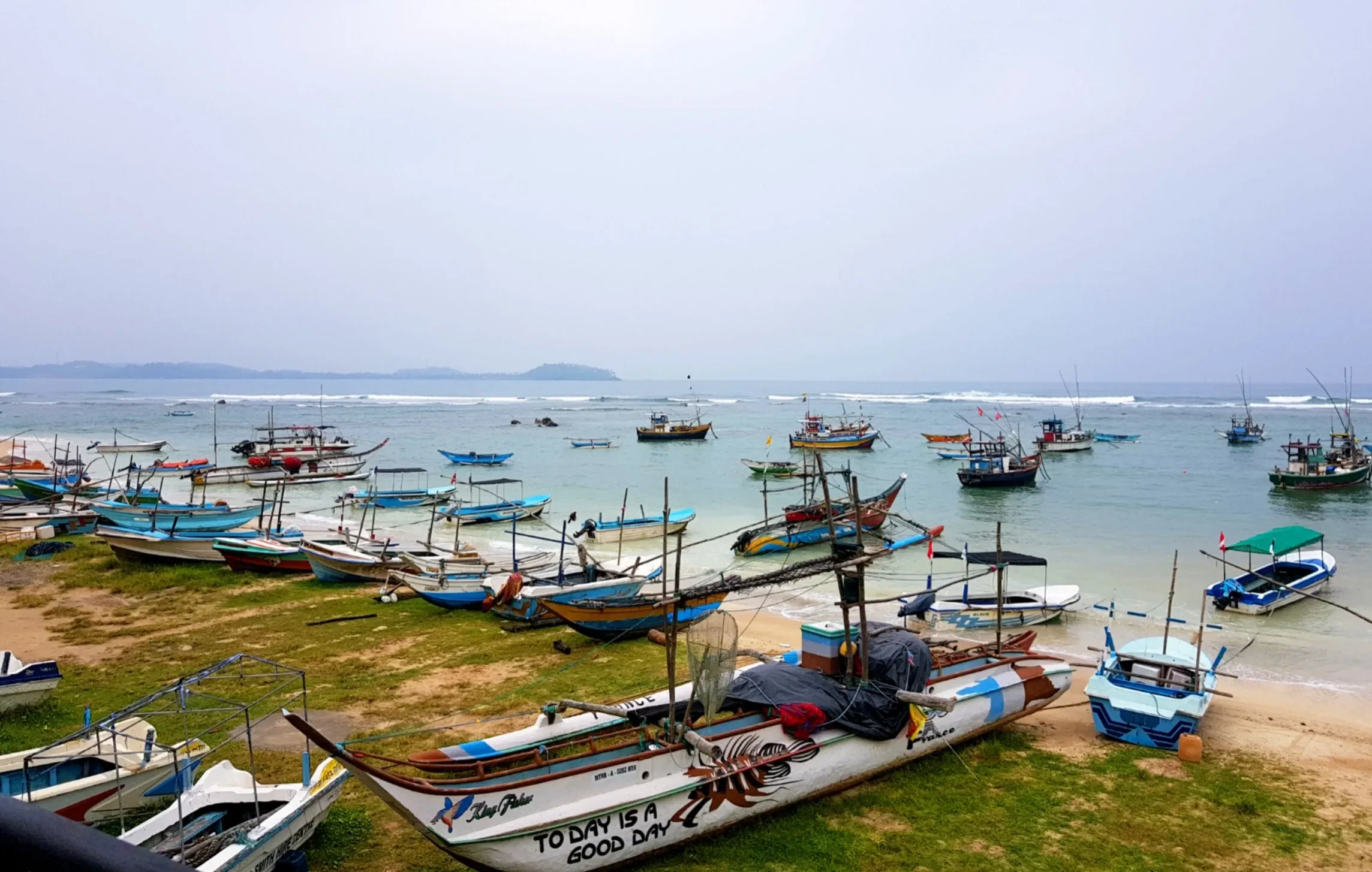
Arugam Bay: the east coast's point breaks
Arugam Bay is a different proposition altogether: a roughly 10 km run of right-hand point breaks rather than a beach town with a scatter of options.
| Break | Character | Level |
|---|---|---|
| Main Point | The longest and busiest point, running for several hundred metres on a good day | Confident intermediate and above |
| Whiskey Point | A shorter, more forgiving point with a gentler takeoff, often used for daily coaching sessions | Improver |
| Peanut Farm | An inside section that's mellow enough for first-timers on a small day, and an outside section that holds bigger swell | Beginner (inside) to intermediate (outside) |
| Elephant Rock | The softest wave of the group, a sand-bottomed right with a gentle takeoff | Beginner to improver |
| Pottuvil Point | Further north, mellower and quieter than the points closer to town | Improver |
Arugam Bay has some options for beginners, particularly Elephant Rock and Peanut Farm Inside, but the area's reputation and most of its coaching are built around improvers and intermediates working the points rather than a total first lesson. It runs on the opposite season to the south coast: best April or May to September, peaking July and August, when wave heights build from chest-high in the shoulder months to head-high or bigger at the season's peak.
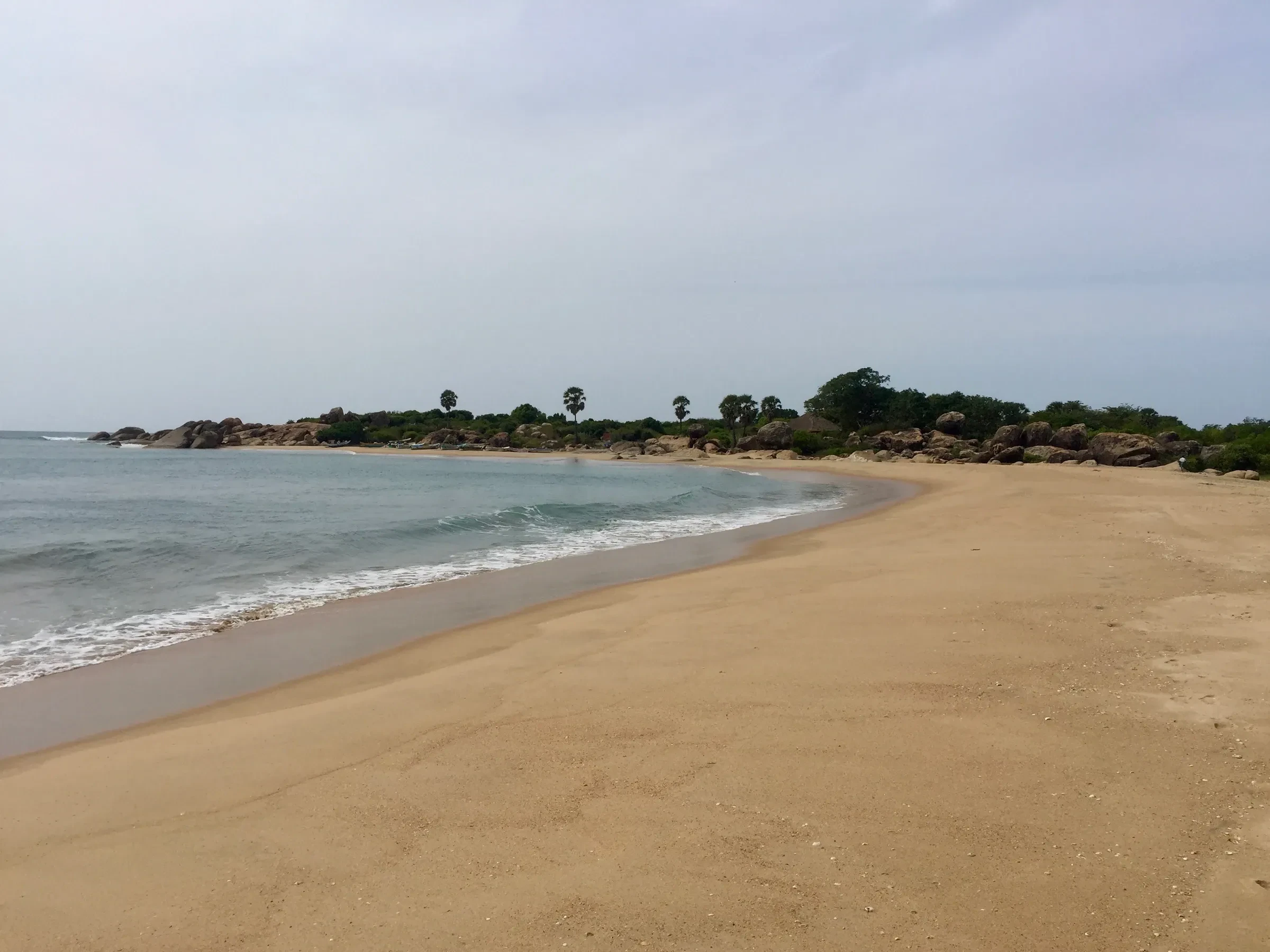
How much does a surf lesson cost in Sri Lanka?
A group lesson with a certified school runs roughly US$20 to $40 on either coast in 2026, usually for 1.5 to 2 hours with a board and rash vest included. Board hire on its own is typically US$4 to $10 a day for a standard board, more for a premium high-performance one. Multi-day packages, sometimes bundled with accommodation and yoga, work out cheaper per session than booking single lessons, and are worth asking about if you're staying more than a couple of days. A very cheap street lesson that doesn't include the board is often a false saving once you add the separate rental cost, so check what's actually included before you compare prices.
Reef safety and surf etiquette
Sri Lanka's south coast is mostly sand, but its reef breaks, and all of Arugam Bay's points, break over rock or coral in places, so a few habits matter more here than on a beginner beach:
- Wear reef shoes or booties on a reef break. A bad step on coral or a sea urchin is a common injury on reef breaks, and many surf schools can lend a pair if you're taking lessons.
- Check the tide before a reef session. Several of these breaks are only surfable, or only safe, at certain tide levels, and a local instructor or your accommodation can tell you the window for that day.
- Use reef-safe sunscreen. Ordinary sunscreen washes off into the water over the reef, so a reef-safe formula is the kinder choice.
- Wait your turn and don't drop in. A busy point like Main Point gets crowded in peak season, and dropping in on someone else's wave is the fastest way to a bad atmosphere in the water.
- Give learners room. If you're the more experienced surfer in the water, especially near a beginner break, leave space for people who are still finding their feet.
Choosing a coast and a level
- Complete beginners: Weligama on the south coast has the most schools and the gentlest, longest beach break of anywhere in the country.
- Improvers wanting a step up: Hiriketiya's reef side, Ahangama or Midigama on the south coast, or Elephant Rock and Peanut Farm at Arugam Bay.
- Confident intermediates and above: Main Point at Arugam Bay, or the sharper reefs at Hikkaduwa and Midigama.
- Matching your dates: the south coast if you're travelling November to April, Arugam Bay if it's May to September. Trying to combine both on one trip rarely works, since they're on opposite sides of the island and opposite seasons.
Surfing on our trip
Our dedicated surf trip is built around the south coast's beginner-friendly break at Weligama, with coached lessons rather than a single session bolted onto a sightseeing itinerary, finishing with a quieter close at Hiriketiya.