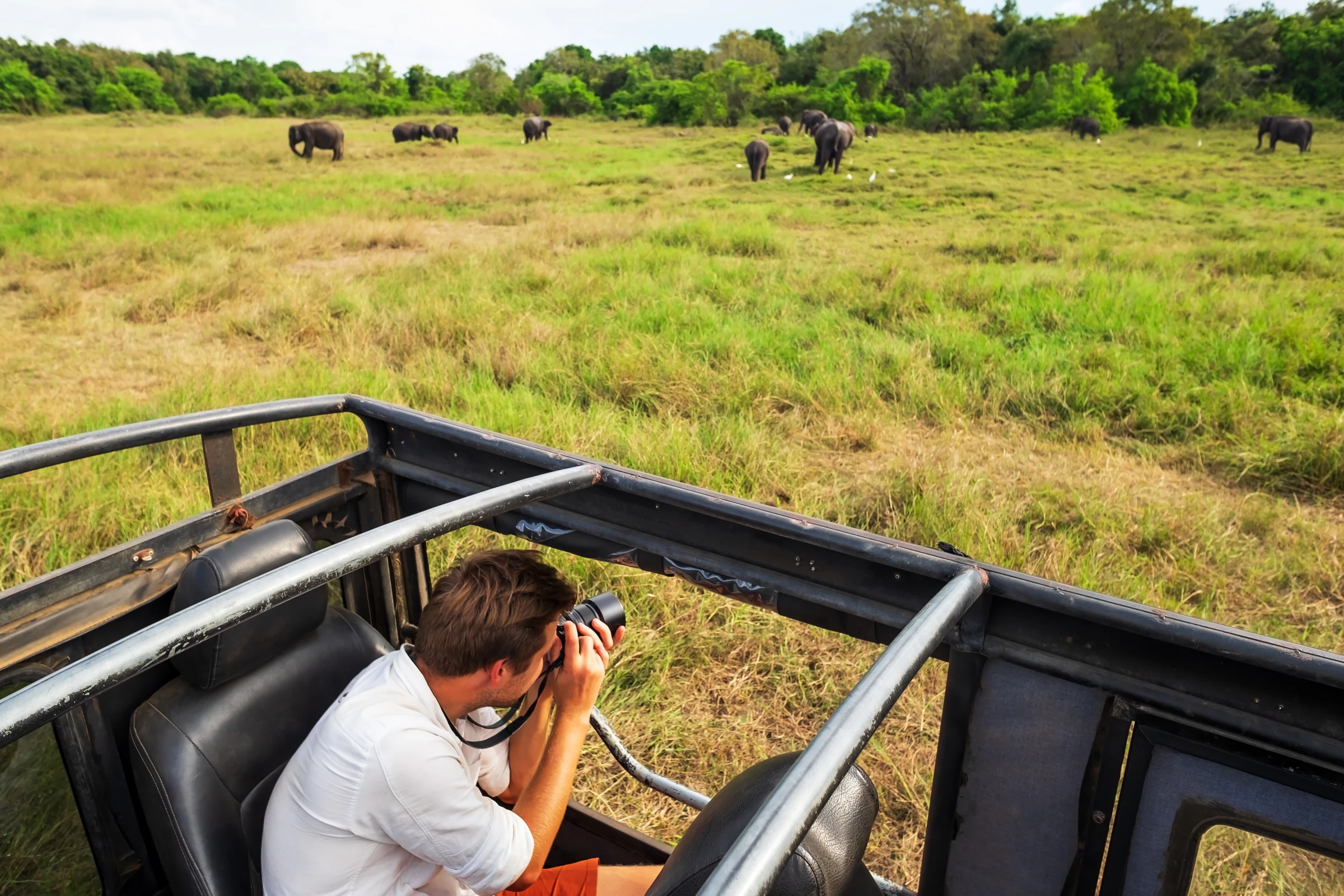
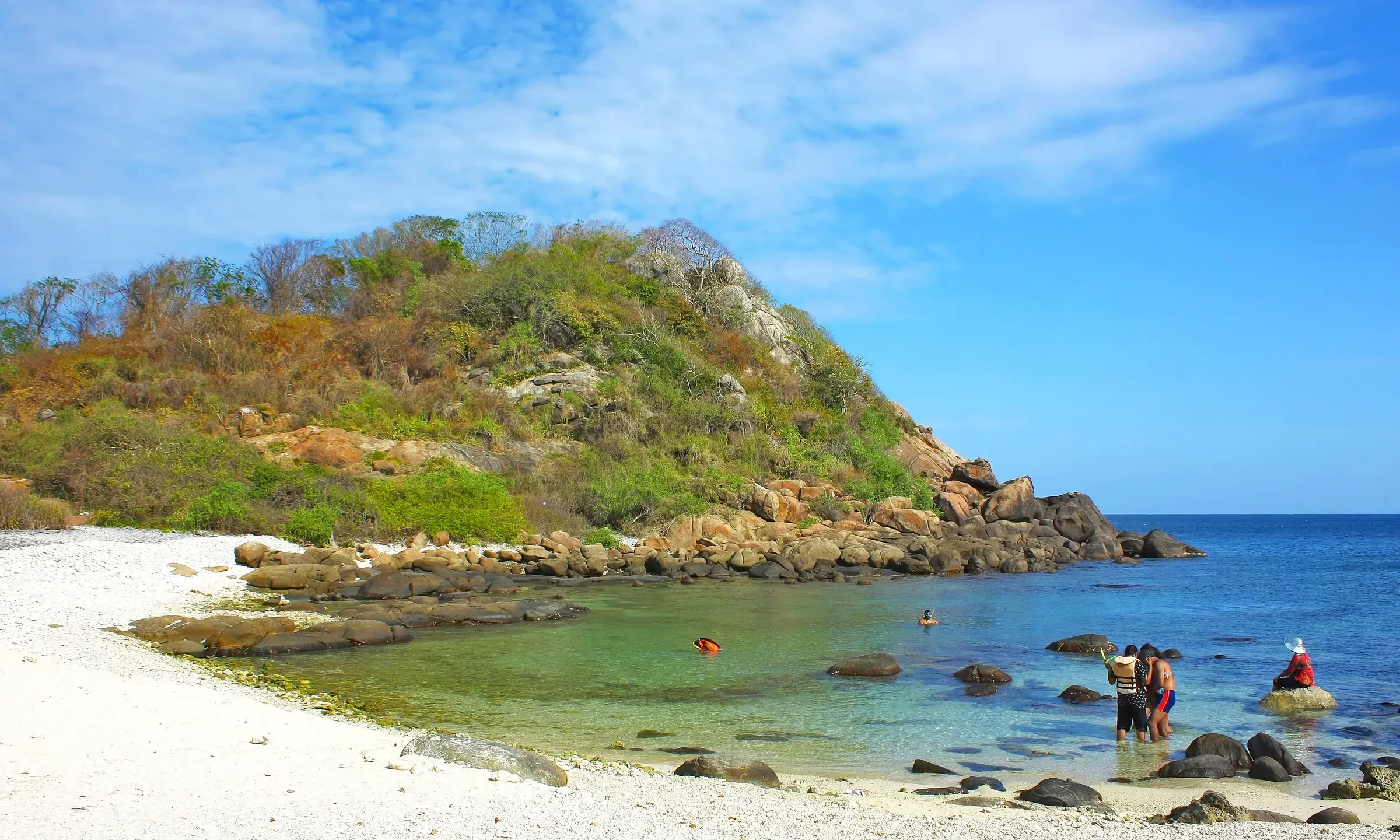
Sri Lanka packs three genuinely different safari experiences into a small area: Yala's leopards, Udawalawe's elephant herds, and the seasonal spectacle of hundreds of elephants gathering at Minneriya and Kaudulla. Which one suits you depends on what you want to see and how much jeep traffic you can tolerate around a good sighting. This guide covers 2026 fees, when each park closes, the case for choosing Udawalawe over Yala for a calmer trip, and what an ethical safari operator actually looks like on the ground.
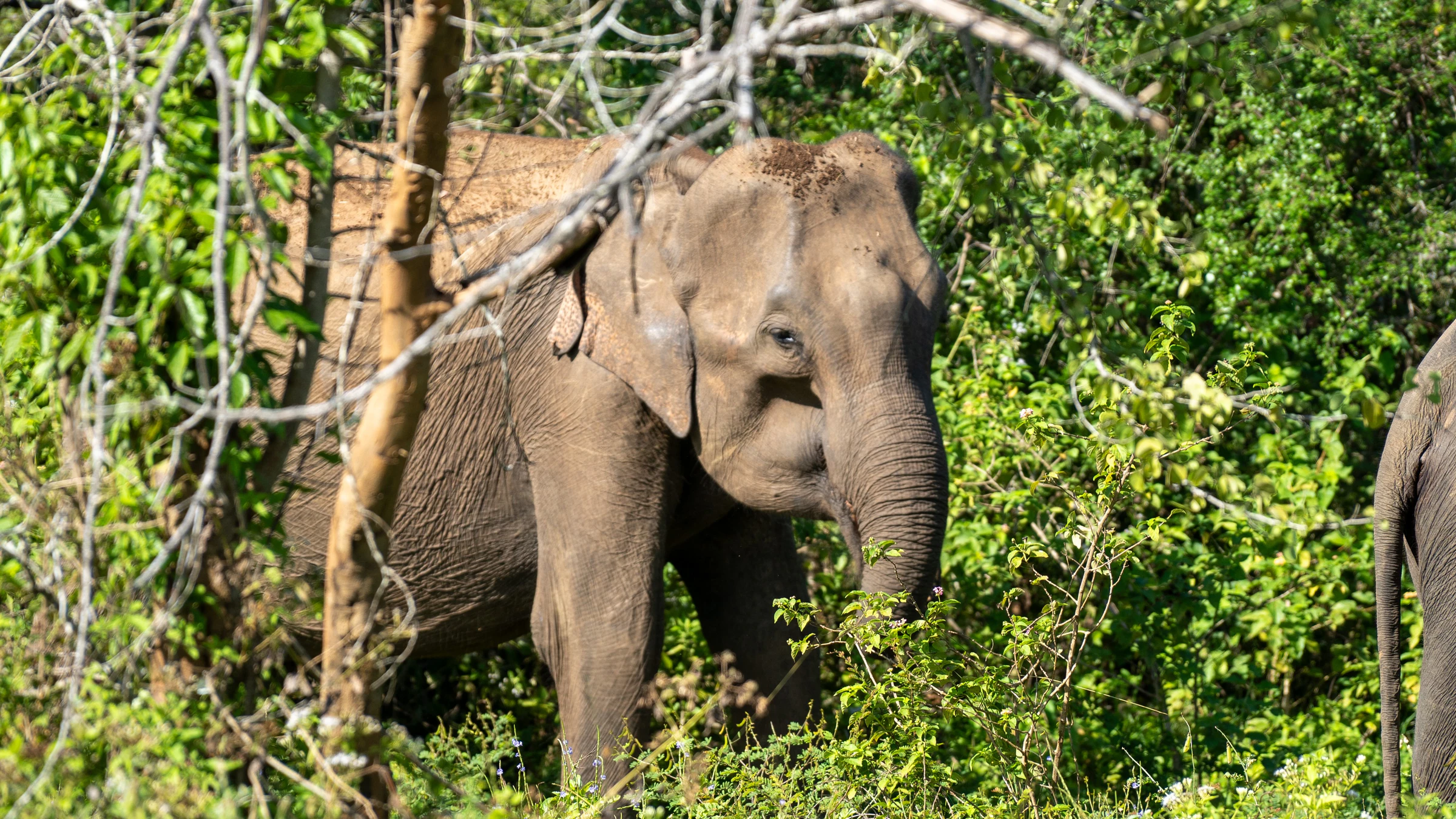
Yala or Udawalawe: which safari should I do?
Both parks are reachable from the south coast in under two hours, and neither needs more than half a day if you're short on time.
| Yala | Udawalawe | |
|---|---|---|
| Known for | A reputation for one of the highest leopard densities anywhere, plus elephants and sloth bears | Reliable, large elephant herds on open grassland |
| Crowding | Jeeps cluster tightly around a leopard sighting, especially in Block 1 | Jeeps spread out more easily on open ground, even when the park is busy |
| Best for | Travellers who specifically want a shot at a leopard | A calmer, more relaxed safari, and anyone combining it with the Elephant Transit Home |
| Typical add-on | Often paired with the south coast | Often paired with the south coast or the Cultural Triangle route south |
If seeing a leopard is the whole point of your trip, Yala is still the park with the best odds. If you'd rather spend a few hours actually watching elephants than jostling for position at a sighting, Udawalawe is the easier, calmer choice, which is also why it's the safari our own 12-Day Sri Lanka Tour is built around.
How much does a Sri Lanka safari cost in 2026?
We couldn't find a fee notice on the Department of Wildlife Conservation website, so these figures come from 2026 operator and travel guides. Prices are charged in rupees at the day's exchange rate, so check the gate price on the day.
| Park | Base entry, non-SAARC foreign adult | What guides quote all in for one adult |
|---|---|---|
| Yala | US$25 | about US$42 to 45 |
| Udawalawe | US$25 | about US$42.50, or Rs 13,420 on one operator's 1 October 2026 guide |
| Minneriya and Kaudulla | US$25 | not found |
| Wilpattu | US$25 | not found |
On top of the base entry, guides list a service charge, a small vehicle fee and tax. One operator's breakdown has the service charge at US$10 per group, which is why the per-person cost falls as the jeep fills up. Jeep hire is separate. One Yala operator's September 2026 guide lists half-day jeep rates of Rs 21,450 for Block 1 and Rs 23,100 for Blocks 5 and 6, and full-day rates of Rs 31,350 and Rs 32,900, per jeep, with park tickets extra. The same guide offers packages with park fees included from US$57 per person for a half day in a jeep of six. A jeep holds up to 6 people, and Udawalawe half-day hire is quoted at Rs 12,000 to 18,000 per jeep. Confirm with your operator exactly what's included, since some quotes bundle the park entry into the jeep price and others don't.
Yala National Park
Yala is Sri Lanka's most visited national park and the one most people mean by "safari" here. It's split into blocks, and almost all visitors enter through Block 1, the smallest and most accessible section, which is also where the leopard sightings behind Yala's reputation happen most often.
Udawalawe National Park
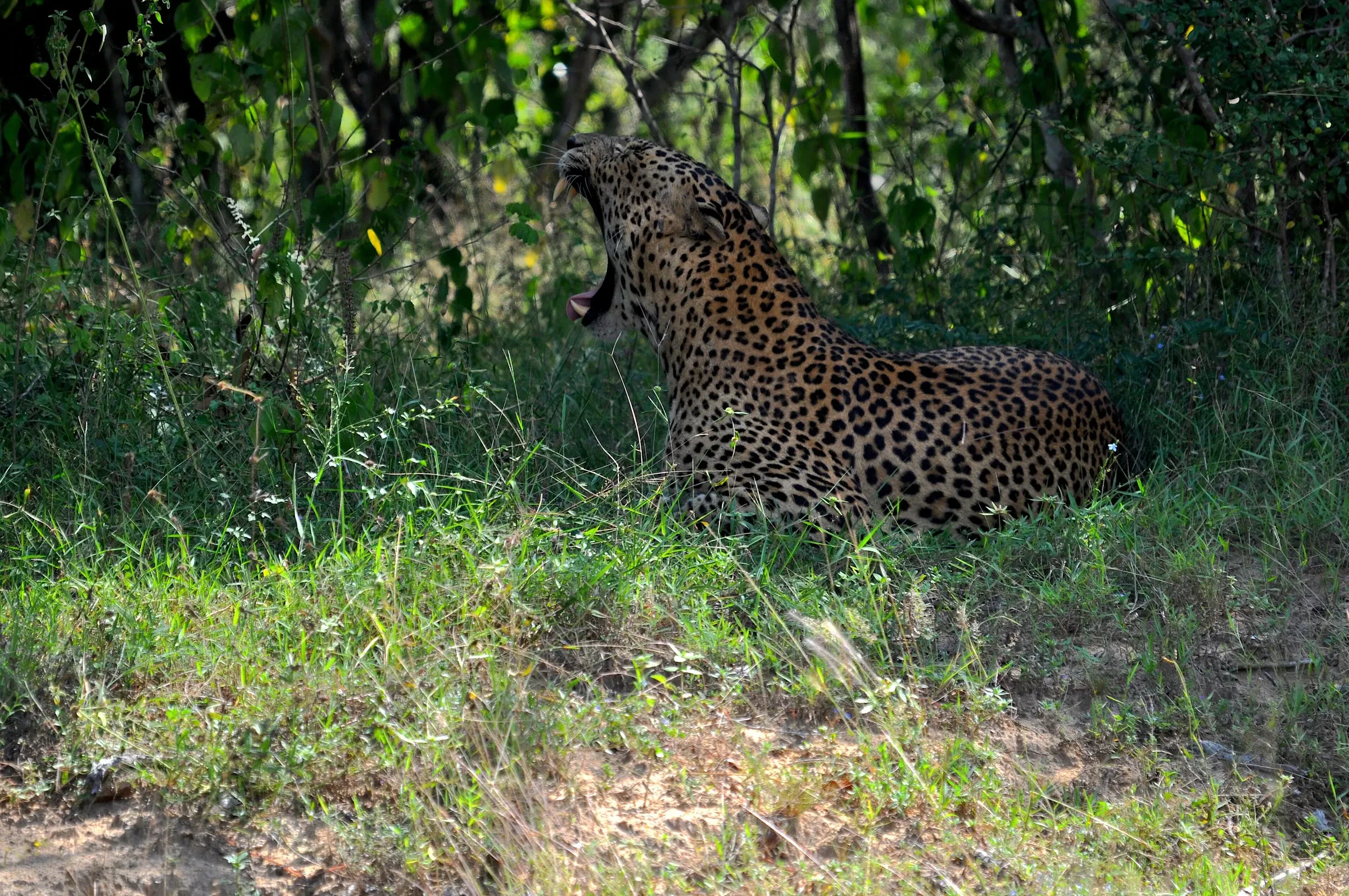
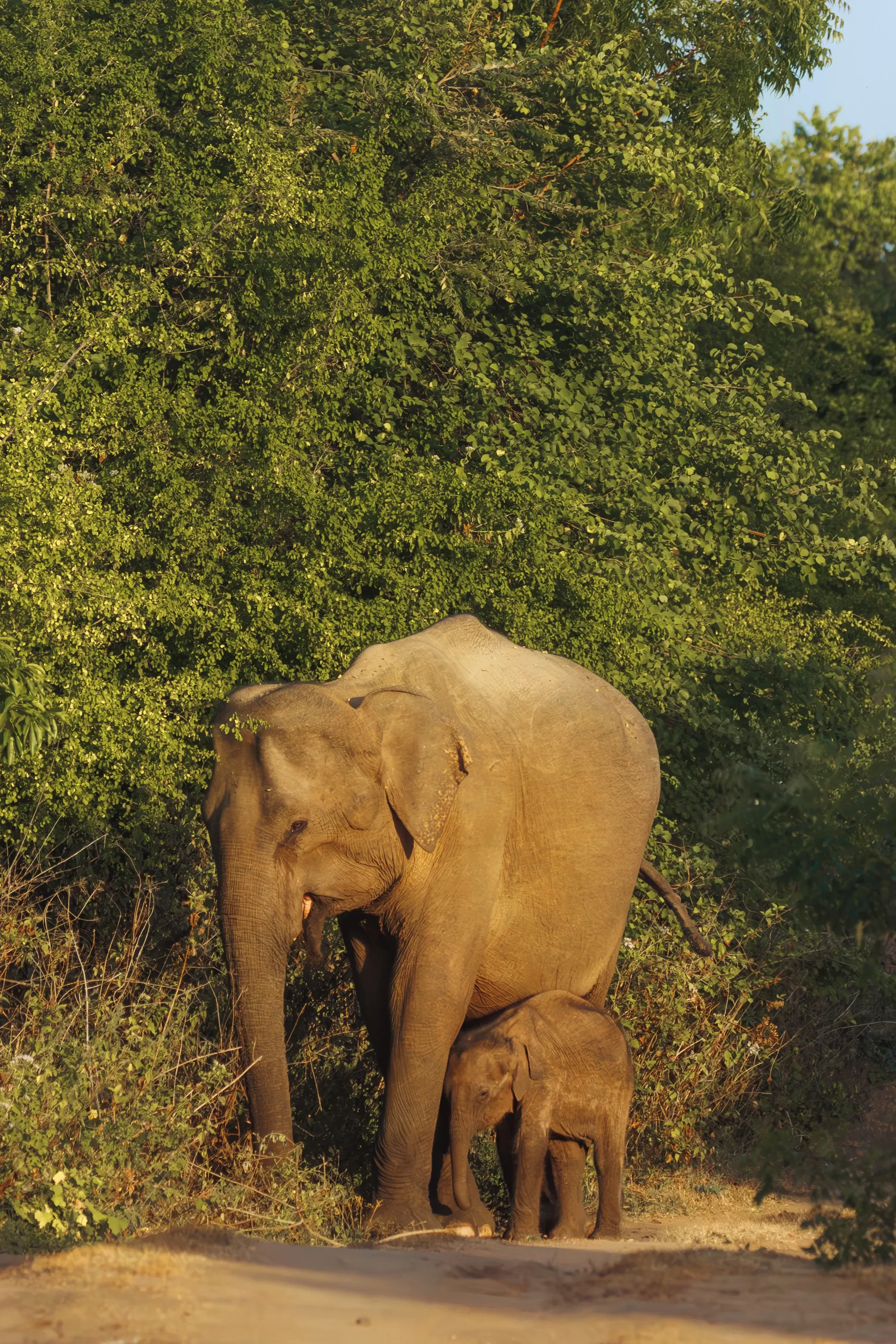
Udawalawe is built around open grassland surrounding the Udawalawe reservoir, and it's genuinely one of the more reliable places in Asia to see wild elephants in numbers, often in herds of a dozen or more, alongside water buffalo, crocodiles and a long list of resident and migratory birds. Because the terrain is so open, jeeps don't need to bunch up around a sighting the way they do in Yala's denser scrub, which makes for a noticeably calmer couple of hours even when the park itself is busy.
Right next to the park, the Elephant Transit Home rehabilitates orphaned and injured wild elephant calves and releases them back into the wild once they're old enough to cope alone. Visitors watch the calves at feeding times from behind a barrier, with no contact between visitors and the elephants. Sources list different feeding times (10:30, 14:30 and 18:00 in several guides, with 9:00 and 12:00 added in another), so confirm locally on the day. Entry for foreigners is quoted at around LKR 1,500 to 1,820, depending on the source. It's run by the Department of Wildlife Conservation as a rehabilitation programme rather than a photo-op sanctuary, and pairing it with a Udawalawe safari is the standard way to see it.
Choosing an ethical safari operator
Overcrowding is the main ethical issue with Sri Lankan safaris. When word of a leopard sighting spreads over the radio, jeeps converge on the spot fast. A driver under pressure to deliver a sighting has an incentive to push in close or move fast to beat other vehicles there, and one conservationist told Mongabay that drivers can be tipped $50 to $100 for a leopard.
The Department of Wildlife Conservation has been tightening the rules. Since January 2024, jeep drivers entering Yala have needed a DWC licence or a DWC tracker alongside, and in April 2026 the Yala jeep owners' association said only the 552 registered jeeps were allowed in. Drivers also described strict time limits, with late vehicles banned for a day. The deputy environment minister said plans were in place to limit jeeps to around 250 to 300 and add GPS speed tracking. We couldn't find a published rule on how many jeeps may stand around one animal or for how long, so judge an operator by what its drivers actually do.
A few things separate a better operator from a worse one:
- They don't chase or crowd a sighting. A good driver holds back rather than nosing into a tight circle of jeeps around one animal.
- They talk in probabilities, not promises. "We've had good luck with leopards this week" is honest, and guaranteeing a sighting isn't.
- They're licensed, and can show it if you ask.
- They're honest about a bad day. Wildlife doesn't perform on schedule, and an operator who says so is worth booking again.
The Minneriya and Kaudulla elephant gathering
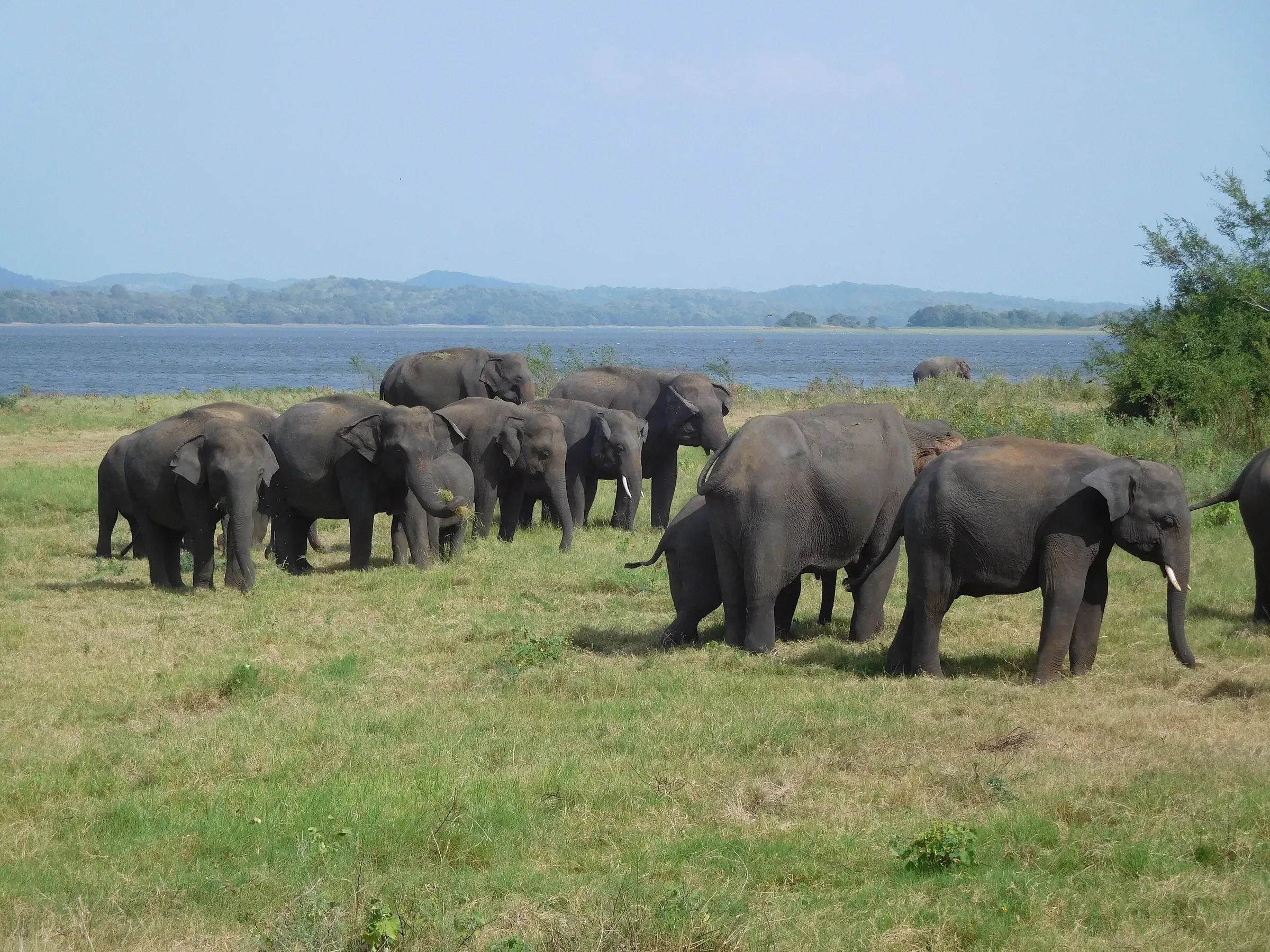
Further north, in the Cultural Triangle rather than the south, Minneriya and Kaudulla National Parks host what's usually described as one of the largest gatherings of Asian elephants anywhere in the world. As the dry season empties smaller waterholes elsewhere, elephants from a wide area, including nearby Wasgamuwa, converge on the Minneriya tank to drink, bathe and socialise. Late July through September is the usual peak window, and some guides run it into October, when water levels are lowest and sightings of 200 or more elephants at once aren't unusual. The base entry fee for foreign adults is US$25 at both parks, with the same extra charges as elsewhere.
The exact location shifts with rainfall and the elephants' own movements, and herds can move between Minneriya and Kaudulla within the same week, so ask your operator or guide on the morning of your visit which park is currently the better bet rather than assuming it's always Minneriya. This is a genuinely different experience from a Yala or Udawalawe safari, closer to a wildlife spectacle than a drive looking for animals, and worth combining with a stay in Sigiriya, Dambulla or Habarana if your dates line up with August or September.
Wilpattu National Park
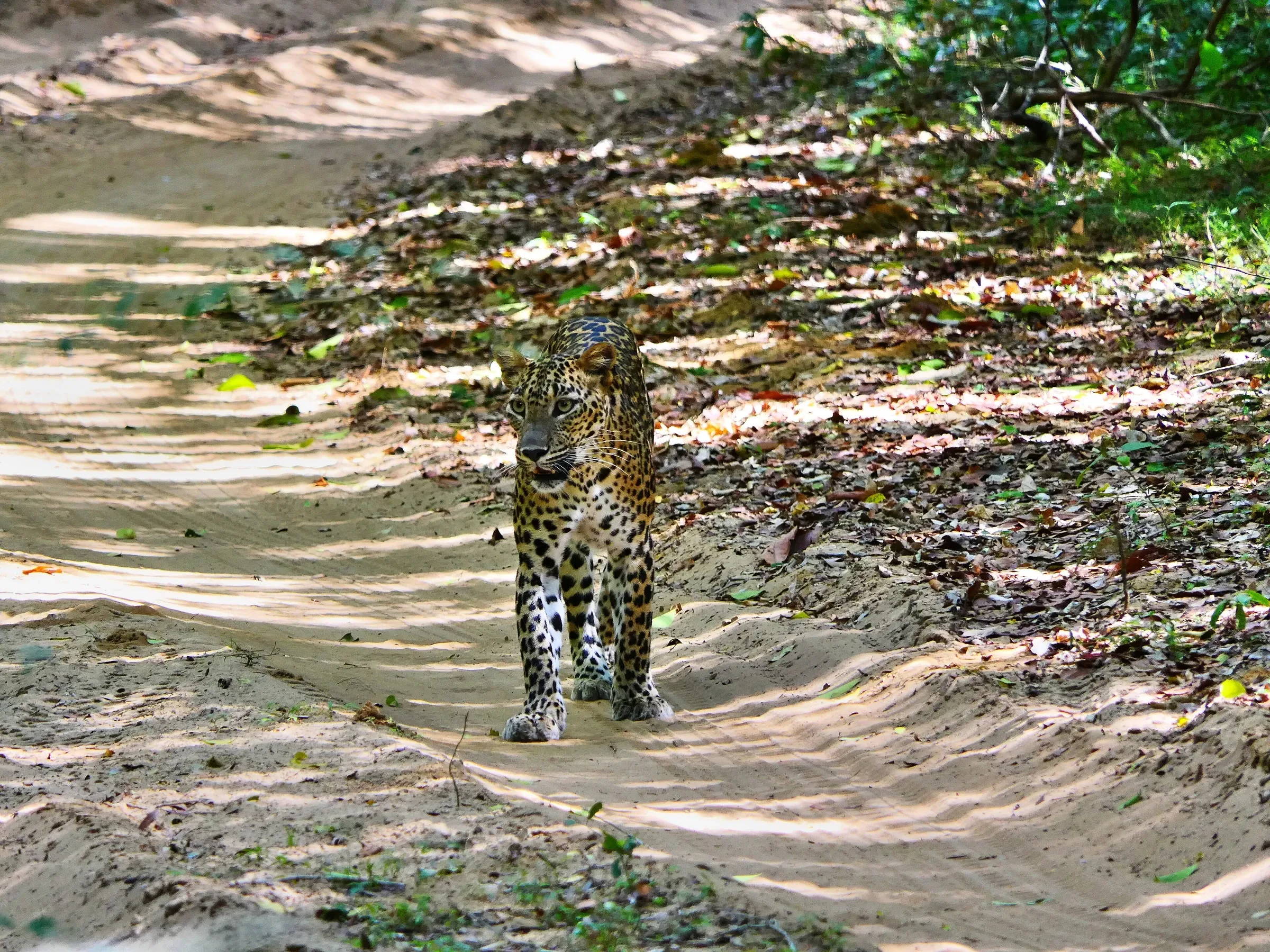
Wilpattu, on the island's north-west coast, is worth a brief mention if you're travelling that way: it has a strong leopard population, in a park with a fraction of Yala's visitor numbers, plus elephants and sloth bears around its many natural lakes. Foreign adults pay a base entry of US$25 here too. It runs on the same dry-season logic as the other parks, best from May to September, when animals cluster around the remaining water. It's further off the standard Cultural Triangle to south coast route, so it suits a longer trip or a dedicated wildlife detour more than a quick add-on.
Safari on our trips
Our 12-Day Sri Lanka Tour builds a full day around Udawalawe, pairing the jeep safari with the Elephant Transit Home visit on the same afternoon.