Mirissa is Sri Lanka's main whale-watching town, and blue whales, the largest animals to have ever lived, are the reason most people book a boat here. This guide covers the season, how a trip actually runs, what to expect on price, the rules boats are supposed to follow and how to choose a responsible operator, and seasickness. For the rest of the town, see our Mirissa guide.
When is whale watching season in Mirissa?
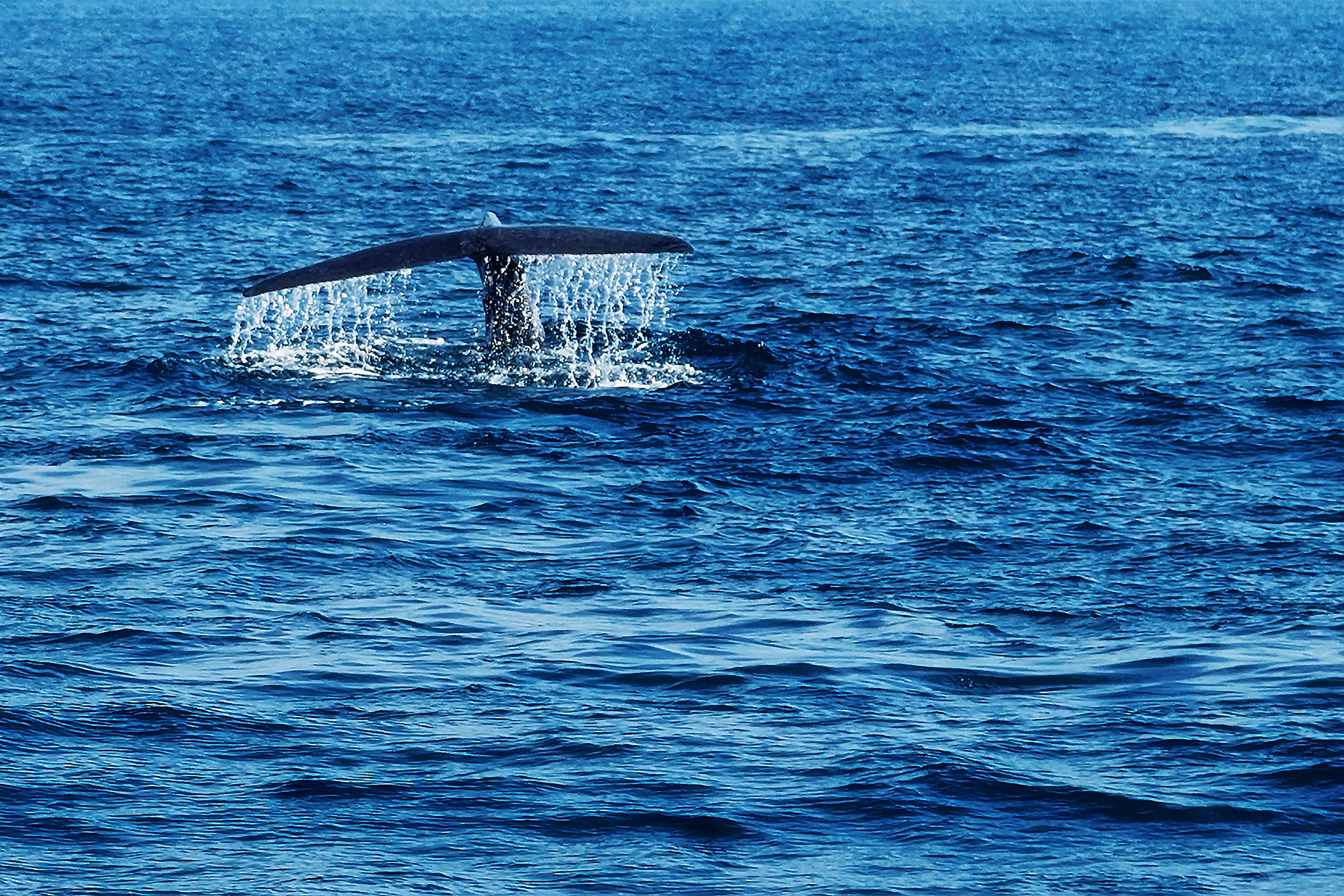
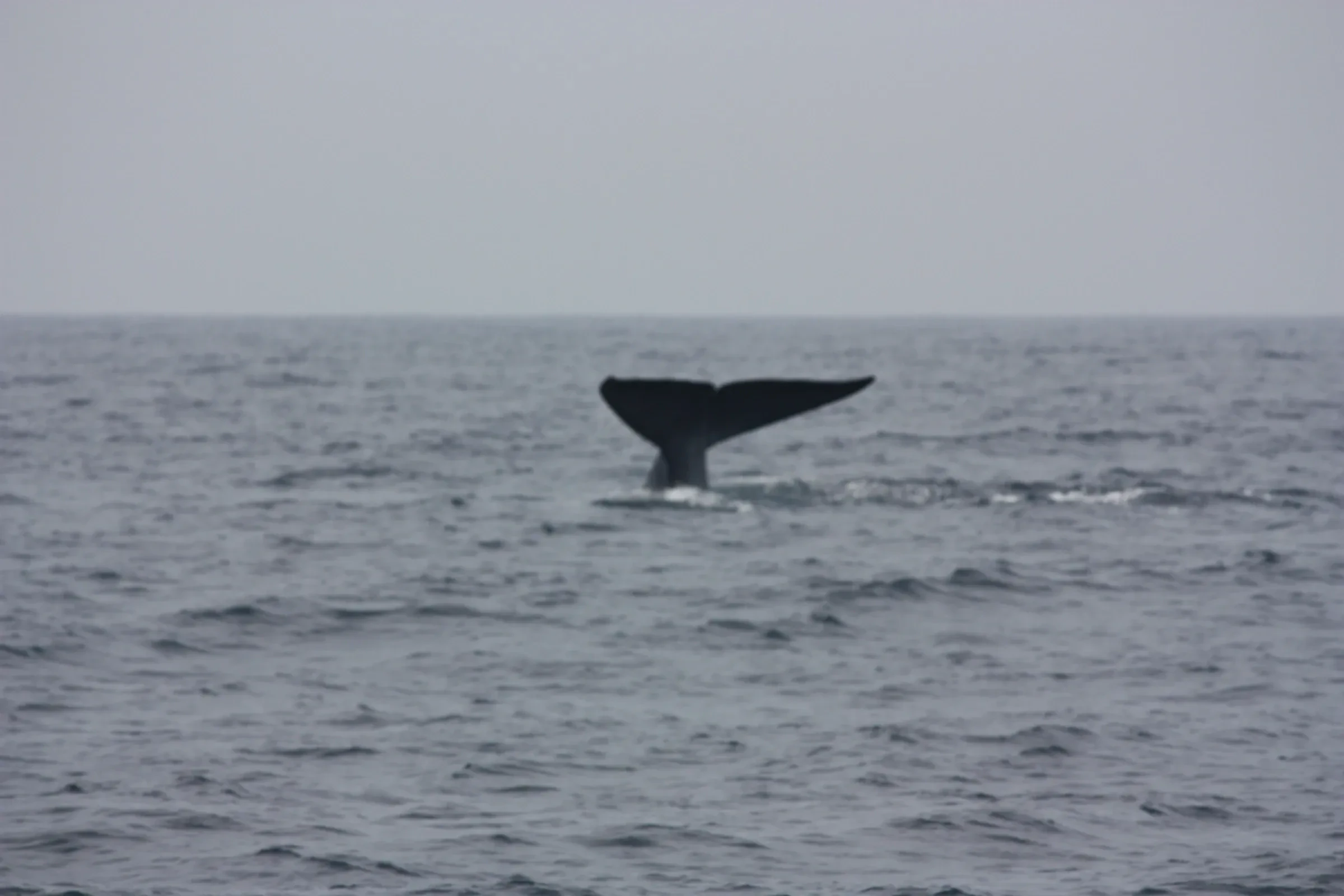
Roughly November to April, with December to March the most reliable stretch for calm seas and good visibility. Outside that window the south-west monsoon, from around May to September, brings rougher water and few boats go out. Blue whales are the headline sighting, and sperm whales, Bryde's whales and pods of spinner dolphins turn up regularly too.
How long does a whale-watching trip take?
Most boats leave Mirissa harbour around 6:30am and return by late morning, so budget 3 to 5 hours in total. The first 45 minutes to an hour, motoring out to the deeper water where whales are more likely, is usually the choppiest part of the trip; once boats slow down and start looking, the ride settles. Bad weather can stop trips: the rules say boats must not go out for whale watching in inclement weather.
Sea conditions and what the boat is like
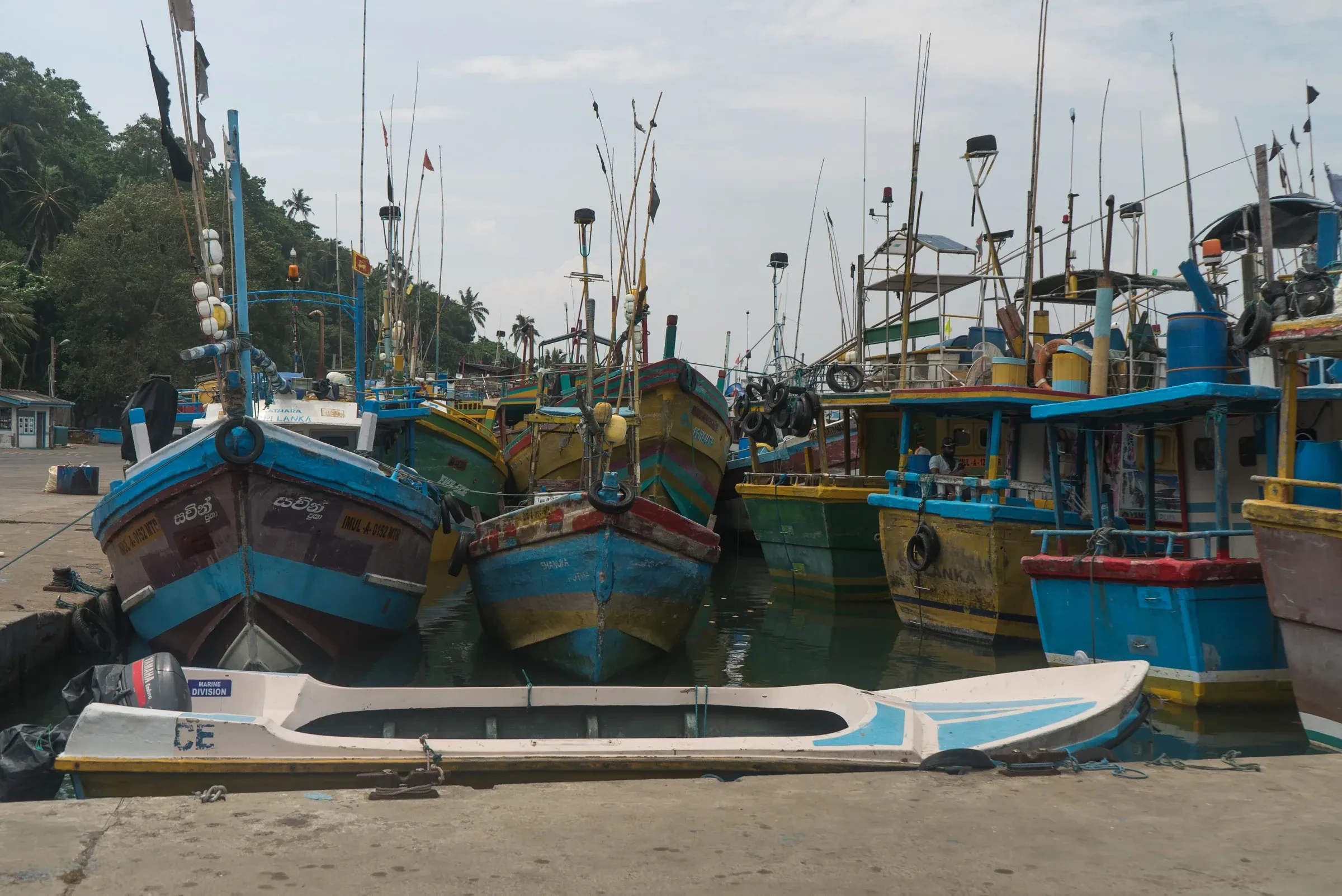
Mirissa's whale-watching fleet is mostly monohull boats rather than the more stable double-hulled catamarans used in some other countries, so expect a fair amount of rocking, especially on the way out. A bigger boat generally rides smoother in rough water than a small one, so if you're worried about the sea state, that's worth asking about when you book, alongside the ethical questions below.
How much does whale watching cost in Mirissa?
Prices vary by operator, boat size and whether you book direct or through a platform, and listings we found put the same kind of trip at very different figures. We haven't found a dated 2026 price from an operator or an official source, so we don't quote one. Compare what each trip includes, such as boat type, passenger numbers and breakfast, rather than only the headline price. Private or premium charters cost more than shared boats. Book a few days ahead in peak season, since the better-regarded operators fill up.
Choosing a responsible operator
Whale watching in Mirissa is licensed under Sri Lanka's Sea Mammals (Observation, Regulation and Control) Regulations, No. 1 of 2012, later amended in 2019. The 2012 gazette says boats must slow down gradually as they approach a whale and stop their engines 100 metres away. They must never go closer than 100 metres to a whale or 50 metres to other sea mammals. They must not change speed or direction abruptly, drive in front of or behind the animals, or block their migration routes. Passengers must not get into the sea, and a registered guide must be on board.
That's the law. In practice, reports of 10 to 25 boats crowded around one blue whale are common, so enforcement doesn't always keep up with demand. The crowding comes from how many boats turn up once a whale is spotted, not from how many are licensed.
A few things to check before you book:
- Be wary of "guaranteed sighting" language. It signals an operator that may chase a whale to deliver on the promise rather than let the animal set the terms of the encounter.
- Ask about boat size. Vessels carrying 15 to 30 passengers can manoeuvre and hold a respectful distance far more easily than a double-decker boat with 80 or more people aboard.
- A rock-bottom price is a red flag, not a bargain. The cheapest trips tend to be the most crowded, both on board and around the whale.
- Ask how the crew handles distance and boat numbers. A good operator tells you its own practice without being asked, rather than mentioning the legal minimum only when a customer raises it.
- Ask whether the boat is licensed. Licensed vessels have their number written on the hull, readable from 50 metres.
- Skip anything sold as a party trip. The rules don't allow liquor on board, and music adds noise to an already crowded stretch of water.
We don't name a specific operator here, and we can't vouch for any certification an operator advertises. If you're booking independently, use the checklist above rather than trusting a high star rating on its own: a boat can be popular and still be one of the ones crowding a sighting.
Seasickness: what actually helps
Sri Lanka's whale-watching boats are not a gentle ride for anyone prone to seasickness. If you know you get seasick, or you're not sure, ask a pharmacist about seasickness tablets and take them before departure rather than waiting to see how you feel on the water. Ginger tablets or motion-sickness wristbands are a lighter option if you'd rather not take medication. Once on board, a seat toward the middle of the boat tends to move less than the bow or stern, and looking at the horizon rather than your phone or a camera screen helps through the choppy first 45 minutes to an hour before the boat reaches deeper water and slows down.
Trincomalee: the opposite-season alternative
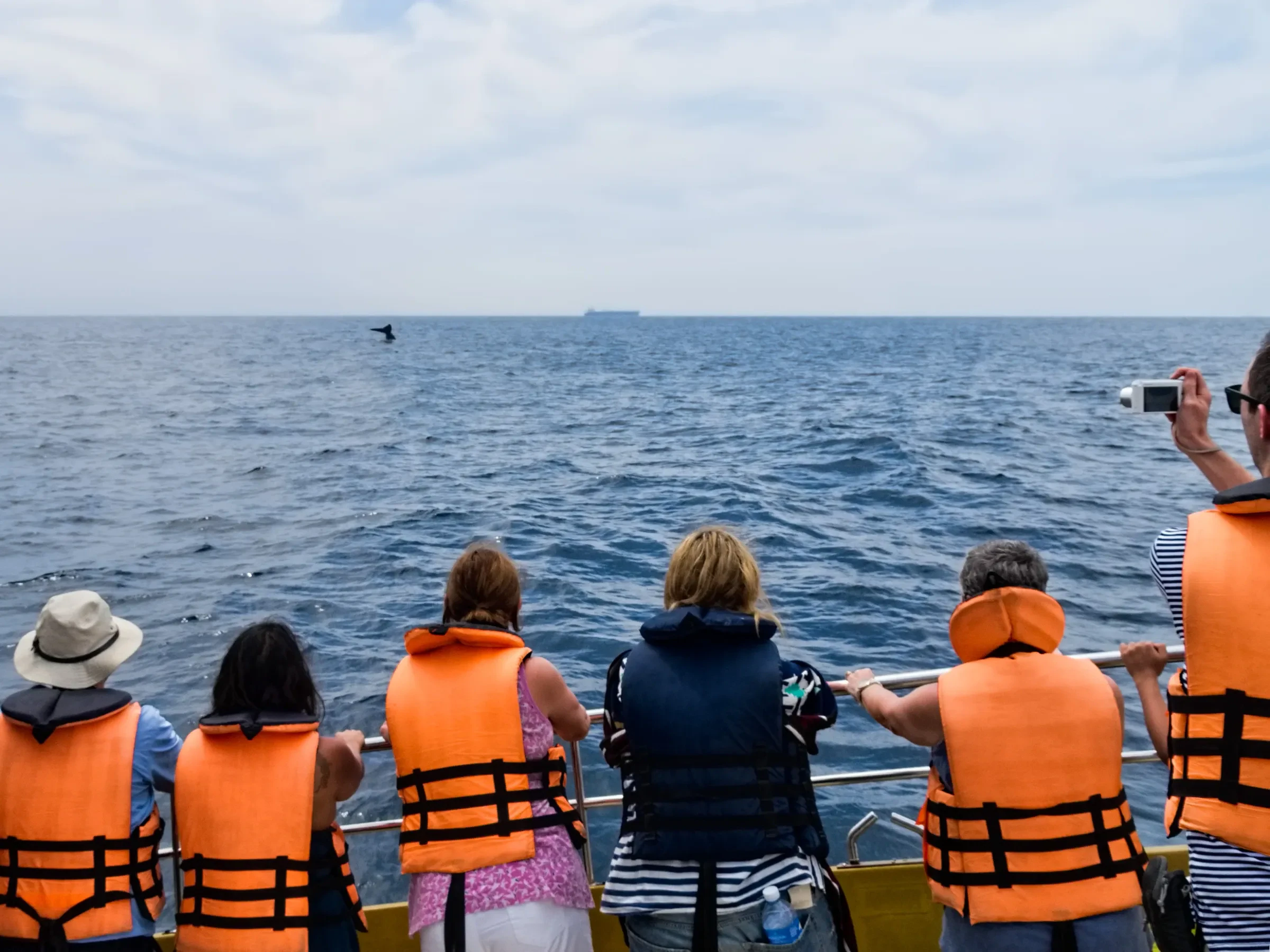
If your dates don't line up with Mirissa's November to April season, Trincomalee, on the east coast, runs on roughly the opposite pattern, with the best months roughly May to September. That means building your route around the east coast instead of the south rather than simply swapping dates, but it's worth knowing about if whale watching matters to you and your trip falls outside Mirissa's window.
Whale watching on our trips
Both our multi-stop Sri Lanka trips include a free day on the south coast where whale watching is available as an optional, self-booked add-on, not something built into the fixed itinerary or price.