What Poson marks
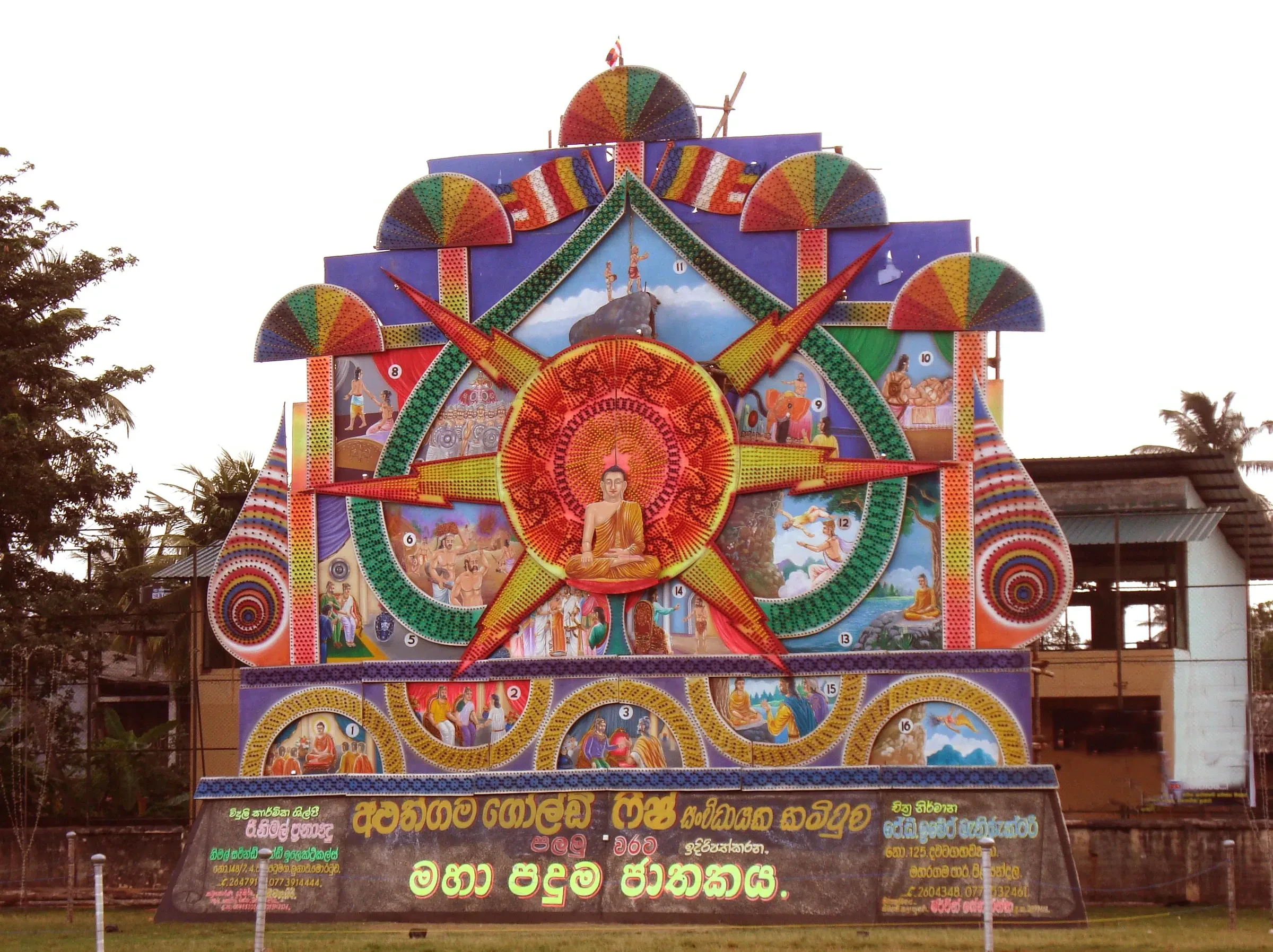
Poson Poya falls on the full moon of the lunar month of Poson, which is why its date shifts by about 11 days each year against the western calendar rather than landing on a fixed day. The festival marks the arrival of Buddhism in Sri Lanka in the 3rd century BC, when the monk Mahinda, said to be the son of the Indian emperor Ashoka, met King Devanampiyatissa while the king was out hunting deer on the hill now called Mihintale, just outside Anuradhapura. Their meeting, and the king's conversion that followed, is the founding story most Sri Lankan Buddhists trace their faith back to. That is why Mihintale and Anuradhapura, rather than anywhere else on the island, are where Poson is marked most seriously.
Vesak, a month or so earlier, is the bigger and more visually spectacular festival, with lantern displays and pandals across the whole country. Poson is narrower: most of the activity happens at these two sites rather than everywhere at once. For the full run of Sri Lanka's festival calendar, see our Sri Lanka festivals guide.
What happened at Poson 2026
Poson Poya fell on Monday 29 June 2026, and the State Poson Festival around it ran from 26 June to 2 July, centred on Anuradhapura's sacred city, Mihintale and Thanthirimale. Ahead of the day, authorities expected more than 1.5 million devotees in Anuradhapura. The Daily Mirror then reported over one million had arrived by the morning of the Poya. We have not found a final attendance figure.
Hiru News reported more than 3,500 police, ten traffic zones across Anuradhapura, Mihintale and Thanthirimale, 21 parking areas, one-way entry and ambulance stations at six points. Lifeguards were stationed at lakes and reservoirs, though sources give different numbers. According to the Daily Mirror, more than 25,000 devotees observed sil, the eight precepts, at Mahameuna Uyana, over 700 dansal gave out free meals, and the bus board and railways ran special services. The paper also reported tens of thousands marking Poson at Kataragama's Kirivehera.
The scale is the draw. One sacred city took in a million people in a day for an event that goes back to a meeting on a hilltop more than 2,000 years ago, and anyone who turns up can eat at a dansal for free.
Where to see it
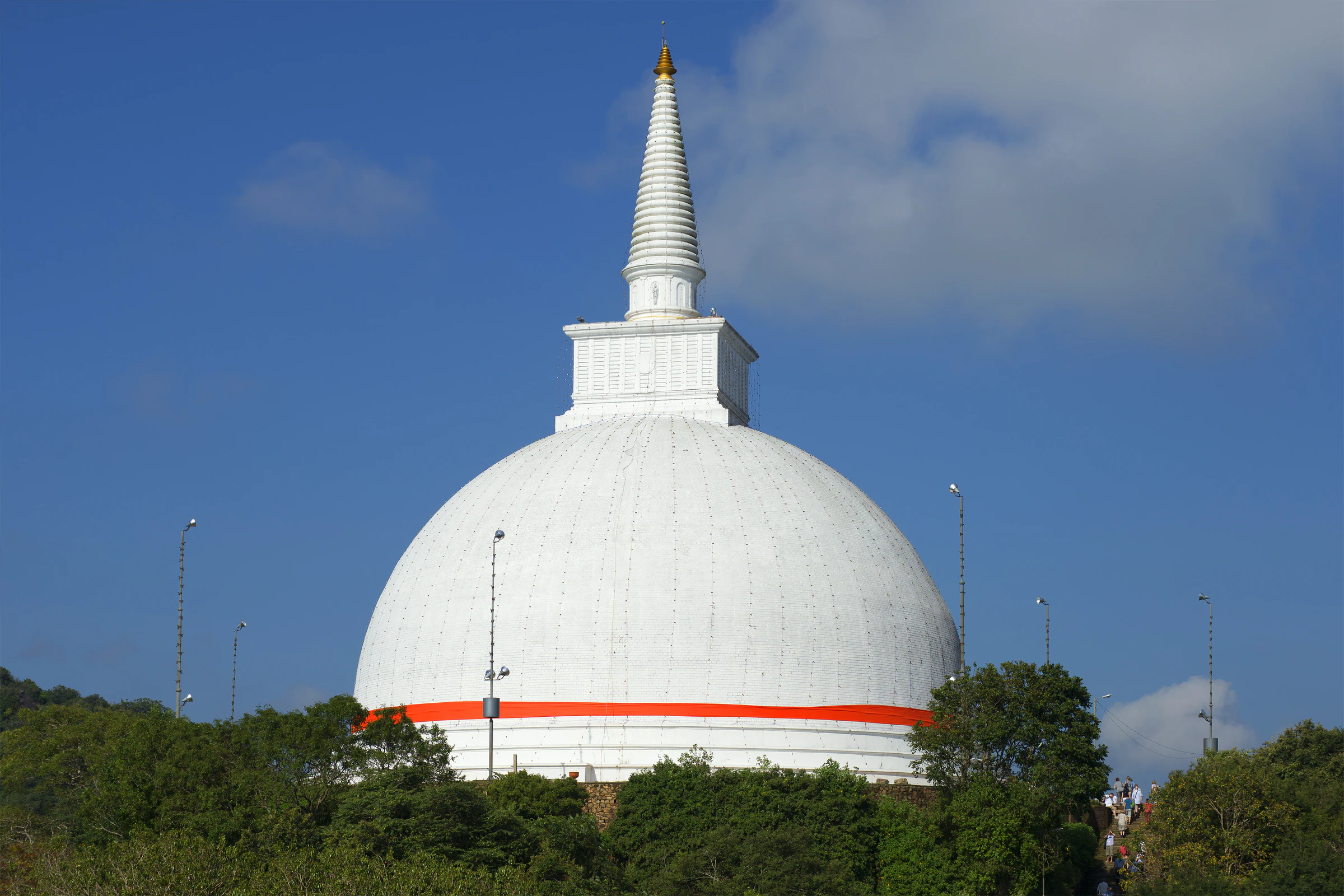
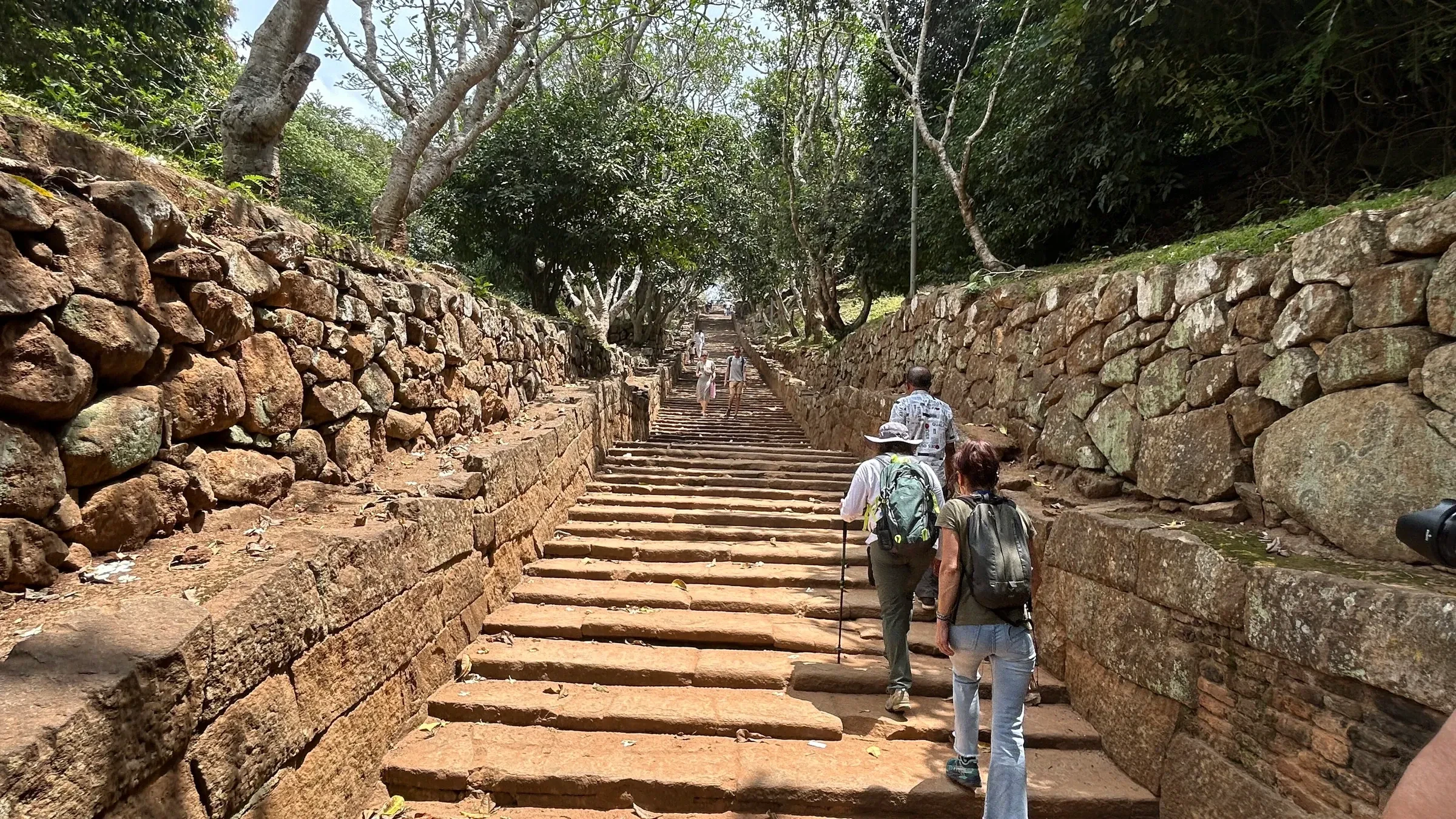
Mihintale is the main event. A stone stairway of close to 1,840 steps, cut into the rock in four flights, climbs past a museum, monastic ruins and several stupas to the hilltop shrine. On Poson day it carries a steady line of people dressed in white from before dawn until well after dark. Our Anuradhapura guide covers the site, the climb and its usual entrance fee for a normal day. We have not confirmed whether fees or queuing rules change on the Poya itself, so carry some cash and follow the staff on the day.
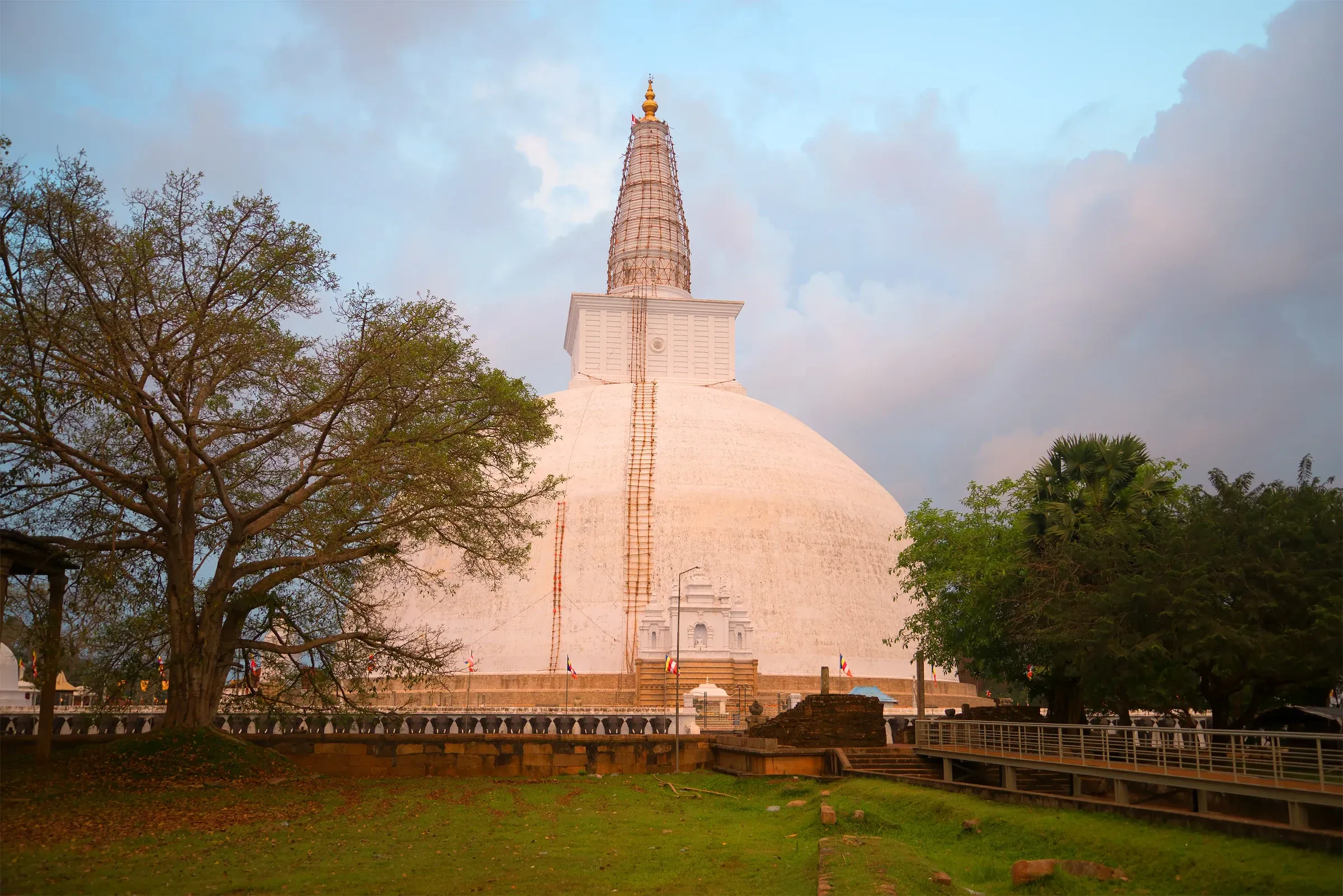
Anuradhapura's sacred city, a short drive from Mihintale, is the second major draw. The great stupas, especially Ruwanwelisaya, are lit with oil lamps and strings of lights after dark.
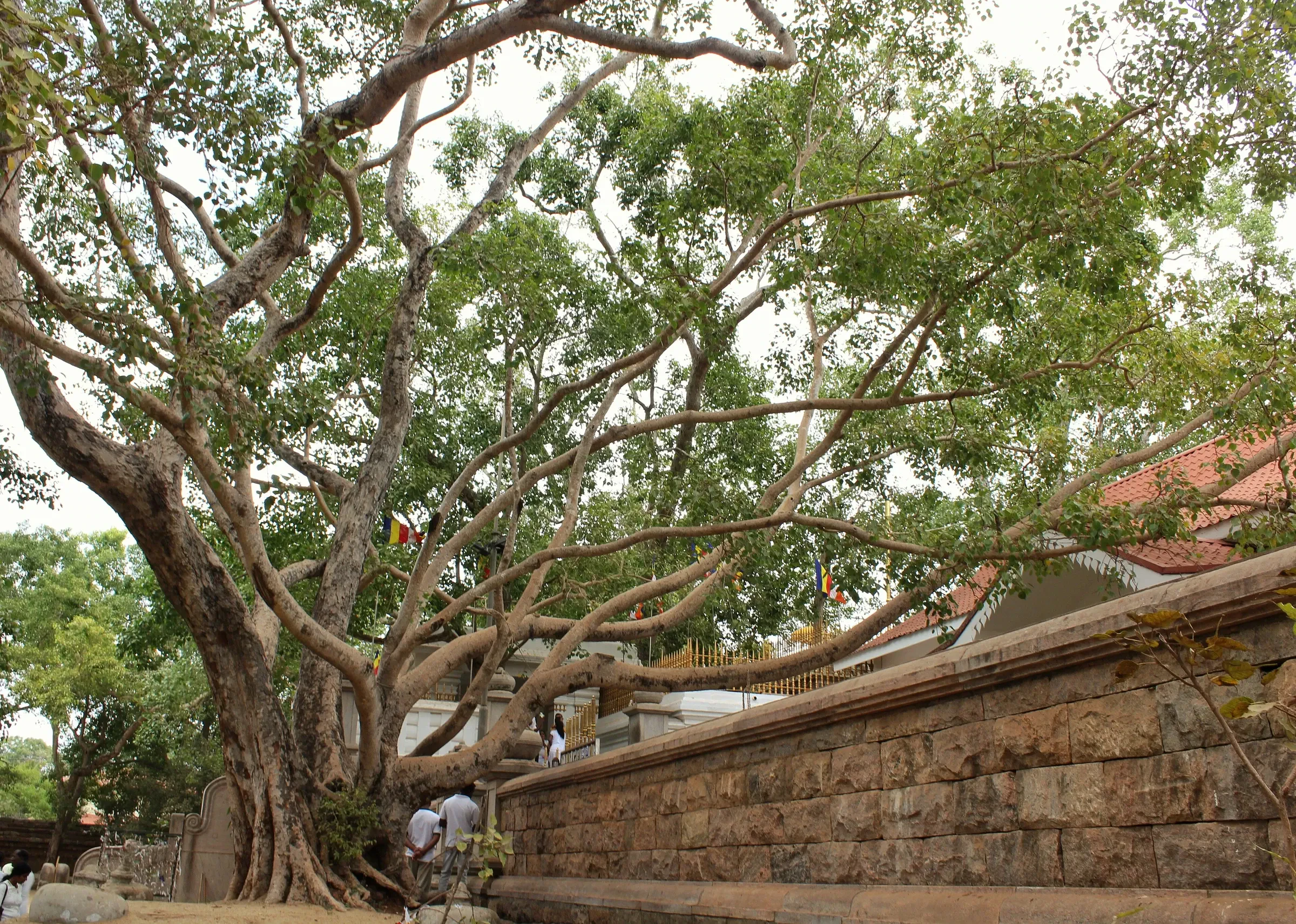
The grounds around the Jaya Sri Maha Bodhi, the sacred Bodhi tree, fill with pilgrims making offerings. Anuradhapura is part of the wider Cultural Triangle, so it is easy to combine a Poson visit with Sigiriya, Dambulla and Polonnaruwa if you are already routing through the region.
Smaller dansal stalls and temple observances happen island-wide, much as they do at Vesak, but if the pilgrimage itself is what draws you, Mihintale and Anuradhapura are where to be.
What happens, day by day
The day or two before: dansal (free food and drink) stalls start going up along the approach roads to Mihintale and Anuradhapura, run by temples, local families and community groups. Traffic into both towns picks up as pilgrims arrive from across the country.
Poson day itself: many pilgrims start the Mihintale climb before sunrise to beat the heat, though the steps stay busy all day. Temples hold sermons (bana), and some lay people observe sil, a set of extra Buddhist precepts taken for the day that usually means abstaining from meat, alcohol and entertainment. After dark, the Anuradhapura stupas and the approach to Mihintale are lit up, and pilgrims keep arriving into the evening.
The following day: crowds thin quickly, and both sites return to their usual, much quieter pace within a day or two.
How to join in and etiquette
What to wear and bring
White or light-coloured, loose clothing that covers your shoulders and knees works for both the climb and the temple visits. Mihintale's steps are stone and can turn slippery after rain, so trainers or grippy sandals beat flip-flops. Bring water, a hat or umbrella for the exposed upper sections of the climb, and cash in small notes if you want to leave a small donation at a shrine. Dansal food itself is free and not something you pay for.
Safety on the day
Mihintale's steps get genuinely crowded on Poson, especially around sunrise and after dark, so allow more time than an ordinary visit and expect to move at the pace of the crowd on the narrower sections. It is a religious holiday rather than a tourist event, so plan for alcohol and meat sales to be suspended nationwide, a rule that applies on every Poya day, not just this one; restaurants and shops may run a limited menu even outside Anuradhapura and Mihintale. Roads into both towns get busiest in the evening as people head out to see the lit stupas, so if you are driving yourself, aim to arrive earlier in the day. Given the 2026 turnout, plan on similar crowds in 2027 and time your arrival and exit around them.
Building a trip around Poson
Poson works best as an add-on to a Cultural Triangle route rather than a trip of its own. Anuradhapura, Sigiriya, Dambulla and Polonnaruwa sit close enough together that a few extra days around the Poya let you combine the pilgrimage with the rest of the region's ruins. See the Cultural Triangle guide for how to link the sites, or our 10-day Sri Lanka itinerary for a full route that passes through the area.
Prefer to travel with a group? Neither of our Sri Lanka trips is timed around Poson, but our routes pass through Sigiriya and the Cultural Triangle region. See Sri Lanka group trips for the routes and current dates.