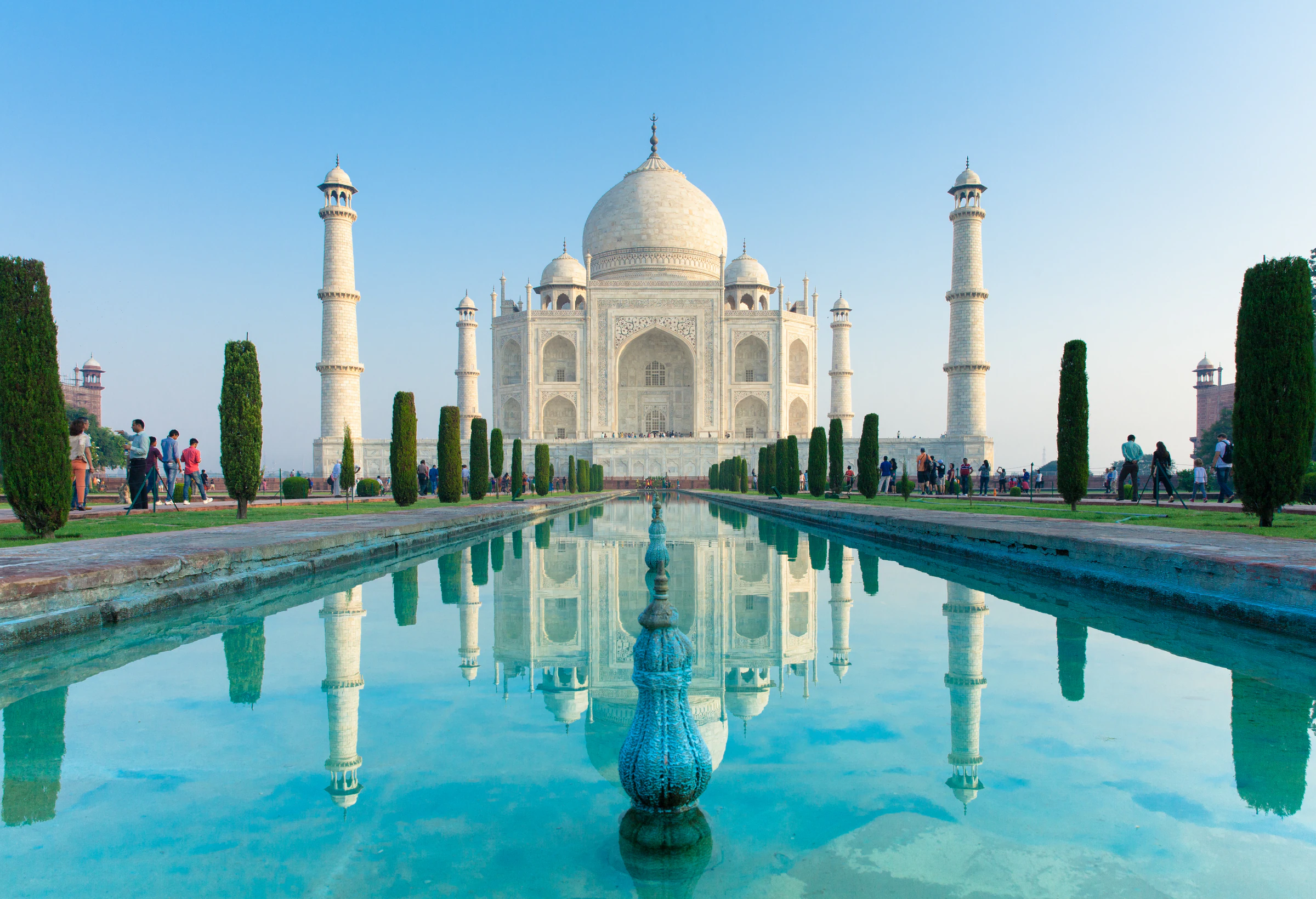
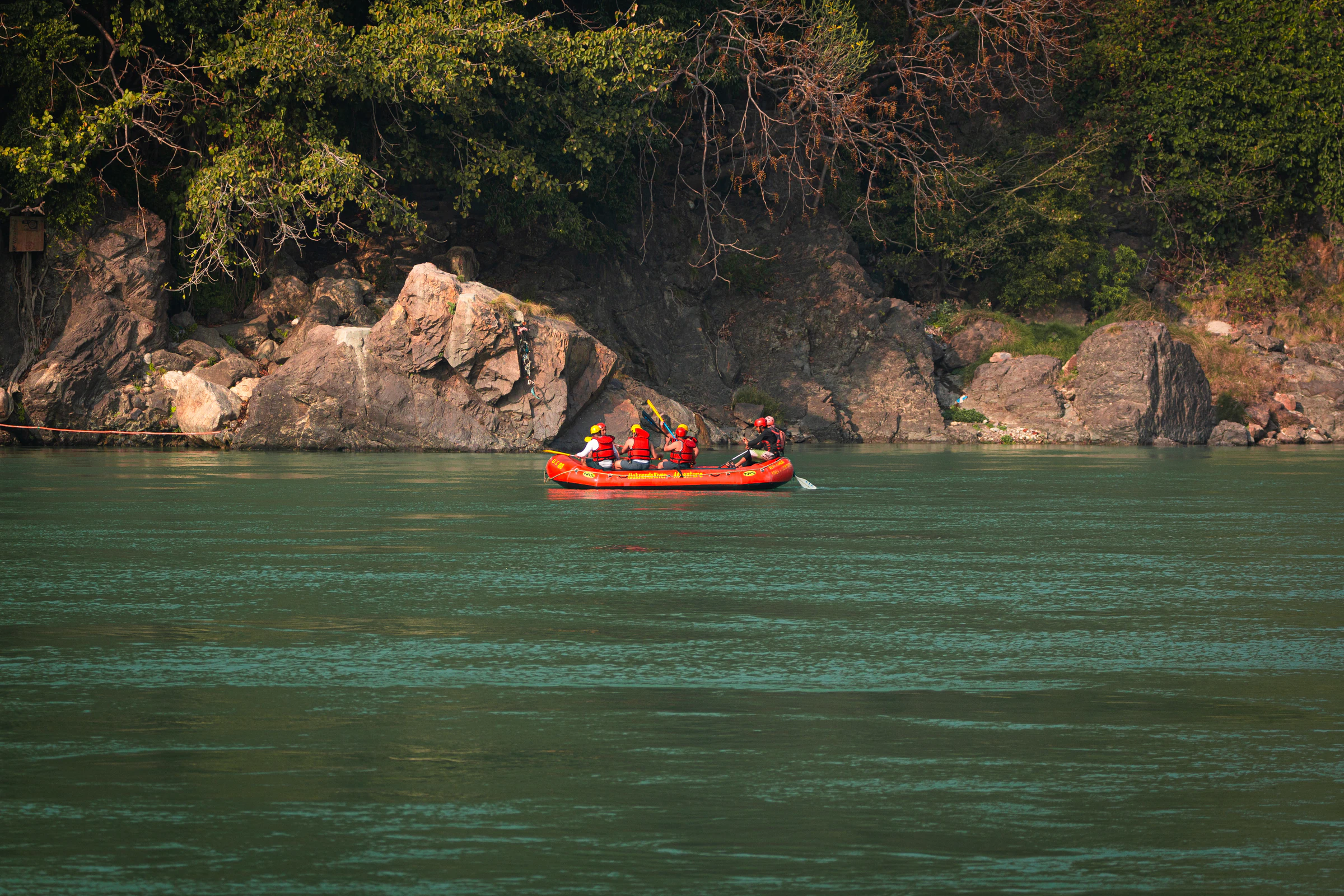
Rishikesh doesn't have a single must-see monument. Its sights are spread along both banks of the Ganga, and most people work through them on foot over a few days, mixing temples and ghats with cafes, yoga and the odd day trip out of town.
This guide runs through the full list. For rafting, see our Rishikesh river rafting guide, and for the weather and festival dates, see the best time to visit Rishikesh. For the wider picture, transport and where to stay, start with our Rishikesh travel guide.
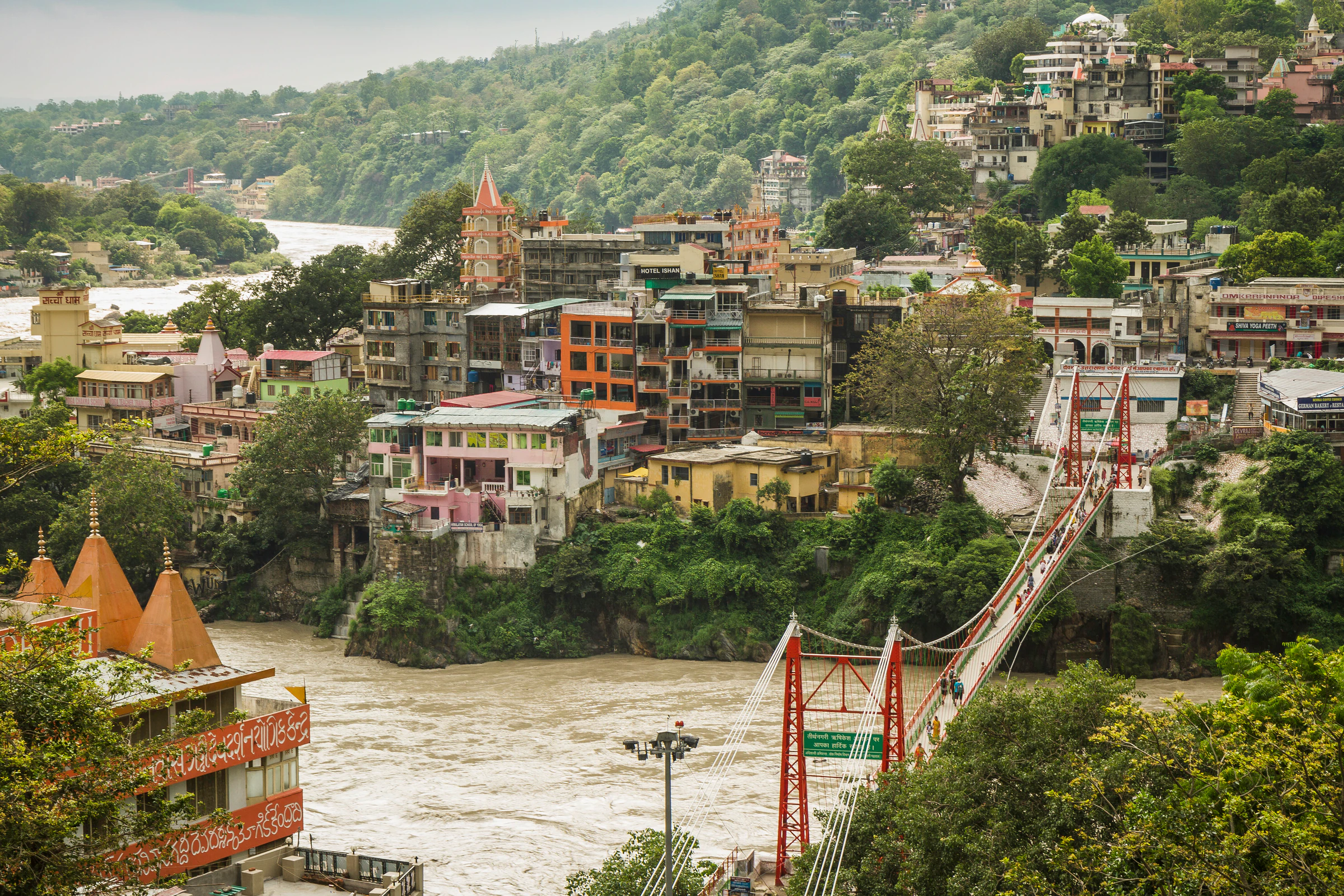
Laxman Jhula and Ram Jhula: the footbridges
The two footbridges are how most people picture Rishikesh, but neither is quite what it used to be. Laxman Jhula, the 1929 suspension bridge, has been closed since 2019 for safety reasons. It's been replaced by Bajrang Setu, a new 132 m bridge right next to it: the concrete middle section is free and open around the clock, and the glass walkways on each side cost ₹100 for two hours, open 06:00 to 22:00. Ram Jhula, further downstream, has been closed for repairs since 26 July 2026, with the latest local works department estimate pointing to a reopening around February 2027 (an earlier report said December 2026), so check before you go. Either way, you'll cross the river on foot at some point during a stay, sharing the bridge with pilgrims, monkeys and the odd cow.
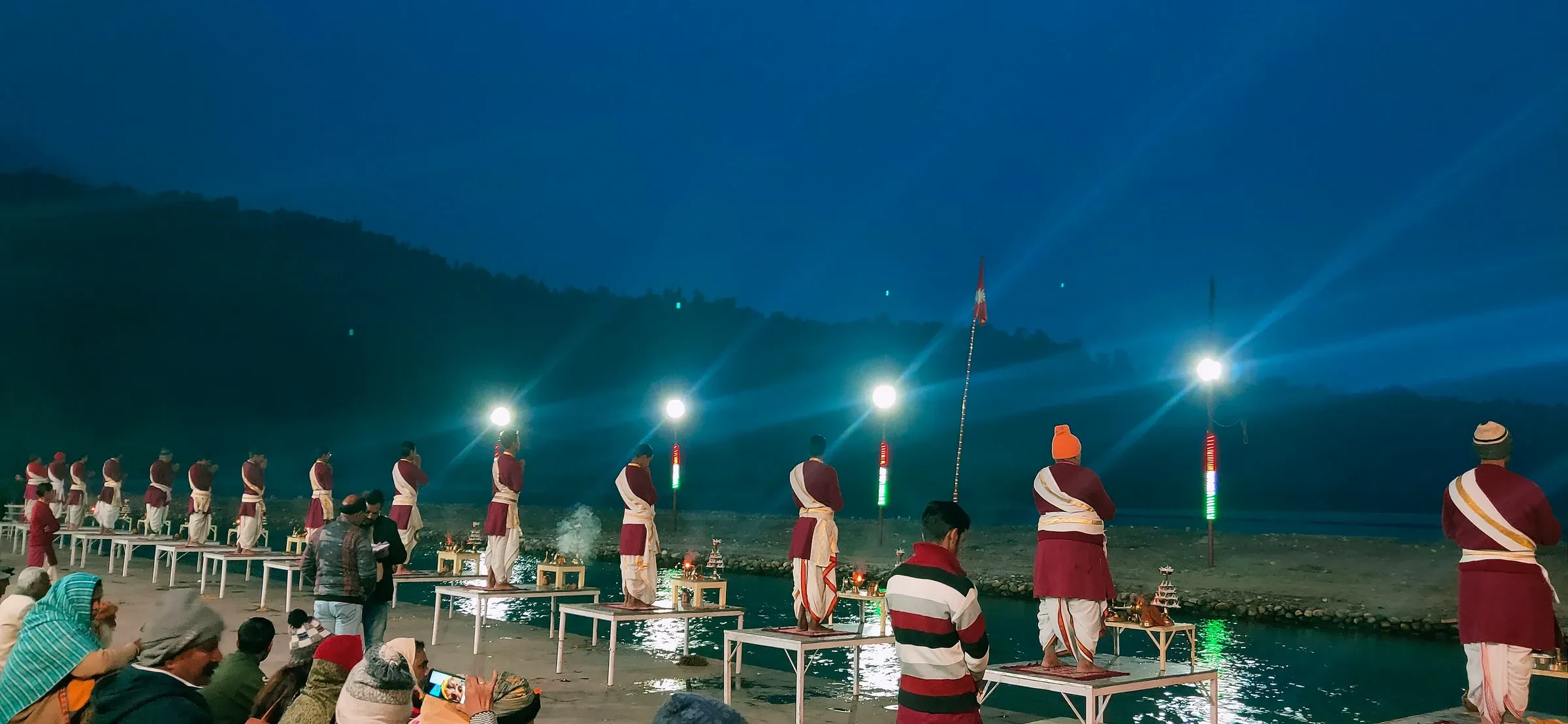
Triveni Ghat's evening aarti
Every evening around sunset, Triveni Ghat in the town centre holds its own Ganga Aarti: lamps, bells and prayers offered to the river as the light fades. India's tourism board lists it as 6pm to 7pm, with the ceremony itself lasting about 45 minutes. The time shifts with the season, so check on the day. It's a busier, more local crowd than the aarti further upstream at Parmarth Niketan, with vendors selling flame-lit diyas to float on the water. If you only have one evening, either works; if you have two, see both and compare the atmosphere for yourself.
The Beatles Ashram (Chaurasi Kutia)
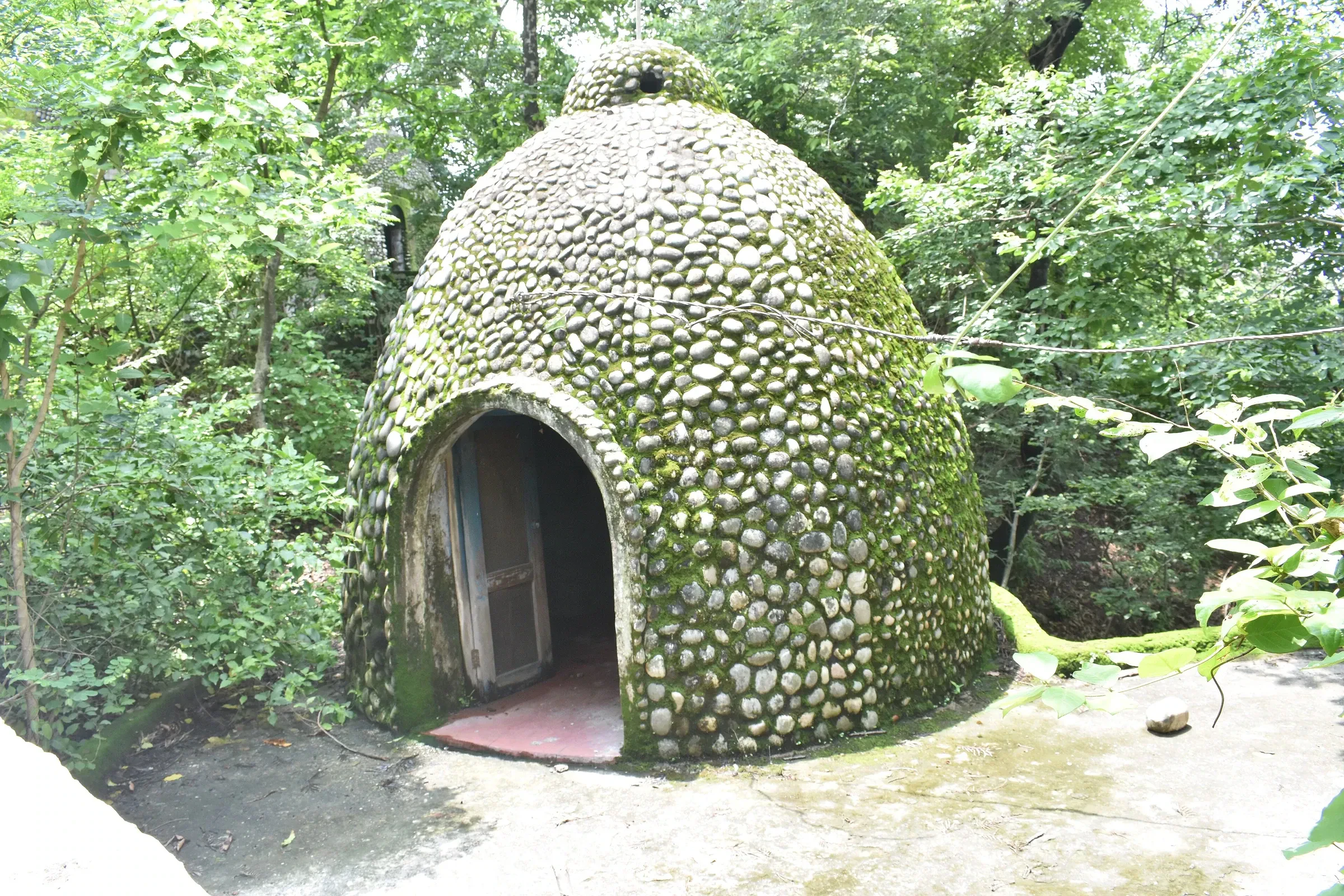
In February 1968 the Beatles came here to study meditation with Maharishi Mahesh Yogi. The ashram has been abandoned for decades and now sits inside Rajaji Tiger Reserve, its meditation huts and domed halls covered in fan art and graffiti left by visitors. Entry is ₹1,200 for foreigners and ₹200 for Indian and SAARC visitors, with an extra charge for an SLR camera (₹2,000 for foreigners), and the forest department lets visitors in after sunrise and before sunset. Give it an hour or two to walk around properly.
Yoga schools and ashrams
Rishikesh calls itself the Yoga Capital of the World, and there's a studio or ashram on almost every lane in Tapovan. A single drop-in class typically costs ₹300 to ₹350, though some studios charge less or more, and you don't need to book ahead. Beyond the drop-in scene, a few ashrams are worth knowing by name if you want to go deeper:
- Parmarth Niketan, on the east bank, is one of the largest ashrams in town and hosts the International Yoga Festival every March.
- Sivananda Ashram, near Ram Jhula, was founded in 1936 by Swami Sivananda and is run by the Divine Life Society. It runs free yoga courses, though donations are welcome.
- Yoga Niketan, founded in 1964, sits on seven acres of land and runs courses certified by the Ministry of AYUSH.
Try a class or two at different places before committing to a longer course. Our Rishikesh travel guide has more on how the teacher-training courses work and what they cost.
Neer Garh waterfall
Neer Garh is a series of small waterfalls in the forest on the Laxman Jhula side of town. You get there by road and then walk uphill through the trees, and it's a good half-day out if you want a break from the river and the crowds. The pools are used for swimming, but ask locally about conditions before you get in.
Day trip: sunrise at Kunjapuri
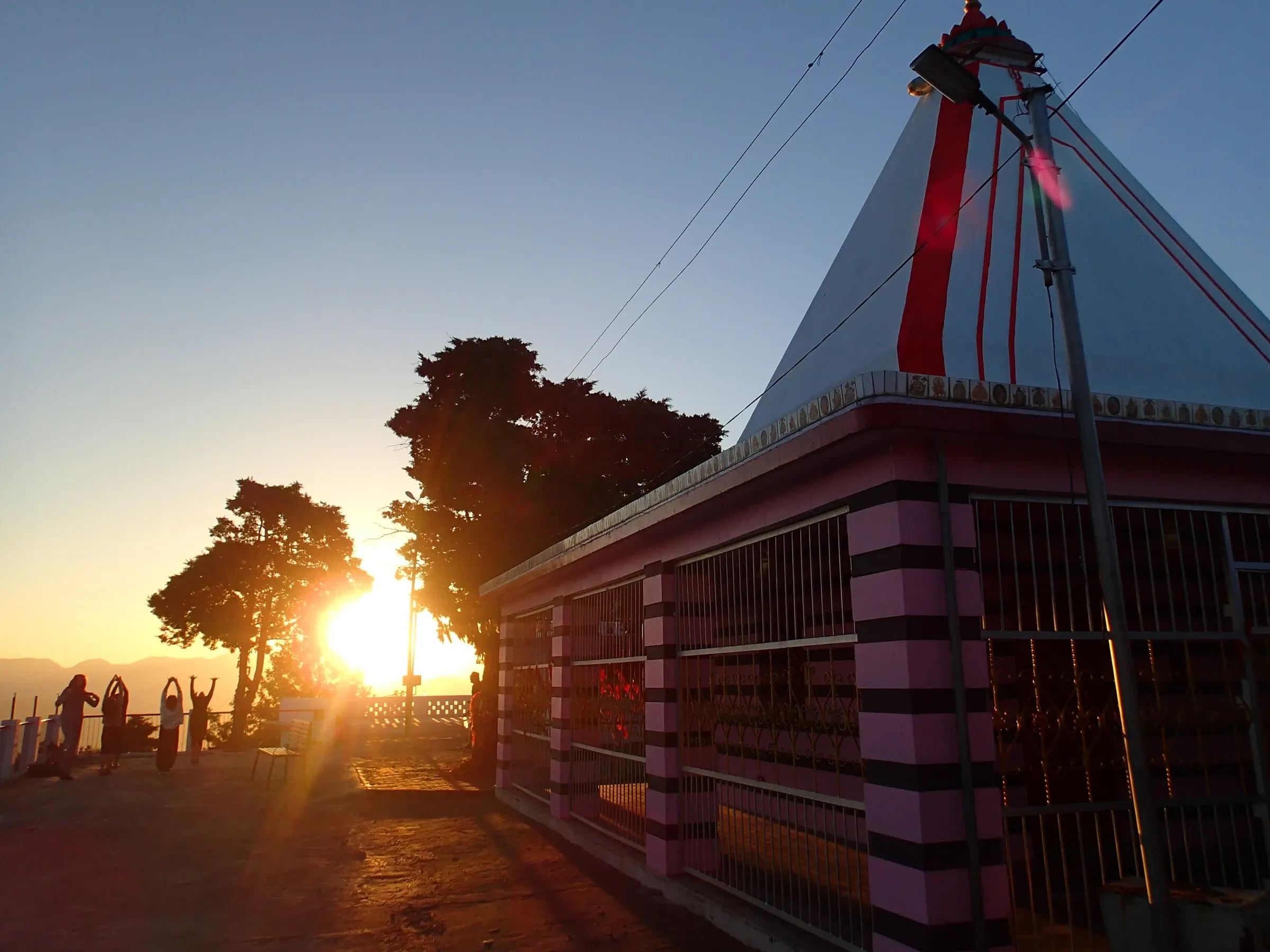
Kunjapuri is a hilltop temple at about 1,650 to 1,700 m, some 25 to 30 km by road from Rishikesh. On a clear morning, the view stretches to the snow peaks of the Garhwal Himalaya. Taxis and tours leave Tapovan about an hour before sunrise to get you there in time, and it's back down and free again by mid-morning.
Day trip: Devprayag, where the Ganga is born
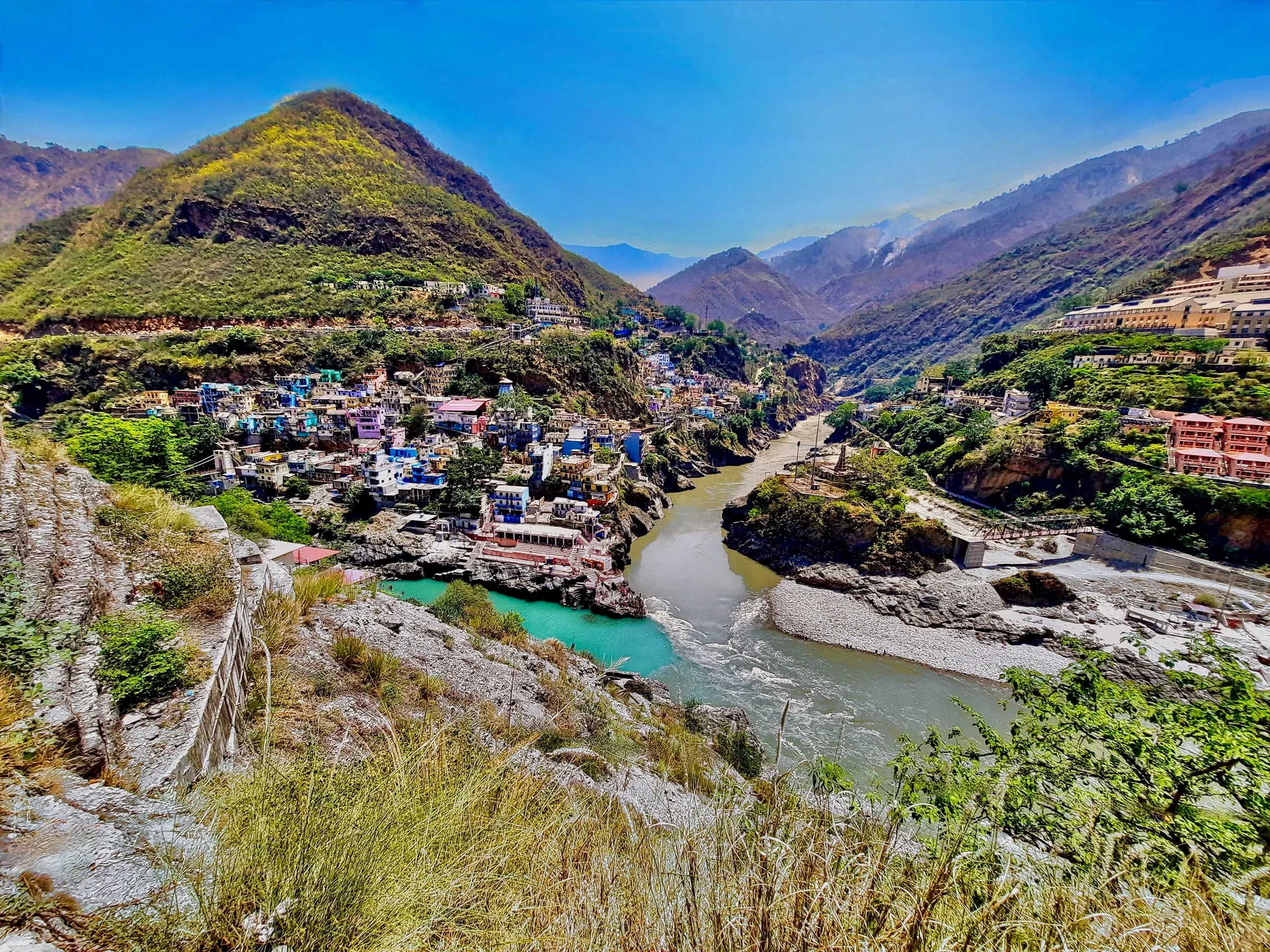
Devprayag is the confluence where the Bhagirathi and Alaknanda rivers meet and take on the name Ganga, about 72 km and roughly 2 to 3 hours' drive from Rishikesh. From the road, a short walk downhill and a crossing over a suspension bridge bring you to the sangam itself, where the two rivers run side by side in visibly different colours before they mix. A climb up to the old Raghunath Temple, and sometimes a stop at Vashishta Gufa, a meditation cave by the river, usually round out the day. It's a full day out rather than a quick detour, so it suits people who already have a few days in Rishikesh.
Day trip: Neelkanth Mahadev temple
Neelkanth Mahadev is a Shiva temple about 32 km from Rishikesh, in Pauri Garhwal. It sits in forest where the Pankaja and Madhumati rivers meet. Tradition says it marks the place where Shiva drank the poison that came up when the gods and demons churned the ocean, and that it turned his throat blue. Most visitors go by taxi or shared jeep. Walkers can take a path of roughly 10 to 12 km each way, which one trekking operator puts at four to five hours, starting near Ram Jhula. The temple is busiest around Maha Shivaratri in February or March and during Shravan in July and August, when Kanwar pilgrims walk in from Haridwar. Listings say entry is free, but opening hours vary between sources, so ask locally before you go.
Cafes in Tapovan
Tapovan's cafe scene is one of the reasons people end up staying longer than planned. Rooftop cafes with Ganga views, among them Little Buddha, Beatles Cafe and Cafe de Goa, are well known for slow mornings, banana pancakes and a laptop-friendly table if you want to work for a few hours. Smaller lane cafes, without much of a sign beyond a handwritten menu, often do the cheapest and best thalis and momos in town. Carry cash: plenty of the smaller places don't take cards.
Alcohol and meat: know the local rules
Rishikesh is vegetarian and dry by law. Selling meat, fish and eggs in the town has been banned since 1956, upheld by India's Supreme Court in 2004, and alcohol isn't sold within the town limits either. Every menu in Tapovan and around the bridges is vegetarian as a result. If a proper night out matters to you, you'll need to look elsewhere on your India trip; our Rishikesh & Himalaya trip reaches Mussoorie, where the rules are different, on its final days.
Things to do on our trips
India Rishikesh & Himalaya builds in the aarti at Parmarth Niketan, a drop-in yoga class in Tapovan, and a free day for the Beatles Ashram, Bajrang Setu or Neer Garh, alongside its rafting and Kunjapuri sunrise. It is scheduled outside the monsoon closure.