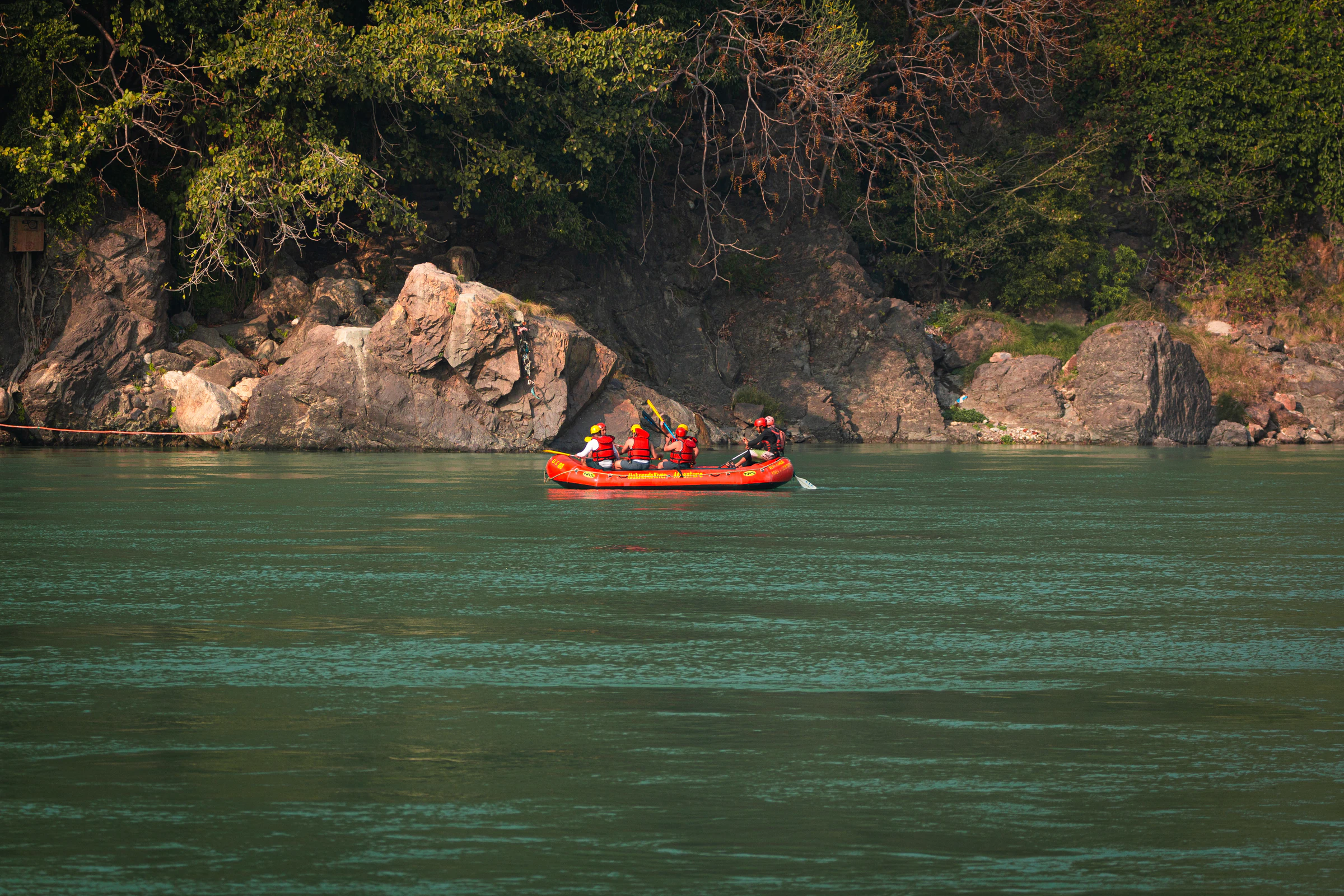
White-water rafting on the Ganges is the reason a lot of people come to Rishikesh in the first place. The river drops out of the Himalaya here, so the rapids are real, but the run finishes in calm water near town, which makes it manageable for a first-timer with a good operator.
This guide covers the four stretches, the season, how to pick a licensed operator, the age and weight rules, and what to expect on the water, plus cliff jumping and camping by the river. For everything else on planning a Rishikesh trip, see our Rishikesh travel guide.
The four rafting stretches from Rishikesh
Every commercial run ends in the same stretch of calm water near town, so the only real choice is where you start. The four put-in points, from shortest to longest:
| Stretch | Distance | Rapids | Time on the water | Approx. price per person (2026) |
|---|---|---|---|---|
| Brahmapuri | 9 km | Grade I to II | about 1.5 hours | ₹600 |
| Shivpuri | 16 km | Grade II to III | about 2.5 hours | ₹1,000 to ₹1,200 |
| Marine Drive | 24 to 25 km | Grade III | about 3 to 4 hours | ₹1,500 to ₹1,700 |
| Kaudiyala | about 36 km | Grade III to IV | about 5 to 6 hours | about ₹2,500 |
- Brahmapuri is the easy, family-friendly run: mostly flat water with a couple of small rapids, good if you just want a first taste of the river.
- Shivpuri is the one most people book. It has enough rapids to feel like real rafting, including the well-known "Golf Course" and "Return to Sender", plus long flat sections in between for swimming and cliff jumping. It's also the stretch our Rishikesh & Himalaya trip rafts.
- Marine Drive adds a longer drive to the put-in and bigger, more continuous rapids. Go for this if Shivpuri sounds too tame.
- Kaudiyala is the full-day option, starting furthest upstream with the biggest rapids on the commercial run. It's a longer day, and some operators build in a stop for lunch or a night of camping partway down.
Prices vary by operator and season, and usually include the raft, safety gear and a return transfer from Rishikesh or Tapovan to the put-in point. Ask exactly what's covered before you pay: some operators charge extra for photos or video, a wetsuit in the cooler months, or a locker for your things.
When is rafting season in Rishikesh?
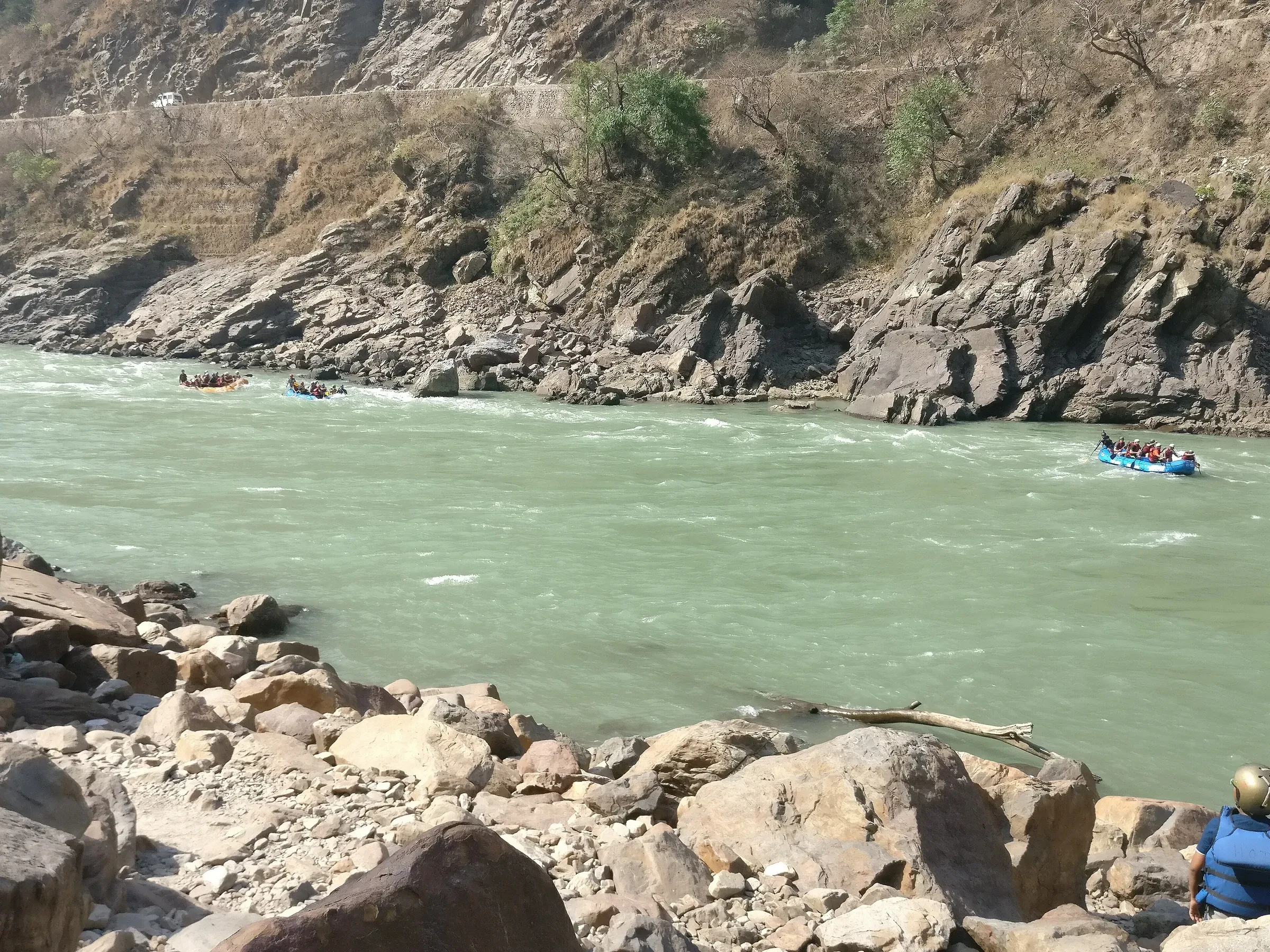
Rafting runs from late September to the end of June, and it's shut for the monsoon while the river runs high, fast and brown. The Uttarakhand Tourism Development Board (UTDB) and the Ganga River Rafting Management Committee open the season with a ceremony at Shivpuri each year; the 2026 to 2027 season opened on 23 September, with rafting from 24 September (Pioneer Edge; ETV Bharat). Anyone offering rafting trips during the monsoon closure isn't operating legally. For the best months to combine rafting with the rest of a Rishikesh trip, see our Rishikesh weather guide.
How to choose a licensed rafting operator
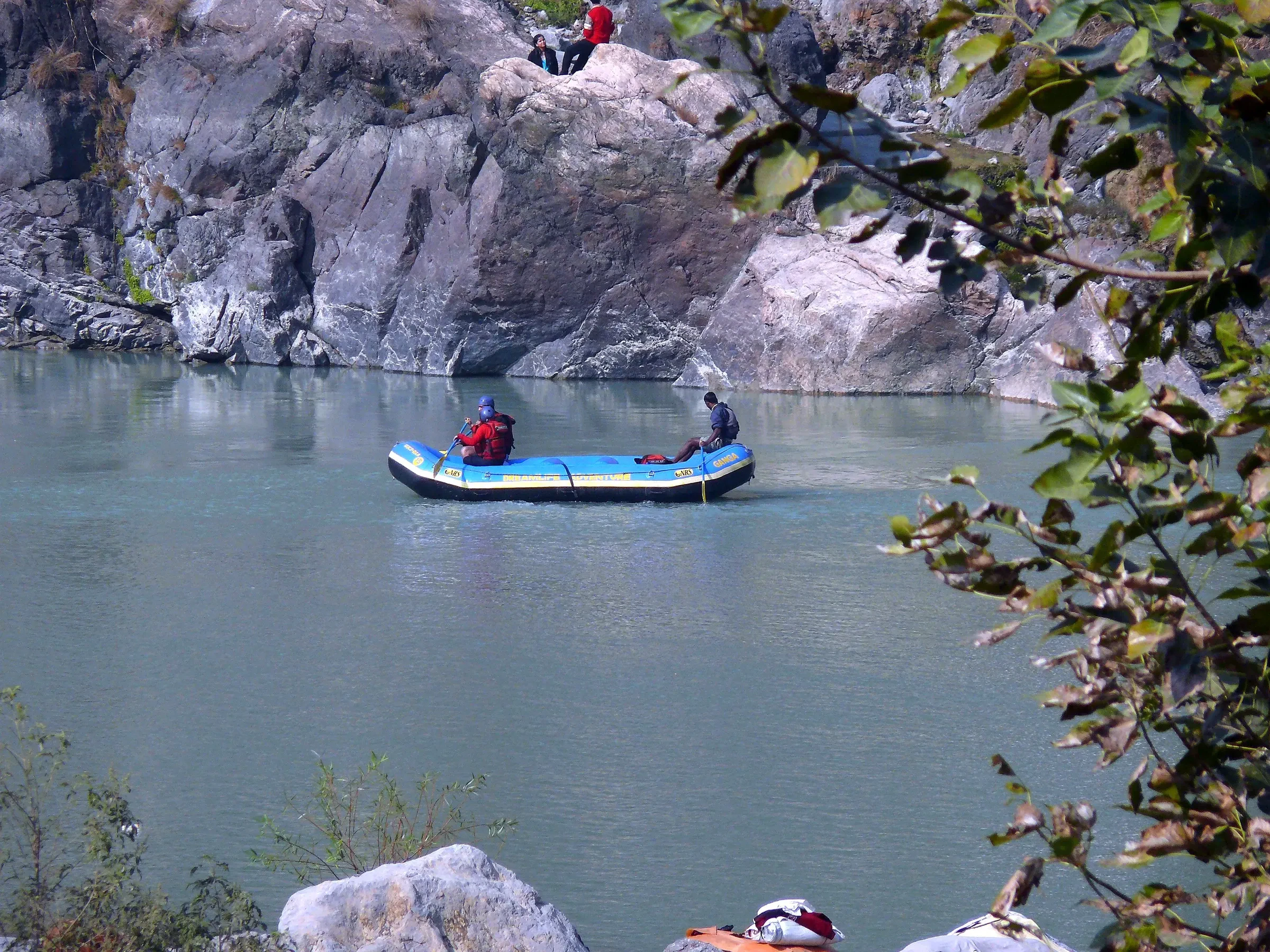
Only firms registered and licensed by the UTDB under the Uttarakhand River Rafting/Kayaking Rules, 2014 are allowed to run commercial rafting trips, and licences are renewed each season. For 2026 to 2027, the UTDB issued 45-day temporary licences from 23 September, with firms moving to a permanent licence once they complete the paperwork and pay the fee (Pioneer Edge). The board is also rolling out a Tourist Guide Portal that gives registered guides a digital ID card, and it's training guides in Wilderness First Aid and CPR.
In practice:
- Ask to see the operator's licence and the guide's ID. A legitimate outfit won't mind showing it.
- Check the raft crew is trained, ideally in first aid and rescue, not just paddling.
- Get a safety briefing before you get on the water. If an operator skips it, that's a red flag.
- Be wary of anyone offering rafting during the monsoon closure, or a price that seems too low for the stretch and gear on offer.
- Book through your hostel, a homestay you trust, or a known operator rather than the first person who approaches you at the roadside.
Age, weight and health rules
You need to be at least 14 to raft in Rishikesh; there's no upper age limit set out in the rules, though some operators ask older or less able rafters to confirm they're fit and well (Rishikesh Rafting). Weight limits vary by operator, but most set a minimum of roughly 35 to 45 kg and a maximum of about 90 to 100 kg. Rafting while drunk or on drugs isn't allowed, and operators are supposed to refuse anyone who's intoxicated. Tell your operator about any heart, back or breathing condition before you book, and check that your travel insurance covers white-water rafting.
What's included in a rafting trip
A standard booking includes:
- A life jacket and helmet for every rafter, worn the whole time you're on the water
- A raft, paddle and a trained guide steering from the back
- A safety briefing before you set off
- Return transport between Rishikesh or Tapovan and the put-in point
It usually doesn't include a wetsuit (useful from about November to February, when the water is cold), photos or video, or food beyond maybe a bottle of water. Ask what's covered when you book, and confirm the group size per raft; six to eight rafters plus the guide is typical.
Cliff jumping on the river
Most rafts stop at least once on a calmer stretch for a swim, and on the Shivpuri run in particular, jumping from the rocks above the river is a regular part of the trip. Jumps are usually in the 20 to 40 ft range. Only jump where your guide says it's safe: river depth and current change with the season and with how much water is coming down from upstream, and a spot that's fine one week can be too shallow or too fast the next.
Camping by the river
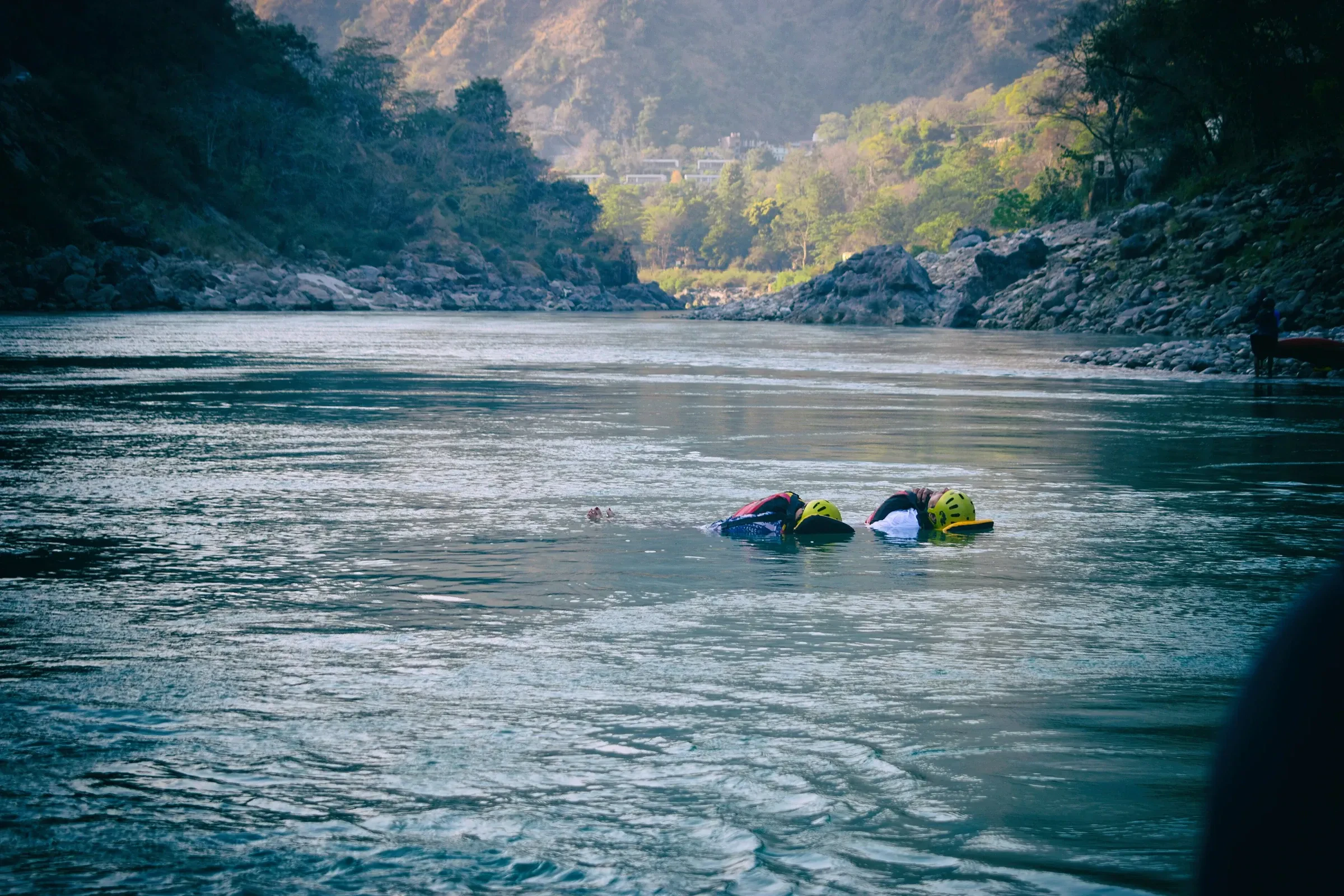
Beach camps along the Ganga between Shivpuri and Kaudiyala are a popular add-on to a rafting trip, with a tent, dinner and a bonfire on the riverbank. Camping here is regulated by the National Green Tribunal (NGT). Under its 2017 order, only camps at officially identified sites, set back at least 100 metres from the river, may operate, and wild camping right on the water's edge isn't allowed (Down To Earth). Ask the operator to confirm the camp is currently approved. Book a camp that's part of a recognised rafting-and-camping package rather than turning up and pitching a tent yourself, and expect the same monsoon closure as rafting itself.
How much does rafting cost in 2026?
| Stretch | Price per person |
|---|---|
| Brahmapuri (9 km) | about ₹600 (US$6.25) |
| Shivpuri (16 km) | about ₹1,000 to ₹1,200 (US$10.41 to US$12.49) |
| Marine Drive (24 to 25 km) | about ₹1,500 to ₹1,700 (US$15.62 to US$17.70) |
| Kaudiyala (about 36 km) | about ₹2,500 (US$26.02) |
Figures use ₹96.07 to US$1, September 2026 rates. Prices vary between operators and can rise a little at weekends and in peak season (October to November and March to April). Group bookings are usually cheaper per person than booking alone. Coverage of the 2026 season launch quoted rides from ₹1,000 up to ₹3,500 depending on the route (ETV Bharat), so the longest run can cost more than the ₹2,500 shown here.
Is rafting in Rishikesh safe?
Rafting with a licensed operator, in season, wearing the gear provided, is a manageable activity for a reasonably fit adult with no relevant health conditions. That said, the Ganga is a real Himalayan river, not a theme-park ride:
- The current is strong even in calm-looking water. Only swim where your guide says it's safe, and never swim alone away from the group.
- Don't raft outside the season. The monsoon closure exists because the river is genuinely more dangerous then.
- Insurance matters. Make sure your policy covers white-water rafting before you book, and check it also covers cliff jumping if you plan to do that too.
Our Rishikesh travel guide has more on staying safe in Rishikesh generally, including the river risks away from organised rafting.
Rafting on our trips
India Rishikesh & Himalaya rafts the Shivpuri stretch on Day 4, after two easier days settling in with a yoga class and the evening aarti, using a licensed operator and full safety kit. It is scheduled outside the monsoon closure, so every departure lands inside the rafting season.