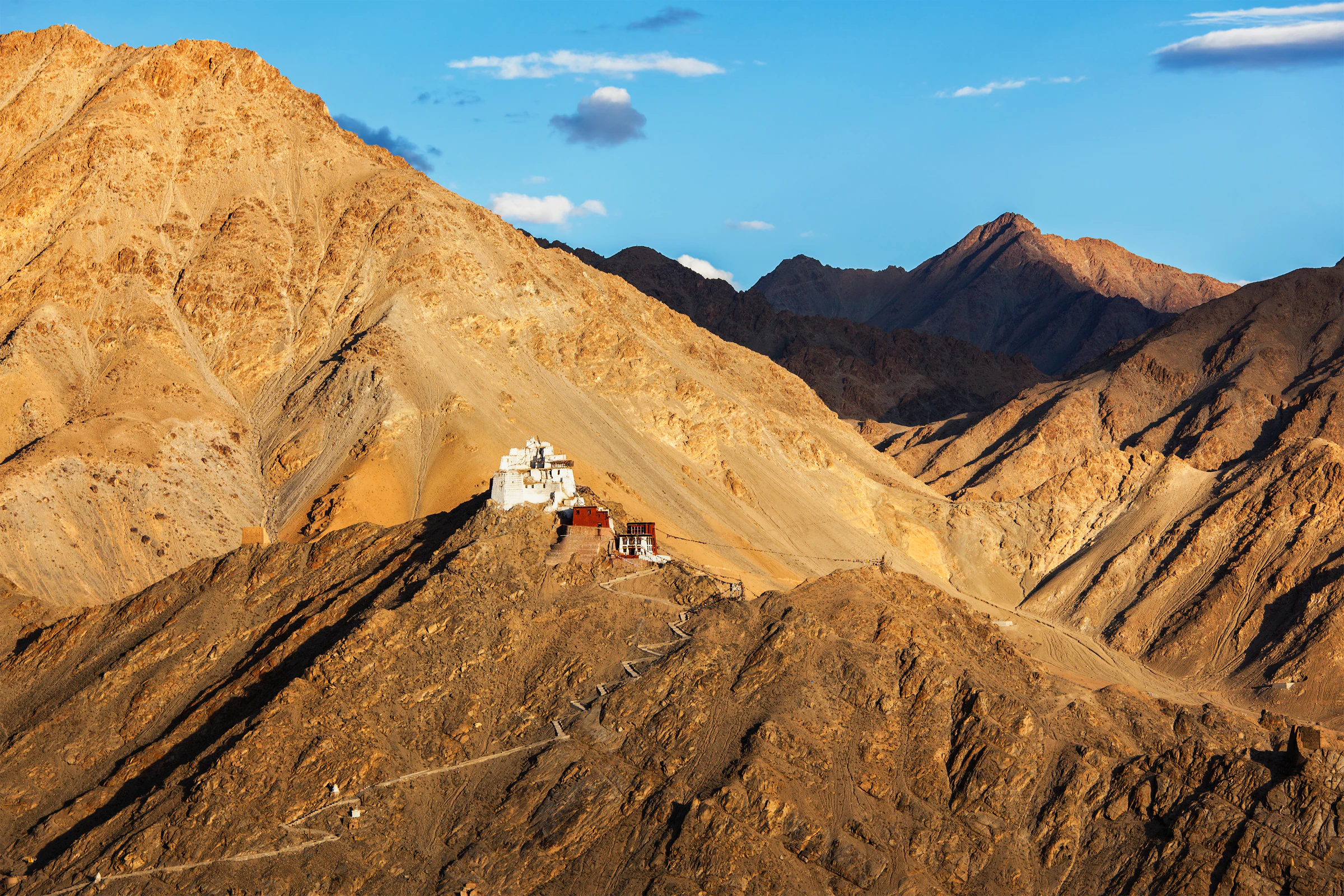
Ladakh is India's high-altitude desert: bare brown mountains, whitewashed monasteries, and lakes that change colour through the day. This route flies into Leh, builds in the rest the altitude demands, then loops out to Nubra's dunes and two of the highest lakes in the country. It doesn't route through Kashmir; Kashmir has no itinerary of its own on this site, for reasons covered in our Ladakh travel guide.
At a glance
The route
6 stops
- Minibus
Is this route for you?
This suits adventure travellers, photographers and anyone drawn to high-altitude landscape who's happy to plan around a short season and take the altitude seriously. It's not a first-timer's India route: the road conditions, the altitude and Ladakh's limited medical infrastructure make it a step up from most of the country.
Pick something else if you want a gentler introduction to India, our Kerala route is the opposite kind of trip, backwaters and tea hills rather than high passes. If you want Himalayan scenery without the altitude commitment, the Himachal Pradesh route tops out far lower. Spiti Valley is Ladakh's quieter, remoter cousin, reached by road from Shimla or Manali, for travellers who want a similar landscape with no flight into the altitude.
Day by day
Do nothing, on purpose
Leh
- Morning
- Flights from Delhi take about 1 hour 25 minutes and land you at 3,500 m in under two hours from near sea level. Today is about resting, not sightseeing.
- Afternoon
- A short, flat walk to the Main Bazaar if you feel fine, otherwise stay in and rest.
- Evening
- An early night. Drink 2 to 3 litres of water through the day and skip alcohol.
Eat A simple thukpa (noodle soup) for dinner, easy on a stomach that's still adjusting to the altitude.
Local tip Headache, nausea, poor sleep and loss of appetite are early signs of altitude sickness. If they get worse rather than better, tell your guesthouse or a doctor rather than pushing on.
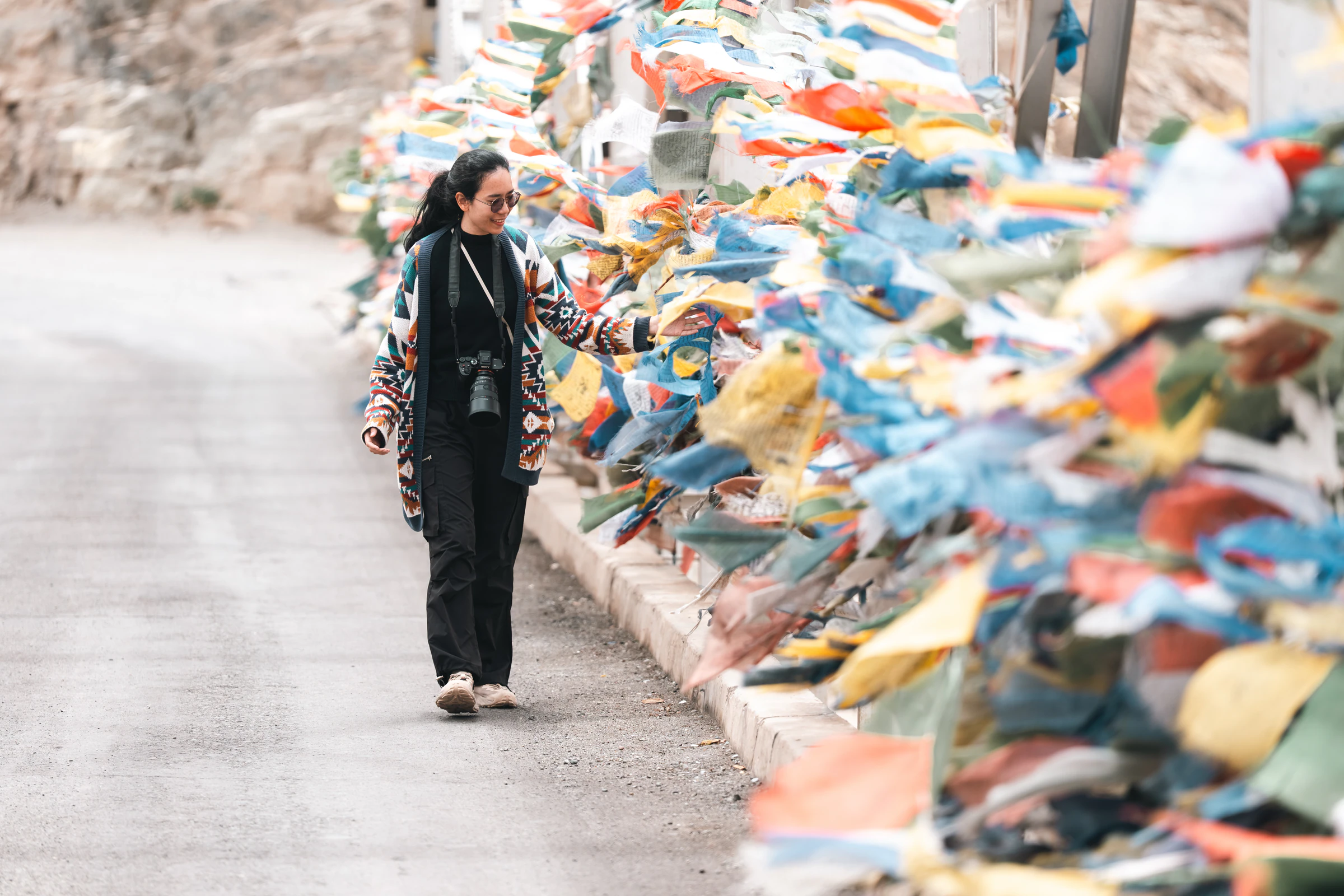
A second rest day, with a little more movement
Leh
- Morning
- Leh Palace, the nine-storey former royal palace above the old town, and the Namgyal Tsemo monastery and fort just above it for the best view over town.
- Afternoon
- Still nothing strenuous. The Main Bazaar is where you'll sort out any last permit paperwork with your travel agent.
- Evening
- The Shanti Stupa for sunset, an easy uphill walk if you're feeling fine by now.
Eat Momos and skyu, a Ladakhi pasta-and-vegetable stew, at a Main Bazaar café.
Local tip Since 2022, a two-day stay in Leh has been required before crossing Khardung La, so this second day isn't just a safety recommendation, it's the rule for tomorrow's drive.
The Indus Valley monasteries
Leh
- Morning
- Thiksey, about 19 km from Leh, built up a hillside like a small version of the Potala Palace in Lhasa. Morning prayers run from about 6am to 7am and visitors can sit in quietly.
- Afternoon
- Hemis, about 45 km from Leh, the largest monastery in Ladakh, with a museum of old thangkas and manuscripts. Shey, on the way back, has an old palace and a large seated Buddha.
- Evening
- Free, back in Leh.
Eat A Ladakhi thali or more thukpa in the Main Bazaar.
Local tip With two rest days and this gentler day behind you, tomorrow's crossing of Khardung La is the first real test of the altitude plan, so keep resting tonight rather than treating this as the trip's real start.
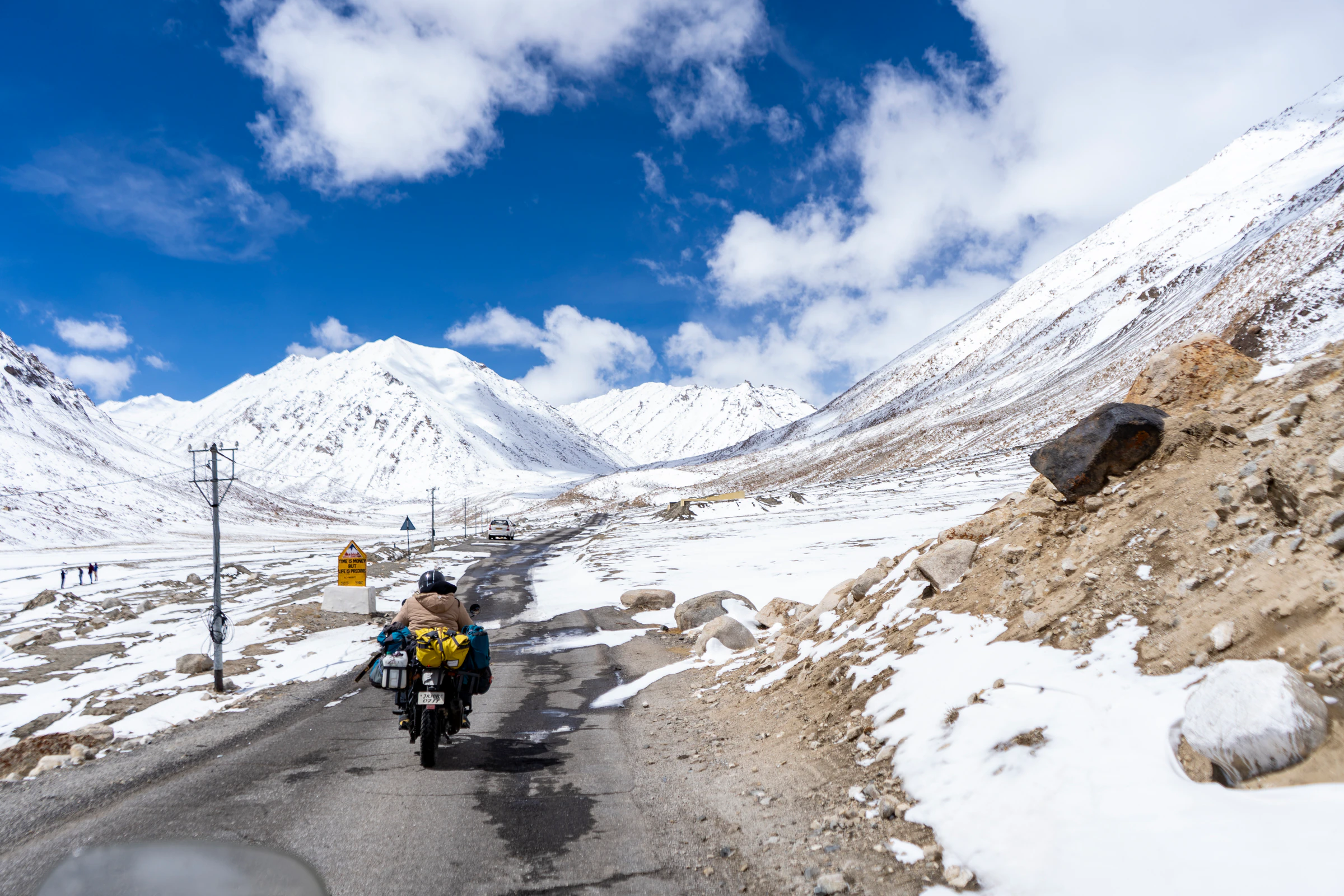
Over Khardung La to the dunes
Nubra Valley
Getting there Leh to Nubra Valley by taxi or a self-drive rental, about 120 km over Khardung La (5,359 m, one of the world's highest motorable passes), 5 to 6 hours with a brief stop at the top. Leh's taxi union runs a fixed 2-day Nubra return package for about ₹11,800 to 13,000 per vehicle (about £92 to £102 / $123 to $135), split between 4 to 6 people sharing a jeep.
- Morning
- The drive, with a short photo stop at Khardung La's summit signboard.
- Afternoon
- Diskit Monastery and its 32 m Maitreya Buddha statue, consecrated by the Dalai Lama in 2010.
- Evening
- Settle in for the night, Nubra sits at a much kinder altitude than Leh (Diskit is about 3,144 m).
Eat Momos again, or apricot products, Ladakh's Sham and Nubra valleys are known for their apricots.
Local tip Don't linger long at Khardung La itself, it's a brief stop for photos, not a place to spend time given the altitude.
Hunder's sand dunes
Nubra Valley
- Morning
- Free, or a longer look around Diskit village.
- Afternoon
- Hunder, a short drive on from Diskit, where the valley floor turns to sand dunes between the mountains. The double-humped Bactrian camels kept here are a Silk Road legacy and specific to this valley. Our trips don't include camel rides.
- Evening
- A walk along the river, or rest before tomorrow's drive.
Eat A simple valley thali.
Local tip Nubra's cafés and shops mostly cluster around Diskit and Hunder; there's little beyond them, so pick up anything you need for the next two days here.
The colour-changing lake
Pangong Tso
Getting there Nubra to Pangong, about 150 km, roughly 5 to 6 hours via the Shyok road. Whether that road is open to foreigners and covered by your permit changes from year to year. If it isn't, the route runs back over Khardung La and Chang La and takes much longer. Ask your agent which applies before you set off.
- Morning
- The drive, a long but genuinely spectacular one.
- Afternoon
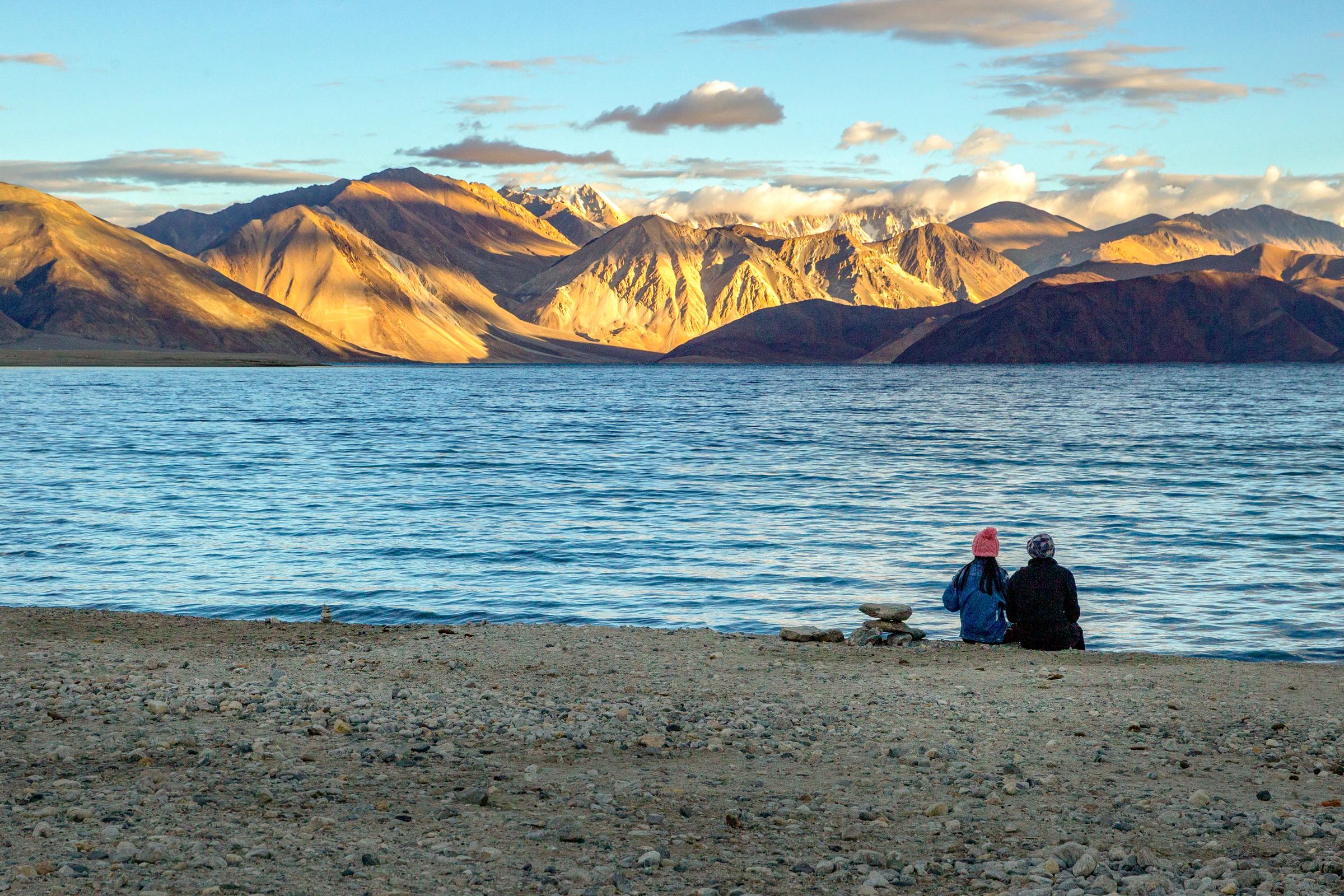
- Arrive at the lake and walk the shore as the water shifts from turquoise to deep blue through the afternoon.
- Evening
- Watch the colour change again in the evening light. Nights at the lake are cold even in August.
Eat A simple thali; bring a warm layer for dinner outside.
Local tip Only part of Pangong lies in India. The rest is in Tibet, under Chinese control, so you can't walk or drive further along the shore than your permit allows.
Pangong at sunrise, then back
Leh
Getting there Pangong to Leh, about 150 to 170 km back over Chang La, roughly 5 hours.
- Morning
- Sunrise at the lake, a different colour palette from the evening before, and worth the cold.
- Afternoon
- The drive back to Leh.
- Evening
- Free in Leh, an early night before the longest driving day of the trip tomorrow.
Eat Whatever you fancy in the Main Bazaar, this is the easiest food choice of the trip.
Local tip Do laundry and buy any supplies you need tonight, Tso Moriri has very little in the way of shops.
The quiet lake
Tso Moriri
Getting there Leh to Tso Moriri, about 220 km, 6 to 7 hours via Upshi and Chumathang, the toughest single driving day on this route logistically. Leh's taxi union prices this run at around ₹12,500 to 13,700 per vehicle (about £98 to £107 / $130 to $143), again split between the group.
- Morning
- The drive south begins, remote and with very little infrastructure along the way.
- Afternoon
- More driving, the last stretch into Korzok.
- Evening
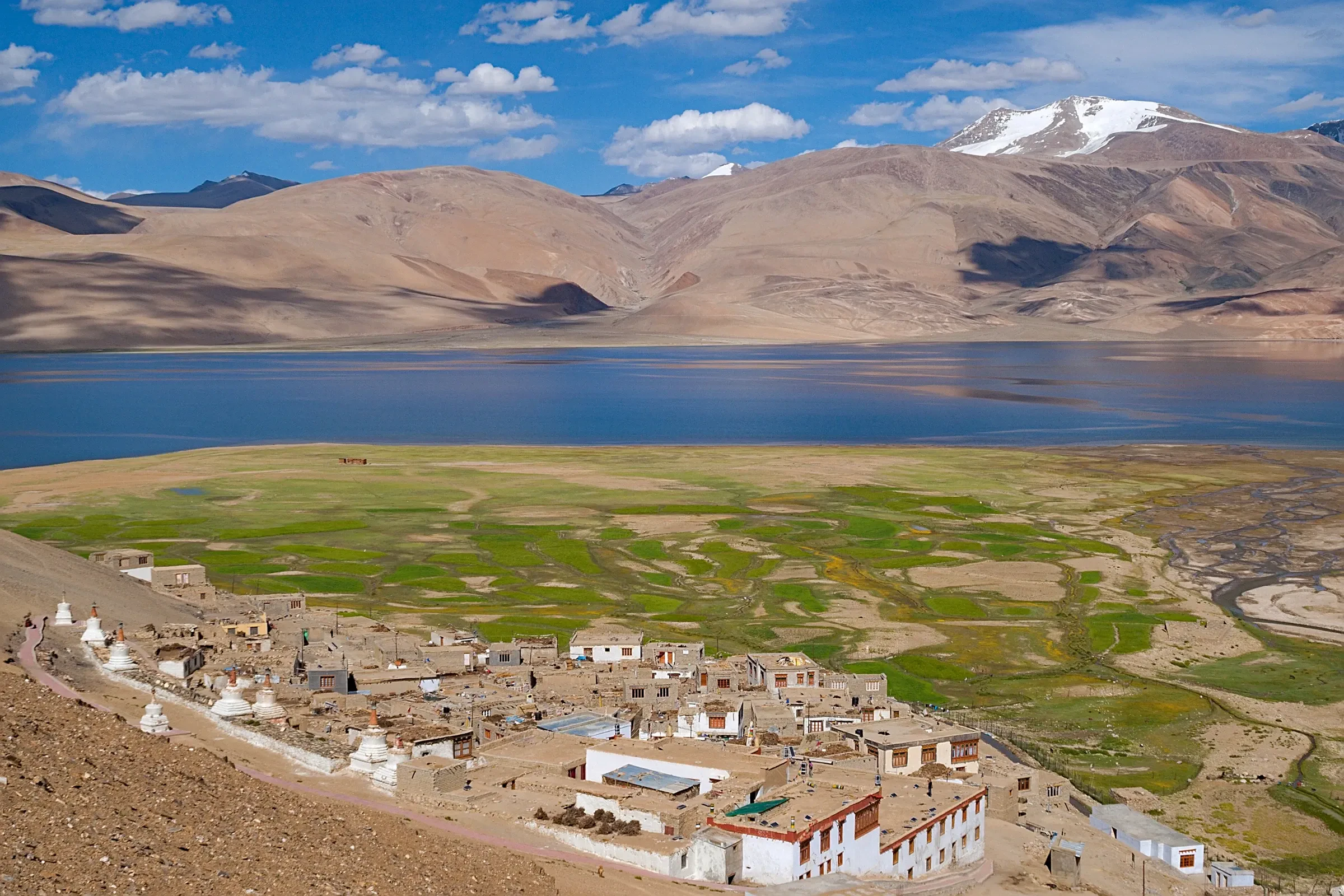
- Arrive at Korzok, the only village on the shore. Tso Moriri (4,522 m) is a protected Ramsar wetland, quieter than Pangong, and home to migratory birds and, with luck, the wild ass known as kiang.
Eat A simple thali in Korzok.
Local tip Expect little to no phone signal out here. Most people end up liking the break from it.
Back from Tso Moriri
Leh
Getting there Tso Moriri to Leh, about 220 km, 6 to 7 hours. Foreigners go back through Leh between the lakes; ask your agent before planning any direct link between Pangong and Tso Moriri.
- Morning
- A quiet last morning by the lakeshore at Korzok before the drive.
- Afternoon
- The long drive back to Leh, with a stop for lunch on the way.
- Evening
- Reach town by early evening.
Eat A proper dinner in Leh, most people are glad to be back at this altitude and out of the vehicle.
Local tip Book your onward flight for the morning. Most flights in and out of Leh run before midday.
Depart
Leh
- Morning
- Fly out of Leh's Kushok Bakula Rimpochee Airport. Flights to Delhi run through the morning.
Eat A last breakfast in the Main Bazaar before heading to the airport.
Local tip If you're connecting to an international flight the same day, build in a generous buffer, Leh's flight schedule can shift with weather.
The 1-week version
A week works if you cut Tso Moriri, which costs two of the trip's longest driving days for one lake.
| Day | Where | What | Eat |
|---|---|---|---|
| 1 | Leh | Arrive, rest completely | Thukpa |
| 2 | Leh | Leh Palace, Shanti Stupa at sunset | Momos and skyu |
| 3 | Leh | Indus Valley monasteries: Thiksey and Hemis | Ladakhi thali |
| 4 | Nubra Valley | Over Khardung La, Diskit Monastery | Apricot products |
| 5 | Pangong Tso | Nubra to Pangong direct, via the Shyok road if it's open on your permit | Camp thali |
| 6 | Leh | Pangong sunrise, back over Chang La | Main Bazaar food |
| 7 | Leh | Depart | Last breakfast |
What changes: the week skips Tso Moriri entirely and links Nubra straight to Pangong on Day 5 rather than returning to Leh in between, which only works if the direct Shyok road is open that season and on your permit; ask your agent before you plan around it. If it isn't open, add a day and route back through Leh, effectively making this an 8-day version instead.
What it costs
| Item | Price (₹) | About |
|---|---|---|
| Dorm bed in Leh | 550 to 700 | £4 to £5 / $6 to $7 |
| Meals (thali, momos, a café dinner) | 400 to 600 | £3 to £5 / $4 to $6 |
| Local prepaid SIM (one-off; postpaid Indian SIMs also work) | 300 to 500 | £2 to £4 / $3 to $5 |
| Shared taxi, Nubra return, 2 days (per vehicle, split 4 to 6 ways) | 11,800 to 13,000 | £92 to £102 / $123 to $135 |
| Shared taxi, Pangong or Tso Moriri (per vehicle, split 4 to 6 ways) | 12,500 to 13,700 | £98 to £107 / $130 to $143 |
| Delhi to Leh flight, one way | about 6,500 to 15,000, higher in summer | varies with the exchange rate |
Day to day in Leh itself is cheap: a dorm bed and meals come to the first two lines of the table. The real cost is the shared jeep for Nubra, Pangong and Tso Moriri, which is why nearly everyone splits one between 4 to 6 people rather than travelling alone.
Getting there, away and around
Fly from Delhi to Leh (about 1 hour 25 minutes) on Air India, IndiGo or SpiceJet, this route's normal way in. The road from Manali is the overland option. It usually opens between late May and mid-June (to tourists on 1 June in 2026) and closes in late October or November (on 20 November in 2025). It takes at least two days, with a night at Keylong or Jispa, and it's a good approach if you're coming from Himachal or Spiti. This itinerary doesn't route through Srinagar. The UK Foreign Office advises against all travel to the Union Territory of Jammu and Kashmir, except flying into and within Jammu city. Ladakh is a separate Union Territory and the FCDO page doesn't name it, but the Srinagar to Leh road runs through areas it does cover. Our Ladakh travel guide covers the detail, including when that road reopens each spring. Once you're in Ladakh, taxis booked through Leh's taxi union are the normal way to reach Nubra, Pangong and Tso Moriri, priced per vehicle and best shared with other travellers.
Permits for foreigners
Your Indian e-visa alone doesn't cover the protected areas on this route (our India visa guide has the entry rules). Nubra, Khardung La, Pangong and Tso Moriri need a Protected Area Permit, usually issued for two or more applicants through a registered agent, and valid for up to 7 days. In practice you apply through a registered agent in Leh, who adds their own fee to the environment, wildlife and Red Cross charges on the official portal, lahdclehpermit.in. If your permit's 7-day validity is tighter than your trip, or you're travelling alone, ask your agent how they handle both before you pay, there's no published solo exception, and it's the same rule our Ladakh travel guide sets out in full. Indian citizens don't need this permit, but pay an environment and wildlife fee on the same portal.
Best time and festivals on this route
June to September is the realistic window for this route: the Manali road is open, the high passes are mostly clear, and Pangong and Tso Moriri are accessible. Khardung La itself is kept open for much of the year, but snow can close it temporarily. July and August are the warmest and busiest months; September is quieter, with clear skies and colder nights at the lakes. Outside June to September this route doesn't work well: the Manali road closes, the Srinagar road is shut from about December or January until spring, and the lakes are hard to reach. Leh itself is reachable by air year-round if you want the town without the lakes.
Hemis Tsechu, the summer festival at Hemis Monastery, marks the birth of Guru Padmasambhava with two days of masked dances and usually lands inside this same June to September window, worth timing Day 3 around if the dates line up with your trip.
What to eat on this route
Ladakh's food is Tibetan-influenced Himalayan cooking: thukpa and momos everywhere, skyu (a Ladakhi pasta-and-vegetable stew) that's specific to this region, chhurpi (a hard yak-milk cheese snack), and apricot products from the Nubra and Sham valleys. Butter tea, a salted Tibetan-style tea, is worth trying once as an experience rather than a daily habit.
If you'd rather ride than sit in a jeep, our Ladakh Royal Enfield Expedition covers Nubra and Pangong from Manali over four high passes on the Manali to Leh road, the highest of them Tanglang La.