Bali is one of the easiest places in Asia to travel alone. Surf lessons put you with other people from your first morning, hostels run group dinners, and Ubud is full of solo travellers doing a course or a retreat on their own. The island is also bigger and more varied than the postcards suggest. Surf towns line the south coast, Ubud sits inland among rice terraces and a volcano, Amed's coast is quiet, and a few small islands lie just offshore.
This guide covers where to go, how many days you need, what to do, what to eat, getting around, the current entry rules and levy, temple etiquette and what things cost. For a day-by-day plan, see our Bali itinerary guide, and for the wider region including Lombok and Komodo, see our Bali and Indonesia travel guide.
Where to go in Bali
| Region | What it's like | Best for |
|---|---|---|
| Canggu | Surf beaches, cafes, coworking and traffic | First-timers and beginner surfers |
| Uluwatu (the Bukit) | Clifftop, reef breaks and a temple on the headland | Stronger surfers and sunset views |
| Seminyak | A more polished stretch of beach clubs, boutiques and restaurants | Shopping and a smarter night out |
| Ubud | Rice terraces, temples, yoga and the Mount Batur sunrise trek | Culture, food and a slower pace |
| Sanur | A calm east-coast town with a paved coastal path | A quiet base, and boats to the Nusa islands |
| Amed | Black sand fishing villages on the quiet east coast | Diving and snorkelling without the crowds |
| Munduk | Cool hill village in the north with waterfalls and coffee | Trekking and a day away from the coast |
| Nusa Penida, Lembongan and Ceningan | Cliffs, manta rays and rougher roads, a boat ride from Sanur | Cliff views and manta snorkelling |
For the full region-by-region breakdown, with who each place suits and how long to stay, see our where to go in Bali guide. If you're torn between the three most popular bases, our Canggu vs Ubud vs Uluwatu comparison weighs up surf, food, nightlife, cost and getting around.
Canggu, Uluwatu and Seminyak: the south coast
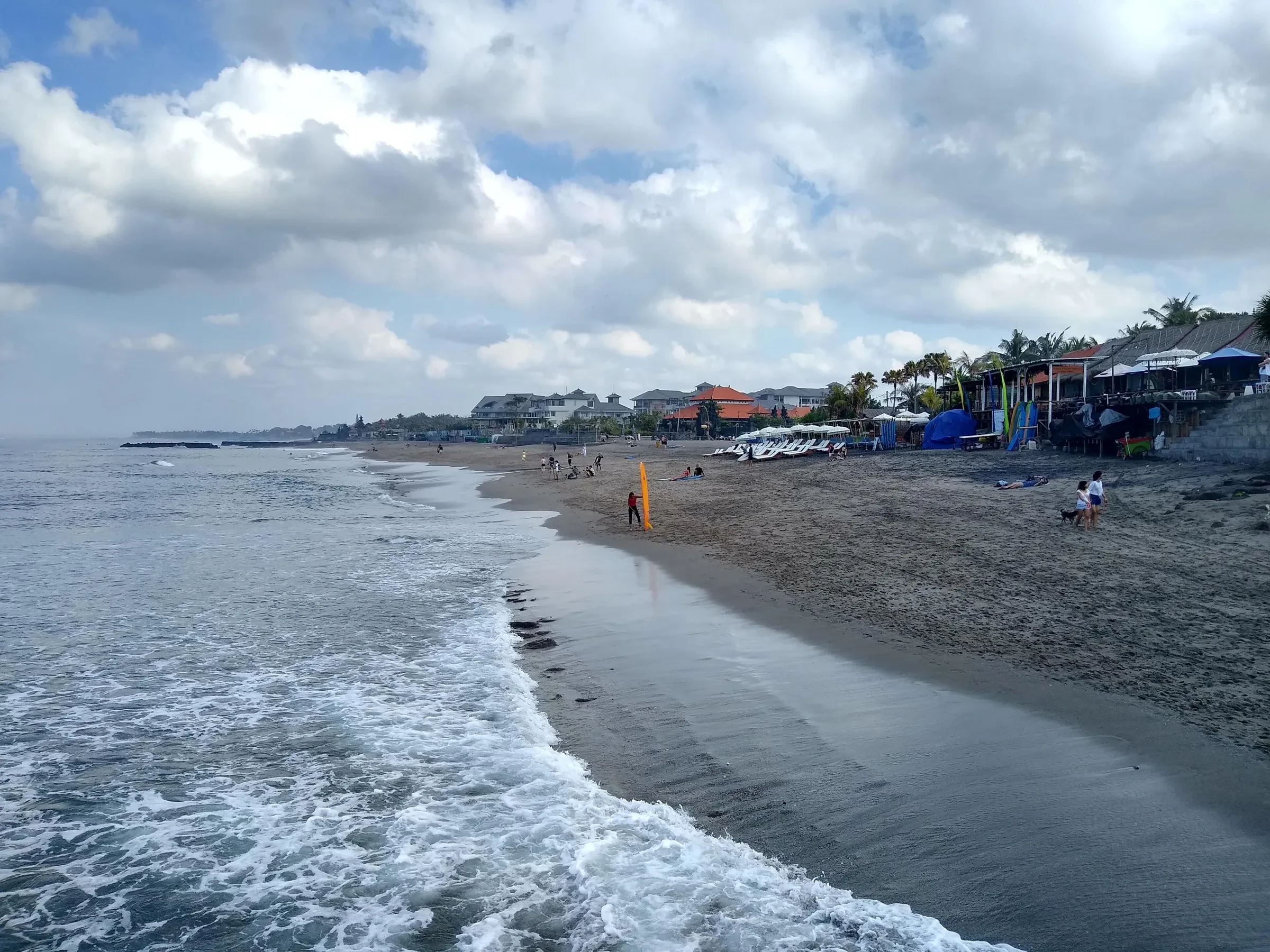
Canggu is where most solo travellers start. Beginner surf lessons run every morning on the sand at Batu Bolong, and cafes, coworking spaces and beach bars fill the gaps in between. The trade-off is traffic, which regularly grinds to a halt on the shortcut roads between the main strips. See our Canggu guide, things to do in Canggu and Canggu hostels.
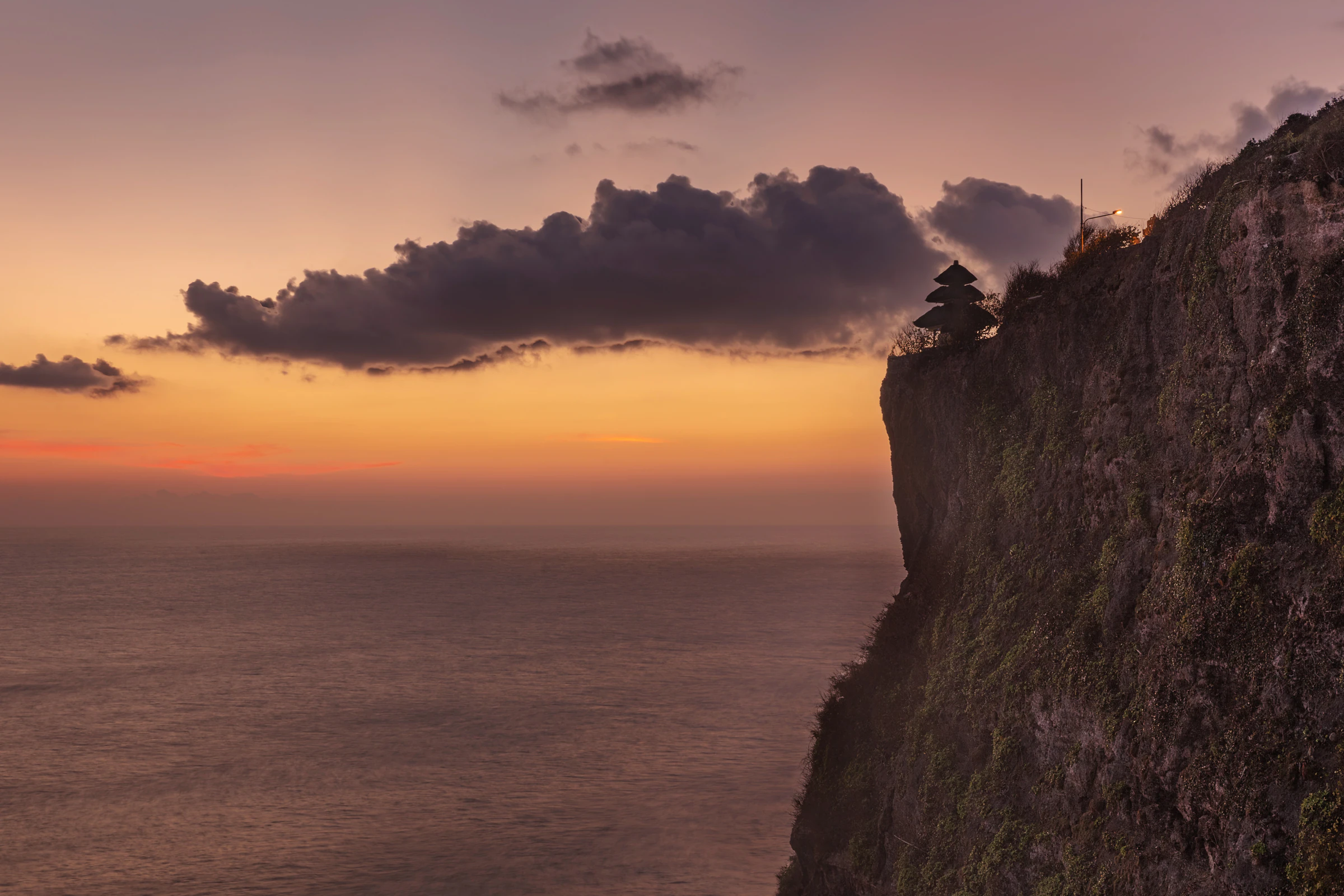
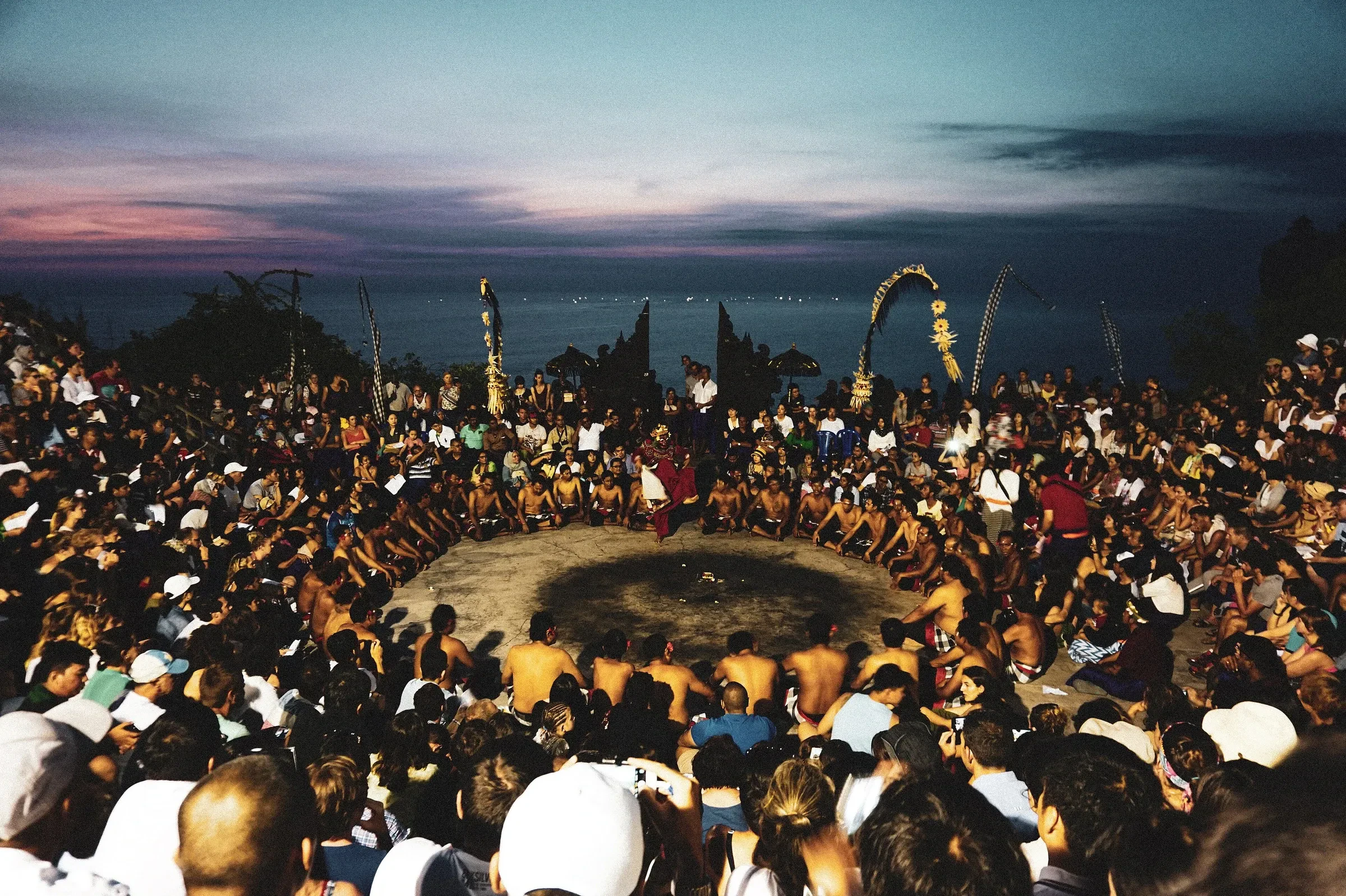
Uluwatu, on the Bukit peninsula in the far south, is for stronger surfers: reef breaks below limestone cliffs, from Baby Padang, the one genuinely beginner-friendly wave, up to Impossibles for advanced surfers only (the main Padang Padang barrel beside Baby Padang is for experts). Uluwatu Temple sits on the headland (entry about IDR 60,000 for adults per the temple's own site, though other listings differ), and the Kecak fire dance staged there in the early evening is one of Bali's best-known cultural shows (IDR 150,000 for adults and 75,000 for children, sold separately, again per the temple's site); two troupes alternate through the week, so check the day's schedule when you arrive. Our Uluwatu guide covers the temple, the dance, the beaches and every surf break, and our Bali surfing guide compares breaks island-wide.
Seminyak sits between Canggu and Kuta, with a more polished mix of beach clubs, boutiques and restaurants along a wide stretch of sand. It suits travellers who want beach access without giving up shopping and a proper night out.
Things to do in Bali
Beyond picking a base, most first trips are built around a handful of experiences: the Mount Batur sunrise trek, the Tegallalang rice terraces, a water temple like Tirta Empul, a surf lesson, manta ray snorkelling off Nusa Penida, the Uluwatu Kecak fire dance, and a Balinese cooking class. Our things to do in Bali guide goes through all of these with costs and how long to set aside for each.
Ubud and Mount Batur
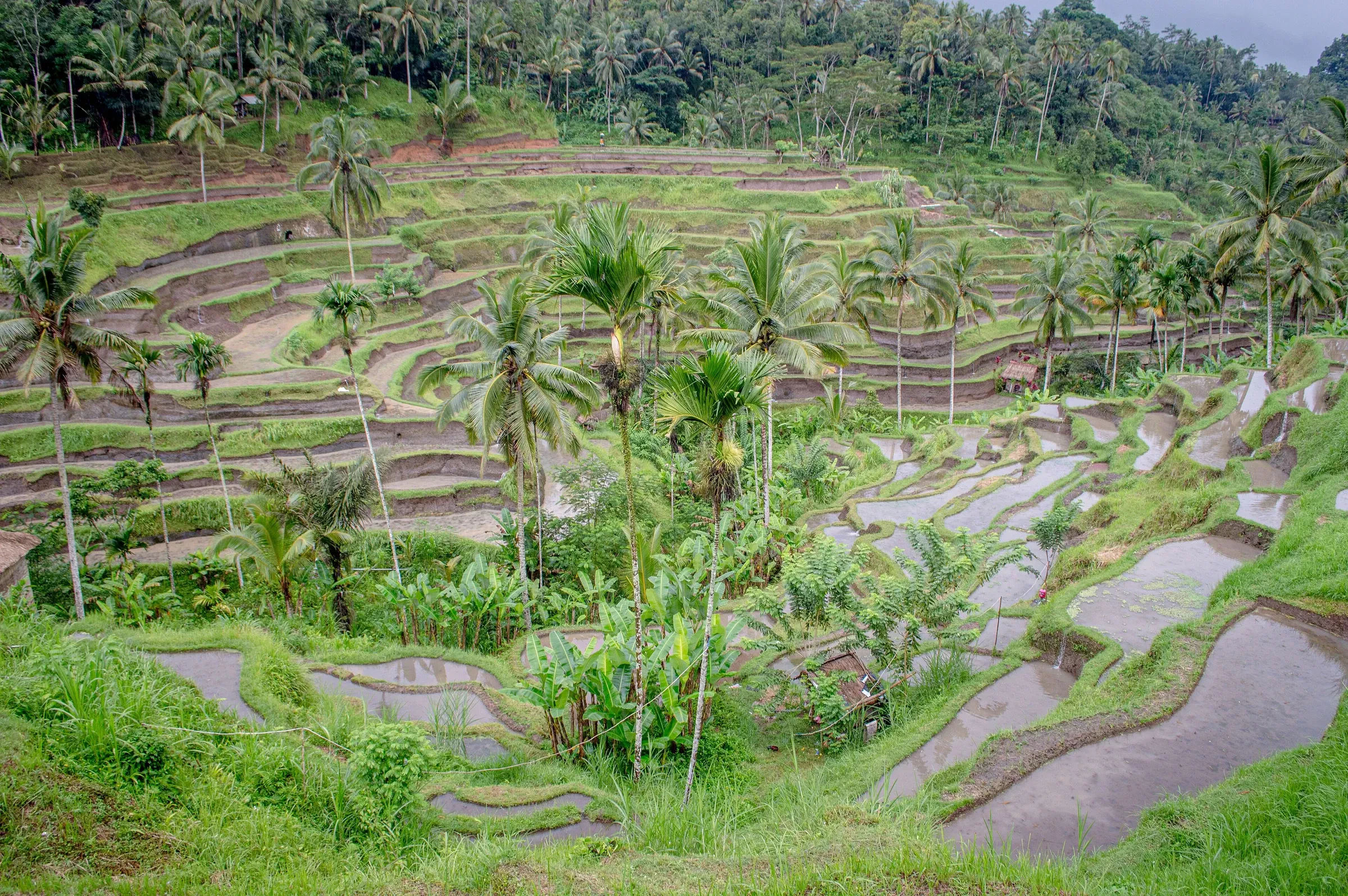
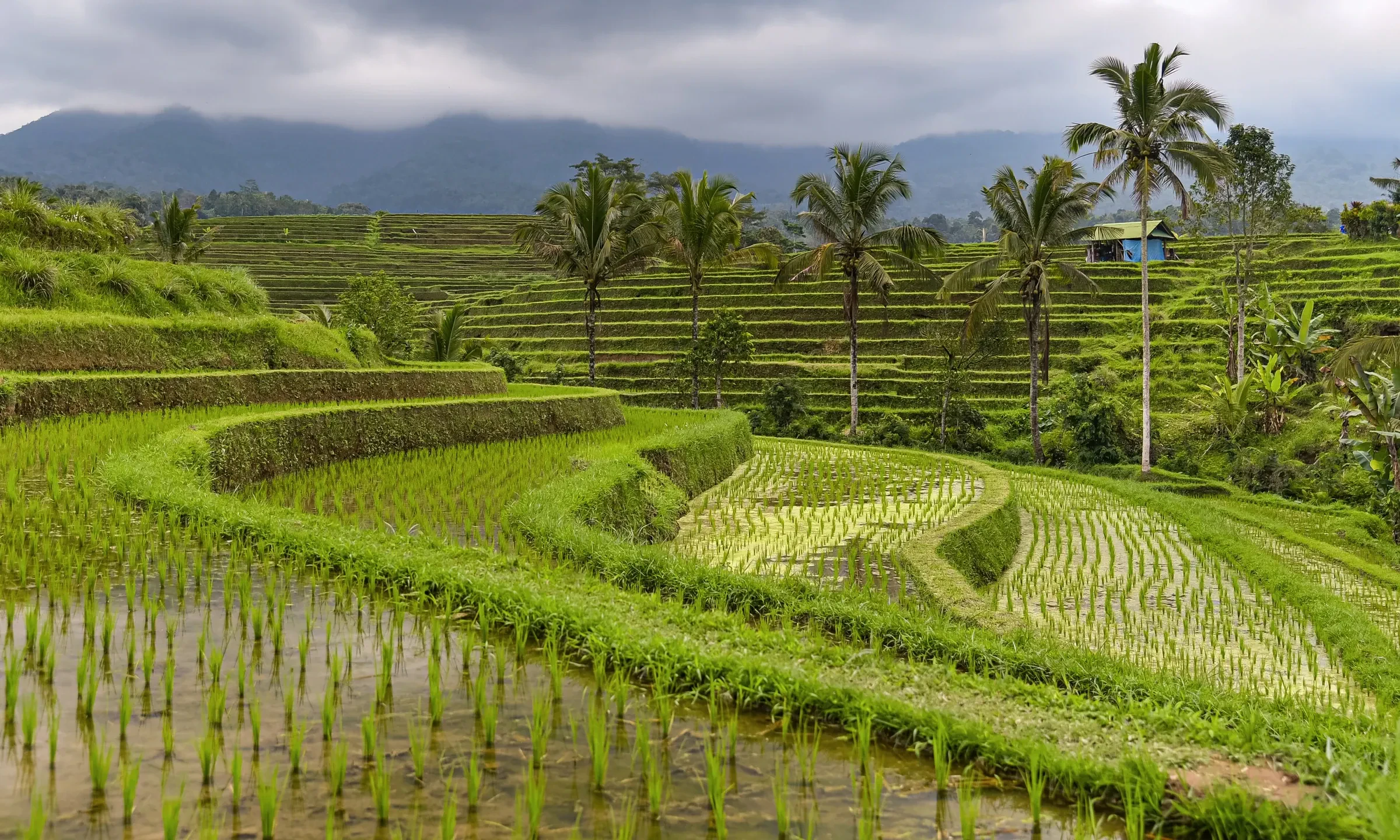
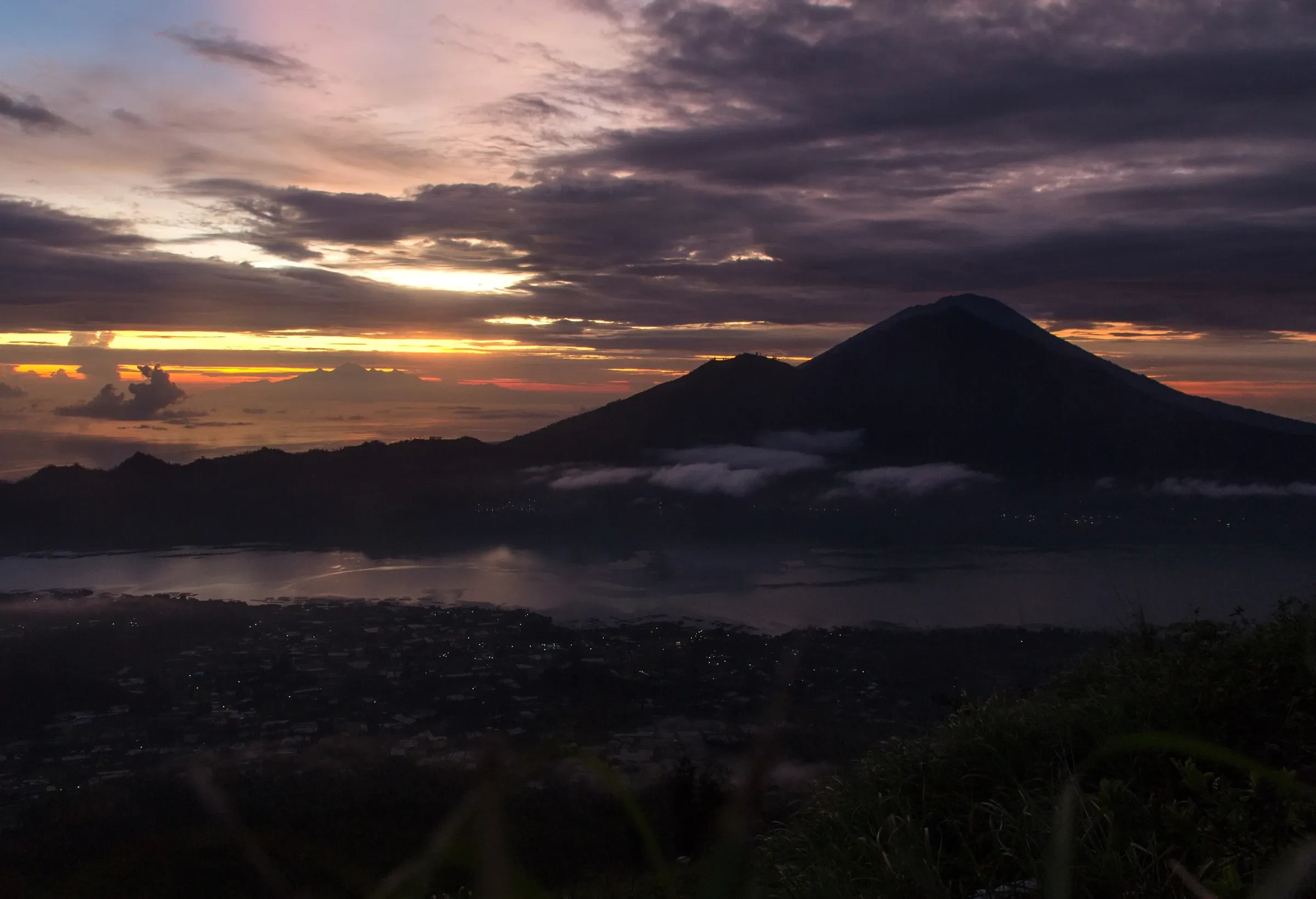
Ubud is Bali's green centre: rice terraces at Tegallalang, the Campuhan Ridge walk, water temples such as Tirta Empul, cooking classes and yoga studios on every second corner. From Ubud, most people also do the Mount Batur sunrise trek: a torchlit climb of around two hours from Toya Bungkah to the 1,717 m summit, with breakfast at the top and a local guide arranged through the trekking association at the trailhead. Our Ubud guide covers the town itself, and our Mount Batur guide has the full trek, costs and how it fits into a Bali trip.
Sanur, Amed and Munduk: the quieter side
Sanur, on the calmer east coast, is one of Bali's original tourist towns: a 5 km paved coastal path, shallow reef-protected water and a proper harbour for fast boats to Nusa Penida. It's a good last-night base if you're catching an early flight, since it's a short drive from the airport.
Amed is a string of small fishing villages further up the east coast, with black volcanic sand and some of Bali's easiest shore diving and snorkelling: the reef starts a few strokes from the beach, and the USAT Liberty wreck at nearby Tulamben is shallow enough for newly certified divers. There's no beach-club scene here, just early mornings and quiet evenings. Our scuba diving in Bali guide has the detail.
Munduk, in the cool hills of the north, is a coffee-growing village with a string of waterfalls (Golden Valley, Munduk and Melanting) that most people walk between on a half-day trek of 4 to 6 hours. It's a good detour if you have time to spare and want a day away from the coast.
The Nusa islands
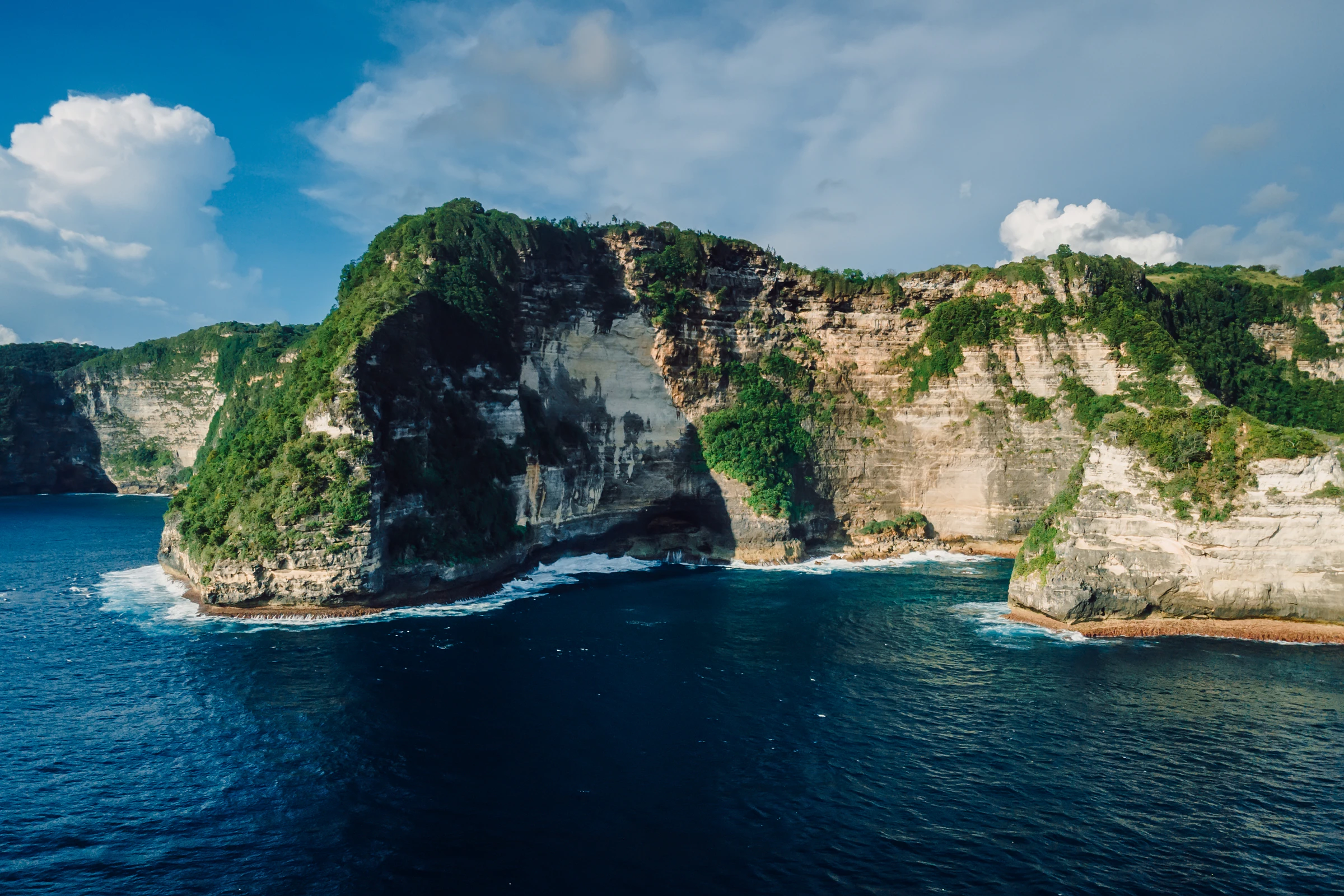
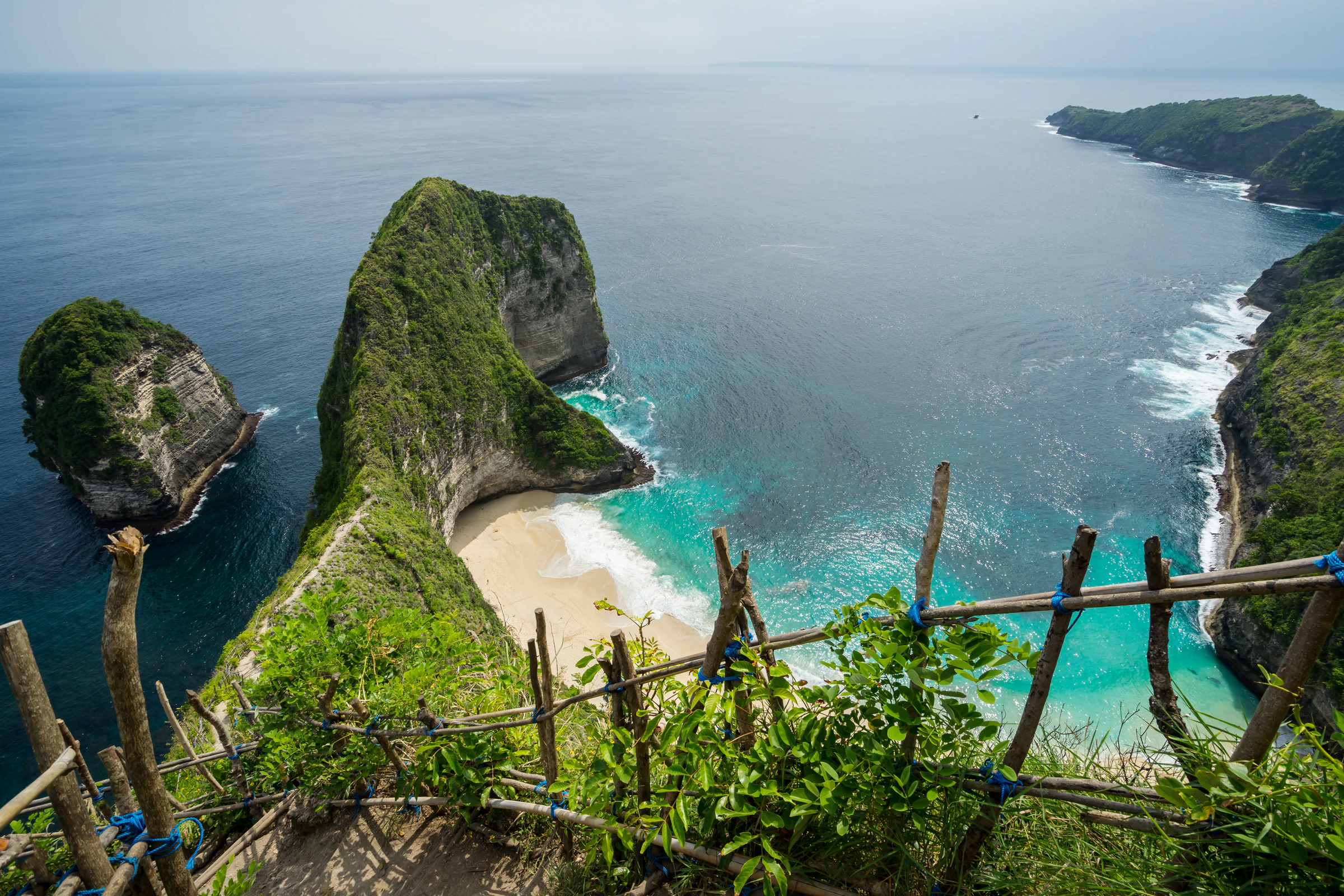
A fast boat from Sanur reaches Nusa Penida in 30 to 45 minutes. It's the one everyone comes for: cliff viewpoints at Kelingking, Broken Beach and Diamond Beach, and reef manta rays feeding in the bays year round. Hire a car with a driver rather than a scooter, since the roads are steep and broken up. Nusa Penida charges an IDR 25,000 arrival fee, and since 1 September 2026 also IDR 25,000 at each of its main sights. Nusa Lembongan and Nusa Ceningan sit alongside it, joined by the Yellow Bridge, and see far fewer visitors. See our Nusa Penida guide.
What to eat in Bali
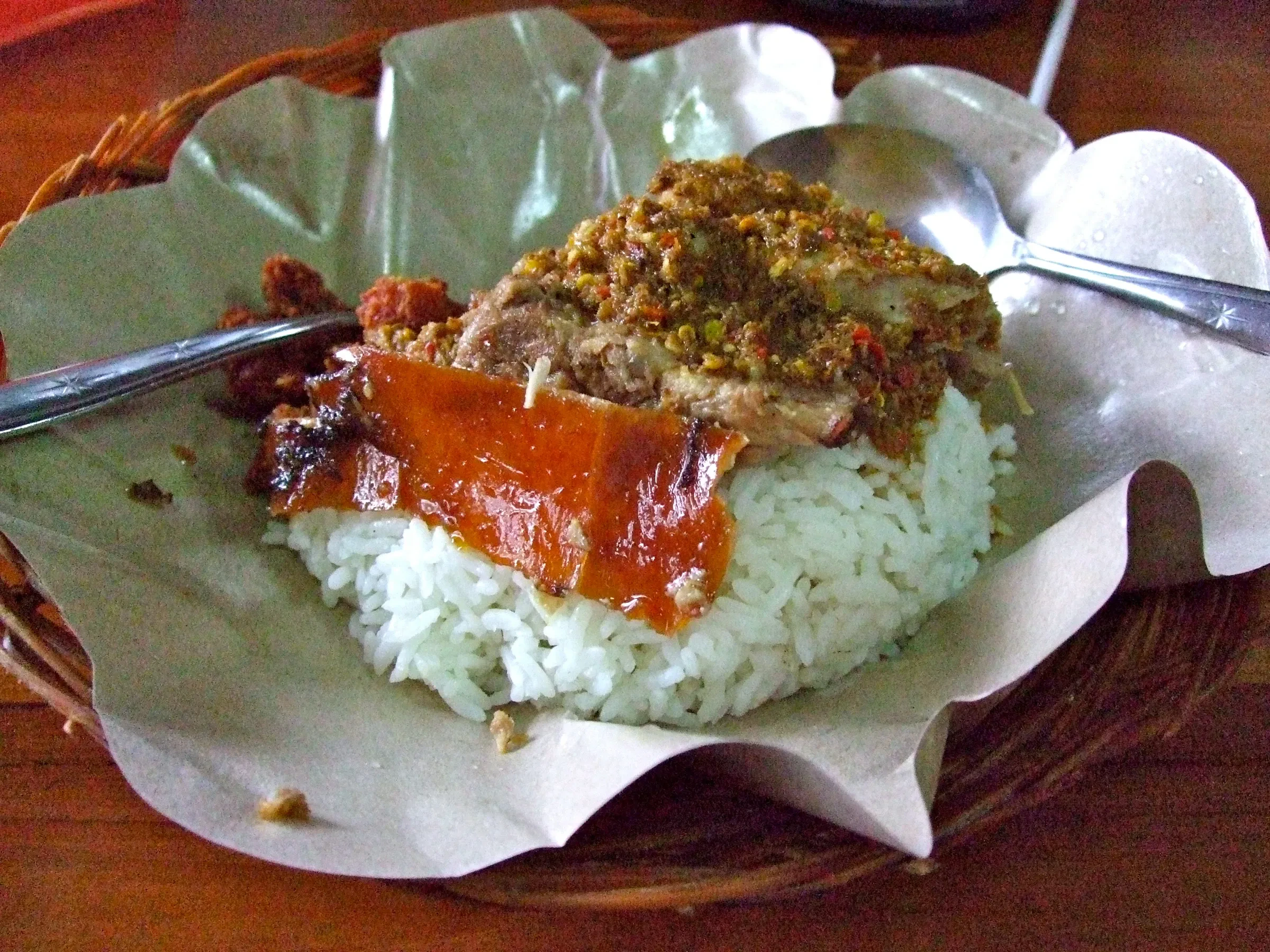
Balinese cooking is built around ceremony as much as flavour. Babi guling (spit-roast pig), lawar (a minced vegetable, coconut and meat mix) and betutu (a whole duck or chicken, slow-cooked in banana leaves) are the three dishes worth planning a meal around, alongside everyday nasi campur, a plate of rice with a small selection of whatever's cooking that day. Ubud is the best base for babi guling and cooking classes, Jimbaran for grilled seafood by the beach, and Canggu for the cafe scene that sits alongside, not instead of, Balinese food. Our Balinese food guide breaks each dish down by area, with what halal and vegetarian travellers can expect.
How many days do you need in Bali?
A week is enough for two or three regions, most often Canggu or Uluwatu, Ubud and one night on Nusa Penida. Ten days to two weeks lets you add the Gili Islands. Our Bali itinerary guide compares every length and links down to a day-by-day route for each one: 1 week, 10 days, 2 weeks, 3 weeks and 1 month. If you're only doing Ubud and central Bali, our Ubud and central Bali itinerary plans that leg on its own.
Getting around Bali
Bali has no trains, and the options depend on the terrain.
- Drivers. For day trips, most people hire a car with a driver, which costs about IDR 650,000 to 900,000 for an 8 to 10 hour day including fuel. It's the easiest way to reach Ubud, a waterfall, or Nusa Penida's rougher roads.
- Grab and Gojek. Both ride-hailing apps work across Bali. Some areas, including parts of Ubud, Uluwatu, Canggu and the airport, have informal "no pick-up" zones where local taxi groups object, so you may have to walk to a main road.
- Scooters. Almost every traveller you see has one, but riding legally means holding your home motorbike licence plus an International Driving Permit that covers motorbikes (category A); a home licence on its own isn't valid. Police checks have stepped up in 2026 in Canggu, Seminyak, Uluwatu, Kuta and Ubud, with on-the-spot fines reported at about IDR 300,000 to 500,000 per missing document. Your travel insurance may not pay out if you crash without the right paperwork. Nusa Penida's roads are rough enough that many people hire a car with a driver there instead.
- Fast boats. Boats connect Sanur to Nusa Penida and Lembongan, Padang Bai or Serangan to the Gilis and Lombok, and Nusa Penida direct to the Gilis. Safety standards vary between operators, and there have been fatal accidents on these routes, so pick an established company, check for life jackets and avoid crossings in rough weather or after dark.
Visa, the tourist levy and Bali's entry rules
Every UK, US, Canadian, Australian, New Zealand, Irish, EU or Indian passport needs a visa for Bali; none of these nationalities gets visa-free entry. Most people buy the Visa on Arrival online in advance as an e-VOA at evisa.imigrasi.go.id, for IDR 500,000, which gives 30 days and can be extended once for another 30. Immigration has announced a higher fee but no start date, so check the official portal before you pay. Before landing you also complete the free All Indonesia arrival card (within 72 hours of landing) and pay the IDR 150,000 Bali tourist levy at lovebali.baliprov.go.id. Indonesia's new Criminal Code also took effect in January 2026, and Satpol PP officers now run spot checks for the levy at popular sites. Our Bali visa and entry requirements guide has the full rules, including pages for travellers from the UK, from the US, from Australia, from Europe and from India.
Respectful temple etiquette
Bali's temples are working places of worship, not just photo stops, and the Governor of Bali's Circular No. 7 of 2025 sets out rules for visitors:
- Cover your shoulders and knees, and wear the sarong and sash offered or rented at the entrance.
- Don't enter a temple's main and middle sanctums (the utama and madya mandala) unless you're there to pray in traditional dress.
- Don't climb on sacred trees or structures, or take indecent photos at sacred sites.
- Use a licensed guide where one is offered, and don't visit a temple mid-ceremony unless you're invited to watch from the side.
Penalties for ignoring the rules range from a fine to deportation. Separately from the circular, Balinese custom also asks menstruating women not to enter temple grounds, and you'll see this on signs at many gates. Temples are busiest around Bali's twin holy days, Galungan and Kuningan, when tall bamboo penjor poles line the streets. On Nyepi, Bali's Day of Silence, the whole island shuts down for 24 hours once a year, including the airport; see our Nyepi guide if your dates are close to it.

How much does Bali cost?
| Item | Typical price (IDR) |
|---|---|
| Dorm bed, simple hostel | 100,000 to 200,000 |
| Dorm bed, social hostel with a pool (Canggu, Ubud) | 250,000 to 450,000 |
| Nasi campur at a local warung | 25,000 to 45,000 |
| Large Bintang at a warung | 25,000 to 45,000 |
| Scooter hire for a day | 60,000 to 110,000 |
| Car and driver for the day | 650,000 to 900,000 |
| Beginner group surf lesson (2 hours) | 300,000 to 500,000 |
Food, drinks and local transport run about IDR 280,000 to 450,000 (US$16 to $25) a day, before your bed, though cafes in Canggu and beach clubs in Seminyak cost far more than a warung. Our Bali trip cost guide breaks the full budget down, including the one-off visa, levy and island fees, and our Bali hostels guide covers where to stay by area and budget.
Best time to visit Bali
The dry season, from about April to October, is the best time to visit: sunnier, calmer seas for boat trips, and clearer skies for the Batur sunrise. May, June and September are the sweet spot, with July and August the busiest and most expensive months. The wet season, November to March, brings heavier rain and rougher crossings to the islands, but lower prices. This dry-season window also covers Bali's two best-known secular festivals: the month-long Bali Arts Festival in Denpasar, usually mid-June to mid-July, and the Bali Kite Festival on the beaches near Sanur, held in the July to August kite season. Our best time to visit Bali guide goes month by month, and our Bali festivals guide has the full year's calendar.
Bali group trips for solo travellers
Our Bali trips follow the routes above with a small group of solo travellers aged 18 to 40. Your Trip Host travels with you the whole way, and a licensed local agency and licensed local guides run the ground arrangements in Indonesia. We also run a dedicated Bali surf trip if surfing is the main reason you're coming.