Nyepi is unlike any other public holiday. There are no parties or fireworks on the day itself. The island goes quiet, dark and still for 24 hours, and visitors are expected to take part. If you know it's coming, it's a day you'll remember. If you don't, it can wreck a travel plan.
What Nyepi is
Nyepi marks the new year in the Balinese Saka calendar. 8 March 2027 is the start of Saka year 1949. It's a day for self-reflection: Balinese Hindus fast, meditate and stay home. Everyone else on the island, visitors included, is asked to do the same.
| 2026 (held) | 2027 | 2028 | |
|---|---|---|---|
| Tawur Kesanga and ogoh-ogoh parades (eve of Nyepi) | Wed 18 March, evening | Sun 7 March, evening | Sat 25 March, evening |
| Nyepi, Day of Silence | Thu 19 March, 6am to 6am on 20 March | Mon 8 March, 6am to 6am on 9 March | Sun 26 March, 6am to 6am on 27 March |
| Ngembak Geni (day after) | Fri 20 March | Tue 9 March | Mon 27 March |
| Saka year | 1948 | 1949 | 1950 |
Melasti purification ceremonies happen in the days before Nyepi every year.
The 2027 date is set in Indonesia's national holiday decree for 2027 and matches the Balinese calendar. The 2028 date comes from the Balinese calendar; Indonesia's official 2028 list hadn't been published when we checked, and it usually comes out around September of the year before.
The detailed rules for each year, such as exact times and what happens to phone data, come from a joint appeal (Seruan Bersama) issued by Bali's religious leaders, the provincial government and the police a few weeks before Nyepi. We'll update this page when the 2027 appeal is out.
What happened at Nyepi 2026
Nyepi 2026 was held on Thursday 19 March, with the silence running from 6am that day to 6am on Friday 20 March. The ogoh-ogoh parades were on the evening of Wednesday 18 March.
The biggest knock-on effect was at the airport. Ngurah Rai stopped all commercial flights for the 24 hours, and 440 scheduled flights did not operate, 231 domestic and 209 international, according to Metro TV. About 19 aircraft stayed on the ground overnight. Only emergency flights, such as medical evacuations, were allowed. Airport management ran a combined Nyepi and Lebaran command post for the period.
The calendar added a complication. Nyepi fell the day before Eid al-Fitr might begin, so the religion ministry and Bali's interfaith forum issued guidance for the Muslim takbiran prayers on the eve of Eid: on foot at nearby mosques, between 6pm and 9pm, with no loudspeakers, vehicle processions or firecrackers. The government later set Eid for 21 March 2026, after its moon-sighting meeting on 19 March, while Muhammadiyah followers marked it on 20 March.
Very few religious observances close an island's only airport. Nyepi does, and its rules apply to residents and visitors alike, with village security guards (pecalang) enforcing them. The observance is tied to the Saka calendar, which dates to 78 AD.
Where to watch the ogoh-ogoh parade
Parades take place in villages all over Bali, so where you are on the evening before Nyepi matters more than where you are for Nyepi itself, since the whole island follows the same rules the next day regardless of location. Denpasar's parade is the biggest and draws the largest crowds. Ubud's is easier to watch and sits close to plenty of central accommodation. Kuta and Canggu run their own too, within walking distance of the beach resorts along the south coast.
Whichever you choose, plan how you'll get back to your hotel: traffic is gridlocked on parade night, and the silence starts at 6am the next morning, so you need to be settled in well before then.
What happens day by day
Melasti
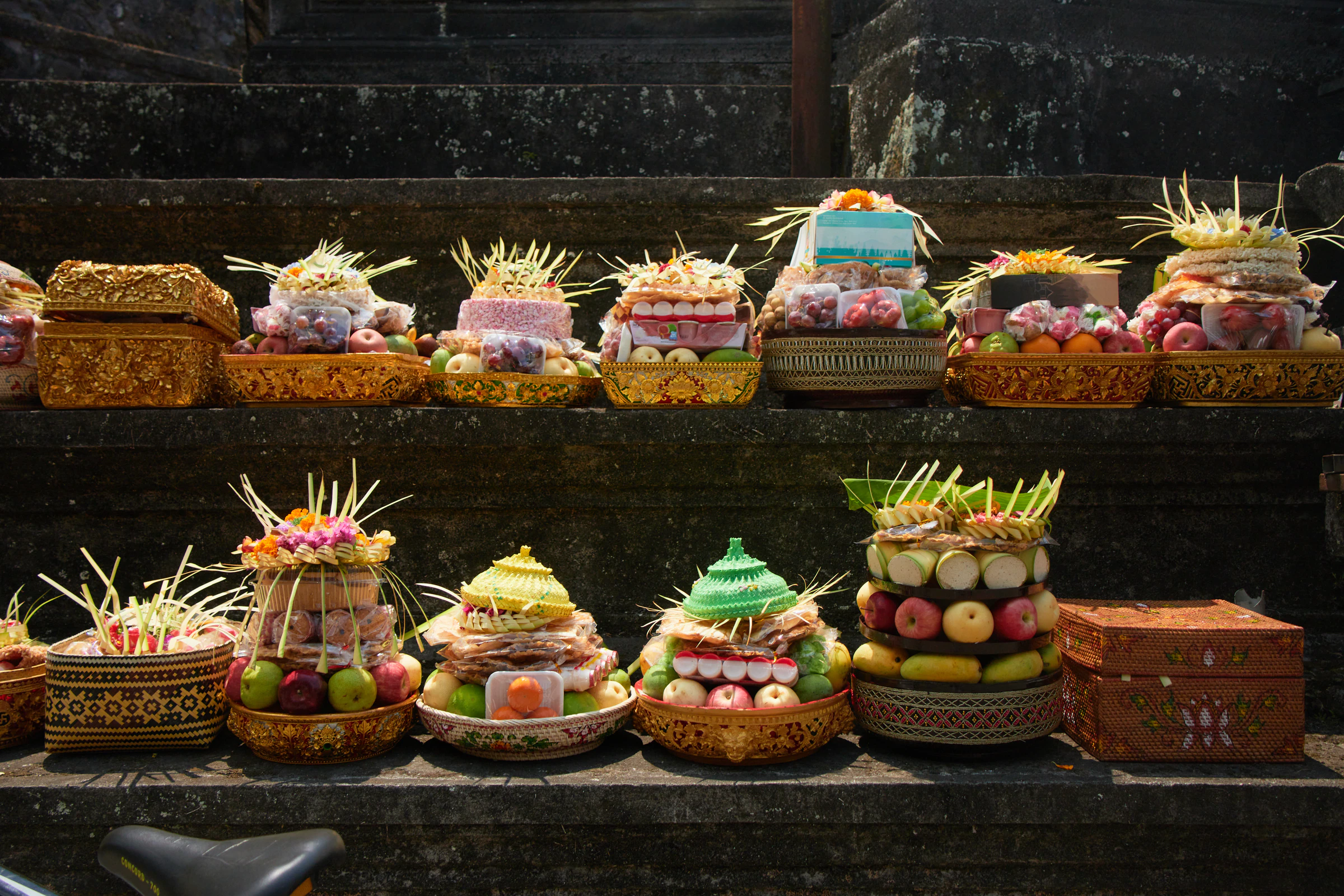
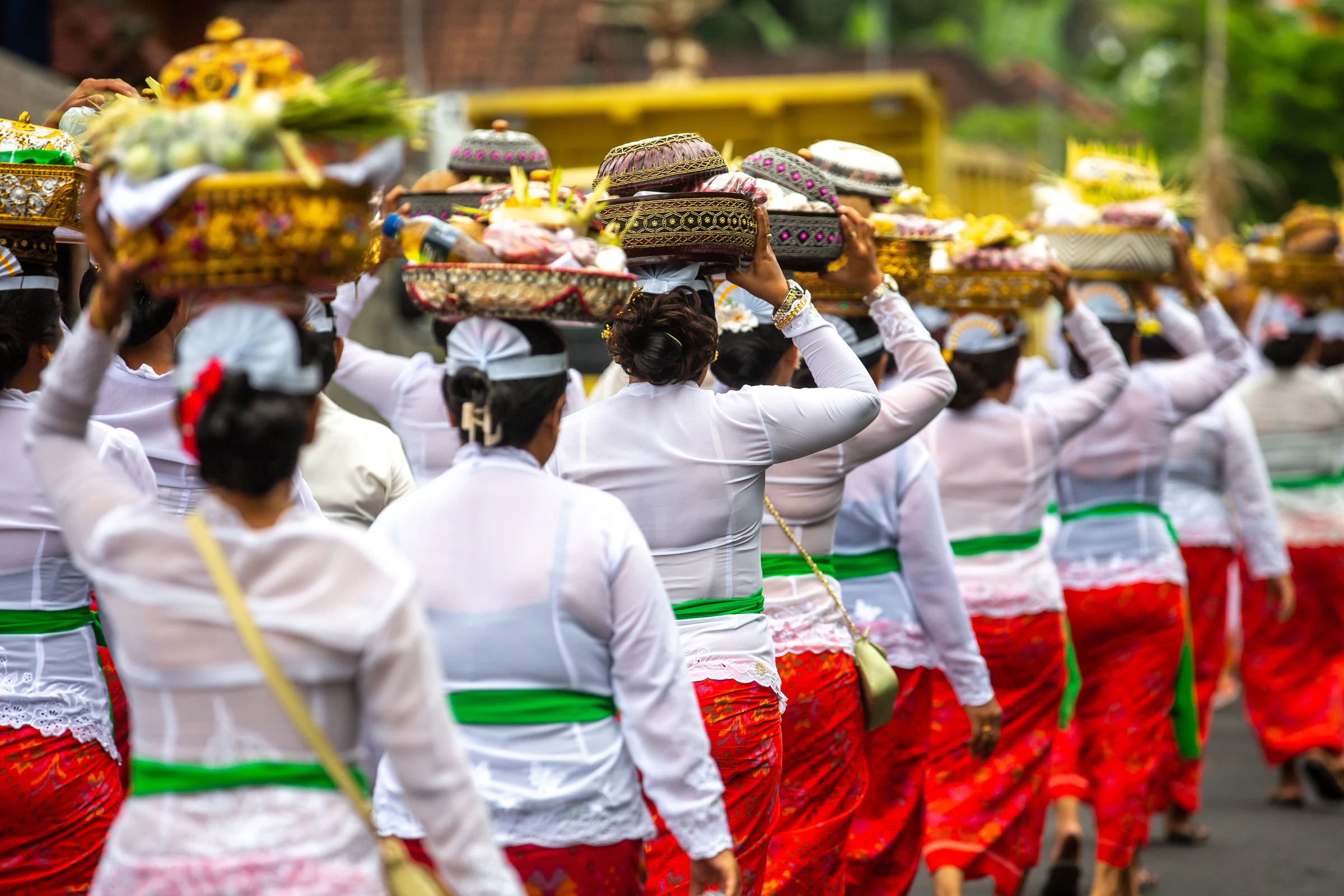
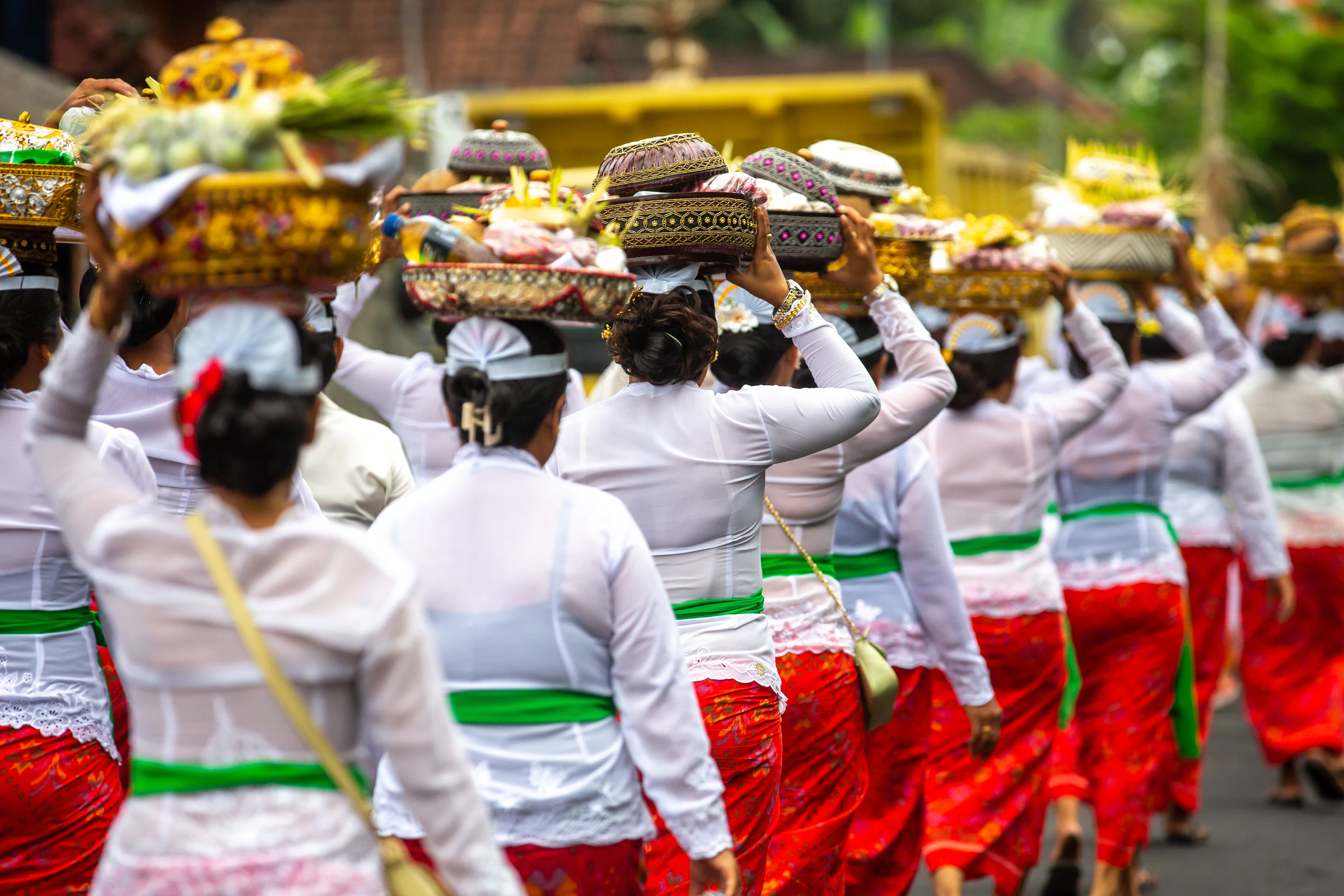
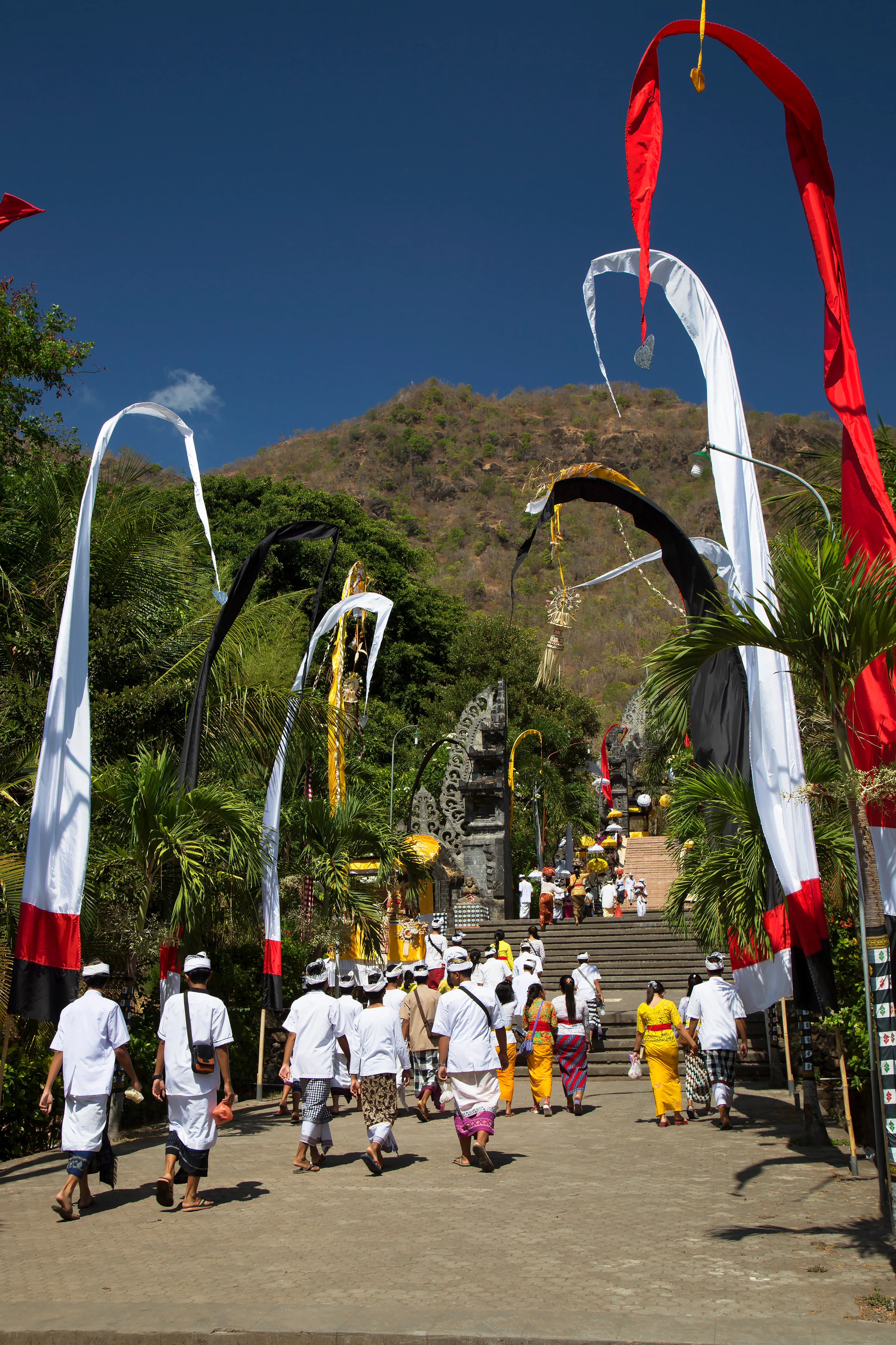
In the days before Nyepi, processions dressed in white carry temple objects to the sea, lakes and springs to be purified. You may see them on beaches across the island. Watch from a respectful distance and don't walk through the procession.
The ogoh-ogoh parade, the night before
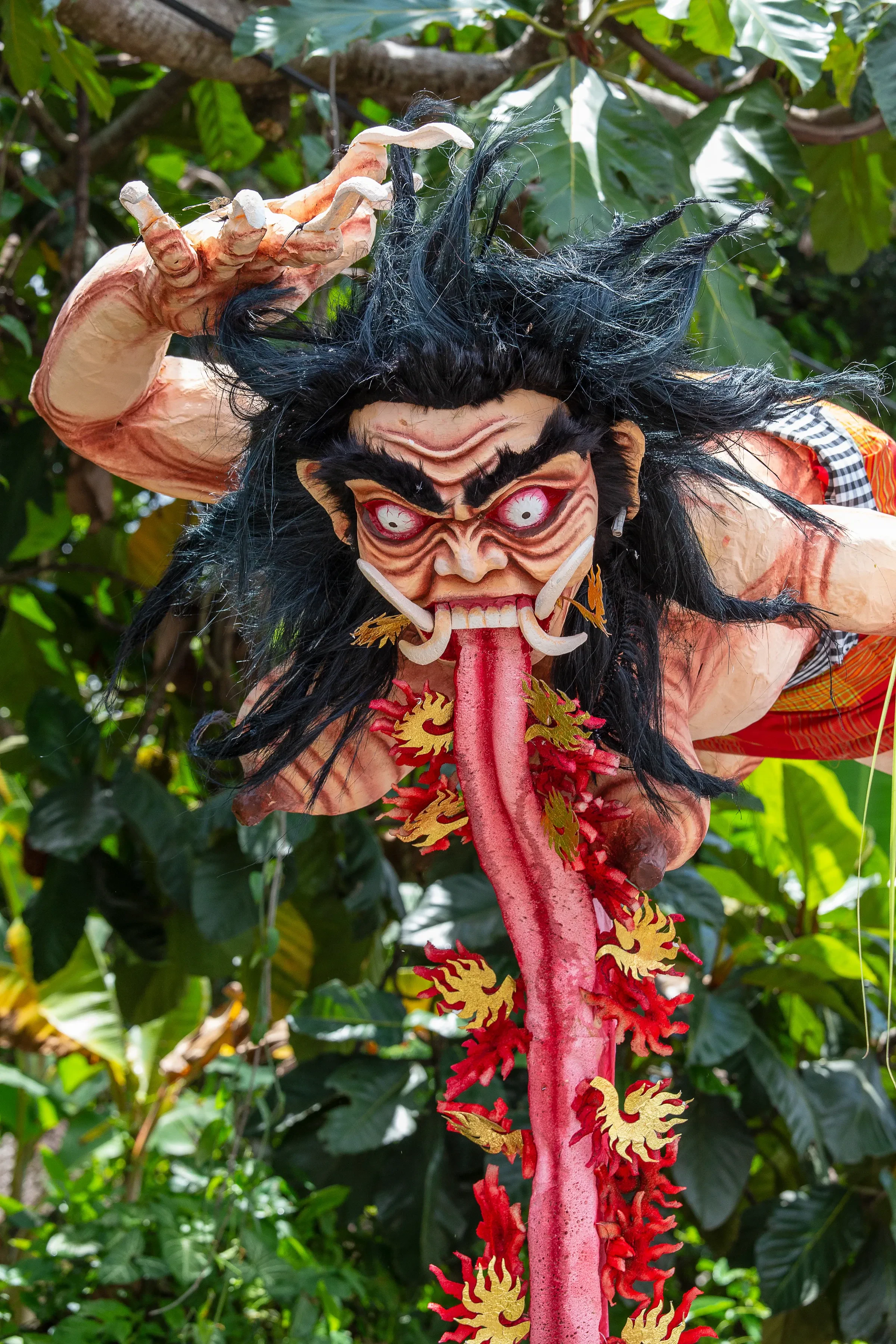
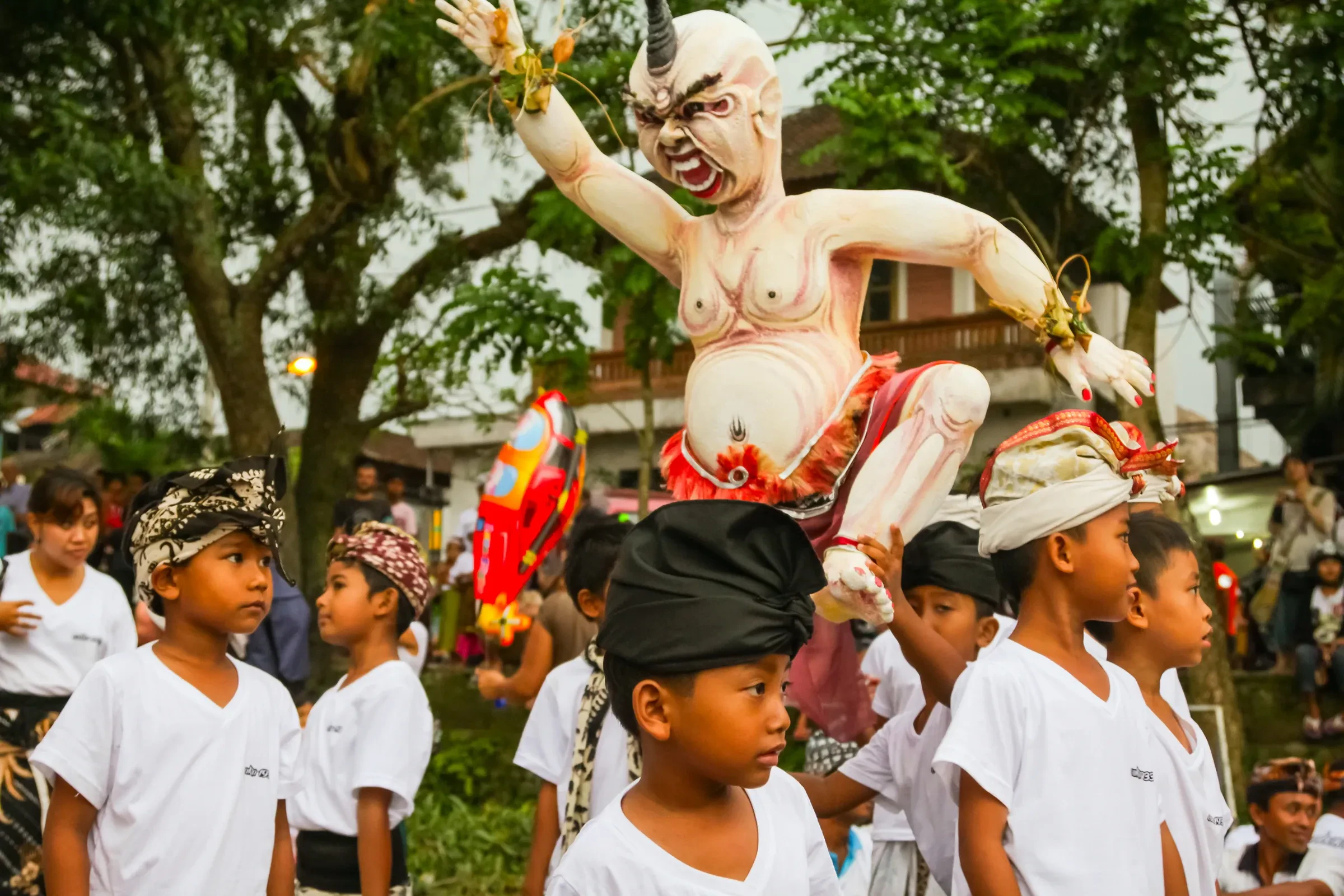
The eve of Nyepi is the loudest night of the Balinese year. Offerings are made at crossroads to appease bad spirits in a ritual called Tawur Kesanga, and in the evening every village parades its ogoh-ogoh: giant papier-mache demons and monsters that young people spend weeks building. There's music, drums and noise to drive the spirits away. Some figures are burned at the end of the night.
Nyepi
At 6am the island stops. The streets are empty, shops and restaurants close, and there's no traffic. At night, with almost no lights on, you can see far more stars than usual.
Ngembak Geni
On the day after Nyepi, people visit family and friends to ask for forgiveness and start the year fresh. Life slowly goes back to normal.
What to bring for Nyepi
Pack for two very different stretches back to back: a loud, crowded parade evening, then a silent day with limited connectivity.
- Cash for the day before. ATMs and card machines may be harder to reach once Nyepi starts, so withdraw what you need in advance.
- A torch or phone light. Streets are dark and unlit on parade night once the procession passes, and again during Nyepi itself.
- Something to read or watch offline. If mobile data goes down, downloaded books, films or podcasts make the quiet day far easier.
- Light, modest clothing. It suits the crowds and heat at the parade, and is more comfortable than swimwear for a day spent indoors.
- Insect repellent. Parade evenings are outdoors after dark, often near temples and open ground.
How to plan a trip around Nyepi
- Pick a place to stay with some outdoor space. A hotel or guesthouse with a garden or pool makes the silent day much easier. Check it will serve meals on Nyepi.
- Don't plan to arrive or leave that day. Flights and boats don't run. Arrive by the afternoon of the day before at the latest, so you can see the parades.
- Expect busy days after. In 2027, Nyepi is followed straight away by Eid al-Fitr on 10 and 11 March, and Indonesia has extra public holidays around it. From about 6 to 15 March 2027 expect busy flights, boats and roads, especially to Lombok and the Gilis.
- Leaving Bali instead. The Gili Islands and Lombok are part of a different province and don't observe Nyepi, but you can't reach them from Bali on the day itself. If you'd rather skip it, get there at least a day early.
- Think about the weather. March is the end of Bali's wet season, so expect rain some days. Our best time to visit Bali guide covers the months.
- Building a longer Bali trip around it. If you want to see the parades and then carry on travelling, our Bali itinerary guide covers how the days fit together at different trip lengths.
Our Bali trips aren't timed around Nyepi. If you're in Bali for it and want to join a trip afterwards, check the dates on each trip page.