Bali packs several very different diving experiences into one island. The east coast is calm, shallow and forgiving: one of Southeast Asia's better places to get certified. Menjangan sits inside a national park and has some of Bali's healthiest reef. Nusa Penida, offshore to the southeast, has the mantas and mola mola that put Bali on many divers' lists in the first place, and currents that catch out anyone who arrives unprepared.
This guide covers where to dive around Bali itself: Tulamben, Amed, Menjangan and Padang Bai, what a course or a day of diving costs in 2026, how to read the currents, and how to pick an operator. Nusa Penida and Nusa Lembongan get their own detailed guide, linked below, and if you'd rather learn somewhere flatter and cheaper first, the Gili Islands off Lombok are the usual choice.
Where to dive in Bali
| Site | What it's like | Best for |
|---|---|---|
| Tulamben | A WWII cargo wreck a few strokes from a black-sand beach, at 5 to 28 metres | Wreck diving, and one of the easiest places anywhere to learn |
| Amed | Calm bays, a second small wreck, and a wall with strong current further along | Learning to dive, and a step up once you're certified |
| Menjangan | Steep reef walls inside a national park, off Bali's northwest tip | Clear water and healthy coral, away from the crowds |
| Padang Bai | A macro-friendly bay, a sunk wreck and a current-swept channel | Certified divers who want variety close to the harbour town |
| Nusa Penida and Lembongan | Cleaning stations for reef mantas, plus mola mola in season | Experienced divers, and anyone snorkelling with mantas |
Tulamben: the USAT Liberty wreck
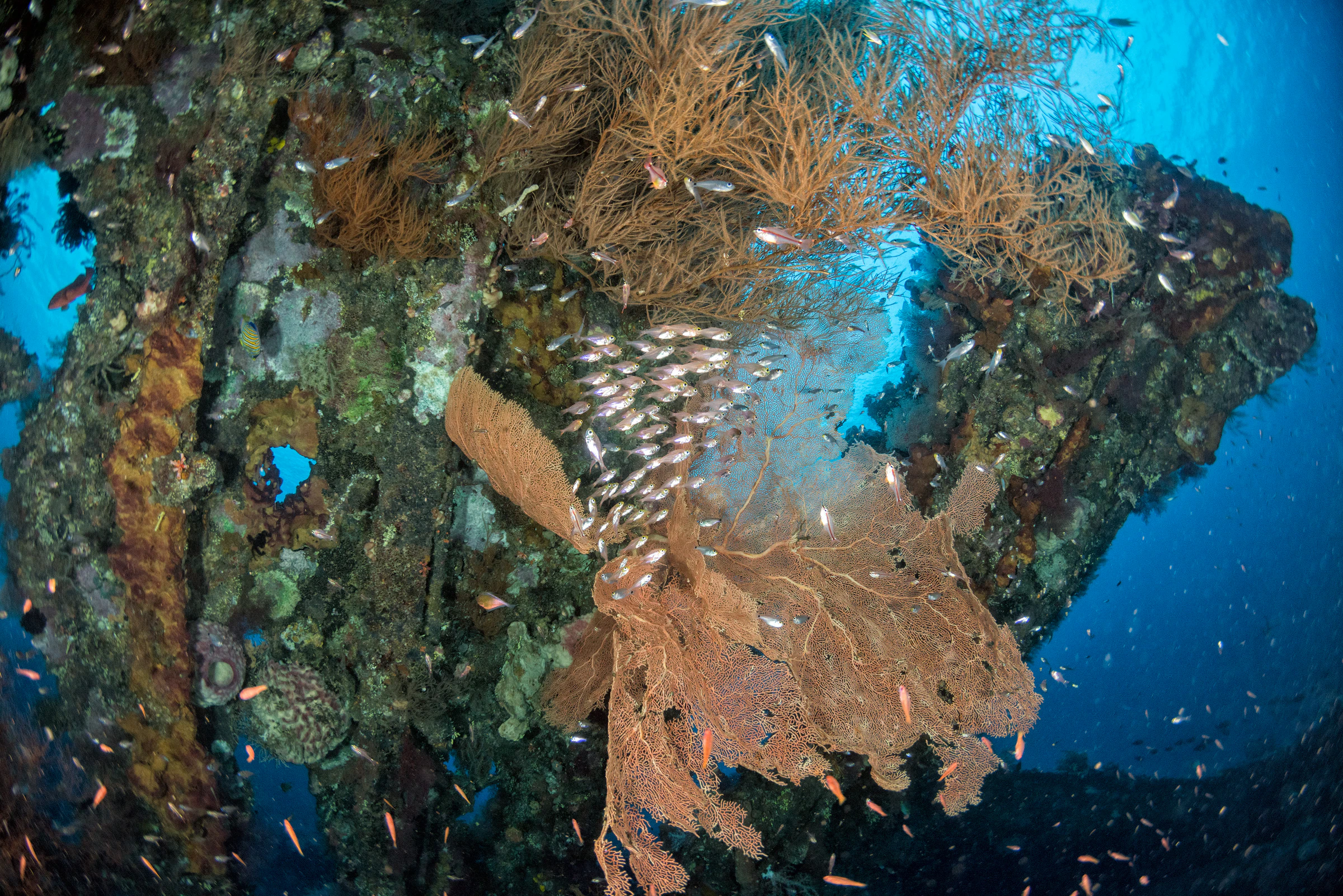
Tulamben is built around a single dive site: the USAT Liberty, a 120-metre American cargo ship torpedoed in 1942 and pushed onto Tulamben's black-sand shore by the 1963 eruption of Mount Agung. It now lies broken up in 5 to 28 metres of water, close enough to the beach that you walk in over the stones and reach the hull within a few minutes. The wreck is thick with soft coral, and its shallower sections make it one of the most forgiving big-wreck dives anywhere, which is why so many schools use it for Open Water training as well as fun dives. No penetration is needed to see most of it.
Away from the wreck, Tulamben's other shore sites, the Coral Garden and the Drop Off, are calm sandy slopes good for a check-out dive or a night dive. Currents here are usually mild to none.
Amed: shore diving and a step up in current
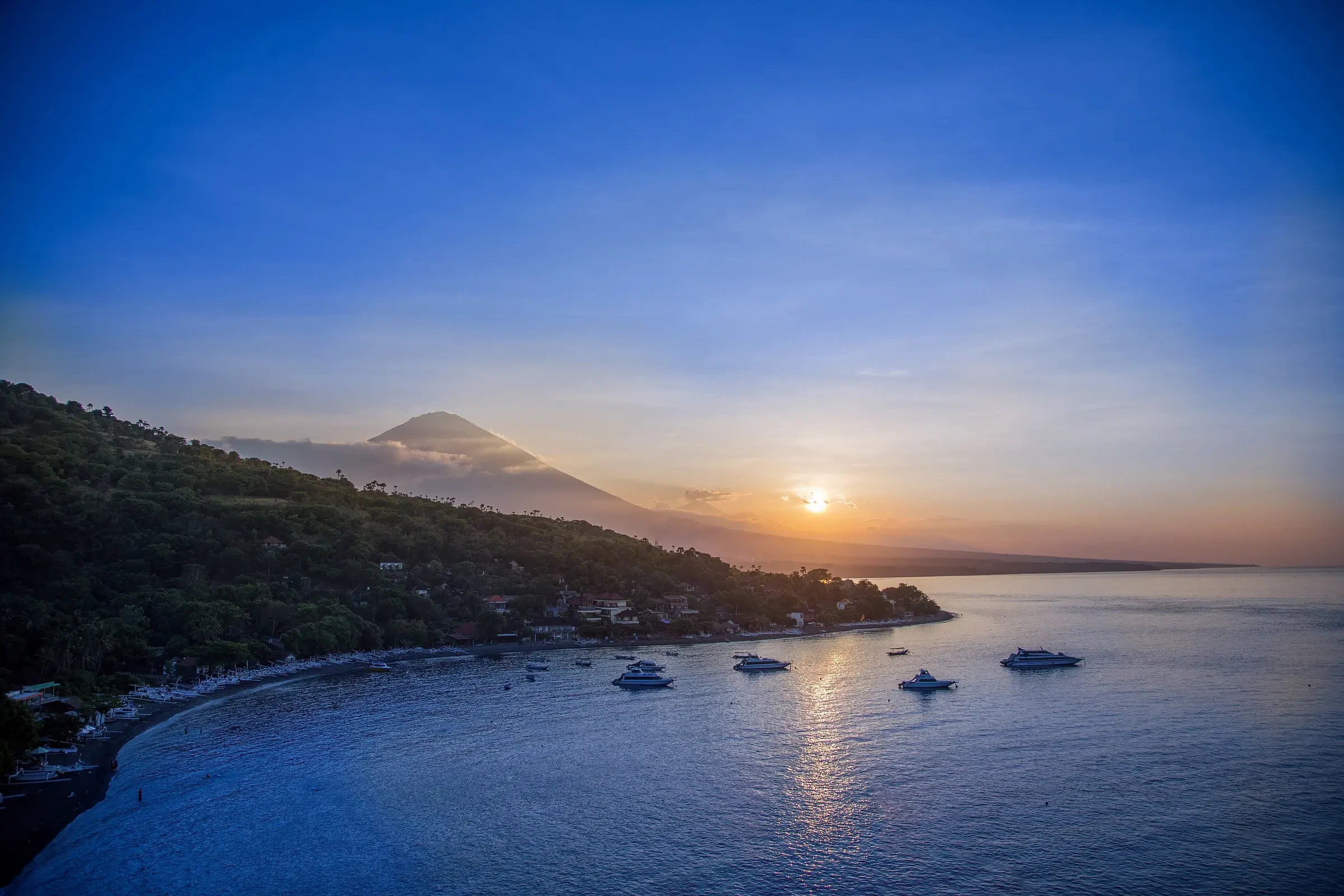
Amed is a string of black-sand fishing villages further up the east coast from Tulamben, and it shares the same easy, shore-access diving. Jemeluk Bay is calm and beginner-friendly, with a gentle wall from 3 to 30 metres. A second small wreck, the Japanese Shipwreck at Lipah Bay, lies at 6 to 12 metres, within Open Water limits, and is a good spot for macro life. Further along at Bunutan, the current picks up and suits divers who already have a few dives behind them.
Menjangan: reef diving inside a national park
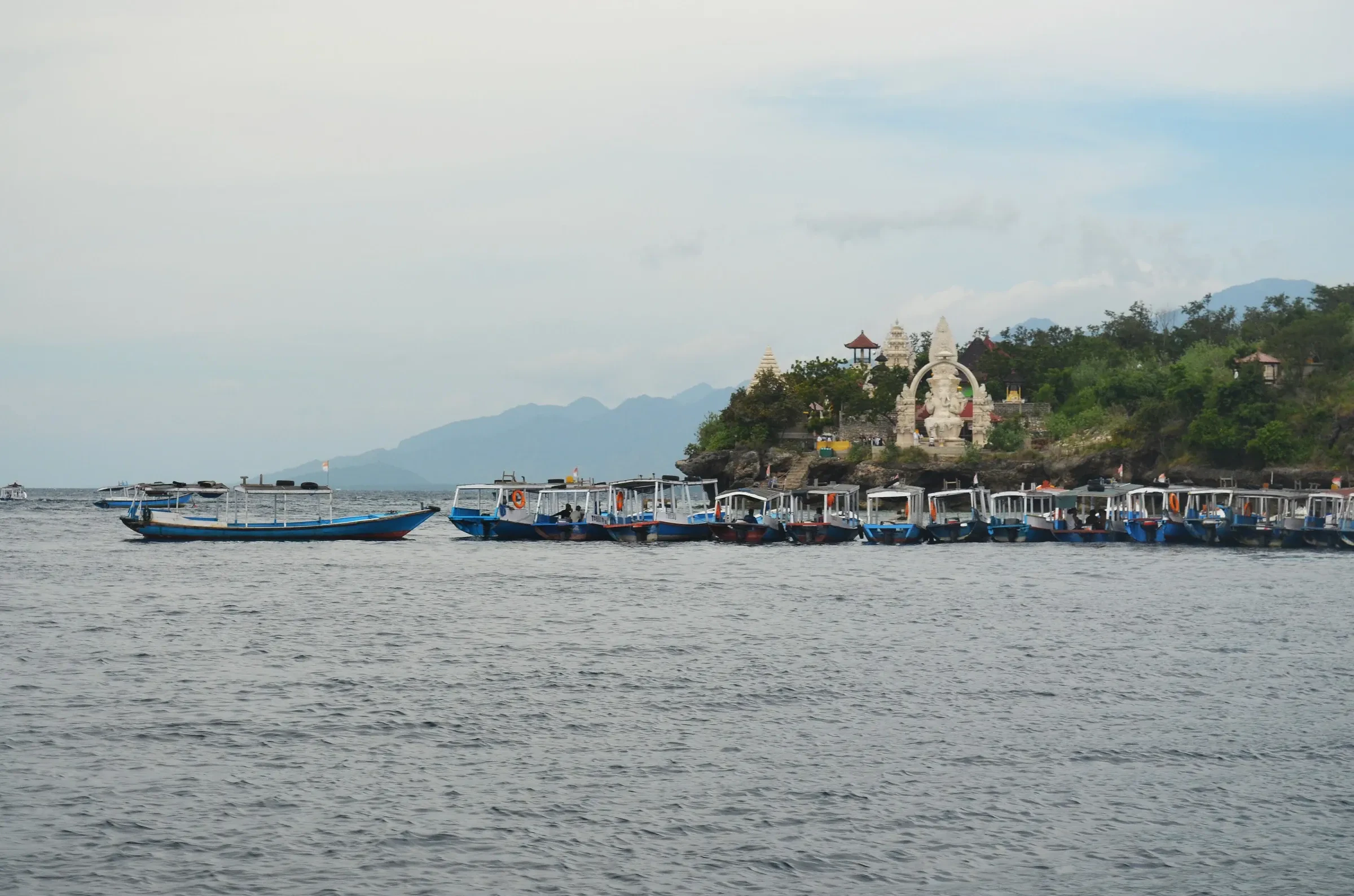
Menjangan is a small uninhabited island off Bali's northwest tip, inside West Bali National Park, and it's the clearest water most divers find on the island. Steep walls drop from the surface into deep water, with healthy hard coral and regular reef sharks and turtles. It's a longer trip than Tulamben or Amed, usually about 3 hours by road from south Bali plus a boat crossing from Labuhan Lalang, so most people go on a day trip rather than a base for a few nights. Every visitor pays a national park entry fee, about IDR 200,000 per person on weekdays and more at weekends and public holidays (some sources give IDR 300,000), plus a boat and a licensed guide, which the park requires. These come on top of the dive operator's price, so ask whether the quote includes them.
Padang Bai: wrecks, walls and the gateway to Nusa Penida
Padang Bai is the small harbour town where the fast boats to Nusa Penida and Lombok leave from, and it's also a dive base in its own right. Blue Lagoon, right off the beach, is a sheltered sandy slope good for macro life and new divers. The Jepun wreck, a small ship sunk deliberately in 2008 as an artificial reef, sits at about 18 metres a short boat ride further round the bay. The Channel, in front of the harbour where the ferries leave, has strong current and suits divers who want a proper drift dive. Padang Bai is also where boats cross to Nusa Penida, and the strait between the two gets rougher the further out you go.
Nusa Penida and Nusa Lembongan: mantas and mola mola
Nusa Penida, a 30 to 45-minute fast boat from Sanur, is where most divers who come to Bali specifically for diving end up. Reef manta rays visit cleaning stations at Manta Point on the south-west coast and at Manta Bay on the north coast, and are seen all year. From around July to October, divers also look for mola mola (ocean sunfish) at deeper sites such as Crystal Bay, though they're usually well below Open Water depth limits. The currents here change quickly and a cold thermocline can drop the water temperature by ten degrees or more in a few metres, so this isn't the place to learn. Read our full diving at Nusa Penida guide for the dive sites, currents, mola mola season and 2026 prices, and our Nusa Penida travel guide for the rest of the island. Nusa Lembongan, joined to Nusa Ceningan by the Yellow Bridge alongside Nusa Penida, sees far fewer divers and shares many of the same currents and cleaning stations.
Learning to dive: the Gili Islands as a nearby option
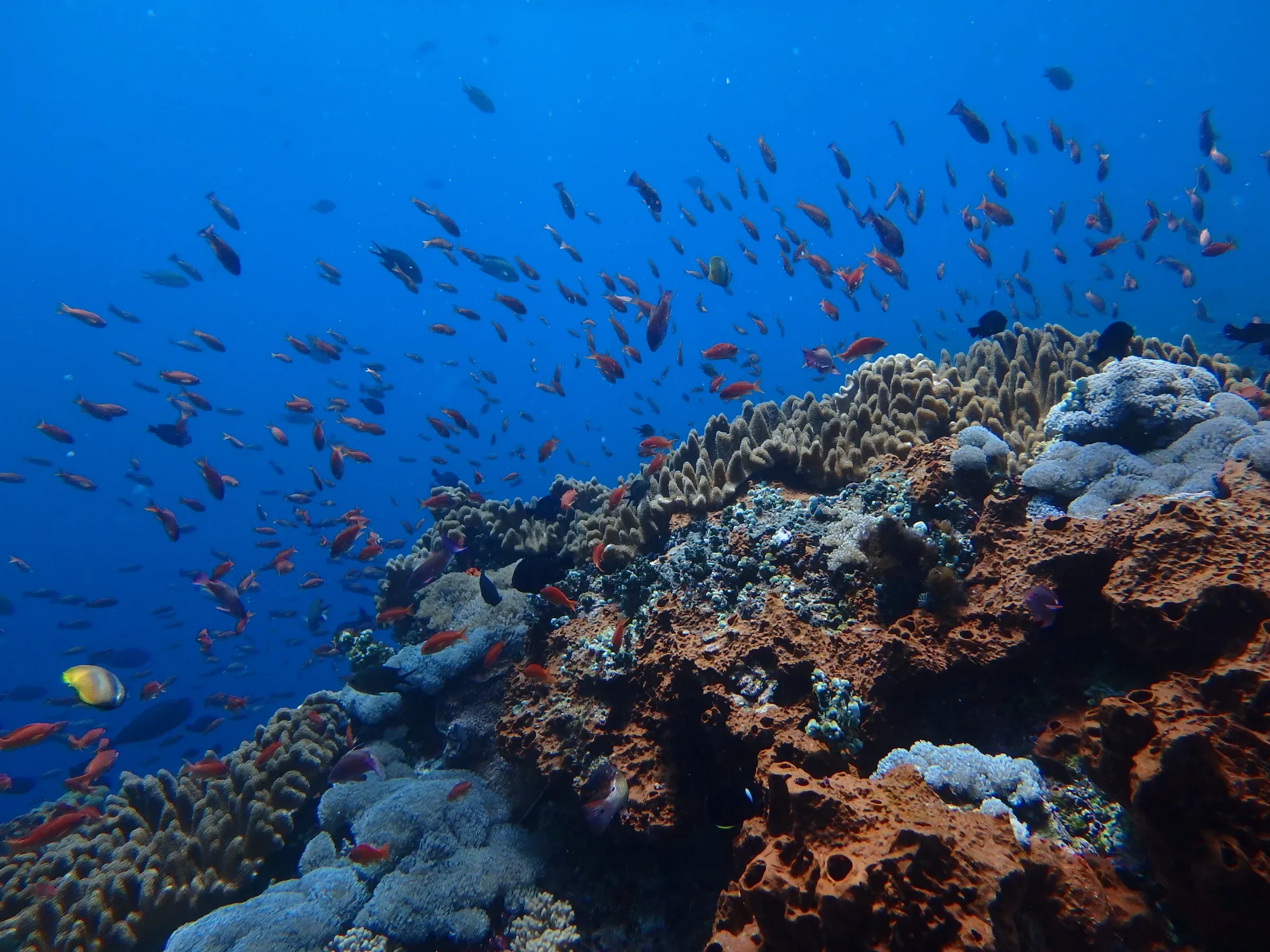
If you'd rather learn somewhere with calmer, warmer water and a huge choice of schools, the Gili Islands off Lombok are the usual alternative to Bali's east coast. They're a further boat ride than Tulamben or Amed, but courses are among the cheapest in Indonesia, and turtles turn up on most dives. See our Gili Islands guide for the detail, or our cross-country diving guide for how the Open Water course itself works, wherever you learn it.
How much does diving cost in Bali in 2026?
| Where | PADI Open Water course | Fun diving (2 dives) |
|---|---|---|
| Tulamben | about IDR 4.7 to 5.1 million | about IDR 1.8 to 2.4 million, including transport from south Bali |
| Amed | about IDR 5.9 to 7.5 million | about IDR 1.9 to 2.2 million |
| Menjangan | not usually taught here | day trip from south Bali, park and boat fees on top of the operator's price |
| Nusa Penida | about IDR 6.8 million | varies by centre; one centre lists IDR 1.95 million for a Manta Point day |
A single shore dive at Tulamben, without a package, costs around IDR 450,000 to 500,000. Nusa Penida divers and snorkellers also pay a marine fee of IDR 100,000 per person per day, plus the island's IDR 25,000 arrival levy (details in our Nusa Penida diving guide). Foreign visitors to Bali also pay the IDR 150,000 tourist levy once per visit, covered in our Bali visa guide. Check exactly what's included before you book: equipment, park or marine fees, transport from your hotel and lunch all vary a lot between schools. Our cross-country diving guide compares these prices with the Gili Islands, Komodo and Thailand.
Currents and choosing a dive operator
Bali's two coasts behave very differently. Tulamben and Amed are sheltered and usually calm, which is exactly why they suit beginners. Nusa Penida, the Padang Bai channel and Bunutan, further along from Amed, can all switch from flat to a strong drift within an hour as the tide turns. A site rated "easy" on a calm day can be genuinely demanding on a rough one, so:
- Ask what the plan is if the current is too strong. A good operator changes the site or cancels rather than pushing on.
- Check the group size. Four divers or fewer per guide is a good sign, especially anywhere with current.
- Look for a proper briefing on entry and exit points, and where to surface if you get separated from the group.
- Confirm what's included, especially park and marine fees, which are usually on top of the headline price.
Our cross-country diving guide has more on choosing a school, the medical form and insurance that covers diving.
Best time to dive in Bali
| Coast | Best months | Notes |
|---|---|---|
| Tulamben and Amed | Year round, best March to June and August to November | Sheltered by Mount Agung's rain shadow, so diveable even in the wet season, though visibility drops after heavy rain |
| Menjangan | April to October | The dry season gives the clearest water |
| Nusa Penida | May, June and September for calmer seas; July to October for mola mola | Big swell cancels boats more often from December to March |
Morning dives at Tulamben and Amed usually have better visibility than afternoons, since afternoon rain and boat traffic can stir up the shallows. Our best time to visit Bali guide covers the wider island month by month.
Diving on our trips
Our Gili & Bali Dive Trip is built around getting you certified on Gili Trawangan, then using the certification straight away: a dive or snorkel at Nusa Penida's Manta Point and Crystal Bay, and two dives on the USAT Liberty wreck at Tulamben to finish.