Bali's surf is spread across two very different coasts. Canggu and the beaches around Kuta are sand-bottomed and forgiving, which is why nearly everyone learns there first. The Bukit peninsula in the south is reef, sharper and more serious, and it's where the island's reputation as a proper surf destination comes from.
This guide runs through the breaks by level, the seasons, what a lesson and board hire cost in 2026, and the basics of reef safety and surf etiquette. For the wider picture on where to base yourself, see our Bali travel guide.
Beginner surf spots in Bali
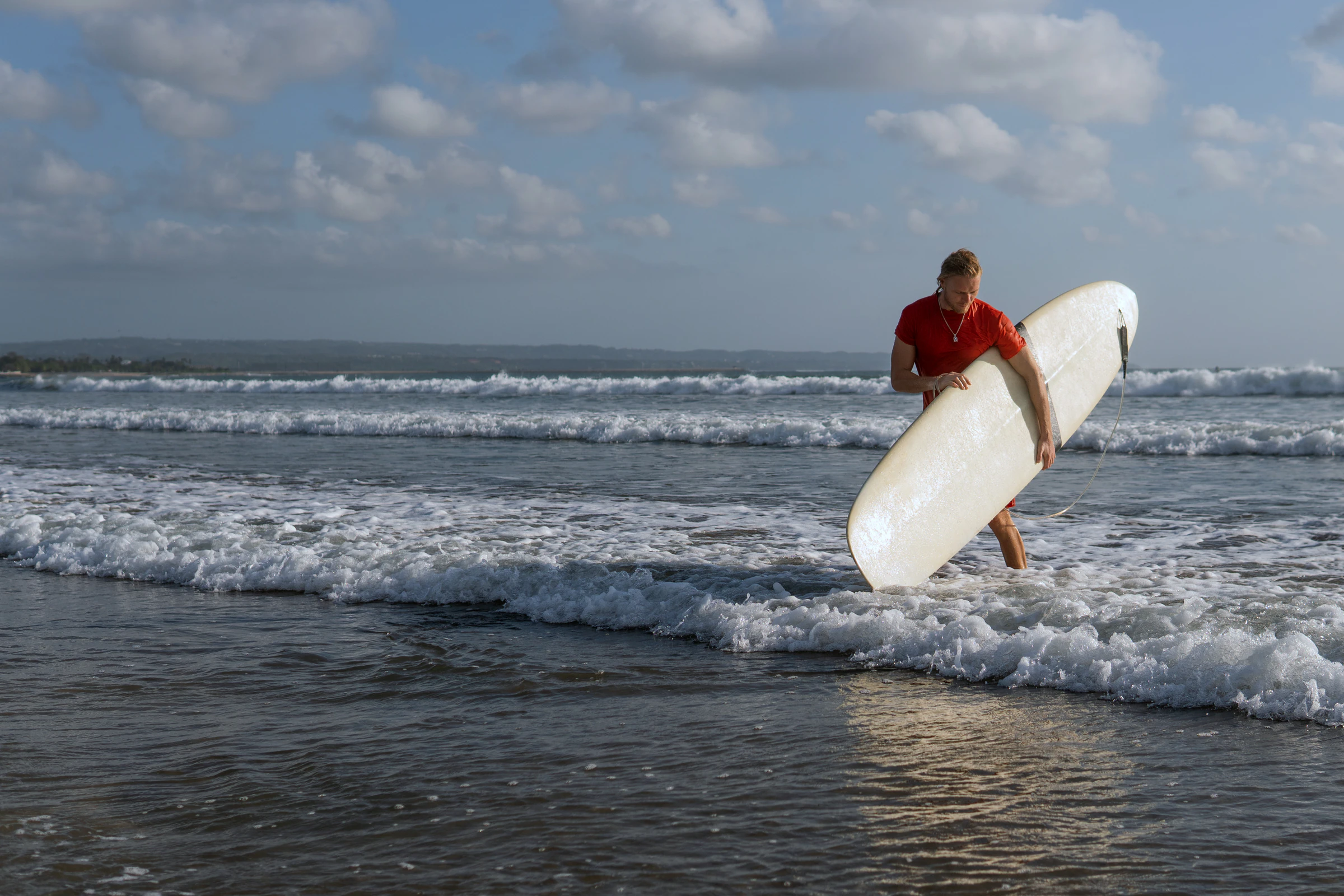
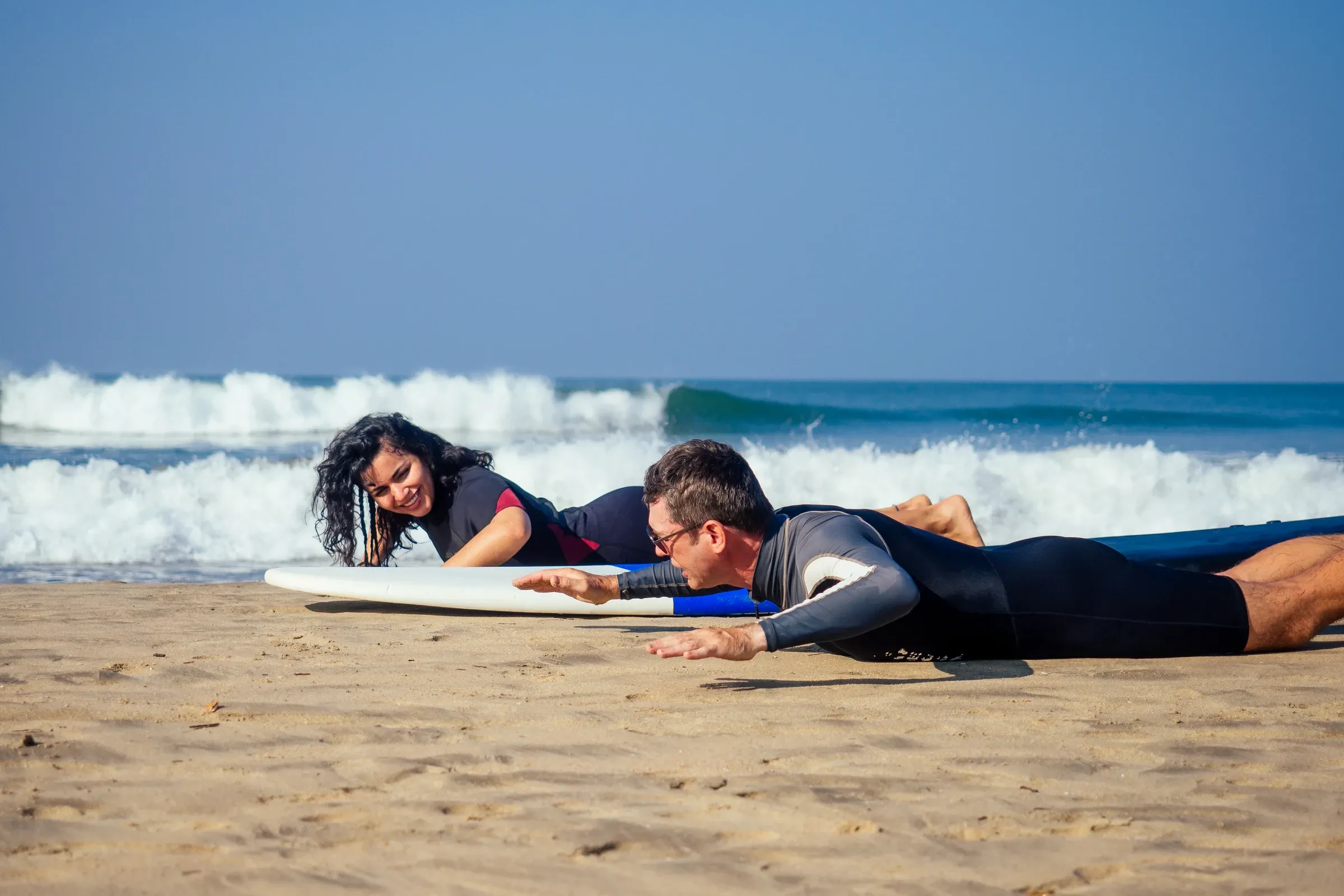
Bali's beach breaks, sand-bottomed and gentler than the reefs further south, are where almost everyone starts.
| Spot | What it's like |
|---|---|
| Batu Bolong, Canggu | Long, slow waves over sand and the busiest surf-school scene on the island. See our Canggu guide |
| Kuta and Legian | A wide beach break running for several kilometres, with a soft, rolling shorebreak that suits total beginners |
| Seminyak | The same stretch of sand as Kuta and Legian, a touch less crowded, with long, gentle waves for beginners and improvers |
| Sanur (Baby Reef) | A softer, more forgiving wave than Sanur's other reef breaks, reached by a short boat ride, and one of the few Bali spots that works best in the wet season |
Berawa, at the southern end of Canggu, also has consistent, improver-friendly waves once you've had a lesson or two. Once you're comfortable in whitewash and can catch a wave on your own, stay on the sand at Batu Bolong or nearby Old Man's before you try a reef. Echo Beach and Pererenan, further up the coast in Canggu, break over shallow reef and rock, so they suit intermediates rather than beginners, and Pererenan works best at mid to high tide.

Uluwatu and the Bukit's reef breaks
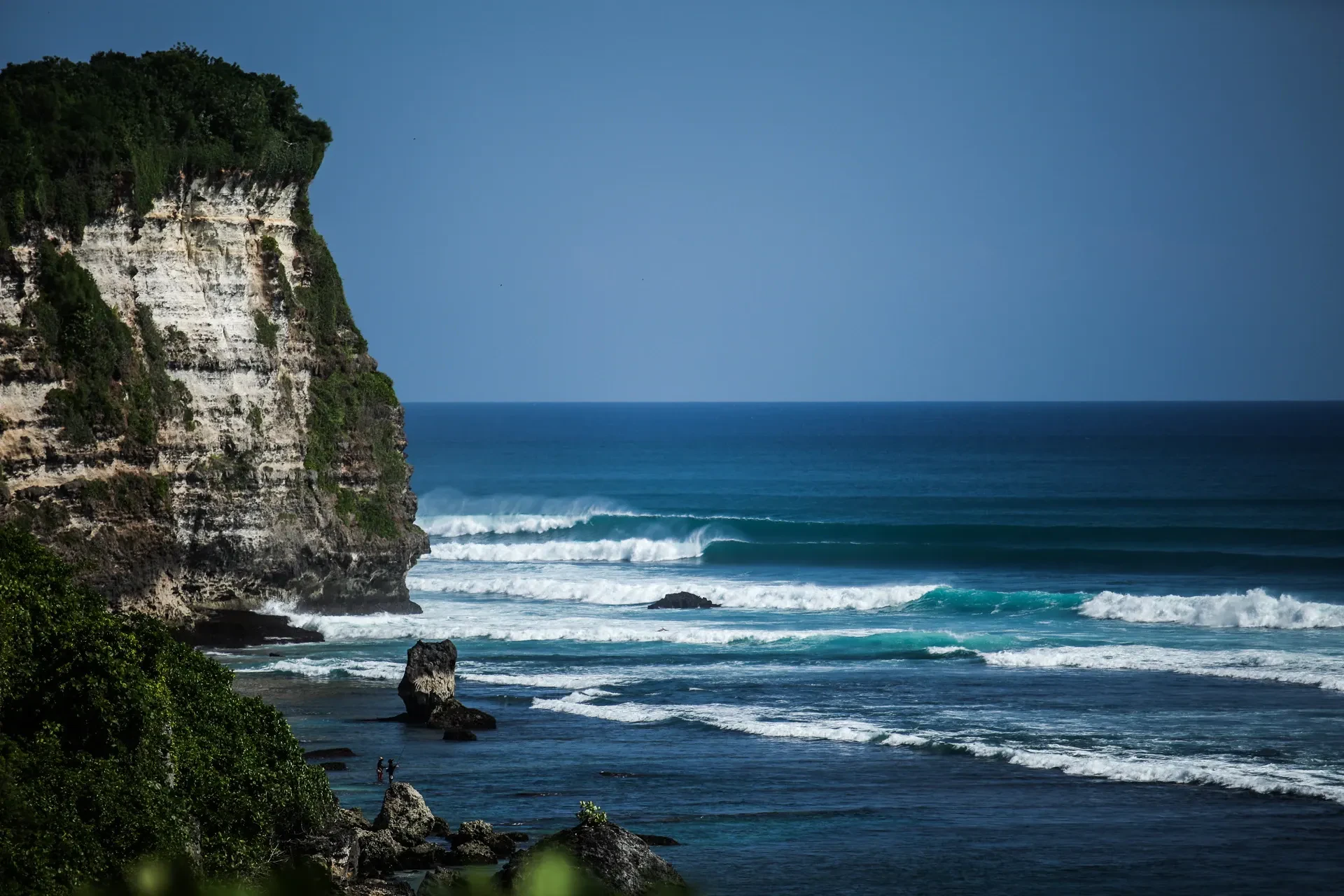
The Bukit peninsula in Bali's far south has some of the best reef surf in Asia, all within a short drive of Uluwatu Temple. These are reef breaks, not sand, so a bit of experience and respect for the tide matters more here than on Canggu's beaches.
| Break | Level | What it's like |
|---|---|---|
| Uluwatu ("The Peak") | Intermediate to advanced | Bali's most famous wave, reached down stairs and through a cave at water level. Several sections work off the one reef, from the more approachable Racetrack to the powerful Outside Corner |
| Padang Padang | Beginner-friendly section, advanced at size | "Baby Padang" is one of the few genuinely beginner-friendly waves on the Bukit; the main Padang Padang barrel next to it is for experienced surfers only |
| Bingin | Intermediate | A gentler inside section suits confident intermediates on smaller swells; it gets more serious as the swell grows |
| Dreamland | All levels, tide-dependent | Breaks both left and right over reef and sand. Forgiving for beginners at mid to high tide, with a more serious A-frame further out for advanced surfers on bigger days |
| Balangan | Intermediate to advanced | A long, consistent left reef break, best in the dry season with the right tide. Beginners can join with an instructor but shouldn't paddle out alone |
Our Bali Surf & Yoga trip spends a full day coaching on the Bukit's reef breaks after two lessons in Canggu, with the spot picked to match the group's level and the day's swell.
Other Bali surf spots worth knowing
- Keramas, on the east coast, is cleanest in the wet season, when the wind that spoils the west coast and the Bukit blows offshore here. The swell is usually smaller than in the dry months. It's a punchy reef break, better suited to experienced surfers.
- Balian, in Tabanan on the west coast, is a quieter river-mouth break with a long peeling left and a punchier right over a boulder-and-sand bottom, roughly 90 minutes from Canggu. It works for progressing beginners through to advanced surfers looking for a break from the crowds at Canggu and Uluwatu.
Bali's surf seasons
Bali's coasts work on opposite schedules.
| Season | Months | Best coast |
|---|---|---|
| Dry season | April to October | The west coast (Canggu) and the Bukit (Uluwatu and around), with offshore trade winds most mornings |
| Wet season | November to March | The east coast (Keramas) and Sanur's Baby Reef, while the west coast still works but with less consistent wind |
The dry season is the more reliable choice if surfing is the main reason for your trip, and May, June and September tend to bring good swell without July and August's crowds. Our best time to visit Bali guide has the fuller month-by-month picture, and our Bali Surf & Yoga trip runs in the dry season for that reason.
Surf lesson and board rental prices in 2026
| Item | Canggu | Uluwatu / the Bukit |
|---|---|---|
| 2-hour group lesson (board included) | IDR 300,000 to 500,000 | About IDR 500,000 to 700,000, depending on the school and whether hotel pickup is included |
| Board rental, per day | IDR 100,000 to 225,000 depending on board type | IDR 100,000 to 200,000 depending on board type |
| Board rental, per hour | IDR 60,000 to 100,000 for a 2-hour hire | IDR 50,000 to 150,000 depending on board type |
Weekly board hire usually works out cheaper per day than paying daily. Multi-day coaching packages on the Bukit vary widely, from budget camps charging under IDR 1 million a night for two lessons a day up to premium week-long intensives costing well over US$1,000, so check exactly what's included (lessons, board, accommodation) before comparing prices.
Reef safety, tides and travel insurance
Batu Bolong and the Kuta to Seminyak beach breaks are over sand, so a fall mostly means a mouthful of water. The Bukit's breaks, and Canggu's Echo Beach and Pererenan, are a different matter. Open beaches also have rip currents, so ask your instructor where to enter and exit the water.
- Reef cuts. Coral cuts and grazes are common on reef breaks like Uluwatu, Bingin, Balangan and Echo Beach. Clean and cover any cut the same day to avoid infection, and consider reef shoes if you're not used to reef breaks.
- Tides matter more than the swell forecast. Several Bukit breaks only work, or only work safely, at a specific tide, since the reef gets shallow and exposed at low tide. Check a tide chart and ask locally before paddling out somewhere new.
- Go with an instructor first. On any reef break you haven't surfed before, a local instructor who knows the exact line to paddle out and back in is worth far more than confidence alone.
- Travel insurance. Check your policy covers surfing and water sports specifically, since some standard policies exclude it or cap the cover, and confirm it includes medical treatment for a reef injury.
Surf etiquette in Bali
- Priority. The surfer closest to the breaking part of the wave has the right of way. Don't paddle around someone to take a wave that's already theirs (dropping in).
- Don't snake. Paddling around the back of the queue to jump ahead of everyone waiting is bad form everywhere, and Bali's crowded breaks make it especially annoying.
- Wait your turn at busy spots like Uluwatu and Batu Bolong, where the lineup can get crowded, especially in the dry season.
- Respect local surfers and instructors, who know the reef and the crowd far better than a visitor on their first session.
- Look after the reef. Don't stand on coral to rest, and use reef-safe sunscreen.
Surfing on our trips
Our dedicated surf trip coaches you through Canggu's beach breaks before moving on to the Bukit's reefs, and our other Bali trips include a taste of Canggu's surf as part of a longer route.