Canggu, Ubud and Uluwatu sit within about an hour of each other and of Bali's airport, but they feel like different islands. Here's how they compare on vibe, surf, food, nightlife, cost and getting around, plus a route that covers all three without wasting a day in traffic.
At a glance
| Canggu | Ubud | Uluwatu | |
|---|---|---|---|
| Typical daily cost | IDR 350,000 to 600,000 | IDR 250,000 to 450,000 | IDR 300,000 to 550,000 |
| Best months | April to October | April to October, driest overall | April to October |
| Getting to Bali | Via Ngurah Rai (DPS); no direct flights from the UK or US; about 3.5 to 6.5 hours from Australia's east and west coasts | Same: one airport serves the whole island | Same: one airport serves the whole island |
| Visa | 30-day e-VOA or VOA, IDR 500,000 for now (a rise is announced, no start date), extendable once | Same, island-wide | Same, island-wide |
| Beaches | Long black-sand beaches, walkable between them | None (inland) | Small cove beaches reached down cliff stairs |
| Food | Western-style cafes and warungs | Balinese warungs, home of babi guling | Cliffside warungs, grilled seafood |
| Culture | Least, though Tanah Lot is nearby | Most: temples, palace, art market | One standout: Uluwatu Temple and the Kecak dance |
| Nightlife | Busiest and latest | Quietest, early nights | Sunset bars, quieter after dark |
| Adventure | Beginner surf lessons | The Mount Batur sunrise trek | Reef breaks for intermediate to advanced surfers |
| Ease for first-timers | Easiest: walkable, social, well signposted | Easy in town, need a driver further out | Hardest: no train or bus, ride-hailing pickups restricted |
| Getting around | Walk, Grab, Gojek or scooter | Walkable centre; car and driver for the outer sights | Scooter or private driver; app pickups restricted at several spots |
| Solo-friendliness | Very high: surf lessons and hostels put you with people fast | High, but a quieter, slower crowd | Moderate: great for solo surfers, harder without your own transport |
Vibe
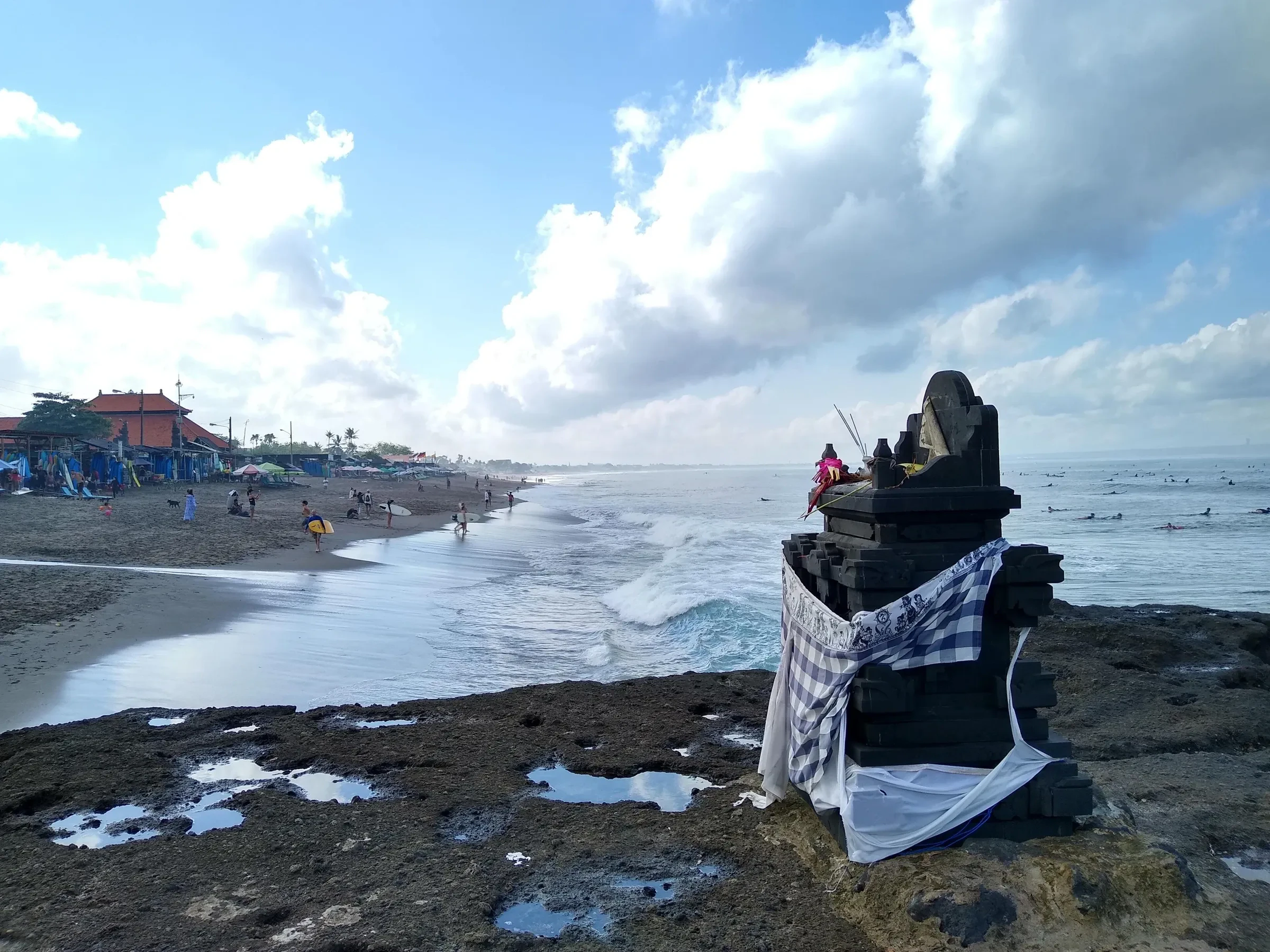
Canggu is Bali's most Western-facing town: coworking spaces, smoothie bowl cafes, and beach bars that fill up for sunset along a run of black-sand beaches from Berawa to Pererenan. It's the busiest of the three and geared as much towards long-stay remote workers as short-stay travellers.
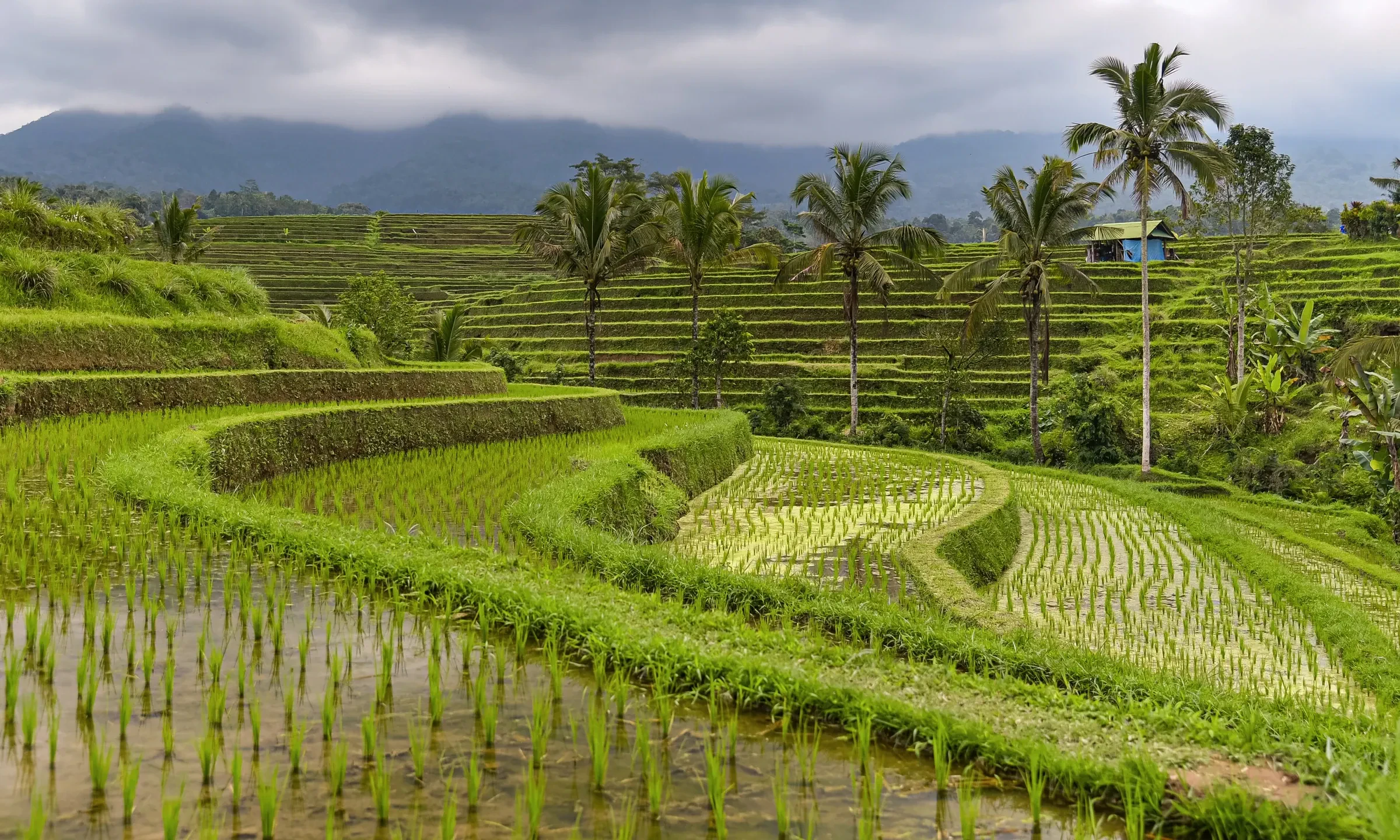
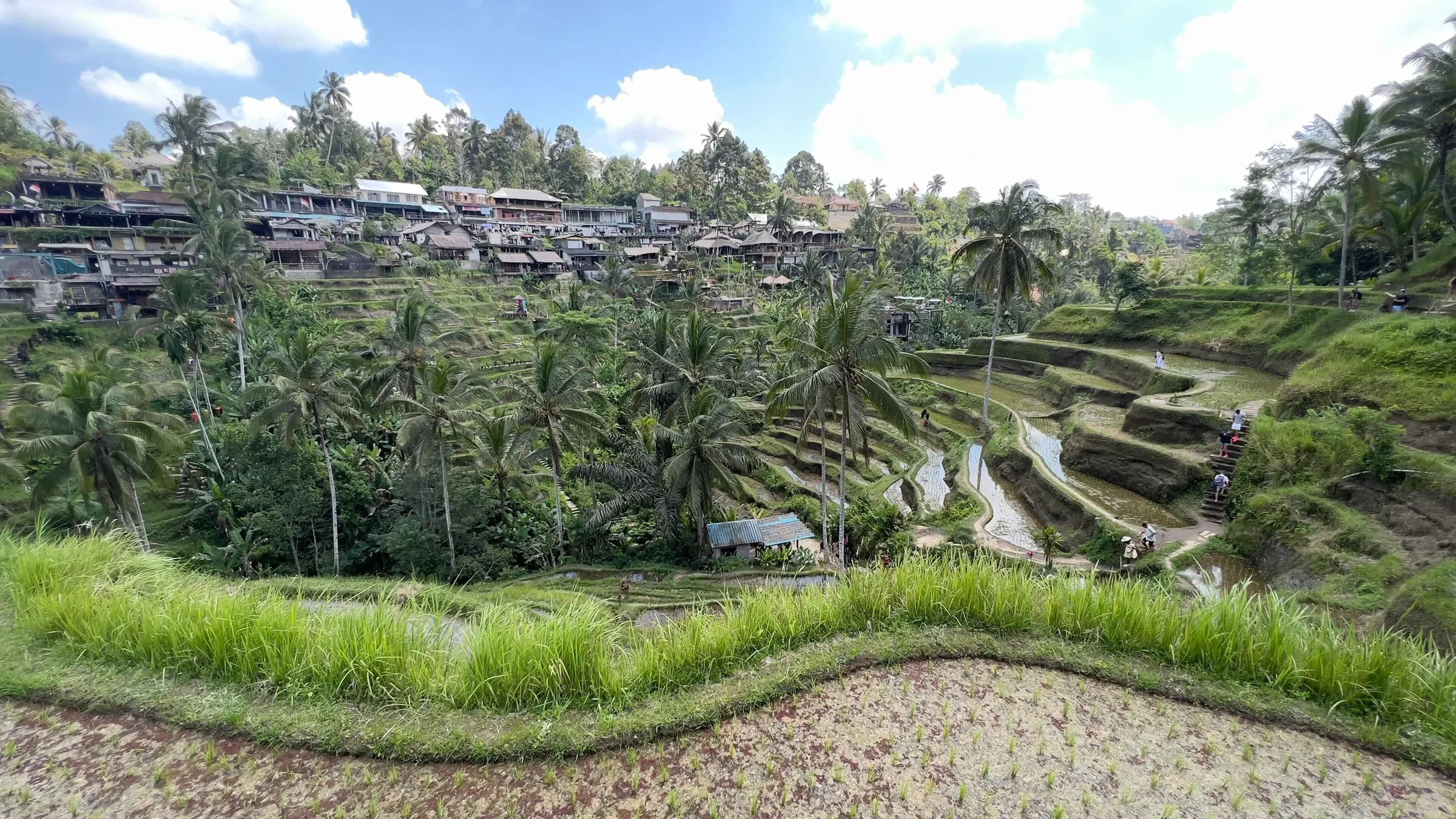
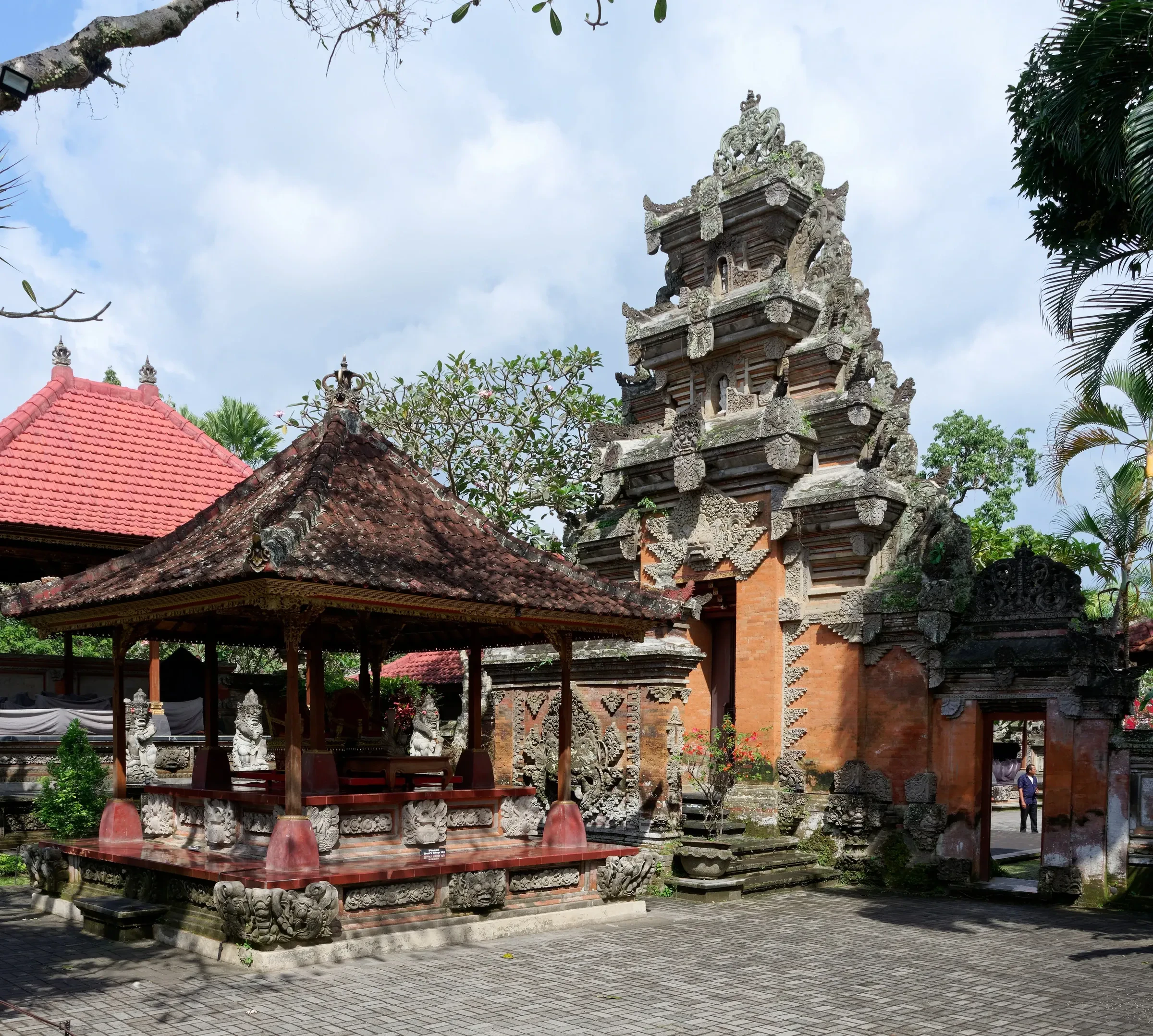
Ubud sits inland, in a belt of rice paddies and river gorges, and has been Bali's cultural and spiritual centre for decades. The town itself is small enough to walk across in twenty minutes, built around the Ubud Palace, a covered art market and temples, with yoga studios and healers on nearly every street.
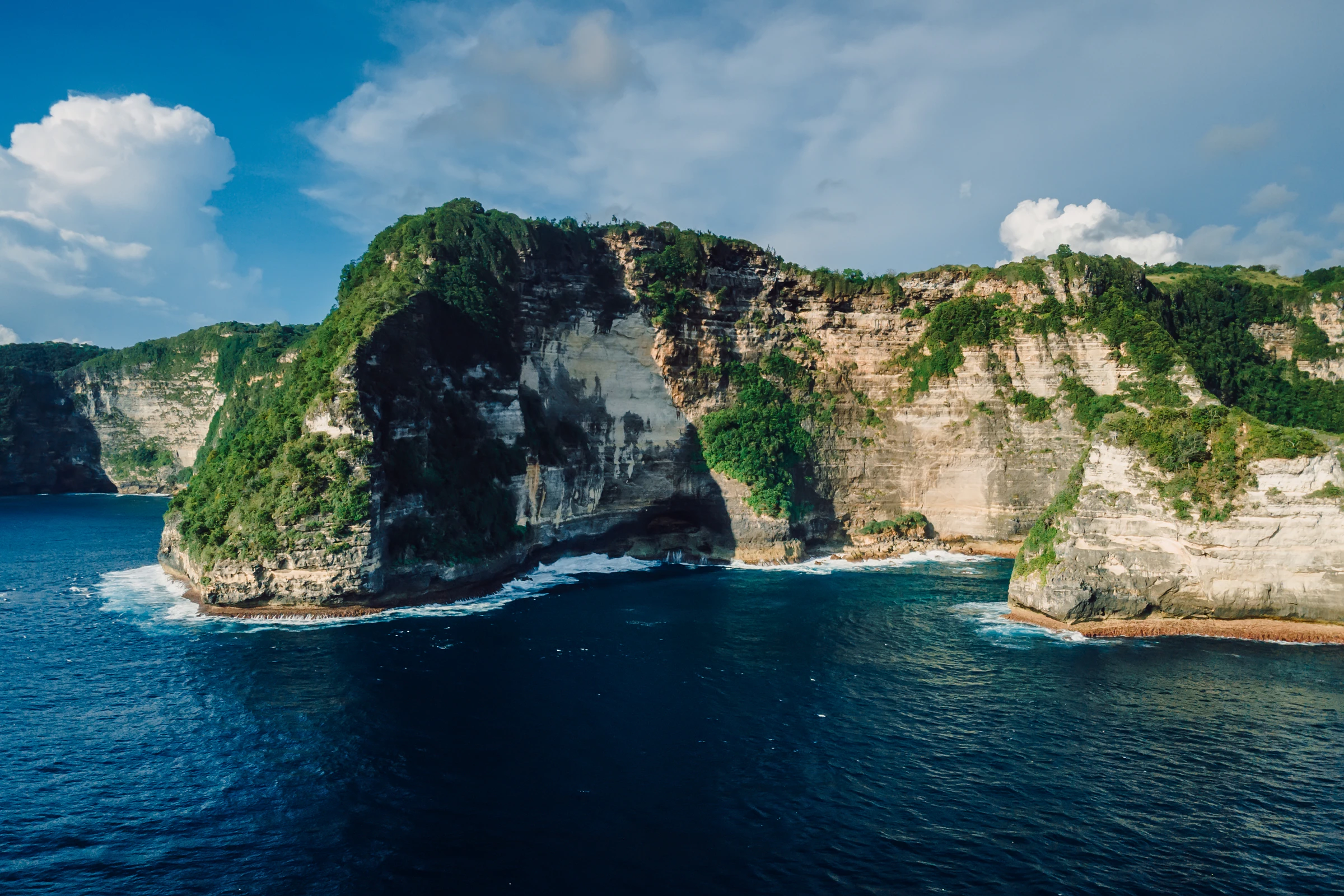
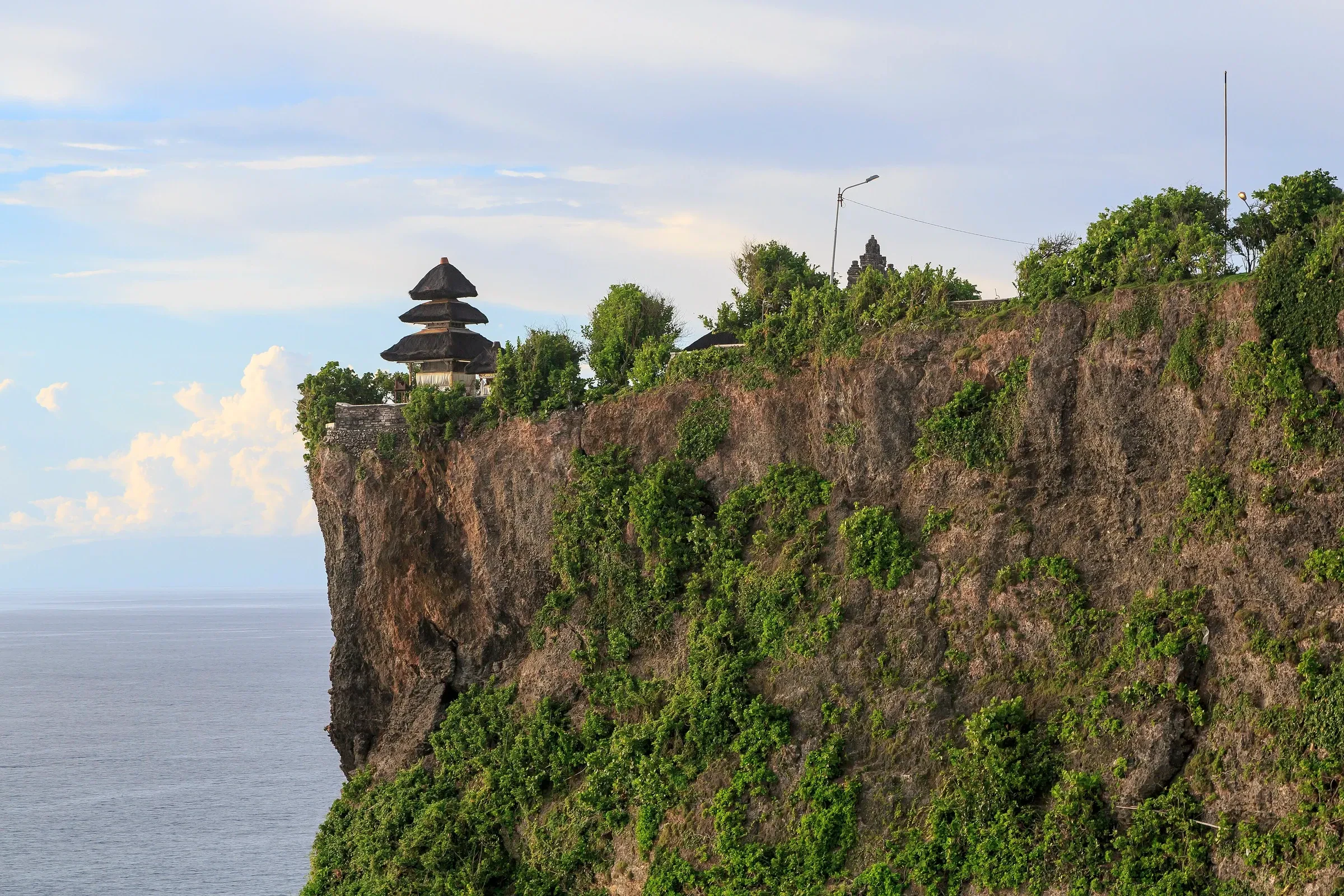
Uluwatu is a different kind of place: a dry, cliff-edged peninsula (the Bukit) where every beach sits down a stairway cut into limestone rock, and the roads run along the clifftop rather than the shore. It draws surfers first and everyone else second, and most of its cafes and beach clubs look down at the water from above rather than sit on the sand.
Winner: depends what you want. Canggu for buzz, Ubud for calm, Uluwatu for the scenery.
Surf
Canggu's Batu Bolong has long, slow waves over a sandy bottom, which makes it Bali's easiest place to learn: a two-hour group lesson with the board included costs about IDR 300,000 to 500,000. Echo Beach and Pererenan break over reef and rock, so they suit more experienced surfers.
Ubud has no surf. It's about an hour or more from the coast.
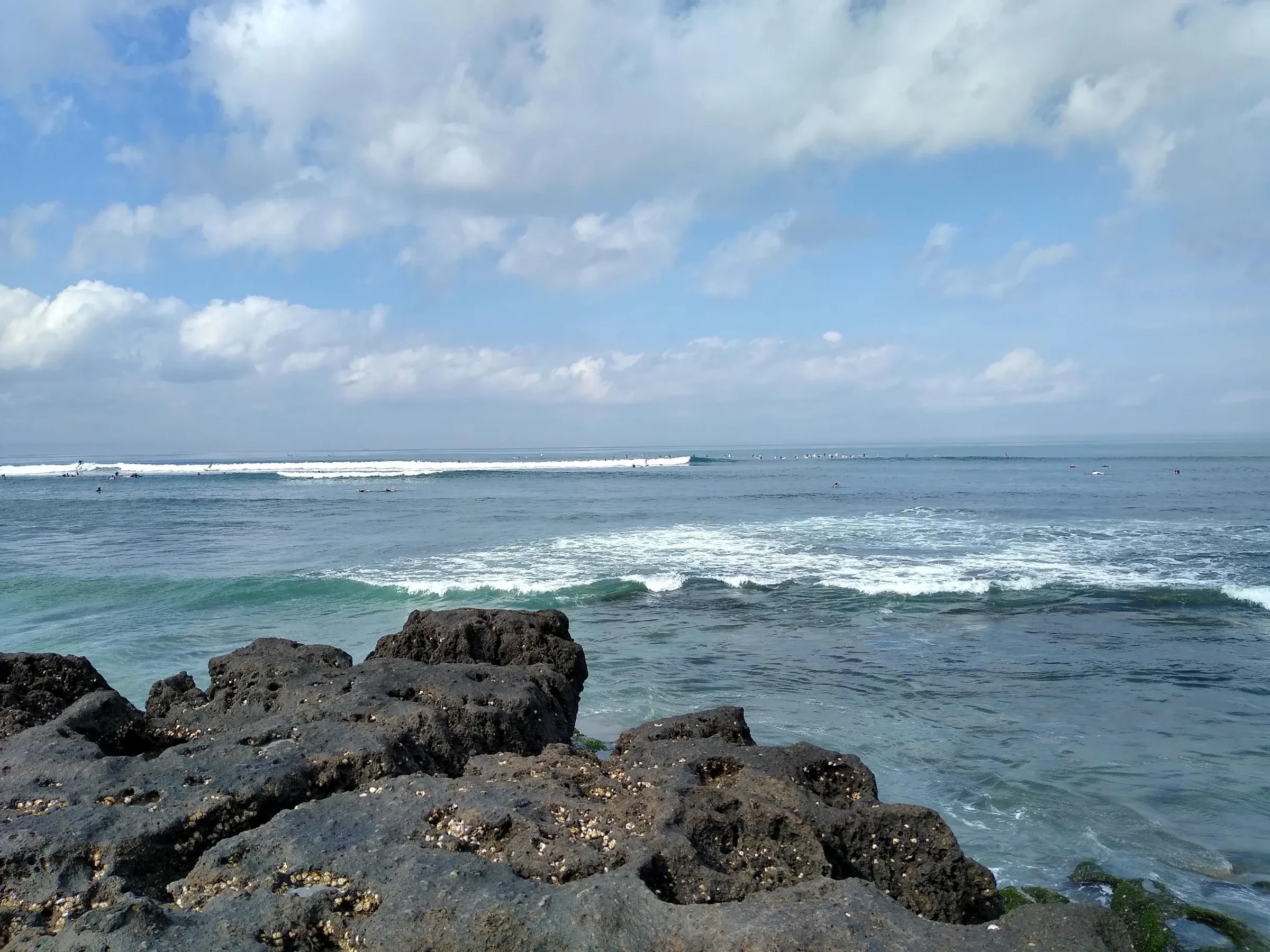
Uluwatu is Bali's serious reef-surf coast. Baby Padang, beside the main Padang Padang barrel, is one of the few genuinely beginner-friendly waves on the Bukit, Bingin suits confident intermediates on smaller swell, and Uluwatu's own break off Suluban is for intermediate and advanced surfers. Lessons on the Bukit cost more than in Canggu, roughly IDR 500,000 to 700,000 for two hours depending on the school. Every break there is reef over shallow coral, so check the tide with a local school before paddling out. The best window for consistent reef swell is May to September, when the dry-season trade winds blow offshore on the west coast and the Bukit.
Winner: Uluwatu for the waves, Canggu for learning from scratch.
Food
Canggu leans Western: smoothie bowls and brunch dishes at cafes cost 60,000 to 120,000 rupiah, against 20,000 to 45,000 for a nasi campur at a local warung.
Ubud is where Balinese food is at its best. It's the spiritual home of babi guling (spit-roast pork), plus lawar (a mixed vegetable, coconut and minced meat dish) and an Ubud-style nasi campur that leans more vegetable-forward than the coastal version. A half-day cooking class, usually starting with an 8:30am market visit, is worth building a day around.
Uluwatu's cliffside warungs serve grilled seafood, mie goreng and gado-gado with a surf view. Look out for nasi jinggo, a small banana-leaf-wrapped rice parcel, and sambal matah, the raw shallot, lemongrass and chilli relish that turns up on almost everything.
Winner: Ubud for depth and variety, Uluwatu for the view with your meal.
Nightlife
Canggu has the busiest scene of the three: beach bars filling up for sunset, later nights, and the most chances to meet people after dark.
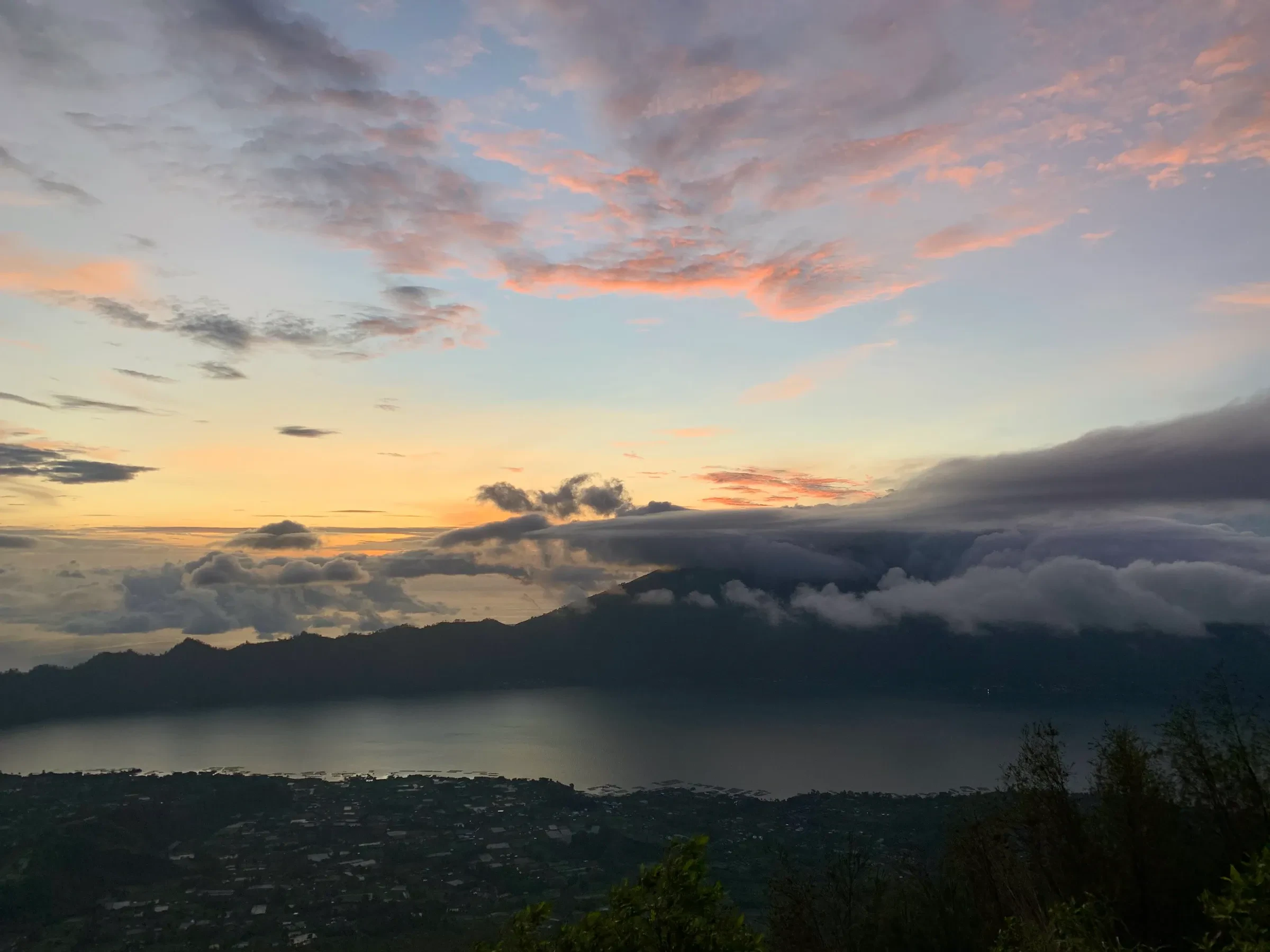
Ubud is quiet by comparison. Evenings tend to mean a traditional Legong dance at the palace, or an early night before the Mount Batur trek's pre-dawn start.
Uluwatu has sunset bars along the clifftop and the nightly Kecak fire dance at Uluwatu Temple, but the scene thins out once the sun goes down, partly because getting between spots after dark is harder here than anywhere else on this list.
Winner: Canggu, by a clear margin.
Cost
Canggu and Uluwatu run close together, both pushed up by Western-style cafes, coworking spaces and beach clubs; eating at warungs brings either down a long way. Ubud is the cheapest of the three day to day, since its warungs undercut the coast, though the cafes near the rice terraces charge coast-town prices. A dorm bed starts at about IDR 150,000 in Canggu or Ubud, and social hostels with a pool cost more. See our Bali trip cost guide for the full breakdown by area.
Winner: Ubud, for the lowest daily spend.
Getting around (and the Bukit's ride-hailing restrictions)
Canggu is the simplest of the three: its beaches sit within walking distance of each other, and Grab and Gojek generally work for longer hops.
Ubud's centre is walkable, but you'll need a car with a driver to reach Tegallalang, Tirta Empul, Gunung Kawi and the Mount Batur trailhead, since public transport barely exists in this part of Bali.
Uluwatu is the hardest to get around without your own transport. There's no train or bus route on the Bukit, and it's the most restrictive part of Bali for ride-hailing apps: local transport groups restrict app pickups at several spots, reportedly including the Uluwatu Temple car park and the Padang Padang entrance (per 2026 listings). Scooter hire (about IDR 70,000 a day, for a confident rider with a home motorbike licence and an International Driving Permit that covers motorbikes) or a private driver (IDR 600,000 to 800,000 a day) are the practical fallbacks for a Bukit stay.
Winner: Canggu, for the least friction.
Solo-friendliness
Canggu is the easiest place to arrive alone and meet people fast: surf lessons, yoga classes and social hostels put you with other travellers from day one, which is why it's a common first stop in Bali.
Ubud is solo-friendly in a slower way. Cooking classes and the Mount Batur trek (done with a local guide, often as part of a group) are good icebreakers, but the pace and the crowd both skew quieter than Canggu's.
Uluwatu suits solo surfers well, since surf schools naturally group you with other learners, but its transport restrictions make it a harder place to be spontaneous alone after dark than either of the other two.
Winner: Canggu, for solo travellers who want to meet people quickly.
Which should you choose?
| If you're... | Choose |
|---|---|
| A first-time surfer wanting to meet people fast | Canggu |
| Drawn to temples, rice terraces and a slower pace | Ubud |
| Chasing reef breaks and clifftop scenery, comfortable arranging your own transport | Uluwatu |
| Short on time (2 to 3 nights only) and want one stop that does surf, food and nightlife | Canggu |
| Working remotely for a week or more | Canggu, for the coworking spaces and cafes |
| Planning a Bali trip around one big cultural moment, like the Mount Batur sunrise | Ubud |
Why not all three?
You can, and most first-time solo trips do. None of the three needs more than 2 to 3 nights on its own, and they sit close enough together that a single loop works well: Canggu for the first few nights, Uluwatu as a short side trip or an extra stop either side of it, then Ubud inland to finish (or start) with the rice terraces and the Batur trek.
- 1 week: Canggu (2 to 3 nights) then Ubud (2 to 3 nights), with Uluwatu as a day trip from Canggu for the temple and the Kecak dance rather than an overnight stop.
- 10 days: Canggu (2 to 3 nights), Uluwatu (2 nights), Ubud (2 to 3 nights), with a couple of spare days for Nusa Penida.
- 2 weeks, 3 weeks or 1 month: the same three-way loop at a slower pace, extended out to Nusa Penida, the Gili Islands, Lombok or Komodo. Our Bali itinerary hub sets out the full day-by-day version at every length.
Keep planning
Read the full guides to each area: Canggu, Ubud and Uluwatu. For the rest of the island, see our Bali travel guide, Bali surfing guide, Bali trip cost guide and Bali itinerary hub.