What makes Uluwatu different
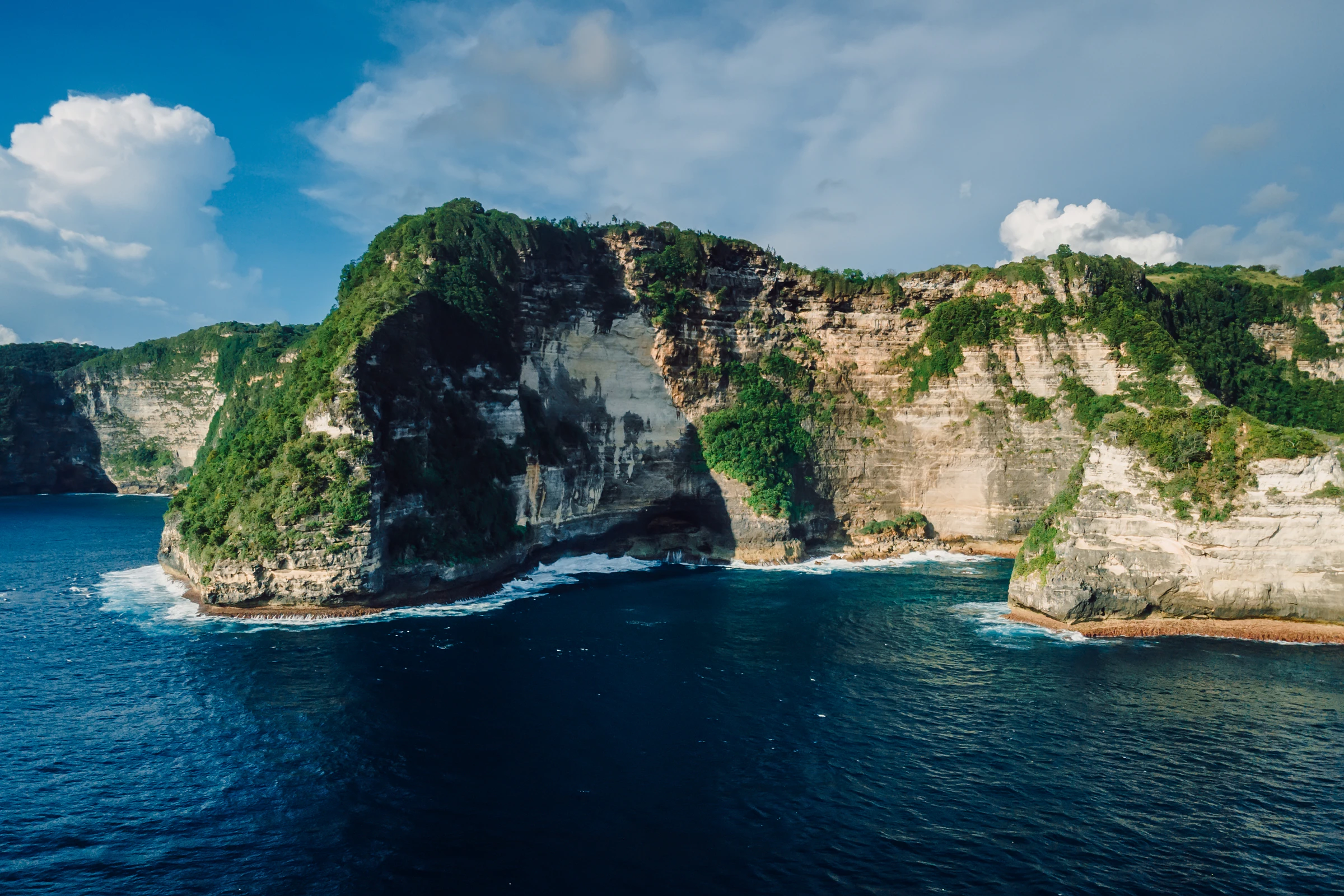
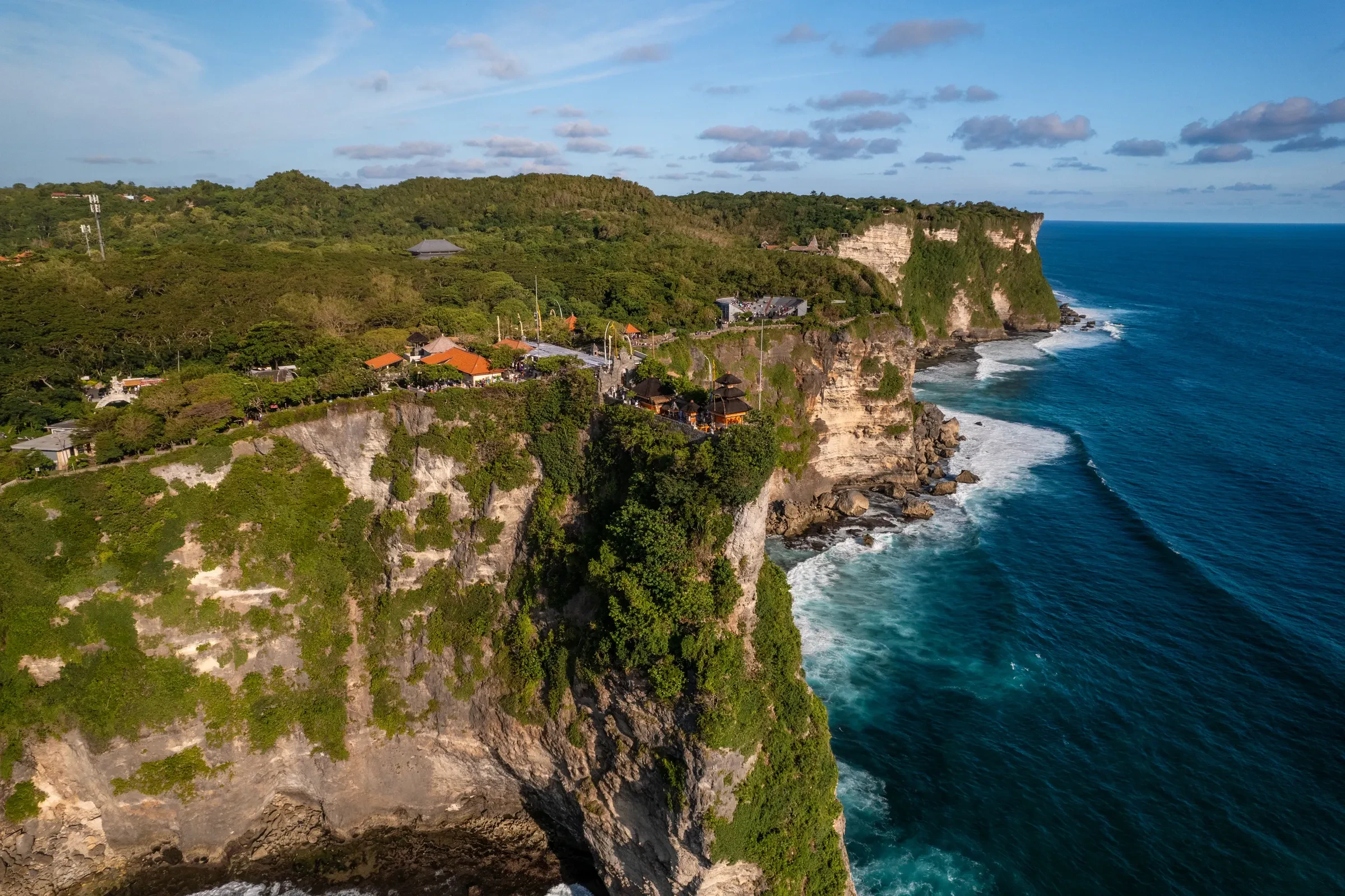
Uluwatu sits on the Bukit Peninsula, the dry, cliff-edged limb of land hanging off Bali's south. Canggu is flat black sand and rice paddy; the Bukit is raised limestone, with roads running along the clifftop and every beach reached by a stair or path cut into the rock. That geography also shapes the surf. The same reef that carves out the coves lines up some of the region's best waves, so this stretch draws surfers first and everyone else second, and most of the warungs and beach clubs you'll eat at sit on a clifftop looking down at the surf rather than on the sand itself.
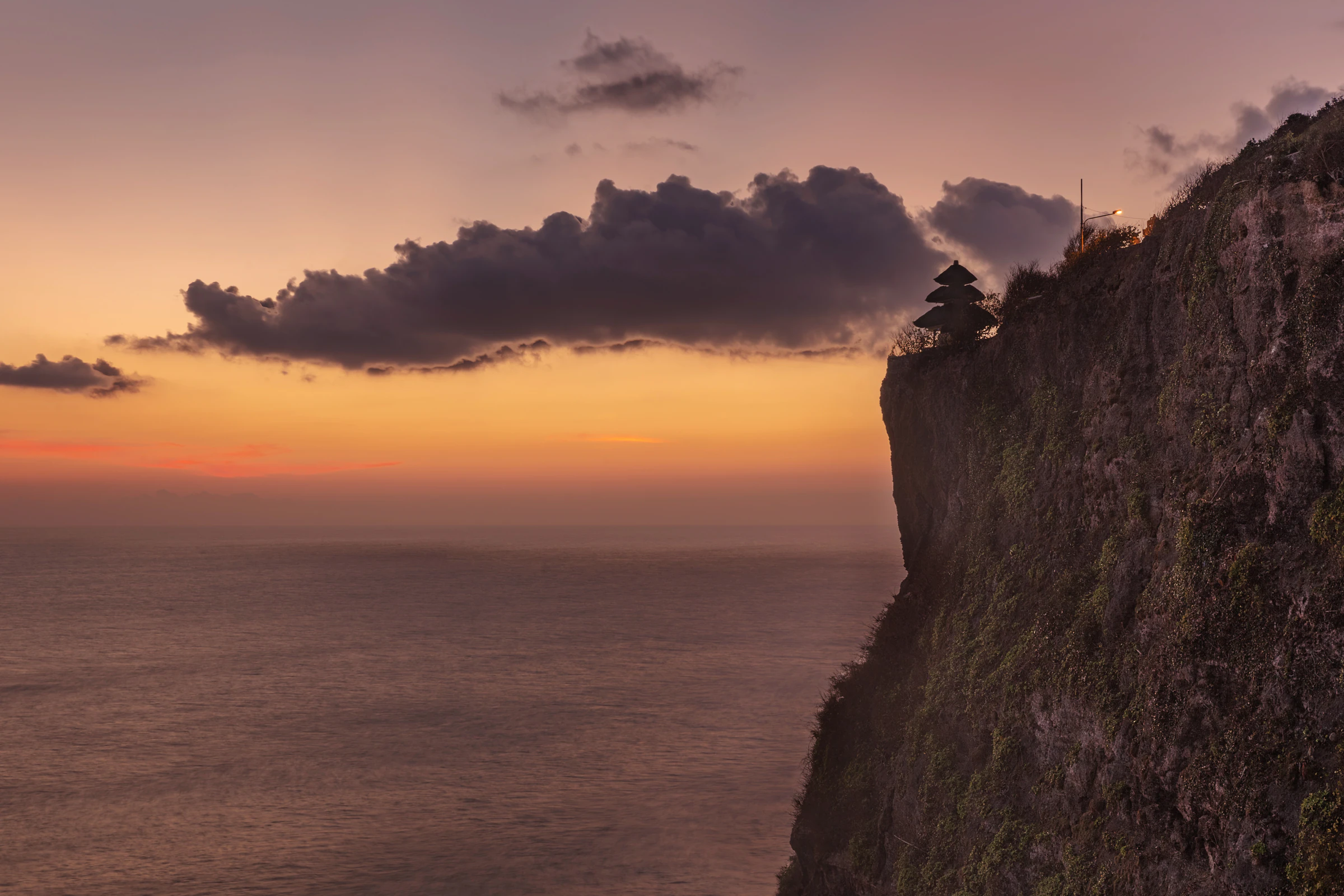
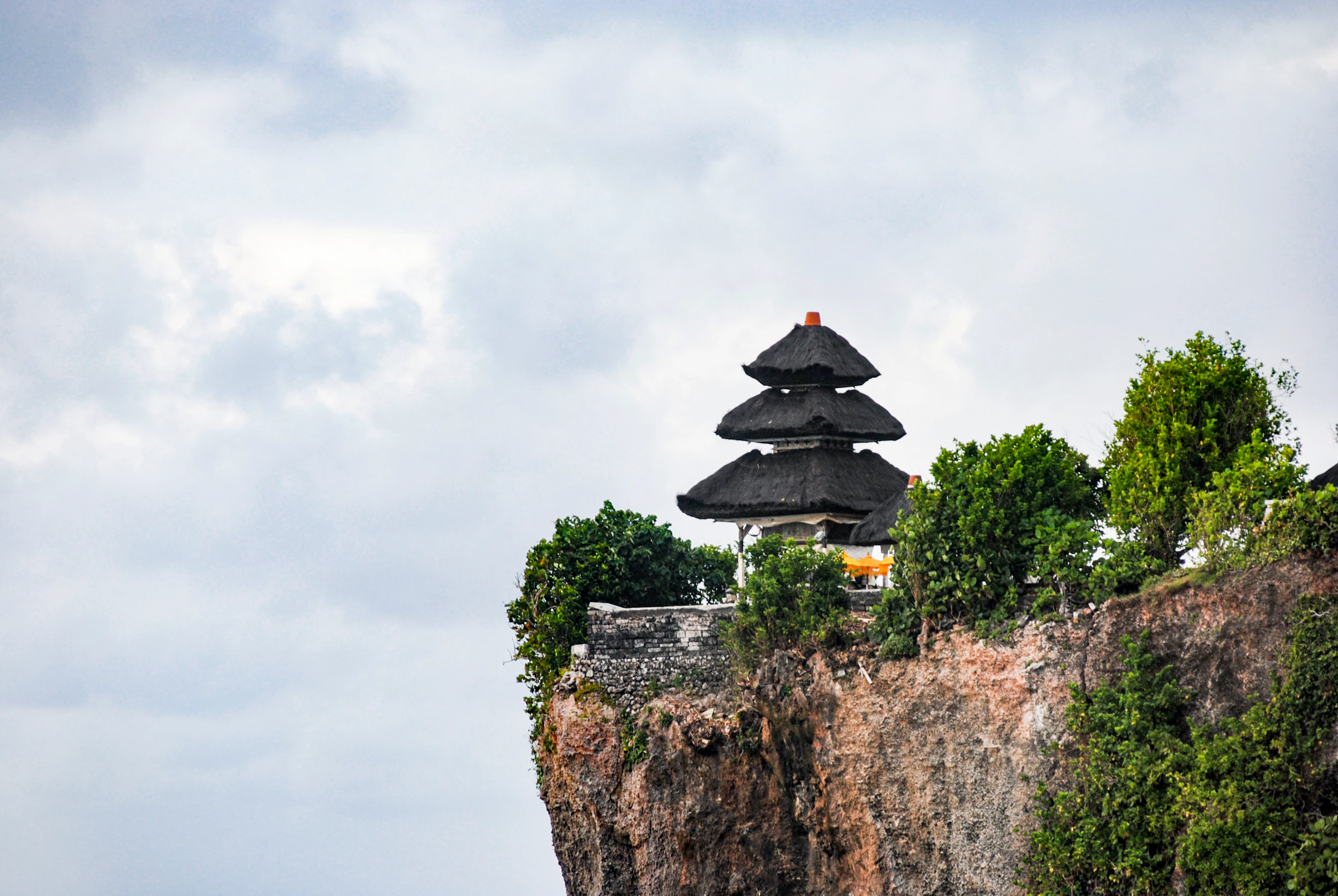
The other reason to come is Uluwatu Temple (Pura Luhur Uluwatu), one of Bali's six key directional temples, perched on a sheer cliff above the sea. It's worth the visit even if you skip everything else here, and the Kecak fire dance performed at its clifftop amphitheatre at sunset is one of the more genuine cultural experiences on the island, not just a photo stop.
Where to go on the Bukit Peninsula
Uluwatu Temple and Suluban Beach
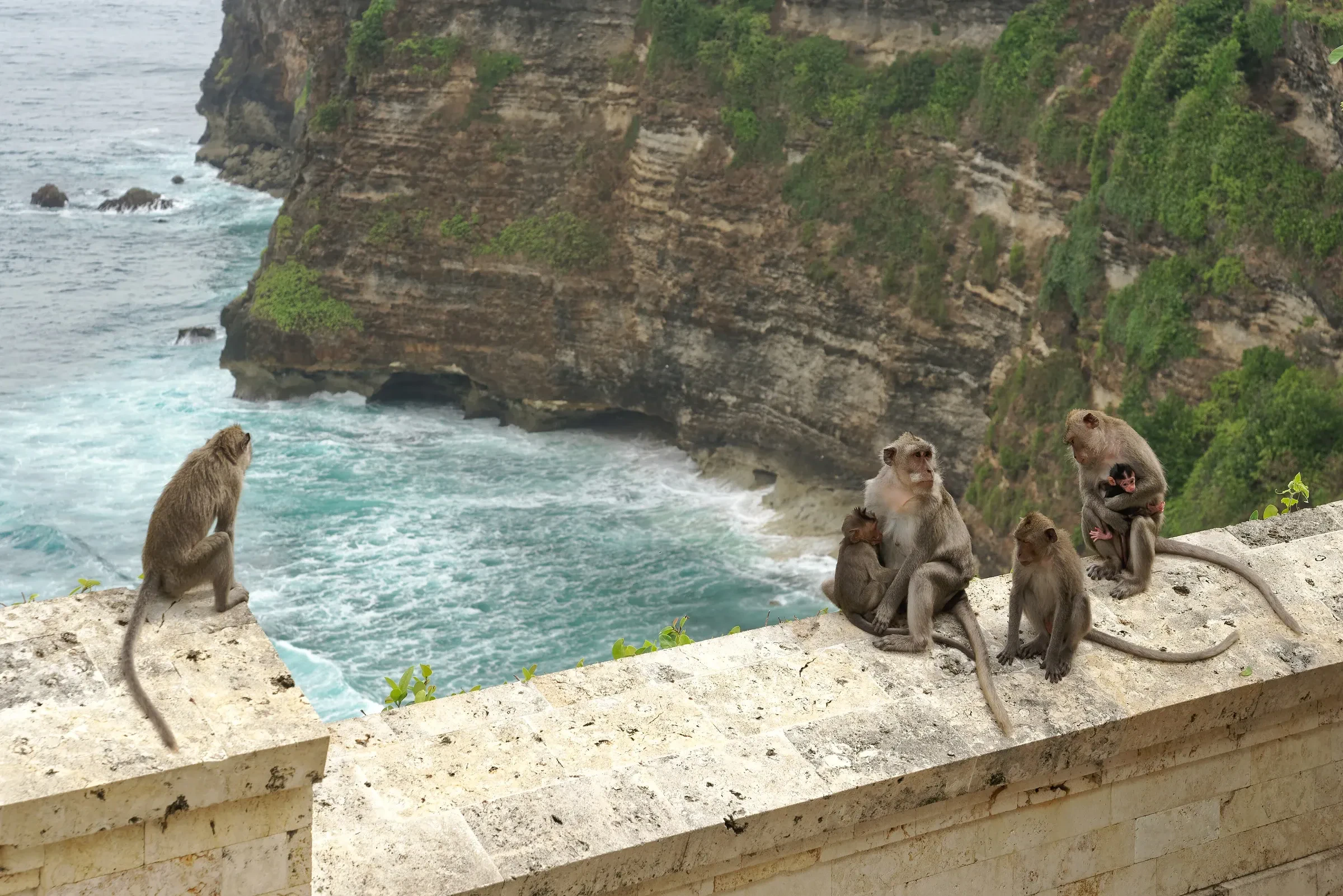
The temple sits right on the cliff edge with ocean views on three sides, and a troupe of wild macaques patrols the clifftop path. The temple's own site calls the monkeys sacred and protected but mischievous: don't feed them, and keep sunglasses, hats and phones secured. Below the temple, a narrow stairway cut through a cave leads down to Suluban Beach, the paddle-out point for the Uluwatu reef break. It's more a place to watch surfers and eat at a cliffside warung than to swim. Give it half a day, more if you're surfing.
Padang Padang Beach
A small cove beach reached down a steep stone stairway, made famous by a scene in Eat Pray Love and now one of the most photographed beaches on the Bukit. It gets crowded by mid-morning, but the water is calm enough to swim in, and the reef break out front includes Baby Padang, one of the few genuinely beginner-friendly waves on this coast. The main Padang Padang barrel beside it is for experienced surfers only. Half a day is enough unless you're surfing.
Bingin Beach
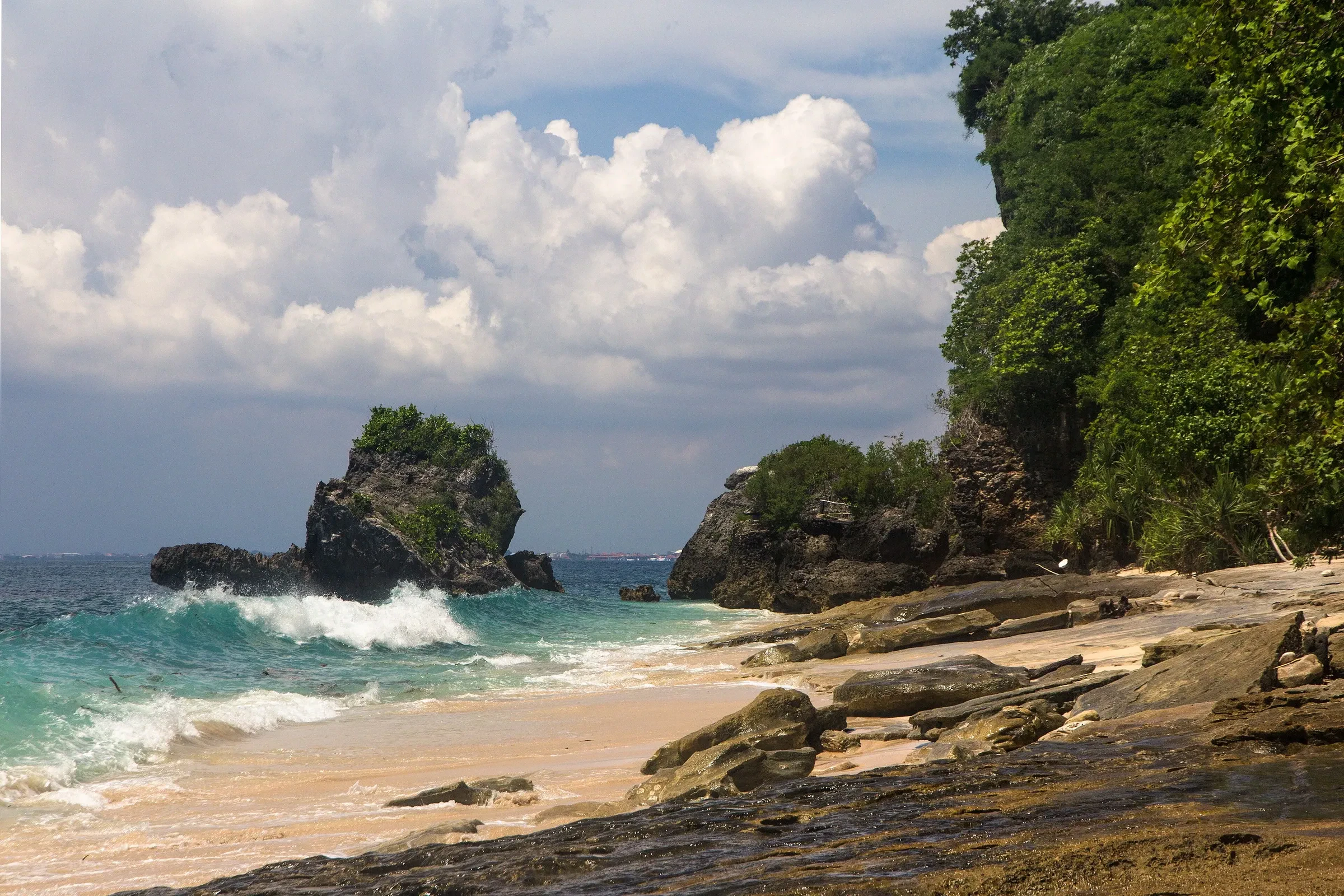
A wider cove than Padang Padang, backed by cliffside bamboo warungs and guesthouses stacked up the rock face. The wave here suits confident intermediates on smaller swell, with a gentler inside section, though it turns more advanced once the swell picks up. It has a slower, more independent feel than Padang Padang, and it's worth a half or full day, or basing yourself here for a night or two if you want quieter evenings than Uluwatu proper.
Melasti Beach
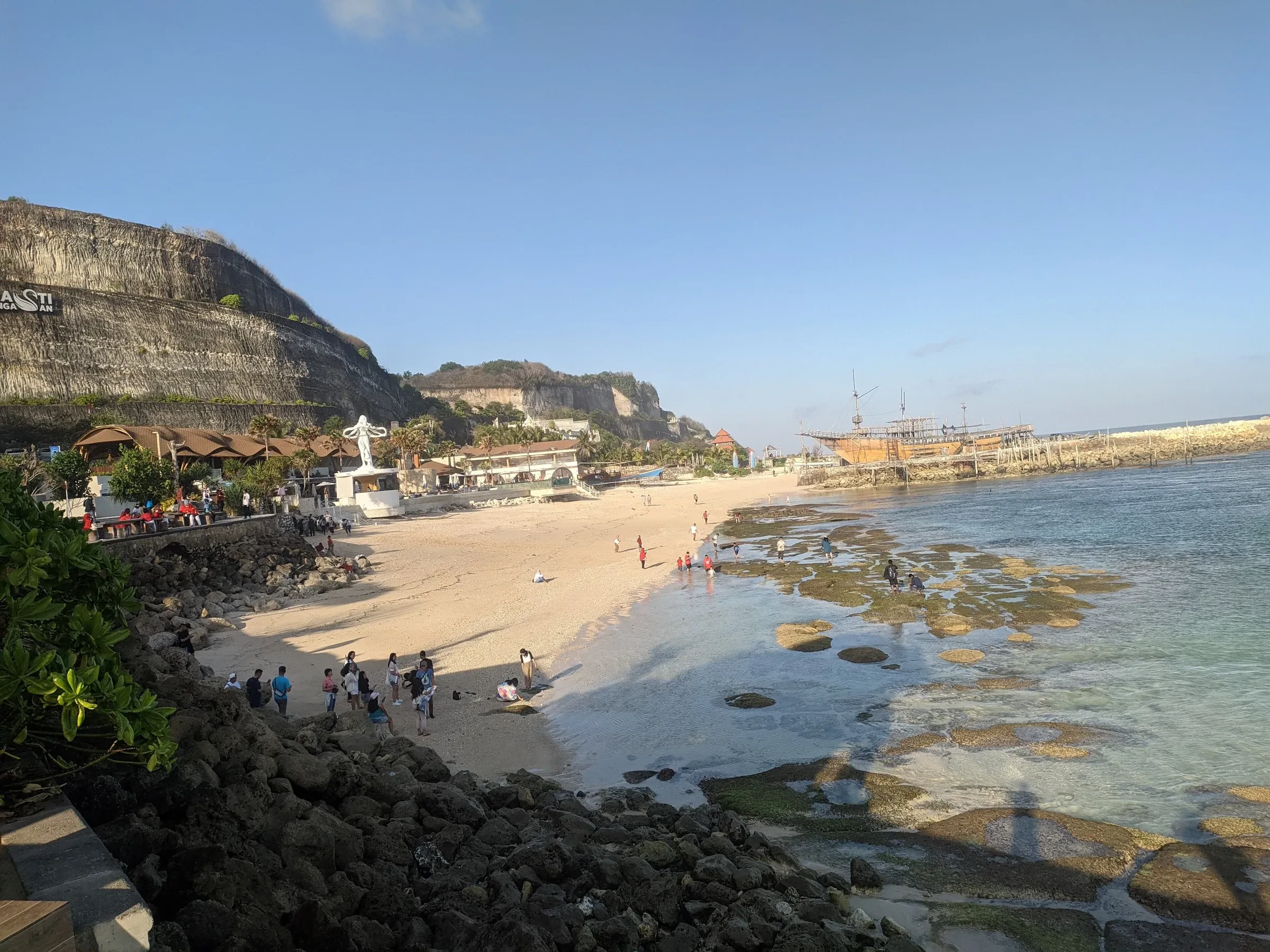
A different kind of beach altogether: a long stretch of white sand backed by tall limestone cliffs, reached by a paved road cut straight through the rock rather than a stairway. The water is calmer than at the surf beaches, good for actual swimming, and a run of beach clubs lines the sand. It's more about the dramatic approach road and the photos than surf or empty beaches, but it's a good change of pace from a morning in the water. Half a day.
Balangan and Green Bowl
The quieter alternatives. Balangan is a straightforward sand beach with its own reef break, popular for sunset drinks away from Uluwatu's crowds. Green Bowl needs a steep flight of over 300 steps to reach, which keeps it the emptiest beach on this list. Either is worth an afternoon once you've seen the Bukit's bigger names.
Beach stairs and access fees
Every cove here is reached by a stair or path, and some stair heads charge a small fee. Per 2026 listings, Padang Padang charges about IDR 15,000 for adults (cash) and is down roughly 100 to 120 stone steps. Bingin has no beach admission but charges for scooter and car parking, and its stairs are longer. Fees change, so carry small notes. Wear shoes with grip, because the steps get slippery after rain.
The Kecak fire dance at sunset
The Kecak is a Balinese chant and dance performance built around a circle of bare-chested men who provide the entire soundtrack through rhythmic "cak" chanting, no instruments involved, climaxing in a fire trance sequence. At Uluwatu it's staged daily at the temple's clifftop amphitheatre, timed to coincide with sunset.
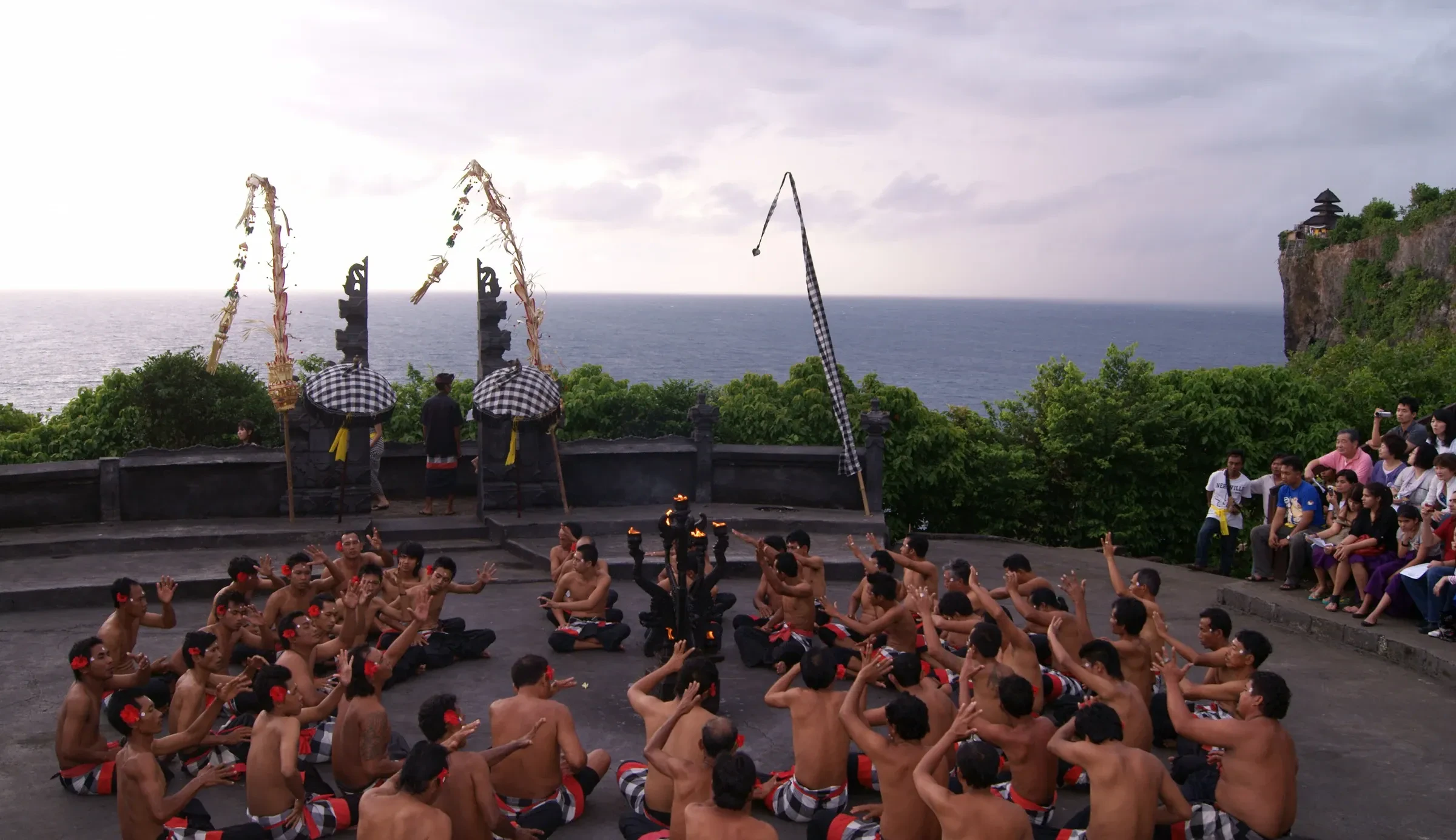
Temple entry costs about IDR 60,000, the figure in the temple's own 2026 fee article (read 6 October 2026). The Kecak performance is a separate ticket at about IDR 150,000 for adults and IDR 75,000 for children aged 2 to 9, again per the temple's site. The same site's home page still shows IDR 50,000 for entry, and the national tourism board's page lists higher foreign rates (IDR 100,000 and IDR 200,000), so bring cash and confirm at the gate. The temple's site says gates open at 4pm and the show runs from 6pm to 7pm. Two troupes alternate through the week, so check the day's schedule and box office hours when you arrive. Leave extra time for the drive, since traffic from Canggu and Seminyak can be slow around sunset, and allow time to buy tickets, find a seat and queue: this is one of the most visited things to do on the island.
Surf breaks and who they suit
Uluwatu itself, often called The Peak, is a long, powerful reef break with several sections, best suited to intermediate and advanced surfers who can handle a reef bottom and a busy lineup. Baby Padang, the soft wave beside the main Padang Padang barrel, is one of the few genuinely beginner-friendly waves on the Bukit. It's still a reef, so a lesson or local guidance helps, and the main Padang Padang barrel next to it is for experienced surfers only. Bingin suits confident intermediates on smaller swell, with a gentler inside section that turns more advanced as the swell grows. Impossibles is fast and shallow, for advanced surfers only, though it can suit strong intermediates on the days Uluwatu itself gets too big. Balangan is a reef break for intermediate surfers and above, and quieter than Uluwatu itself.
Every break here is reef over shallow, sharp coral, and the tide changes the conditions as much as the swell does. Ask a local surf school or your accommodation about the tide before you paddle out.
None of these are true learn-to-surf spots the way Canggu's beach breaks are. Our surfing in Bali guide covers lesson and board-hire prices and compares every break on the island, and most people learning from scratch are better off getting a few days at Batu Bolong or Old Man's in Canggu first.
What to eat
Cliffside warungs are the default here: grilled seafood, mie goreng and gado-gado eaten with a surf view. Look out for nasi jinggo, a small banana-leaf-wrapped rice parcel that's a cheap, everyday local staple, and sambal matah, the raw shallot, lemongrass and chilli relish that turns up on almost everything. If you haven't tried babi guling (spit-roast pork) yet, it's a Bali-wide dish rather than a Bukit speciality, and Ubud's version is the most famous; our Ubud guide covers where to find it there.
Best time to visit
April to October is the dry season and the best window overall, with May to September giving the most consistent swell for the reef breaks specifically. June to August brings the biggest, strongest swell of the year, which can feel large and intimidating if you're not an experienced surfer. December to March is the wet season: Uluwatu's reef breaks are more swell-dependent and less reliable, and short, intense afternoon downpours are common, though rarely all day. Our best time to visit Bali guide breaks the whole island down month by month.
Getting to Uluwatu and around without a car
From Canggu it's about 45 to 60 minutes by car or scooter, sometimes longer through Jimbaran's traffic at peak times. From Ngurah Rai airport (DPS) it's the shorter run, about 30 to 45 minutes.
There's no bus route or train out here, and local transport groups restrict app pickups at several spots on the Bukit, reportedly including the Uluwatu Temple car park and the Padang Padang entrance (per 2026 listings). Drivers may ask you to walk out to the main road, so don't rely on an app alone for your whole stay.
Scooter hire is the flexible option if you're a confident rider, at around IDR 70,000 a day, and it earns its keep given how spread out the beaches are along the clifftop roads. Riding legally means your home motorbike licence plus an International Driving Permit that covers motorbikes, and police checks have stepped up in 2026. If you'd rather not ride the Bukit's steep, narrow lanes, book a private driver for the day instead, typically IDR 600,000 to 800,000, or arrange point-to-point rides through your accommodation, which tends to work more reliably than hailing on the street. Our Bali cost guide has more on typical transport and activity prices, and remember the IDR 150,000 Bali tourist levy is paid on entering Bali, not per place (see our Bali visa guide).
How long to spend, and which route to follow
Most solo travellers pair Uluwatu with Canggu rather than visiting it alone: 2 to 3 days here is enough for the temple, the Kecak dance and a couple of beaches, on top of 2 to 3 days learning to surf in Canggu first. If you want to slow the Bukit down properly, stretch it to 3 days on its own so Bingin, Padang Padang, Melasti and Balangan each get real time rather than a rushed afternoon. Our South Bali guide covers the full Canggu-to-Uluwatu route day by day, and the Bali itinerary hub lays out how this fits into a 1-week, 10-day, 2-week, 3-week or 1-month trip.
Keep planning
Read the Bali guide for the whole island, Canggu for the surf-town half of a South Bali stay, Ubud for the cultural and rice-terrace half further inland, and Nusa Penida for the closest island add-on. If you're still deciding where to base yourself, see Canggu vs Ubud vs Uluwatu, and for more of the Bukit and the rest of the island, things to do in Bali.