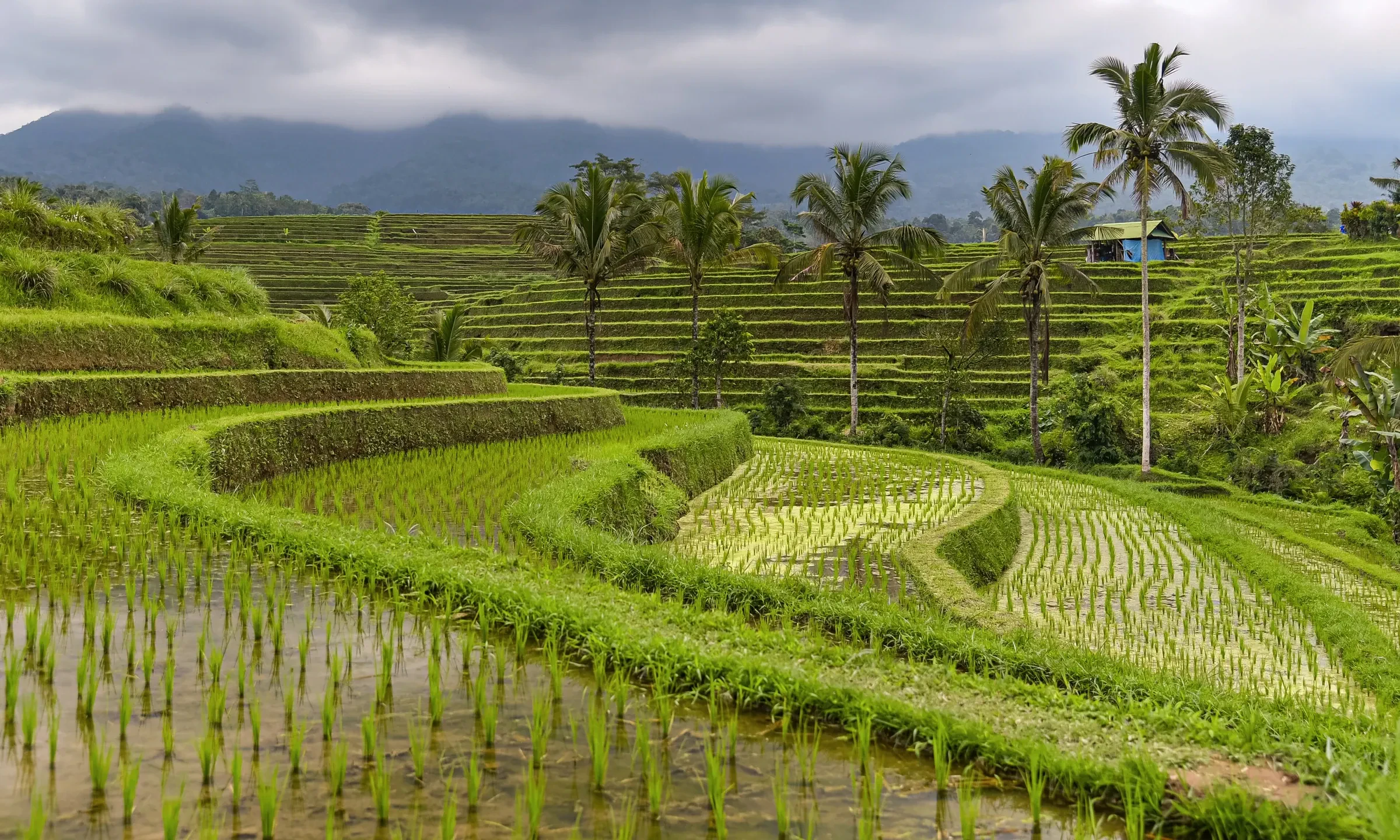
Indonesia's food changes island by island, and our Indonesian food guide covers the whole country. Bali is the outlier: it's Hindu-majority in a mostly Muslim country, which is why pork is a normal, everyday menu item here in a way it isn't in Java or Lombok. This guide goes deeper on the dishes and areas that make Balinese food its own thing, rather than repeating the country-wide picture.
The dishes to know
Babi guling
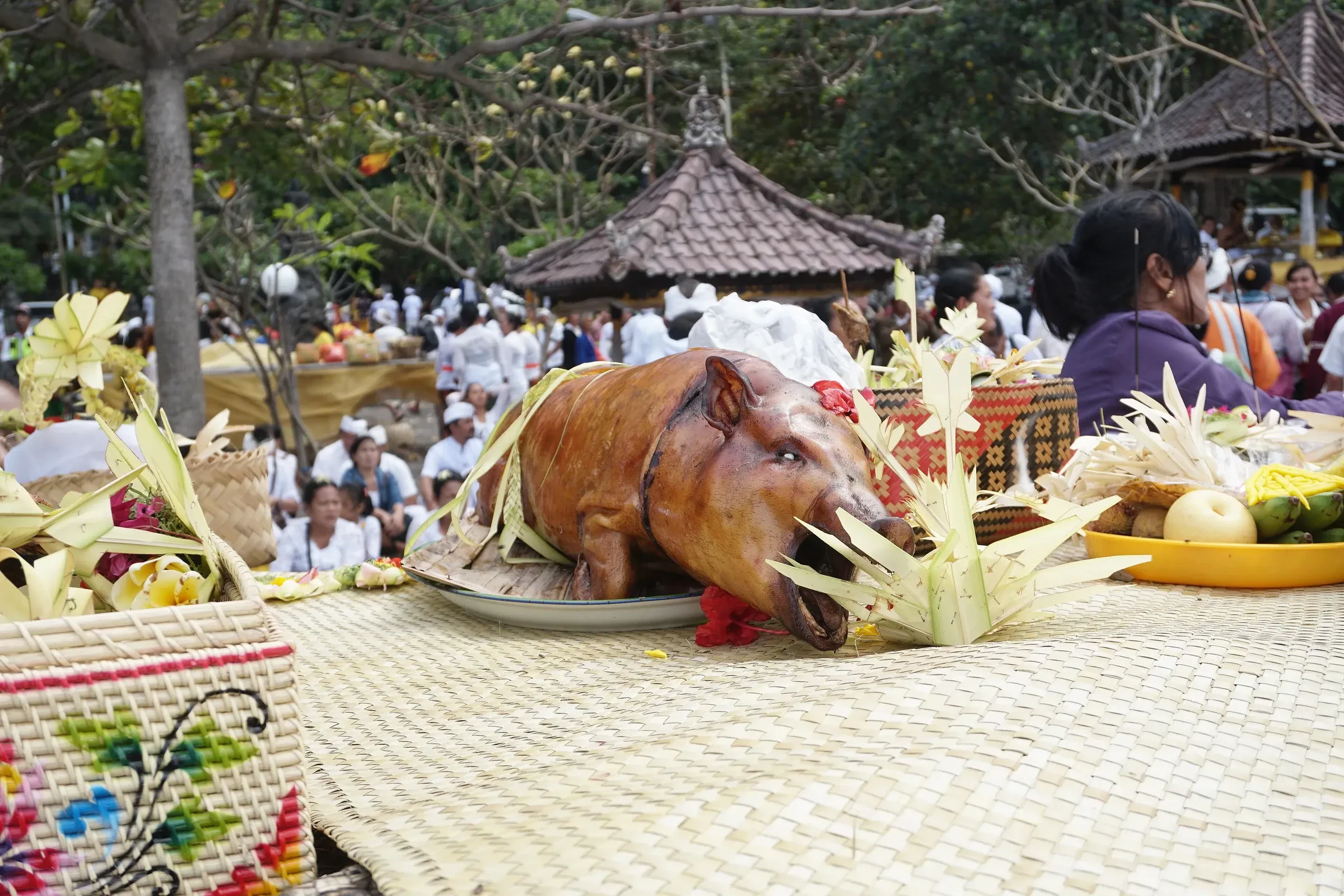
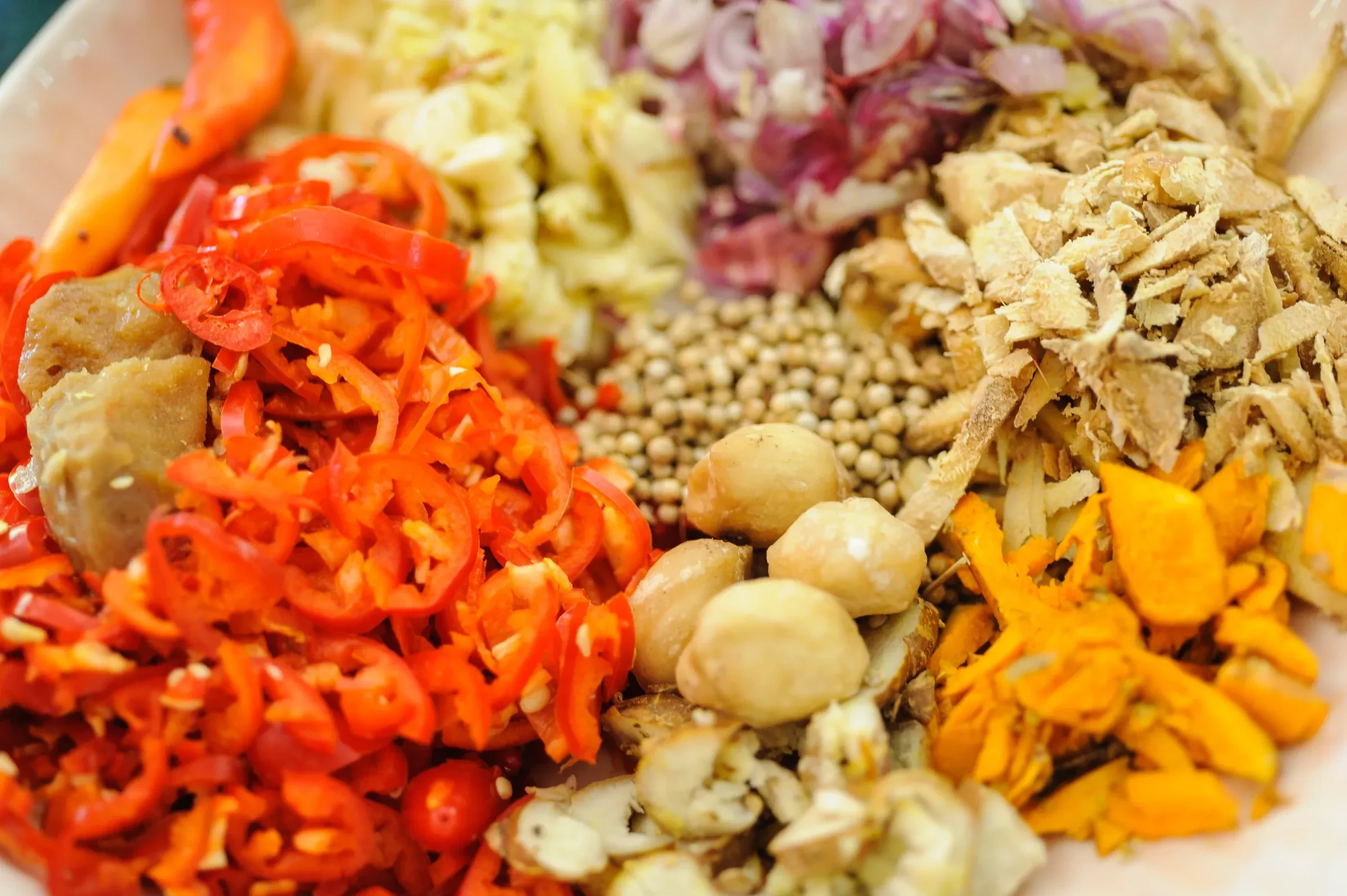
Whole suckling pig, stuffed with a turmeric-and-chilli spice paste called base genep and turned slowly over a wood fire until the skin cracks. It's Bali's best-known dish and, for many Balinese families, a ceremonial one first and a restaurant dish second. A plate (rice, crackling, a scoop of meat, a bit of lawar and blood sausage on the side) is listed at roughly IDR 25,000 to 45,000 (about £1.05 to £1.90) at smaller local warungs in 2026 price guides, and about IDR 65,000 to 85,000 (about £2.75 to £3.55) at better-known or more polished places. Ubud is treated as the spiritual home of the dish, and Ibu Oka is the best-known long-running warung. It now has three branches in and around Ubud, including one on Jalan Suweta, and its own website lists daily opening from 11:00, closing when the pig is sold out, and main plates at IDR 65,000 and 75,000 (read 6 October 2026). It's popular with visitors, so go early. Quieter alternatives exist all over Ubud and beyond, and locals will usually point you to whichever warung near them is roasting that day.
Lawar
A mix of finely chopped vegetables (usually young jackfruit or long beans), grated coconut, spices and minced meat or blood, often served as part of a ceremonial spread alongside babi guling. There's a vegetable-only version too (lawar sayur), which is what to ask for if you don't eat meat or blood. It's more of a side or component than a dish to order on its own, and it turns up on nasi campur plates across the island.
Bebek betutu and ayam betutu
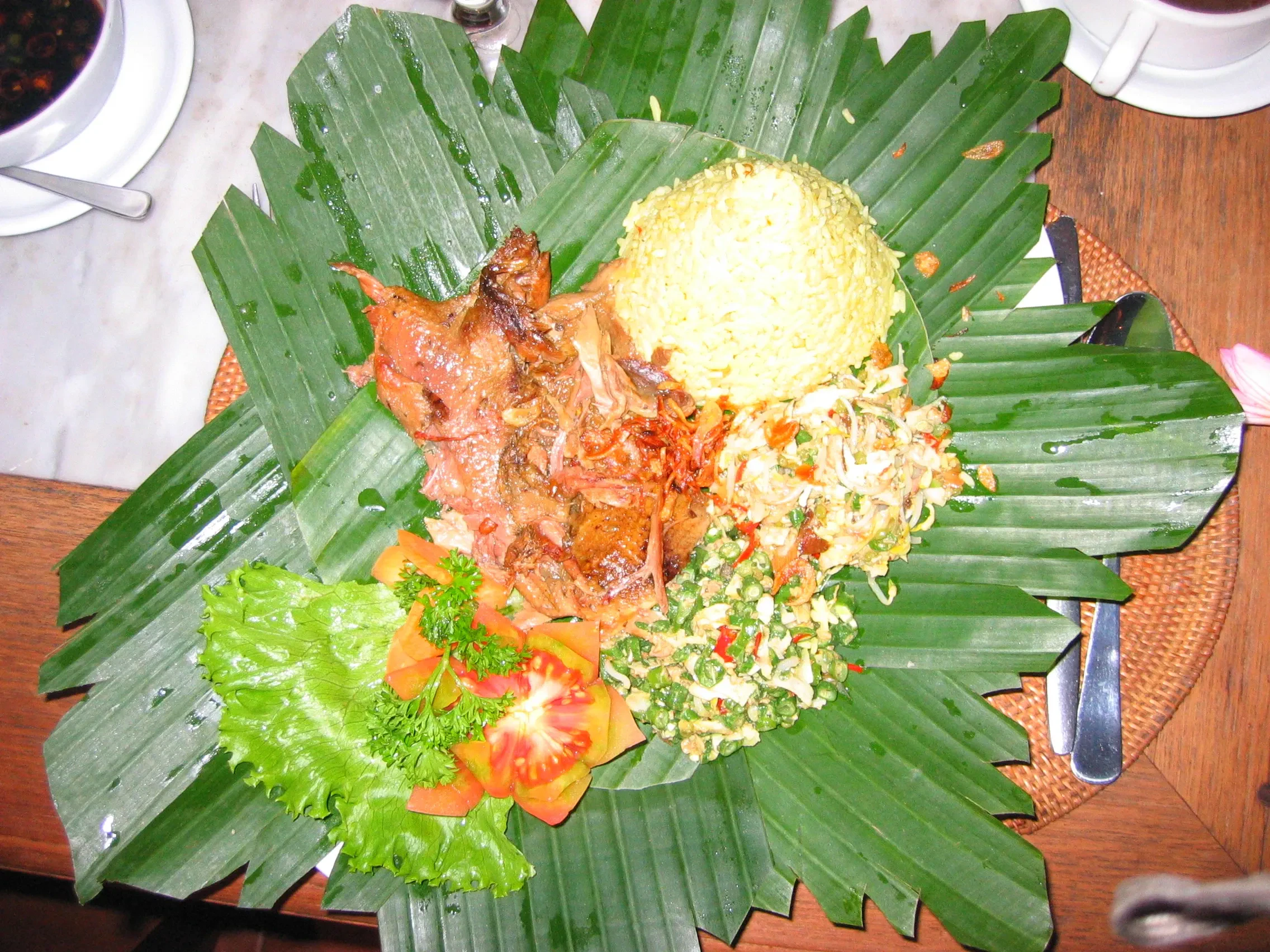
A whole duck (bebek) or chicken (ayam), rubbed with the same base genep spice paste, wrapped in banana leaf and betel-nut husk, then slow-cooked (traditionally buried in embers) for around 12 hours. Gianyar, the regency that includes Ubud, is particularly known for its version, which is milder than the betutu you'll find further west near Gilimanuk. Because of the long cooking time, most proper betutu restaurants want 24 hours' notice; walk-in versions exist but are usually pre-cooked and reheated. Listings from 2026 put a whole bird at roughly IDR 150,000 to 350,000, enough for two to three people, or from around IDR 250,000 per person at a sit-down restaurant.
Sate lilit
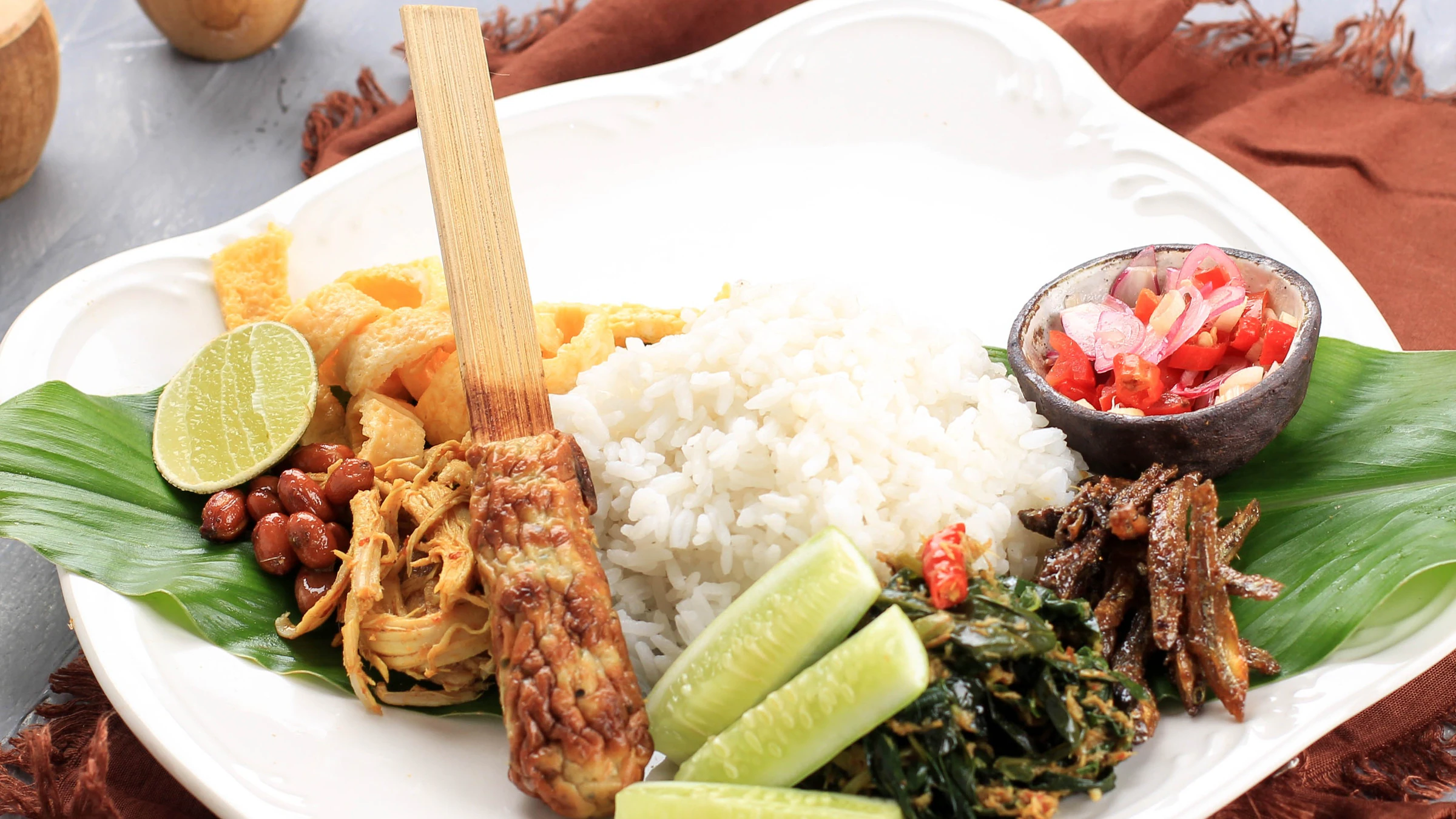
Minced, spiced fish, chicken or pork mixed with grated coconut and pressed onto flattened lemongrass stalks or bamboo skewers, then grilled. It's distinct from the skewered-chunk satay found elsewhere in Southeast Asia, and it's one of the easiest Balinese dishes for a first-timer to like. Prices vary a lot between a street stall, a warung and a tourist-area restaurant, so check the menu before you order.
Nasi campur and nasi Bali
Nasi campur is a plate of rice with a mix-and-match selection of small dishes spooned over it: a bit of lawar, some shredded chicken or pork, a boiled egg, a vegetable dish, crackers and sambal. It's the fastest way to try several Balinese dishes at once, and every warung's version is slightly different. Nasi Bali is the more specifically Balinese version of the same idea, usually built around babi guling or betutu leftovers with the full range of ceremonial sides. A warung plate is listed at about IDR 20,000 to 50,000 in 2026 price guides.
Jaja Bali
Traditional Balinese sweets and snacks, sold at markets and used as temple offerings as much as they are eaten as dessert. Common types include jaja godoh (fried banana fritters), jaja lempog (a soft cassava sweet), and rice-flour cakes coloured and flavoured with pandan and palm sugar. Ubud's market and any traditional pasar (morning market) around the island is the place to find a fresh spread of them, usually for very little each.
Where to eat, area by area
Bali's food scene looks different depending on where you're based, which is worth knowing before you plan a trip around it.
Ubud: the home of babi guling and cooking classes
Ubud is the island's food-culture centre: it has the best-known babi guling warungs, the widest choice of Balinese cooking classes, and a strong vegetarian and vegan scene built up around its wellness-tourism identity, with raw food cafés and all-vegan menus sitting a short walk from traditional warungs. Balinese cooking classes here typically run 3 to 4 hours, often starting with a market visit, and 2026 listings put a standard group class in a family home or on a farm at roughly IDR 450,000 to 650,000 (about £19 to £27), and the more polished cooking schools in the centre of town at about IDR 850,000 to 1,200,000. It's a popular add-on for solo travellers, since classes are usually small and sociable rather than a large tour group. See our Ubud guide for where to base yourself.
Canggu and Seminyak: warungs next to a serious cafe scene
Canggu's food identity is really two scenes running in parallel. The original one is warung food: nasi campur, sate lilit and mie goreng at about IDR 20,000 to 50,000 a plate. The other is the café scene Canggu has become internationally known for: smoothie bowls, specialty coffee and all-day brunch menus, aimed squarely at the digital-nomad and surf crowd. A smoothie bowl alone is listed at about IDR 60,000 to 85,000, and a bowl with coffee and juice can reach IDR 180,000 or more, several times what you'd pay for similar food at a warung. Neither is more "authentic" than the other at this point; they're just different budgets and different crowds, often on the same street. Seminyak, a short ride south, adds Middle Eastern and Indian restaurants on top of its beach-club dining. See our Canggu guide for areas and hostels.
Sanur: a calmer, more local mix
Sanur's food scene sits between Ubud's traditional warungs and Canggu's café culture, without leaning hard into either: a working fish market and fishing-boat beach in the mornings, and a quieter run of family-owned warungs and mid-range restaurants than the south coast's party strip. It suits travellers who want Balinese and Indonesian food without queuing behind a tour group or paying Canggu café prices.

Jimbaran: seafood on the sand
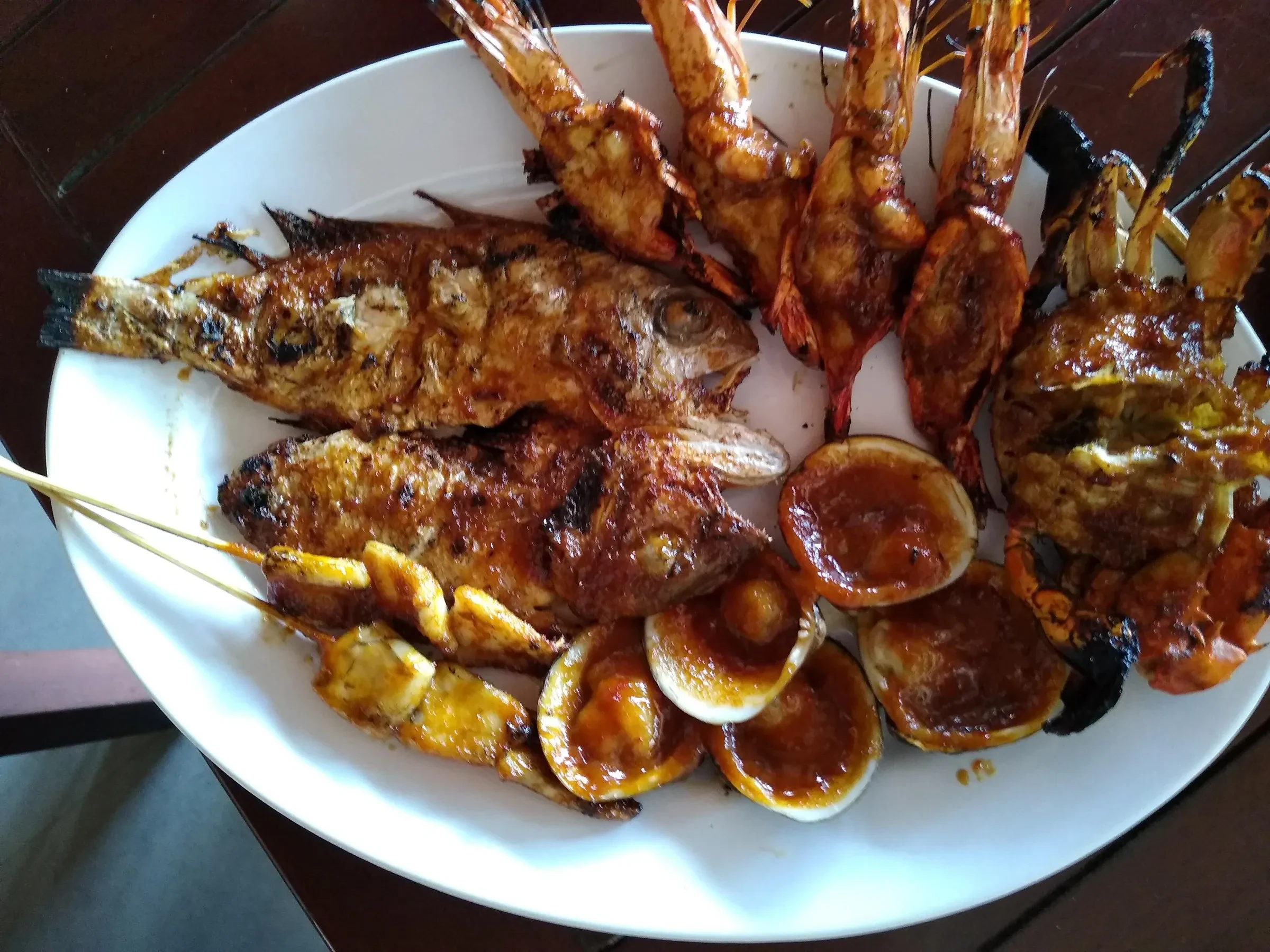
Jimbaran's beachfront seafood warungs are built around one experience: choosing fresh fish, prawns, squid or lobster at the market or from a display case, then having it grilled to order and eaten at a table on the sand as the sun goes down. In 2026 listings the grilling and cooking fee runs about IDR 15,000 to 50,000 per kilogram depending on the warung and method (grilled, fried, or with sambal matah), on top of the seafood's own weighed price. A full sit-down package with rice and sides at a beachfront restaurant is listed at roughly IDR 150,000 to 300,000 per person, rising past IDR 400,000 for lobster or king crab. It's touristy and the sunset tables get busy, so book ahead or arrive early.
Halal and vegetarian travellers
Bali's pork-heavy food culture can look daunting for Muslim travellers at first glance, but halal restaurants are not hard to find in the main tourist areas. Halal guides list the widest choice in Kuta, Seminyak and parts of Ubud: Indonesian restaurants serving rendang, soto and fried tempeh, plus Middle Eastern, Turkish and Indian restaurants. Check for a halal certificate or ask staff directly, because a menu without pork is not the same as halal. Away from those areas, halal options thin out, so it's worth checking ahead if you're basing yourself somewhere quieter.
Vegetarian and vegan travellers have it easier than the pork-forward reputation suggests. Nasi campur, nasi goreng, mie goreng and gado gado (a vegetable salad with peanut sauce) all have straightforward vegetable-only versions at almost any warung, usually for the same IDR 20,000 to 40,000 as the meat version, and lawar sayur is the vegetable-only take on Bali's signature side dish. Ubud in particular has built a real raw-food and all-vegan restaurant scene since its wellness-tourism boom, and Canggu has followed with several plant-based cafés and warungs of its own.
Drinks and alcohol safety
Arak, a locally distilled spirit, is sold across Bali, often mixed into cocktails. The UK Foreign Office warns that alcoholic drinks containing methanol have caused deaths and serious illness in Indonesia, that cases have come from drinks bought in licensed bars, shops and hotels in tourist areas, and that even small amounts of methanol can kill. Its travel advice doesn't name arak, but our advice is to be careful with cheap spirits and arak cocktails, stick to sealed bottles of known brands, and get urgent medical help if you feel unwell after drinking. For water, drink sealed bottled water or water that has been boiled or filtered, and eat food that's freshly cooked and piping hot, as TravelHealthPro advises.
Keep planning
Read the Bali travel guide for the bigger picture on regions and costs, or where to go in Bali to match a place to your trip. For a route that eats its way through the island, see things to do in Bali and the Uluwatu guide for the Bukit Peninsula's clifftop warungs. Our wider Indonesian food guide covers what changes once you leave Bali for Java, Lombok or Flores.