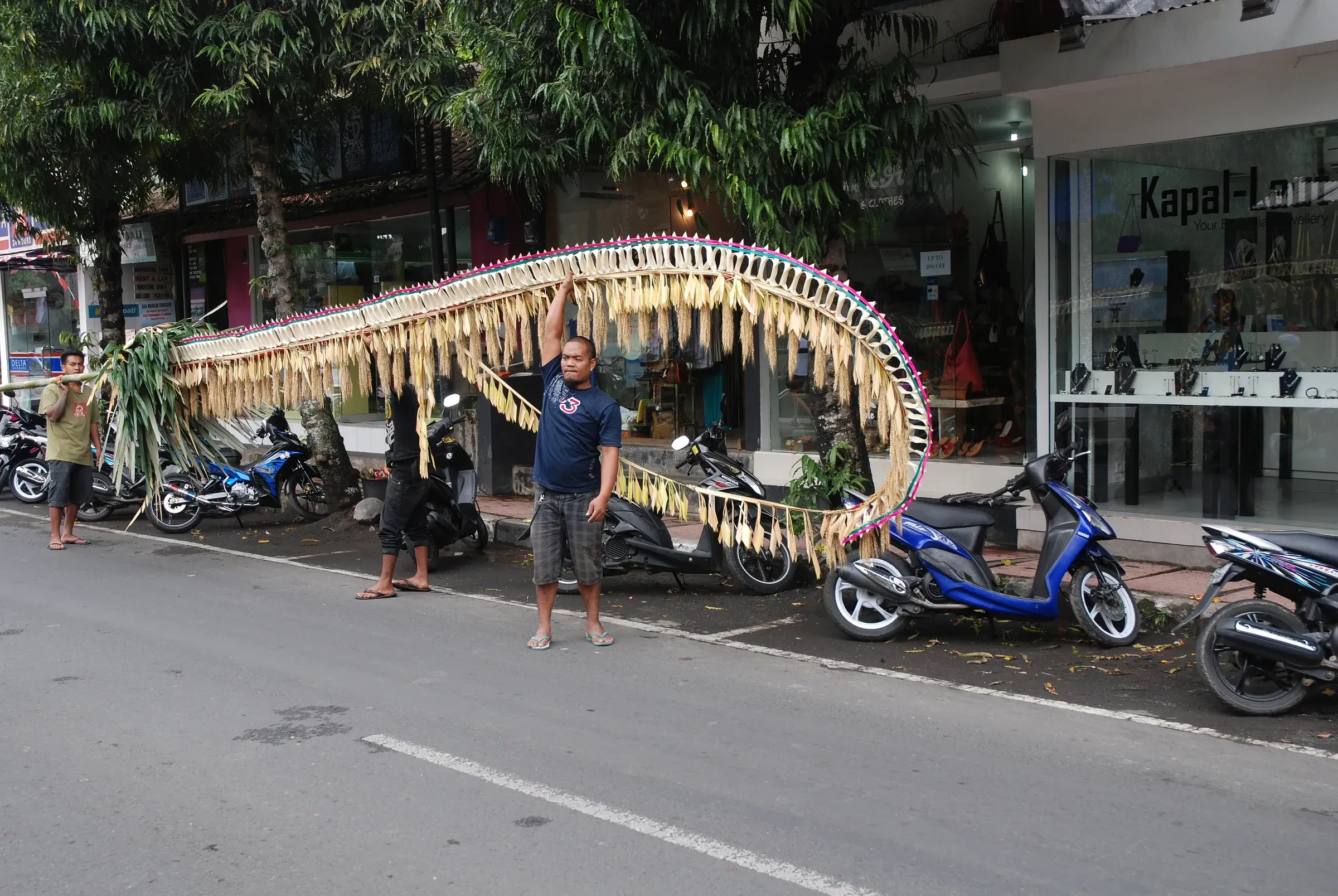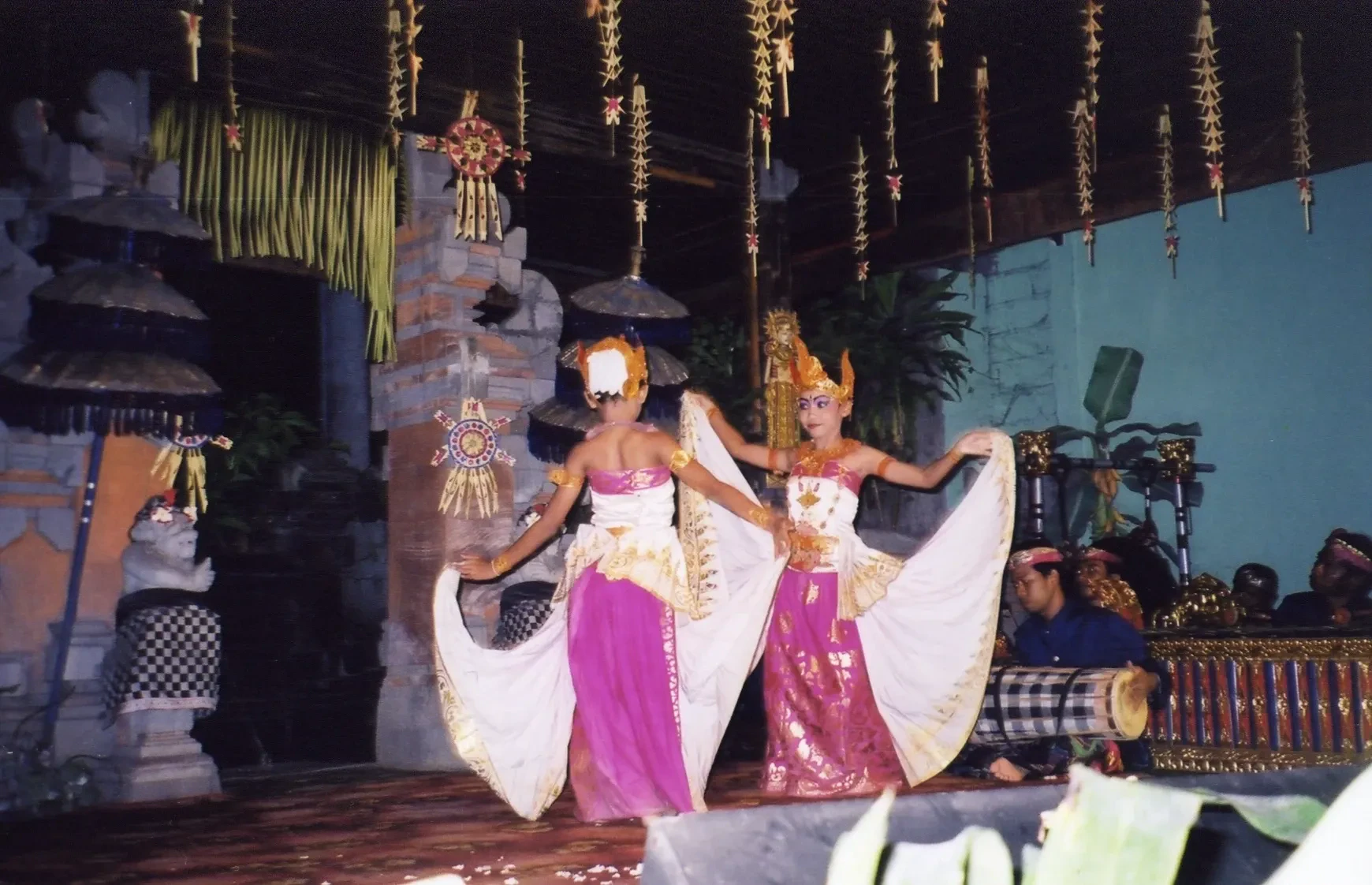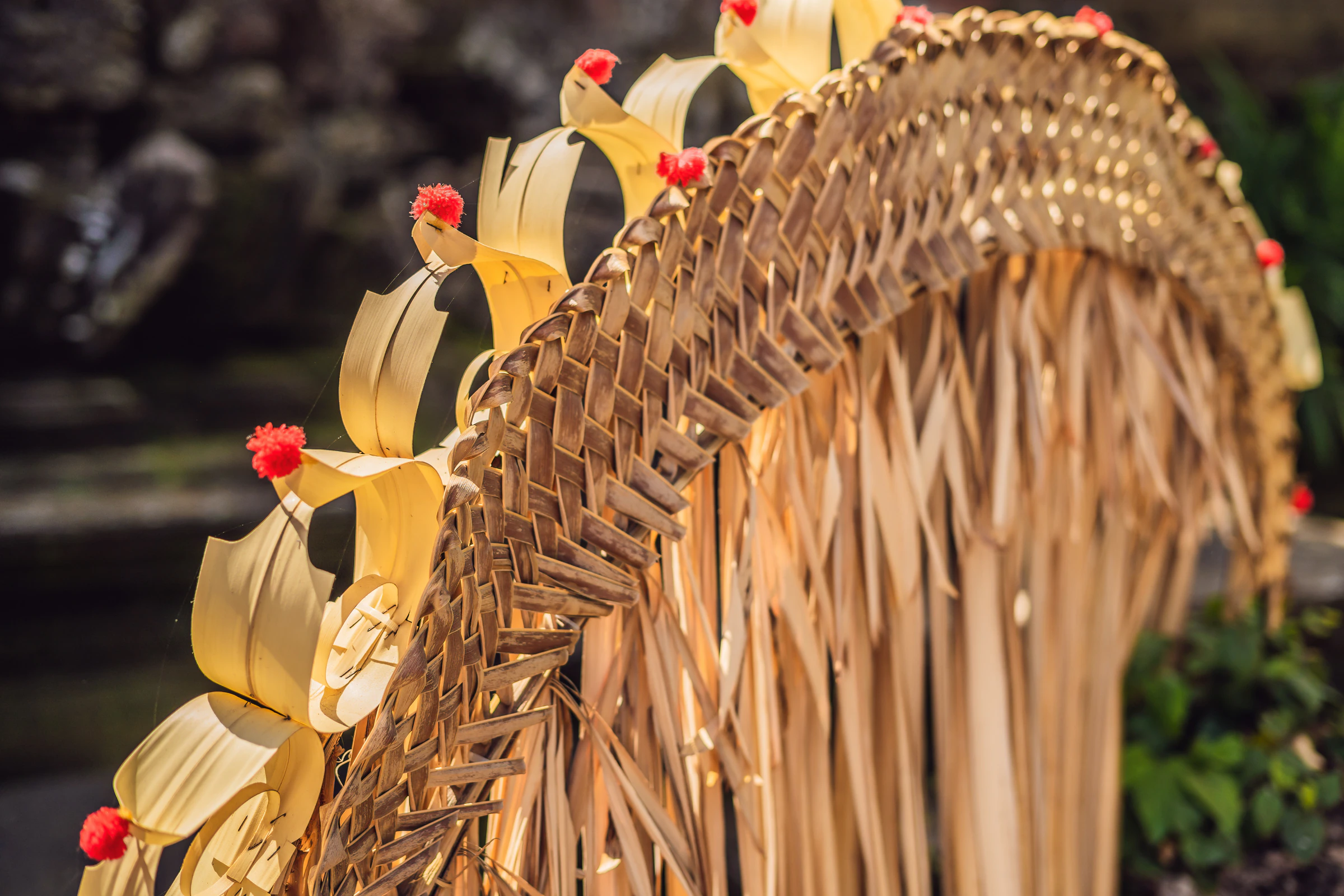
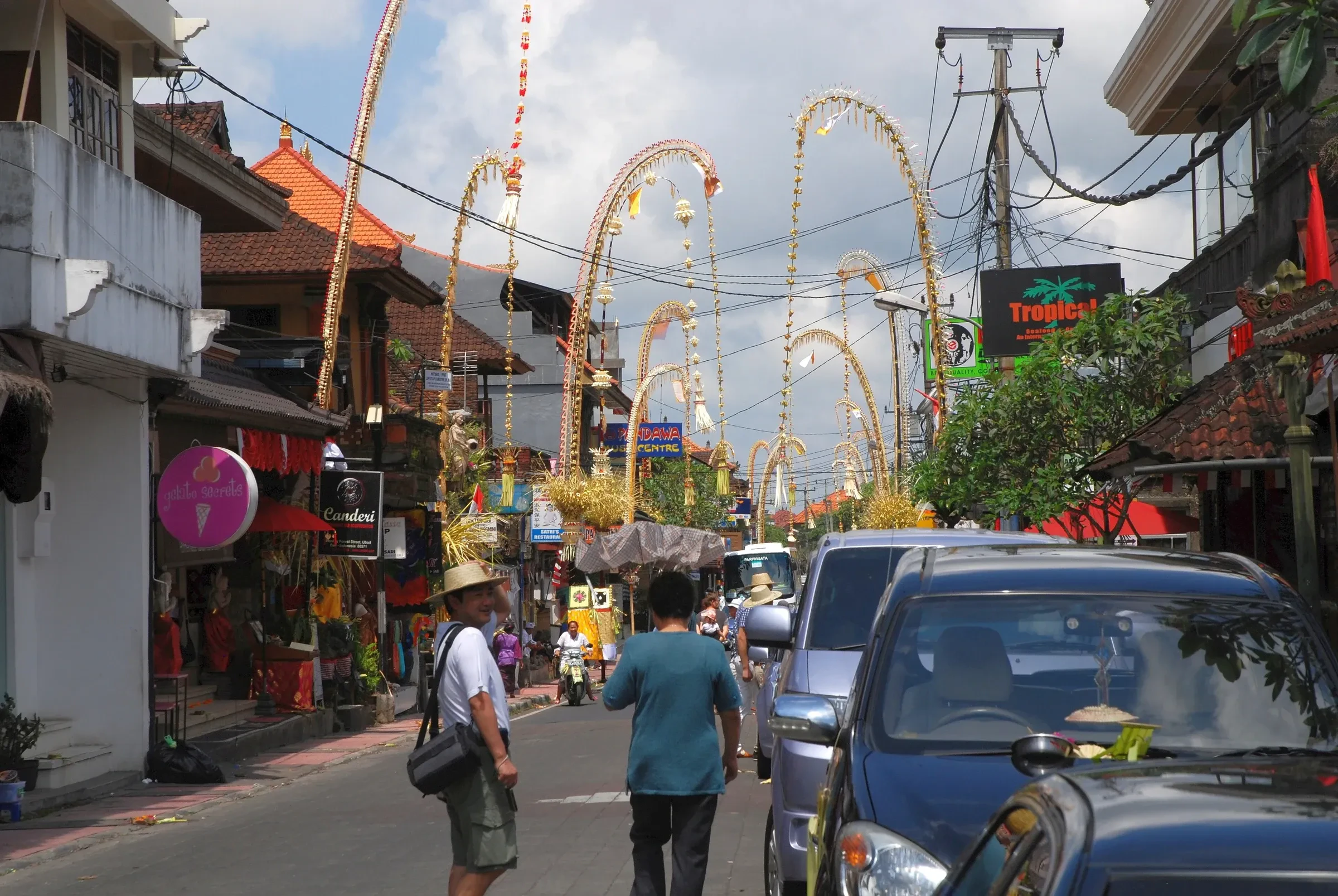
Drive around Bali in the run-up to Galungan and you'll see it before anyone tells you what it is: tall, curved bamboo poles leaning out over every gate, hung with coconut leaves, fruit and flowers. Galungan and Kuningan are Bali's most frequent big holy days, more so than Nyepi, and they're a far easier one to build a trip around, since there is no island-wide shutdown and nobody's confined indoors. This guide covers what the two days mean, when they fall in 2027, what happened in 2026, where the penjor displays are best, and how to visit without getting in the way.
What Galungan and Kuningan are
Galungan marks the victory of dharma (good) over adharma (evil), and the belief that ancestral spirits descend to visit their family's home shrines. Ten days later, Kuningan marks their return to the heavens. Together they're the most important recurring pair of holy days in Balinese Hinduism, arguably more woven into daily life than Nyepi, since they happen far more often and involve no lockdown at all.
The date comes from the Pawukon calendar, a 210-day cycle rather than the 365-day solar year most visitors are used to. Because 210 days is shorter than a year, Galungan drifts earlier each time and, over a few years, cycles right through the calendar. Most years get two occurrences. 2025 had two, 2026 had only one, and 2027 has two again.
What happened at Galungan 2026
Galungan fell on Wednesday 17 June 2026 and Kuningan on Saturday 27 June. Penampahan, the day for preparing the feast and raising the penjor, was Tuesday 16 June, and Umanis Galungan was Thursday 18 June. Bali's provincial government recognised 17 and 27 June as the dates, and the ten-day period ran between them.
A news-agency report carried by bluewin on the day described penjor along the roads, families visiting temples in sarongs and ceremonial dress, and hotel staff taking the day off for ceremonies at home. Le Petit Journal Bali, a French-language Bali news site, listed what changed for visitors: government offices, schools and banks closed or ran reduced hours, traffic got heavier as families travelled to home villages and temples, and ride-hailing slowed down. Tourist areas such as Canggu, Seminyak, Ubud, Sanur and Uluwatu stayed mostly open.
We found no reports of records, bans or incidents. 2026 was an ordinary, well-observed year, not a news event.
What makes Galungan worth knowing about is that it belongs to households, not to an organiser. It follows the 210-day Pawukon cycle, so it keeps shifting against the Western calendar. Ancestors are believed to stay at the family shrine for ten days, and the penjor goes up outside homes, temples and businesses across the island at the same time. There's no venue to find and no ticket to buy. If you're on a road in Bali, you're in it.
Galungan and Kuningan dates
| 2026 (held) | 2027 (first) | 2027 (second) | |
|---|---|---|---|
| Galungan | Wed 17 June | Wed 13 January | Wed 11 August |
| Kuningan | Sat 27 June | Sat 23 January | Sat 21 August |
Kuningan always falls exactly 10 days after Galungan, on a Saturday, since both are fixed points on the 210-day Pawukon cycle. The 2026 dates were confirmed by news reports from the day. The 2027 dates are computed from the same cycle (17 June 2026 plus 210 days, then plus 420 days) and match Wikipedia and a Bali ceremony calendar. We haven't found an official Bali provincial calendar for 2027 yet, so treat them as expected until one appears. The arithmetic is simple and the sources agree.
What happens in the run-up to Galungan
The days before Galungan each have their own name and their own small rituals, mostly happening at home rather than in public:
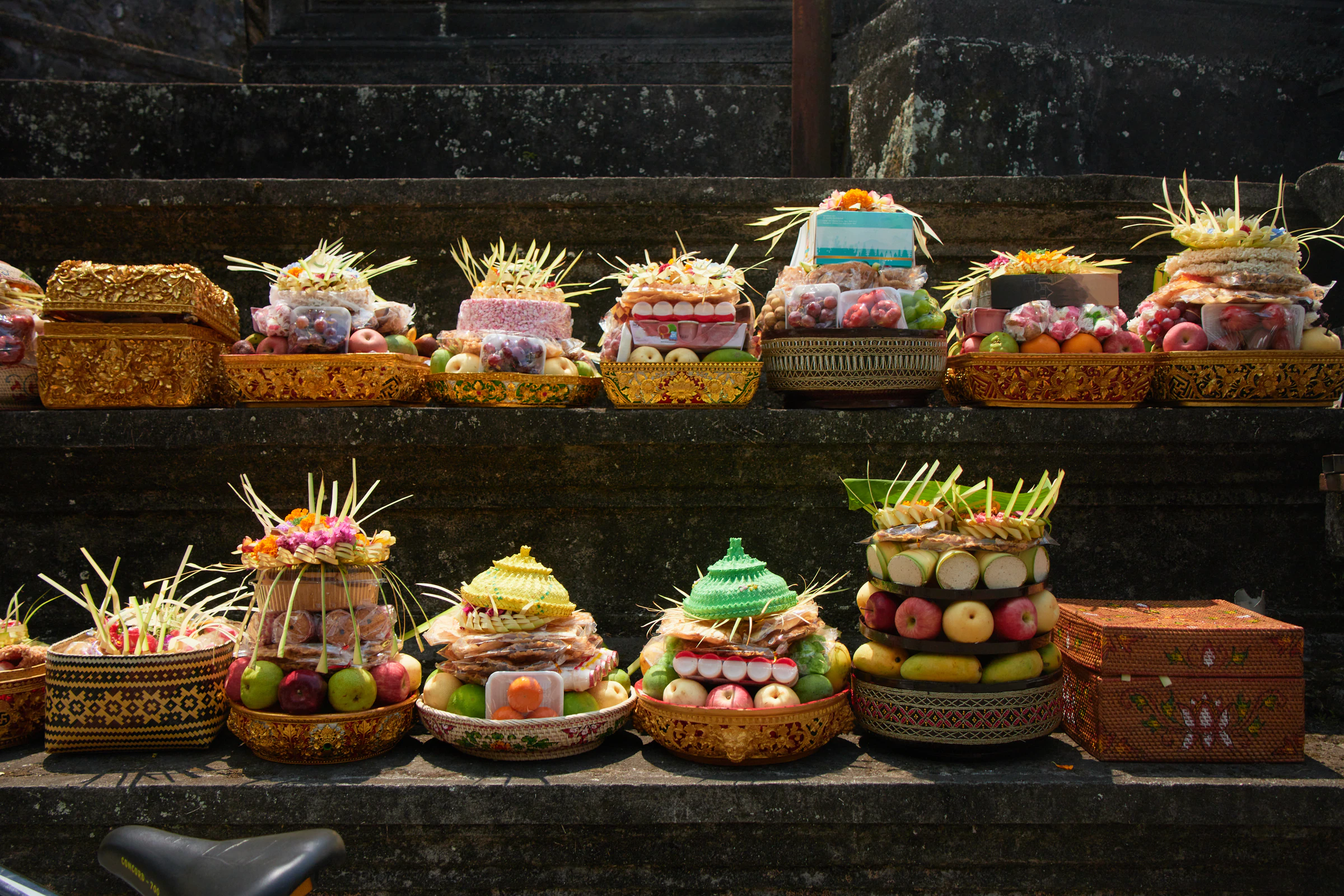
- Penyekeban, 3 days before: families cover bunches of bananas to ripen them in time for offerings.
- Penyajaan, 2 days before: households make jaja, traditional Balinese rice cakes, for the offerings to come.
- Penampahan, the day before: pigs or chickens are prepared for the feast, and this is when penjor poles go up outside almost every home and business.
The penjor, and where to see it
The penjor is the image everyone associates with Galungan: a tall bamboo pole, bent into a graceful curve, decorated with young coconut leaves, rice stalks, fruit, flowers and small cakes, and planted outside every gate on the island. It's meant to represent the mountain, prosperity and gratitude, and the effect of an entire street lined with them is genuinely striking.
Ubud is the easiest base to see it from: the town and its surrounding villages decorate heavily, and there's plenty of accommodation close by. For a more concentrated version, head to Penglipuran Village in the Bangli regency. It's a well-preserved traditional village with a single row of houses along one street, and during the festival that whole street is lined with matching penjor, which is about as photogenic as this gets. Besakih, Bali's largest and holiest temple on the slopes of Mount Agung, is also heavily decorated and busy with families making offerings around Galungan itself.
Galungan Day and Umanis Galungan
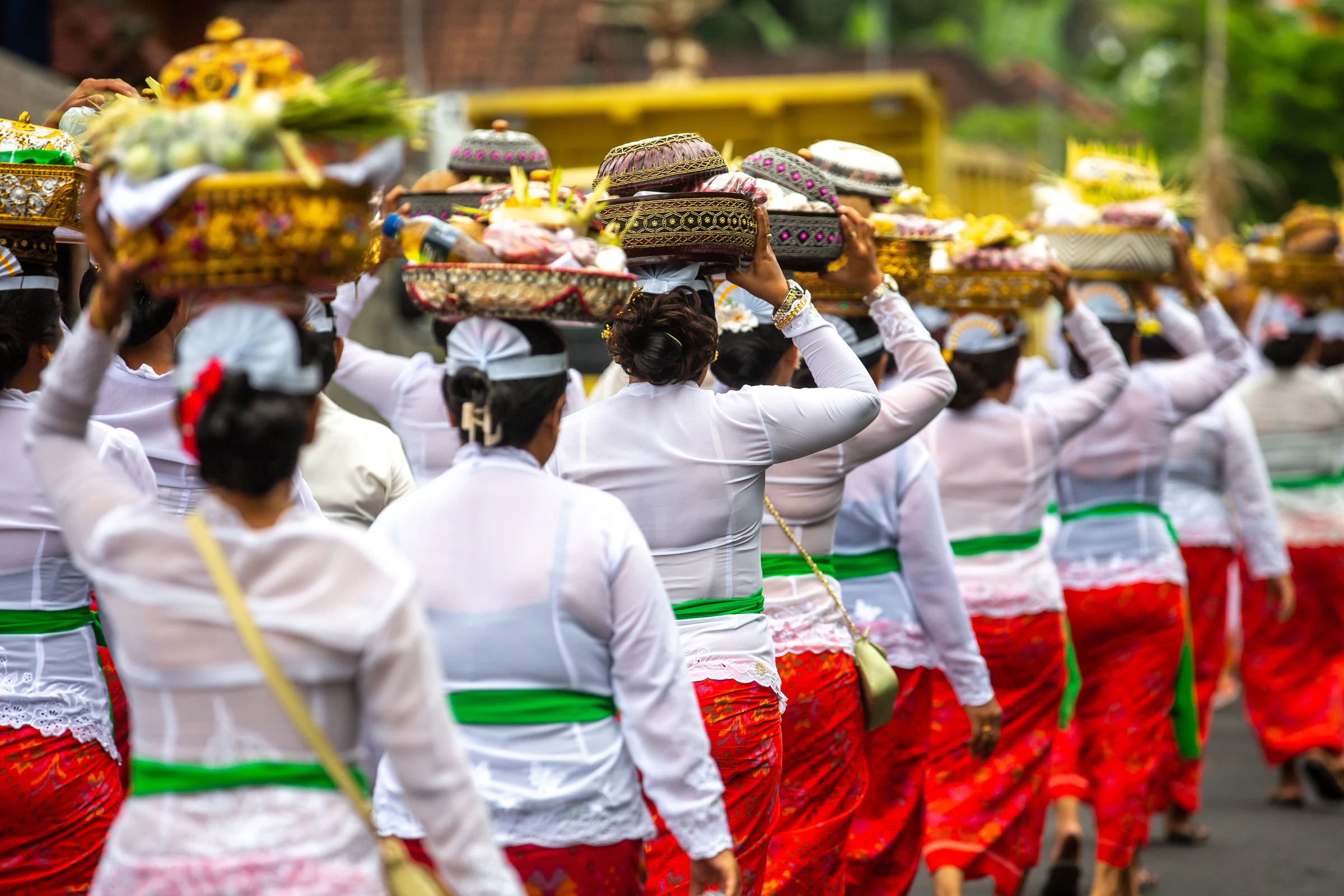
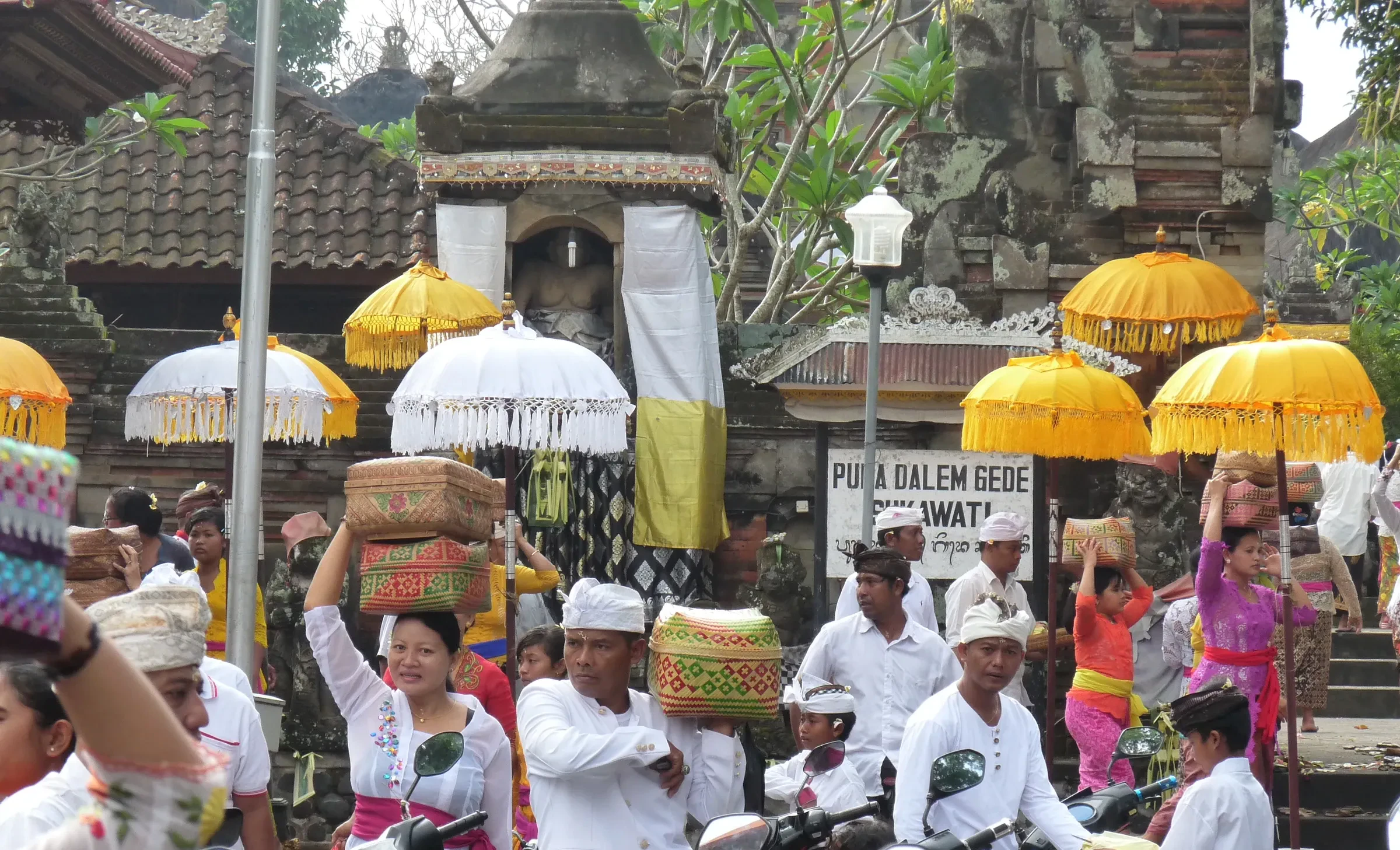
On Galungan itself, families dress in their best traditional clothes and visit temples together to give thanks, with the belief that ancestral spirits are present at the family shrine for the whole period through to Kuningan. The following day, Umanis Galungan, is a quieter, more social day, when families travel to see relatives or make short trips to further-flung temples.
Kuningan, 10 days later
Kuningan closes the cycle. It falls on a Saturday, always 10 days after Galungan, and marks the moment the ancestral spirits who arrived at Galungan return to the heavens. Offerings on Kuningan are traditionally made only in the morning, since the spirits are believed to leave by midday. It's a quieter day for visitors than Galungan itself, with less street decoration but the same sense of a household occasion.
Unlike Nyepi, there's no official safety notice for Galungan and Kuningan, and nobody is required to stay indoors. The practical thing to plan around is traffic: village roads near well-known temples get busy with family processions and parked motorbikes on Galungan Day itself and again on Kuningan morning, and in 2026 ride-hailing was slower too. Build in extra time if you're driving through, and don't plan on banks or government offices on Galungan Day.
Galungan, Kuningan and Nyepi: not the same thing
It's an easy mix-up, so it's worth being clear: Nyepi is Bali's Day of Silence, a single, legally enforced 24-hour shutdown tied to the separate Saka lunar calendar and usually falling in March. Galungan and Kuningan are the opposite in almost every way: they recur far more often, involve no restrictions on travel, and are set by the fixed 210-day Pawukon cycle instead of the moon. If your dates happen to line up with a Nyepi visit too, see our Nyepi guide for what that day involves.
Building a Bali trip around it
Because Galungan and Kuningan don't restrict travel, they're one of the easier festivals to fold into an ordinary Bali itinerary rather than plan a whole trip around. If your dates land near Ubud, that's reason enough to spend an extra afternoon walking the back streets rather than rushing straight to the rice terraces. Our Bali itinerary guide covers how the days fit together at different trip lengths, and our best time to visit Bali guide covers the weather either side of January and August.
Our Bali Express trip spends three nights in Ubud, one of the best places to see the penjor, but it isn't built around the festival. The trip page lists current departures.