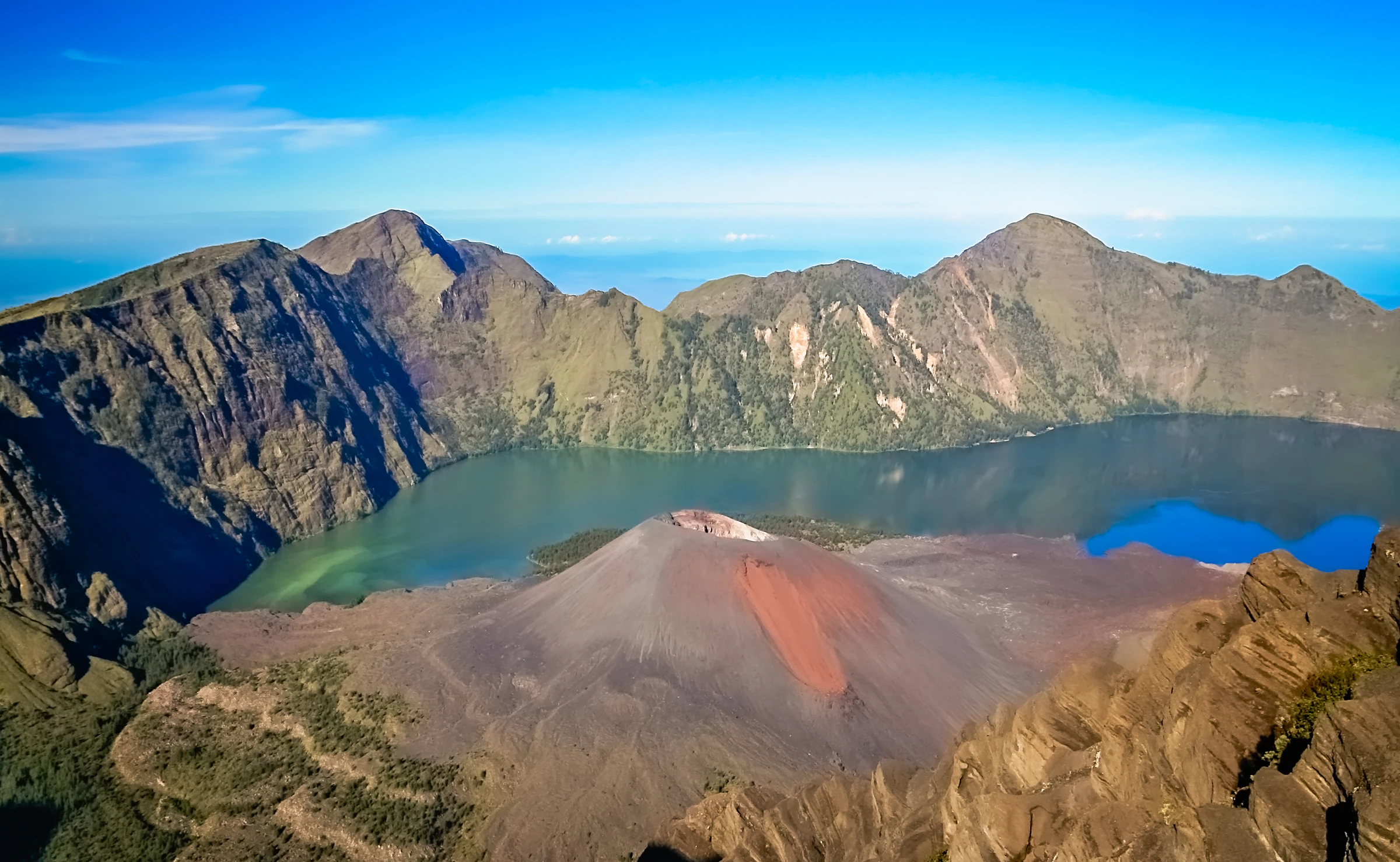
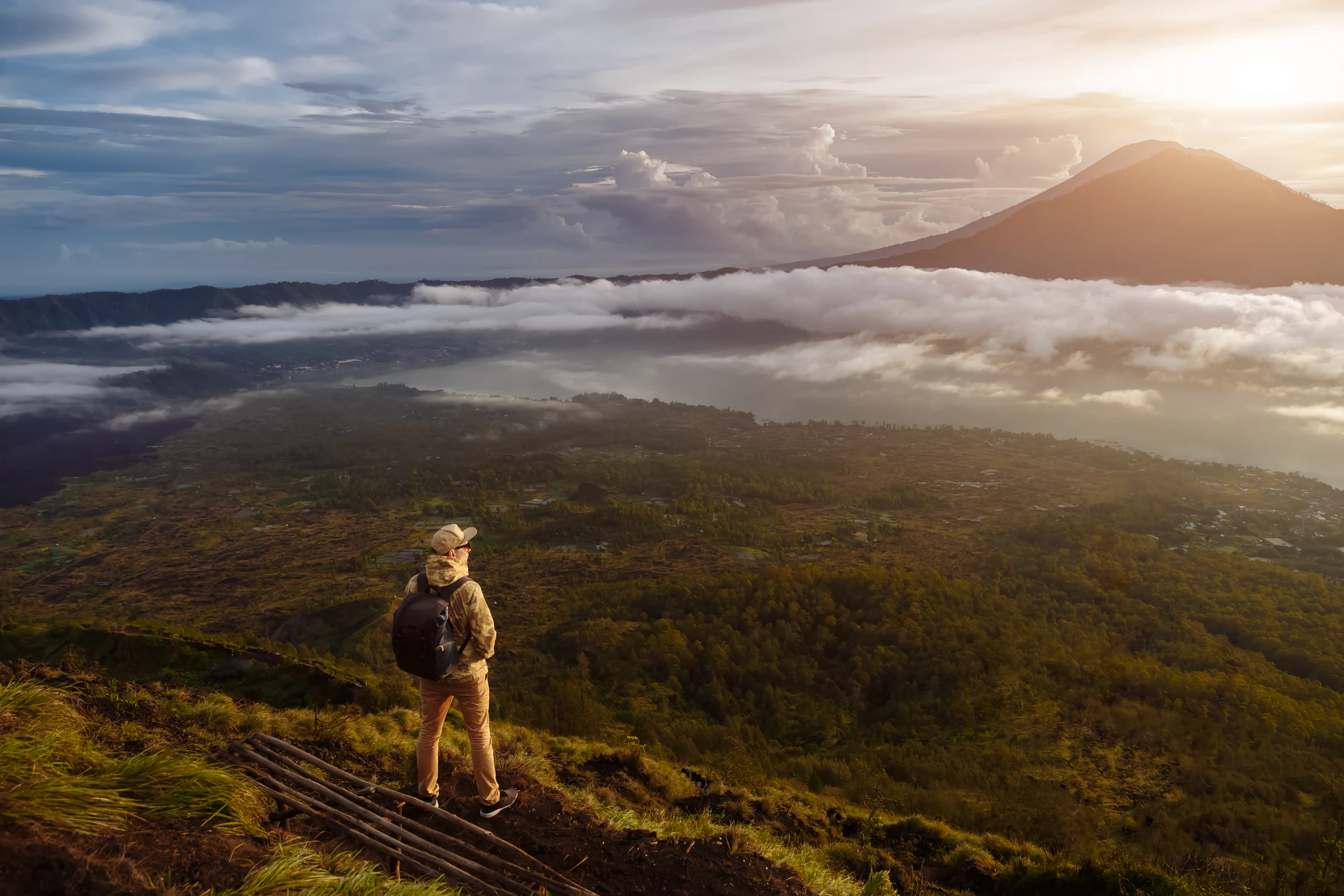
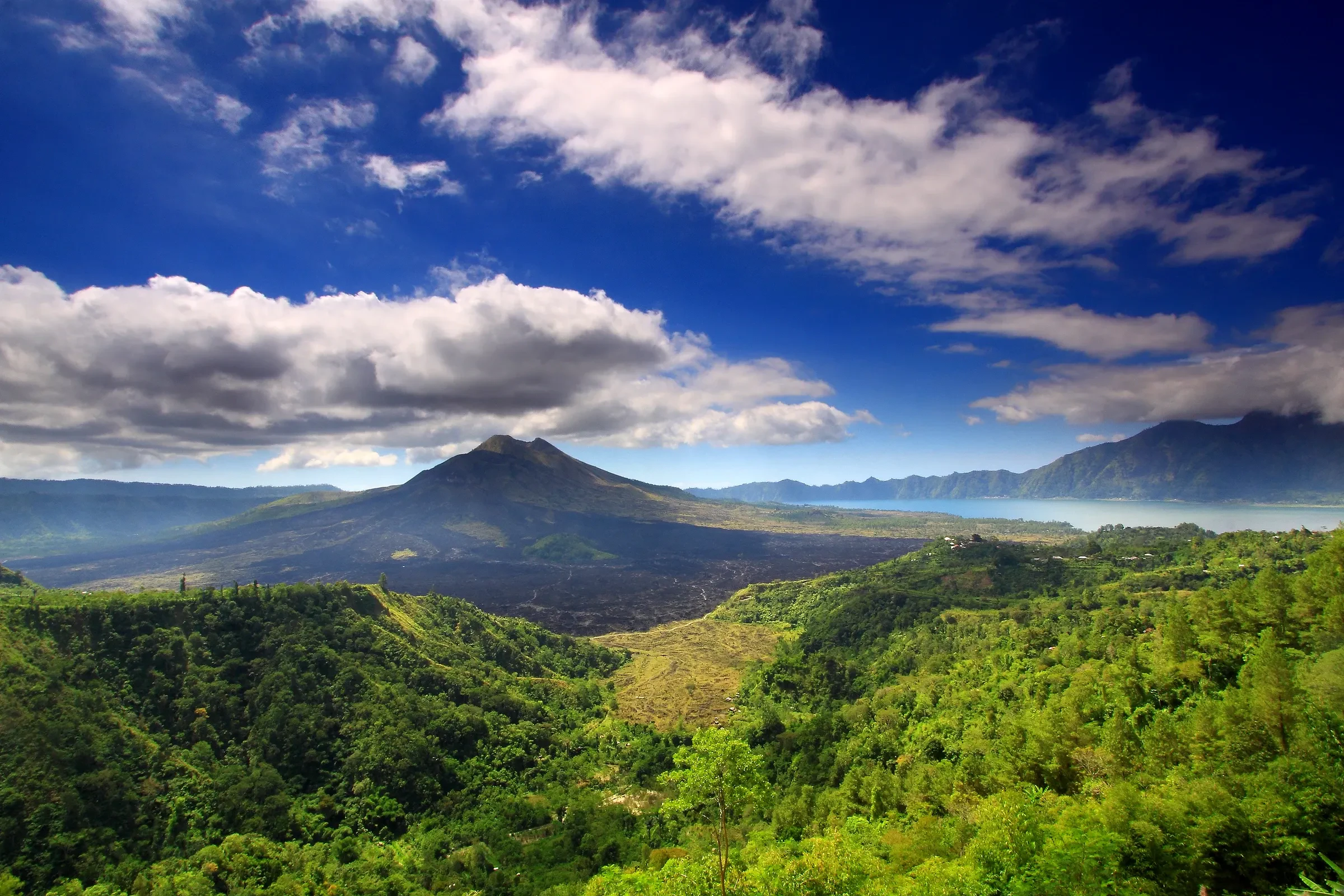
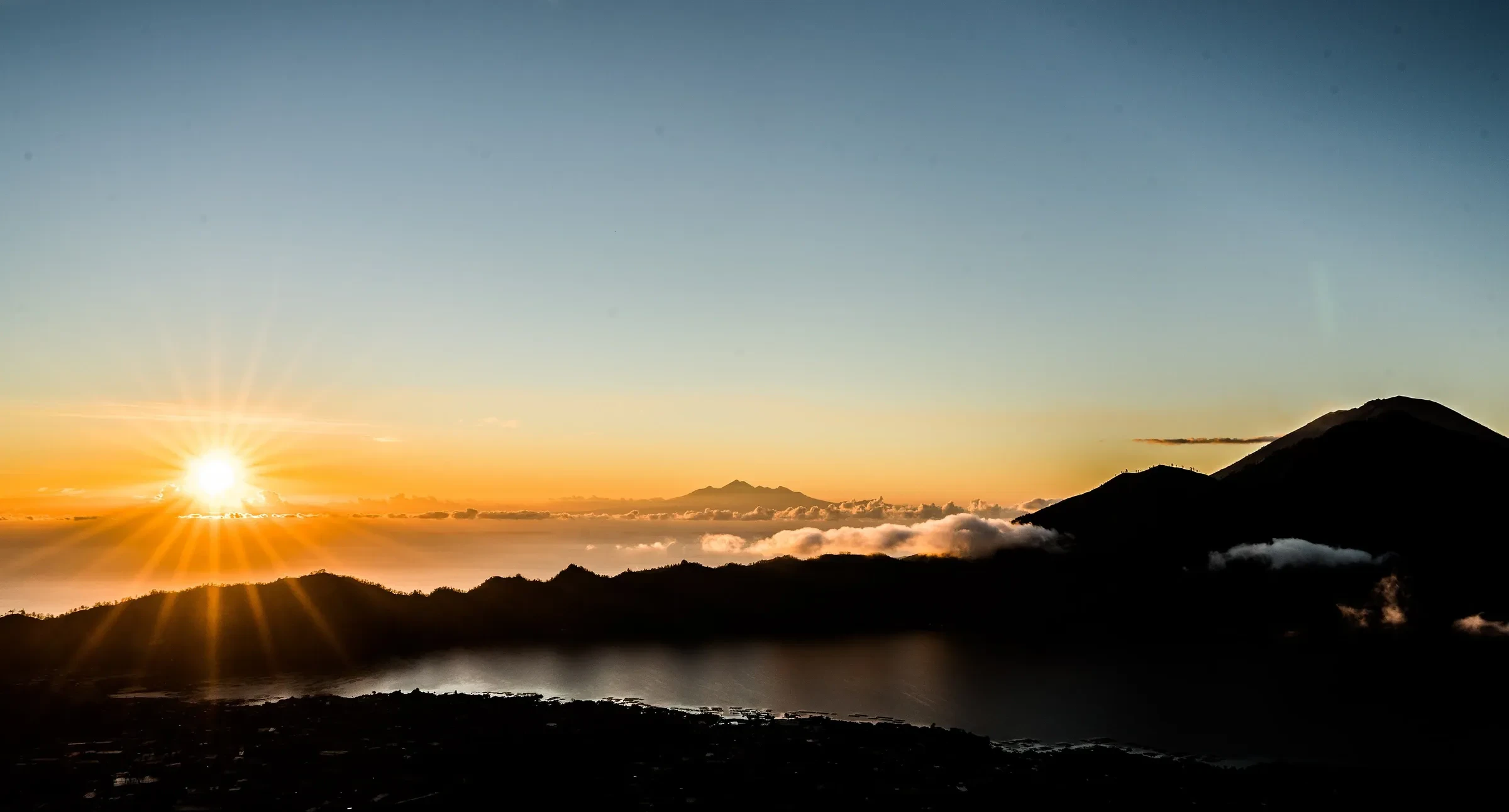
Mount Batur isn't a place you spend days wandering. It's a mountain you climb once, before dawn, and a lake you sit beside afterwards while your legs recover. The Kintamani area around it is one of the highest and coolest parts of Bali, and on a clear morning the reward for the early start is a sunrise over the crater with Mount Agung floating beyond it.
The trek is what brings almost everyone here, so this guide leads with that: how the climb works, what it costs, whether you need a guide (you do) and how safe it currently is. It also covers the hot springs and lake temple below the mountain, where to stay if you're not doing it as a day trip, and how it fits into a wider Bali itinerary. For the rest of the island, start with our Bali and Indonesia travel guide.
Mount Batur at a glance
- Where: Kintamani highlands, Bangli regency, about 1 hour 15 minutes north of Ubud by road
- Height: 1,717 metres, with about 700 metres of climbing from the usual starting point
- Known for: the sunrise trek, the crater lake, hot springs and Kintamani's cooler air
- Best months: April to October, for the clearest skies
- How long: most people visit as a day trip or overnight from Ubud; the trek itself takes about half a day including transport
The Mount Batur sunrise trek
Trekking associations run every route up the mountain, and a registered local guide is mandatory. Checkpoints on the trail turn back anyone without one, so this isn't a shortcut worth trying.
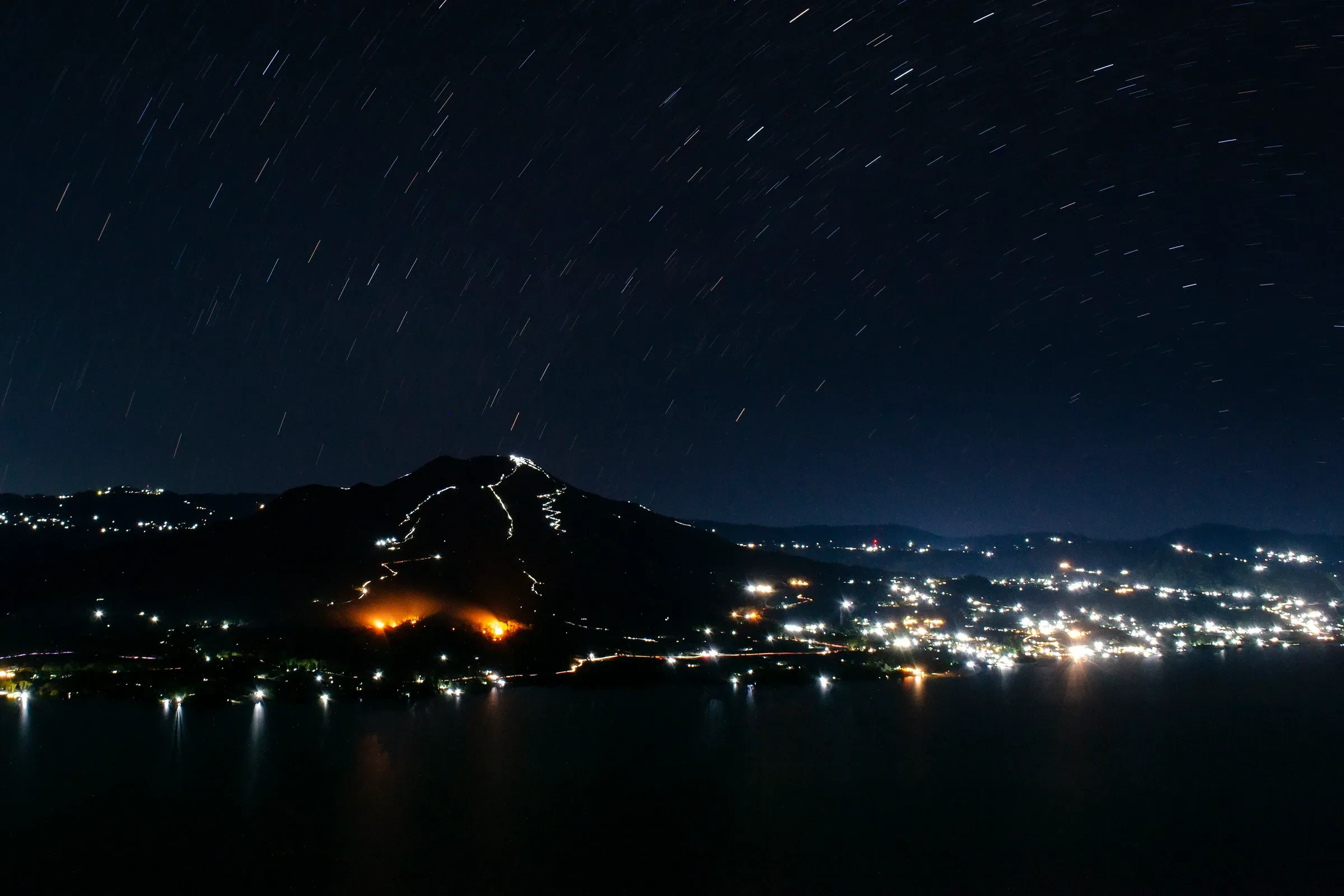
The route. Most treks start from Toya Bungkah, the village on the lake shore that's the main base for the mountain. From there it's about 700 metres of climbing to the summit, on a mix of dirt path and loose volcanic scree. The way up takes about one and a half to two hours, and the way down about one to one and a half hours. Some guides use other starting points, such as Pura Jati, but Toya Bungkah is the standard one.
The timing. You start walking in the dark, usually between 2am and 4am, with a head torch. Drive time from Ubud is around an hour and a quarter, so pickup is typically around 1:30am to 2am. At the top, guides cook a simple breakfast on the volcanic steam vents: usually eggs, banana sandwiches and toast, with coffee or tea. You watch the sun come up over the lake, then walk back down.
The cost. A private guide runs roughly IDR 300,000 to 600,000 per group, plus a tip. Most solo travellers join a shared sunrise tour instead, which covers transport, the guide and breakfast for roughly IDR 500,000 to 800,000 per person, depending on the operator. Bangli regency also charges foreign visitors a Kintamani area fee of IDR 50,000, collected at ticket points along the Penelokan road. Ask your operator whether it's already in the price.
Volcano status. Mount Batur is listed at Normal (Level I) on the national volcanology agency's MAGMA Indonesia site in early October 2026, and the trail is open with no restrictions. A few third-party sites still show an older Level II, but MAGMA is the official source. The level can change, so check it and any guide association notices before you book.
Ethics note. Some transfers between Ubud and Kintamani stop at roadside "coffee plantations" that sell kopi luwak, coffee made from beans that civet cats have eaten and passed. Welfare studies have found most of these plantations keep civets caged in poor conditions. Ask your operator not to include a plantation stop.
Hot springs and the lake temple
Below the summit, the shore of Lake Batur has its own attractions that pair well with a morning that starts at 2am.
Toya Devasya hot spring. A resort on the lakeshore in Toya Bungkah with several geothermal pools, including one with a view across the water to the volcano, for around IDR 80,000 to 100,000 entry. It's the obvious place to soak out a two-hour climb.
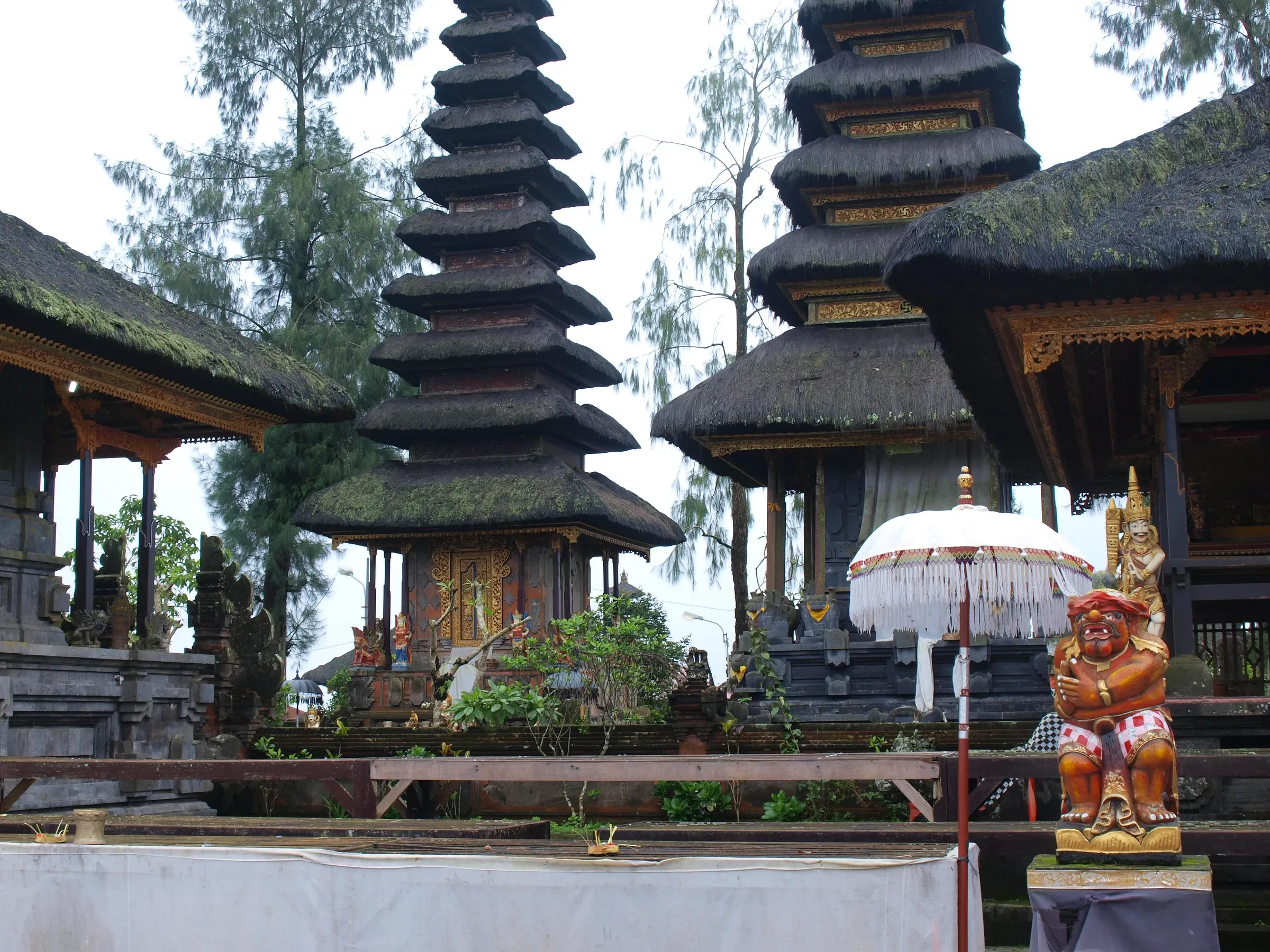
Pura Ulun Danu Batur. The main temple of the lake, dedicated to Dewi Danu, the Balinese goddess of water and the lake. It's one of the most important temples on the island, on the caldera rim above the water rather than down by the shore.
Kawah Hitam. A patch of black lava near Toya Bungkah from one of Batur's past eruptions, worth a short stop if you're already in the village.
Where to stay near Mount Batur
Most travellers doing the trek stay in Ubud and treat Batur as a very early start and a long morning, then sleep through the afternoon back in town. If you'd rather stay closer, or want time for the hot springs without an extra drive:
- Toya Bungkah is the lakeside village at the trek's usual starting point, with simple guesthouses from around US$20 to US$60 a night. Staying here means you can walk to your guide meeting point instead of being picked up in the dark.
- Kintamani town, on the caldera rim above the lake, has a few guesthouses with views over the crater, aimed mainly at people doing the trek the next morning.
Either way, book ahead: guesthouses here are small and fill up around the sunrise trek.
Getting to Mount Batur
There's no real public transport to Kintamani, so almost everyone arrives by private car, tour van or as part of a booked trek.
- From Ubud: about 1 hour 15 minutes by road.
- From Canggu, Seminyak or Denpasar: closer to 2 to 2.5 hours, which is why most trips base themselves in Ubud rather than the south coast for this leg.
If you're booking the sunrise trek as a shared tour, transport from Ubud is normally included in the price.
Best time to visit Mount Batur
| Months | Weather | Good for |
|---|---|---|
| April to October (dry season) | Clearer skies, best sunrise odds | The trek. This is when most people go |
| November to March (wet season) | More cloud cover, rain | The summit is often clouded over at dawn, so a clear sunrise isn't guaranteed |
Even in the dry season, weather at altitude can change quickly, so a cloudy sunrise is always possible. Our Bali and Indonesia travel guide has the season picture for the rest of the island.
How much does Mount Batur cost?
| Item | Price |
|---|---|
| Shared sunrise trek (guide, transport, breakfast) | about IDR 500,000 to 800,000 per person |
| Private guide only | about IDR 300,000 to 600,000 per group, plus tip |
| Kintamani area fee (foreign visitors, Penelokan ticket points) | IDR 50,000 |
| Toya Devasya hot spring entry | about IDR 80,000 to 100,000 |
| Guesthouse in Toya Bungkah or Kintamani | about US$20 to 60 a night |
Staying safe on Mount Batur
- Go with a registered guide. It's required, and checkpoints on the trail enforce it. Guides also know the current ground conditions and volcanic activity level.
- Check the current alert level before you go. Indonesia's volcanology agency publishes it, and your guide association will know of any closures.
- Dress for altitude, not for Bali's beaches. It's genuinely cold before sunrise, and the scree is easier in proper shoes.
- Watch your footing on the way down. Most minor injuries happen on the descent, when the loose ground is more visible but legs are tired.
How many days do you need for Mount Batur?
For most people, none as a standalone stay. The trek is usually done as a very early start and finish from Ubud: pickup around 1:30am to 2am, back in Ubud by early afternoon, with the rest of the day free to recover. If you want the hot springs without rushing, add one night in Toya Bungkah either before or after the climb.
Mount Batur with a small group
Both our Bali trips include the Mount Batur sunrise trek as a full part of the itinerary, not an optional extra. We leave Ubud in the early hours with a registered local guide, climb by torchlight, and have breakfast at the top before walking back down. On the way back we stop at Tirta Empul, a water temple, rather than a coffee plantation. Your Trip Host is with the group throughout, and a licensed local agency and licensed local guides handle the ground arrangements in Indonesia.