Learning to dive is one of the best things you can do on a trip to Southeast Asia. The water is warm, the reefs are close to shore, and courses cost a fraction of what they do at home. It's also a very sociable way to travel alone. You spend three or four days with the same small group and instructor, and by the end you've usually got a few new dive buddies.
This guide explains how the PADI courses work, what they cost, what you need to know about health and insurance, and where to learn in Thailand, Indonesia, India and Vietnam.
How PADI Open Water certification works
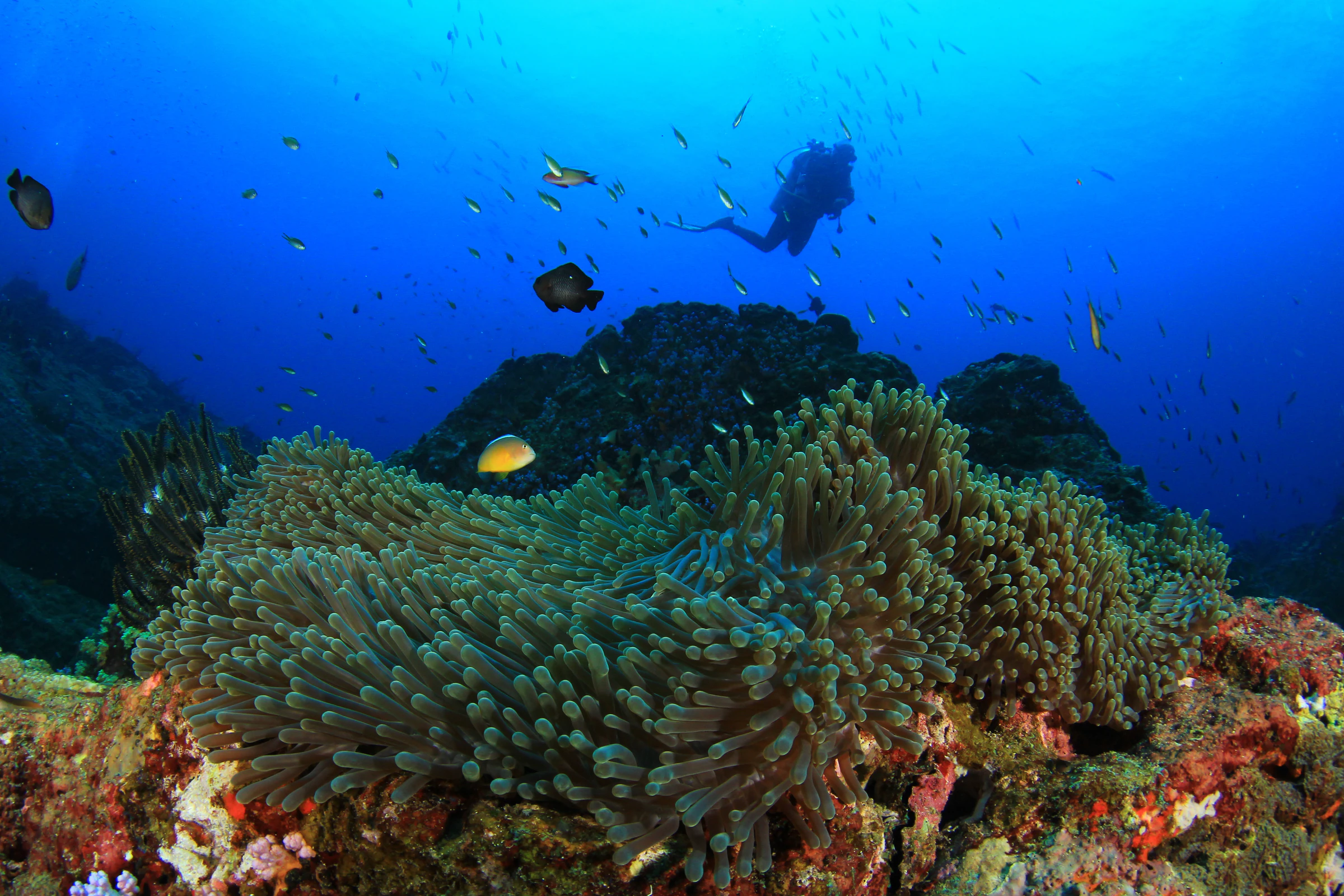
PADI (the Professional Association of Diving Instructors) is the largest diver training agency, and its Open Water Diver course is the most common first certification. The course has three parts.
- Knowledge development. Five sections on how pressure affects your body, how the equipment works and how to plan a dive, followed by a short exam. Most people do this as PADI eLearning before they travel, so they can spend their holiday in the water.
- Confined water. Five sessions in a pool or calm, shallow water, where you learn and practise the skills: breathing underwater, clearing water from your mask, sharing air and controlling your buoyancy.
- Open water dives. Four dives in the sea over at least two days. Dives 1 and 2 go to a maximum of 12 metres, and dives 3 and 4 to 18 metres. You repeat the skills, then spend the last dive mostly just exploring.
How long does it take? PADI says as little as 2 to 4 days, and about 3 to 4 days if you do the eLearning at home. Most dive schools in Asia run it over three or four days. Leave a spare day in case bad weather cancels a dive.
What does it let you do? Once certified, you can dive to 18 metres with a buddy without an instructor, rent equipment and fill tanks anywhere in the world. The certification doesn't expire. If you haven't dived for a while, PADI recommends a refresher before your next trip.
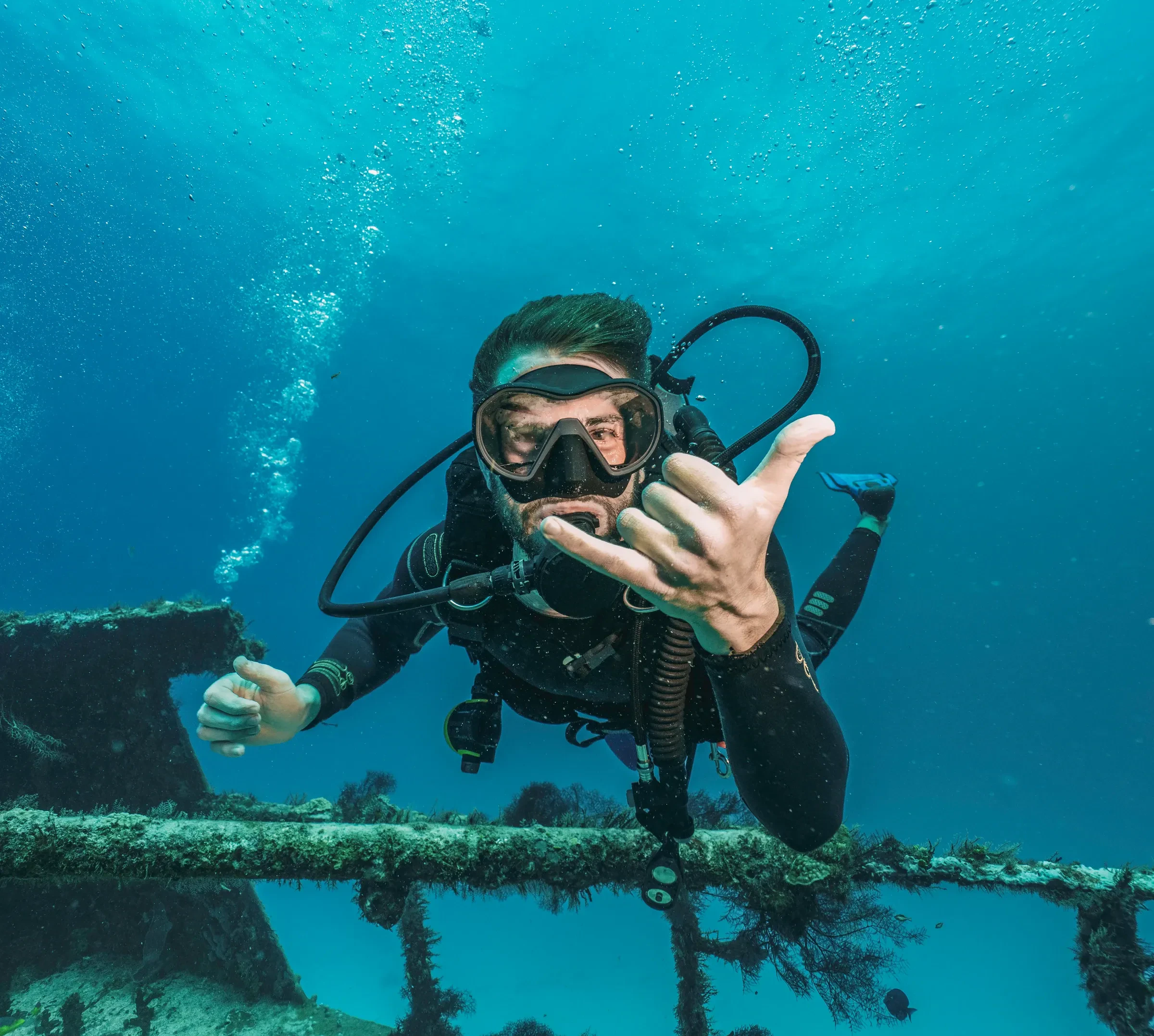
Before you start: swimming and the medical form
- Swim test. You must swim 200 metres without stopping, or 300 metres with a mask, fins and snorkel. There's no time limit and you can use any stroke. You also need to float or tread water for 10 minutes.
- Medical questionnaire. Every student fills in the Diver Medical Participant Questionnaire. If you answer yes to any question, for example about asthma, ear or sinus problems, heart or lung conditions, fainting or pregnancy, you need a doctor to sign a form clearing you to dive before you start. It's much easier to see your own doctor at home before you travel than to find one on an island.
Junior Open Water
Children can start at 10 with the PADI Junior Open Water Diver course. The course is the same, but there are limits:
- Ages 10 and 11: a maximum depth of 12 metres, diving with a certified parent or guardian or a PADI professional.
- Ages 12 to 14: a maximum depth of 18 metres, diving with a certified adult.
- At 15 the junior card can be upgraded to a full Open Water card without retesting.
PADI or SSI?
Many dive schools, especially on the Gili Islands, teach SSI (Scuba Schools International) instead of PADI. Both train entry-level divers to the same international standard (ISO 24801-2), with four open water dives and an 18-metre limit. PADI accepts qualifying entry-level cards from other agencies for its Advanced course, so an SSI Open Water card lets you carry on with PADI later. Choose the school, the instructor and the group size rather than the agency.
Discover Scuba Diving: try it first
If you're not sure about committing to a full course, try PADI Discover Scuba Diving. It's a half day with an instructor: a short briefing, some skills in shallow water, then usually one dive in the sea to a maximum of 12 metres. The minimum age is 10. It isn't a certification, but it can count towards the Open Water course if you sign up afterwards. On Koh Tao it costs about 2,500 to 4,000 baht.
PADI Advanced Open Water
The Advanced Open Water Diver course is the next step, and many people do it straight after Open Water.
- Five adventure dives. Two are required, Deep and Underwater Navigation. You choose the other three, for example night diving, wreck diving, buoyancy or nitrox.
- Depth: you're trained to 30 metres. Going deeper, to the recreational limit of 40 metres, needs the Deep Diver specialty.
- Time: about two days, plus some eLearning.
- Age: 15 for the full card. Juniors aged 12 to 14 are limited to 21 metres.
- Before you start: you need an Open Water card from PADI or another agency.
Advanced is worth doing if you want to dive places like Komodo, deeper sites at Nusa Penida or the Similan Islands, where many of the best dives are deeper than 18 metres or have strong currents.
How much does a PADI Open Water course cost?
Prices vary a lot between countries. As a guide, for the full course in 2026:
| Where | Open Water course | Notes |
|---|---|---|
| Koh Tao, Thailand | about 9,500 to 12,500 baht | Often includes a few nights in a dorm |
| Gili Islands, Indonesia | about IDR 6.2 to 6.9 million | Plus a one-off marine park fee and an Eco Trust fee |
| Nusa Penida, Indonesia | about IDR 6.8 million | Plus a marine area fee |
| Komodo, Indonesia | from about IDR 8.5 million | National park fees are extra |
| Havelock, Andaman Islands, India | about ₹20,000 to 32,000 | Some schools add GST |
| Nha Trang, Vietnam | about US$390 to 410 | |
| Phu Quoc, Vietnam | about US$450 to 490 | |
| Con Dao, Vietnam | about 11.5 million VND | Remote, so pricier |
Check exactly what's included: eLearning, equipment, the certification fee, boat trips, park fees, accommodation and insurance. On Koh Tao, many schools include a few nights' accommodation. Elsewhere it's usually extra.
Best time to dive, by region
Every diving destination in this guide has its own season, and they don't line up with each other, so check the region you're actually going to rather than a single "best time to dive" answer.
| Region | Best months | Good to know |
|---|---|---|
| Koh Tao and the Gulf of Thailand | February to April, and May to September | November is the wettest month, with rougher seas that can cancel dives at exposed sites |
| Similan Islands, Thailand | Roughly mid-October to mid-May | The national park is closed the rest of the year; it sets the exact dates each year |
| Gili Islands, Indonesia | April to November | Currents run stronger from June to October |
| Nusa Penida, Indonesia | April to November for the calmest crossings; July to October if you want mola mola | Mantas are seen year-round regardless of season |
| Komodo, Indonesia | April to November for the clearest water in the north | Manta activity in the south peaks from December to February |
| Andaman Islands, India | About October or November to April or May | Boats are often cancelled from July to September |
| Nha Trang, Vietnam | About February to October | |
| Cu Lao Cham and Con Dao, Vietnam | About March to September | |
| Phu Quoc, Vietnam | About November to April |
Where to learn to dive
Koh Tao, Thailand
Koh Tao is one of the world's busiest places to learn to dive. It has dozens of dive schools, warm and usually calm water, dive sites close to shore, and some of the cheapest courses anywhere. It's also sociable: dive school, dorm and bar are often on the same strip of Sairee Beach. The best months are February to April, when the sea is flat and visibility is often 15 to 30 metres. May to September is also good. November is the wettest month, and rougher seas can cancel dives at exposed sites.
Read the Koh Tao diving guide and scuba diving in Thailand, which also covers Koh Samui, Phuket and the Similan Islands. The Similans are for certified divers on day trips or liveaboards, and the national park is only open from roughly mid-October to mid-May, with dates set by the park each year.
The Gili Islands, Indonesia
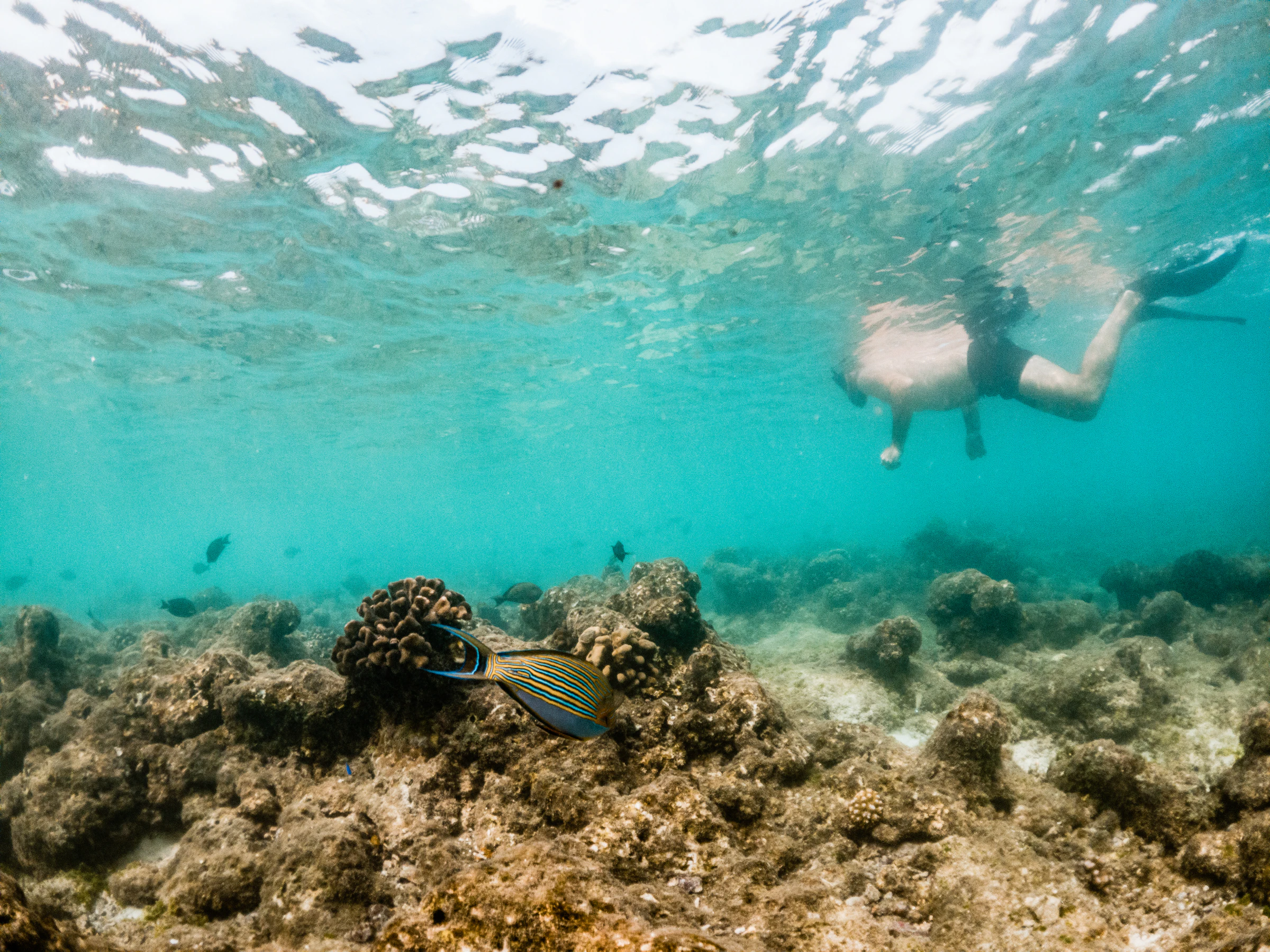
The three Gili Islands off Lombok are Indonesia's easiest place to learn. The courses are cheap, the water is about 29 to 30°C all year, and turtles are seen on most dives. Sites range from sheltered beginner reefs to drift dives with reef sharks at Shark Point. Off Gili Meno, the Nest, a ring of 48 life-size statues, sits only 3 to 6 metres down, so snorkellers can see it too.
The best season is April to November, when visibility is often 20 metres or more. Currents are stronger from June to October, and most dives drift with the current. Divers pay a one-off marine park fee of IDR 100,000, and most shops also collect IDR 50,000 for the Gili Eco Trust. Many Gili schools teach SSI rather than PADI. See the Gili Islands guide.
Nusa Penida and Nusa Lembongan, Indonesia
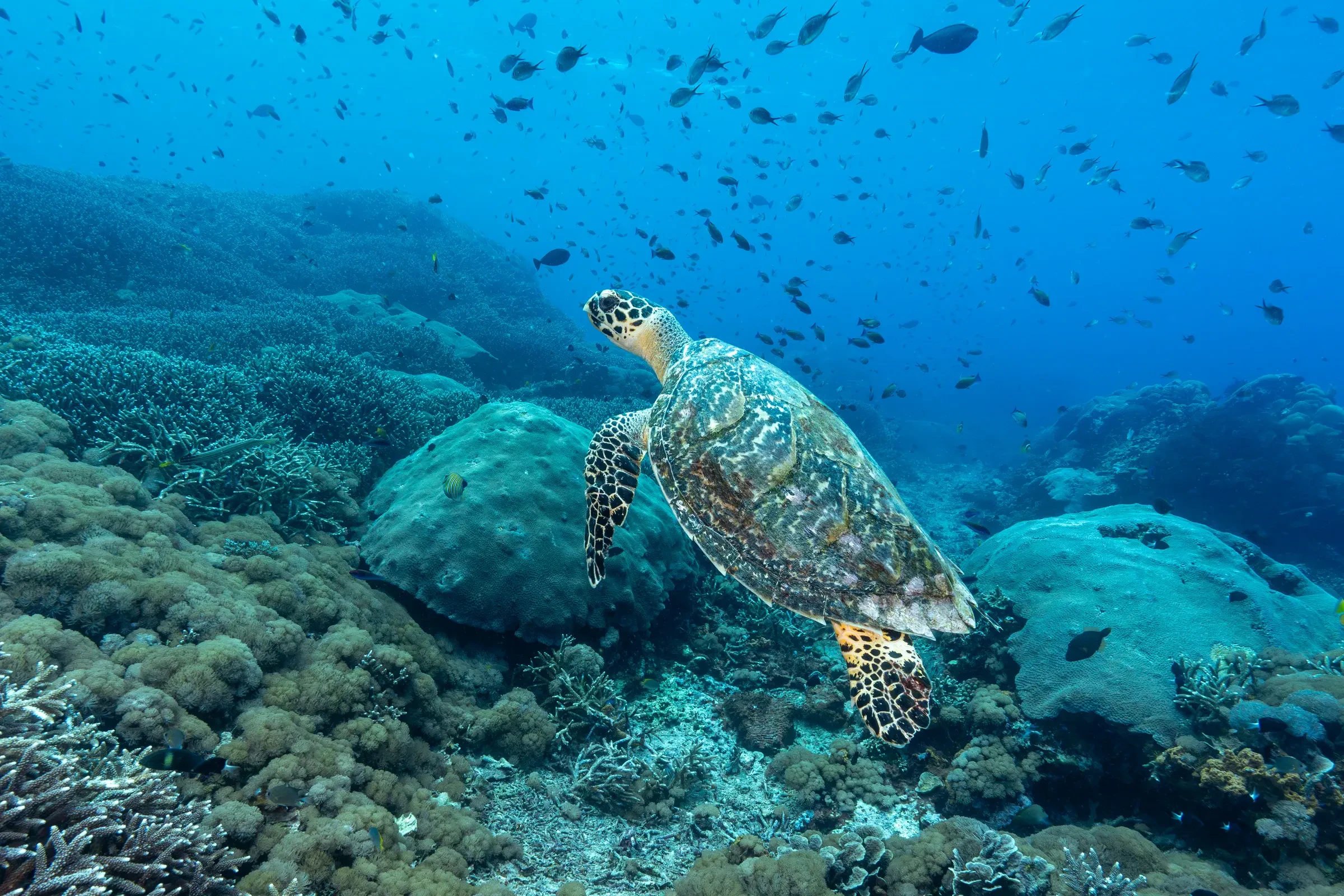
Nusa Penida is famous for manta rays. Reef mantas visit cleaning stations at Manta Point all year, at about 10 to 12 metres, a depth many Open Water divers can reach with a guide, though some operators ask for a few logged dives first. From about July to October, divers also look for mola mola (ocean sunfish), but they're usually seen at 25 to 40 metres, deeper than an Open Water diver can go.
Be honest with yourself about the conditions. The currents around Penida are strong and change quickly, and cold thermoclines can drop the water below 20°C. Most of the drift sites are for experienced divers, so many people learn somewhere calmer and come here afterwards. A marine area fee applies to divers and snorkellers. Read the Nusa Penida guide, diving at Nusa Penida and scuba diving in Bali. On Bali itself, the USAT Liberty wreck at Tulamben and the shore dives at Amed are shallow and calm enough for new divers.
Komodo, Indonesia
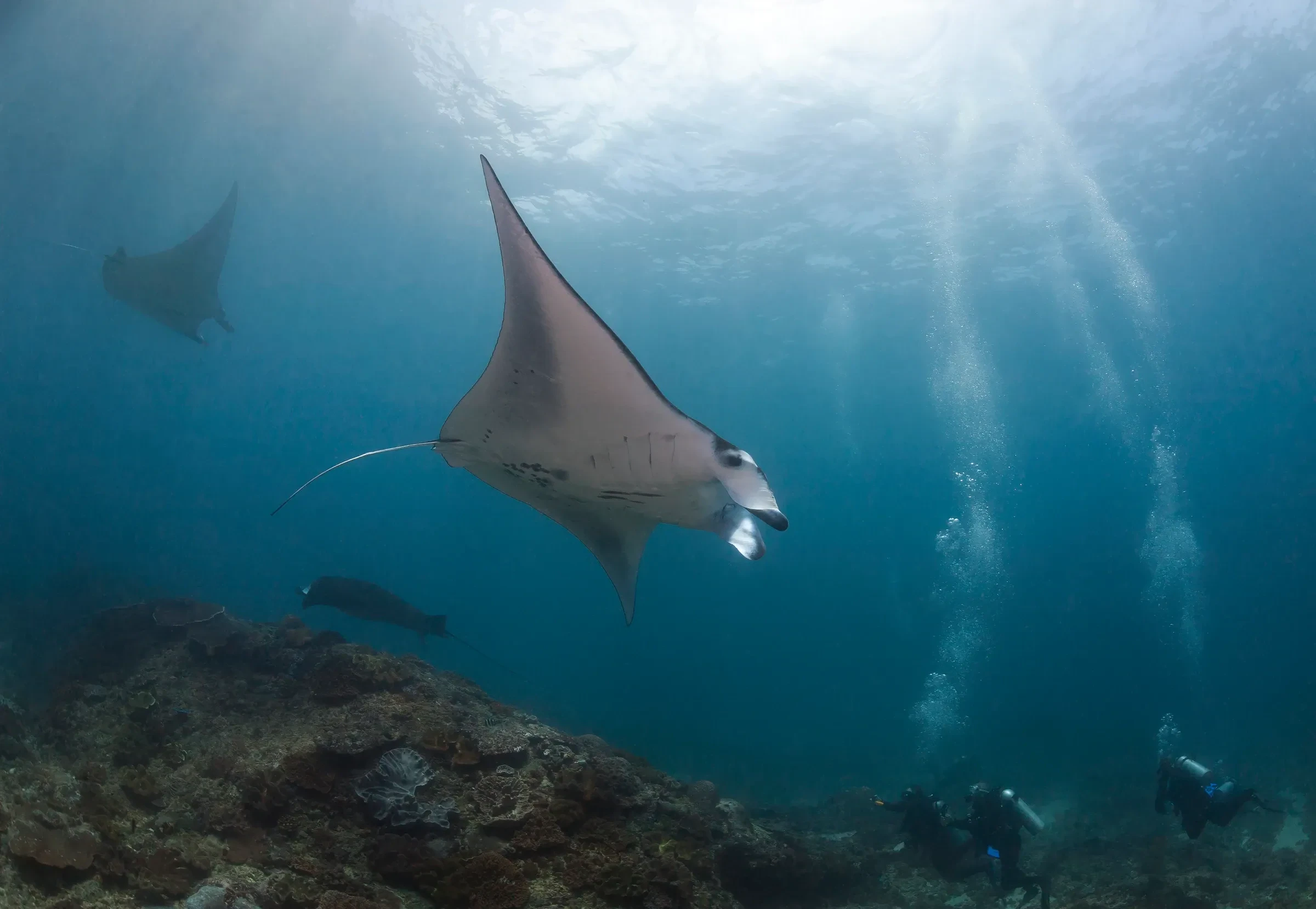
Komodo National Park has some of the richest diving in Indonesia: mantas, sharks, big schools of fish and healthy reefs. It also has currents of up to 4 knots at some sites. Park rules say you must be certified to dive, and many sites suit Advanced divers only. A day trip with three dives from Labuan Bajo costs about IDR 2.6 to 3.3 million. Since 1 April 2026 the park has admitted no more than 1,000 visitors a day, so book through an operator before you travel. Park fees change often, so check what's included. The dry season, April to November, has the best visibility in the north of the park, while manta activity in the south peaks around December to February. See the Komodo guide and diving in Komodo.
The Andaman Islands, India
The Andamans are India's main place to learn to dive. Most dive schools are on Havelock (Swaraj Dweep), with a few on Neil (Shaheed Dweep). The season runs from about October or November to April or May, and boats are often cancelled from July to September. A try dive costs from about ₹3,500. Beginners train on shallow reefs around Havelock, while sites like Dixon's Pinnacle and Johnny's Gorge suit Advanced divers. Read the Andaman Islands guide.
Vietnam
Vietnam's diving is cheap and fun, but its reefs are generally in poorer shape than Thailand's or Indonesia's, with fewer big fish. The main options:
- Nha Trang: the most popular place to learn, with dive season from about February to October. Diving at the best-known site, Hon Mun, was stopped in 2022 to let the reef recover, and the province has since named other dive areas. Ask your school where it actually dives.
- Cu Lao Cham, off Hoi An: a protected area with variable visibility, best from about March to September.
- Con Dao: the best reefs and the best chance of turtles in Vietnam, but remote and more expensive. Best from about March to September.
- Phu Quoc: shallow reefs with small marine life, best from November to April.
Health and safety for new divers
Flying and going up mountains after diving
Nitrogen stays in your body for hours after a dive, and going up in altitude too soon can cause decompression sickness. The Divers Alert Network (DAN) recommends waiting at least:
- 12 hours before flying after a single dive
- 18 hours after several dives in a day, or after several days of diving
DAN Europe treats driving over high ground, more than about 700 metres above sea level, the same way. So plan your last dive the day before a flight or a trip into the mountains, such as from the Bali coast up to Mount Batur.
Insurance
Check your travel insurance before you book a course. Many policies need an add-on for diving and set a depth limit, often 18 metres for uncertified divers and 30 metres for certified ones, and some only cover you if your instructor holds certain qualifications. Standard policies rarely cover treatment in a hyperbaric chamber. Specialist dive cover, such as DAN's, is designed for that. The UK government's travel advice for Thailand also suggests checking the dive school's credentials, asking whether there's oxygen on the boat and finding out how far it is to the nearest chamber.
Choosing a dive school
- Small groups. Four students per instructor or fewer is ideal.
- Well-kept equipment that fits you properly.
- Recent reviews that mention the instructors by name.
- Clear safety habits: a proper briefing before every dive, oxygen and first aid on the boat, and no pressure to dive if you feel unwell or can't equalise your ears.
- Honest about conditions: a good school cancels or changes a dive when the sea is rough or the current is too strong.
Look after the reef
Don't touch, stand on or kick the coral, and don't touch or chase marine life. Work on your buoyancy so you can hover. Use reef-friendly sunscreen, or better, a rash vest.
Diving on our trips
Three of our trips are built around diving. Koh Tao Dive & Islands is 8 days: a full PADI Open Water course on Koh Tao, with a spare day built in for bad weather, then two nights on Koh Phangan timed to the Full Moon Party. The Gili & Bali Dive Trip is also 8 days, with the same full PADI Open Water course, this time on Gili Trawangan, followed by a manta dive at Nusa Penida and two dives on the USAT Liberty wreck at Tulamben, near Amed. Andaman Islands Dive & Beach doesn't include the course itself: it's 8 days on the beaches of Havelock and Neil Island, with an optional PADI Discover Scuba Diving session on Havelock at your own cost if you want to try diving before committing to a full certification.