What Thrissur Pooram is
Thrissur Pooram is often called Kerala's "festival of festivals": two temples, Paramekkavu and Thiruvambadi, bring their processions of caparisoned elephants to Vadakkunnathan Temple on the same day and, in effect, compete. In a normal year the two sides face each other with 15 elephants each for the Kudamattam umbrella exchange, with hours of percussion before it and a fireworks display that lights up the temple grounds before dawn.
Local tradition traces the festival to the 1790s, when the Raja of Cochin, Sakthan Thampuran, brought together temples from around Thrissur that had been turned away from the older Arattupuzha Pooram procession and gave them a new, larger gathering at Vadakkunnathan Temple instead. It has grown into the largest gathering of temple elephants and percussion artists in Kerala, and one of India's most photographed festivals, which brings problems as well (more on that below).
What happened at Thrissur Pooram 2026
Thrissur Pooram 2026 went ahead on Sunday 26 April, with the closing ritual around midday on 27 April, but in a much reduced form. Around 21 April, according to Onmanorama, South First and Kerala Kaumudi, an explosion hit a fireworks unit at Mundathikode, near Thrissur, where fireworks material for the festival was stored. The death toll differs by outlet and date: ETV Bharat reported 14 on 23 April, Onmanorama reported 15 on 26 April, and Kerala Kaumudi later reported 17. We give the range, 14 to 17, because no single figure is settled.
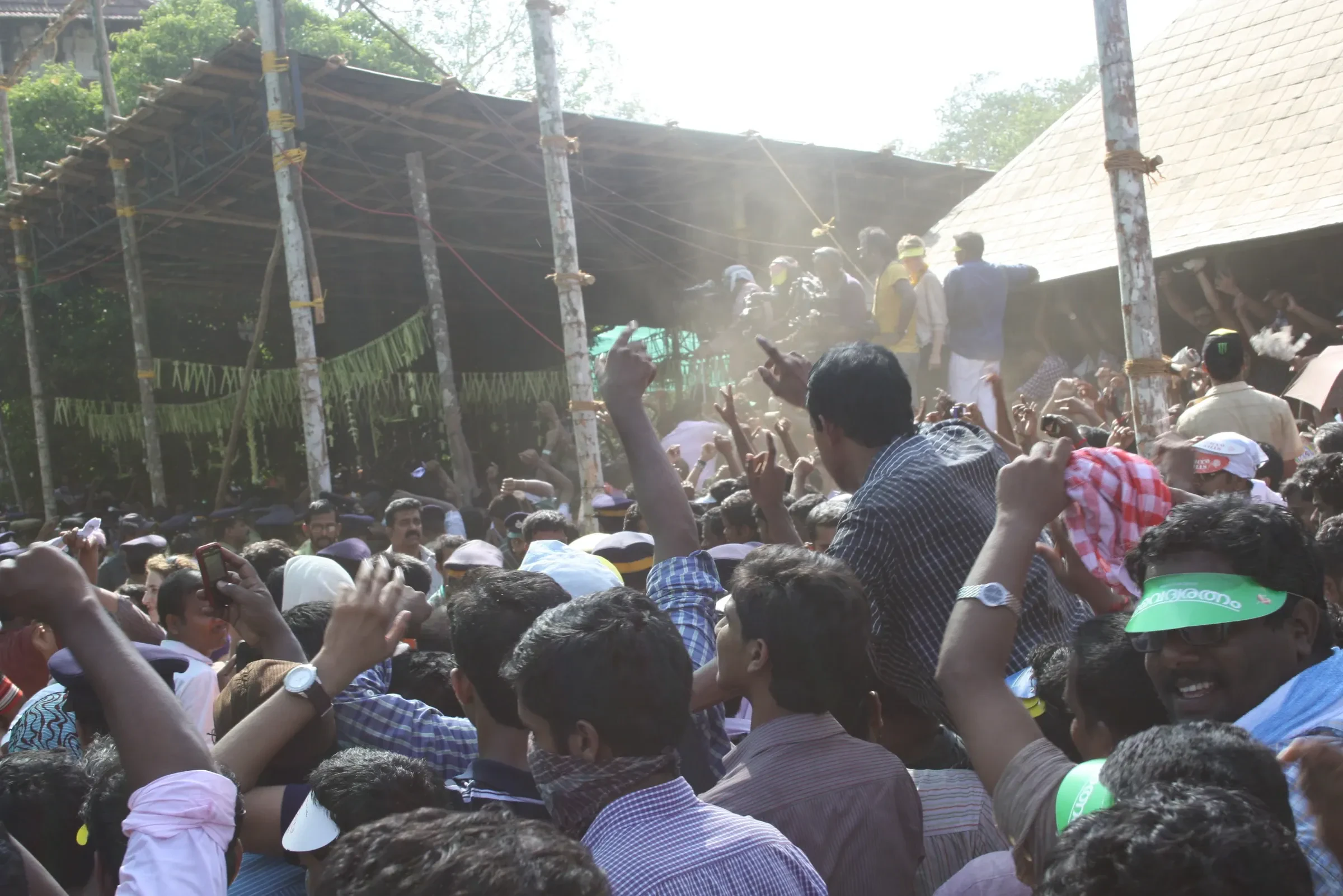
At a Collectorate meeting on 23 April, officials and both temples agreed to hold the Pooram as a ceremonial event with no fireworks, so the pre-dawn display was dropped (South First). The Kudamattam was cut from about an hour to about 15 minutes, with fewer than ten umbrellas shown. The Ilanjithara Melam and the Madathil Varavu Panchavadyam still took place, and Onmanorama described the mood as subdued, in memory of those killed. Reports differ on two points. South First said all 30 Kudamattam elephants took part, while ETV Bharat said 15. ETV Bharat also reported on 23 April that the public would not be admitted, while Onmanorama and Asianet News described large police, CCTV and medical arrangements on the day itself. We could not confirm how many spectators were let in, so we don't say either way.
This was the 230th Pooram, and the temples noted that it has been scaled down before, including in 1943, 1945, 1948, 1957, 1962 and 2020 (Onmanorama). Normally it is a contest between two temples that has run for more than two centuries, with the umbrellas and ornaments made fresh every year. As of 3 October 2026 we found no announcement on whether the 2027 programme will include fireworks again.
Where to see it
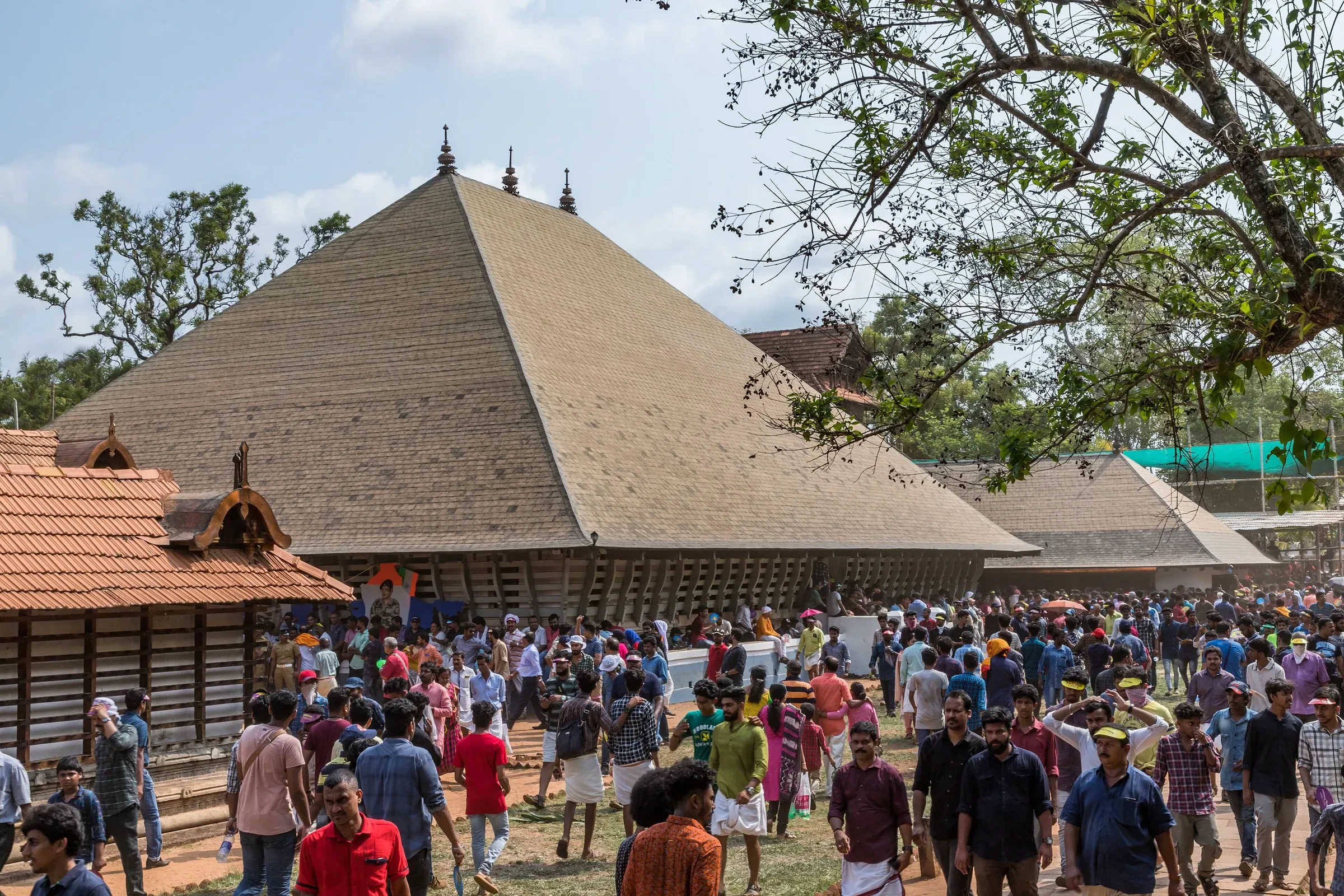
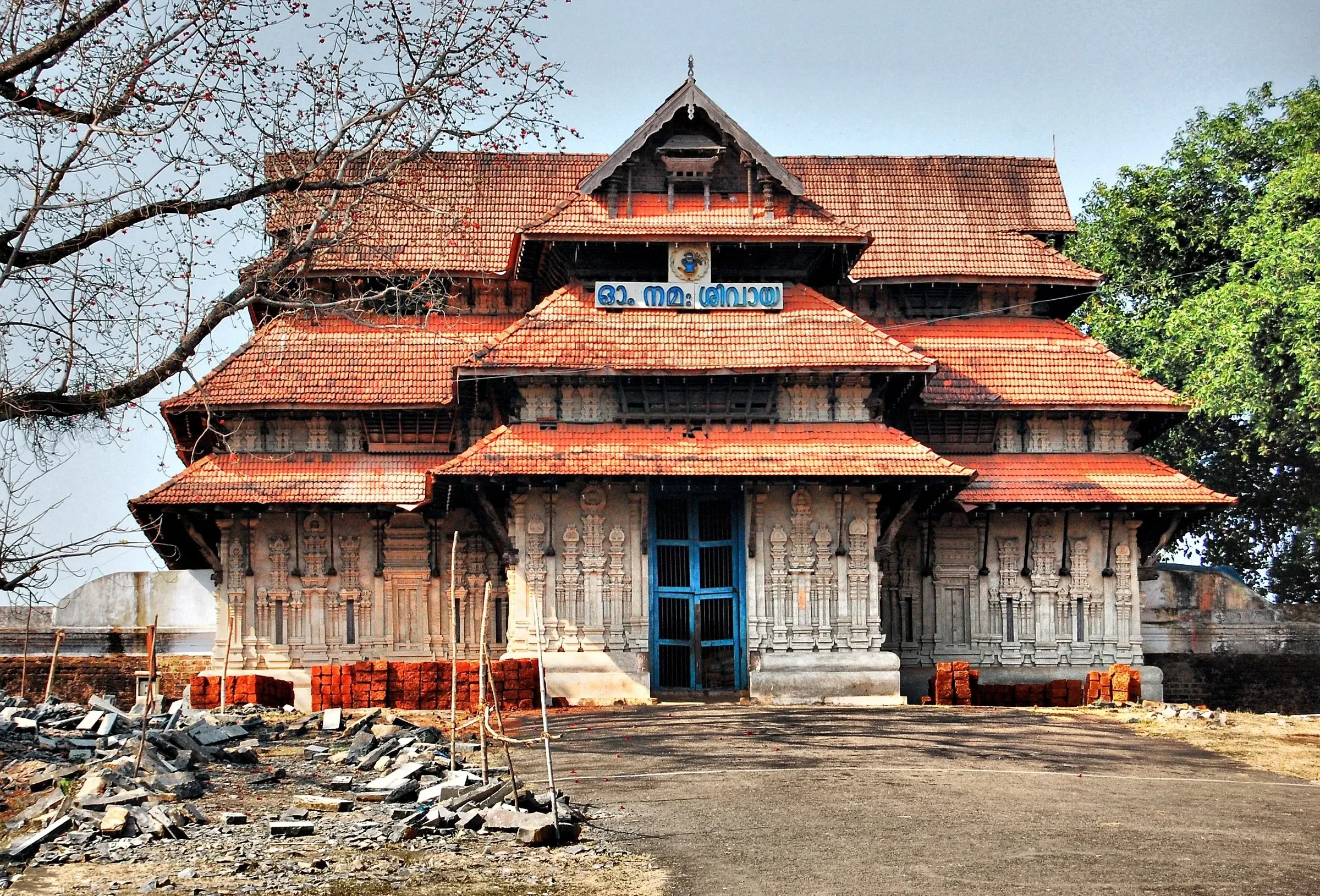
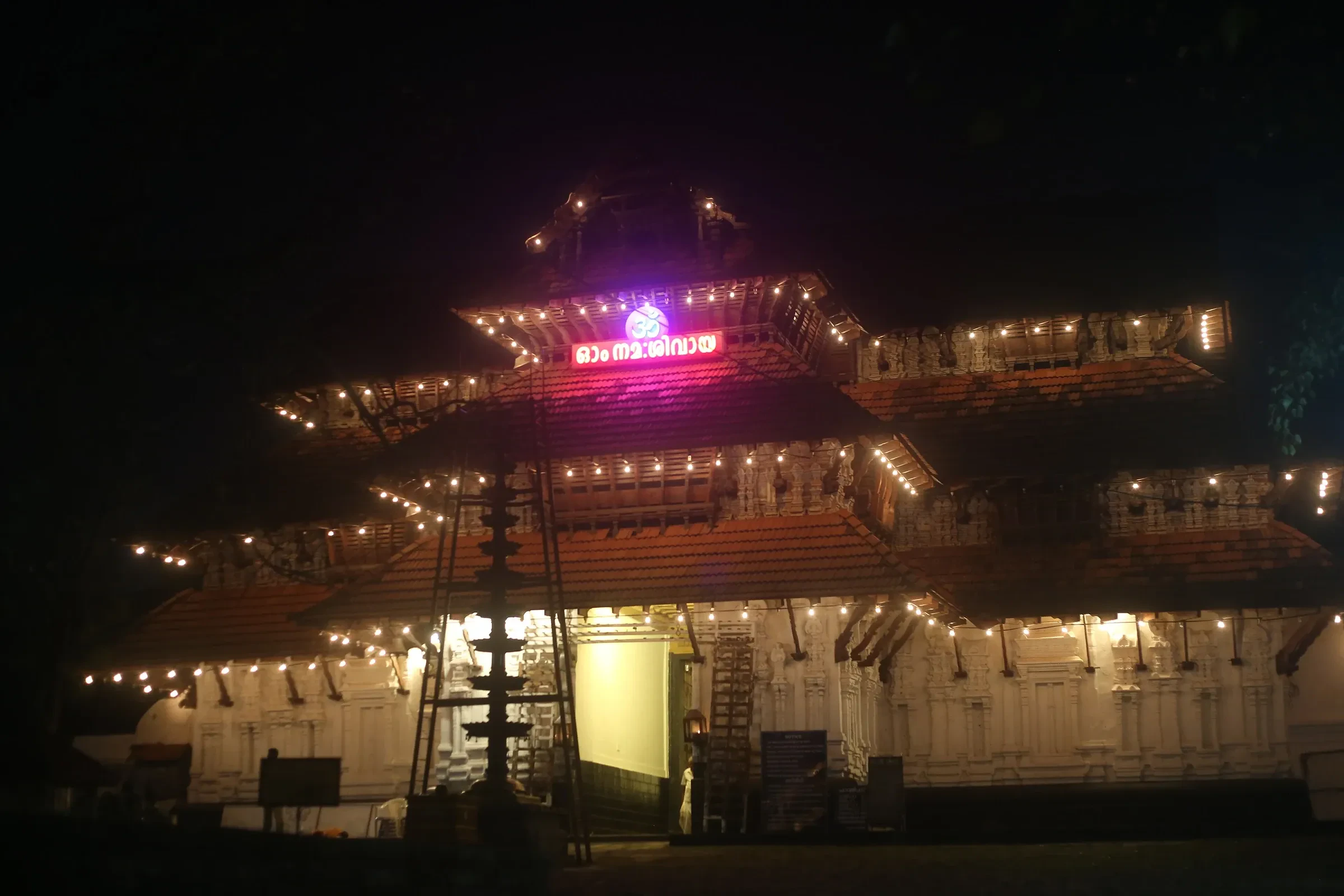
Thrissur Pooram unfolds around Vadakkunnathan Temple and the circular road that rings it, the Swaraj Round, plus the open ground (Thekkinkadu Maidanam) inside. A few spots work better than others depending on what you want to see.
- The southern entrance of the temple, for the morning deity processions. It's also where foreign visitors can arrange a seated viewing area through Kerala Tourism in advance, worth doing if you want a guaranteed, less crowded spot.
- Naduvilal, on the Swaraj Round, and the Ilanjithara courtyard inside the temple, for the percussion performances, standing room only and packed tight by midday.
- Either side of the southern entrance, or further back in the crowd, for the Kudamattam umbrella exchange. You'll see more from further back than from right against the barrier.
- Round South and Naikanal, on the Swaraj Round, for the fireworks, held well after midnight in a normal year.
- The CMS school grounds nearby are more open and less crowded than the temple itself, a reasonable trade if you'd rather see the scale of it than get close to any one part.
- A Pink Police point near the banyan tree at the southern entrance is a designated safe point for women travelling alone.
What happens, hour by hour
This is the usual programme, based on the Onmanorama tourist guide for 2026. The festival plays out over roughly a day and a half rather than in neat calendar days, so it helps to think of it as a timeline. The 2026 edition cut the fireworks and shortened the Kudamattam, so check the announced programme for 2027.
Morning: the deity processions. The day opens around 7am with the two temples' deities carried out in procession, the first elephants of the day among them.
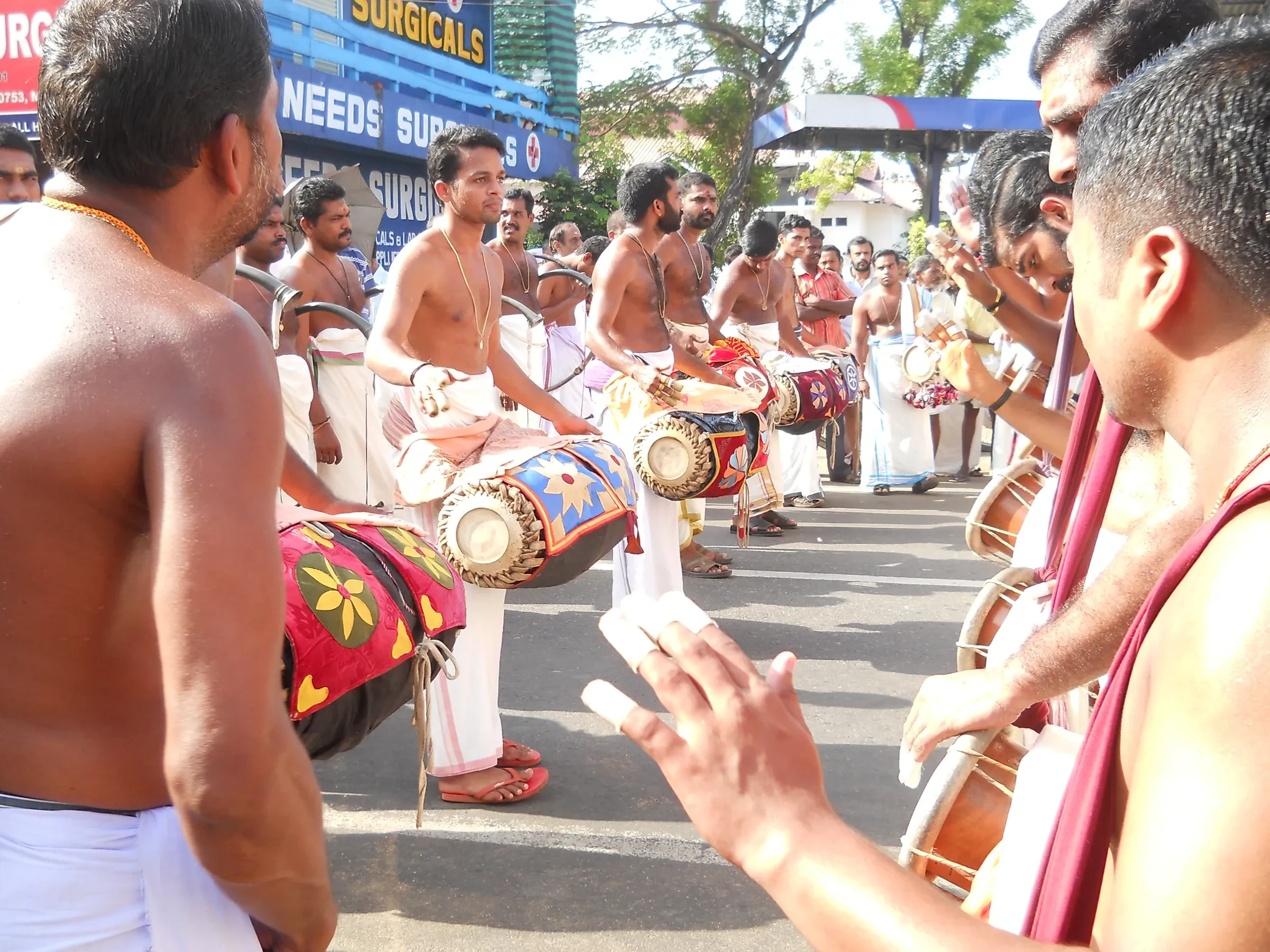
Late morning to early afternoon: Ilanjithara Melam. From around 11:30am to 2:30pm, hundreds of percussion artists gather at the Ilanji (bullet wood) tree in the temple courtyard for what's considered the biggest assembly of traditional Kerala percussion anywhere, chenda drums building through a long, structured crescendo.
Early evening: Kudamattam, the umbrella exchange. From around 6pm, teams from the two temples swap out the elephants' ceremonial umbrellas in fast, choreographed rounds, competing on colour and design rather than volume. In a normal year it runs about an hour. Elephants from both sides line up together for it, so this is also the point where they stand closest to each other and to the crowd.
Late night: the evening procession, from around 11:30pm.
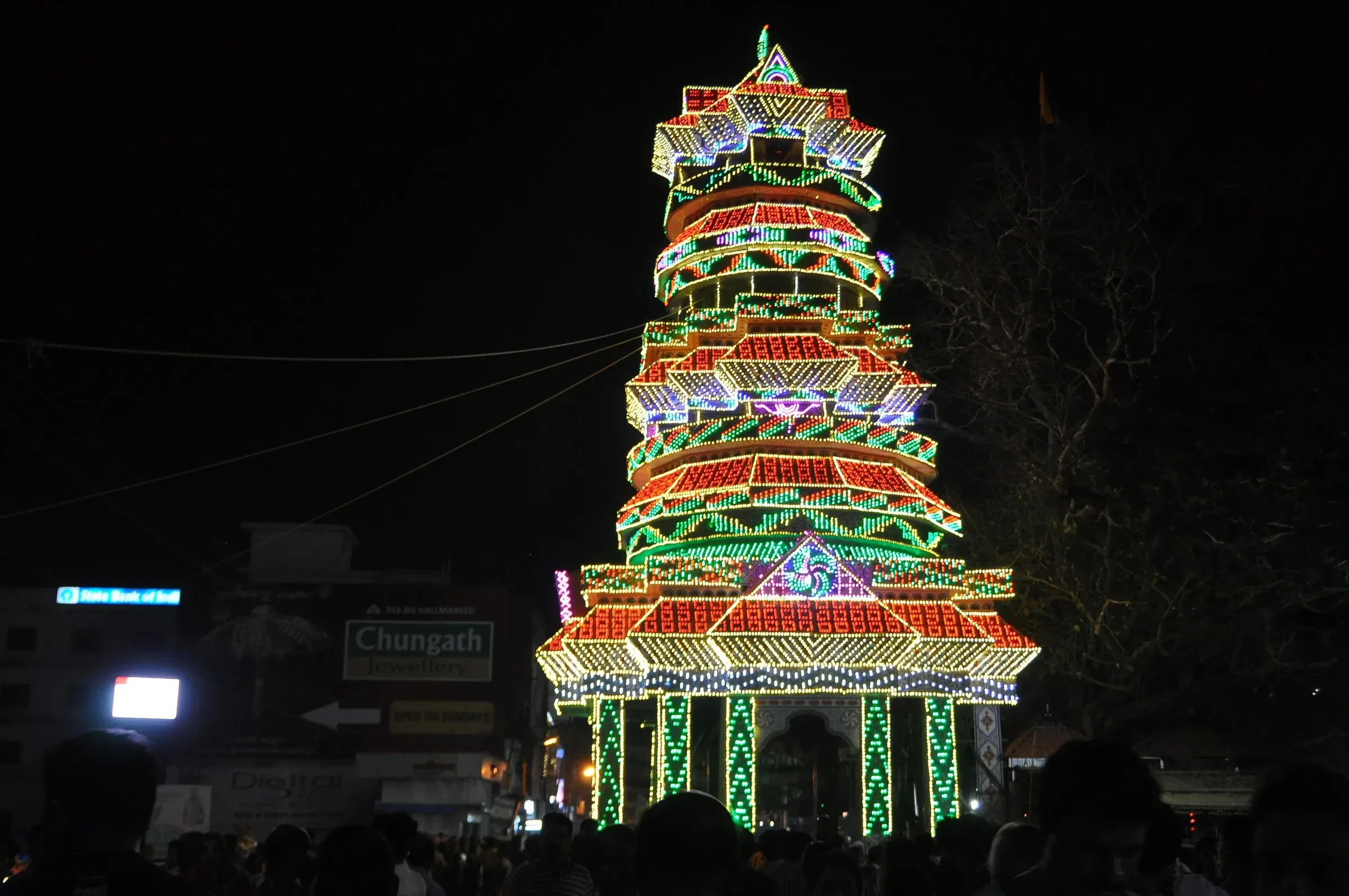
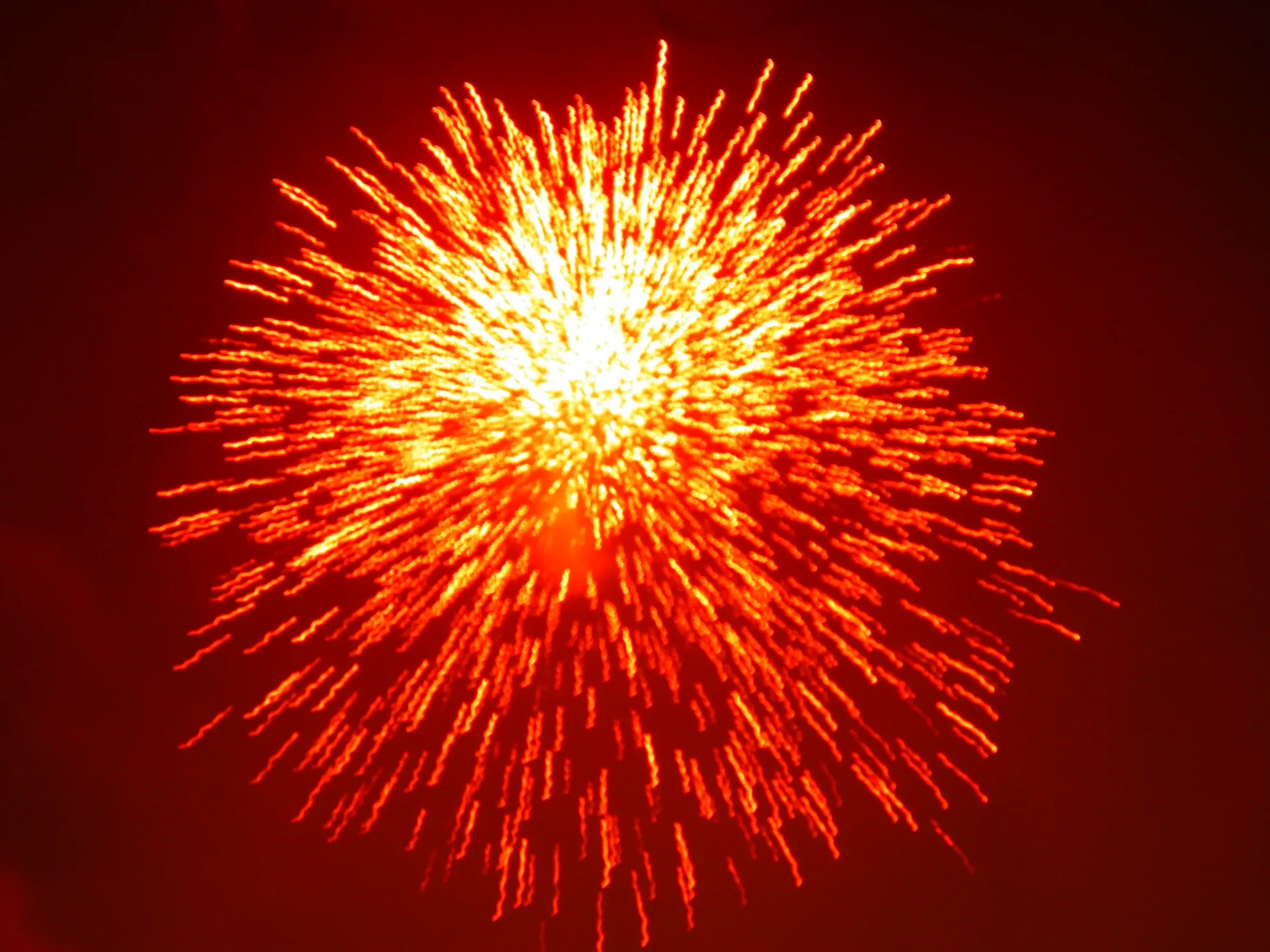
Small hours: Vedikettu, the fireworks. In a normal year the festival closes with a fireworks display that traditionally starts around 3am and can run for the best part of an hour, visible across the town and the reason many visitors choose to stay overnight in Thrissur rather than travel back after dark. The closing farewell ritual follows around midday.
The elephants, and the welfare debate
Be clear-eyed about this before you decide whether Thrissur Pooram is for you. The elephants at the centre of the festival are captive temple elephants, decorated (caparisoned) with gold-plated head ornaments, standing for many hours in heat, noise and dense crowds. That is what has drawn growing criticism from animal welfare groups in recent years, in Kerala's temple festivals generally and not only at Thrissur Pooram.
That criticism has reached the courts. In April 2024, the Kerala High Court ordered a minimum distance of at least 3 metres between elephants during processions, with a wider 6-metre gap around the theevetti (fire torches carried near them), banned continuous parading of any elephant for more than 3 hours, ruled out parading elephants on public roads between 9am and 5pm, and made a fitness certificate compulsory for every elephant before it could be paraded (LiveLaw; Onmanorama). Temple authorities and elephant owners pushed back, arguing the spacing rules were unworkable on Thrissur Pooram's crowded, narrow processional routes. In December 2024, the Supreme Court stayed the High Court's guidelines, allowing the parading of elephants to continue under the existing rules while the wider legal question is still being decided (Kerala Kaumudi).
We don't sell or promote elephant rides or close-up "meet the elephant" experiences anywhere, and Thrissur Pooram is no exception. If you go, you're a spectator at a religious procession, not on a wildlife encounter, and the honest picture includes the welfare debate along with the spectacle.
Fireworks. Fireworks stored and fired close to a town and a dense crowd carry real risk, as the 2026 explosion at Mundathikode showed. The 2027 programme hadn't been announced as of October 2026, so check closer to the date rather than assuming a full display.
How to join in and etiquette
Thrissur Pooram is a religious festival for the two temples involved, not a performance staged for visitors, so the basic etiquette is the same as any Hindu temple event: dress modestly, don't touch the elephants or press against the barriers around them, and follow instructions from police and stewards, who are managing huge crowds. Non-Hindus can watch the processions and the Swaraj Round events freely; the inner sanctum of Vadakkunnathan Temple itself follows the usual Kerala temple rule of Hindus only. Photography is fine from the designated viewing areas; don't use flash near the elephants.
What to wear and bring
Light, breathable cotton in pale colours copes best with April heat and hours of standing. Closed shoes rather than sandals are worth it in a crowd this dense. Bring a hat or cap, sunscreen and your own water, and carry only what you need: a small day bag rather than anything bulky through the security checks at the venue. If loud, sustained noise bothers you, be aware that the massed percussion, and the fireworks when they are held, are close up and intense; bring earplugs if you're sensitive to it, and think twice about bringing young children near either.
Safety
Heat. April in Thrissur regularly brings heat warnings, and the district administration has deployed medical teams across the festival grounds in past years for exactly that reason. In 2026 the Collector issued a heat warning and a 200-member medical team was reported on duty (Asianet News). Drink water through the day, use shade where you can find it, and don't underestimate how long you'll be standing.
Crowds. This is one of the most heavily attended festivals in Kerala, and the crowd around the temple and the Swaraj Round gets very dense by afternoon. Vehicles are restricted near the venue during festival hours, so plan on walking the last stretch, and arrive well ahead of the event you want to see rather than trying to push through a packed crowd. Police posts, including the women-only Pink Police point at the southern entrance, are there to help if you need them.
The elephants. However the current court rules settle, standing for hours in noise, heat and firecracker smoke close to a dense crowd is stressful for any animal, captive or wild, and every so often a spooked elephant at a Kerala temple festival has caused real injury. Keep well back from the barriers around the elephants, especially during Kudamattam when they're standing closest together, and don't try to get closer for a photograph.
Thrissur as a base, and how long to spend
Thrissur is about 1 to 1.5 hours from Kochi by road, and Cochin International Airport is roughly the same distance again, so a day trip from Kochi or Fort Kochi is workable if you're happy to travel back late. Given that in a normal year the fireworks don't finish until well past midnight, most visitors who want the whole sequence, from the morning processions through to Vedikettu, book a hotel in Thrissur for one or two nights instead of trying to get back the same night. Book early for 17 April 2027: rooms near the temple sell out and prices rise well before the date.
If you're building a longer Kerala trip around it, our Kerala itinerary guide covers the wider region, and our Kerala guide has the backwaters, hill stations and beaches to combine with a Thrissur stop. Kochi, the nearest big base, is worth an extra day or two either side.
A trip around Thrissur Pooram
Our group trips aren't timed to land in Thrissur on Pooram day, so this is a festival most solo travellers build into an independent leg of a Kerala trip, either before or after joining a group. Our Goa, Hampi and Kerala backwaters trip runs through Kochi and Alleppey and works well as a template for the wider route if you want to add a Thrissur stop of your own in April. Our India group trips page lists current dates.