What Navratri and Garba actually are
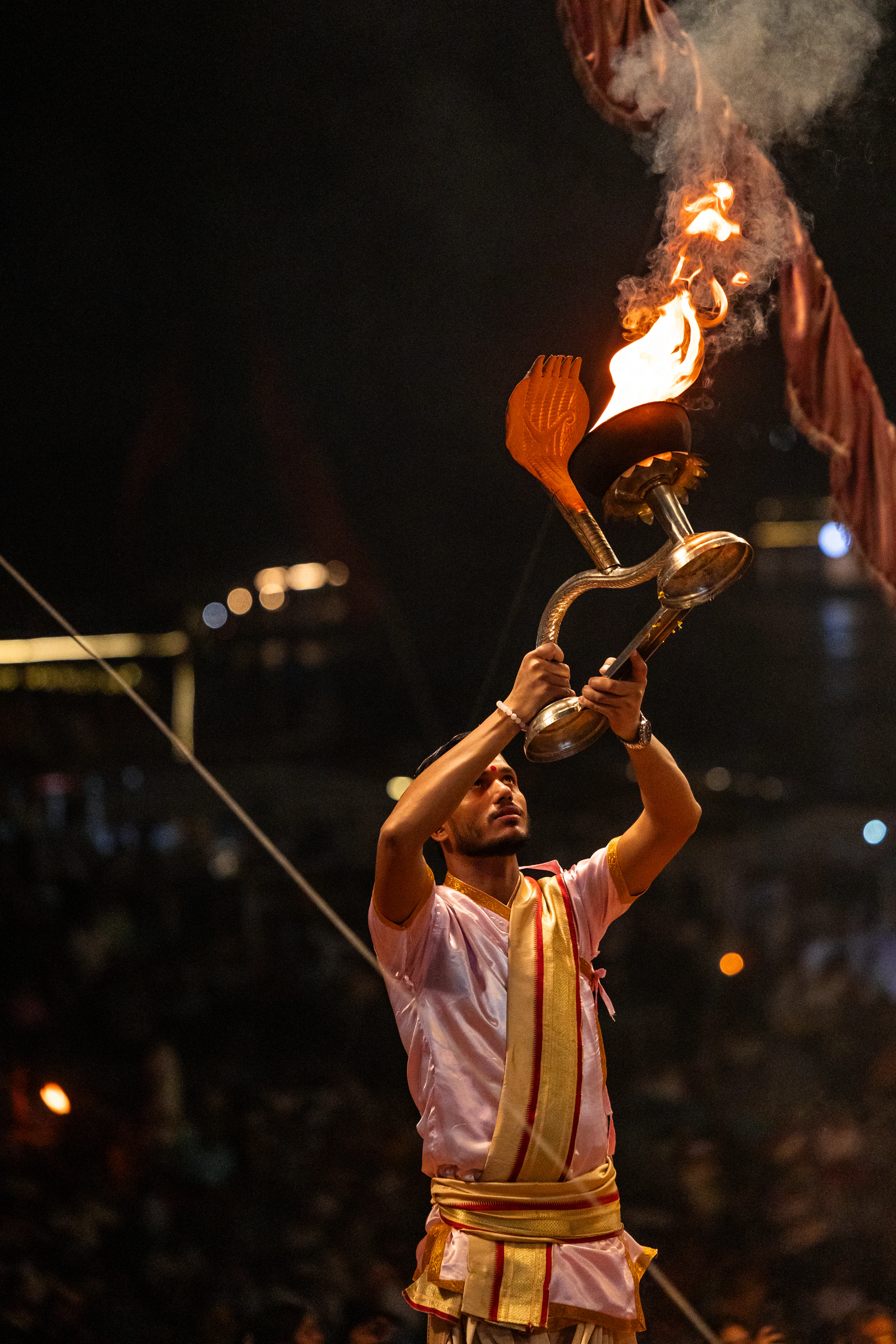
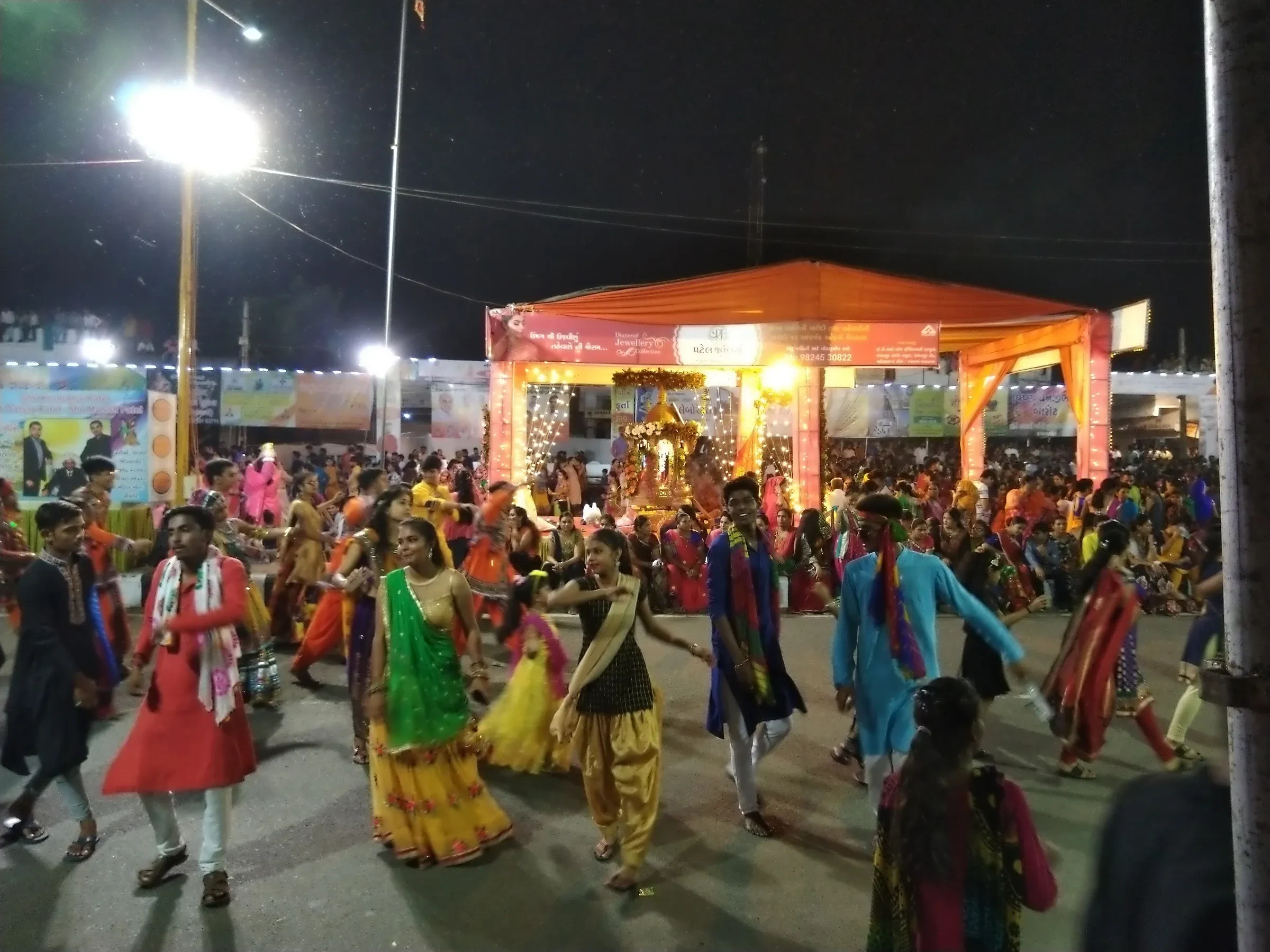
Navratri means "nine nights" and honours the goddess Durga across nine nights, closing with Vijaya Dashami, the day she's said to have defeated the buffalo demon Mahishasura. The festival is celebrated all over India, in different forms: Kolkata builds elaborate pandals for Durga Puja, the same goddess honoured over five days in a different tradition. In Gujarat it takes a distinctly participatory shape. Rather than watching a deity honoured from a distance, whole cities turn out every night to dance in circles around a central shrine or lamp, and the circles keep growing until the ground is packed edge to edge.
People use two names for the dancing, and they're not quite the same thing:
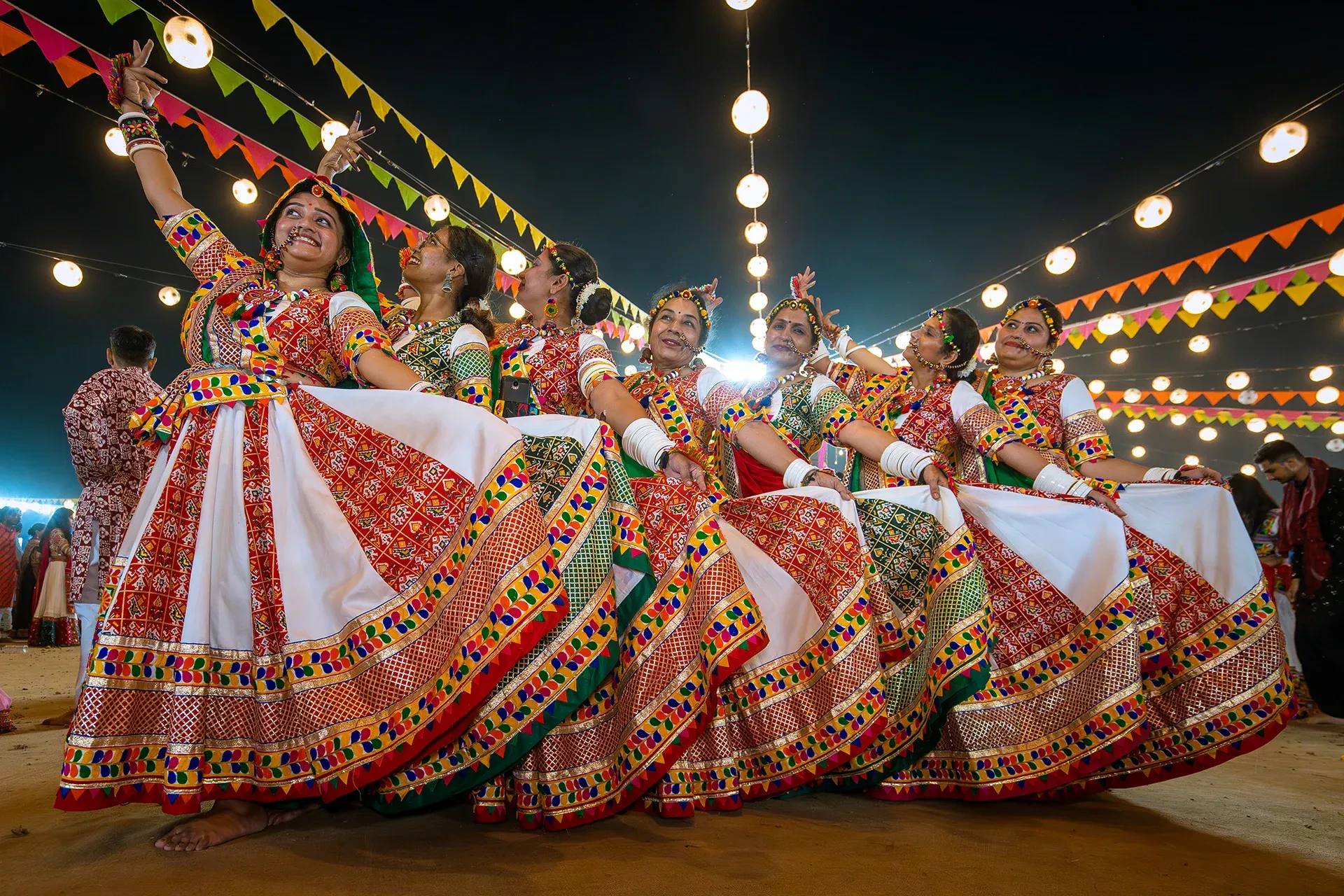
- Garba is danced empty handed, in concentric circles that all rotate the same way, built from a repeating pattern of steps and claps. It doesn't need a partner, so newcomers can join a circle at almost any point in the night.
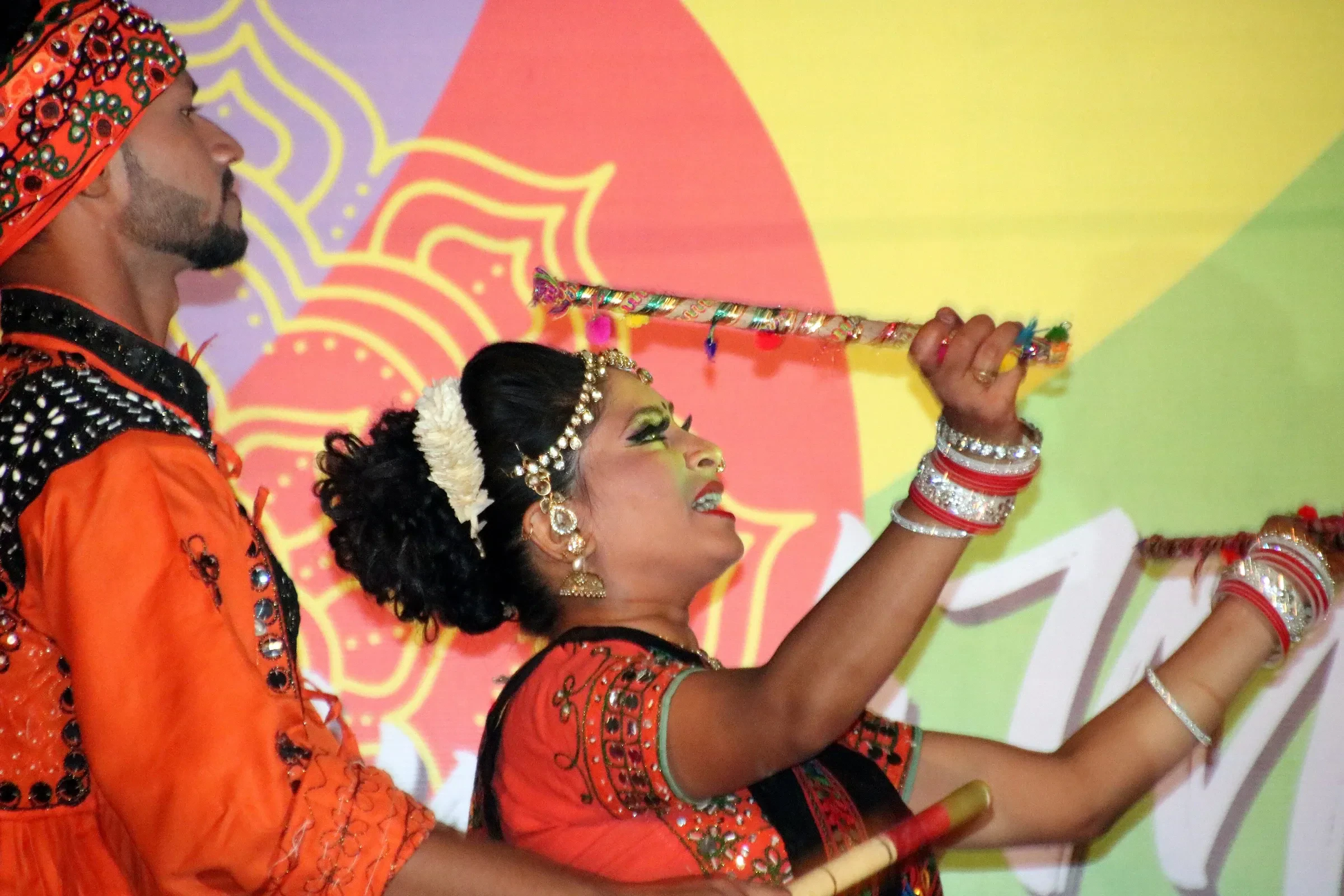
- Dandiya Raas is the stick dance: dancers pair up, each holding two short sticks, and strike them together in time with a partner while the whole floor turns in a shifting pattern. It needs an even number of dancers and takes more coordination, though the basic hitting pattern is easy to pick up within a few songs.
Most events run both across a night: Garba as the ground fills up, then Dandiya Raas later, or alternating between the two as the DJ or live dhol group changes the beat.
Where to dance: Ahmedabad and Vadodara
Ahmedabad and Vadodara host the biggest, most organised public Garba in the country, and between them cover most of what a first-time visitor needs.
Vadodara's United Way Garba is the single most famous ground in Gujarat. It has been recognised for hosting some of the largest Garba gatherings on record, with tens of thousands of dancers circling a central Durga statue on the big nights. It's commercial and ticketed, with separate passes for men and women (men's passes cost noticeably more and sell out fastest), and the dress code is strictly enforced at the gate. Its own listing gives 11 to 19 October 2026 for this year's run. Book through the event's own listing or an authorised ticketing platform as soon as passes open, since the popular nights sell out well in advance.
Ahmedabad spreads its Garba across dozens of venues rather than one dominant ground: large ticketed "party plots" and air-conditioned dome venues at the top end, and free or low-cost neighbourhood and housing-society garbas at the other. Society garbas are usually the easiest and cheapest way in for a visitor, since most are technically open to all and don't charge for entry, though a few restrict entry to residents and their guests as a security measure. It's worth asking a local contact or your hotel which ones welcome outsiders that year.
Gujarat Tourism also runs its own official Navratri festival at the GMDC Ground in Ahmedabad, listed for 11 to 20 October 2026 and open to visitors from abroad.
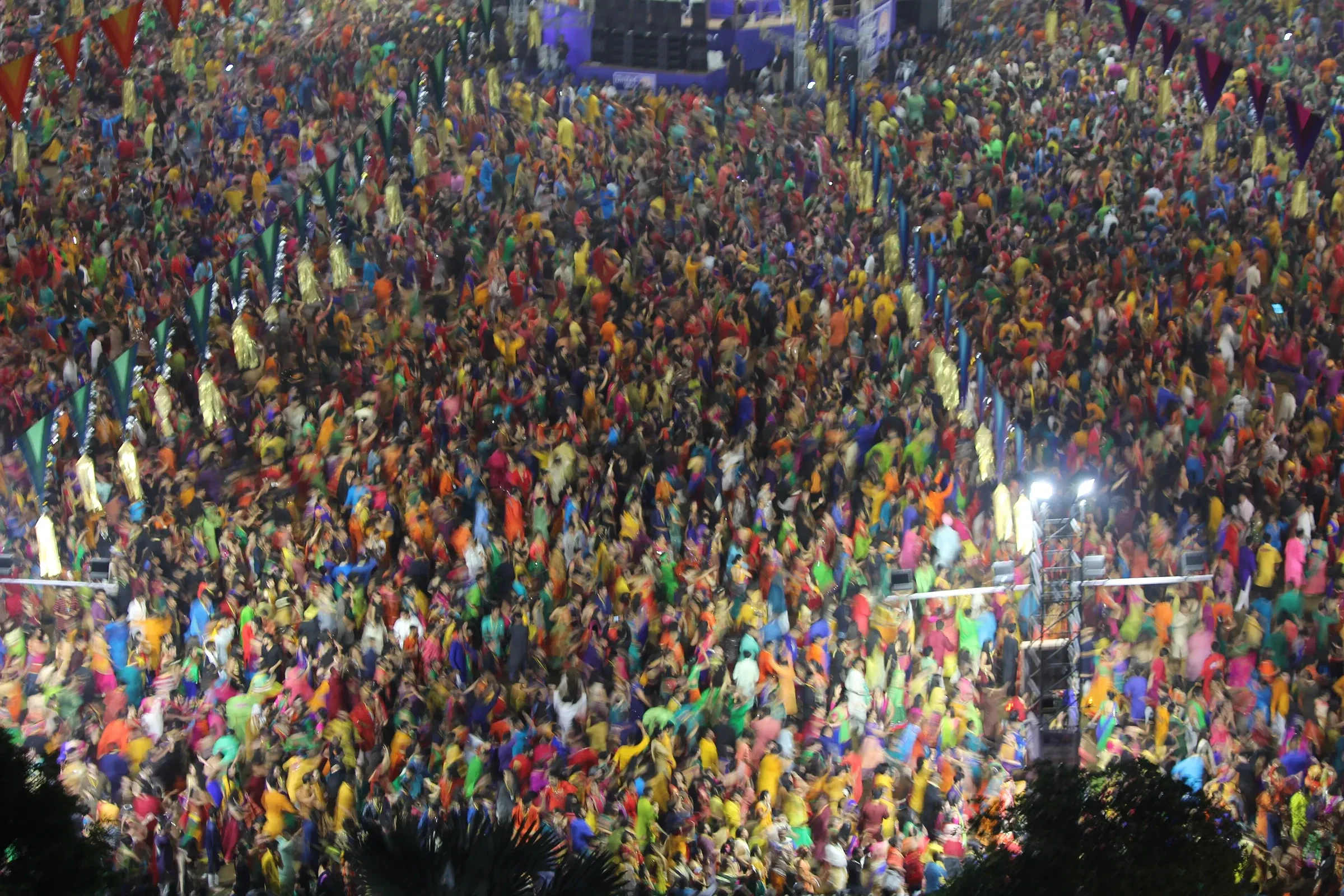
For a foreign visitor without a local contact, a paid, ticketed venue is the more reliable route. Single-night passes run from roughly ₹300 at community events up to ₹3,000 to ₹5,000 or more at the largest commercial and dome venues. Premium passes at the biggest venues reached around ₹10,000 in 2025. They're usually sold online through the event's own site or a mainstream ticketing app in the weeks before Navratri starts. Turning up on the night without a pass rarely works at the well-known grounds.
What to wear, and where to rent it
Traditional dress is expected, and enforced at the gate of most ticketed venues.
- Women typically wear a chaniya choli: a full, embroidered skirt (chaniya) with a fitted blouse (choli) and a long dupatta draped across the body, often finished with oxidised silver jewellery and mirror-work embroidery.
- Men wear a kediyu, a short, flared, gathered top, over a dhoti or churidar, sometimes with a turban or a simple bandhani-print stole.
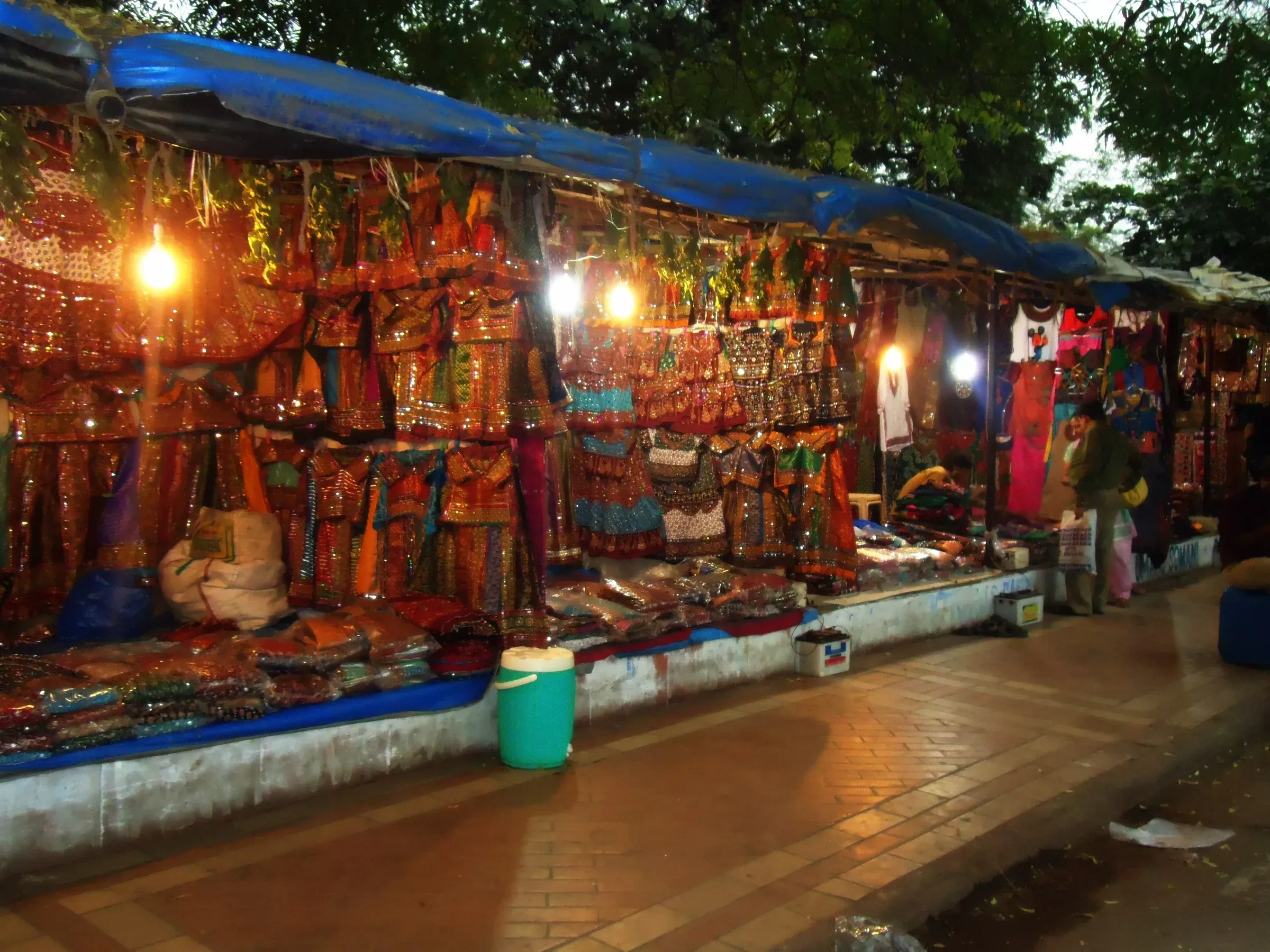
Renting is normal, even for Gujarati regulars who don't want to buy a new outfit every year, and there's no shortage of rental shops in both cities during the festival. Expect to pay from around ₹700 to ₹1,500 a day for a mid-range chaniya choli (plus a refundable deposit), rising to ₹5,000 to ₹8,000 for elaborate, heavily embroidered sets; kediyu rental for men tends to run cheaper. Book a rental a day or two ahead in the first week of Navratri, since the better outfits go quickly once the festival starts.
Learning the basic steps
Garba is built from a small number of repeating movements, so a beginner can pick up enough in one night to stop feeling lost:
- Teen taali ("three claps"): a simple three-clap pattern, roughly one clap in front, one to the side and one overhead, that anchors the rhythm.
- Do-taali or dodhiyu: a two-step turning walk that carries the circle around, and the pattern most of the dance is built on.
- Chakkar: a spin worked into the walk every few beats, usually on the turn back toward the centre.
Dandiya Raas adds a stick-tap pattern on top: hit your own sticks together once, then your partner's once, in time with the beat, while the whole line or circle rotates and swaps partners every few rounds. A few of the bigger commercial grounds run short beginner sessions or have instructors on the floor early in the evening before the crowd builds, so it's worth asking at the entrance if you want a head start.
Late nights and safety
Garba and Dandiya Raas draw enormous, dense crowds until late at night, so ordinary big-event precautions apply: keep valuables minimal, agree a meeting point if you arrive with others, and don't count on phone signal working well once a ground is full.
Ahmedabad police run a dedicated Navratri security operation each year. Past measures have included plain-clothes women officers patrolling in traditional dress to blend into the crowd, all-women "She Teams" stationed at busy roads and low-visibility spots, and a rule requiring commercial garba organisers to run separate men's and women's entry and exit gates plus one security guard for every 100 attendees; Ahmedabad police guidelines generally allow loudspeakers until midnight, which is when most licensed grounds wind down. It's a heavily policed event rather than an unmanaged one, but as with any dense night-time crowd in India, solo travellers, especially women, should stick to well-lit, ticketed grounds with visible security rather than unlisted street gatherings.
Gujarat is also a dry state under state-wide prohibition. Foreign tourists staying in a 3-star or higher hotel can apply for a temporary liquor permit, but Garba itself is danced sober, and turning up drunk to a ticketed ground is likely to get you turned away at the gate.
Navratri fasting food
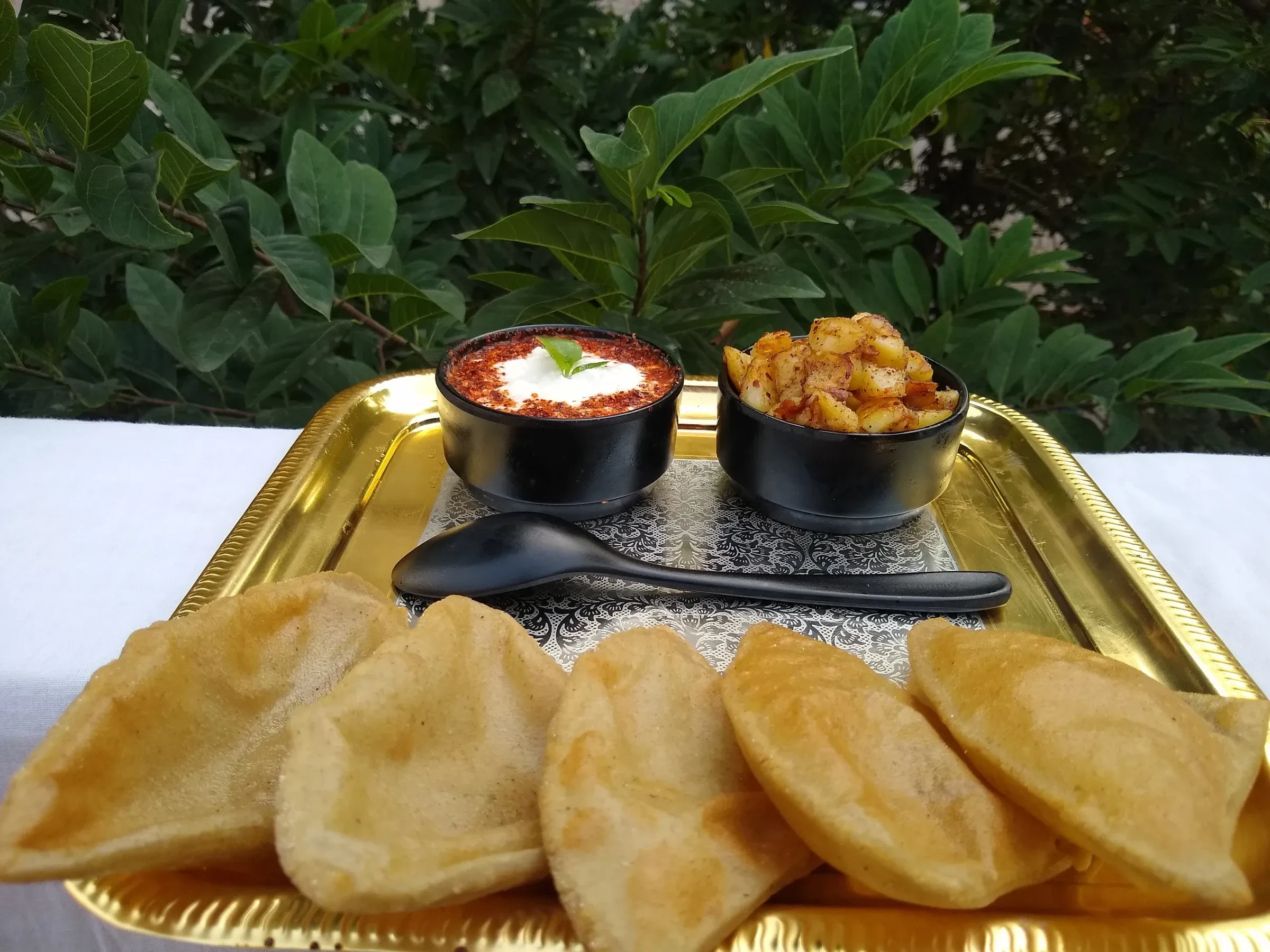
Many Gujaratis observe a Navratri fast for some or all of the nine days, avoiding regular grains, lentils, onion and garlic in favour of "falahari" (fasting-permitted) ingredients such as buckwheat flour (kuttu), water chestnut flour (singhara), amaranth (rajgira), sabudana (tapioca pearls) and potato. Around the Garba grounds and in the old city you'll find stalls selling sabudana khichdi (a spiced tapioca and peanut dish), farali bateta (a dry potato and peanut curry) and kuttu or rajgira flatbreads, alongside sweeter snacks like coconut barfi. It's worth trying even if you're not fasting yourself: the flavours lean lighter, and more toward peanut and coconut, than everyday Gujarati thali food, which is itself one of India's best vegetarian cuisines.
How long to spend, and building a trip around it
Two to three nights of Garba is enough to get a proper feel for it without exhausting yourself, since most visitors are dancing late into the night and sightseeing during the day on very little sleep. A comfortable plan is 3 to 4 nights based in Ahmedabad, with a day trip to Vadodara (about 2 hours away by train) if the United Way ground is a draw.
Navratri sits well at the start of our Gujarat and Kutch itinerary, which continues on from Ahmedabad into the Rann of Kutch. Note that Rann Utsav, the White Desert festival, runs later in the winter season rather than alongside Navratri, so the two need separate trips unless your dates happen to bridge them. If Gujarat doesn't fit your dates, the same October fortnight is Diwali season elsewhere in the country, and West Bengal's Durga Puja honours the same goddess in a completely different, pandal-based style. We don't currently run a Gujarat departure, but our other India trips run through the same October to March season if you'd rather join a small group elsewhere in the country.