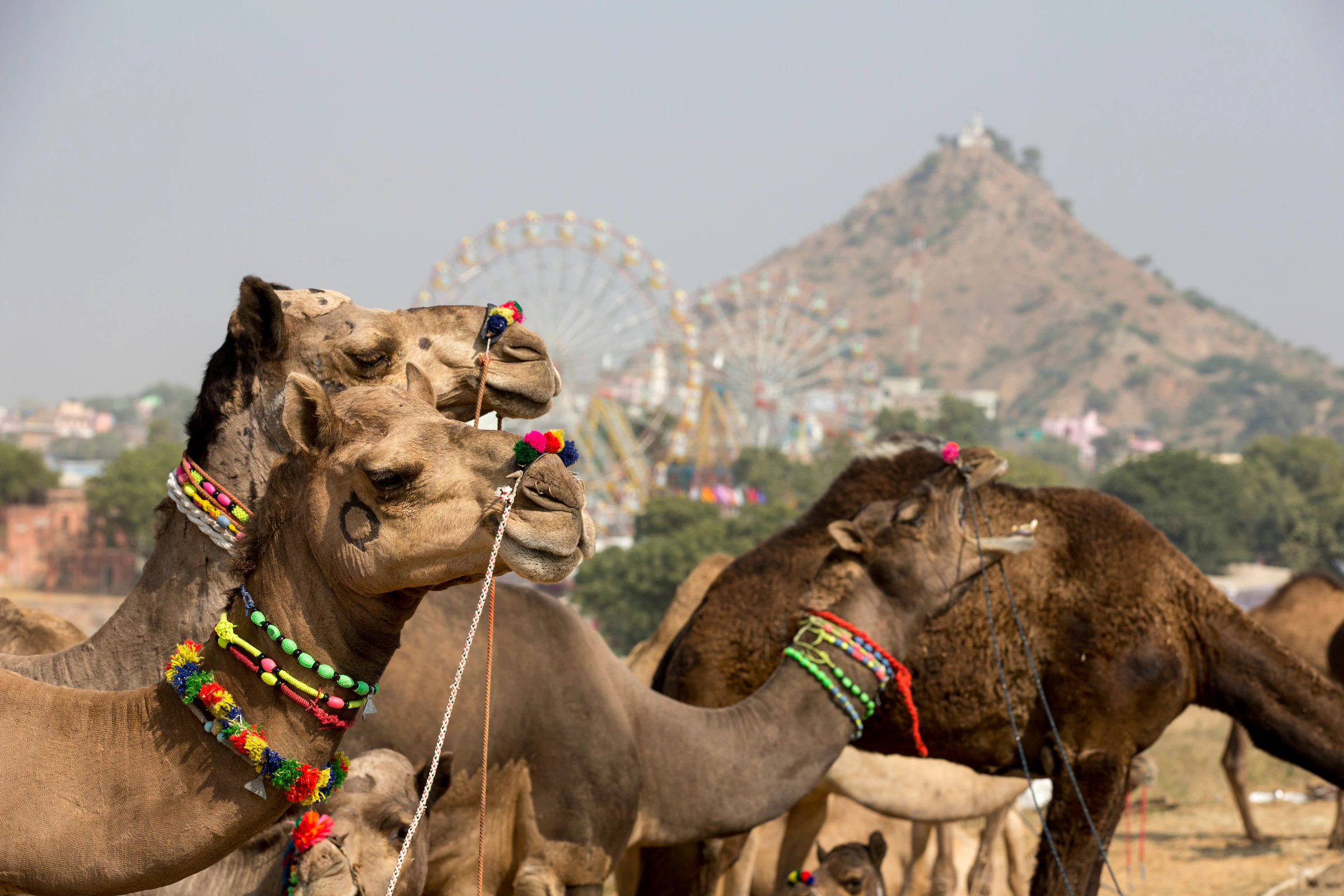
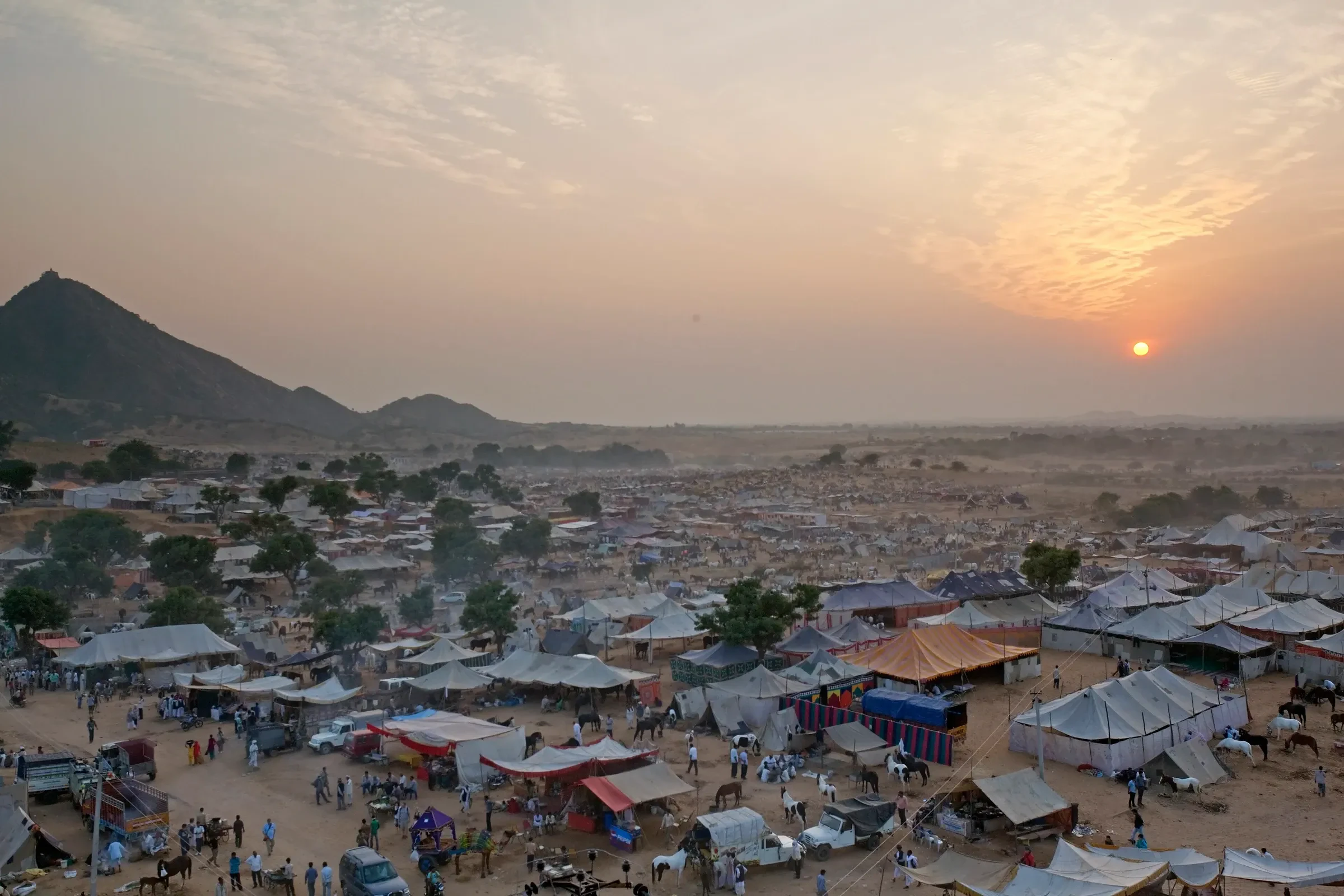
For a week each autumn, the desert on the edge of Pushkar fills with camels, horses, herders, traders, pilgrims and visitors. It's part livestock market, part religious festival and part county fair, with contests, music and stalls. It's a favourite with photographers, and it gets very busy. This guide covers what happens, the dates, when to go and how to enjoy it without getting worn out.
What the Pushkar Camel Fair is
The fair has two sides that happen at once.
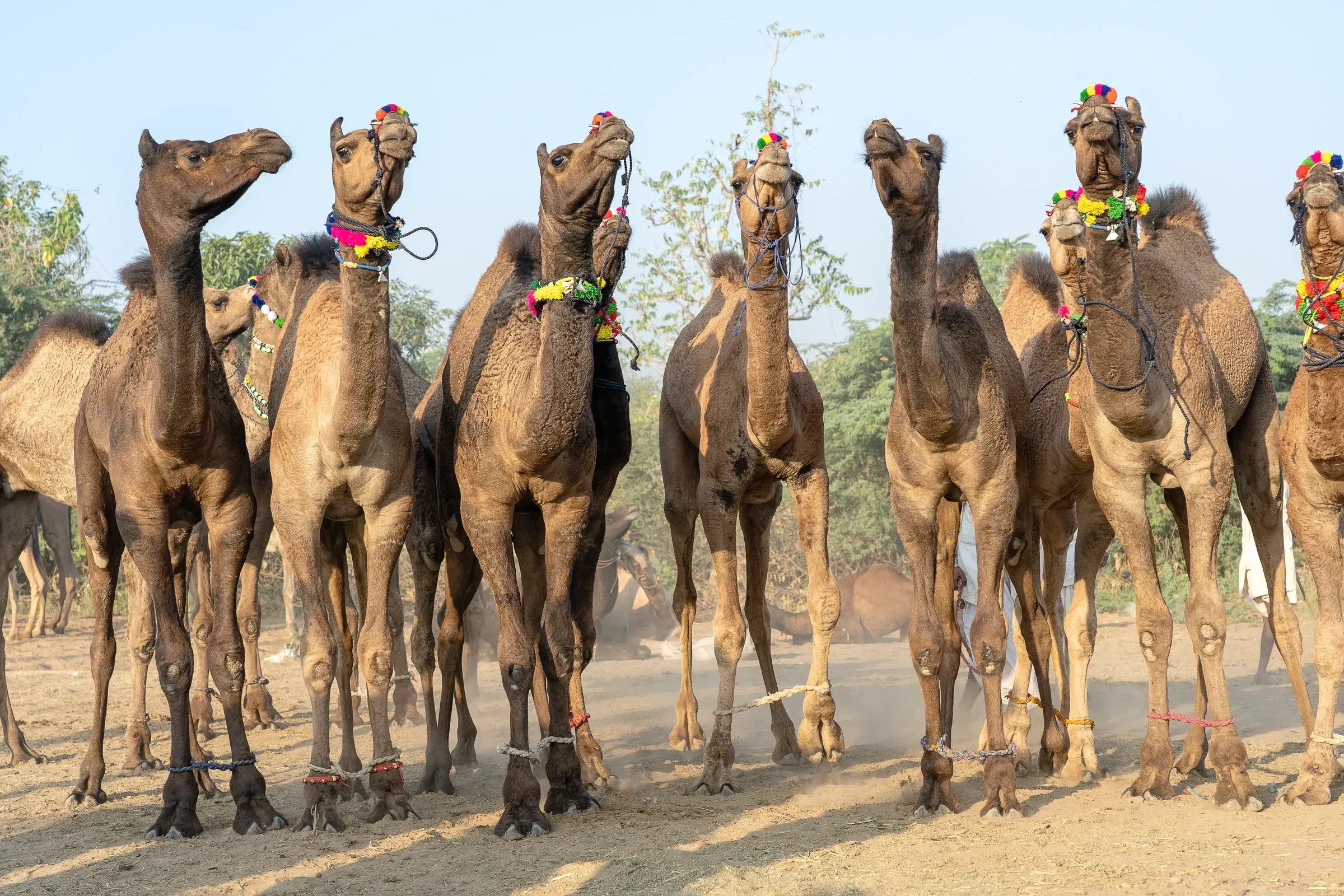
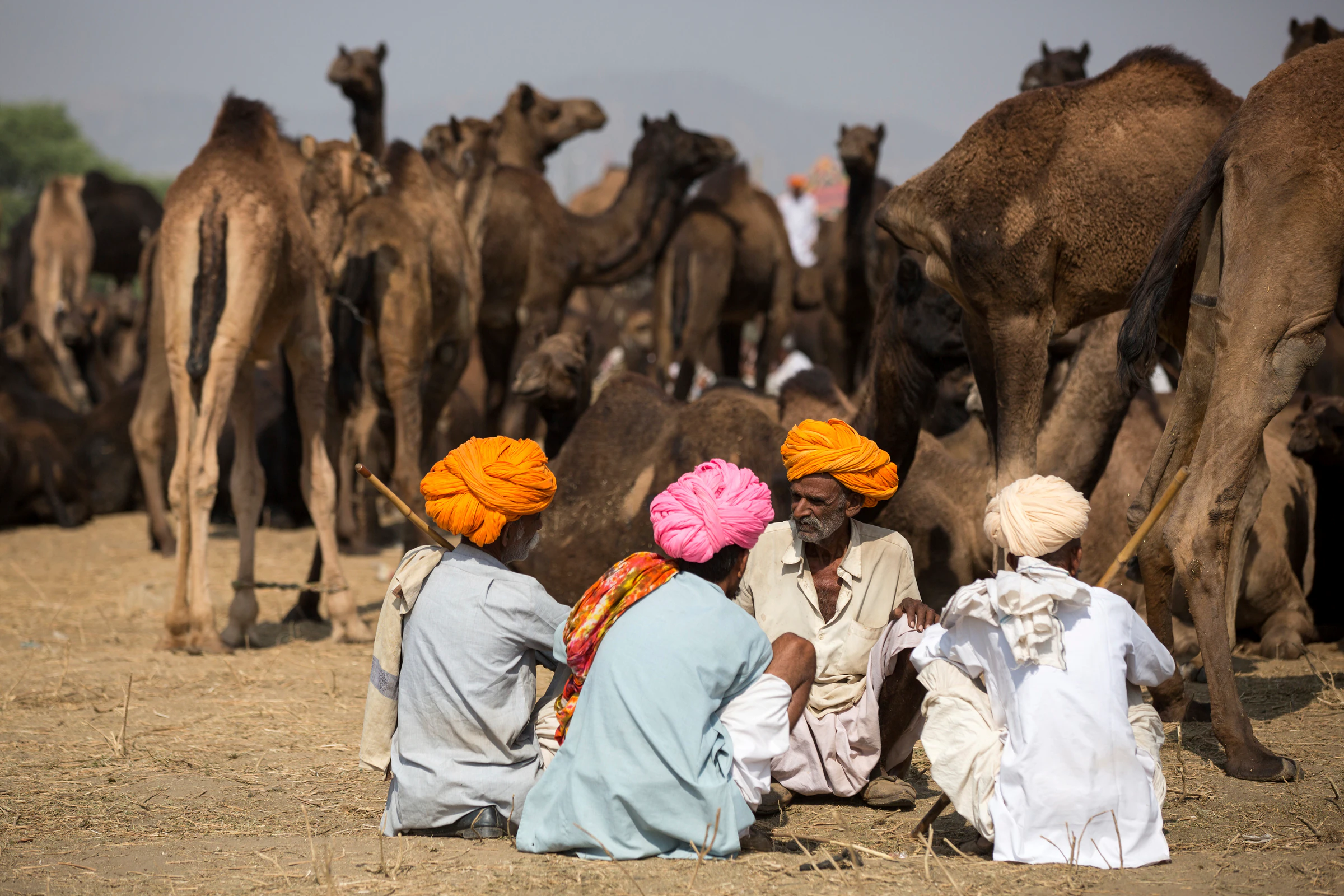
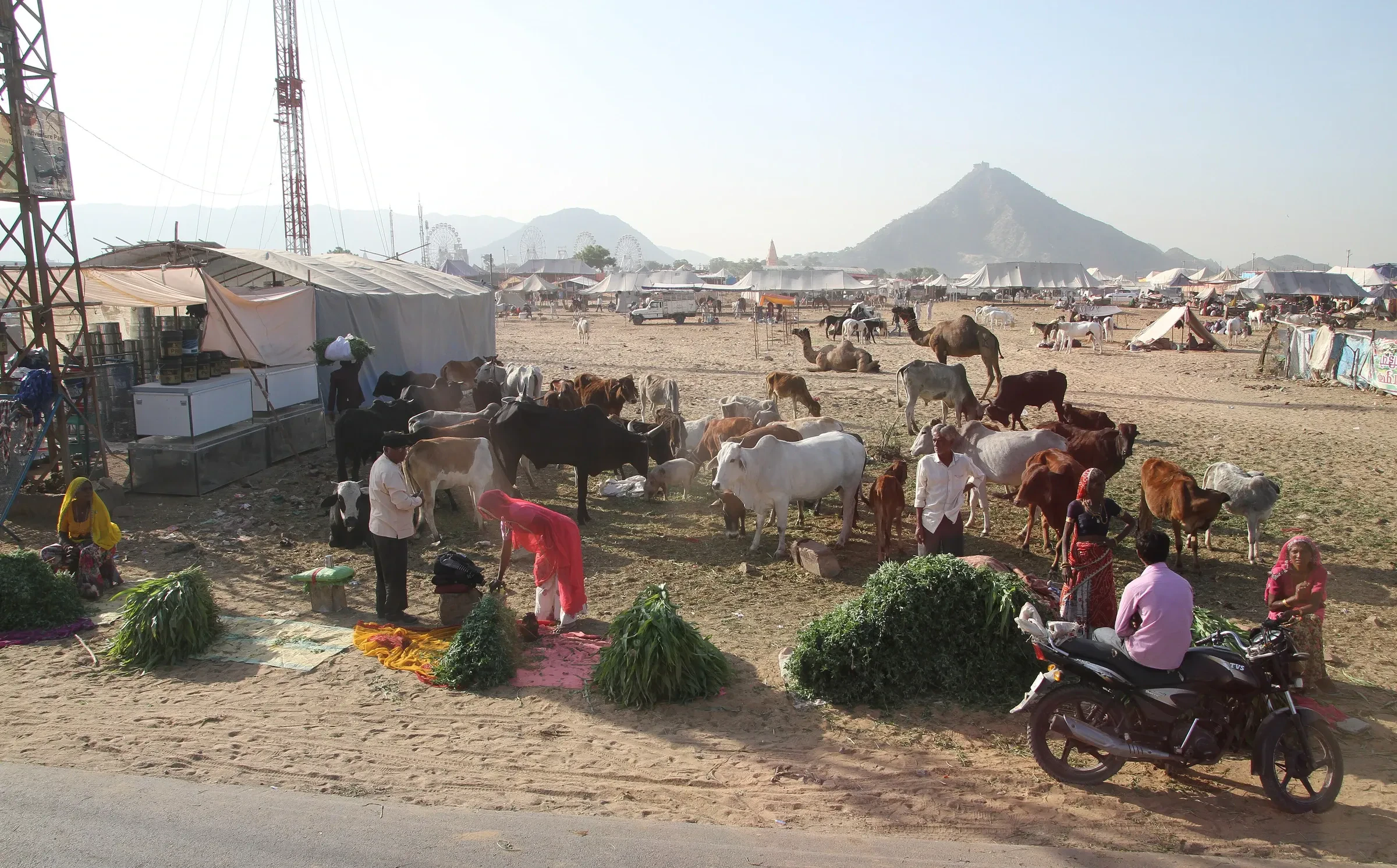
- The livestock fair. Herders from across Rajasthan bring camels, horses and cattle to the fairground on the edge of town to buy and sell them. The camels are decorated, groomed and shown off.
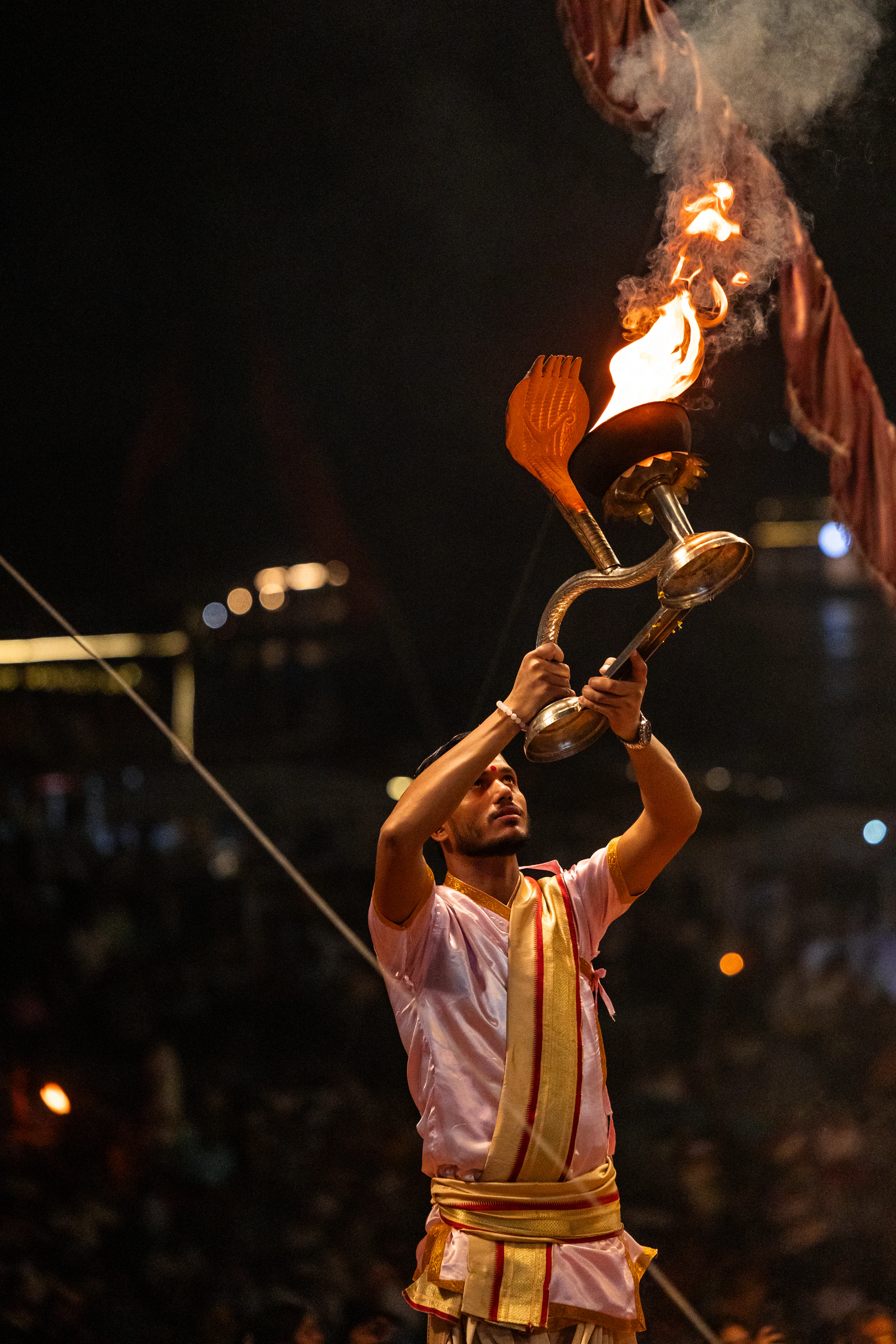
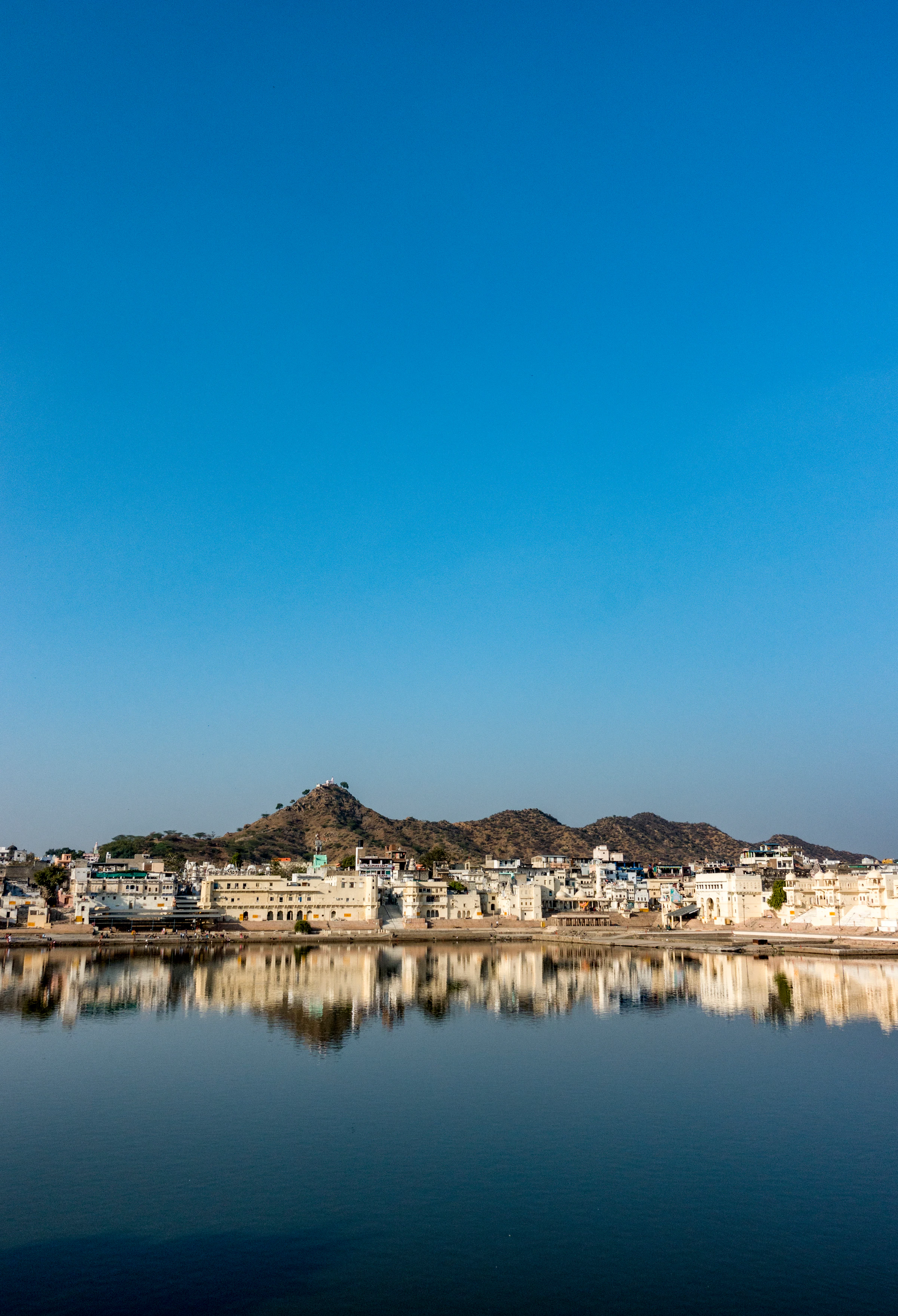
- The pilgrimage. Pushkar Lake is one of the holiest lakes in Hinduism, and its most important bathing day is Kartik Purnima, the full moon of the Hindu month of Kartik. Legend says the gods came down to Pushkar on that day to bless the lake. Pilgrims arrive in their thousands to bathe at the ghats and visit the Brahma Temple, one of very few temples in India dedicated to Brahma.
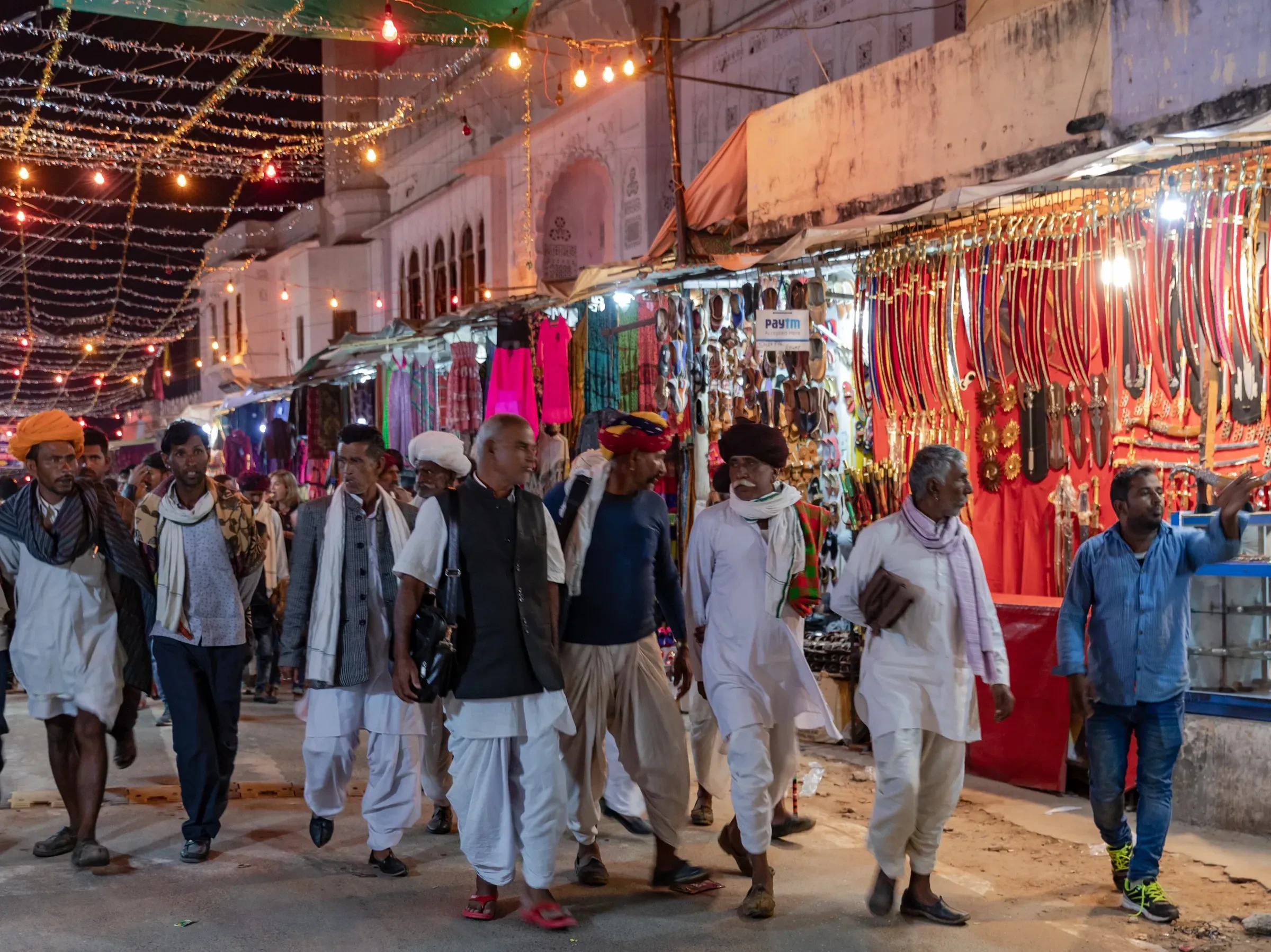
Around them, the organisers run a programme of events. It usually includes camel parades and a camel beauty contest, folk dance and music, puppet shows, a moustache competition, matka phod (a pot-breaking game), camel races and sports, and hot-air balloon rides over the fairground.
The fair has been held for well over a century. It has changed a lot in that time. There are far fewer camels than there used to be, because trucks and tractors have replaced them and grazing land is shrinking, and the cultural programme has grown.
Pushkar Camel Fair dates for 2026, 2027 and 2028
| 2026 | 2027 | 2028 | |
|---|---|---|---|
| Pushkar Camel Fair (estimated) | Tue 17 to Tue 24 November | Sat 6 to Sun 14 November | Not yet announced |
| Kartik Purnima (climax) | Tue 24 November | Sun 14 November | Thu 2 November |
The fair follows the Hindu lunar calendar and builds to Kartik Purnima, so it moves every year. The fair dates in the table are estimates from tour operators, because we couldn't find an official Rajasthan Tourism programme. Plan around the full moon date, which is fixed by the calendar: the trading side of the fair typically opens about a week before it.
How the week unfolds
- The first days are best for the livestock side. The herders' camps are full, and most of the trading happens early on.
- The last days, up to Kartik Purnima, bring the biggest crowds of pilgrims, the main religious events and the busiest ghats.
- Two or three days is enough for most people. Pushkar is small and gets very crowded, and many visitors find a couple of days in the middle of the fair the best balance.
November weather in Rajasthan is dry and pleasant, with warm days and cool evenings.
What to wear and bring
- A warm layer. Sunrise at the fairground is cold before the sun's properly up.
- Modest clothing. Cover your shoulders and knees, especially near the temples and ghats.
- Cash. Many stalls, rides and food vendors take cash only.
- A scarf or bandana. The fairground gets dusty, especially with camels and crowds moving through it.
Where to stay
Rooms in Pushkar get booked out and prices rise sharply during the fair, so book as early as you can. You have three main options:
- Guesthouses and hotels in town. The easiest option. You can walk to the lake, the bazaar and the fairground.
- Tent camps. Temporary tented camps are set up near the fairground each year, from basic to very comfortable. Check what's included and how far the camp is from town.
- Ajmer. The city is about half an hour away by road and has more rooms. You lose the atmosphere, but it's a fallback if Pushkar is full.
Etiquette in Pushkar
Pushkar is a holy town, and a few local rules apply all year:
- No meat, no eggs, no alcohol. They aren't sold in town. Food is vegetarian, and very good.
- Shoes off at the ghats. Take your shoes off before you walk down to the lake.
- No photos of people bathing. Keep your camera away from the ghats while people bathe.
- The flower "blessing". Someone may hand you flowers, lead you to the lake for a blessing and then ask for a large donation. A polite "no, thank you" before you take the flowers is the easiest way out.
- Dress modestly. Cover your shoulders and knees, especially near the temples and ghats.
Seeing the camels responsibly
The fair is a working livestock market, and the animals' welfare is not always good. You'll see camels carrying tourists, pulling carts and giving rides all week. If you decide to ride one, choose an animal that looks healthy and well treated, without sores, and avoid anything that looks rough. You don't have to ride at all to enjoy the fair: walking through the herders' camps early in the morning is the highlight for many people. Ask before you photograph herders and their families, and accept a no.
Safety
Pushkar is generally an easy, welcoming town, and the fair is a family event, but big crowds need the usual care.
- Keep your valuables close. Crowds are dense at the fairground and the ghats, particularly around Kartik Purnima.
- Carry cash. Many stalls, rides and food vendors take cash only.
- Expect to be photographed. Travellers, especially women, are often asked for selfies. It's fine to say no.
- Plan your travel. Most visitors fly into Jaipur, about three hours away by road. Ajmer is the nearest big railway station.
The fair and our trips
Our India Rajasthan & Varanasi trip spends two nights in Pushkar, with a sunrise hike to Savitri Temple and time on the lake. When a departure is timed for the camel fair, the trip page says so next to the date. Our India North to South trip also stops in Pushkar for a night on the way from Jaipur to Udaipur. Neither trip includes a camel ride.
Keep planning
- India travel guide
- Festivals in India
- Best time to visit India
- Holi festival
- Diwali and Dev Deepawali in Varanasi, the same Kartik full moon
- Hornbill Festival in Nagaland
- India visa guide