What is Kumbh Mela?
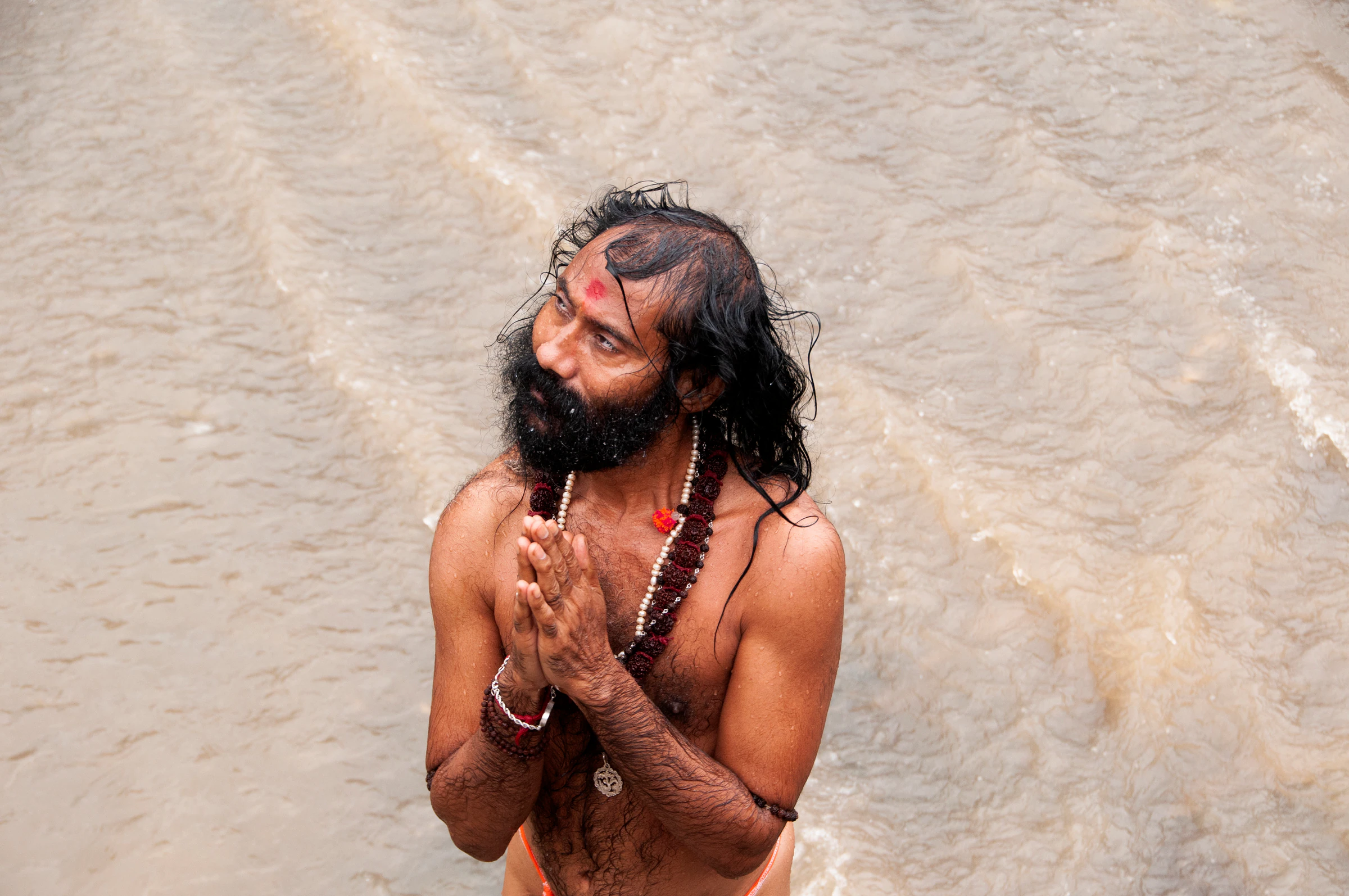
Kumbh Mela is a Hindu pilgrimage built around one act: bathing in a sacred river at an astrologically fixed moment, believed to wash away sin and, for some pilgrims, to bring release from the cycle of rebirth. The story goes back to the Samudra Manthan, the churning of the cosmic ocean, when drops of amrita (the nectar of immortality) are said to have fallen at four places on earth: Prayagraj, Haridwar, Nashik and Ujjain. Each of the four now holds a Kumbh Mela in rotation, roughly every three years, so the full cycle returns to any one site about once every twelve years.
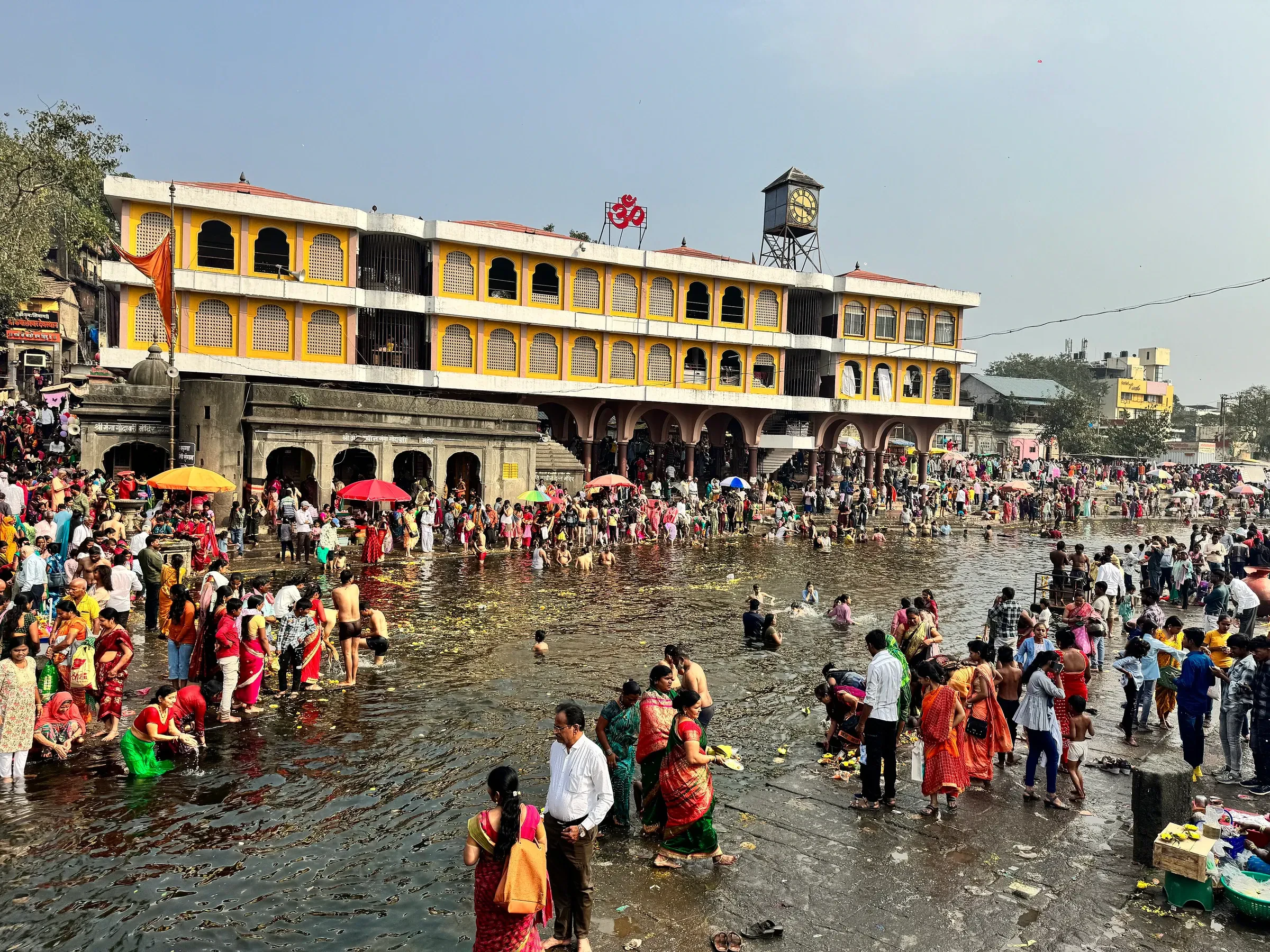
The Nashik and Ujjain gatherings are also called Simhastha Kumbh, from Simha (Leo). Their timing is set by Jupiter's position in the constellation Leo, rather than by the lunar calendar most Hindu festivals follow, which is why their dates fall years apart from Prayagraj's or Haridwar's. It's also why the "same" festival can look like it spans a year or more on a calendar: the formal opening, the core bathing dates and the final closing ceremonies are spread across many months.
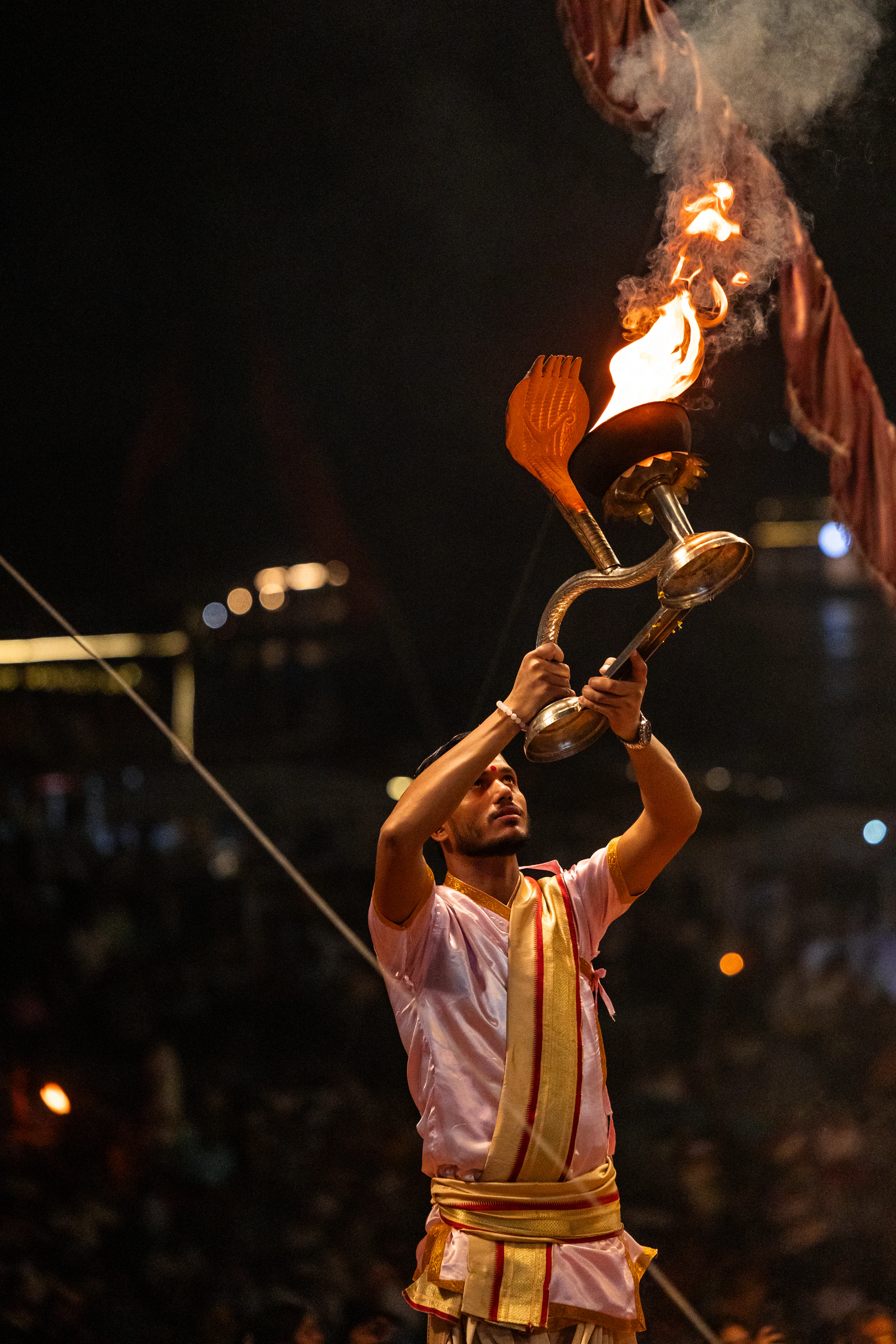
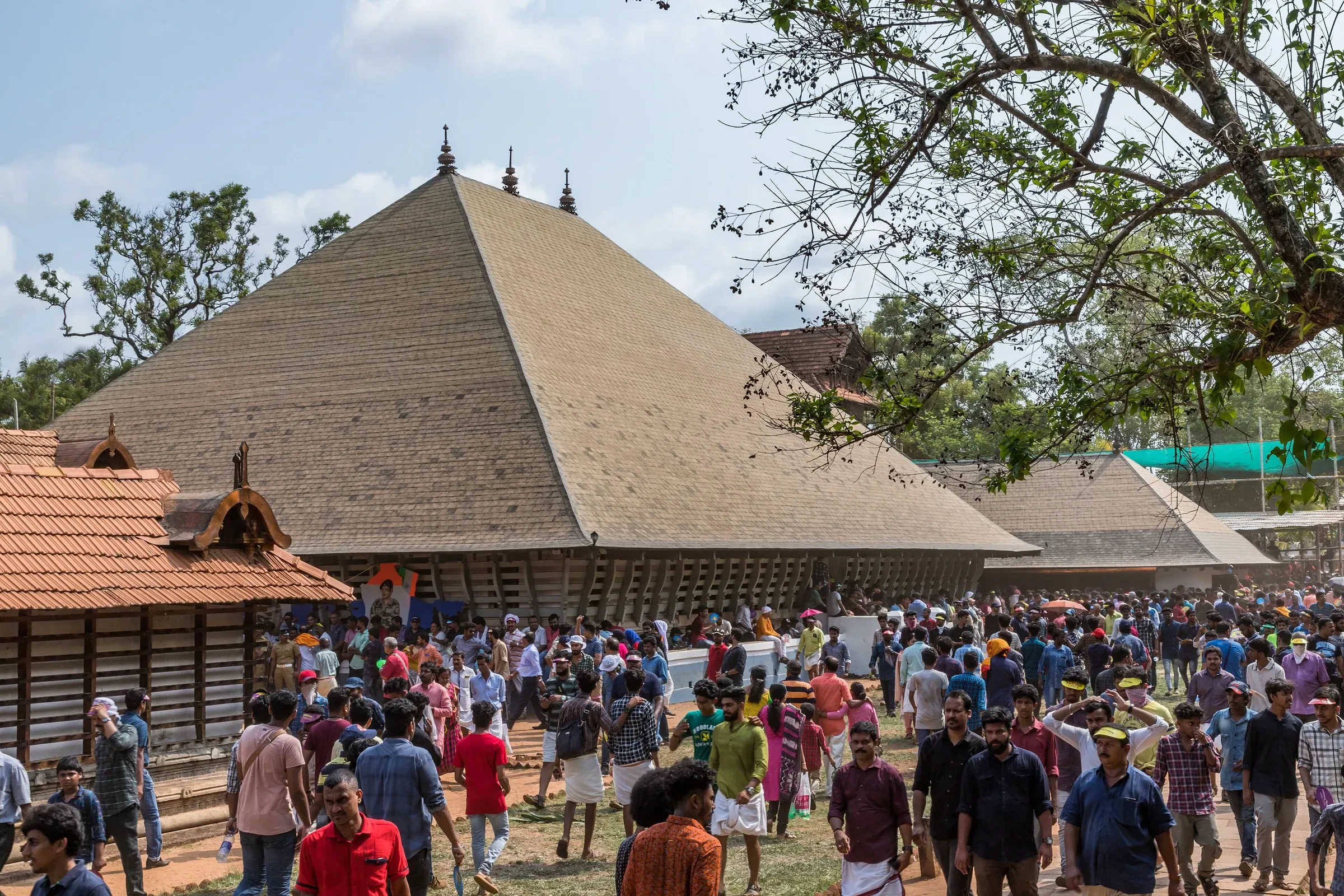
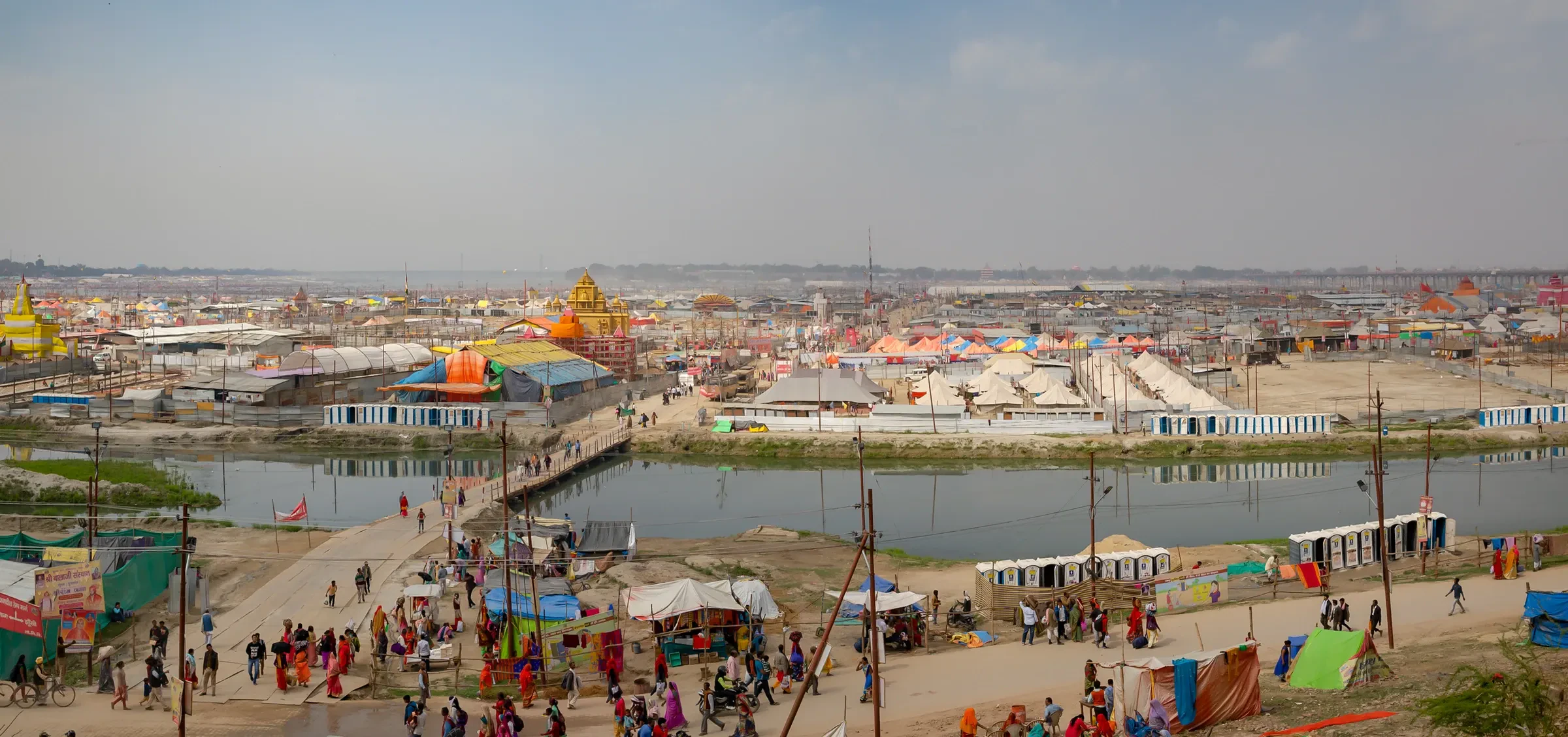
Millions of pilgrims and ash-covered ascetics (sadhus and sadhvis) converge on the riverbanks for the bathing days, camping for weeks in tent cities in between. For a solo traveller it's a rare thing to witness. It's also one of the most crowded events anywhere in the world, which is why this guide leans so heavily on the safety section below.
Which Kumbh is which: Nashik, Ujjain and Prayagraj
It's easy to conflate these, and a lot of tourism copy online does, but they're separate events in different years.
Nashik and Trimbakeshwar's Simhastha, in 2027, is the edition this guide is built around. It's held jointly at two sites about 30 km apart in Maharashtra: Ramkund on the Godavari river in Nashik, and Kushavart Kund at Trimbakeshwar. The next Nashik and Trimbakeshwar Kumbh after this one won't come around again until the 2039 cycle, which is what makes 2027 worth planning around.
Ujjain's Simhastha follows a year later, in 2028, on the Shipra river in Madhya Pradesh. Ujjain's last Simhastha was in 2016, and the 2028 season is reported to run from 27 March to 27 May 2028. Sources disagree on the exact royal bathing dates, so we haven't listed them. It's a different river, city and state from Nashik's, so don't plan one trip assuming both happen together.
Haridwar's Ardh Kumbh also falls in 2027, on the Ganges in Uttarakhand, running from 14 January to 20 April 2027 with ten main bathing dates. It's the "half" Kumbh between Haridwar's full ones, and a separate event from Nashik's, held earlier in the year. The dates come from state and akhara announcements, so confirm the bathing days before you book.
The Prayagraj Maha Kumbh, the most recent full Kumbh, was held at the Triveni Sangam (the confluence of the Ganges, Yamuna and mythical Saraswati) in Uttar Pradesh from mid January to late February 2025. It's already over. It's mentioned here only because it's the most recent large-scale precedent for crowd behaviour and safety, which comes up again below.
When is Kumbh Mela 2027 in Nashik and Trimbakeshwar?
Set by Jupiter's position in Leo, the Nashik and Trimbakeshwar Simhastha spans an unusually long calendar. It opens formally on 31 October 2026, with a flag-hoisting ceremony (Dhwajarohan) at 12.02pm at Ramkund in Nashik, with a matching ceremony at Kushavarta in Trimbakeshwar. The main pilgrimage season is a year on from there: a Nagar Pradakshina, a ceremonial procession of the akharas (the ascetic orders) through Nashik, is reported for 29 July 2027, ahead of three Amrit Snan (royal bathing) days: 2 August, 31 August, and 11 September in Nashik or 12 September in Trimbakeshwar, the two sites holding their processions on consecutive days. These are the dates that draw the biggest crowds and the tightest security cordons. The mela's reported closing date is 24 July 2028, well after the main pilgrimage season has emptied out.
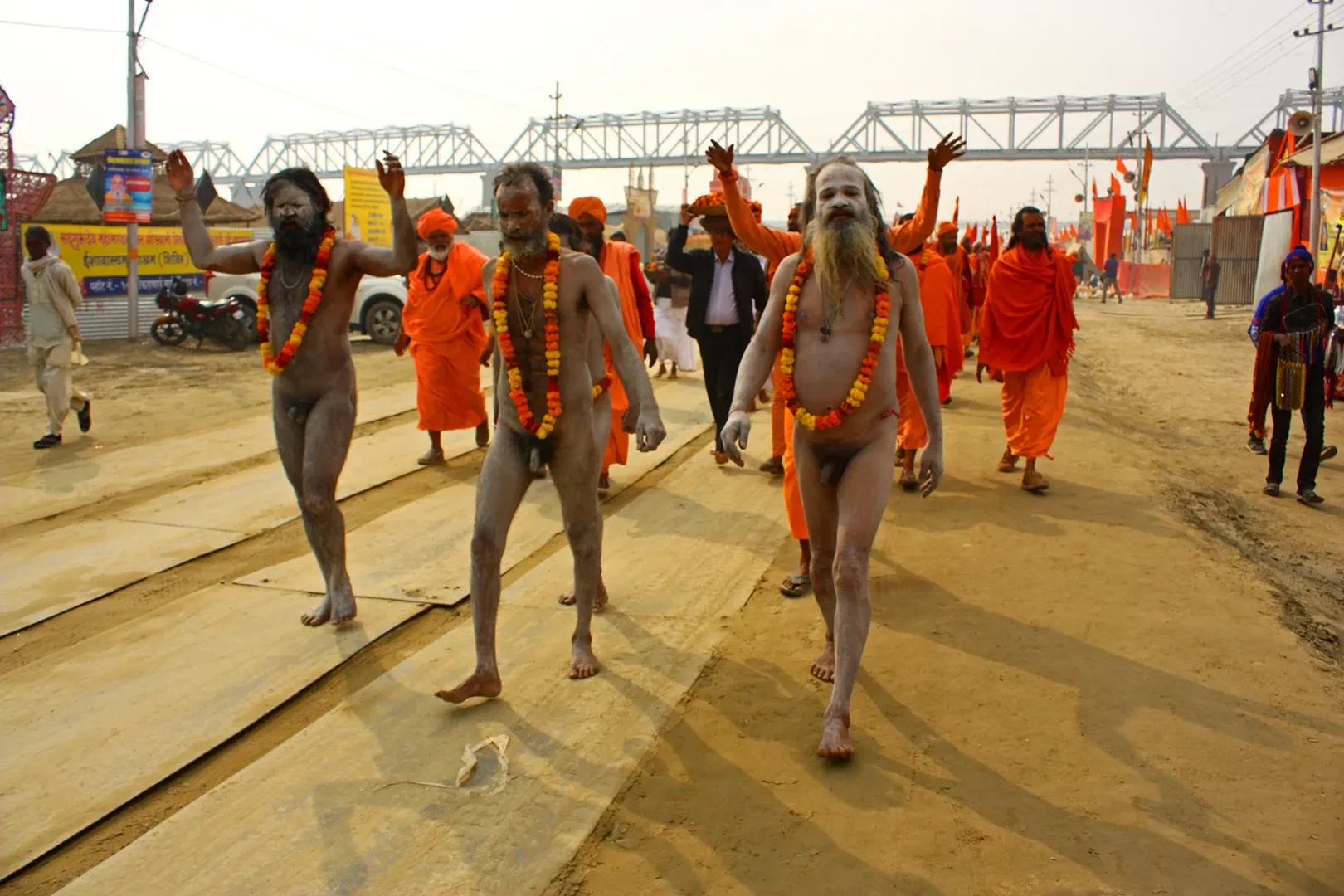
The Maharashtra government announced these dates with the akhadas in June 2025, and Indian news outlets still report them in September 2026. Kumbh dates come from a panchang (astrological calendar) calculation that rarely shifts by more than a day, but crowd-control and procession details are usually confirmed only a few months out. If you're booking flights or tent-city accommodation, check the schedule again closer to the time.
Outside the three Amrit Snan days, the riverbanks are still busy. Many pilgrims observe kalpwas, a month-long stay camped by the river, so there's a constant, lower-key flow of bathing and ritual through the open season. You don't need to hit an exact Shahi Snan date to see the Kumbh; arriving on an ordinary day in August or September 2027 still puts you among an enormous gathering, with far less risk.
Where to see it: Nashik and Trimbakeshwar, ranked
Ramkund, on the Godavari river in Nashik's city centre, is where the flag-hoisting takes place and where the first and largest crowds gather. It's also the more built-up, easier site to reach and leave from, with Nashik's hotels, station and bus stand all close by.
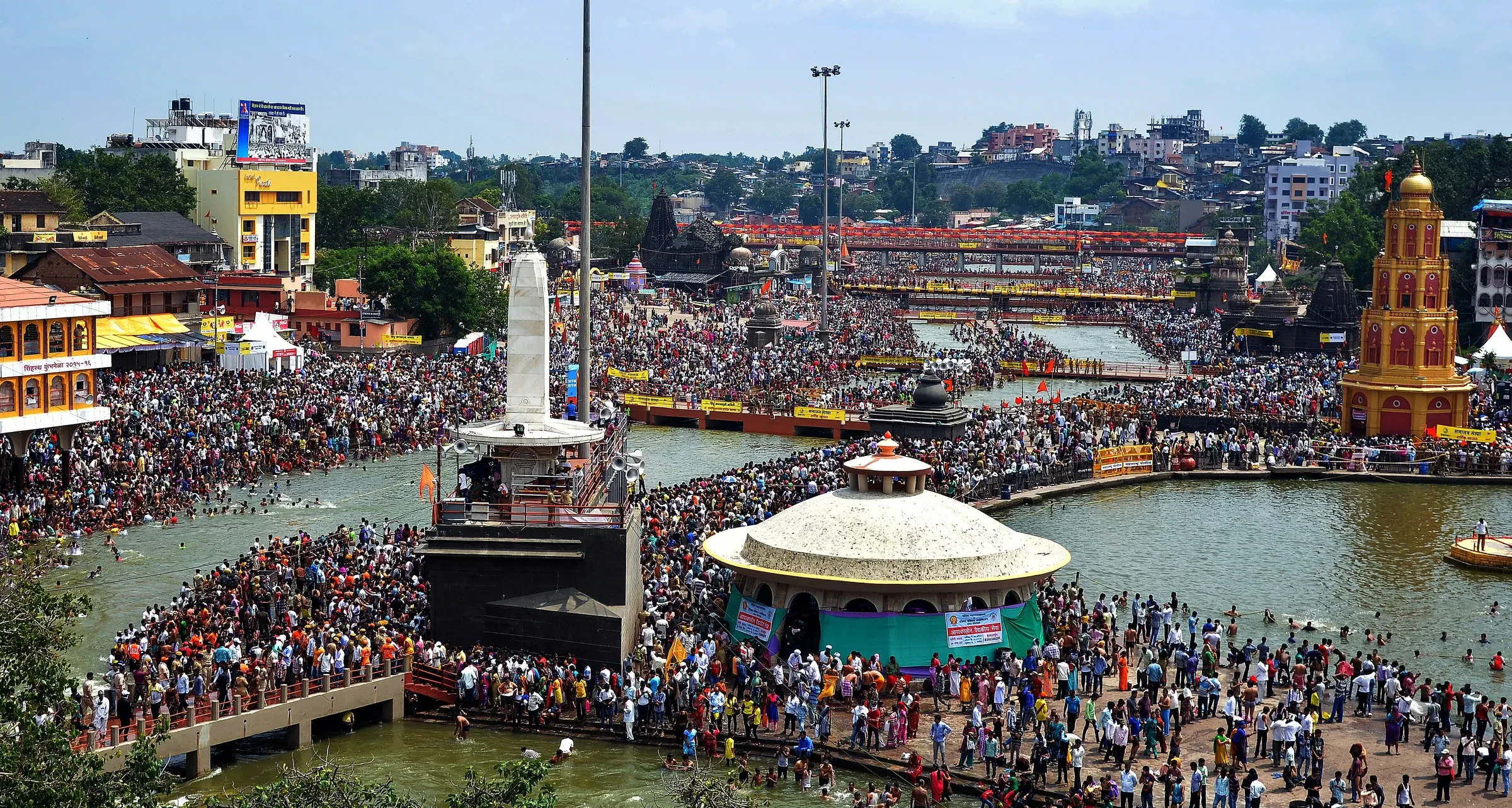
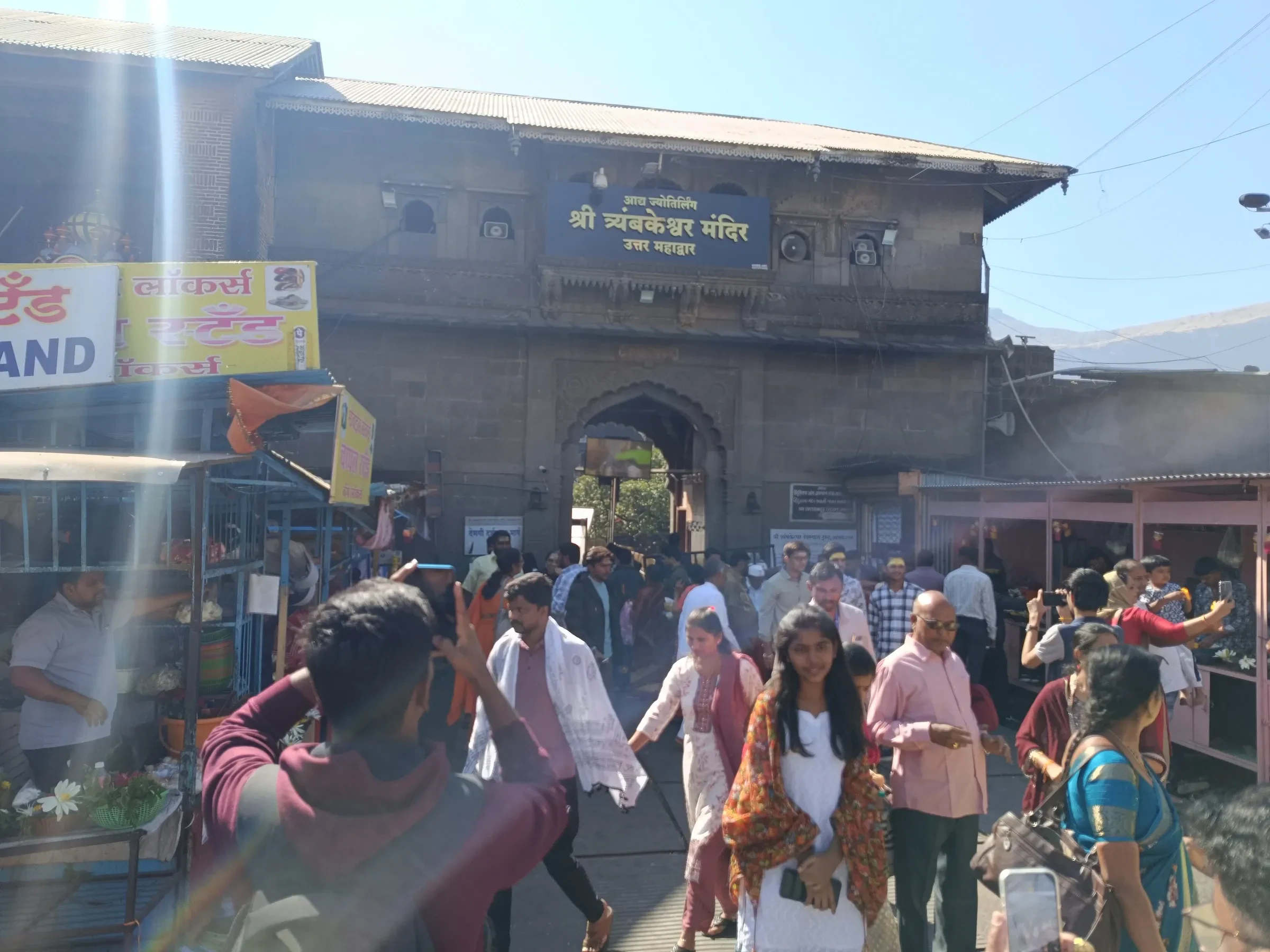
Kushavart Kund, in Trimbakeshwar about 30 km from Nashik town, is smaller and quieter, set at the source of the Godavari beside the ancient Trimbakeshwar Jyotirlinga temple, one of twelve shrines in India considered especially sacred to Shiva. It draws intense crowds on its own bathing dates, a day after Nashik's, but is a calmer base outside the peak hours.
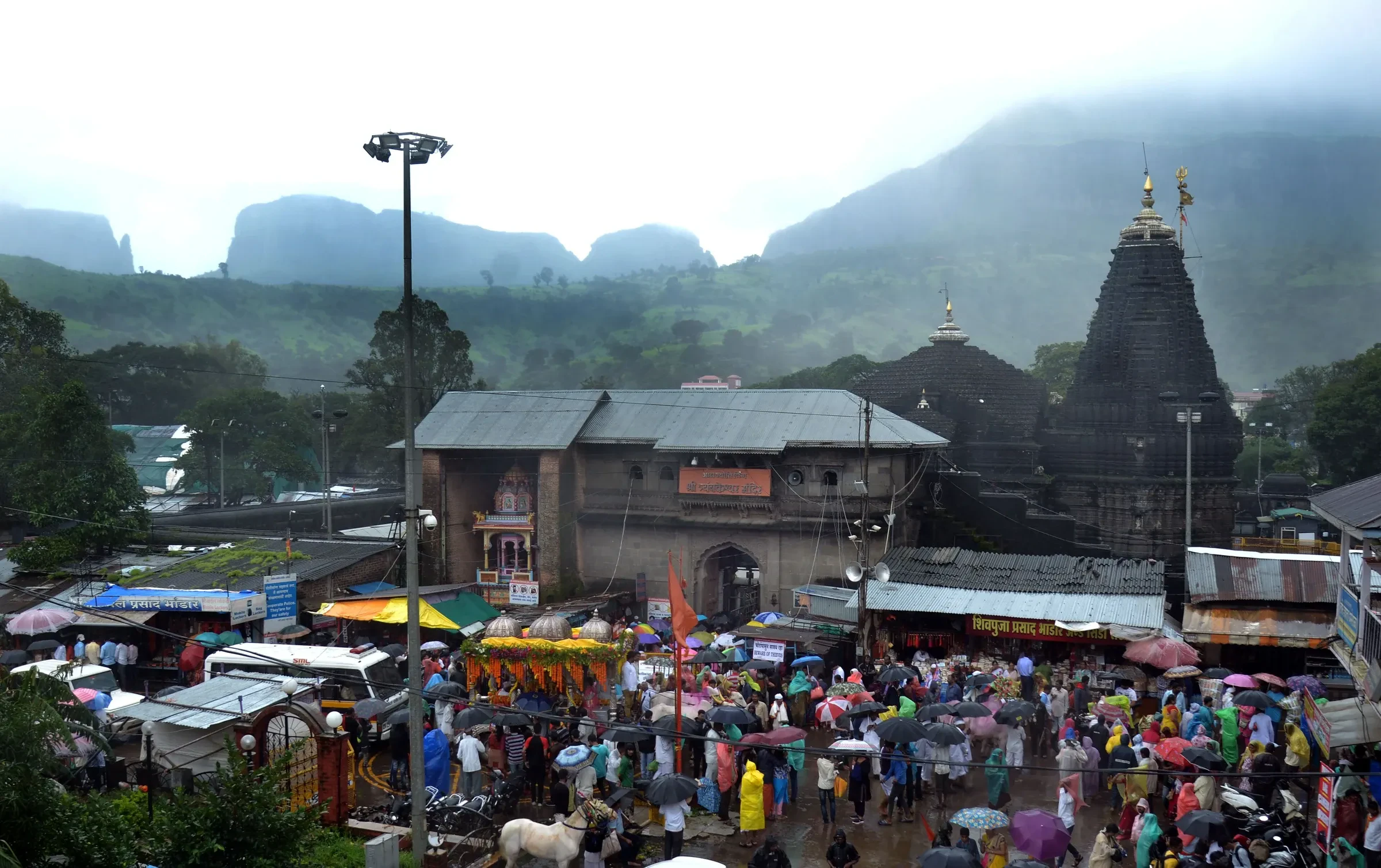
For a first visit, Nashik is the practical choice: better transport links, more accommodation, and an easier retreat if the crowds feel like too much. Trimbakeshwar rewards a slower visit, ideally on a day that isn't one of the three main Amrit Snan dates.
Camps and tent cities: where pilgrims stay
A temporary tent city, built specifically for the mela, is the standard way to stay close to the ghats. Expect a range from simple dormitory tents through to deluxe cottages and private "Swiss tents" with attached bathrooms, mostly pitched within a 5 to 15 minute walk of the main bathing areas. Nashik's ordinary hotels and guesthouses also fill up fast for the bathing dates and are worth booking well ahead once the 2027 schedule is finalised.
We haven't found a reliable, published price list for tent-city rooms, so we've left specific figures off this page. Ask each operator for current rates and what's included.
Getting to Nashik
Mumbai is the nearest international gateway, and Nashik is about 166 km north-east of it. A private car or taxi takes roughly 2 hours 30 minutes on the Mumbai to Agra highway in normal traffic; a direct bus is about 4 hours; the train is slower still, at around 4 hours 30 minutes, and usually involves a change rather than a single direct service. During the mela itself, expect these times to lengthen substantially. State authorities plan to keep private vehicles at parking points outside the centre on the main bathing days, with shuttles into town and roads closed around the ghats, so budget extra hours either side of any of the three Amrit Snan dates.
From further afield, fly into Mumbai (most international routes) or Delhi, then on to Nashik by road or rail. Nashik also has a small airport at Ozar, about 20 km from the city, which is being expanded for the mela, so check which routes are running. Check our India e-visa guide well before you book.
What to wear and bring
Modest, loose clothing that covers shoulders and knees works for both temple visits and the general crowd. You'll be walking and standing for long stretches, so comfortable, closed shoes you don't mind getting wet or muddy matter more than anything else. Carry minimal valuables: pickpocketing is a real risk in any crowd this size, and phone signal can drop entirely near the ghats when networks are overloaded. A refillable water bottle, a light rain layer if you're visiting in the tail end of the monsoon, a printed copy of any hotel or tent booking, and a physical or downloaded offline map are all worth having, since data connectivity is the first thing to fail in a crush of people.
How long to spend
Two to four days is enough for most solo travellers: a day to arrive and get your bearings away from the crowds, a day near (not exactly on top of) one of the bathing dates, and a day or two either side to see Nashik and Trimbakeshwar's temples and old town at a normal pace. Don't plan to stay through the entire multi-month mela. Almost nobody outside dedicated pilgrims on kalpwas does, and the value of a longer stay drops off fast once you've seen a bathing day and the tent city itself.
Building a trip around Kumbh Mela
SoloNomads doesn't currently run a group departure timed to Kumbh Mela. The crowd-safety profile of the Amrit Snan dates means any departure we did run would need its own safety briefing and a much smaller group than usual, and that's a decision we're still weighing, not one we've made. If you're visiting independently, Nashik and Trimbakeshwar pair naturally with a few extra days in Mumbai before or after. If you'd rather have the rest of your India trip run as a small group, our India tours cover the classic Golden Triangle and Rajasthan routes, which you could bookend around your own independent Kumbh visit.
For festivals that are easier to fold into a small-group trip, see Holi in Mathura and Vrindavan, which does run as a scheduled SoloNomads departure, or browse the full India festival calendar for other dates worth building a trip around, including Durga Puja in Kolkata, the Pushkar Camel Fair and Rann Utsav in Kutch.