What Ganesh Chaturthi is
Ganesh Chaturthi marks the birth of Ganesha, the elephant-headed god of new beginnings, and turns Mumbai and much of Maharashtra into a ten-day open-air festival. Families and neighbourhood committees ("mandals") install an idol at home or in a street pandal, keep it for anywhere from a day and a half to the full run, then carry it in procession to be immersed in the sea, a river or a lake. The public version of the festival, with its enormous pandal idols and marching bands, took shape in Pune in the 1890s as a way to bring people together under colonial rule, and has grown since into the city-wide event Mumbai is known for today.
What happened at Ganesh Chaturthi 2026
The 2026 festival began with installation on Monday 14 September and reached Anant Chaturdashi on Friday 25 September, which makes it twelve days on the calendar (All India Radio). Mumbai's biggest idols were immersed on the morning of Saturday 26 September after processions of more than 21 hours: Lalbaugcha Raja, in its 93rd year, went into the sea at about 10.50am, Chinchpokhlicha Chintamani around 10am and Ballaleshwar around 11am (Daily Pioneer). In 2025 the same immersion had dragged on for about 35 hours because of high waves and a technical fault (Navbharat Live).
Mumbai Police had over 24,000 personnel on duty and the city corporation (BMC) about 25,000 staff, with 383 artificial lakes across 278 locations, 67 natural sites, 1,132 lifeguards and 85 ambulances (ThePrint). A High Court order made it mandatory to immerse idols under six feet in artificial ponds (All India Radio). By noon on 25 September, 430 idols had been immersed with no untoward incident reported, and BMC warned about blue-button jellyfish and stingrays (ThePrint). Maharashtra Tourism also ran a pavilion for international visitors at Girgaon Chowpatty. We found no reliable attendance figure for 2026.
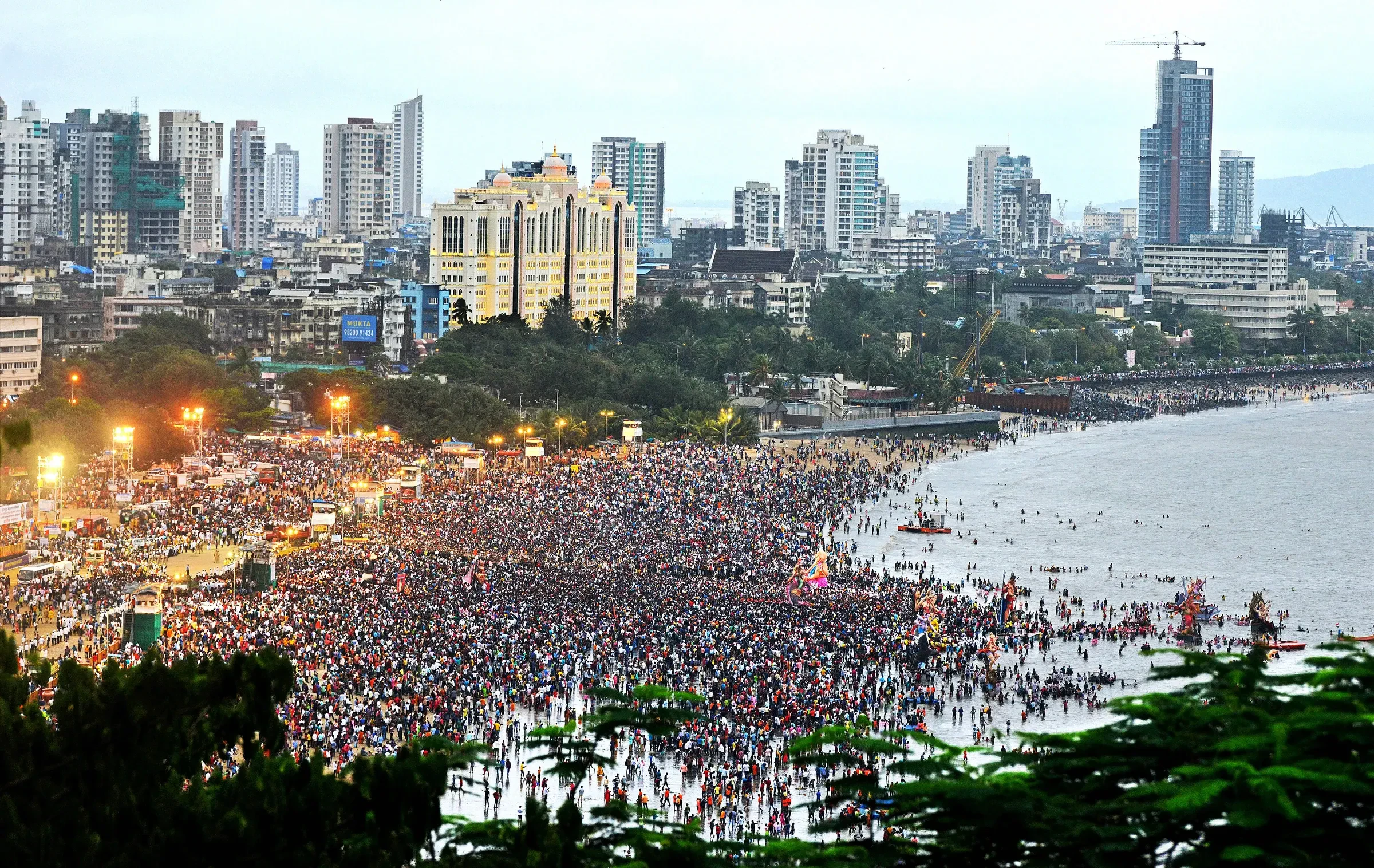
The festival is worth seeing for its scale and its history. A community celebration that began in Pune in the 1890s now fills pandals and beaches across Mumbai, and the biggest idols spend more than 21 hours in procession before they reach the sea. All of it can be watched from the street without a ticket.
Where to see it
Lalbaugcha Raja, Lalbaug. The pandal every "Ganpati" conversation in Mumbai starts with, and the most visited in the country. It runs two separate queues: a mukh darshan line, for a look at the idol's face from a short distance, and a much longer navas darshan (also called charan sparsh) line for devotees making or fulfilling a vow, which gets you closer. Reported waits for mukh darshan run 3 to 4 hours or more on weekends and festival evenings; the navas line is reported at 25 to 30 hours, sometimes stretching close to 40, across the ten days, though press and blog estimates vary widely (Lalbaugcha Raja Guide). Queues open after 6am and mukh darshan runs until nearly midnight. If you just want to see the idol, go for mukh darshan on a weekday morning, not the navas line, and not a weekend evening.
GSB Seva Mandal, King's Circle. Run by the Gowd Saraswat Brahmin community since 1954 and known as the richest pandal in the country: the idol is dressed in tens of kilograms of gold and hundreds of kilograms of silver ornaments (Curly Tales). Go for the jewellery and the more orderly darshan line, not the crowd size of Lalbaug.
Andhericha Raja, Andheri. Founded in 1966 and often called the Lalbaugcha Raja of the western suburbs: a good alternative if you're based near the airport or Andheri and don't want the trek to Lalbaug.
Chinchpoklicha Chintamani, Chinchpokli. One of the oldest public pandals, dating to 1920, with a reported daily footfall in the hundreds of thousands but a calmer, more traditional atmosphere than Lalbaug.
Khetwadi Ganraj, Khetwadi. Founded in 1959 and known for tall, striking idols; each year's mythological theme is part of the draw.
What happens day by day
The festival runs from Sthapana (installation) to Anant Chaturdashi, which is ten to twelve calendar days depending on how the lunar days fall, but most idols leave long before the end. Families and mandals choose one of a handful of traditional cycles:
- 1.5-day (Dedh Ganpati): the idol is installed and immersed the following afternoon, the oldest and simplest household tradition.
- 5-day and 7-day: common for households and smaller mandals that want a few days with the idol at home without keeping it the full run.
- Anant Chaturdashi (the final day): the day almost every big public pandal, including Lalbaugcha Raja, immerses its idol, and the day Mumbai's streets fill with processions from mid-afternoon into the small hours. In 2026 the biggest ones ran into the next morning.
In 2026 that gave four main immersion dates: 15 September (1.5-day), 18 September (5-day), 20 September (7-day) and 25 September (Anant Chaturdashi, the big one) (LatestLY). Counting the same way from installation on 4 September 2027, the household immersions should fall around 5, 8 and 10 September, with Anant Chaturdashi on 14 September.
How long to spend, and which days to be there
If you can only be in Mumbai for one day of the festival, make it Anant Chaturdashi: it's the day the big public pandals move, and the only day you'll see Lalbaugcha Raja on the road rather than in its pandal. Three to four days gives you time to see a couple of pandals in the days before, when queues are shorter and idols are still in place, then stay for the immersion procession itself. A full week lets you pandal-hop across the city (Lalbaug, GSB, Andheri, Chinchpokli) before the crowds peak, and still catch the closing night.
Girgaon Chowpatty: the immersion day
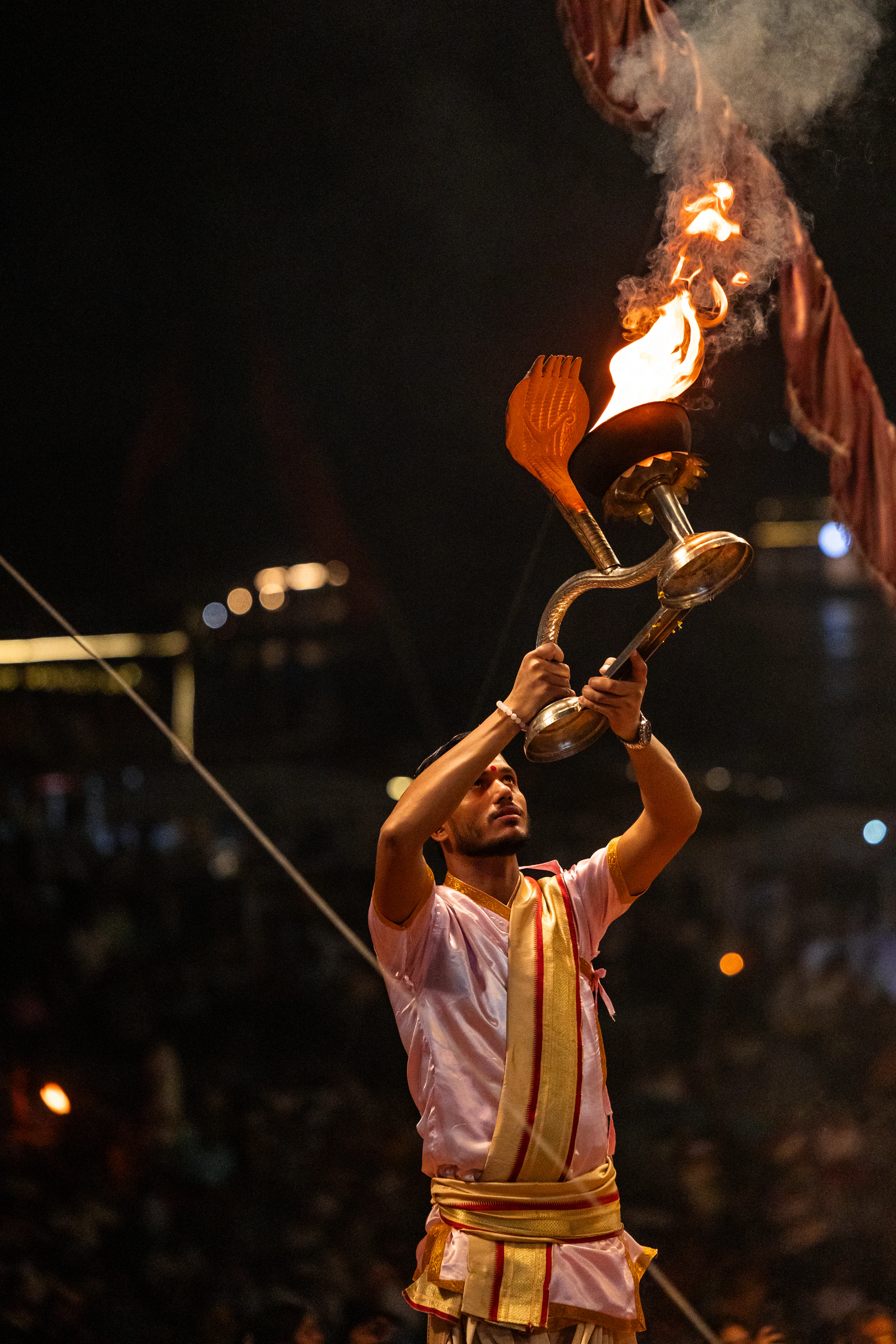
Girgaon Chowpatty is Mumbai's main natural immersion site and the one with the biggest crowds: Lalbaugcha Raja itself is carried here on the final leg of its procession. On Anant Chaturdashi 2026, the civic authorities set up barricades, CCTV, a police post and safety boats along the beach to manage the crowd (ANI), and foreign visitors were among those reported joining the aarti and the chants of "Ganpati Bappa Morya" as the idols went into the water (Free Press Journal). Other immersion points, including Dadar, Juhu, Versova and Powai, also get heavy police deployment on the night, so any of them is a workable, somewhat quieter alternative to Chowpatty.
What to wear and bring
Light, modest cotton clothing that covers shoulders and knees copes better with Mumbai's September heat and humidity than anything heavier. Comfortable, closed shoes matter more than looks: you'll be standing in queues and walking on wet, crowded streets. September is still within Mumbai's monsoon tail, so carry a compact umbrella or light raincoat rather than a large one, and keep valuables in a crossbody bag you can see, since pickpocketing risk rises with crowd density. Carry water and cash in small notes; card machines are unreliable at street stalls.
Eco-friendly idols
Mumbai's immersions have a real environmental cost: idols made from Plaster of Paris don't dissolve cleanly, and their paint can leach heavy metals into the sea. The Central Pollution Control Board has banned Plaster of Paris, plastic and thermocol in idol-making in favour of natural, biodegradable clay, and Maharashtra has pushed the same eco-friendly rule at state level, alongside public awareness campaigns encouraging clay idols and immersion in artificial tanks rather than the open sea (Mongabay India). In 2026, BMC said it gave idol makers more than 940 tonnes of natural shadu clay, and a High Court order required idols under six feet to go into artificial ponds. Most large housing societies and several public mandals now run their own artificial immersion tanks alongside the traditional sea and river sites.
Modak and festival food
Ganesha's favourite sweet is the modak, a dumpling of rice flour or wheat pastry filled with grated coconut and jaggery. The classic version, ukadiche modak, is steamed and eaten fresh (it doesn't keep, so it's a festival-week treat rather than a takeaway souvenir); a fried version keeps longer and has a firmer, crisper shell. A newer, richer variant, the mawa modak, swaps the traditional filling for sweetened milk solids, sometimes flavoured with pistachio or chocolate. Panshikar, a family-run sweet shop in Mumbai open since 1931, is a long-standing spot for ukadiche modak and other festival snacks (checked September 2026). For more on Maharashtrian and wider Indian festival food, see our India food guide.
A trip around it
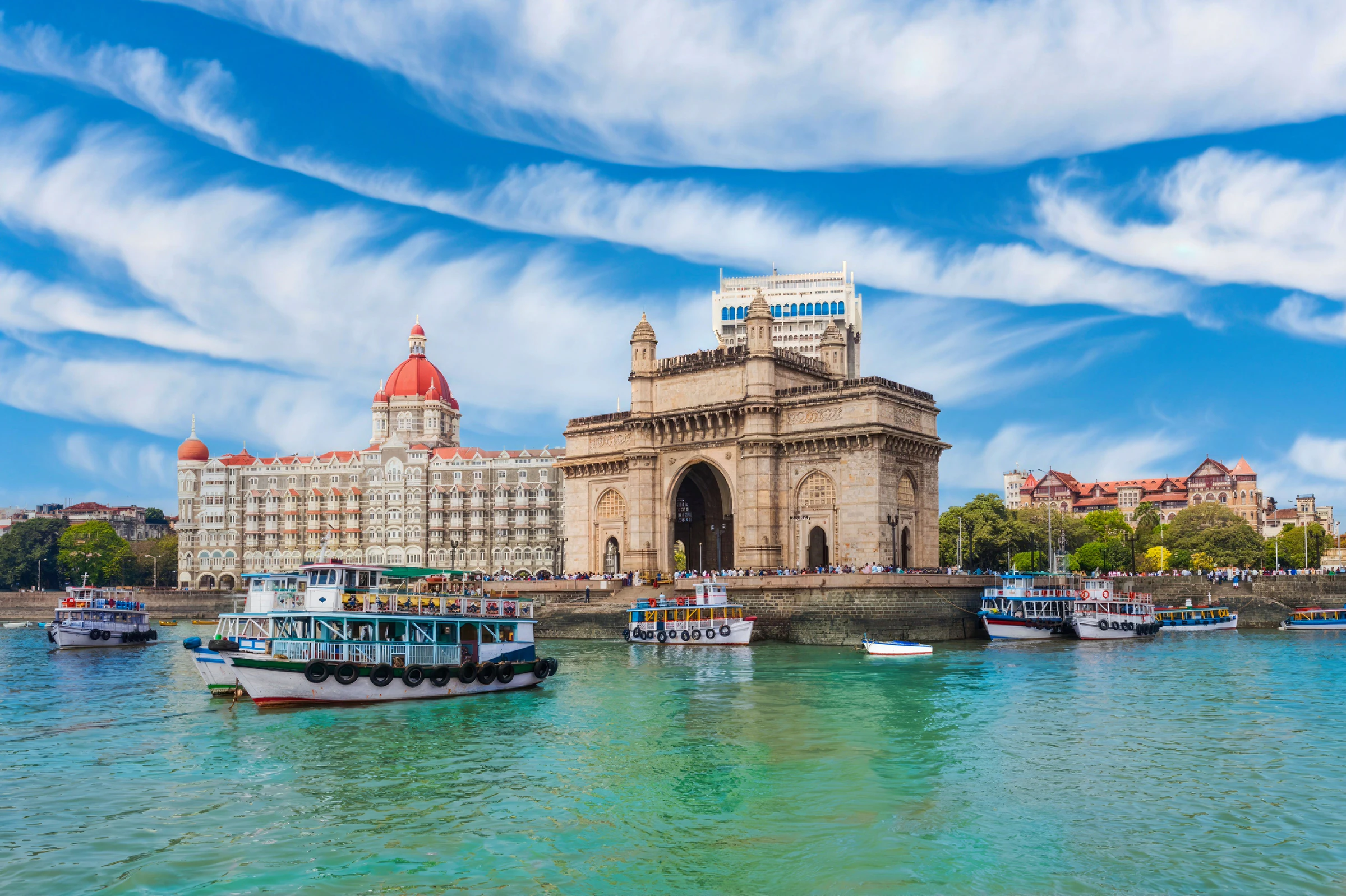
No SoloNomads trip is currently built around Ganesh Chaturthi itself. Our India North to South route does pass through Mumbai and could, in principle, be timed around the festival in future. If you're building your own trip, Mumbai's full guide covers areas to stay in and getting around by local train, which matters more than usual during festival week, when road traffic slows to a crawl near the pandals.
Pune: the alternative
Pune predates Mumbai's public Ganesh Chaturthi and still runs its own major celebration, centred on the Shrimant Dagdusheth Halwai Ganapati, one of the city's five "Manache" (most honoured) idols. Its 2026 immersion procession left Belbaug Chowk at 4pm on Anant Chaturdashi and reached Panchaleshwar Ghat for immersion at around 8.25pm, with a marching band, a Kerala chenda melam troupe and a live broadcast for those following from elsewhere (Pune Pulse). Pune's version is generally reported as more manageable than Mumbai's biggest pandals, and it's a straightforward 3 to 4 hour road or rail trip from Mumbai if you want to compare the two.
Other festivals worth planning around
If Ganesh Chaturthi's scale appeals but you'd rather travel outside monsoon season, see our month-by-month festivals in India guide. Two other big city festivals with a similarly public, pandal-and-procession feel are Durga Puja in Kolkata in October and Navratri and Garba in Gujarat, also around October: both, like Ganesh Chaturthi, are built around public gathering rather than a private or ticketed event.