4 stops
- Minibus
Is this route for you?
This suits travellers who want Himalayan monasteries, tea culture and mountain views without Ladakh's altitude and logistics, and who don't mind a permit-heavy route with genuine road risk in the wrong season. It's a two-base minimum trip: Darjeeling (West Bengal) and Gangtok (Sikkim) are about 100 km apart by a slow, winding mountain road, so there's no version of this route that skips one of them.
Pick something else if you want a guaranteed clear Kanchenjunga view (cloud cover at Tiger Hill and Pelling is common and weather, not planning, decides it), if you want to go deeper into North Sikkim's Lachung and Yumthang Valley (that needs more days and permit lead time than either length here, see the FAQs), or if permits and registered-operator requirements aren't for you, in which case Himachal Pradesh gives you Himalayan scenery with no permit at all. For bigger high-altitude landscapes without Sikkim's border sensitivities, see Ladakh or Spiti Valley.
Day by day
Settling in above the tea gardens
Darjeeling
Getting there Bagdogra airport to Darjeeling by shared jeep or private taxi, about 3 hours for 90 km; NJP station to Darjeeling is a similar drive, about 3 to 3.5 hours
- Morning
- Transfer up from the plains; the road climbs steadily through pine forest and tea estates into the hill station.
- Afternoon
- Settle in, then walk Chowrasta, Darjeeling's central square, and the Mall Road loop around it.
- Evening
- An early night. Tomorrow's Tiger Hill trip leaves before dawn.
Eat Momos from a stall near Chowrasta; a pot of first-flush Darjeeling tea at one of the town's tea houses.
Local tip Book your Tiger Hill jeep and toy train seats today. Both sell out in peak season (October to December, March to May).
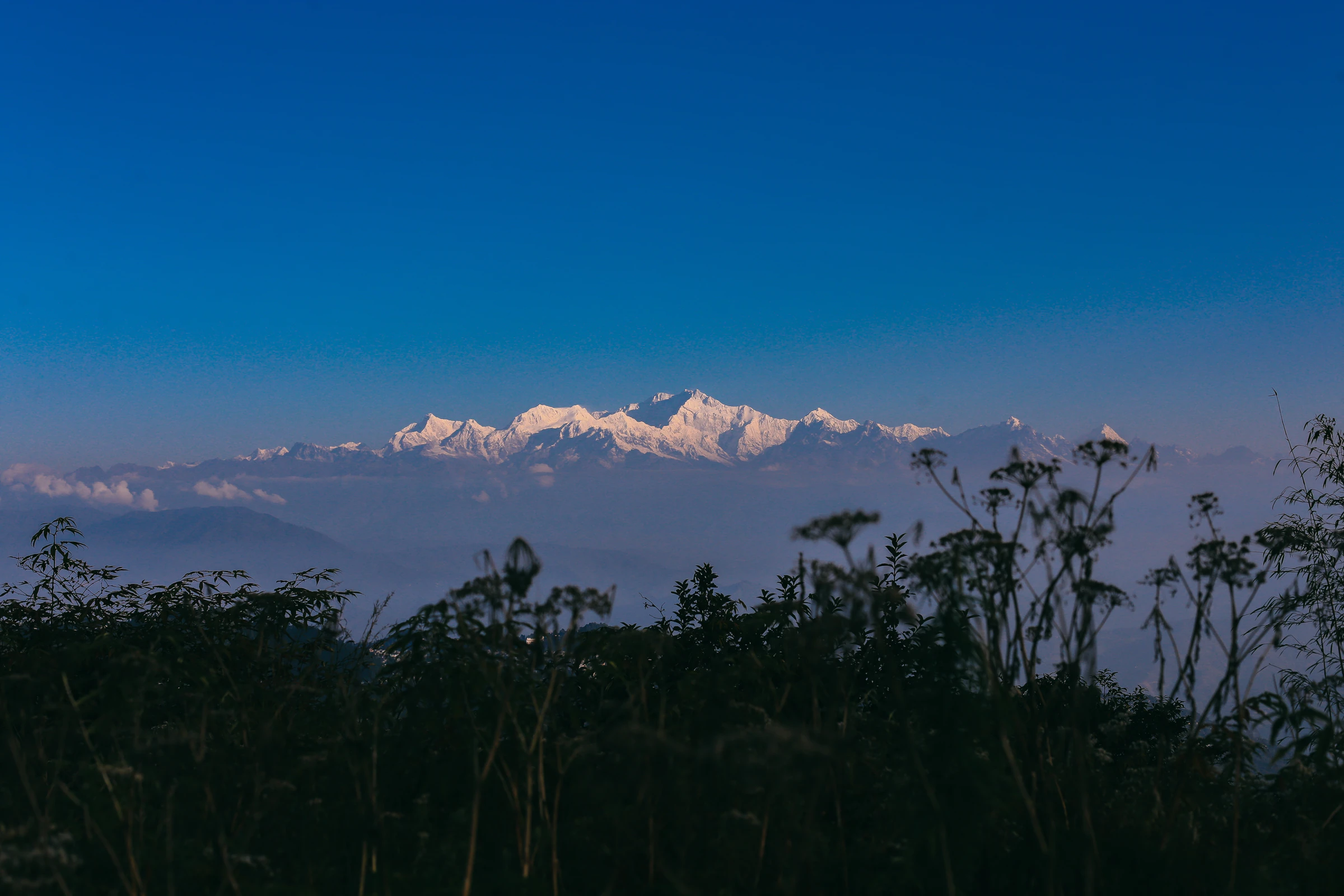
Tiger Hill sunrise and the toy train to Ghum
Darjeeling
- Morning
- Leave in the dark for Tiger Hill, about 11 km out, for sunrise over Kanchenjunga; cloud cover is common, so treat a clear view as a bonus, not a given. Back in town, ride the Darjeeling Himalayan Railway's joyride up to Ghum and back via the Batasia Loop, a UNESCO World Heritage listed line and about a 2-hour round trip.
- Afternoon
- Tour a working tea estate close to town, such as Happy Valley, to see how the leaf you drank yesterday gets made.
- Evening
- Free time around Chowrasta.
Eat Thukpa, the Tibetan noodle soup that Darjeeling's long-settled Tibetan community does especially well.
Local tip The toy train runs both a diesel joyride and a pricier, less frequent steam one; check which is running on your date when you book.
With more time A second sunrise attempt at Tiger Hill, if the first one clouds over
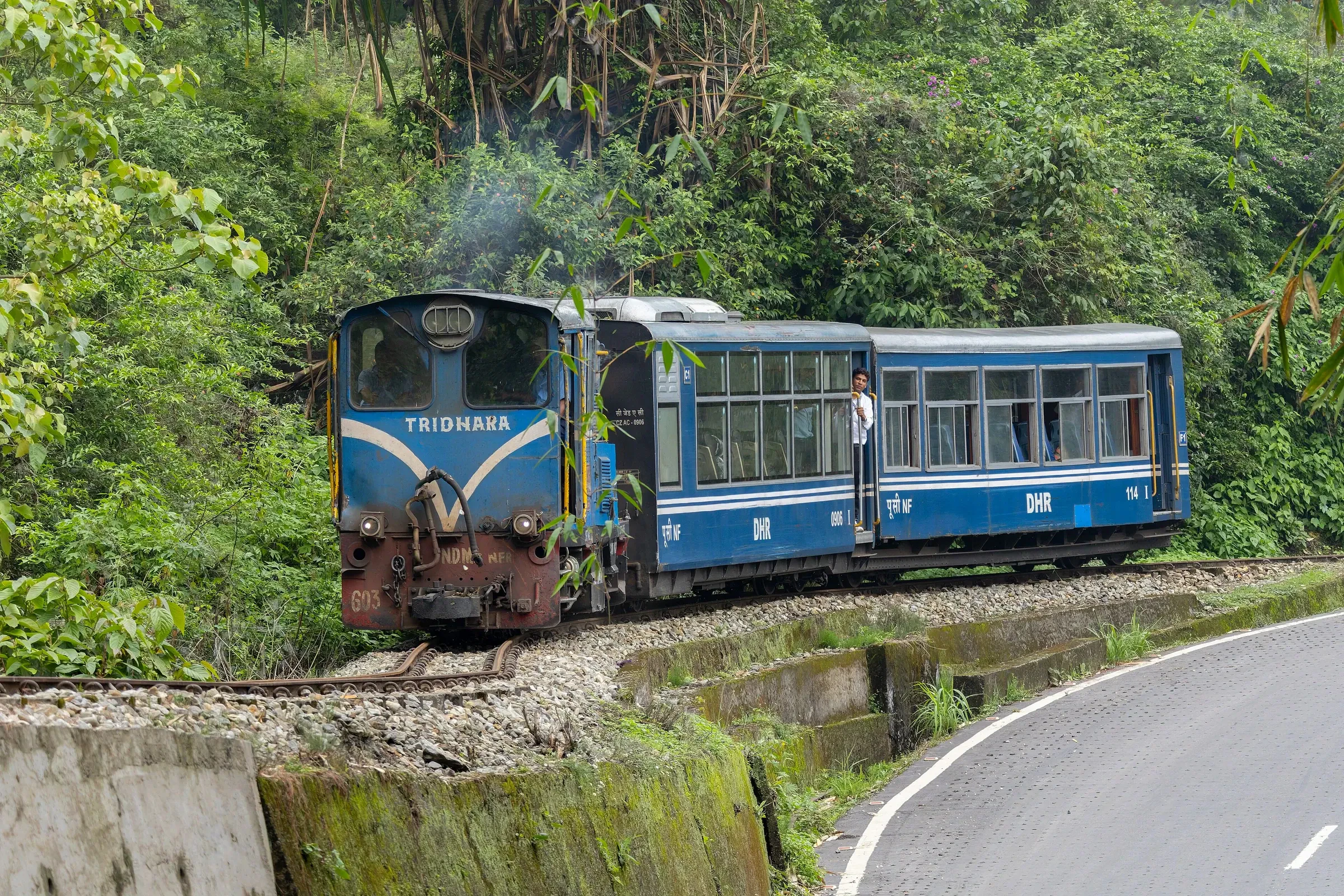
Over the hills from West Bengal into Sikkim
Gangtok
Getting there Darjeeling to Gangtok by shared jeep or private taxi, about 4 to 5 hours for roughly 100 km, crossing from West Bengal into Sikkim at the Rangpo checkpoint (keep your ID handy)
- Morning
- Depart Darjeeling.
- Afternoon
- Arrive in Gangtok and settle in.
- Evening
- MG Marg, Gangtok's pedestrian-only high street, busy and lit up after dark.
Eat Sikkimese momos and gundruk, a fermented leafy-green soup on most Sikkimese menus.
Local tip This road has had serious disruptions in recent years, including the October 2025 floods that brought down the Dudhia bridge on the Siliguri to Mirik road, and the Teesta Bazaar to Rangpo stretch closes repeatedly in the monsoon; build in a spare day either side if you're travelling June to September.
Monasteries and viewpoints
Gangtok
- Morning
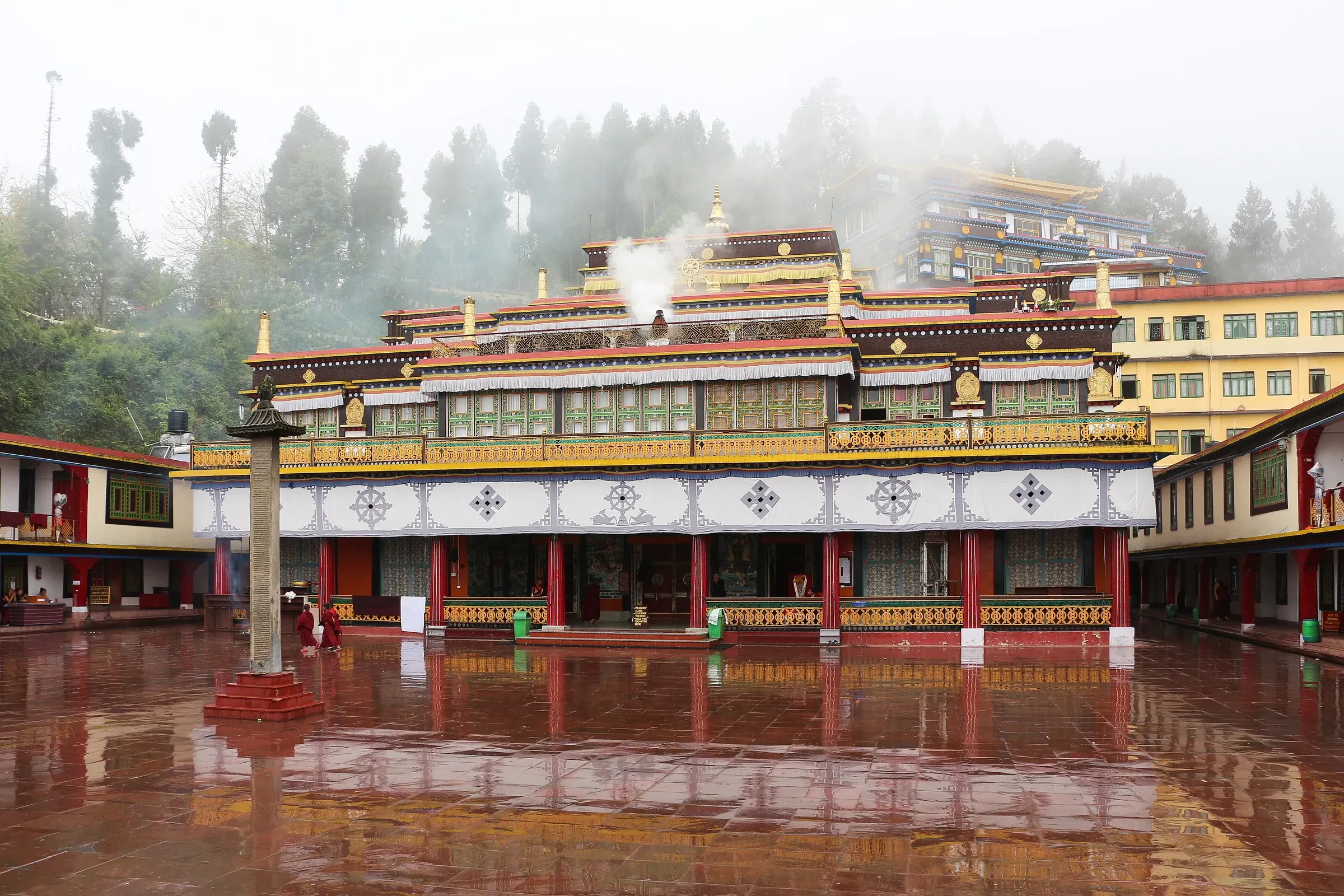
- Rumtek Monastery, about an hour out of town and one of Sikkim's most important Buddhist monasteries.
- Afternoon
- Enchey Monastery, closer to the centre, then a viewpoint such as Ganesh Tok or Hanuman Tok over the valley.
- Evening
- MG Marg again, or Banjhakri Falls if you've time.
Eat A full Sikkimese thali, with churpi, the region's hard yak cheese, on the side.
Local tip Rumtek and Enchey are working monasteries, not museums. Dress modestly and keep quiet around prayer times.
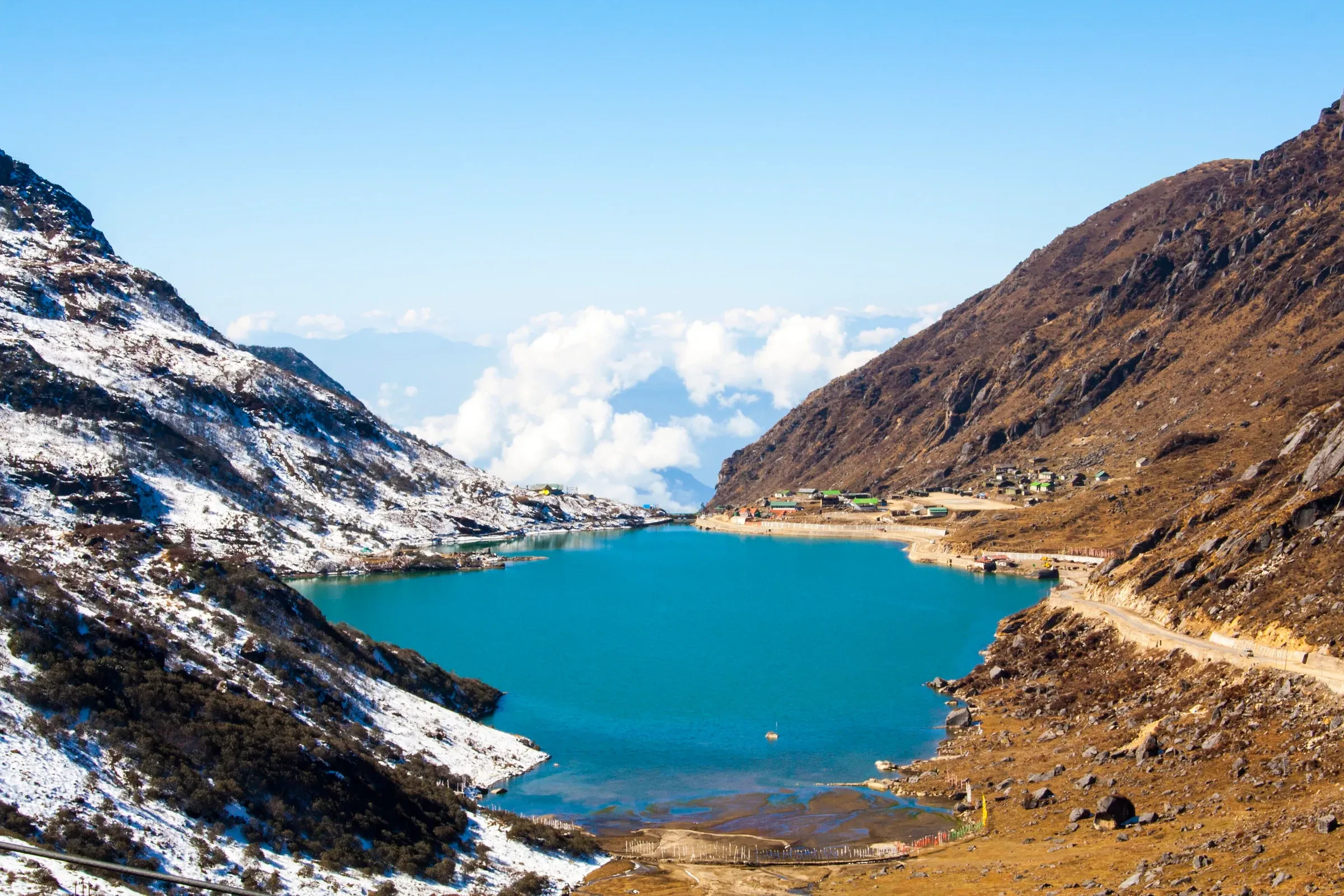
A permit day trip to 3,750 m
Tsomgo Lake
Getting there Gangtok to Tsomgo Lake and back, about 40 km and 2 to 2.5 hours each way; foreigners need a Protected Area Permit arranged in advance through a registered Sikkim operator, see Getting there, away and around below
- Morning
- Leave early for the lake, a glacial body ringed by prayer flags at close to 3,750 m; go slowly if you notice any symptoms of altitude sickness.
- Afternoon
- Return to Gangtok. The road backs up with day-trip traffic, so leave a buffer if you have an onward connection.
- Evening
- Rest. The altitude and the road both take more out of you than the distance suggests.
Eat Hot momos and butter tea from a stall by the lake, genuinely welcome at that altitude.
Local tip Foreigners cannot continue from Tsomgo Lake to Nathu La itself, which stays open to Indian nationals only, being a sensitive border crossing.
A slower day before you move on
Gangtok
- Morning
- Banjhakri Falls and Energy Park, or a slow start if yesterday's altitude and driving left you tired.
- Afternoon
- Shopping on MG Marg, or the Himalayan Zoological Park for a look at the region's red pandas.
- Evening
- A final Sikkimese meal in Gangtok.
Eat Sael roti, a rice-flour ring-shaped fried bread, if you can find somewhere still making it.
Local tip Keep this day light. Between Tiger Hill's early start, the Gangtok travel day and Tsomgo's altitude, most people are ready to slow down by now.
Heading home
Bagdogra or NJP
Getting there Gangtok to Bagdogra airport or NJP station, about 4 to 5 hours for roughly 125 km
- Morning
- Depart Gangtok early to leave room for road delays.
- Afternoon
- Arrive at Bagdogra or NJP in good time for your flight or train; a 2-hour buffer is worth having, given how variable this road can be.
- Evening
- Onward travel.
Eat A last plate of momos at a Gangtok taxi stand before you go.
Local tip If you're flying out of Bagdogra, an afternoon or evening flight gives the road more room to run long than an early one does.
The 10-day version
| Day | Where | What | Eat |
|---|---|---|---|
| 1 | Darjeeling | Arrive, settle in, evening at Chowrasta | Momos, Darjeeling tea |
| 2 | Darjeeling | Tiger Hill sunrise, toy train joyride to Ghum, a tea estate tour | Thukpa |
| 3 | Darjeeling to Gangtok | Travel day (about 4 to 5 h), evening on MG Marg | Sikkimese momos, gundruk |
| 4 | Gangtok | Rumtek and Enchey monasteries, a valley viewpoint | Sikkimese thali, churpi |
| 5 | Tsomgo Lake | Permit day trip to the lake and back | Butter tea, lakeside momos |
| 6 | Gangtok | Free day: Banjhakri Falls, shopping, the zoological park | Local café food |
| 7 | Gangtok to Pelling | Travel day (about 4 to 4.5 h), Pemayangtse Monastery, Rabdentse Ruins | Bhutia-style dishes |
| 8 | Pelling | Khecheopalri Lake, Sanga Choeling Monastery, Kanchenjunga viewpoint at sunset | Sael roti |
| 9 | Pelling | Free day, or Kanchenjunga Falls; a useful weather buffer | Local thali |
| 10 | Pelling to Bagdogra or NJP | Return travel day (about 5 to 5.5 h) | - |
What changes: the extra three days add West Sikkim's monastery towns and one of the best Kanchenjunga views you can reach by road, at the cost of two more travel days on top of the 1-week route.
What it costs
| Budget | Mid-range | |
|---|---|---|
| Stay | ₹800 to ₹1,500 (£6 to £12): hostel dorm or a budget guesthouse | ₹2,500 to ₹4,500 (£20 to £35): private room, hot water |
| Food | ₹500 to ₹700 (£4 to £5) | ₹1,000 to ₹1,500 (£8 to £12) |
| Local transport | ₹300 to ₹600 (£2 to £5): shared jeeps between towns | ₹1,500 to ₹3,000 (£12 to £23): private taxi legs |
| Total per day | about ₹2,500 to ₹3,500 (£20 to £27) | about ₹5,500 to ₹8,000 (£43 to £62) |
This doesn't include your Tsomgo Lake day trip, which your hotel or a local operator books as a package covering the permit, vehicle and guide; ask for the price in writing before you commit, since it varies by operator and group size.
Getting there, away and around
Bagdogra airport and NJP (New Jalpaiguri) railway station, both near Siliguri in the plains, are the shared gateway for this whole route: Bagdogra has domestic flights from most Indian metros, and NJP sits on the main line from Kolkata, Delhi and further afield. From either, it's about 90 km and 3 hours by road up to Darjeeling, or about 125 km and 4 to 5 hours to Gangtok, on a different road. Gangtok's own airport at Pakyong, about 30 km out, has had no regular scheduled flights lately (Wikipedia's airport page lists none for April 2025 to March 2026), so check with the airlines first. Bagdogra is the dependable choice.
Visa and entry. You need an Indian e-Tourist visa (30 days, 1 year or 5 years) and, since 1 April 2026, the free e-Arrival card; our India visa guide has the steps. The e-visa doesn't cover restricted areas, so you apply for the Sikkim permit separately.
Shared jeeps (locally, Sumos or Boleros) run these routes through the day, cheaper than a private taxi but with fewer departures once you're past early afternoon; a private taxi costs more but leaves when you want it to. The Darjeeling to Gangtok road crosses from West Bengal into Sikkim at Rangpo, where you may be asked to show ID. This road, along with the wider NH10 corridor through Teesta Bazaar and Kalijhora, has a real history of monsoon-season closures and slope failures, including the October 2025 floods that collapsed the Dudhia bridge on the Siliguri to Mirik road and cut the plains' road links into the hills for a time; check locally before you travel between June and September, and build in a spare day if you can.
Permits. Foreign visitors need a Restricted Area Permit (RAP) to enter Sikkim. Since January 2026 permits are issued online only, through the e-FRRO portal (indianfrro.gov.in), and no paper permits are issued at checkpoints. In January 2026 Sikkim's tourism department said foreigners can apply to visit Tsomgo (Changu) Lake, Yumthang Valley and Zero Point. Tsomgo needs a Protected Area Permit (PAP) from a registered Sikkim operator, and foreign nationals must travel in a group of two or more. The Indian embassy in Bogota's notice on e-FRRO asks people already in India to apply at least 15 days ahead, so allow a fortnight. Indian nationals don't need the RAP to enter Sikkim but do need the PAP for Tsomgo and the other restricted zones. See our India visa guide for the wider permit picture, and check the rules on the e-FRRO site before you apply, as they have changed more than once.
Beyond this route. North Sikkim's roads have been unreliable since the October 2023 flood. The road to Lachen and Gurudongmar was closed for about two and a half years until the Taram Chu bridge opened on 26 February 2026, then a landslide cut it again on 5 April 2026 and it reopened on 29 August 2026. Lachung and Yumthang had their own closure in 2025: about 1,000 tourists were stranded after landslides in late April, and the area closed from May until it reopened on 8 September 2025. Light vehicles must now cross the Toong check post by 4pm in both directions, under a Mangan district order issued on 10 September 2026. Yumthang Valley and Zero Point are on the foreigners' list from Sikkim's January 2026 notice, but Gurudongmar Lake isn't, and operators disagree on whether foreigners can go, so ask a registered operator before you plan on it. None of North Sikkim is in either route here. It needs a registered operator, more lead time for the permit and spare days for road closures, so it fits better in a 3-week India route (see our 3-week itinerary) than a 1-week or 10-day Sikkim trip.
Best time and festivals on this route
March to May brings rhododendrons into bloom and generally clear mountain air; October to mid December is the post-monsoon window with the best odds of a clean Kanchenjunga view. Avoid June to September: the monsoon brings the landslide risk described above, and cloud cover ruins the views that are much of the draw. January and February are cold, with snow and possible closures at higher points, though Darjeeling and Gangtok themselves stay open and accessible.
Losar, the Tibetan new year, is observed in Sikkim and Darjeeling. The February 2026 Losar was held on 18 to 20 February, and the next one falls on 7 to 9 February 2027.
What to eat on this route
Momos, Tibetan and Nepali-style dumplings, turn up everywhere in both Darjeeling and Sikkim. Thukpa, a Tibetan noodle soup, and gundruk, a fermented leafy-green soup, are Sikkimese and Darjeeling staples worth ordering more than once. Churpi, a hard yak cheese, usually appears as a side on a Sikkimese thali. Darjeeling tea is worth tasting at a working estate rather than just in a cup, and sael roti, a ring-shaped fried rice-flour bread, is a smaller find worth asking for in West Sikkim. Our India food guide covers what to expect region by region.
Keep planning
This route is one of five Himalayan itineraries on the site: see the India itinerary hub for all of them, or go deeper into Ladakh, Spiti Valley or Himachal Pradesh for the routes it combines least awkwardly with, given how far apart they all sit. For the wider permit picture across India's restricted regions, see our India visa guide. We don't currently run a group trip through Sikkim or Darjeeling; see our India trips for the routes we do run.