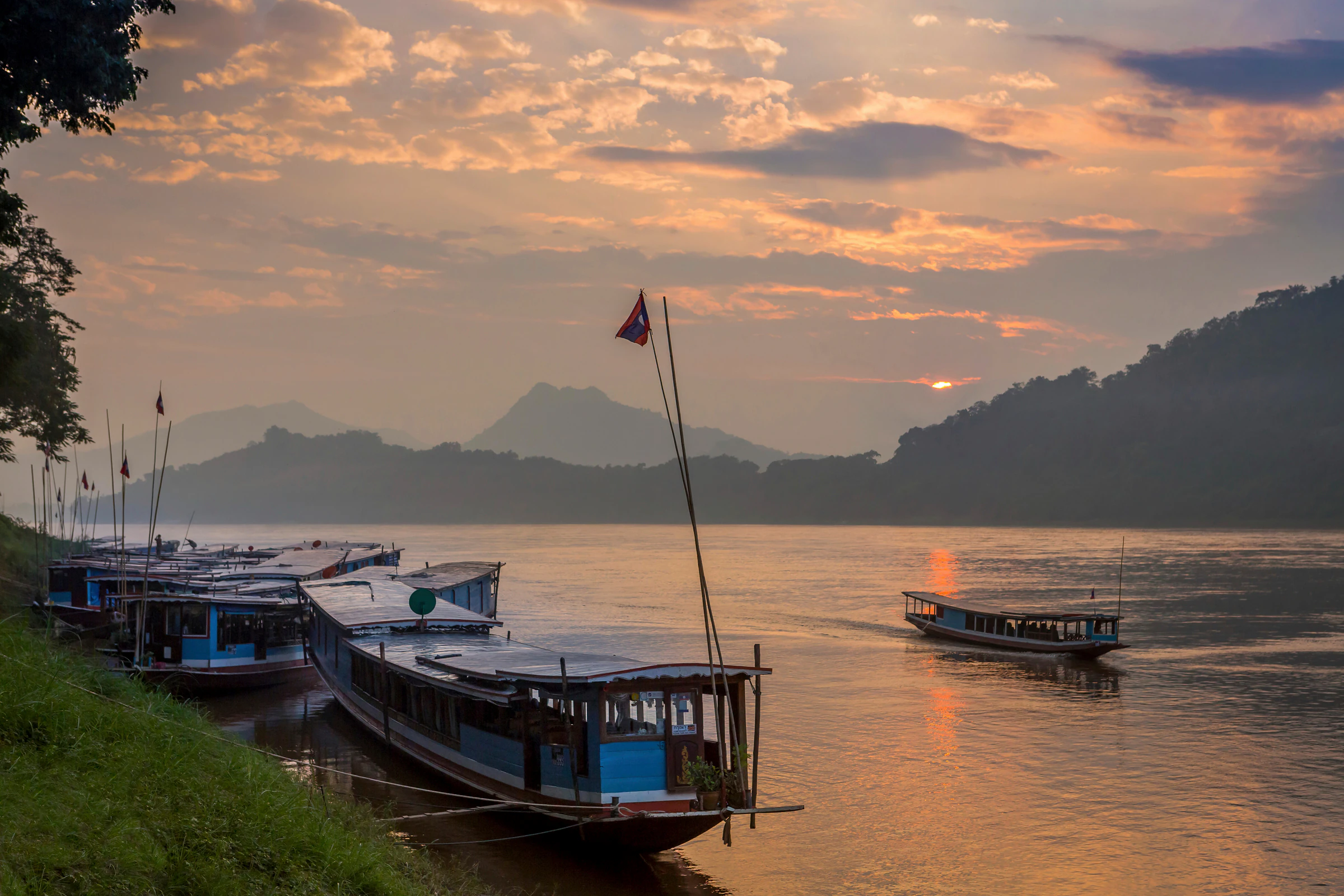
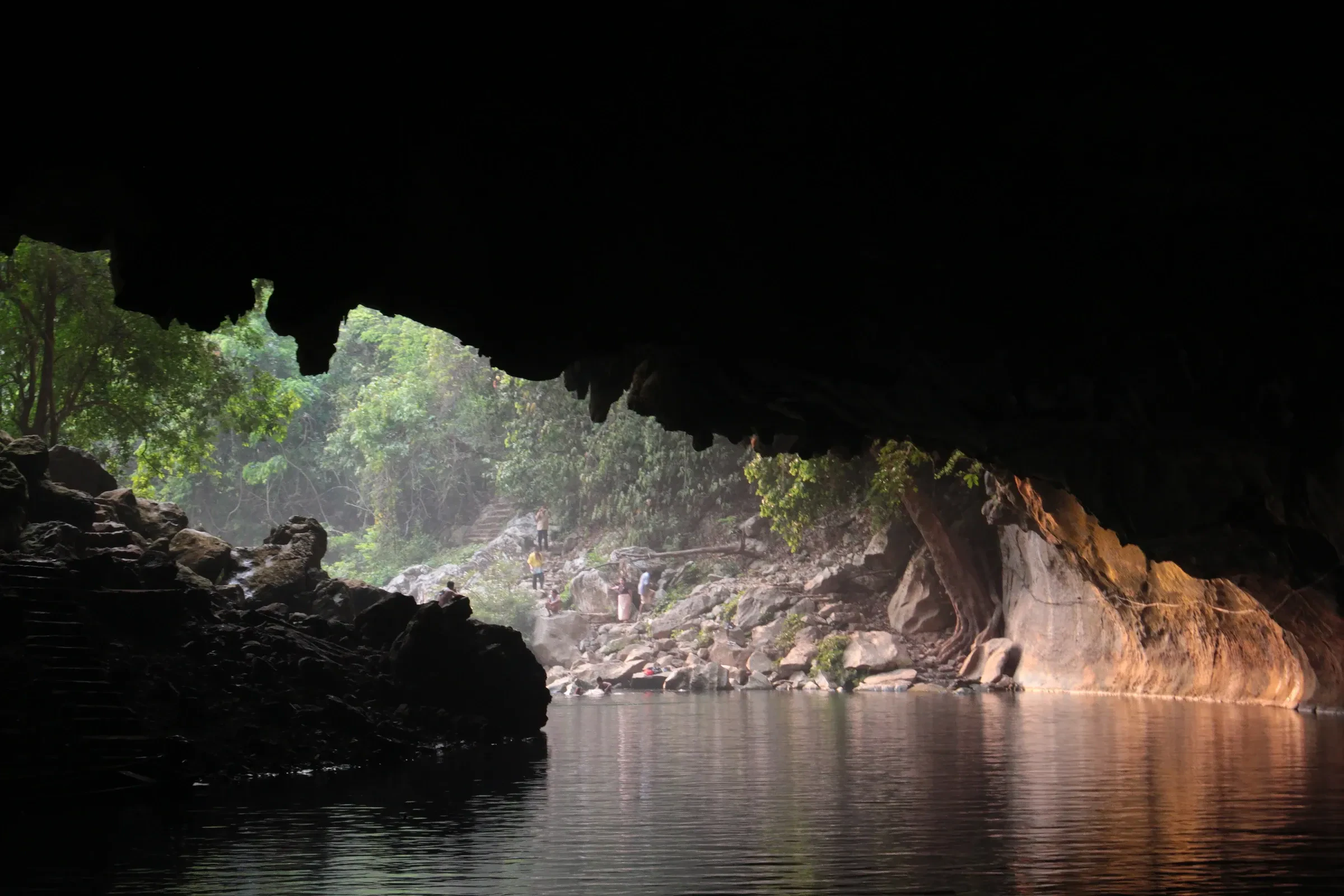
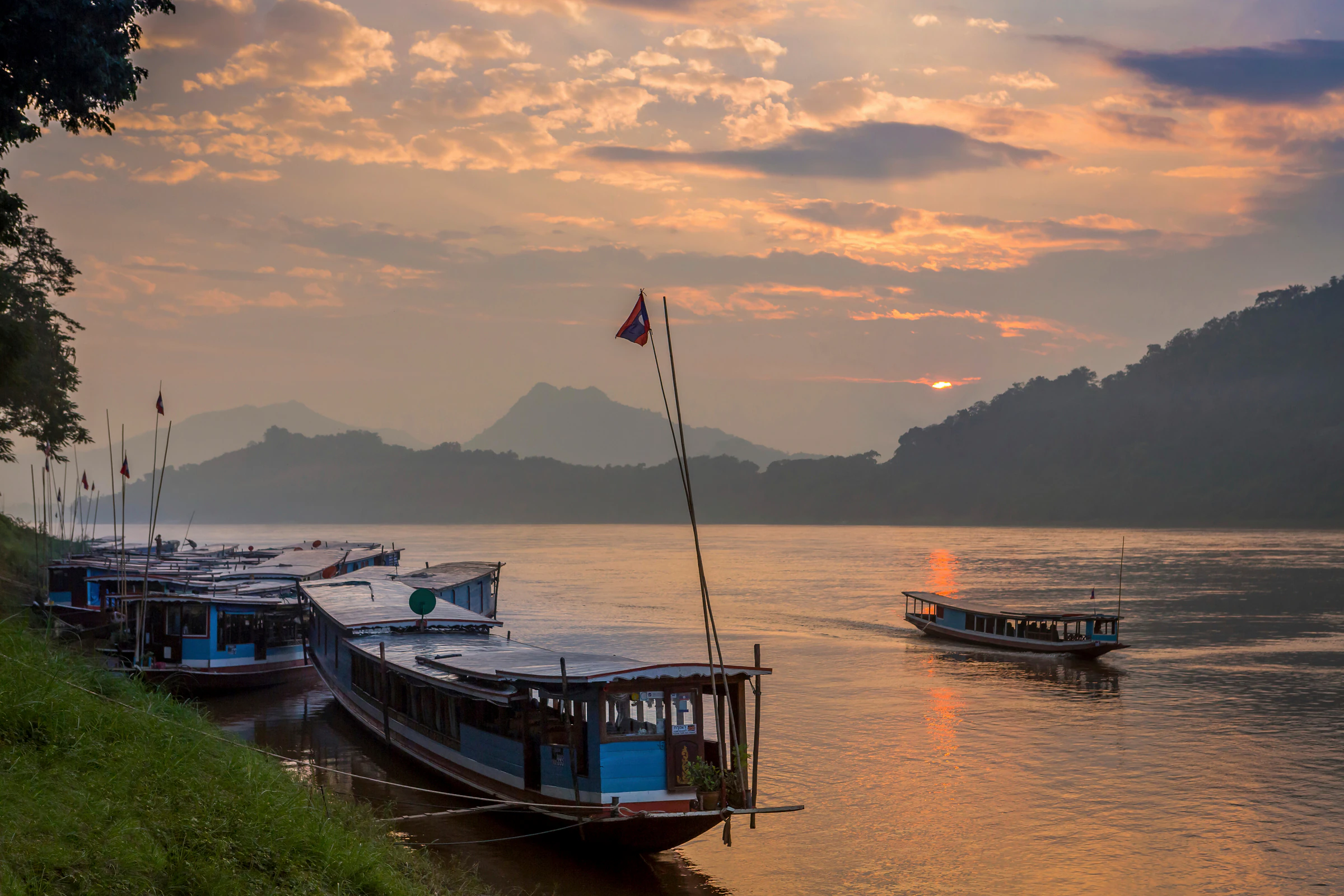
The far south of Laos moves at a different pace to Luang Prabang or Vang Vieng. Pakse is a working provincial town rather than a tourist set piece. The Bolaven Plateau is a coffee-growing region you actually ride or drive through, not just photograph from a bus window. And on the 4000 Islands you get around by bicycle and boat. This route strings the three together: a couple of days on the plateau, then several more doing very little on the Mekong.
5 stops
- Motorbike
- Minibus
- Bicycle
Is this route for you?
This suits coffee drinkers who want to see a plantation rather than just order the drink, riders who want a loop with real distance between stops, and anyone who has been moving fast through Thailand or northern Laos and wants a proper pause before flying home. The 4000 Islands leg in particular rewards people happy to read, cycle a little and watch the river for three days rather than tick off sights.
It suits you less if you want temples and old towns: for that, Luang Prabang and the Luang Prabang to Vientiane route up north are the better fit, and you can always add this southern leg on a longer trip through our Laos itinerary hub. Rather not ride a motorbike at all? Skip ahead to how to do the loop by van instead.
Day by day
Arrival and getting ready for the loop
Pakse
Getting there fly from Vientiane, about 1 to 1.5 h, or take the overnight sleeper bus, about 10 to 12 h. Flying is the easier choice unless you're doing the whole country overland.
- Morning
- settle in and get your bearings around Pakse's riverside town centre.
- Afternoon
- the daily market, and a wander along the Se Don and Mekong riverfronts.
- Evening
- arrange a motorbike for the next two days if you're riding, or book a seat on a Bolaven loop van tour if you're not.
Eat khao piak sen, a thick rice-noodle soup that reflects Pakse's Lao-Vietnamese mixed heritage, from any market stall
Local tip sort your licence and helmet before you ride, not after. See "Getting around" below for what actually counts here.
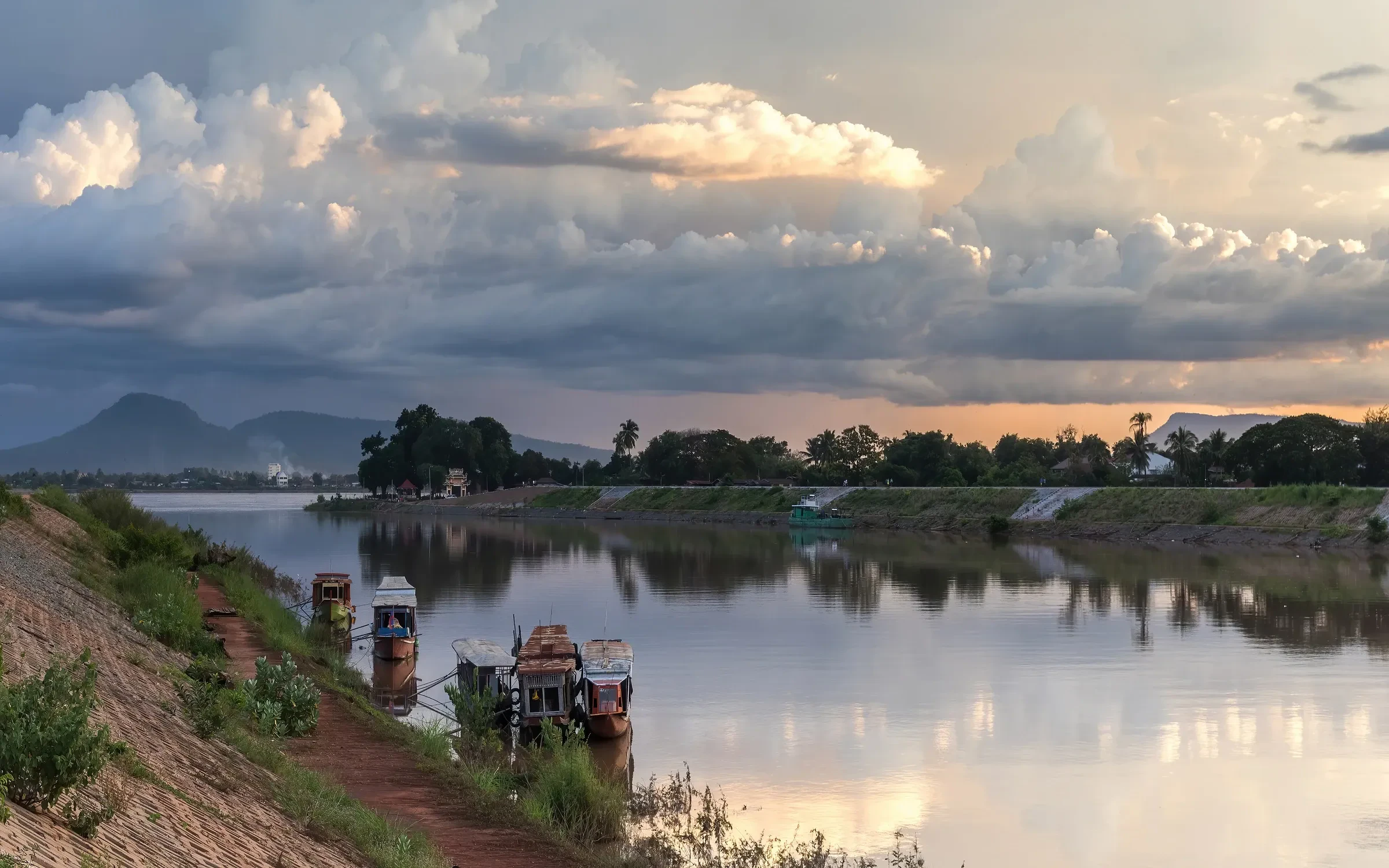
Waterfalls and coffee country, the small Bolaven loop begins
Tad Lo
Getting there ride out from Pakse into the plateau, about 90 km and 3 to 4 h with stops
- Morning
- coffee farms give way to jungle as the road climbs onto the plateau; stop at the Tad Fane viewpoint for its twin waterfalls dropping into a gorge, then Tad Champee and Tad Gneuang nearby.
- Afternoon
- continue on to Tad Lo village, a smaller and quieter falls town than Tad Fane.
- Evening
- an early night, so you can reach the falls in the morning.
Eat a coffee-farm stop for a Bolaven-grown brew, fresher and less well known abroad than Vietnam's
Local tip each waterfall charges its own entry, about 30,000 kip at Tad Fane and 40,000 kip at Tad Yuang plus motorbike parking (2025 listings), so carry small notes. Rental helmets are often basic: check for cracks and a snug fit, or bring your own.
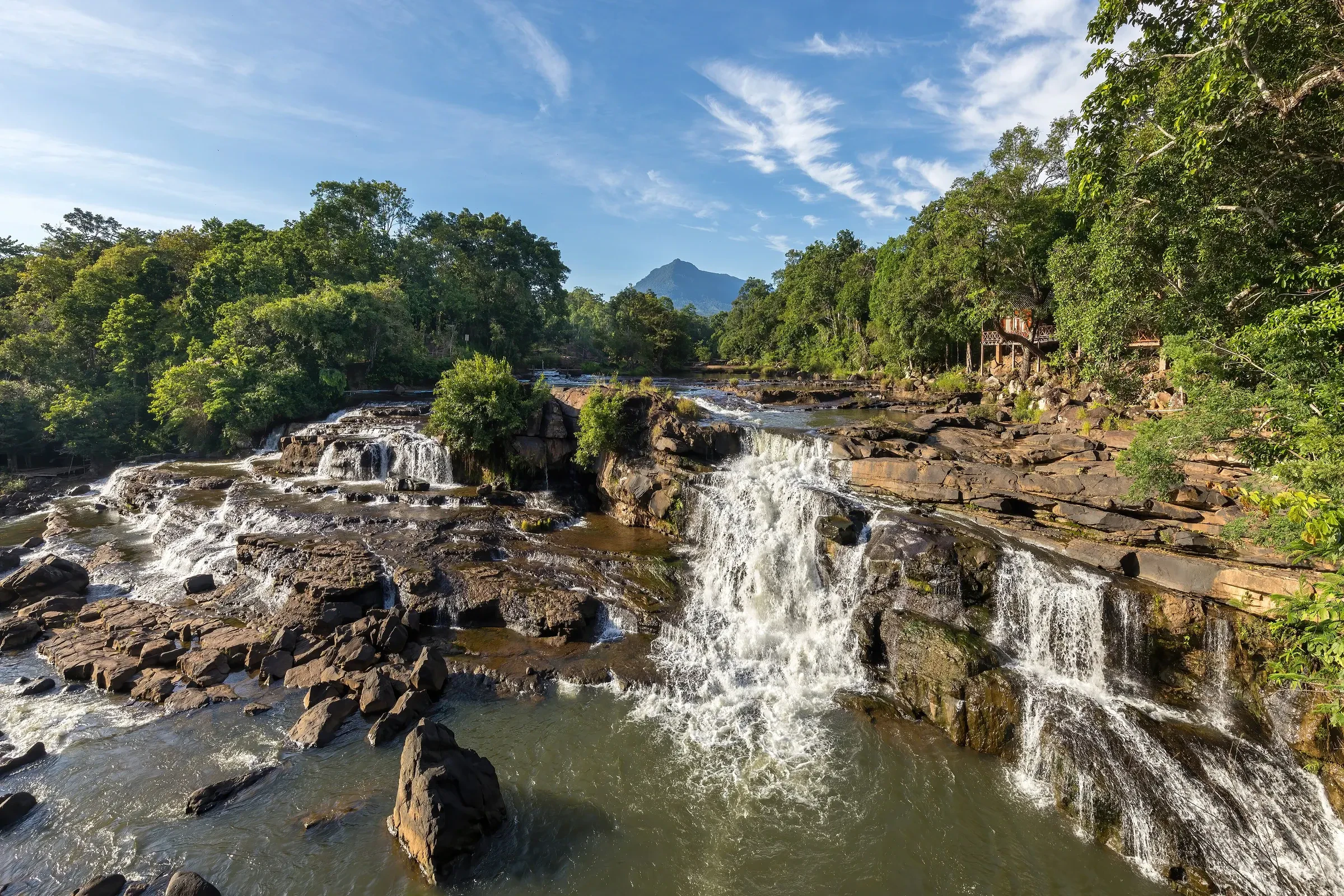
Back over the plateau through the coffee heartland
Pakse
Getting there Tad Lo to Pakse via Thateng and Paksong, about 110 km and 3 to 4 h
- Morning
- Tad Lo's own falls, and if there's time, a visit to one of the area's ethnic minority villages.
- Afternoon
- Thateng, then Paksong, the plateau's coffee-plantation centre, for a farm tour and tasting.
- Evening
- return the motorbike in Pakse and rest before the transfer south.
Eat a last Bolaven coffee before descending back to the lowlands
Local tip return the bike with a full tank and photograph any existing scratches when you collect it, to avoid disputed damage charges.
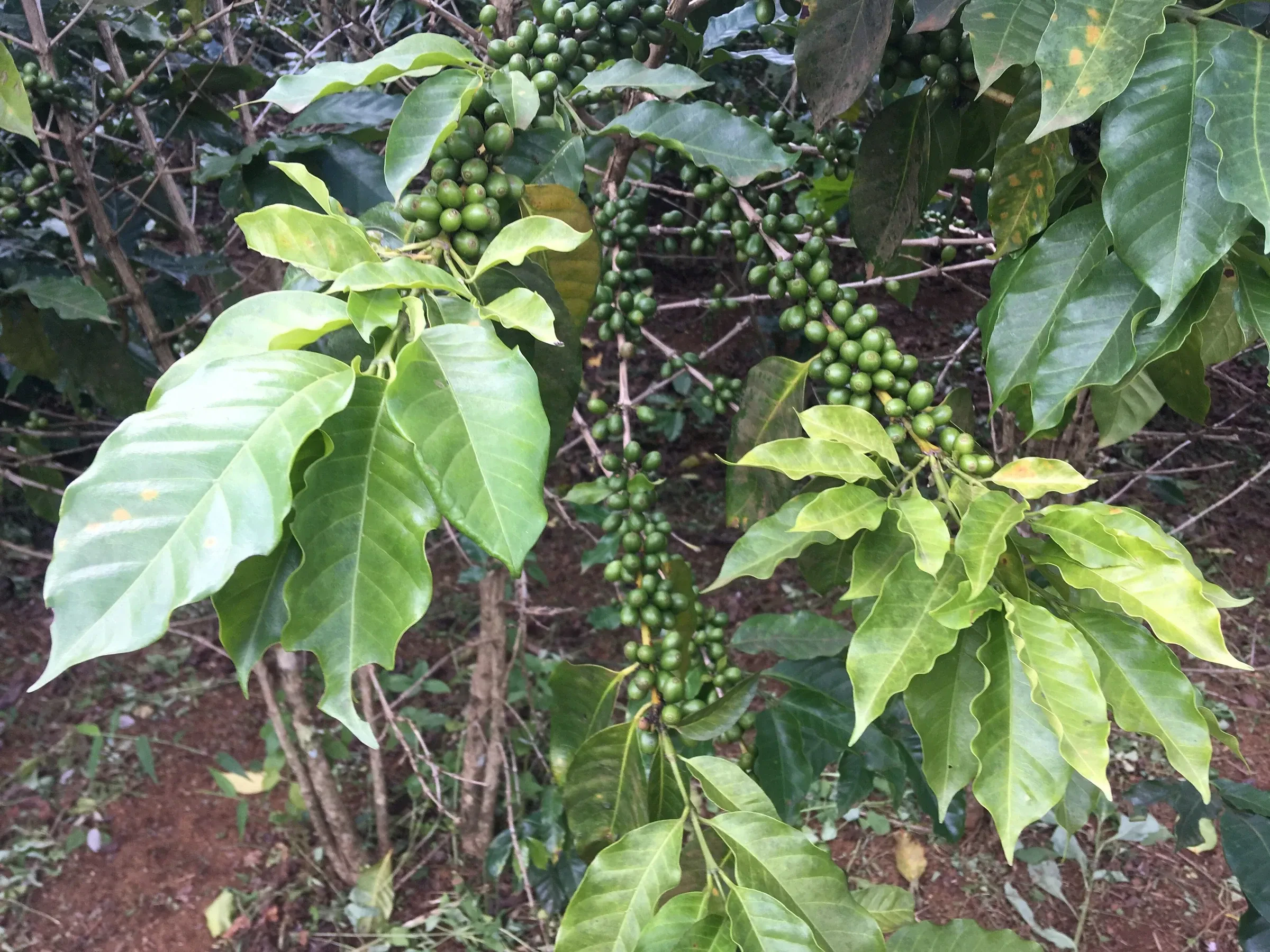
Into the 4000 Islands
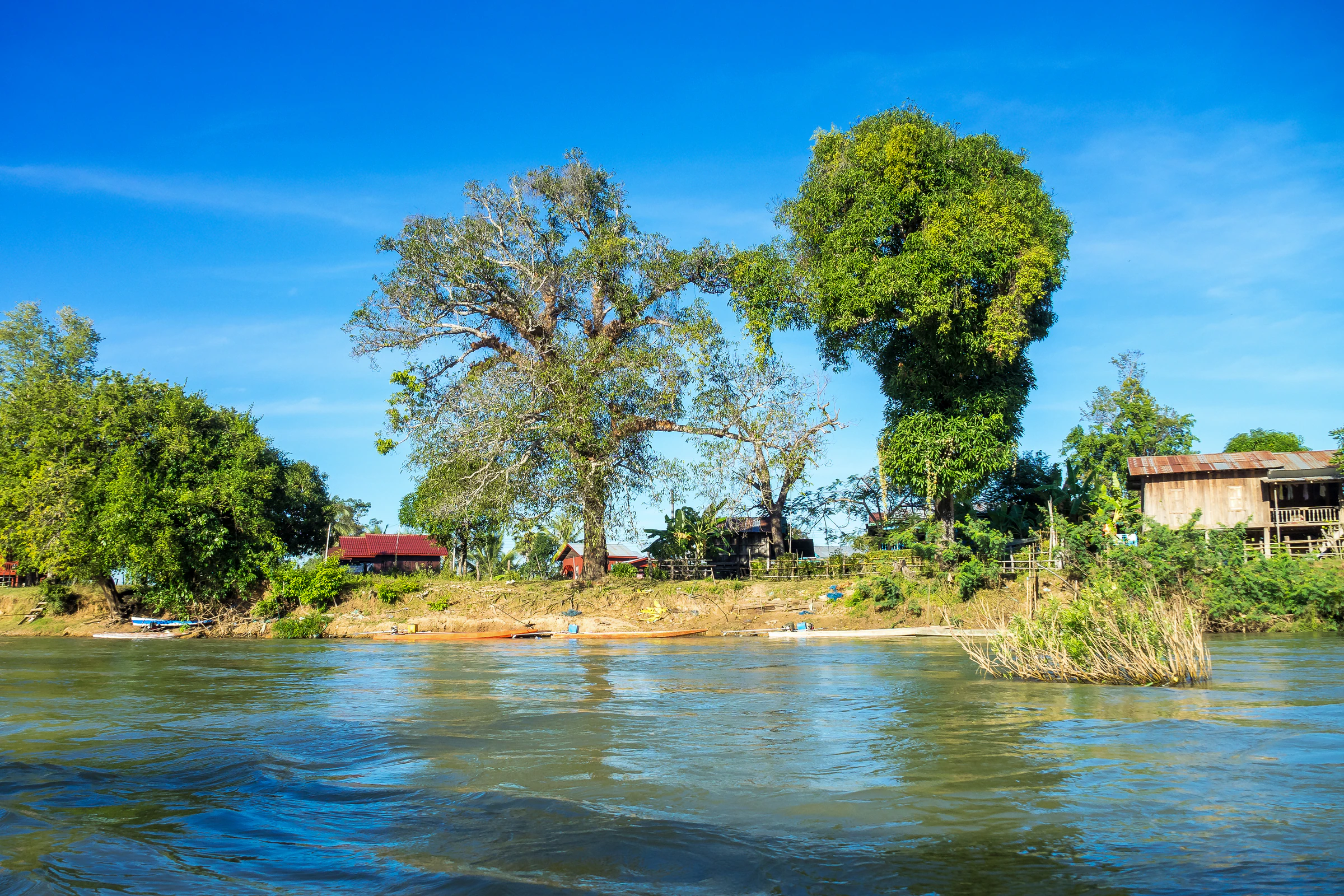
Don Det
Getting there the tourist bus-and-boat combo ticket from Pakse, about US$6 to 11 on 2026 listings, roughly 3 hours including the boat transfer at Nakasong. Fares and departure times vary between operators, so check on the day.
- Morning
- depart Pakse on the morning bus.
- Afternoon
- arrive Don Det and settle into a slower pace straight away; there's little to plan here.
- Evening
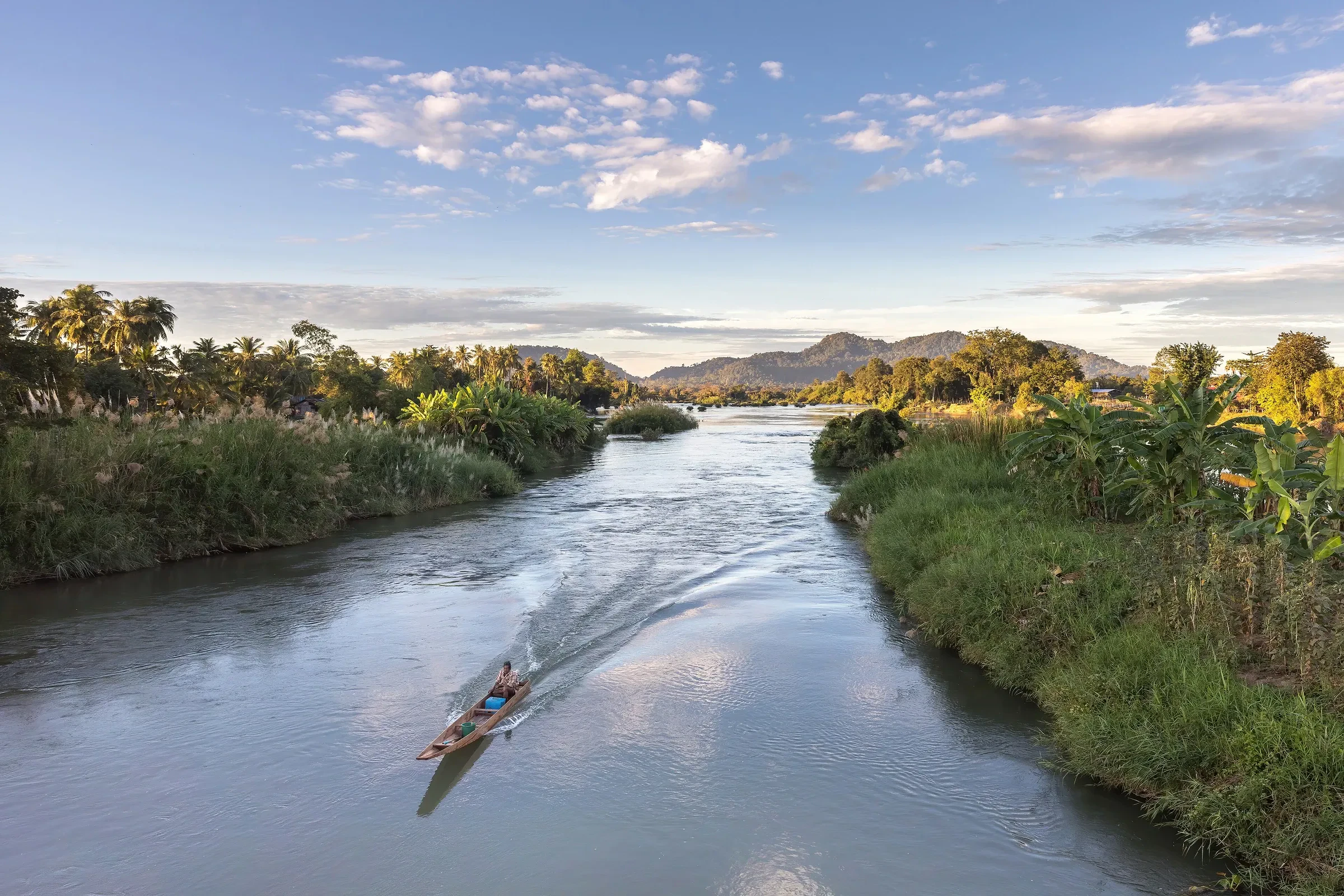
- a Mekong sunset from a riverside hammock or bar, the first of several.
Eat fresh Mekong fish, and your first taste of the islands' relaxed backpacker-café menus
Local tip bicycles are the usual way round Don Det and rent for about 25,000 kip a day.
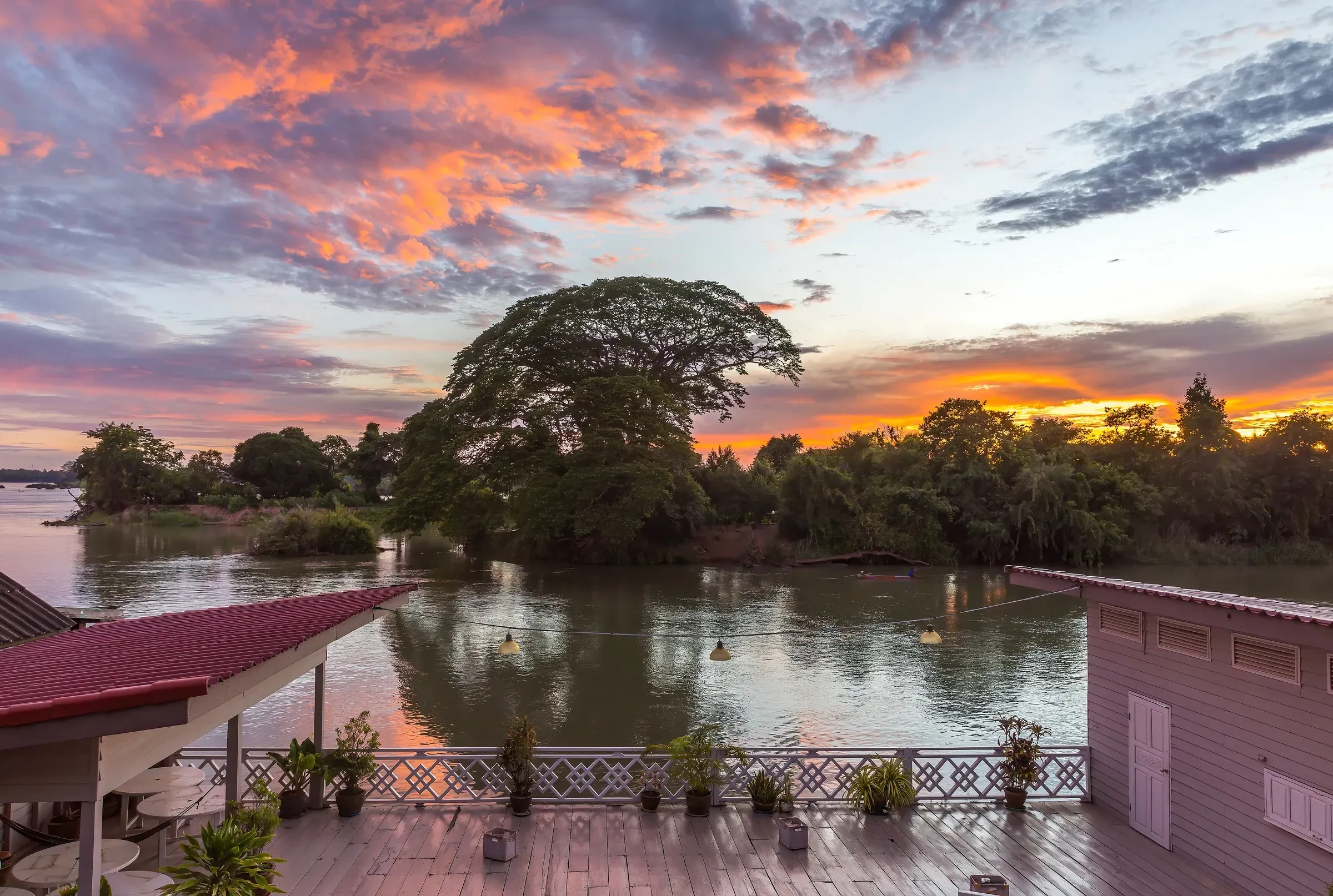
Li Phi Falls and the region's biggest falls
Don Khon
Getting there cycle or walk across the old French-era railway bridge from Don Det, about 15 to 20 min
- Morning
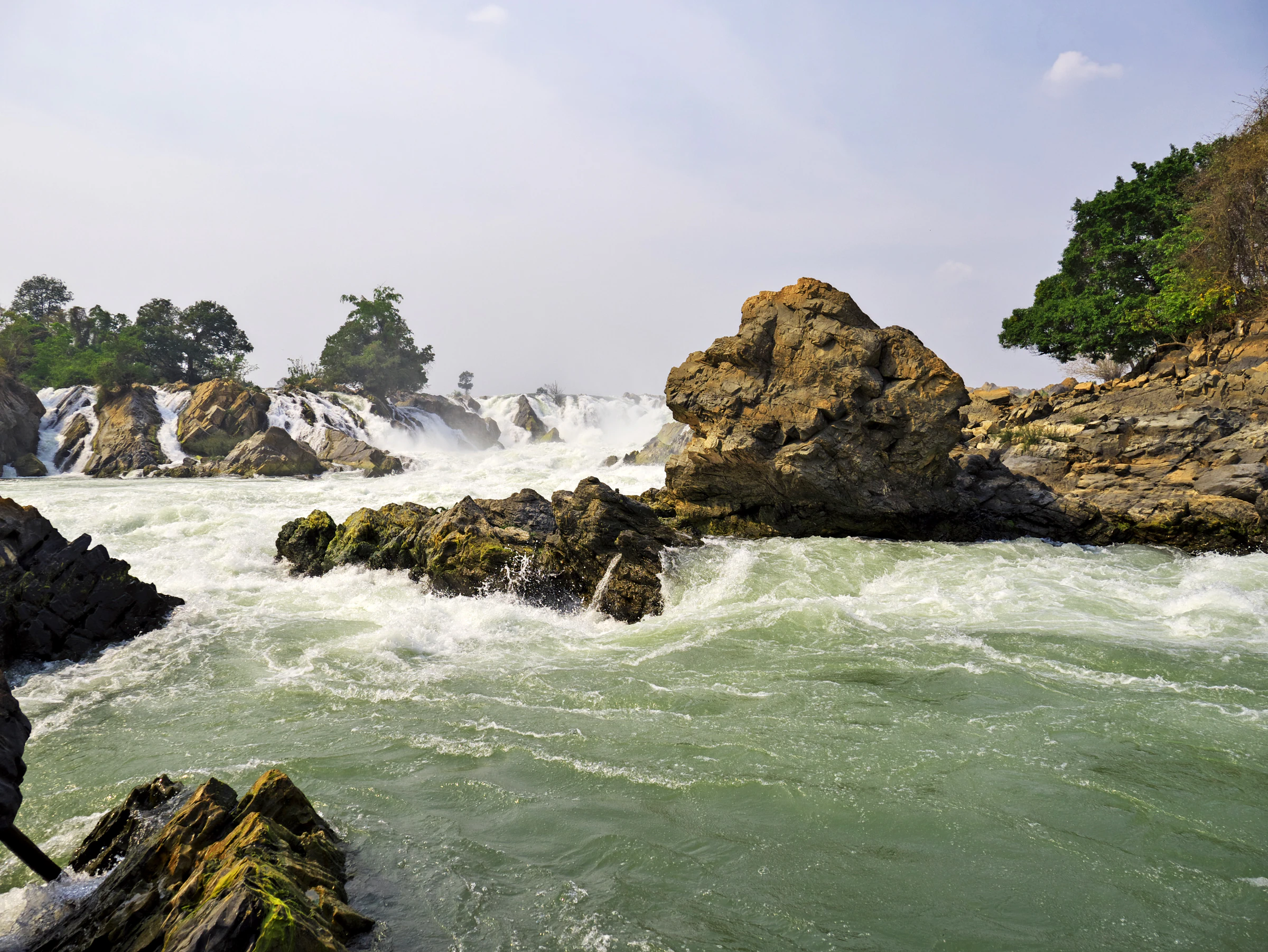
- cycle over to the quieter island of Don Khon, stopping at Li Phi Falls (Tat Somphamit), a stretch of narrow Mekong rapids seen from wooden walkways.
- Afternoon
- Khone Phapheng Falls, often described as the largest waterfall by volume in Southeast Asia, is on the mainland, not on Don Khon. Take the boat to Nakasong, then a tuk-tuk for about 20 to 30 minutes, and treat it as a separate half day. The last Irrawaddy dolphin in the border pool died in 2022. How the falls look depends on the river: in the dry season the separate cascades and rock are easier to see, and in the rainy season high water covers part of them.
- Evening
- back to Don Det for the sunset ritual again.
Eat a slow riverside dinner; this is a place for doing less, well
Local tip there are no dolphins to see on the Lao side, so a boat sold as dolphin watching here is just a Mekong boat ride. If you continue into Cambodia, dolphins are still seen around Kratie, where a population of just over 100 survives along the river there and in Stung Treng.
A day for doing very little
Don Det
- Morning
- hammock time, or cycle further round the island than you did the day before.
- Afternoon
- a Mekong sunset boat cruise if you want company, or nothing at all if you don't.
- Evening
- a last sunset from Don Det.
Eat whatever the café you liked best on day 4 is serving
Local tip this unstructured day is deliberate. If you'd rather keep moving, use it for Wat Phou instead (see the 10 day version below).
With more time rent a kayak for an hour on the calmer channels around the island.
Depart
Pakse
Getting there the bus-and-boat combo back to Pakse, about 3 to 4 h, timed to your flight or onward bus
- Morning
- a final coffee before the boat.
- Afternoon
- back in Pakse, connect to your flight home or onward travel.
- Evening
- depending on your flight, a last bowl of khao piak sen near the airport.
Eat khao piak sen again, or sticky rice and jaew for the road
Local tip build in slack before a flight; the combo ticket's arrival time in Pakse is approximate.
The 10 day version
Ten days swaps the small Bolaven loop for the bigger one, through Sekong and Houay Kong, and adds a half-day at Wat Phou near Champasak.
| Day | Where | What | Eat |
|---|---|---|---|
| 1 | Pakse | Arrive, rent a bike or book a van tour | Khao piak sen |
| 2 to 5 | Tad Lo, Sekong, Houay Kong, Paksong | The big Bolaven loop, about 300 km over 4 days and 3 nights, with more time at each waterfall and coffee stop | Bolaven coffee, grilled Mekong fish in Sekong |
| 6 | Don Det | Bus-and-boat combo from Pakse, settle in | Fresh Mekong fish |
| 7 | Don Khon | Li Phi Falls, then Khone Phapheng Falls as a half day by boat and tuk-tuk | Riverside dinner |
| 8 | Don Det | Free day: hammock, cycling, an optional sunset cruise | Café favourite |
| 9 | Champasak, then Pakse | Half-day at Wat Phou, the Khmer Hindu temple complex, then back to Pakse | Lao-Vietnamese noodle soup |
| 10 | Pakse | Depart | Sticky rice and jaew |
What changes: the big loop trades two days of riding for four, with more distance between stops and a wider spread of villages, so it suits people who want more time on the bike rather than more time on the islands. Sources disagree on Wat Phou's entrance fee, so check the price when you arrive.
What it costs
Plan on about US$20 to 35 a day for a bed, food and local transport; our Laos guide has the full picture. These items are specific to this route:
| Item | Cost |
|---|---|
| Motorbike rental, per day | about US$5 to 10 |
| Bicycle hire on Don Det, per day | about 25,000 kip |
| Bus-and-boat combo, Pakse to Don Det | about US$6 to 11 one way (2026 listings) |
| Tad Fane waterfall | 30,000 kip plus bike parking (2025) |
| Tad Yuang waterfall | 40,000 kip plus bike parking (2025) |
| Li Phi Falls, Don Khon | about 30,000 kip |
| Khone Phapheng Falls | about 55,000 kip |
| Wat Phou | sources disagree, so check on arrival |
Fees change often, so treat these figures as a guide.
Getting there, away and around
Getting there: Pakse International Airport has flights from Vientiane (about 1 to 1.5 h) and some regional connections that change by season, so check current timetables. The overnight sleeper bus from Vientiane takes about 10 to 12 h and is the budget option for anyone travelling the country overland.
Getting around the loop: riding yourself needs a motorcycle licence from your home country plus an International Driving Permit. Some rental shops hand over keys without checking either, but that doesn't make it legal, and many travel insurers refuse a motorbike claim if you can't produce both documents afterwards. Always wear a helmet, and in the south stay on main roads and marked paths, because unexploded ordnance from the war still injures people. If that's more risk than you want, you can book a driver-led tour of the loop in Pakse. Our Bolaven Plateau Loop trip is a small-group version of this route, and the trip page explains how the riding is arranged.
Getting around the islands: The islands have no cars, but motorbikes and tuk-tuks do run. Bicycles are for hire on both islands, and walking covers most of what you'd want to see.
Getting away: most people either fly home from Pakse, head back north by bus (Thakhek is about 350 km and 5 to 7 h from Pakse), or cross into Cambodia at the land border near Don Det, a well-used route into Cambodia's northeast. Sort out any Cambodian visa before you go.
Best time and festivals
November to February is the coolest window and the best fit for this route; the south runs hotter than northern Laos, so the cool season matters more here. April is the hottest month nationwide and worth avoiding. The rainy season, roughly May to October, brings high water to the Bolaven Plateau's waterfalls, along with rougher unpaved sections on the loop roads, particularly on the bigger loop.
There's no major festival tied specifically to this route. For dates that might shift your timing either way, see our Laos festivals guide.
What to eat on this route
Bolaven Plateau coffee is the standout: Lao arabica and robusta grown at altitude, less known abroad than Vietnam's but worth a farm visit rather than just a cup. In Pakse, look for khao piak sen, a rice-noodle soup shaped by the town's Lao-Vietnamese heritage. On the islands, fresh Mekong fish is the default, and sticky rice with jaew (a chilli dip) turns up everywhere in between. For more, see our Lao food guide.