Larb: the dish to know before you go
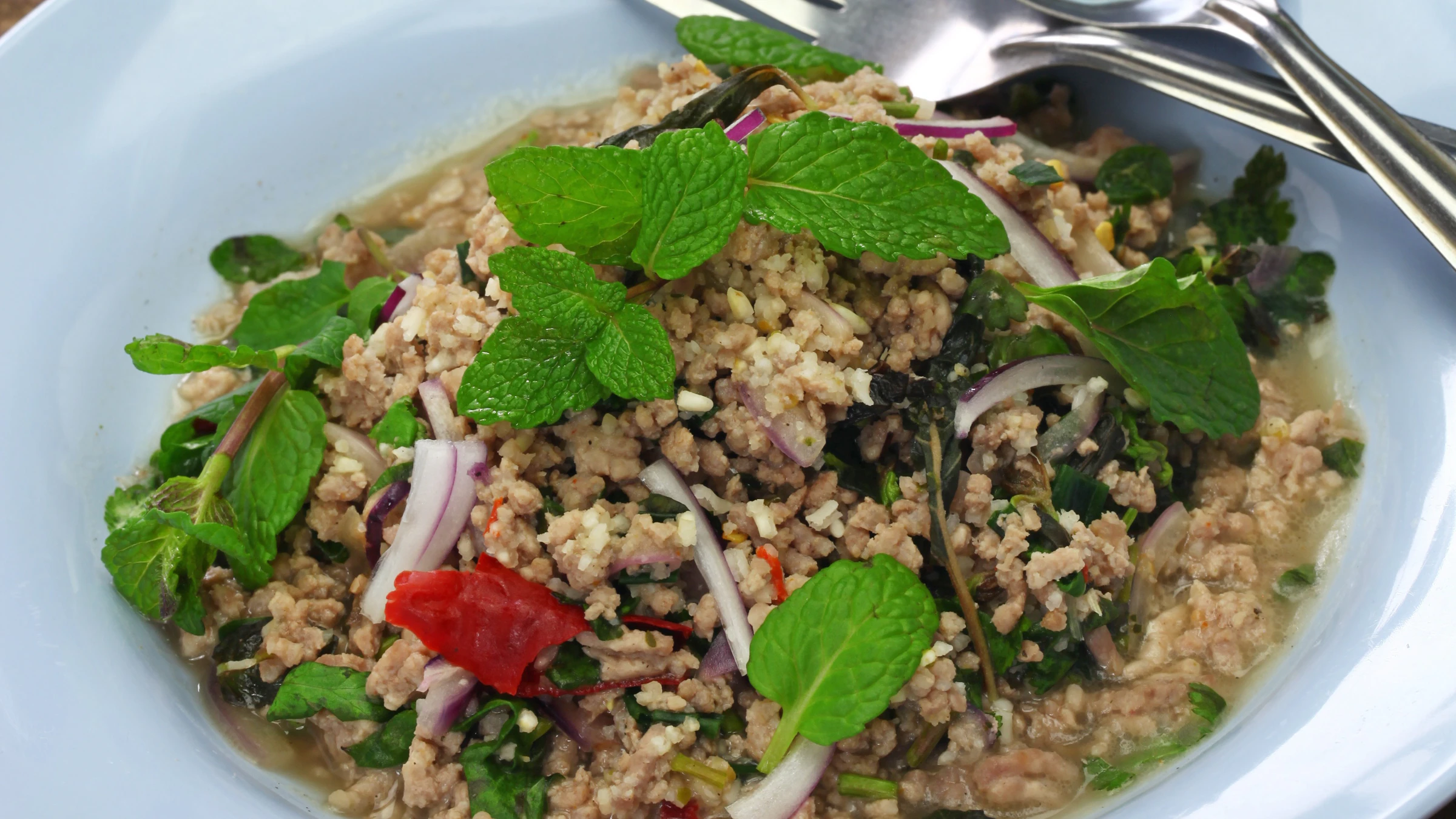
Larb (also spelled laap or laab) is minced meat, usually pork, chicken, beef, duck or fish, tossed with lime juice, fish sauce, mint, coriander, shallots, chilli and toasted rice powder for crunch. It's eaten nationwide rather than tied to one town, and it turns up everywhere from a roadside stall to a wedding: the word laab sounds close to the Lao word for luck, and it's traditionally served at celebrations for exactly that reason. Some versions use raw meat (laab dip); if you'd rather have it cooked through, ask for laab suk, a request any restaurant serving both Lao and traveller menus will know.
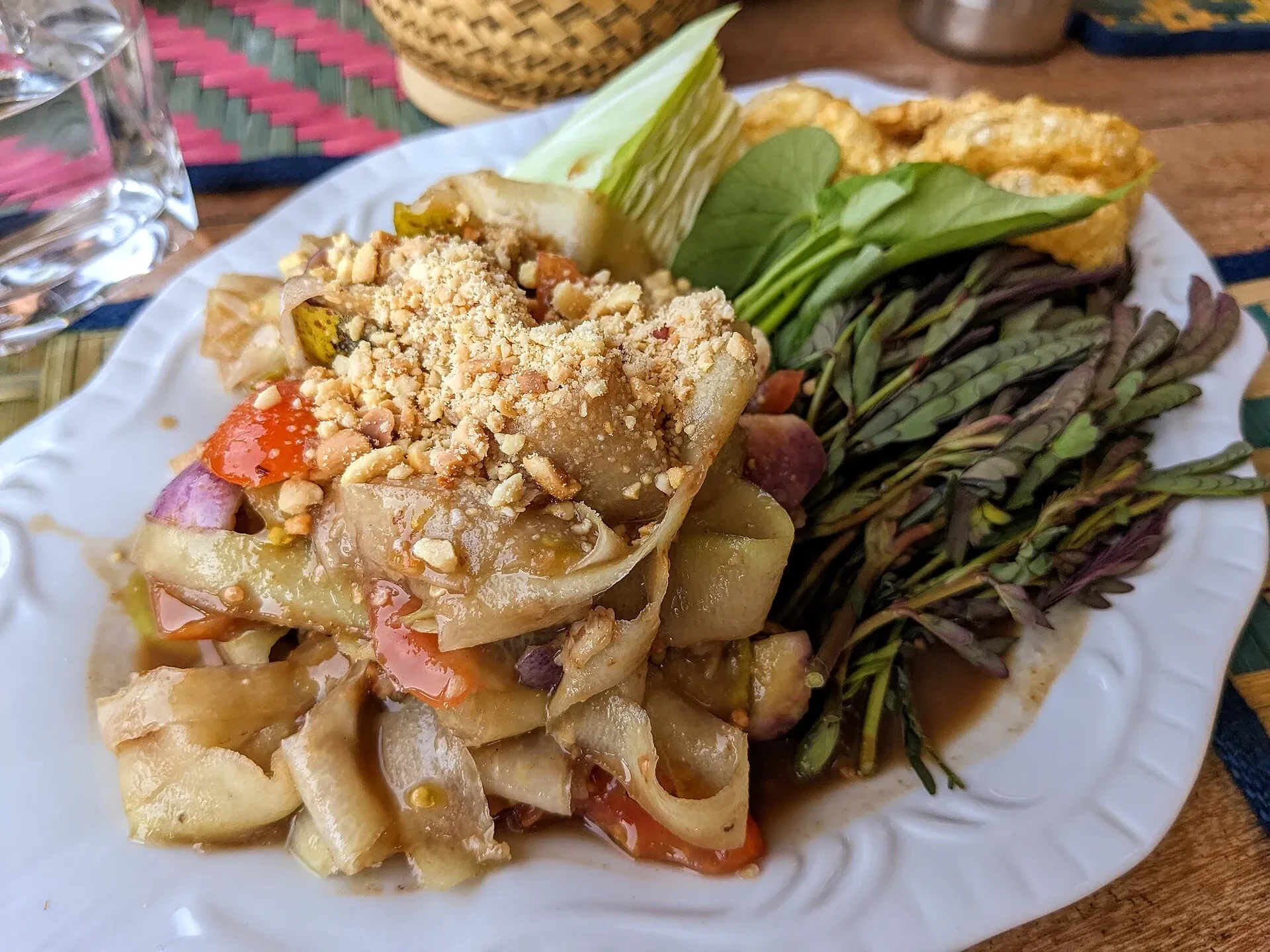
Tam mak hoong, green papaya salad, is the other staple of Lao cooking. It's pounded, not fried, using green papaya, chilli, lime, tomato and often padaek (a fermented fish sauce) or fermented crab paste, which gives it a saltier, funkier edge than Thailand's som tam. The two salads share an origin, but the Lao version is generally more pungent and less sweet. Ask for it mild (bo phet) if the fermented paste and chilli together are more than you want on day one.
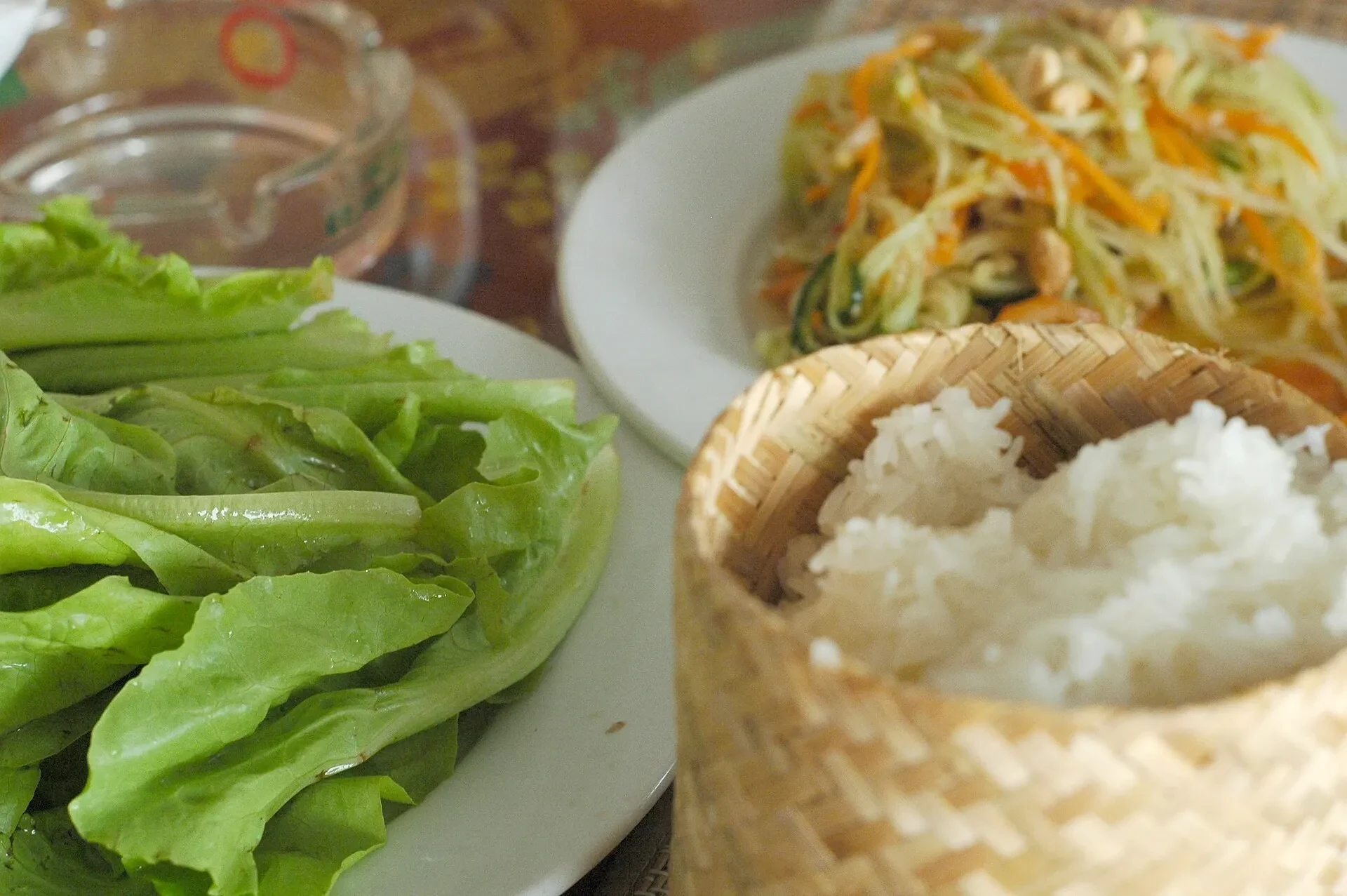
Sticky rice: eaten by hand, at every meal
Khao niaw, sticky rice, is the starch everything else in Lao cooking is built around, steamed in a conical basket and served in a smaller one at the table. You eat it with your fingers: pinch off a small ball, roll it, and use it to scoop up larb, a curry or a dip. It's rarely ordered on its own in a restaurant. Sticky rice is also what Lao Buddhists put into the alms bowls of monks in the early-morning procession (tak bat) in Luang Prabang. That is a religious practice, not a food experience. Visitors who watch should keep quiet and well back from the monks, and offer alms only if it means something to them (local guidance from the Luang Prabang tourism department and Buddhist groups asks for this).
Luang Prabang's own dishes: or lam, khao soi and jeow
A few dishes belong specifically to Luang Prabang and the surrounding north rather than the whole country.
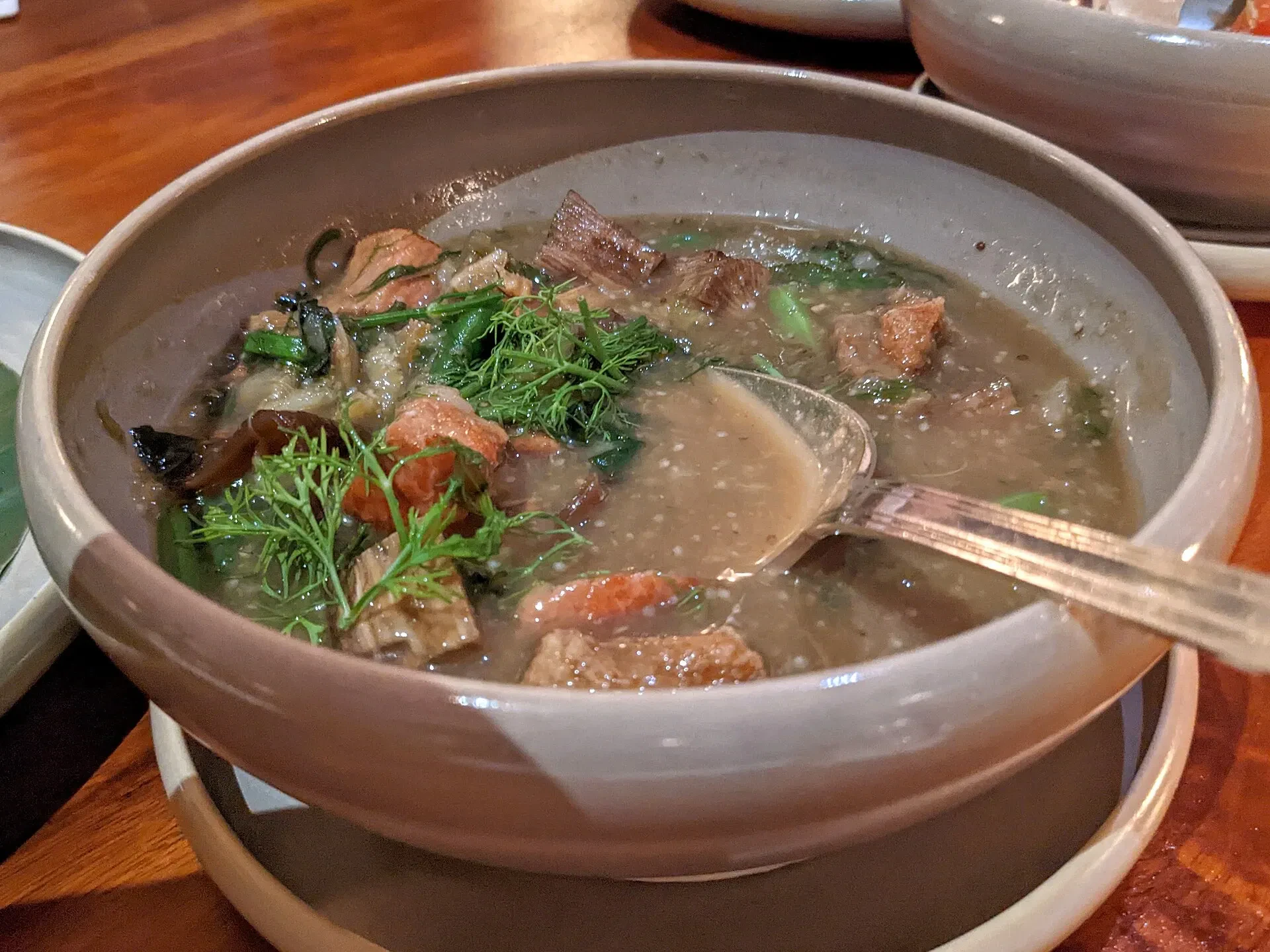
Or lam is a slow-cooked stew, traditionally made with buffalo, beef or game, along with eggplant, yard-long beans, wood ear mushrooms and a local wood called sakhaan, which gives the broth a mild, tongue-numbing peppery edge a bit like Sichuan pepper. It's thickened with pounded sticky rice rather than cornflour, so it ends up more of a thick, herbal stew than a soup. It's one of Luang Prabang's signature dishes, and the old royal kitchens reportedly made it with deer meat.
Khao soi, as served in Luang Prabang, is a completely different dish from the coconut curry noodle soup of the same name in northern Thailand. The Lao version is a clear pork or beef broth over flat rice noodles, topped with a sauce of minced pork, tomato and fermented soybean paste, closer to a Southeast Asian bolognese than a curry. It's a breakfast and lunch dish at market stalls.
Jeow (jaew) is the umbrella name for Lao chilli dips, eaten alongside sticky rice and grilled meat or vegetables rather than served as a dish in its own right. Jeow bong, a well-known version, comes from Luang Prabang: a sweet, smoky, dark red paste of dried chilli, garlic, galangal and shredded buffalo or pork skin, roasted and pounded rather than fried. It's sold in small jars at the morning market and travels home better than almost anything else on this list.
Khao piak sen: the noodle soup for any time of day
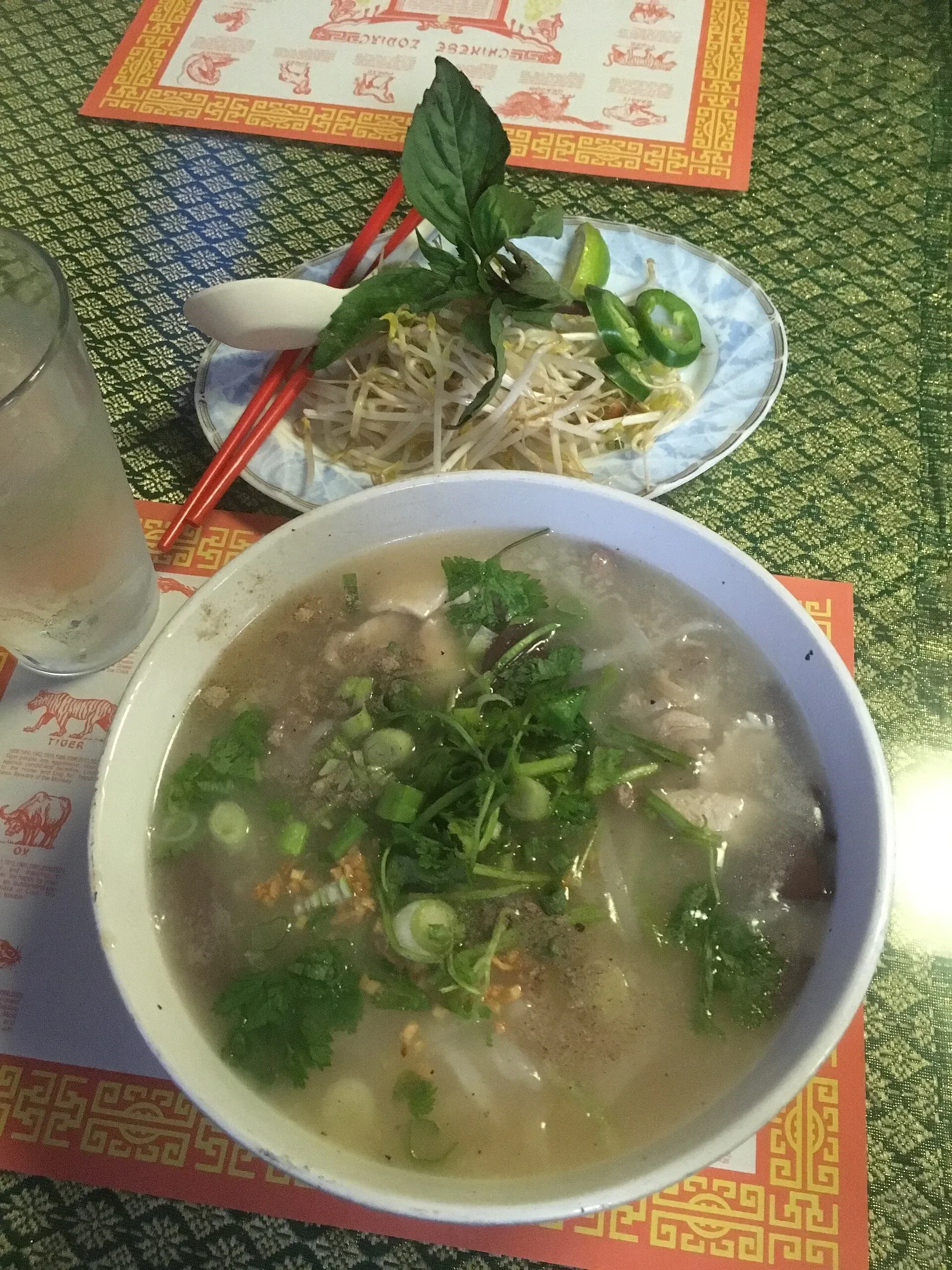
Khao piak sen is a thick soup of hand-cut rice-and-tapioca noodles in a peppery chicken or pork broth, topped with crispy garlic, spring onion, coriander and a squeeze of lime. The name means "wet rice noodles", and unlike khao soi it's found all over the country, not tied to one region, usually eaten for breakfast but sold through the day at markets and small noodle shops.
Khao jee: the baguette Laos kept from France
Khao jee (or khao jee pâté) is Laos's answer to Vietnam's banh mi: a crusty baguette, split and filled with pork liver pâté, Lao sausage or grilled pork, pickled papaya or carrot, cucumber, coriander and a smear of jeow. The baguette itself is left over from French colonial rule, and it's sold everywhere from Vientiane's street corners to Luang Prabang's morning market. In Vientiane, the sandwich sits alongside a strong local pho scene, brought over by generations of Vietnamese immigrants and cooked with a lighter, more pork-forward broth than the Vietnamese original: a good bowl to have if you're spending a day in the capital before or after heading north or south.
Beerlao and what to drink with dinner
Beerlao, brewed with local jasmine rice alongside barley, is the default beer almost everywhere you'll eat. A large bottle costs roughly 15,000 to 25,000 kip (2026 listings), more at a restaurant or bar than from a shop. Beerlao Dark and Beerlao Gold are the two common variants beyond the original lager. If you're not drinking beer, Lao coffee, grown on the Bolaven Plateau in the south, is strong and usually served over condensed milk (kafe nom); tea is the other standard order with a meal, and both are cheap enough that having either alongside food barely moves the bill.
Drinking safely
Take care with spirits and cocktails. In November 2024, six foreign travellers died in Vang Vieng after drinking alcohol; a lab found methanol, and in July 2026 the authorities said they could not formally establish the cause. Canada's government says to buy drinks only from licensed bars and restaurants, to buy alcohol in shops only as sealed bottles and cans, and to avoid free or very cheap drinks. Methanol can't be tasted or smelled, and the UK Foreign Office adds that Laos has banned Tiger Vodka and Tiger Whisky. A sealed bottle of Beerlao is the straightforward choice; our Vang Vieng guide has more.
The Luang Prabang night market and morning market
The night market runs along Sisavangvong Road every evening from around 6pm, and its food side sits down a side alley (sometimes called the food alley) behind the main strip of textiles and souvenirs. Stalls sell grilled meat and fish skewers, khao soi, sausages, coconut pancakes and Beerlao by the bottle, and some run a fill-your-own-plate buffet. It's an easy way to try several dishes from this guide in one sitting, at street-food prices.
The morning market, a few streets away, opens before dawn and is where locals shop for the day's cooking: fresh herbs, river fish, jeow in jars, and sticky rice. It's worth a look even if you're not buying, both for the produce itself and for a sense of what actually goes into the dishes on this page.
Beyond Luang Prabang: Vientiane and the south
Vientiane serves the same core dishes as the rest of the country, plus a strong Vietnamese influence you won't find as much elsewhere: pho, fresh spring rolls and banh mi-style sandwiches sit on menus next to larb and khao piak sen, a legacy of the city's long-standing Vietnamese community. Read more in our Vientiane guide.
Further south, around Pakse, the Bolaven Plateau and the 4000 Islands, the food follows the Mekong itself: grilled river fish, fish larb made with the day's catch, and simple rice-and-vegetable plates at the family-run guesthouses lining Don Det and Don Khon. Our 4000 Islands guide covers what to eat once you're on the islands, and our Thakhek loop guide has a section on eating along that route by motorbike.
Which route to use for a Laos food trip
Most of the dishes above cluster around Luang Prabang, so any itinerary that spends 2 or more nights there covers the food side well. Our Laos itinerary hub breaks routes down by length; the 1 week and 10 day versions both centre on Luang Prabang, Vang Vieng and Vientiane, while the southern Laos itinerary is the one to use if the Mekong fish dishes and the 4000 Islands matter more to you than the northern specialities.