What Pi Mai Lao is
Pi Mai Lao is Laos's new year, and it shares its roots with Thailand's Songkran and Cambodia's Chaul Chnam Thmey: all three follow the traditional solar calendar's new year point in mid-April. At its centre is a Buddhist cleansing ritual. Buddha images are washed with scented water to mark the end of the old year, and that water spills out into the streets as a blessing everyone ends up sharing, whether they want to or not.
The festival runs over three named days. Sangkhan Luang, the first day, is the last day of the old year: people clean their homes, gather water and flowers, and visit temples to wash Buddha statues with scented water. Sangkhan Nao, the second day, translates loosely as "the day of no day": it belongs to neither year, and tradition holds that nobody should work on it. Sangkhan Kheun, the third day, is new year's day itself, when younger people pour scented water over the hands (and sometimes feet) of elders in exchange for blessings, often as part of a baci ceremony that ties white strings around the wrist for luck.
What happened at Pi Mai Lao 2026
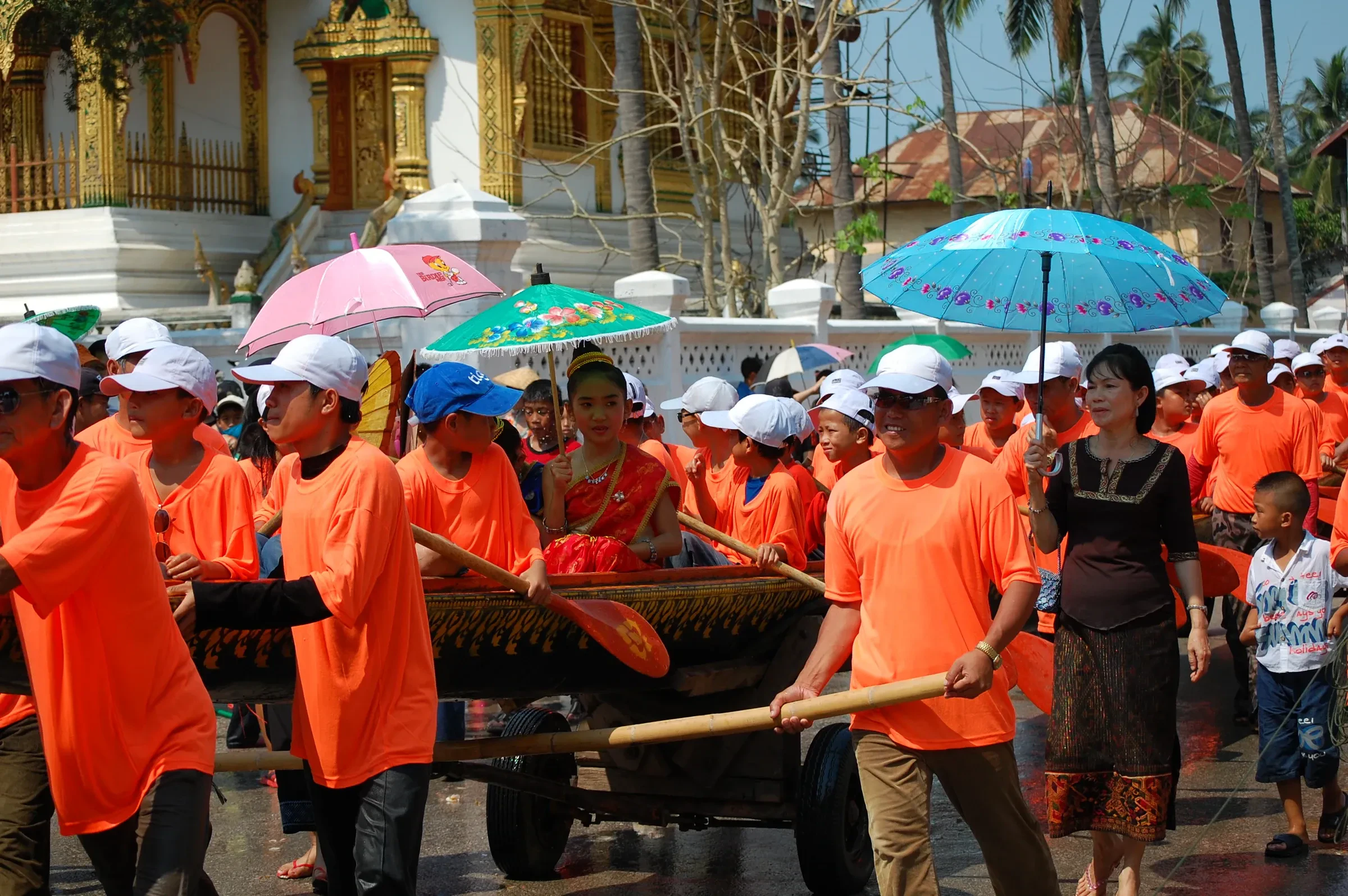
The public holiday ran from 14 to 16 April 2026, but Luang Prabang stretched its celebrations into a ten-day programme from 11 to 20 April, according to the Lao national news agency, KPL. The line-up included the Nang Sangkhan pageant, the Hae Vor procession, an elephant procession, sand stupa building at Don Say Moungkhoun, and food and craft markets. The Phra Bang Buddha image was carried in procession to Wat Mai on 17 April and bathed there for three days and nights, until 19 April. We found no reporting on Vientiane's 2026 programme.
The visitor figures were the notable part. Tourism Laos reported that Luang Prabang had 68,126 visitors between 10 and 20 April, down 46% from 126,846 in 2025. International visitors fell 42% and domestic visitors 48%, and tourism revenue dropped from USD 97.5 million to USD 52.2 million. Thai visitors were down 75%, while Chinese visitors rose 105% to 2,102. The report doesn't give a reason, so we won't guess at one.
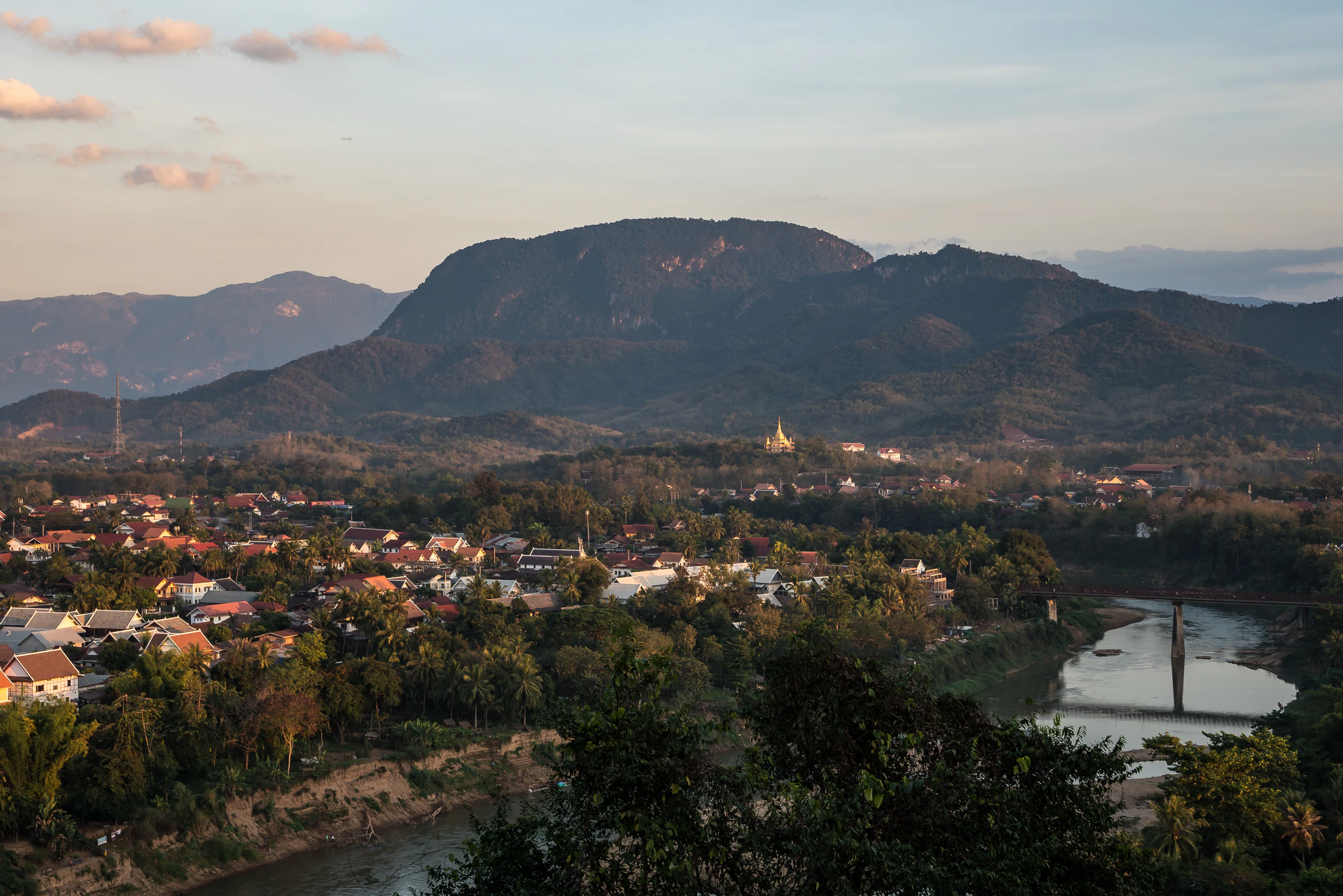
Pi Mai is the Lao new year, and Luang Prabang is where the ritual side is easiest to see. The city takes its name from the Phra Bang image, and its bathing is the holiest part of the festival.
Where to see it
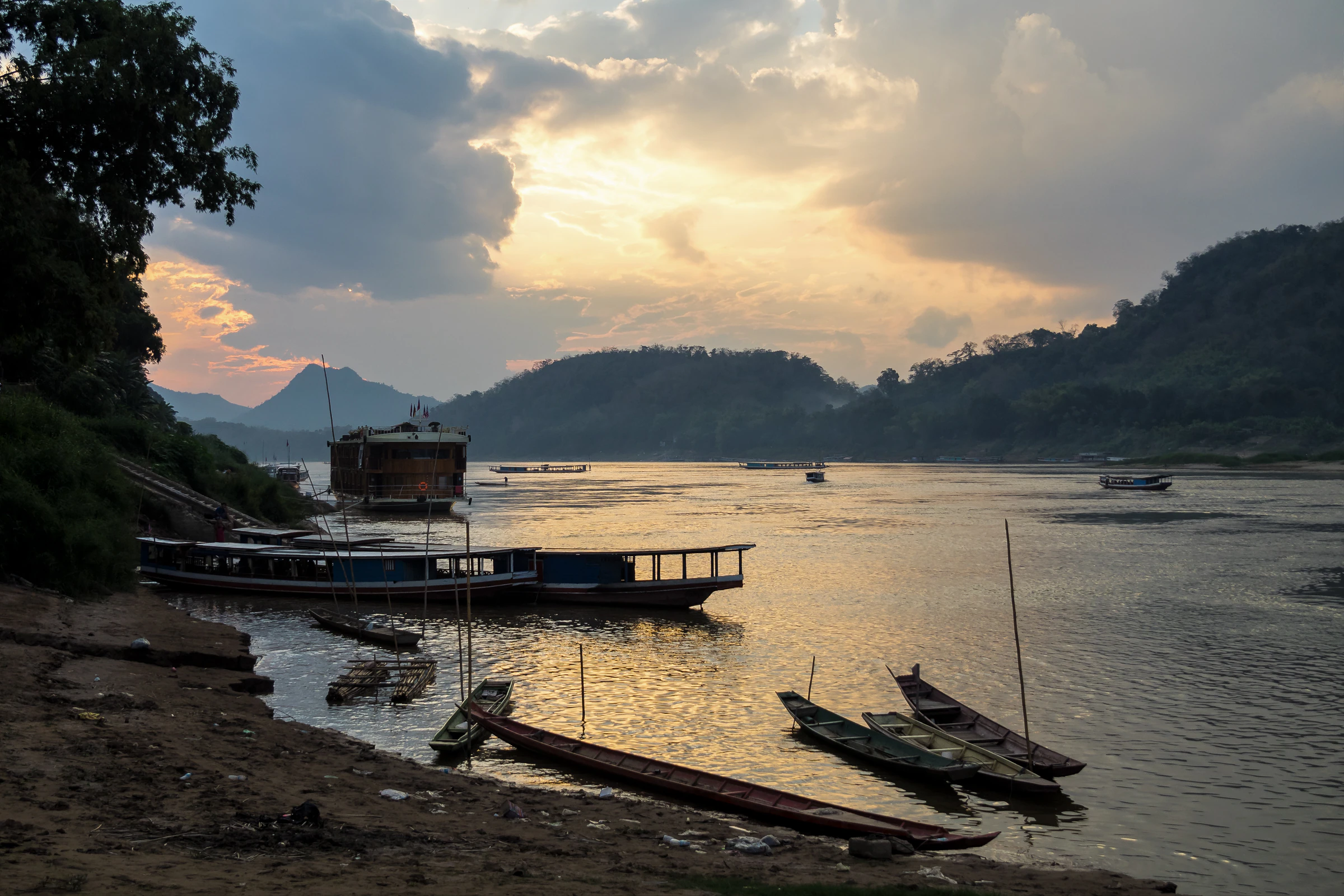
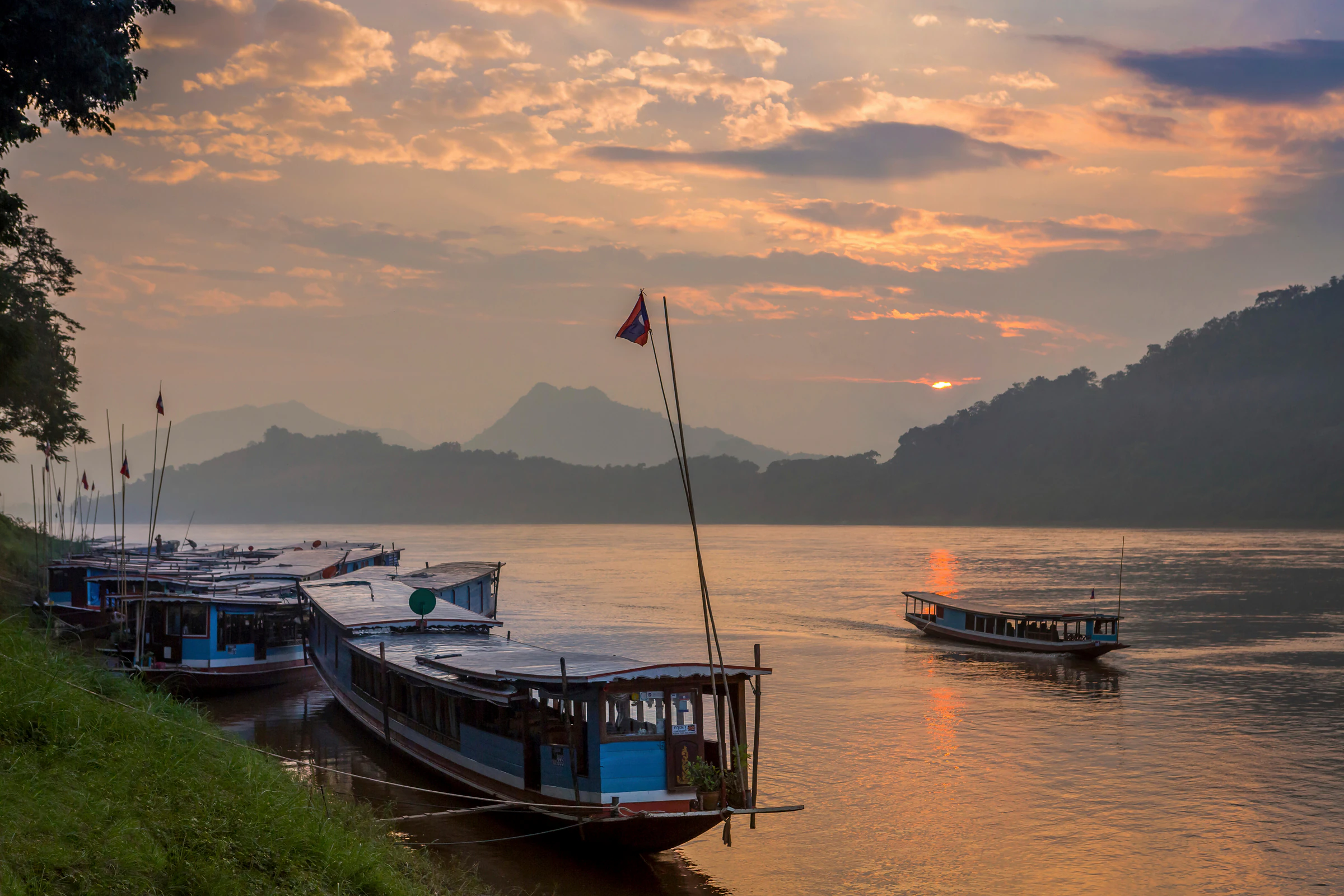
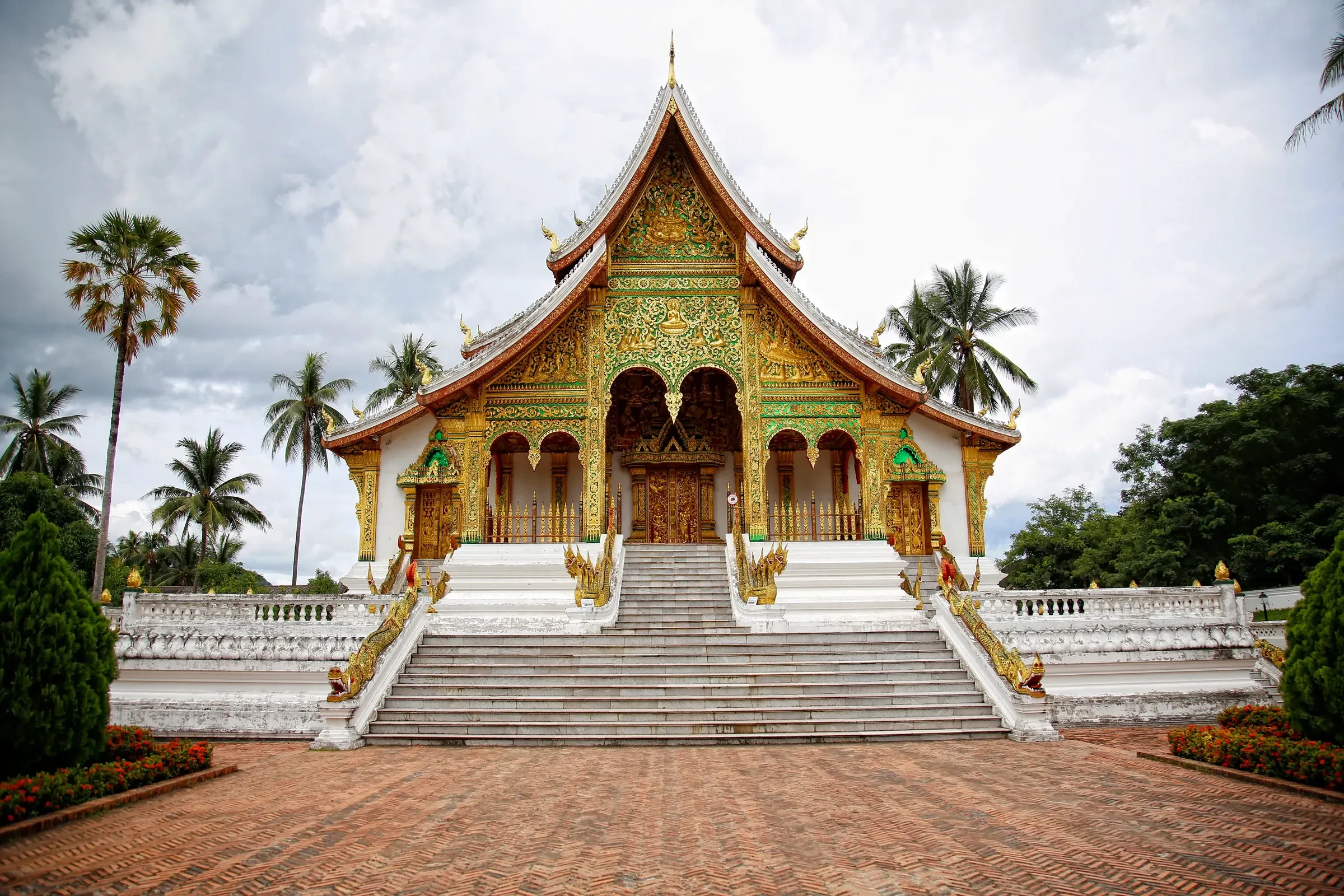
1. Luang Prabang. This is by far the festival's most atmospheric setting. The town's UNESCO-listed temples and Mekong riverfront give the rituals room to breathe before the water fighting takes over, and several processions run through the old town: the Nang Sangkhan (Miss New Year) procession from Wat That Noy to Wat Xieng Thong, an elephant procession, and the procession that carries the sacred Prabang Buddha image out for its ceremonial bathing, the holiest moment of the whole festival. Along the riverbank, locals build small sand stupas decorated with flags and flowers, a merit-making tradition tied to the new year.
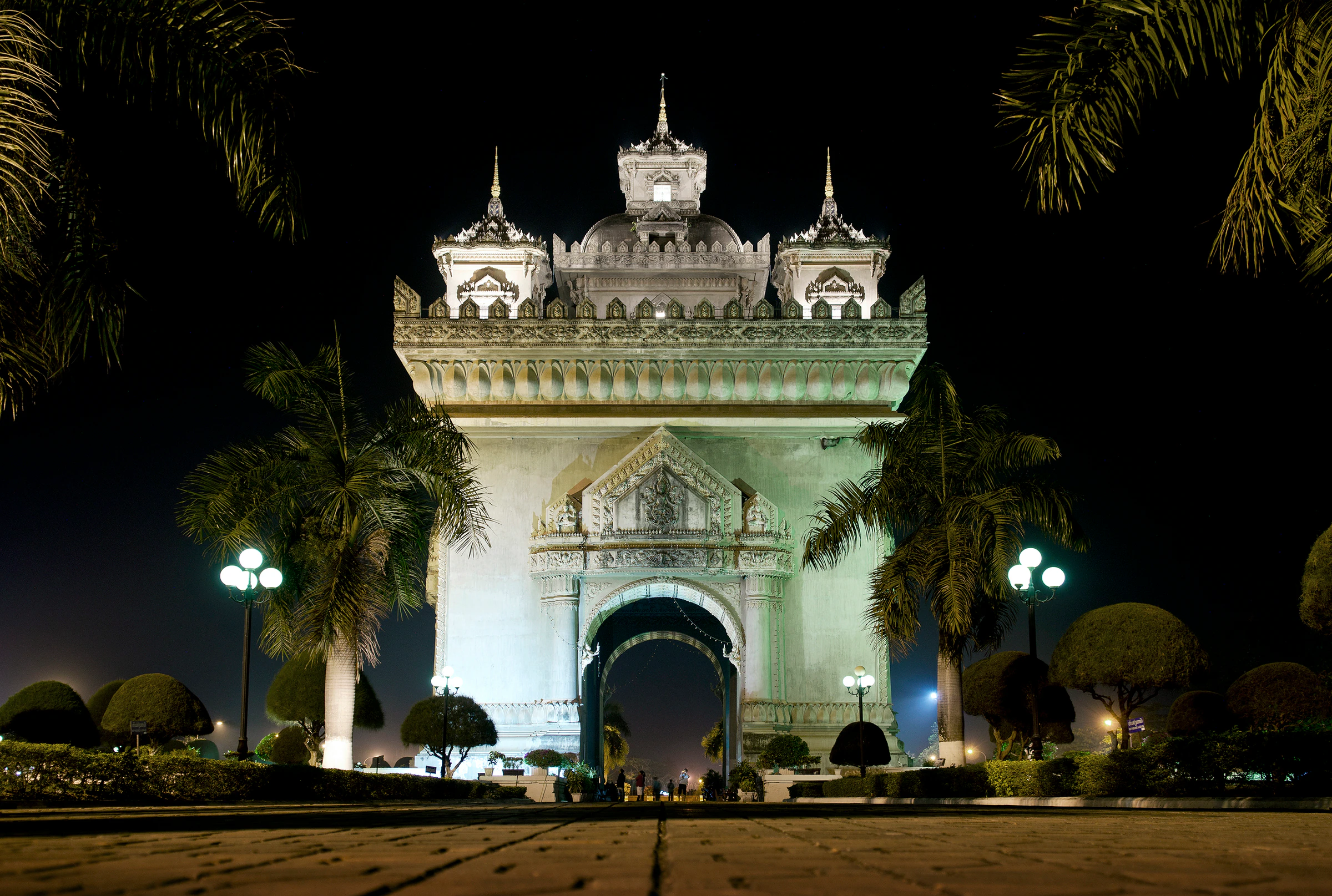
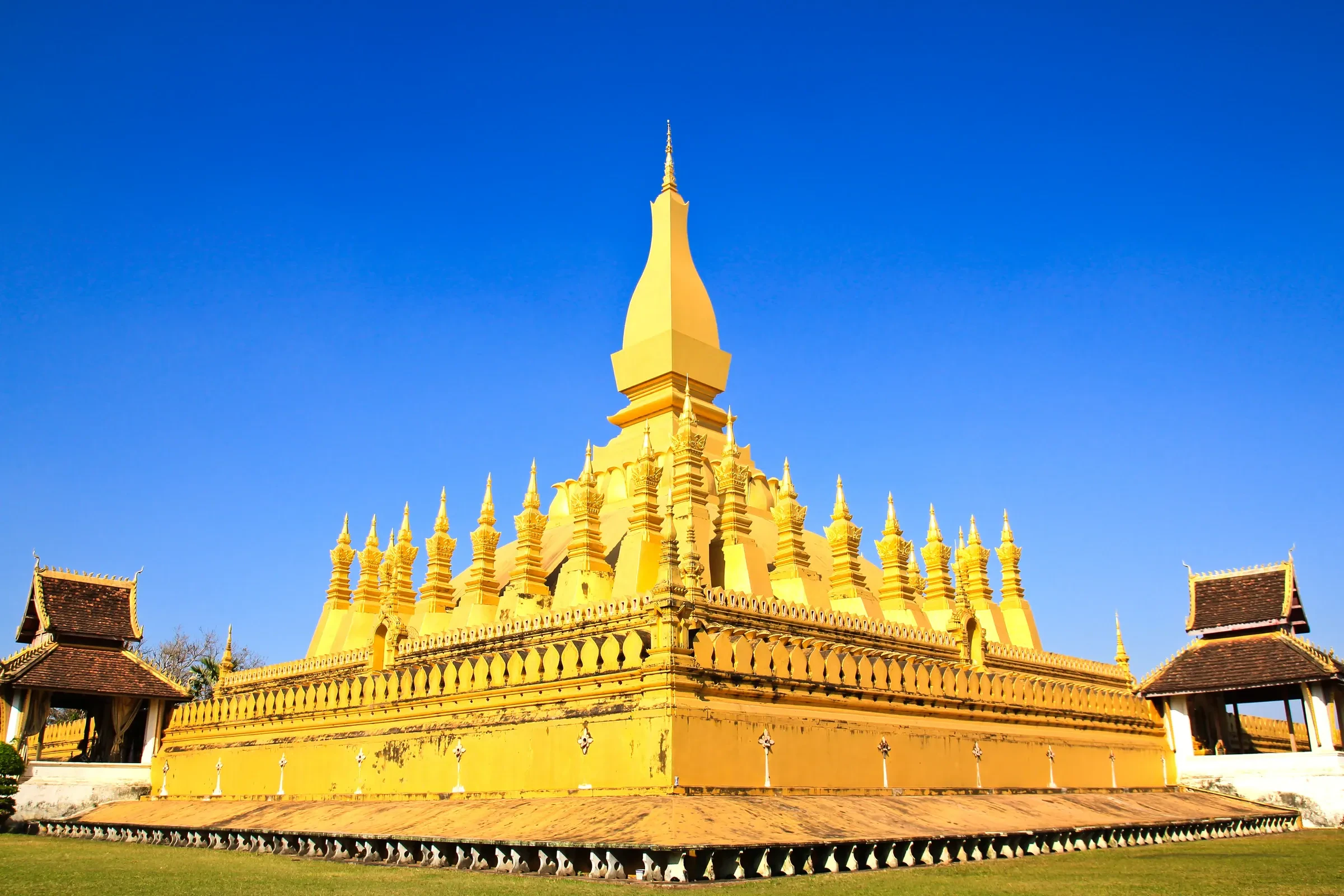
2. Vientiane. Laos's capital does Pi Mai on a bigger, noisier scale: main roads turn into extended water battles, with music, street food and a younger, more raucous crowd than Luang Prabang's. It's good fun if that's what you're after, but there's less of the ritual side, and the traffic and crowds are harder going in the heat.
Pi Mai Lao day by day
Day 1, Sangkhan Luang. Households clean top to bottom and stock up on water, flowers and incense for the days ahead. In Luang Prabang, people start visiting temples to wash Buddha statues with scented water, and the first processions of the festival period often begin around this point.
Day 2, Sangkhan Nao. The "day between years", traditionally a day of rest rather than work. Water fighting is already well underway in the streets by this point, alongside the more solemn temple visits.
Day 3, Sangkhan Kheun. New year's day itself, when younger people formally pay respects to elders with water and, often, a baci ceremony. In Luang Prabang the Prabang Buddha's ceremonial bathing falls later in the programme: in 2026 the image was carried to Wat Mai on 17 April and bathed until 19 April, after the public holiday had ended.
Luang Prabang's celebrations don't stop sharply after day three. Expect a lingering festival atmosphere, extra market stalls and processions around the three official days: the 2026 programme ran from 11 to 20 April.
How to join in and etiquette
Anyone can join the water fighting: it's aimed at everyone in the street, tourists included, and there's no real way to stay dry once you're out in it. The temple side of the festival is open to watch respectfully from a distance; ask before photographing people mid-ritual.
What to wear and bring
Wear light, quick-drying clothes you don't mind getting soaked, and shoes with a grip, since the streets get wet and slippery. Seal your phone, camera and cash in a waterproof bag or pouch before you go anywhere near a main street. Sun protection matters too: April is Laos's hottest month, and standing around in direct sun between water fights adds up fast. Carry more water than you think you'll need.
Staying safe
A trip around it
Two of our Laos trips run the route that puts you in Luang Prabang: the Laos Explorer starts there before heading to Nong Khiaw, Vang Vieng and Vientiane, and the Northern Thailand & Laos Slow Boat reaches Luang Prabang partway through before continuing the same way. Neither is built around Pi Mai, so if the festival is the reason you're going, check our Laos trips for current departures before you book flights, or plan your own dates around the festival and travel independently for that stretch.