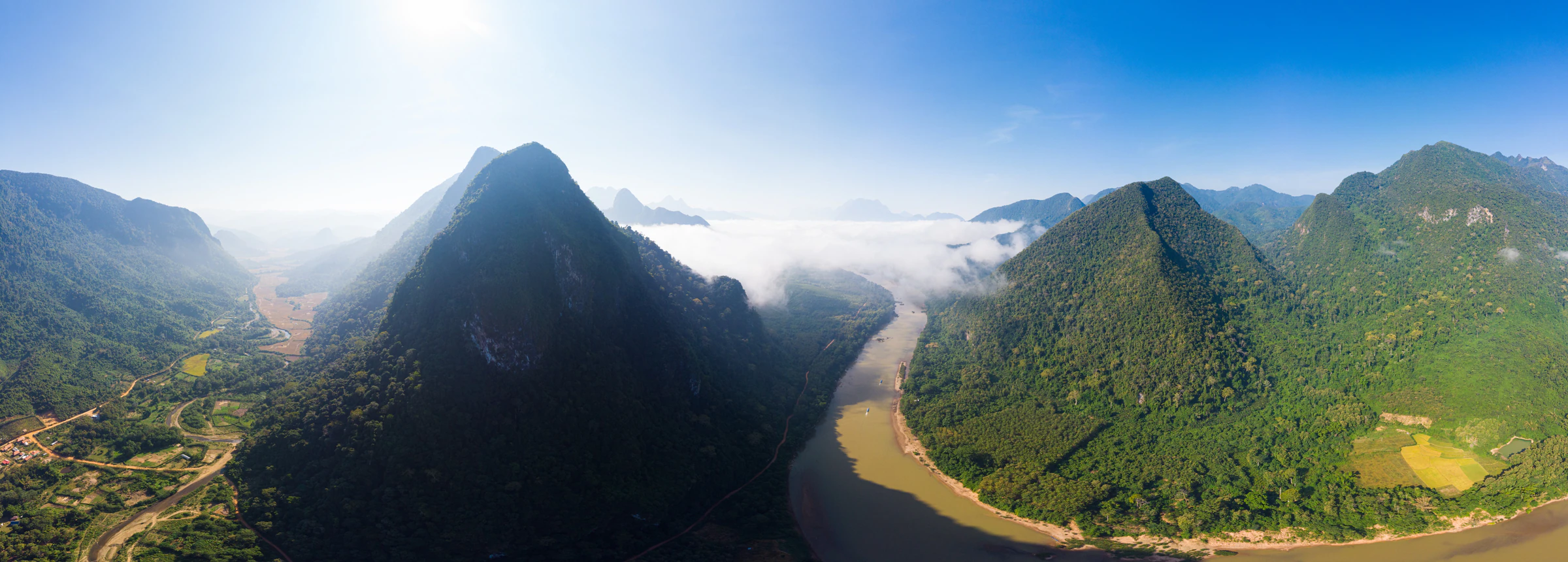
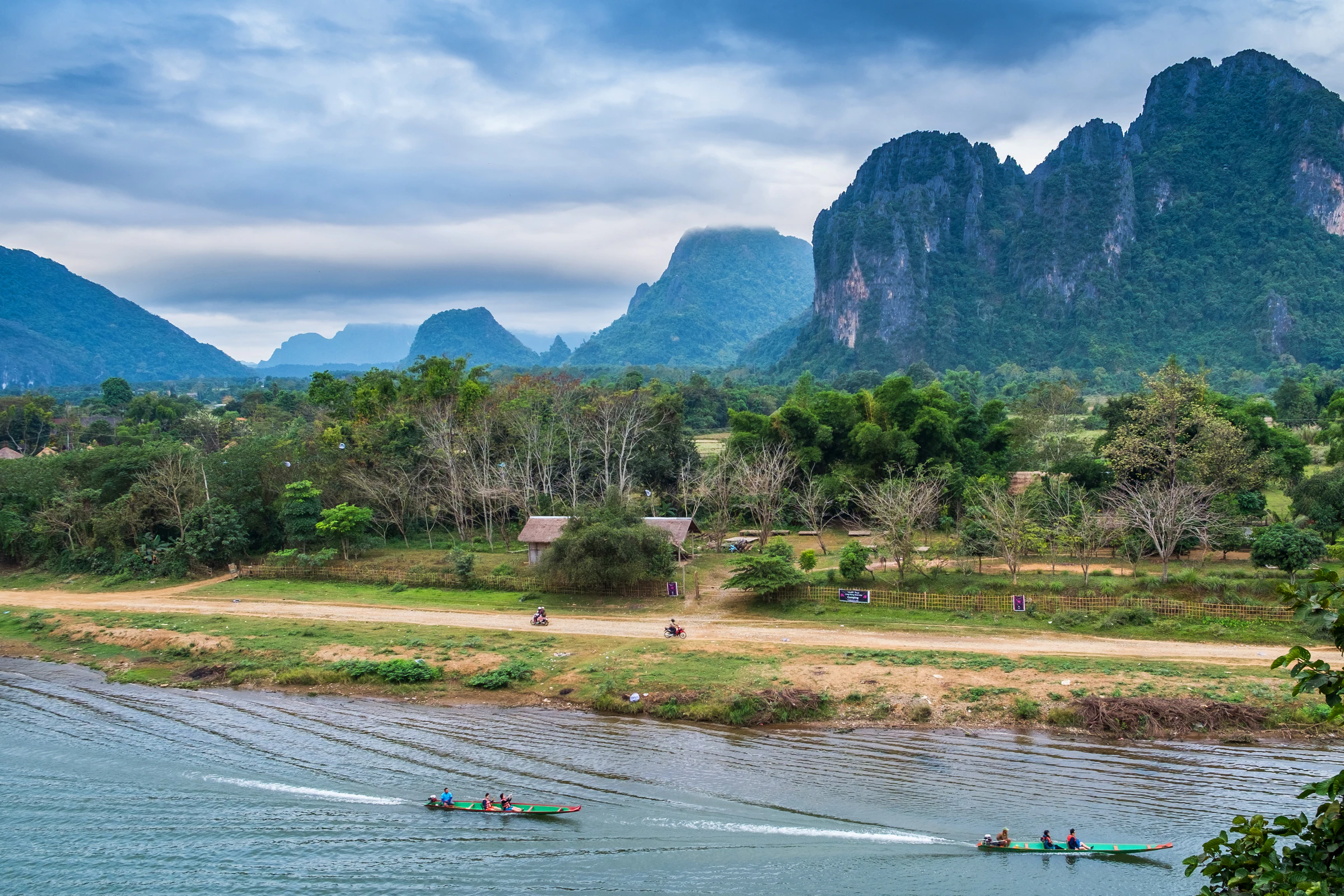
Vang Vieng had a reputation long before most people could find it on a map. In the 2000s it was the party stop of the Southeast Asia backpacker trail, with bars, rope swings and slides all along the river. After a run of deaths the government shut that down in 2012, and the town has been reinventing itself ever since. What's left, and what brings people now, is the setting: a flat green valley, a river you can paddle, and karst peaks rising straight out of the rice fields on every side.
It's still a social town and there's still a bar scene. But most days here start with a kayak or a hike, not a hangover, and the railway has made Vang Vieng an easy two or three nights between Luang Prabang and Vientiane. This guide covers what to do, tubing as it is now, the balloons, day trips, safety and how long to stay. For the rest of the country, start with our Laos travel guide.
Vang Vieng at a glance
- Where: Vientiane province, central-north Laos, on the Nam Song river
- Getting there: about 1 hour by train from Luang Prabang or Vientiane
- Known for: kayaking, tubing, the Blue Lagoons, caves, viewpoint hikes, hot-air balloons
- Best months: November to February
- How long: two or three nights, or four with a day trip
Things to do in Vang Vieng
Most of what there is to do sits within about 20 km of town, and a lot of it involves water. Here are the main ones. You'll sometimes see the town's name written the other way round, as "Vieng Vang", but it's the same place.
Kayaking the Nam Song
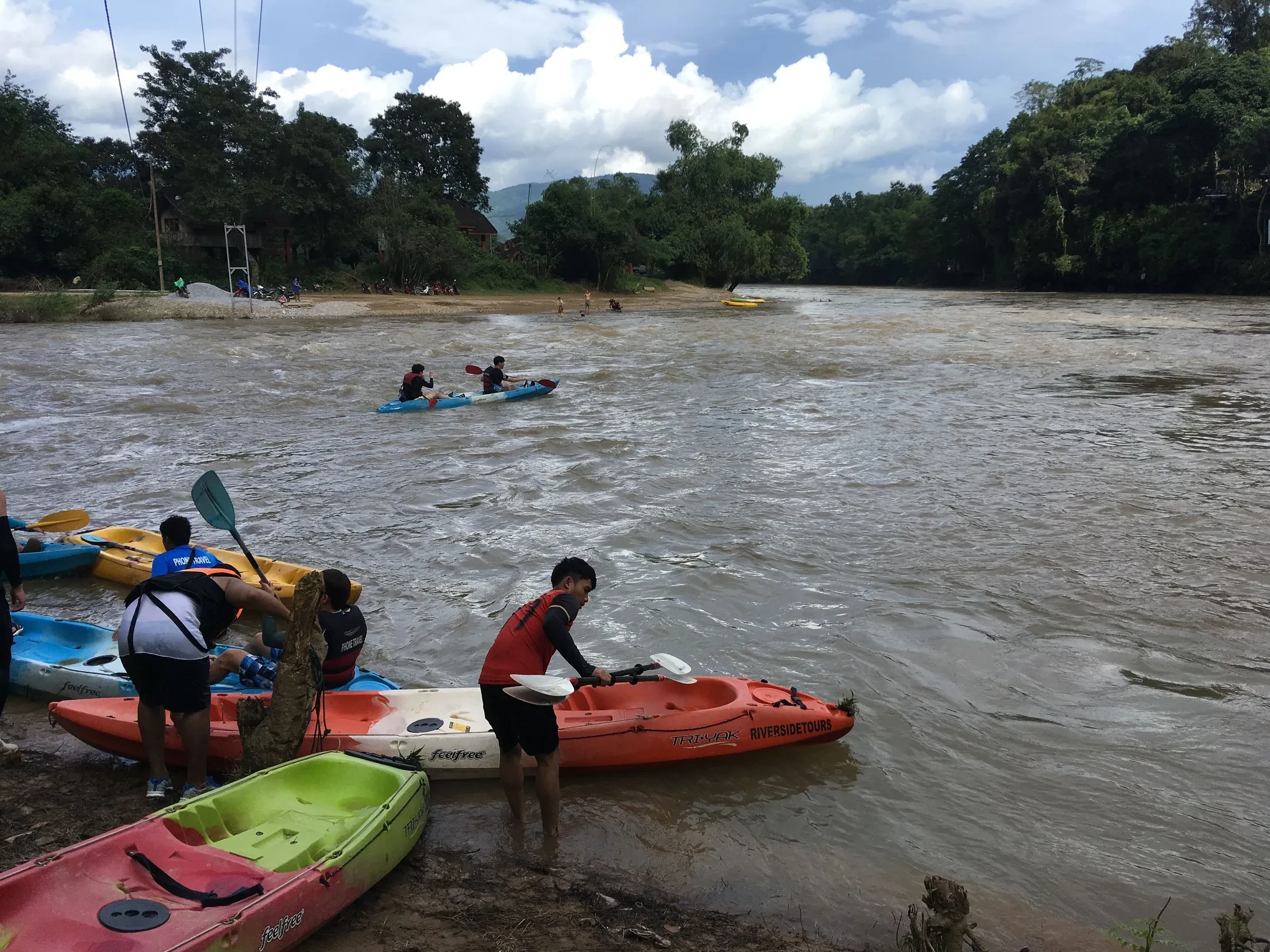
This is the best way to see the valley. Half-day and full-day trips put you in a kayak for a stretch of the river under the cliffs, usually ending near town. Most full-day tours combine kayaking with the water cave and a Blue Lagoon, include lunch and take six to eight hours. Expect to pay about US$25 to US$75. Wear the life jacket you're given, and trust the operator if they shorten the route because the water is high.
The water cave (Tham Nam)
About 15 km north of town, near the village of Tham Xang, you sit in a tube and pull yourself into a cave along a rope, with a head torch to see by. It's cold, dark and a lot of fun. The nearby Tham Xang (Elephant Cave) is a small shrine cave named after a rock that looks like an elephant. Most kayak day tours stop here.
The Blue Lagoons
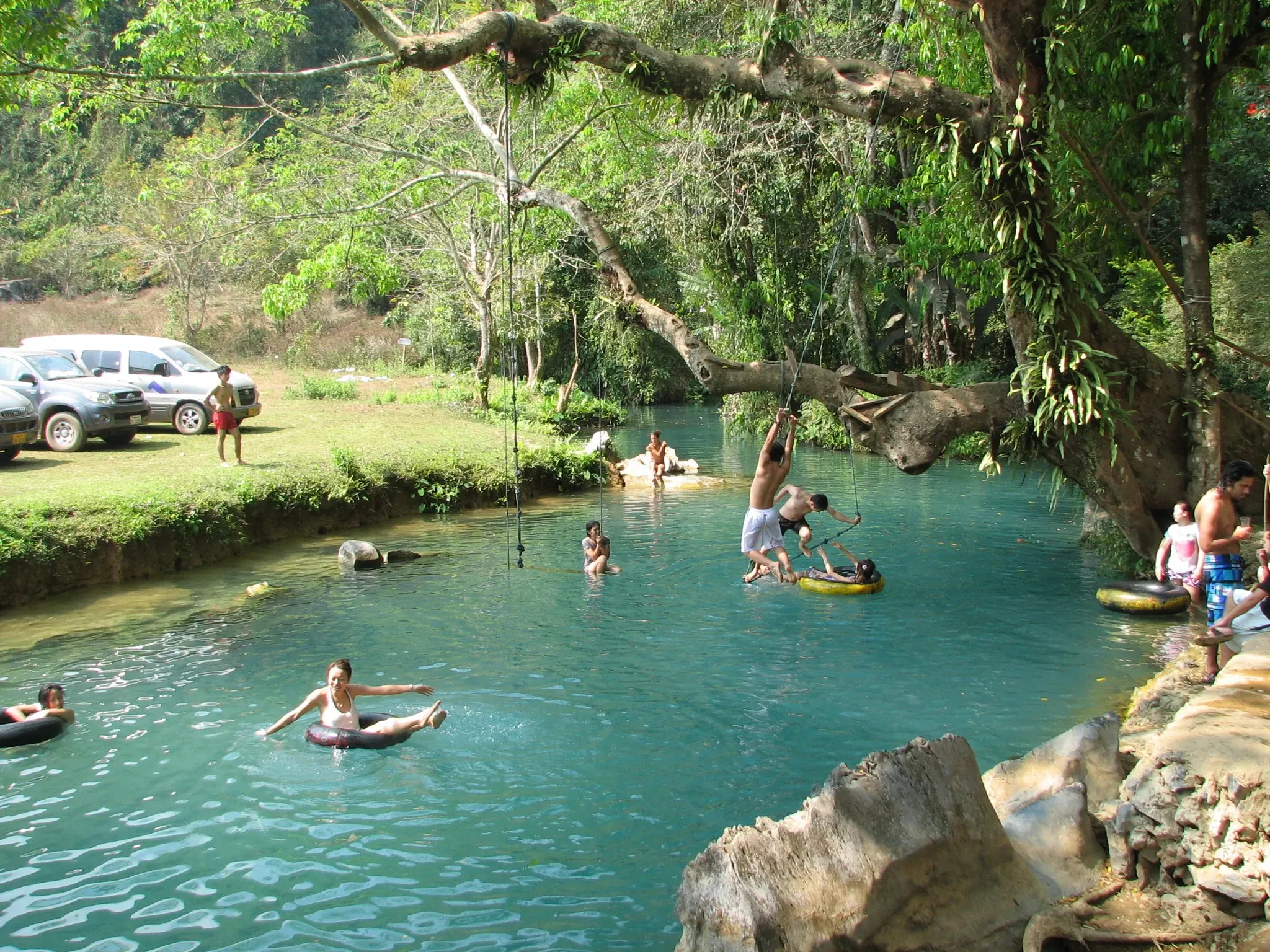
"Blue Lagoon" is the name for a string of spring-fed swimming holes west of the river, numbered 1 to 4 (and counting).
| Lagoon | Distance from town | What it's like |
|---|---|---|
| Blue Lagoon 1 (Tham Phu Kham) | about 10 km | The original. A busy pool with a big tree for jumping, next to a cave with a reclining Buddha up a steep climb |
| Blue Lagoon 3 | about 20 km, about an hour on dirt roads | Bigger and prettier, with rope swings, a zip line and a restaurant. Open 08:00 to 18:00 |
| Blue Lagoons 2 and 4 | on the same side of the valley | Quieter and smaller |
Entry is about 20,000 to 30,000 kip each, and there's a small toll on the bridge out of town. A tuk-tuk for the afternoon is the easiest way to get there, because the roads get rough. Check how deep the water is before you jump from a tree or a swing, and don't jump after drinking.
Viewpoints
The two best-known hikes cross the river to the west:
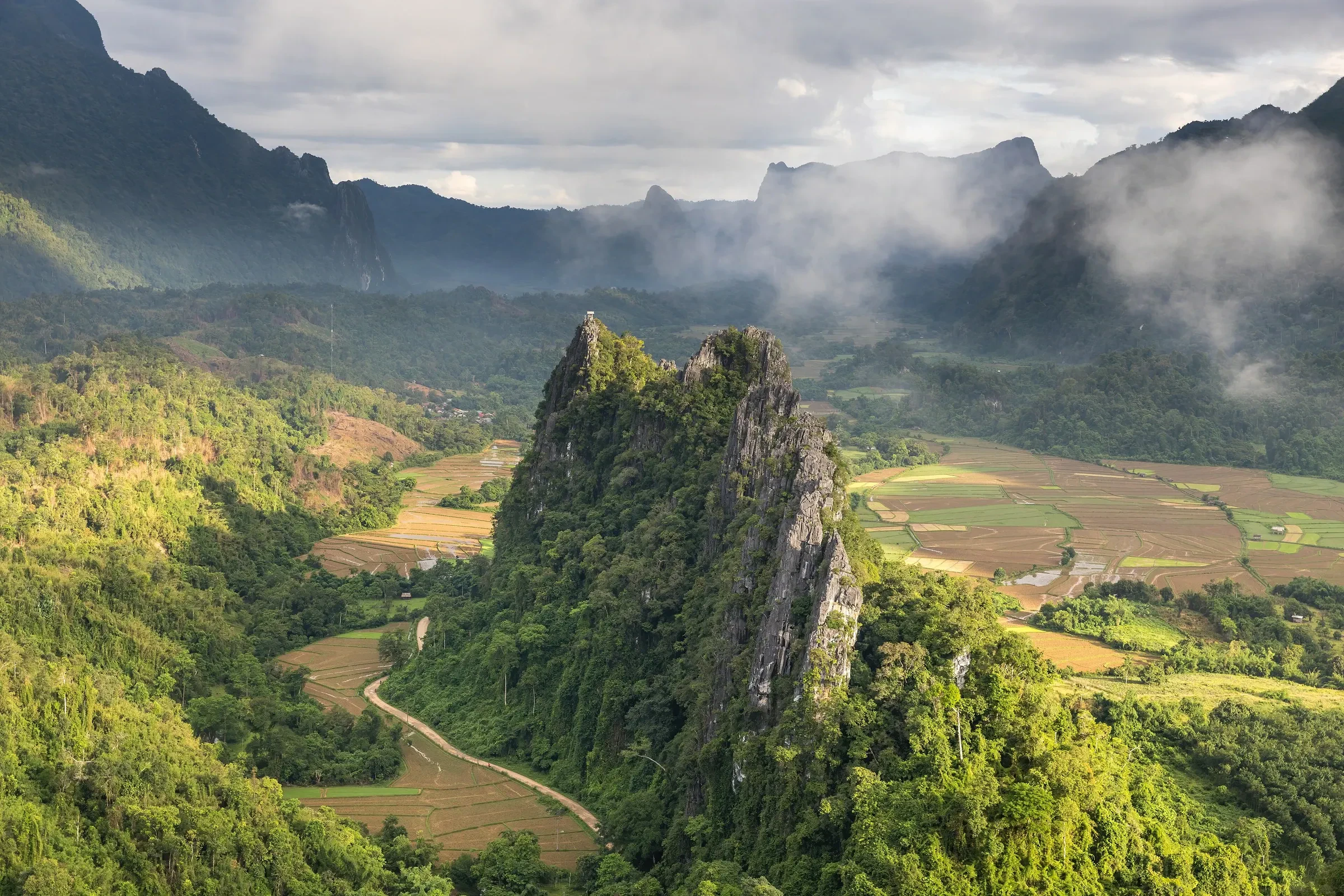
- Nam Xay viewpoint is a steep 30 to 45 minute scramble up limestone, with bamboo handrails in places. At the top, an old motorbike is perched on a rock for the photo everyone takes. Entry is about 20,000 kip.
- Pha Ngern viewpoint is longer and harder, with better views down the river.
Wear proper shoes, bring water, and skip both when the rock is wet. Get down before dark, because the trails are dangerous without light.
Tham Chang cave
Tham Chang is right on the edge of town, up a flight of steps above a small spring you can swim in. It's an easy hour if you have a spare morning.
Tubing in Vang Vieng: then and now
Tubing is the thing everyone has heard of, so it's worth being straight about it.
What it was. From the late 1990s, travellers floated down the Nam Song in tractor inner tubes from one riverside bar to the next. By the late 2000s the bars sold cheap buckets of spirits, the rope swings and slides dropped people into shallow water, and "happy" shakes were on the menus. The deaths added up. About 27 people died in 2011 alone, according to widely reported figures, and in 2012 the Lao government closed the riverside bars and tore down the swings and slides.
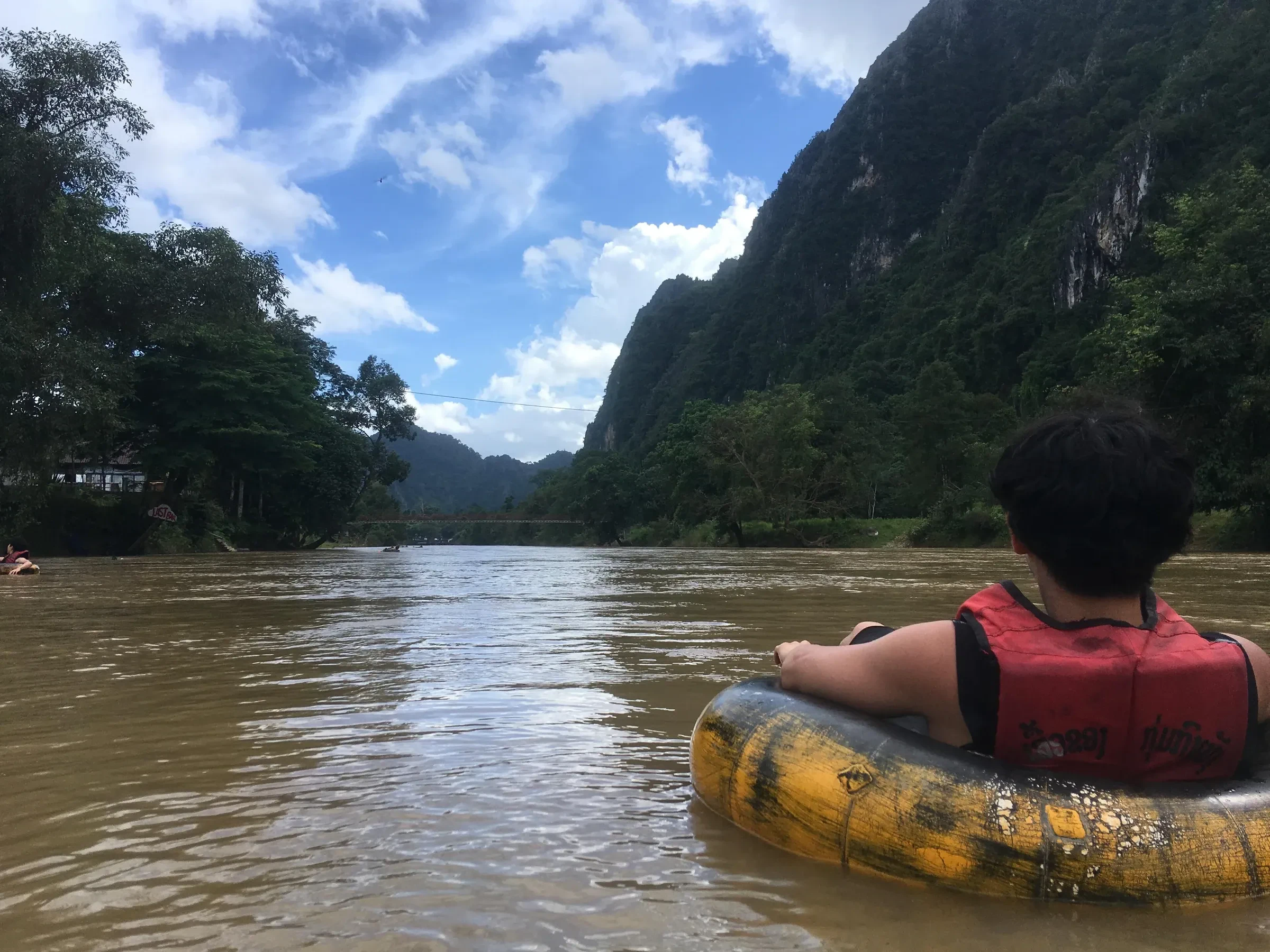
What it is now. Tubing came back as a much quieter float. You rent a tube in town for about 60,000 to 80,000 kip plus a 60,000 kip refundable deposit, a tuk-tuk takes you upstream, and you drift back to town. It usually takes about three hours, longer when the river is low. A few bars still operate near the start, and after that it's mostly river, cliffs and the odd restaurant. You get your deposit back if the tube is returned before the office closes, usually 18:00 or 20:00, so ask when you rent.
How to tube safely
The risks haven't gone away with the swings. Canada's government says that travellers have died or been seriously injured while tubing or jumping into the river, that river levels can change a lot and debris can make it dangerous, and that you shouldn't drink or take drugs before going on the river. The UK Foreign Office says tubing, kayaking and swimming in Laos can carry significant risks.
In practice:
- Don't drink on the river, or keep it to one. Most accidents involve alcohol.
- Ask for a life jacket. Operators have them, but you usually have to ask.
- Don't jump or dive in. The river is shallower in places than it looks, and there are rocks.
- Go early. Start before lunch so you're off the water well before dark.
- Don't go when the river is high. After heavy rain, and through much of the May to October rainy season, the current gets fast. The rental office should close when it's unsafe; if you're unsure, don't go.
- Check your insurance. Make sure your policy covers tubing and kayaking, and remember that claims can be refused if you were drunk.
If you want the river without the bar scene, the kayak day is the better choice. It's what our group trip does.
Hot-air balloons in Vang Vieng
Balloon flights over the valley at sunrise or sunset are one of the most photographed things in Laos, and several operators sell them. Prices vary by operator, so check a current listing.
Before you book, know the recent history. In late February 2026 the authorities suspended all balloon and paramotor flights after a paramotor crash, and flights resumed in mid-March. On 26 March 2026 a balloon carrying tourists hit power lines during a sunset flight, causing a local power cut. No injuries were reported. On 7 April Laos's prime minister called for stronger oversight of tourism businesses and pointed to gaps in safety standards for high-risk activities such as balloons and paramotors. The UK Foreign Office also warns that equipment for activities such as ballooning and paragliding may not meet UK safety and insurance standards.
If you still want to fly, choose an established operator, ask what licence and insurance it holds, check that your travel insurance covers ballooning, and don't fly in poor weather. Rules may have changed since the spring. Our trips don't include or book balloon flights.
Day trips from Vang Vieng
- The kayak, water cave and Blue Lagoon day. The classic full day out, covered above.
- Blue Lagoon 3 and the western valley. Hire a tuk-tuk for the afternoon and combine the lagoon with the villages and rice fields on the way.
- Kaeng Nyui waterfall. A waterfall of about 30 m, around 7 km east of town. It's best in the months just after the rains.
- The caves north of town. Tham Nam, Tham Xang and the other caves around the village of Tham Xang, about 14 to 15 km up the valley.
- Vientiane. The capital is about an hour away by train, so you can go down for the day, though most people simply move on there. See the getting there section below.
Longer trips such as Kong Lor Cave on the Thakhek Loop are too far for a day. Do them as a separate trip from Vientiane. The Laos itinerary guide shows how they fit.
Where to stay in Vang Vieng
The town is small, and it's all walkable.
| Area | Best for | Good to know |
|---|---|---|
| The town centre | Hostels, meeting people, restaurants | Close to the tubing office and the tour agents. The bars are here too, so it can be loud |
| The riverfront | Sunset views over the cliffs | Guesthouses and bungalows along the Nam Song. Book early for a river view in high season |
| Across the river | Quiet nights | Bungalows among the fields on the west bank, near the viewpoints and on the way to the lagoons |
A dorm bed in Laos costs about 100,000 to 400,000 kip a night. If you book a social hostel, check that it doesn't hand out free shots of unlabelled spirits (see the safety section).
Getting to Vang Vieng
By train. The Laos-China Railway is the easiest way in. Fast trains take about an hour from Luang Prabang and about an hour from Vientiane, and there are several a day. A 2nd-class ticket from Vientiane costs about 170,000 to 190,000 kip, after fares rose about 9% on 1 April 2026. Tickets are released only a few days ahead (reports say 3 to 7, so check the app) and sell out in high season, so book on the LCR Ticket app as soon as they open. Bring your passport, because security at the station is like an airport's (no knives, lighters or aerosols). Vang Vieng's station is about 4 km from town, so allow time for a tuk-tuk or minivan.
By minivan or bus. Minivans from Vientiane now use the expressway and take about 1.5 to 2.5 hours, for roughly 150,000 to 250,000 kip. From Luang Prabang the road over the mountains is much slower than the train.
For visas and border crossings, read our Laos visa guide. Most passports need one.
Getting around Vang Vieng
- On foot. The town centre, the river and Tham Chang are all walkable.
- Tuk-tuks. Hire one for the lagoons or the caves, and agree the price and the waiting time before you set off.
- Bicycles. Fine around town and to Blue Lagoon 1 on a cool morning. Blue Lagoon 3 is a long, bumpy ride.
- Scooters and buggies. Popular for the lagoons, but the dirt roads are rough and crashes are common. You need a licence that covers motorbikes, and your insurance may not pay out without one. Never leave your passport as a deposit: the UK Foreign Office has reported rental shops arranging for their own bikes to be stolen or damaged and then demanding high fees to return passports.
Best time to visit Vang Vieng
| Months | Weather | Good for |
|---|---|---|
| November to February | Dry and cooler, with clear skies. Nights can be cool | Everything. The best months for kayaking, tubing and hiking |
| March to April | Hot and dry. Smoke from field burning can bring haze | Swimming in the lagoons, but views are often hazy |
| May to October | Rainy season, often 200 to 300 mm a month. Green and quiet | Waterfalls and fewer people, but high water makes tubing and kayaking riskier, and trails get slippery |
In January 2026 Laos banned most outdoor burning until April after bad air, so check the air quality if you travel in March or April. Our Laos travel guide has the season picture for the whole country.
How much does Vang Vieng cost?
| Item | Price |
|---|---|
| Tube rental | about 60,000 to 80,000 kip, plus a 60,000 kip deposit |
| Kayak, water cave and Blue Lagoon day with lunch | about US$25 to US$75 |
| Blue Lagoon entry | about 20,000 to 30,000 kip |
| Nam Xay viewpoint | about 20,000 kip |
| Hot-air balloon flight | prices vary by operator, so check a current listing |
| Train from Vientiane, 2nd class | about 170,000 to 190,000 kip |
| Large Beerlao | 15,000 to 25,000 kip |
Most backpackers in Laos spend about US$20 to US$35 a day before activities. Vang Vieng's activities add up, so budget for one or two paid days. There are ATMs in town, but carry some cash for the lagoons and tuk-tuks.
Staying safe in Vang Vieng
Vang Vieng is a friendly town, and most visits go fine. The real risks are specific, and they're worth knowing.
- Methanol. In November 2024, six foreign tourists died after a night out in Vang Vieng, in a case linked to methanol in spirits. Laos's health authorities found excessive methanol in a vodka sample, and in July 2026 they said they could not formally establish the cause of death because the families had not allowed autopsies (EWN report). Canada's government says several foreigners in the town have died or become seriously ill from suspected methanol. You can't taste or smell it. Drink beer or spirits from a sealed bottle or can from a licensed shop or bar, and turn down free shots and cheap buckets.
- "Happy" menus. Shakes, pizzas and other "happy" or "special" items can contain opium or other unknown drugs, and foreigners have died after taking them. Laos has zero tolerance for drugs, including cannabis, and possession can mean a long prison sentence.
- The river. See the tubing section. No alcohol, a life jacket, no jumping, and stay off the water when it's high.
- Sexual assault. Canada's government says sexual assaults occur, particularly in Vientiane, Luang Prabang and Vang Vieng. Watch your drink, go home with people you know and use a registered tuk-tuk at night.
- Healthcare. It's basic outside Vientiane, and serious cases are usually moved to Thailand. Get insurance that covers medical evacuation and the activities you plan to do.
How many days in Vang Vieng?
Two nights gives you one full day on the water (kayaking, the water cave and a lagoon) plus a viewpoint or tubing on the morning you leave. Three nights is better: add Blue Lagoon 3 or a second hike and a slow evening on the river. Stay longer if you want to climb, hike more or just sit still. Here's how Vang Vieng fits into longer trips.
Vang Vieng in a 1-week Laos itinerary
Three nights in Luang Prabang, two in Vang Vieng and one or two in Vientiane, with the train between each. See the Luang Prabang guide for the first half.
10 days
Add the Nam Ou river to the week above: go north from Luang Prabang to Nong Khiaw for karst viewpoints and village life, then come back for the train south to Vang Vieng. Or add a third night in Vang Vieng for Blue Lagoon 3 and Pha Ngern.
2 weeks
Start in northern Thailand (Chiang Mai or Chiang Rai), fly to Luang Prabang, and take the train down through Vang Vieng to Vientiane. That's close to the shape of our group trip below. With two weeks you can give Vang Vieng three nights and still see the north properly.
1 month
After the north, head south from Vientiane for the Thakhek Loop and Kong Lor Cave, then carry on to the 4,000 Islands on the Cambodian border. Remember the visa is for 30 days, and you'll need an extension to stay longer. The Laos itinerary guide sets out routes of every length.
Vang Vieng with a small group
Two of our trips spend time in Vang Vieng. Our Thailand & Laos Slow Boat trip spends two nights here. The group takes the train from Luang Prabang in the afternoon and arrives in time to watch the sun set behind the cliffs. The next day is a full day outdoors with a local operator: kayaking down the Nam Song, floating into a water cave on a tube with a head torch, and swimming at the Blue Lagoon, with lunch included. How much of the river we paddle depends on the water level, and we go with the operator's call. The last morning is free for a viewpoint or a coffee by the river before the train to Vientiane. Your Trip Host is with the group the whole way, and a licensed local agency runs the ground arrangements in Laos.
Our Laos Explorer trip also gives you two nights here, with the same shape of kayak, water cave and Blue Lagoon day with a local operator, after three nights in Luang Prabang and two more in the karst hills around Nong Khiaw.
If you're heading south from Vientiane afterwards rather than flying home, our Laos Adventure trip picks up from there for the Thakhek Loop, Kong Lor cave and the 4,000 Islands, though it doesn't come through Vang Vieng itself.