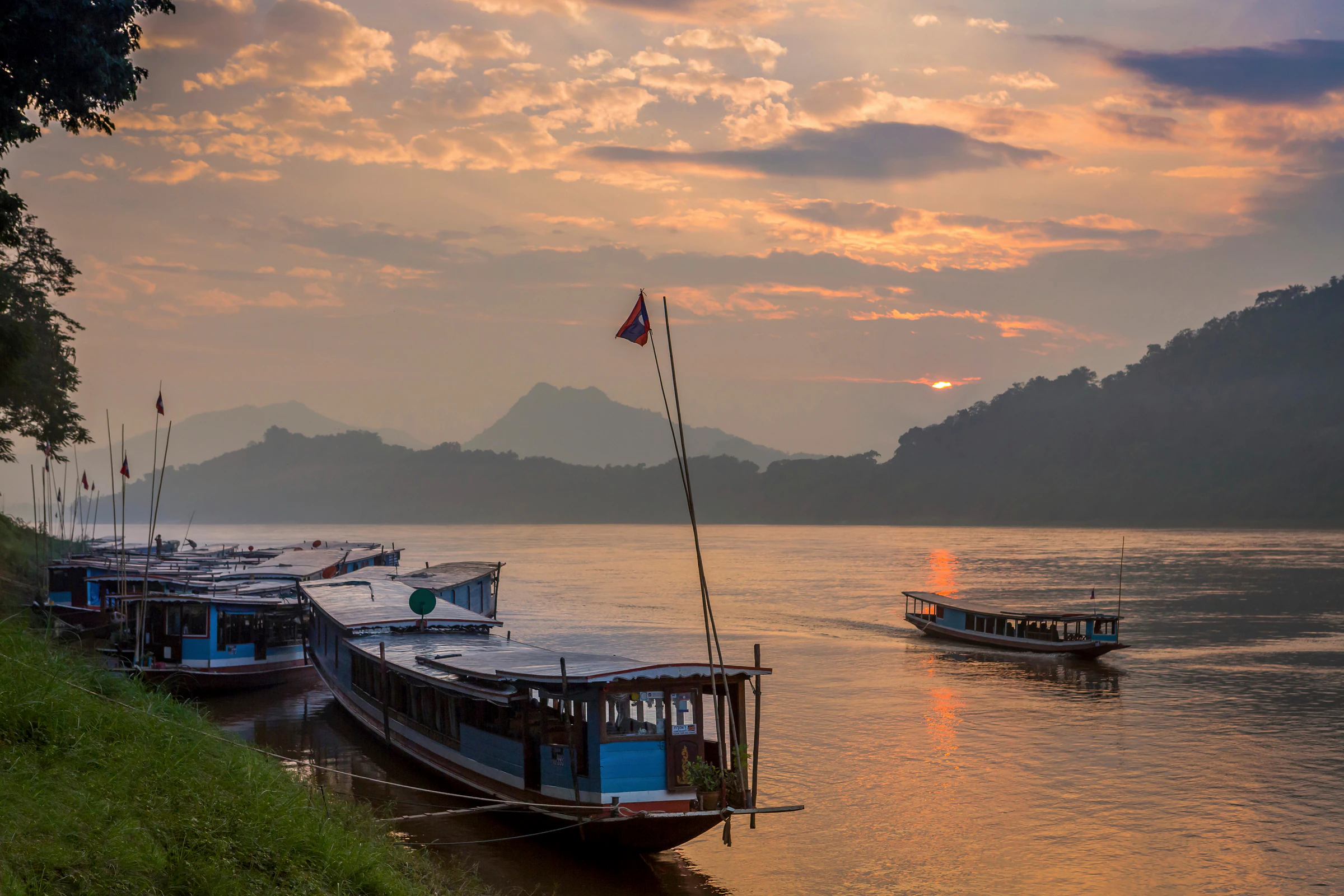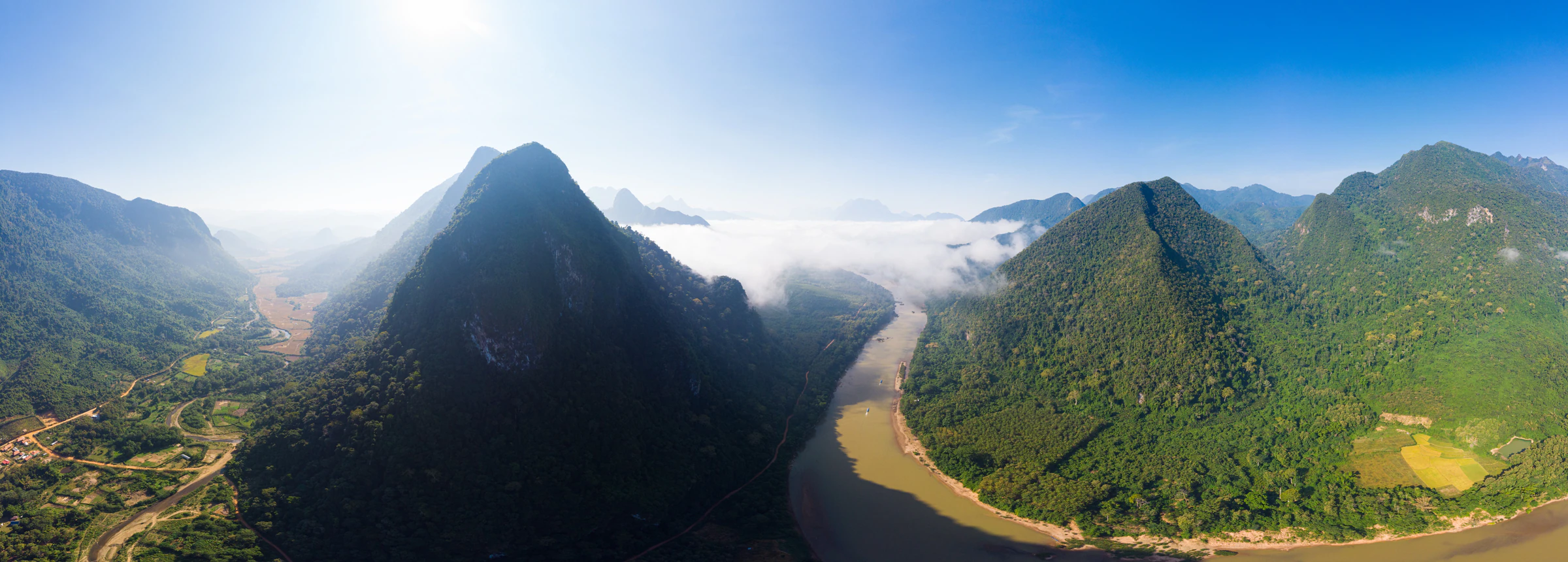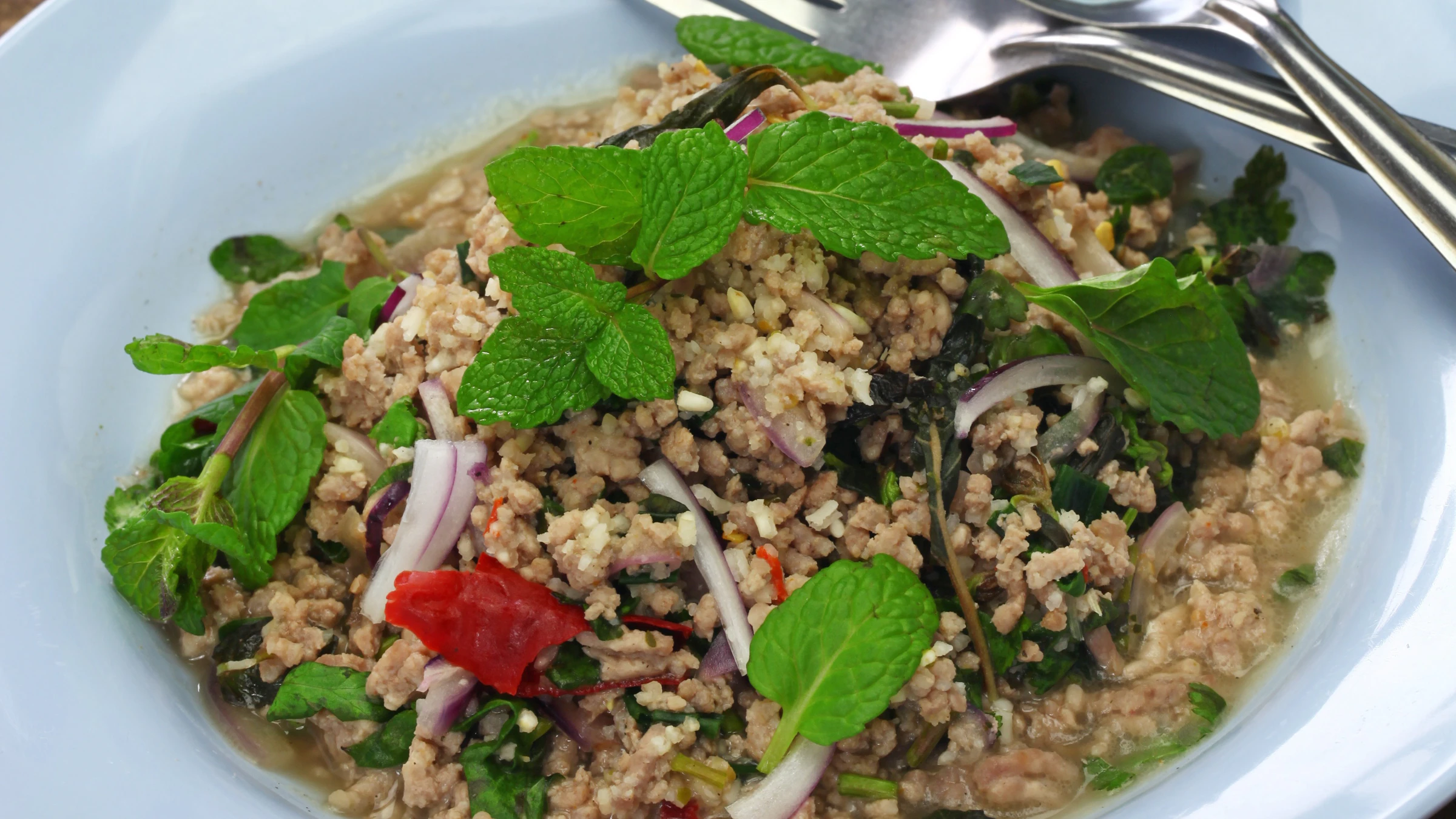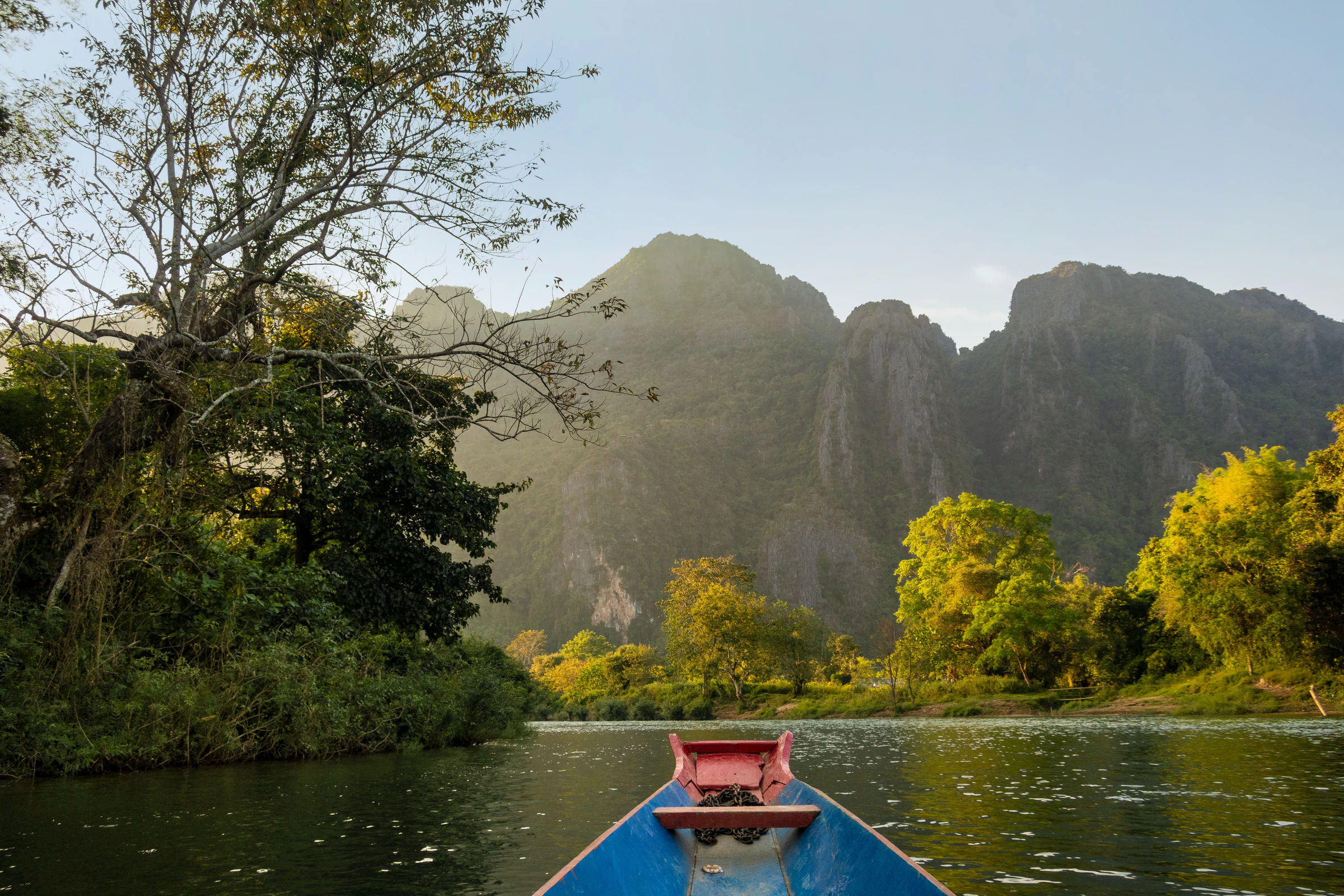
Laos doesn't have Thailand's beaches or Vietnam's food scene as its headline act. What it does have is a handful of things you can't really do anywhere else nearby: travel an underground river by boat, watch a religious ritual rather than a staged one, or spend days on a stretch of the Mekong with no cars. Below are the experiences worth planning a route around, what each one costs, and which of our Laos group trips already includes it. For the wider country picture, start with our Laos travel guide, or time a trip around one of the country's own celebrations with our Laos festivals guide.
The seven experiences
1. Swim at Kuang Si Falls
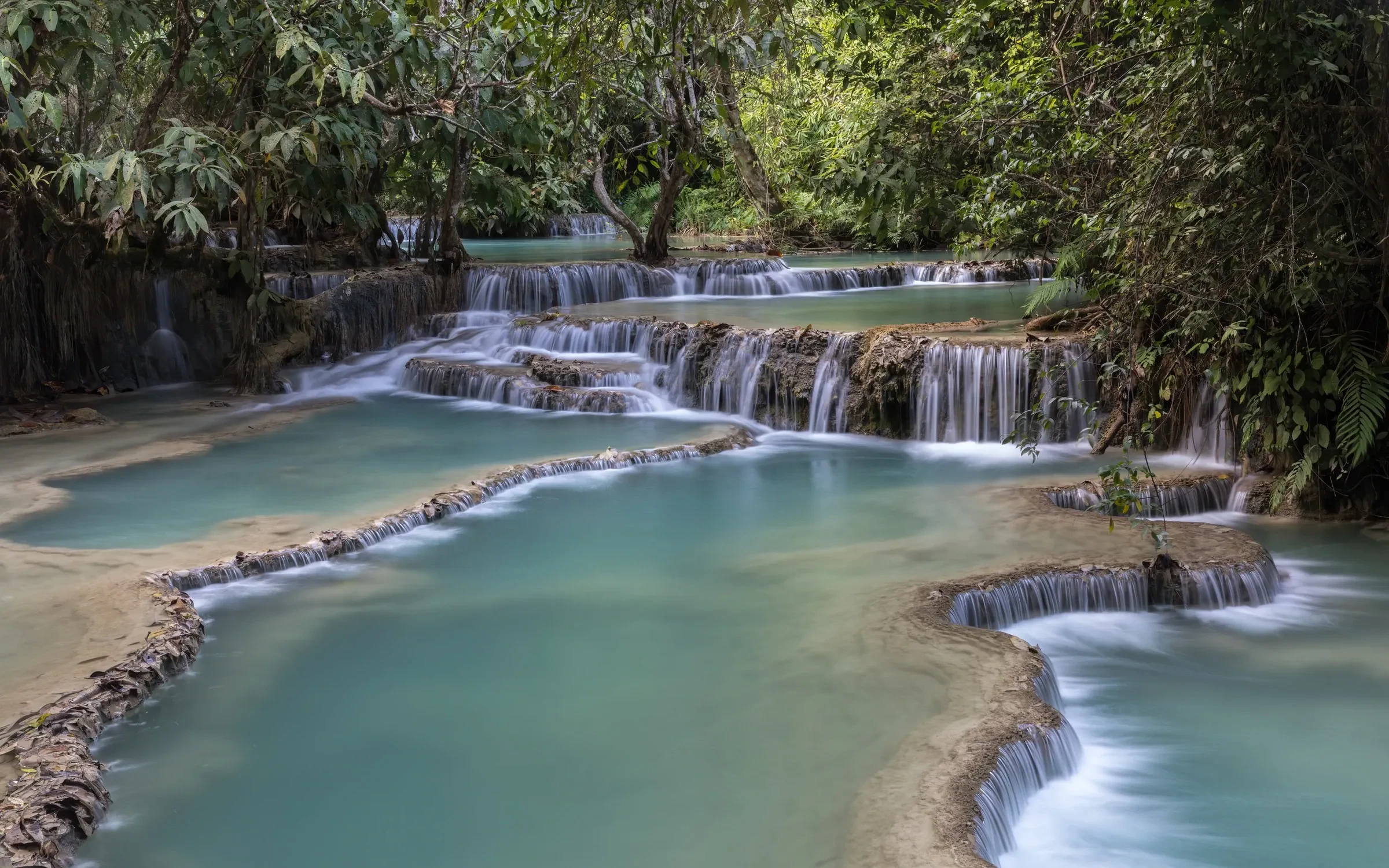
What it is: a series of turquoise limestone pools stepping down through the forest to a tall main waterfall, about 30 km outside Luang Prabang. Why: it's the most photographed spot in the country for good reason, and swimming in one of the cooler pools after the ride out is genuinely refreshing. Where: just outside Luang Prabang, in the north. Cost: 60,000 kip entry, which also covers the bear rescue centre near the entrance. The centre is run by the charity Free the Bears, and the park fee doesn't pass money on to it, so a donation there helps. Time needed: half a day, including the ride there and back.
Go early or late to dodge the midday tour groups, and check the signs before you get in: swimming is allowed in the lower pools, not at the top of the falls. The water runs bluest in the dry months and turns milky brown after heavy rain. Full details, and the rest of the town, are in our Luang Prabang guide.
2. Watch the monks' morning alms round
What it is: at dawn every day in Luang Prabang, lines of monks walk barefoot through the streets collecting sticky rice from local people kneeling at the roadside. Why: it's a living religious ritual, not a show put on for visitors, and one of the few moments on a Laos trip where you're a quiet observer rather than a participant. Where: Luang Prabang's old town, along the main streets at first light. Cost: free to watch. Local guidance asks visitors to observe in silence, and to offer alms only if it means something to you. Time needed: 30 to 45 minutes. The round runs about 5:30 to 6:30am from March to October and about 6 to 7am from November to February, so arrive a little before.
Luang Prabang's tourism office asks visitors to keep about 5 metres from the monks, stay silent, skip the flash, cover shoulders, chest and legs, and never touch a monk. Don't follow the procession on a vehicle, because that puts you above the monks. If you'd rather not take part, watching from across the street does more good than a close-up photo.
3. Boat through Kong Lor Cave
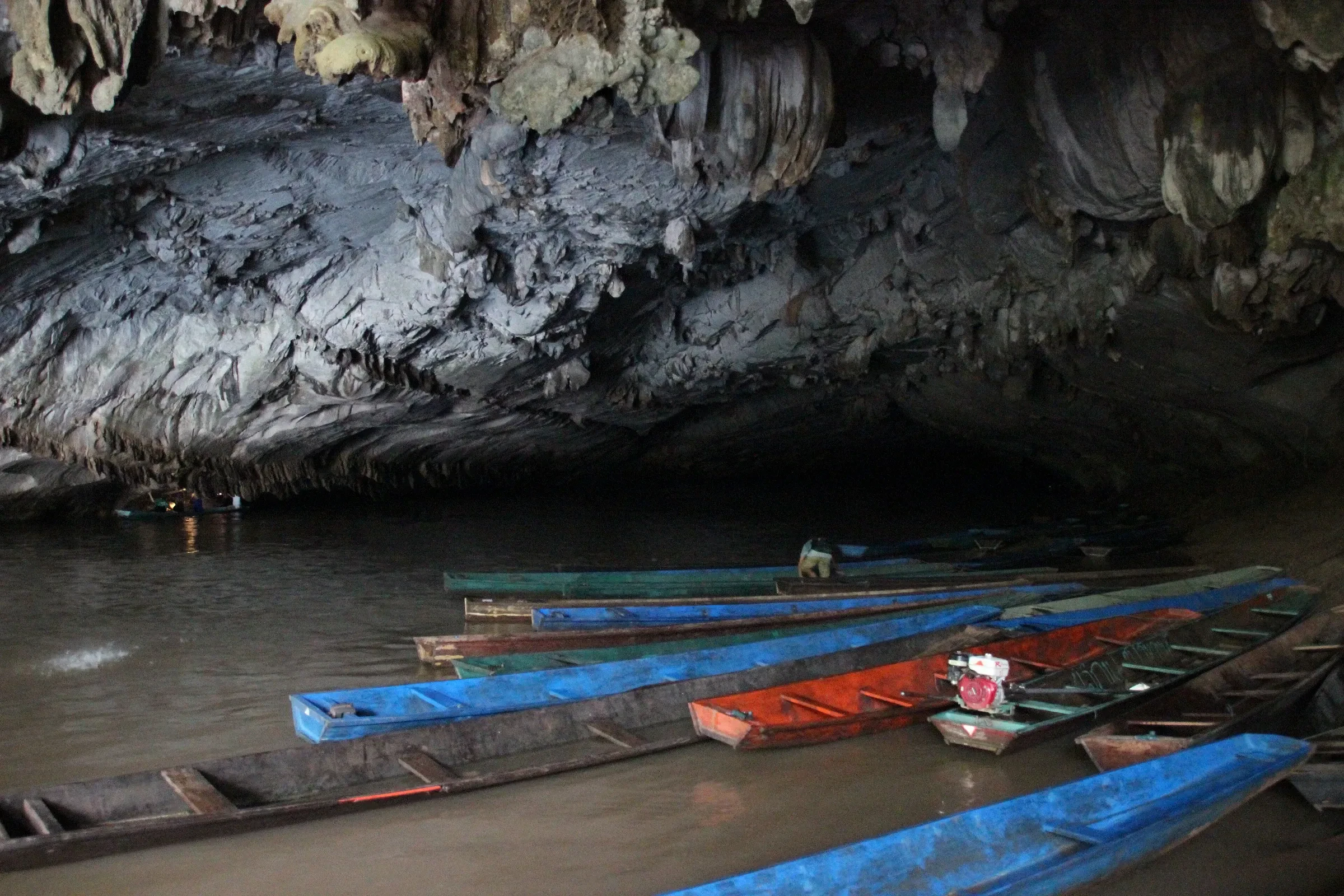
What it is: a 7.5 km longtail boat ride through a limestone cave, following an underground river beneath a mountain, with a stop partway to walk among the rock formations by headlamp. Why: there's no real substitute for it anywhere else in the region. Where: Kong Lor village, in Khammouane province, the centrepiece of the Thakhek loop. Cost: a boat fee plus a small park and cave entry fee, both paid on the day. Recent sources disagree on the boat price, so we don't quote one; ask at the village. A life vest and headlamp normally come with the boat. Time needed: about an hour and a half round trip, plus a half day to reach the village.
Most people ride the Thakhek loop by motorbike to get here. That needs a motorcycle licence valid in Laos: for most visitors, their home motorcycle licence plus an International Driving Permit. Riding without one is illegal, and World Nomads says insurance won't cover illegal activity, so check your policy wording before you ride. Our Southern Laos Adventure includes the Kong Lor boat as one of its stops.
4. Kayak the Nam Song and swim the Blue Lagoons
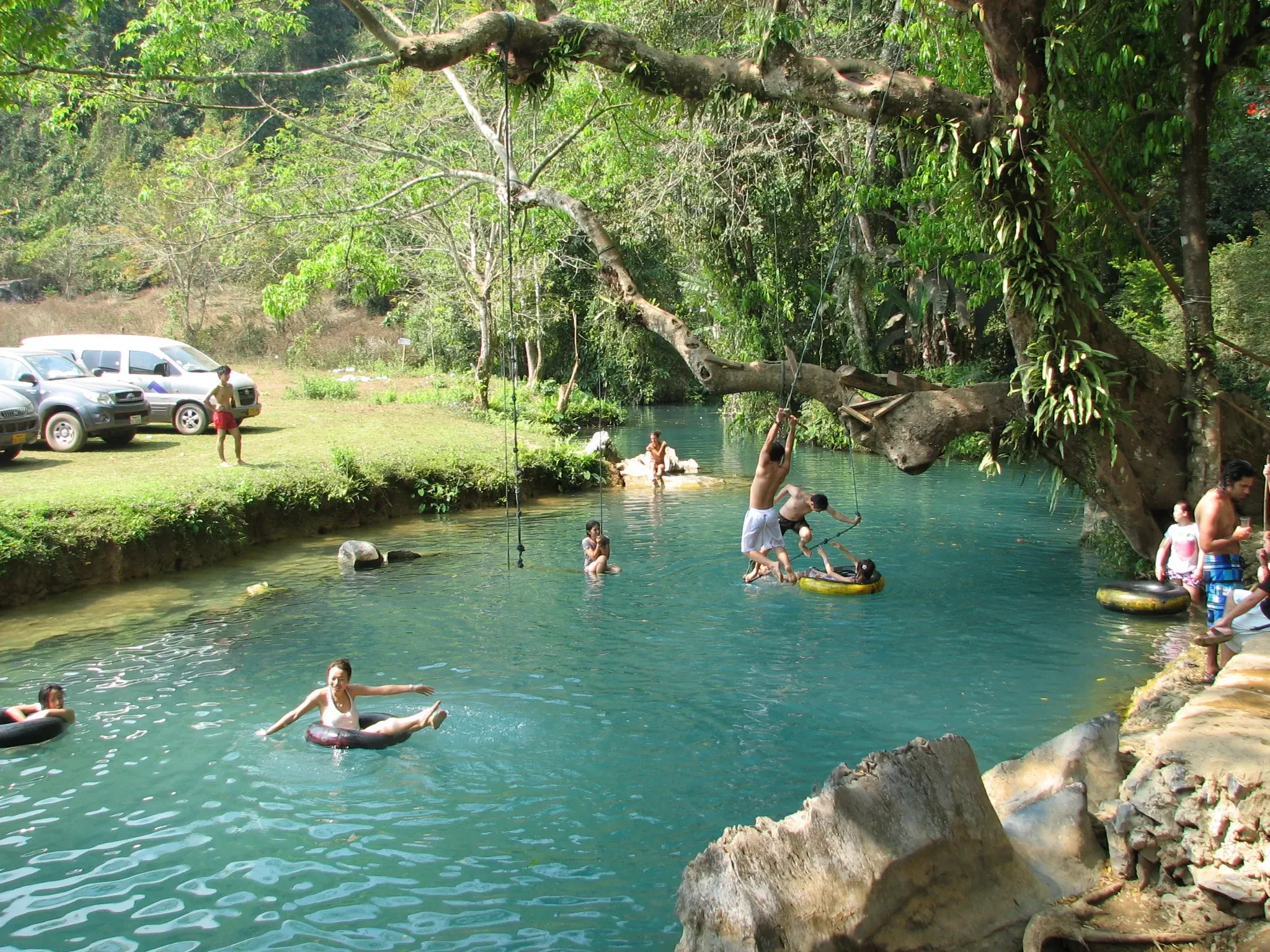
What it is: a half or full day kayaking under limestone cliffs on the Nam Song river, usually combined with a water cave and a stop at one of Vang Vieng's Blue Lagoons. Why: it's the best way to see Vang Vieng's karst scenery, and a calmer alternative to the town's tubing scene. Where: Vang Vieng, between Vientiane and Luang Prabang. Cost: full-day kayak, cave and lagoon combos run about US$25 to US$75 depending on the operator and what is included; Blue Lagoon entry alone is about 20,000 to 30,000 kip. Time needed: six to eight hours for a full-day combo tour.
Vang Vieng's tubing scene is far quieter than its old reputation, but the risks on the river are real. Canada's government says travellers have died or been seriously injured tubing or jumping into the river, and the UK Foreign Office says tubing, kayaking and swimming in Laos can carry significant risks. Wear the life jacket you're given and check the water depth before you jump. Alcohol is a separate risk: six foreign travellers died in Vang Vieng in November 2024 after drinking alcohol, and a lab found methanol, but Lao authorities said in July 2026 that the cause isn't formally established. If you want a balloon flight, know that one hit power lines in March 2026 (no injuries were reported), so check how your operator is regulated. Our Vang Vieng guide covers tubing, the lagoons and staying safe in full.
5. Ride a motorbike loop through karst or coffee country
What it is: a multi-day motorbike circuit, either the Thakhek loop's karst country in central Laos or the Bolaven Plateau's coffee farms and waterfalls in the south. Why: both give you a slower, more physical way through Laos than a bus window, with real distance between stops. Where: the Thakhek loop runs out of Thakhek in central Laos; the small Bolaven Plateau loop runs out of Pakse in the far south. Cost: motorbike rental runs about US$5 to 10 a day, with fuel on top. Time needed: 3 to 4 days for the Thakhek loop, 2 days and 1 night for the small Bolaven loop.
Both routes need the same licence as Kong Lor Cave above. Many rental shops hand over keys without checking, but that doesn't make riding unlicensed legal, and most travel insurance excludes it. Our Bolaven Plateau Loop trip runs the coffee-country route as a 6-day group trip. Full route detail is in the Thakhek loop guide and the southern Laos itinerary.
6. Slow down on the 4000 Islands
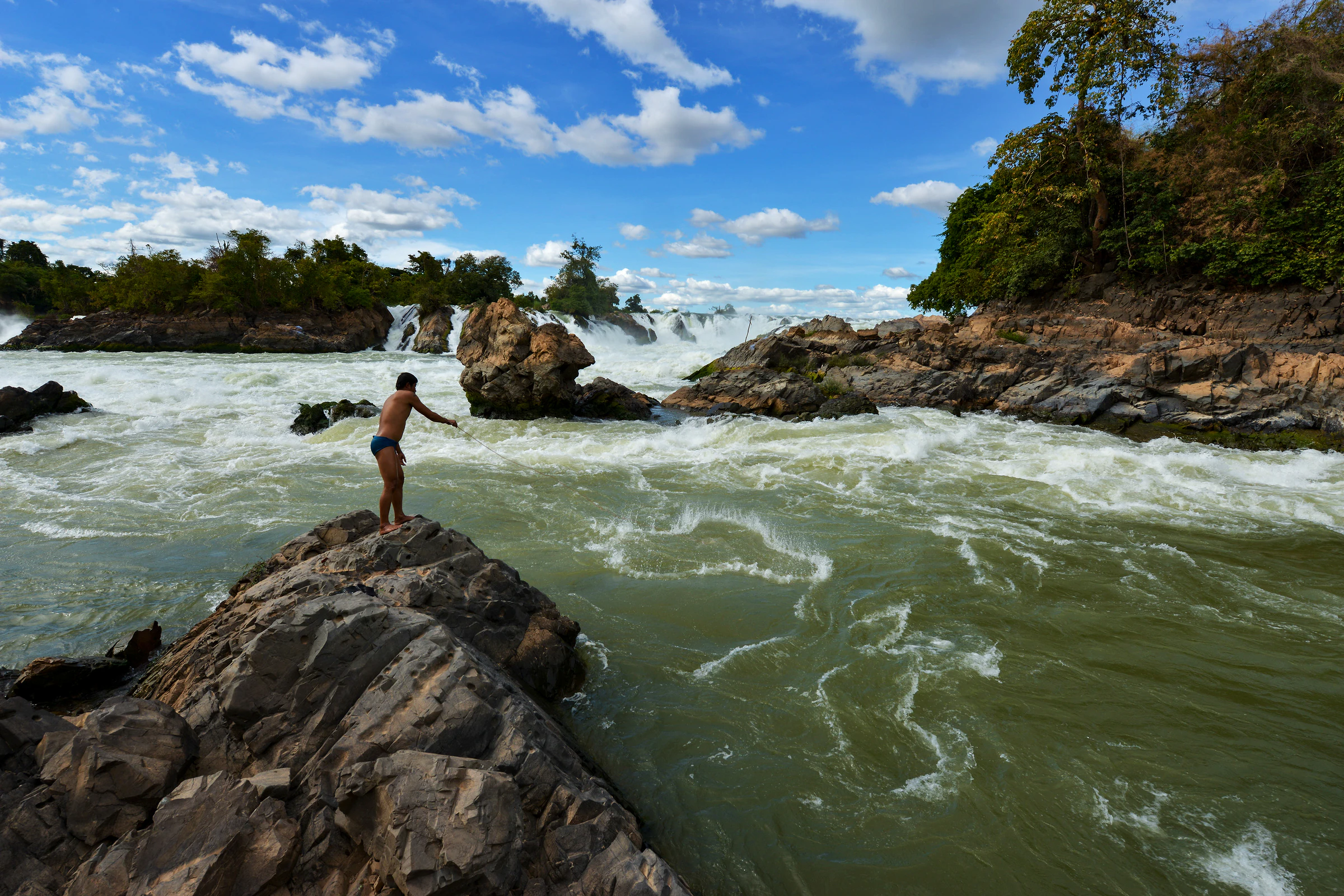
What it is: several unhurried days by bicycle on Don Det and Don Khon, two of the hundreds of islands and sandbars where the Mekong widens near the Cambodian border, plus a visit to Khone Phapheng Falls. Why: after the motorbike miles or the temple circuits further north, this is where a Laos trip stops moving. Where: Si Phan Don, in the far south, reached from Pakse. Cost: Khone Phapheng Falls entry is about 55,000 LAK. There's no reliable ATM on the islands, so bring enough Lao kip from Pakse. Time needed: 2 to 3 nights.
The last Irrawaddy dolphin in this stretch of the Mekong died in February 2022, so don't pay for a boat trip sold as dolphin watching. Our 4000 Islands guide has the full picture, and the Southern Laos Adventure pairs this stretch with the Thakhek loop above.
7. Zipline and sleep in a treehouse at the Gibbon Experience
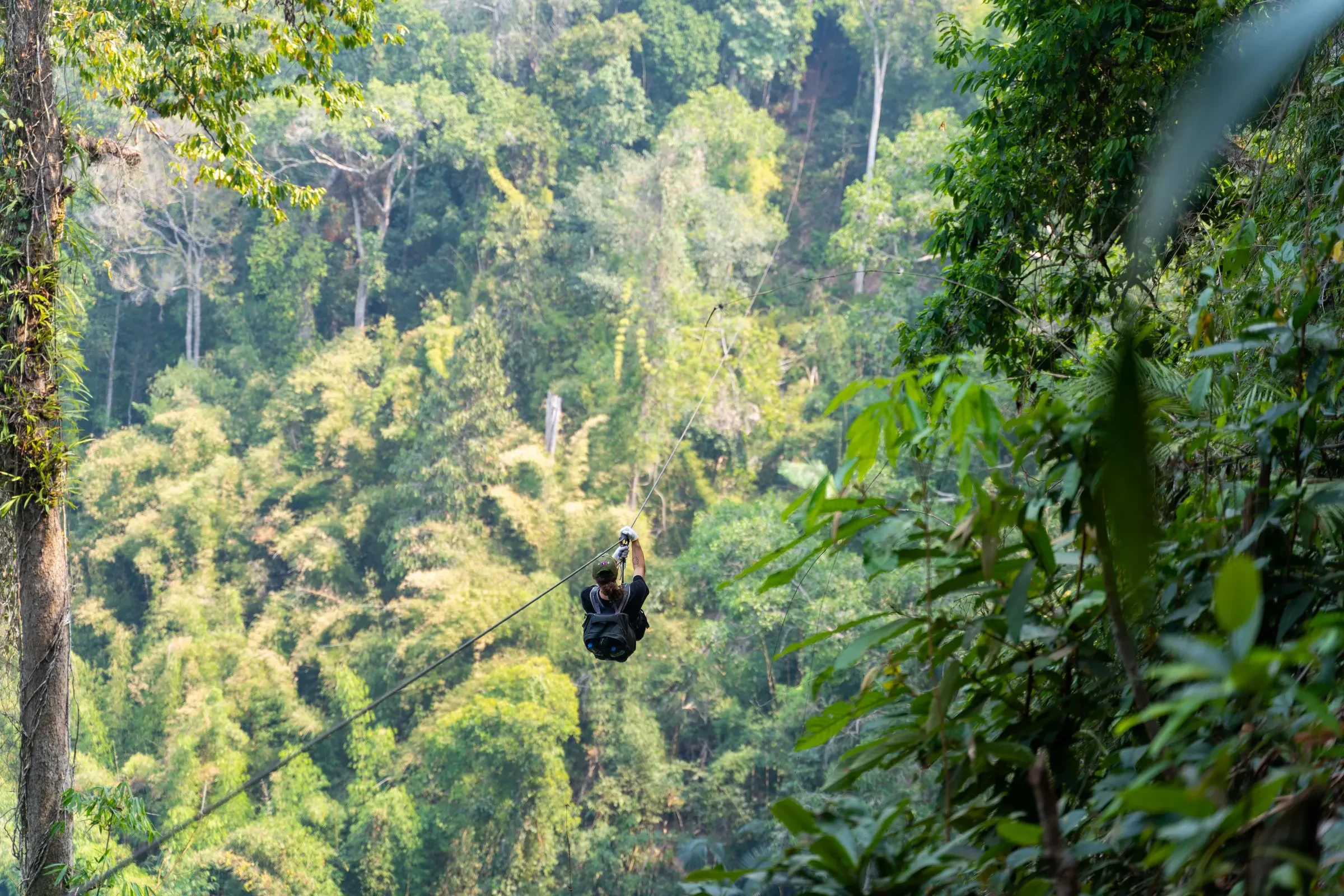
What it is: a multi-day zipline circuit through Bokeo Nature Reserve in the far north, sleeping in treehouses connected by zip lines high in the forest canopy, with a chance of hearing, and occasionally seeing, wild gibbons. Why: the treehouse nights are unlike anywhere else in the country. Where: Nam Kan National Park (also called Bokeo Nature Reserve), reached from Huay Xai in Bokeo province, in the far north. Cost: reseller listings put the 3-day, 2-night Classic tour at about €340 and the 2-day Giant Loop at about €215. Check the official Gibbon Experience site for current prices. Time needed: 2 to 3 days, including a night or two in a treehouse.
This one sits well off most Laos routes, so it suits travellers extending north from Luang Prabang or crossing overland from northern Thailand, rather than a quick add-on to a shorter trip. Several governments warn about Bokeo: Canada advises avoiding non-essential travel within 10 km of the Thai border in parts of Bokeo, the UK advises extreme caution there, and Germany advises against travel to Bokeo and Sainyabuli provinces. Read your own government's advice before you book; our Laos travel guide and Mekong slow boat guide cover the same region.
Every experience compared
| Experience | Where | Cost | Time needed |
|---|---|---|---|
| Kuang Si Falls | Near Luang Prabang | 60,000 kip | Half a day |
| Morning alms round | Luang Prabang | Free (small donation optional) | 30 to 45 minutes |
| Kong Lor Cave boat | Khammouane, central Laos | Boat and entry fees paid on the day | 1.5 hours, plus a half day to reach it |
| Nam Song kayak and Blue Lagoons | Vang Vieng | US$25 to US$75 for a full day | 6 to 8 hours |
| Thakhek or Bolaven motorbike loop | Central or southern Laos | Rental about US$5 to 10 a day, plus fuel | 2 to 4 days |
| 4000 Islands and Khone Phapheng | Si Phan Don, far south | About 55,000 LAK for the falls | 2 to 3 nights |
| Gibbon Experience | Bokeo, far north | About €215 to €340 | 2 to 3 days |
Practical notes
Currency and cash. Most prices above are in Lao kip, which has been sliding against the dollar through 2026 (about 22,400 kip to US$1 in September 2026), so treat any figure as a starting point. ATMs are unreliable outside the main towns, so carry more kip than you think you'll need before heading to Kong Lor, the 4000 Islands or the Bolaven Plateau.
Best months. November to February is the dry, cool season across the whole country and the best window for all seven experiences, though the south runs hotter overall than the north. April is the nationwide heat peak and worth avoiding. The rainy season, roughly May to October, makes Khone Phapheng and the Bolaven waterfalls more dramatic but can make the Thakhek loop and Bolaven roads rougher.
Licences for riding. Both motorbike loops above need a motorcycle licence valid in Laos, which for most visitors means a home motorcycle licence plus an International Driving Permit. Rental shops often don't check, but riding unlicensed is illegal and most travel insurance excludes it. Wear a helmet: insurers can also refuse claims where one wasn't worn.
Unexploded ordnance. Bombs left from the Vietnam War era remain a risk across Laos away from marked paths. At the Plain of Jars sites near Phonsavan, stay on the cleared, marked paths, and never touch metal objects you find. The Vientiane guide covers the COPE Visitor Centre, which explains the legacy.
Getting north. The two-day slow boat from Huay Xai to Luang Prabang costs about 400,000 to 500,000 kip, and the speedboat isn't recommended; see our Mekong slow boat guide.
Visas. Most passports need a Laos visa; see our Laos visa guide for the e-visa and visa-on-arrival process.
Prefer to travel with a group?
Our Laos group trips build several of these experiences into fixed routes, with a Trip Host from your group's first day to its last, and a licensed local agency and guides handling the ground services. See our Laos itinerary hub to plan your own route by length, or where to go in Laos to choose a base for each of these experiences.