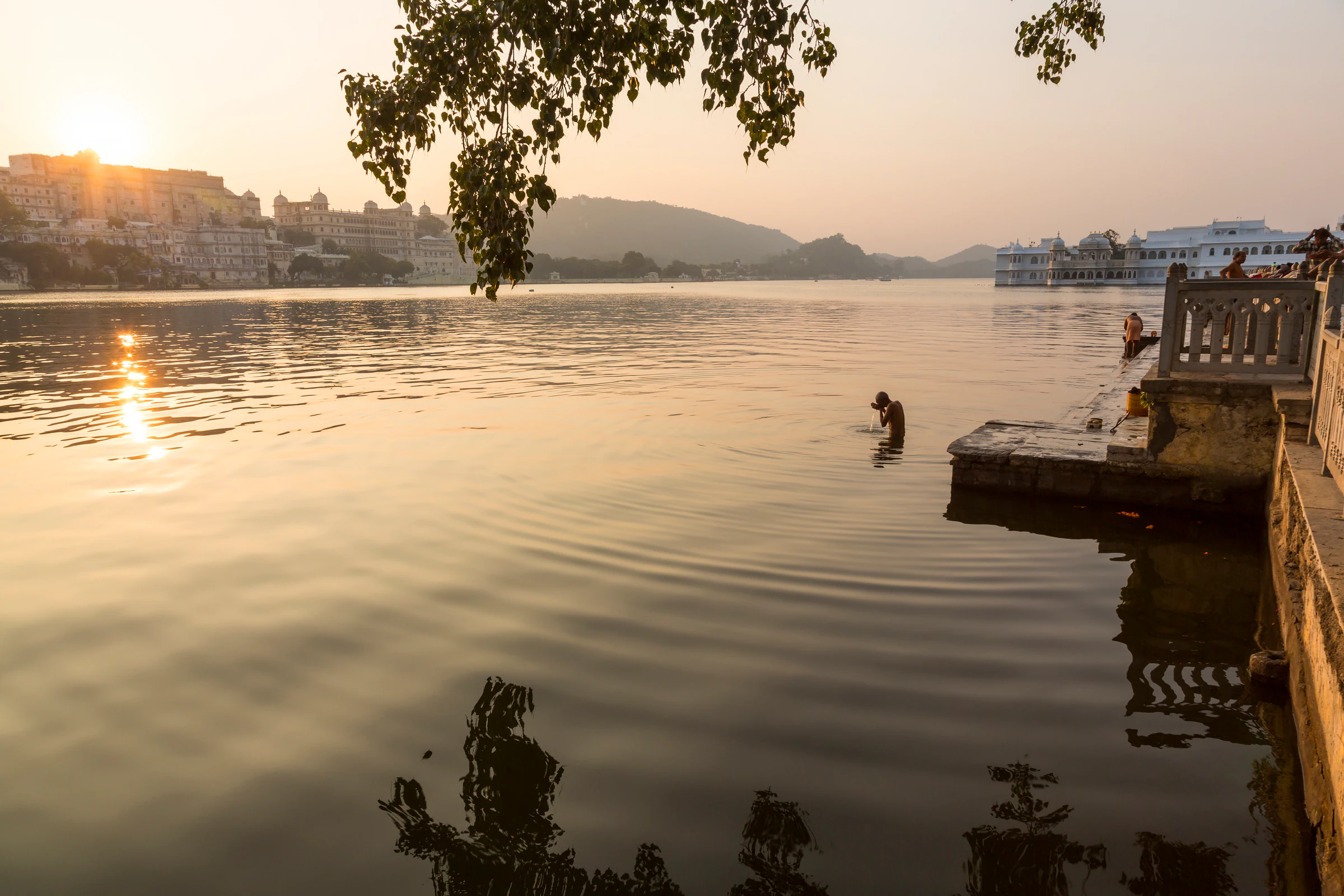
Udaipur is built around Lake Pichola, with the City Palace running along one shore and the Taj Lake Palace hotel on an island in the middle, and the old city's whitewashed lanes climb the hill behind it. Where Jaipur and Jodhpur are about forts and bazaars, Udaipur adds water, and a rooftop-restaurant scene that looks straight across the lake at the palaces lighting up after dark.
It's also compact. Unlike Jaipur's sprawl or the long transfers between Rajasthan's desert towns, most of what's worth seeing in Udaipur is within a 20-minute walk of the lake, which makes it an easy, low-stress couple of days after the rest of the Rajasthan loop.
Where to go in Udaipur
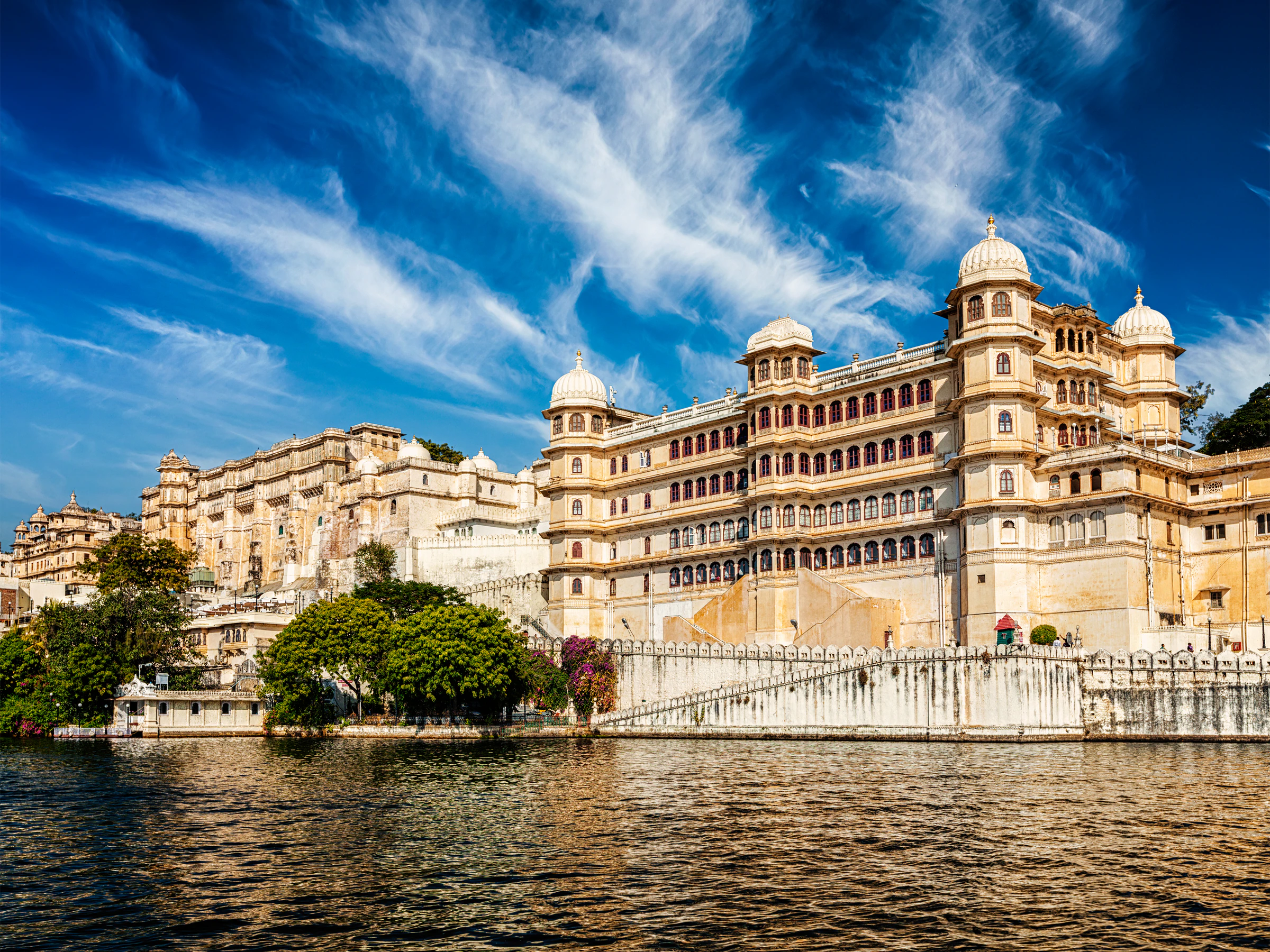
City Palace
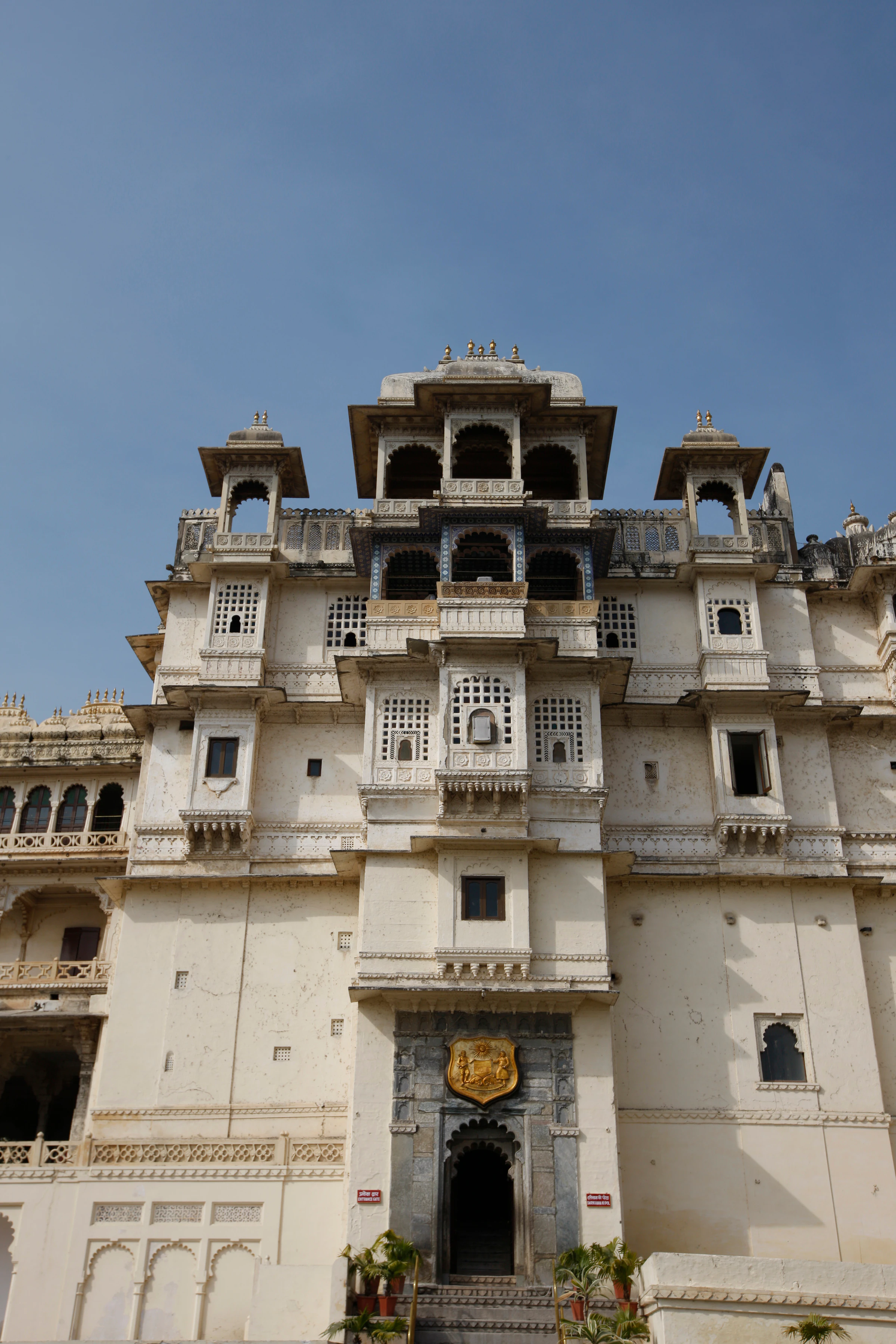
One of the largest palace complexes in Rajasthan, built up over roughly 400 years by successive Maharanas of Mewar and still partly run by the royal family's charitable foundation. Inside are courtyards, mirror-work halls and a museum of armour and miniature paintings. Listings for 2026 put the foreign-visitor ticket at about ₹700, with extras such as the audio guide, a camera and the Crystal Gallery charged on top. We couldn't reach the palace's own ticket site, so check the board at the gate. Give it half a day, more if you want the museum in full. It opens around 9:30 am and closes between 5 pm and 5:30 pm in most listings, so ask for the day's exact closing time at the gate.
Lake Pichola
The lake the whole city is arranged around, dug in the 14th century and enlarged when the City Palace was built. You don't pay to look at it from the ghats, only to get on the water (see Take a boat on Lake Pichola below). Rameshwar Ghat, next to the City Palace, is where the HRH boats leave from, and the municipal boats have their own boarding point.
Jagdish Temple
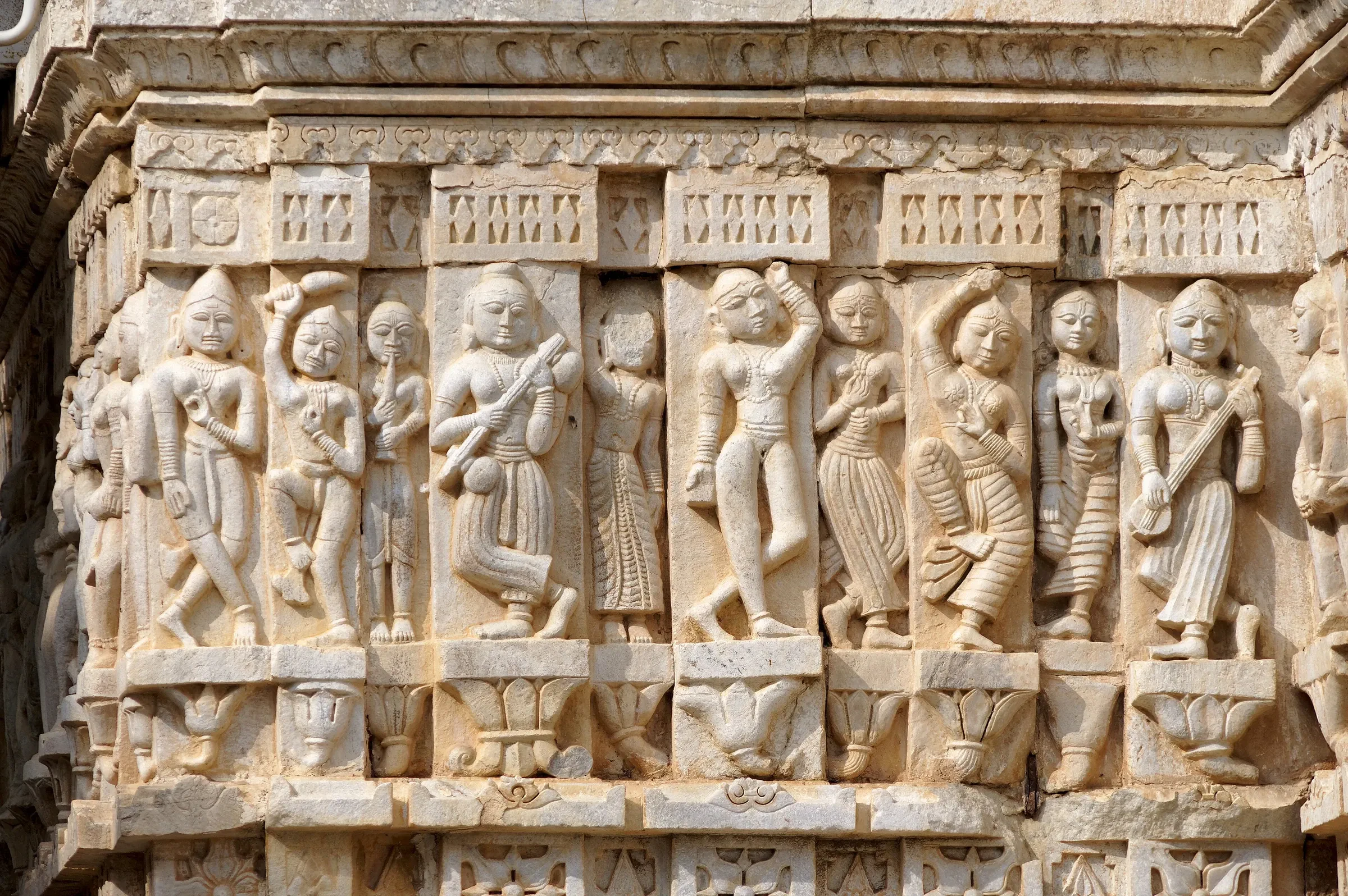
A large 17th-century Vishnu temple a short walk from the City Palace, with an elaborately carved tower and an elephant-flanked entrance. Entry is free. Listings give different opening hours, from early morning to evening, with a midday break in some of them, so check at the door; the main aarti is in the evening. Dress modestly, with shoulders and knees covered, and take your shoes off before going in. It only takes 20 to 30 minutes to see, so it fits easily between the City Palace and lunch.
Saheliyon ki Bari
A small, shaded garden of fountains and marble pavilions, built for the ladies of the royal court. It's an easy, half-hour stop, better in the cooler part of the day since the fountains aren't always all running.
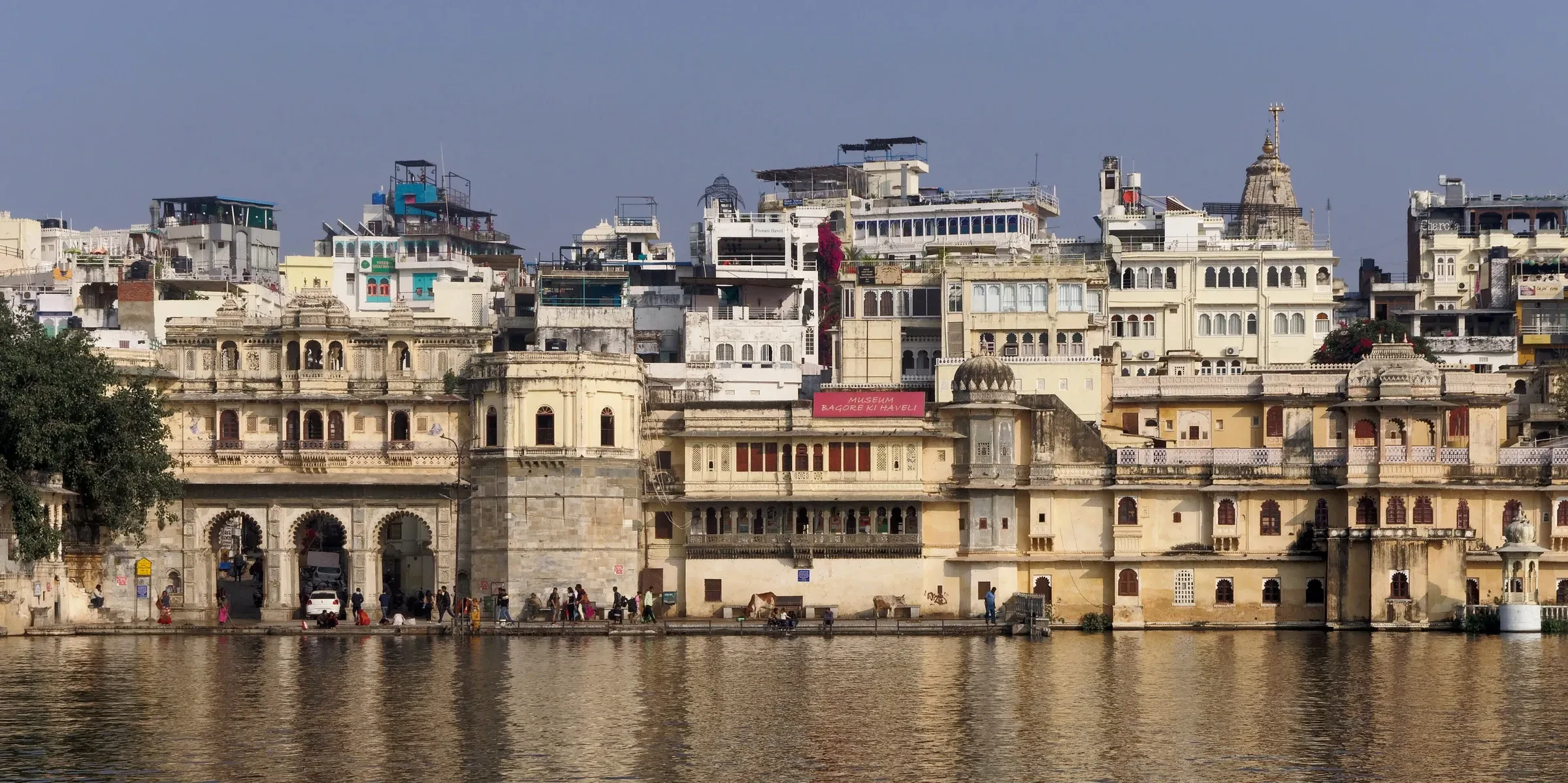
Bagore Ki Haveli
A restored 18th-century haveli on the lakeside at Gangaur Ghat, now a museum of Mewar court life and costume, and the venue for the city's best-known evening cultural show (details below). Half an hour for the museum, or build your evening around the show.
Things to do in Udaipur
Take a boat on Lake Pichola
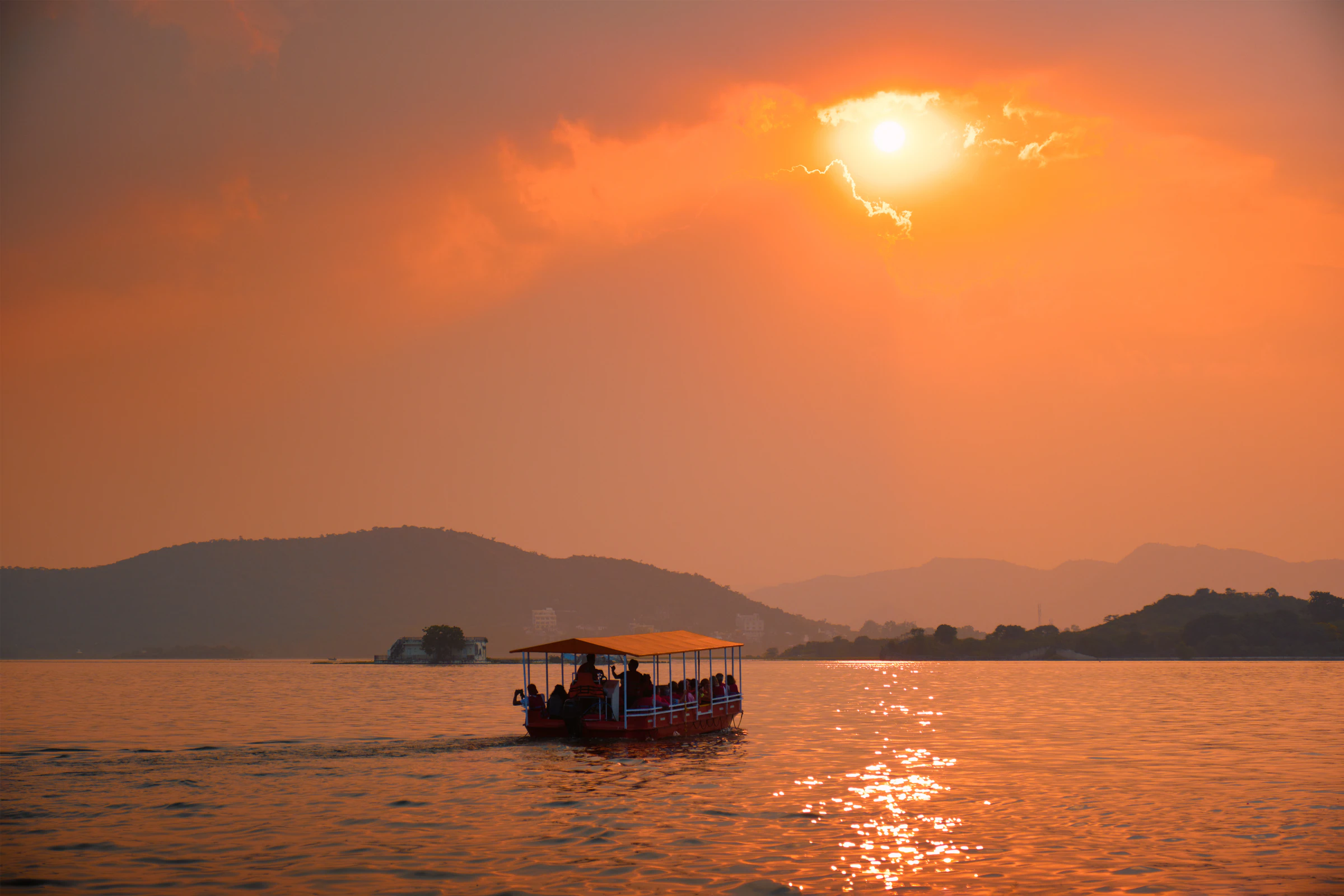
Many visitors come to Udaipur mainly to get out on the lake. The HRH boats leave from Rameshwar Ghat, by the City Palace, and the island excursion stops at Jag Mandir. The last published HRH tariff ran until 31 March 2026 and listed ₹600 for a regular ride and ₹800 for the sunset ride. We found no newer tariff. The municipal boat circuit is cheaper (travellers report about ₹180) and doesn't land at Jag Mandir. Regular departures stop in mid-afternoon, and sunset departures run until about 6 pm in summer and 5 pm in winter. Confirm the last departure at the jetty. Either way you'll pass close to the Taj Lake Palace's island and see the City Palace from the water.
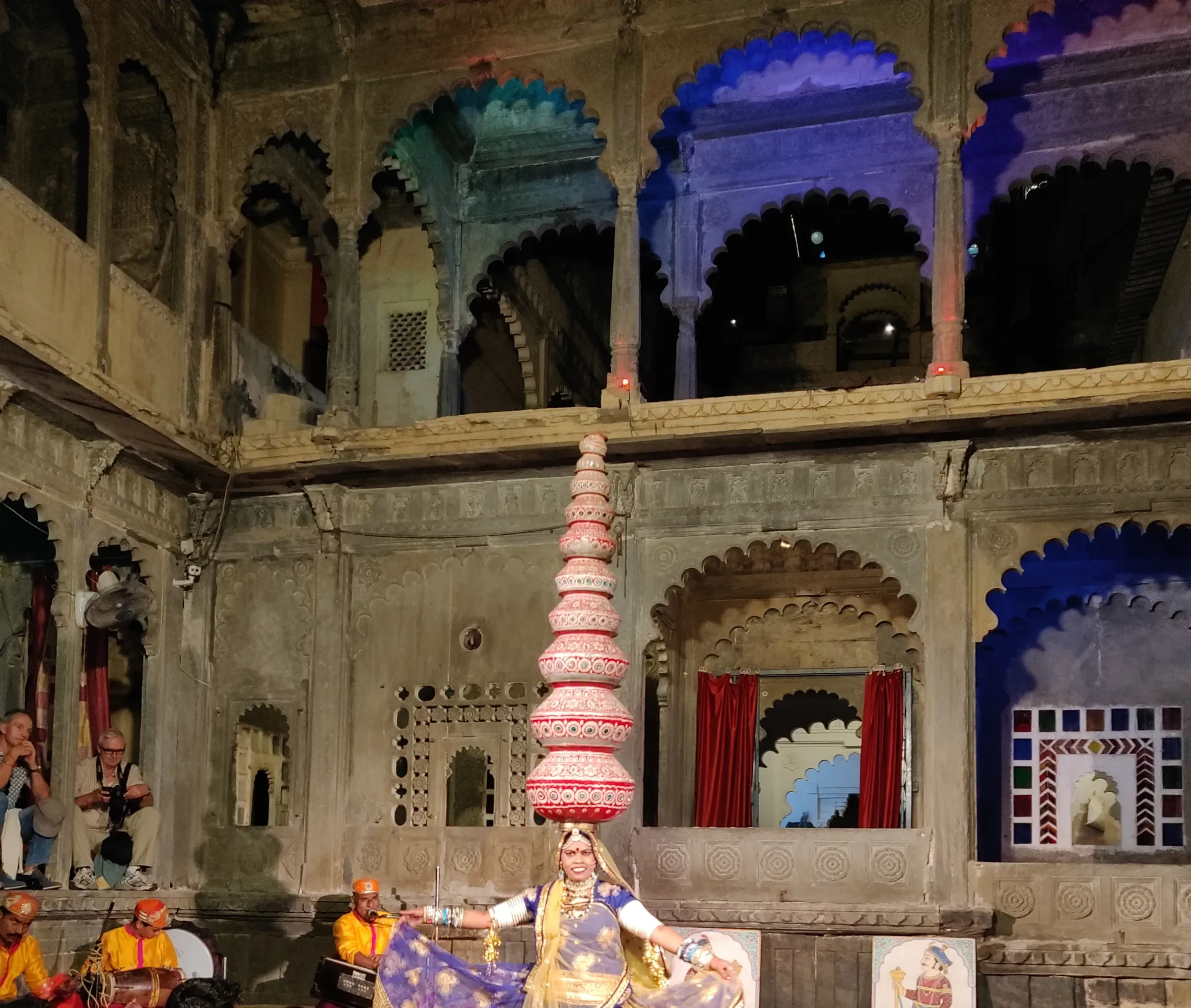
Watch the Dharohar folk-dance show at Bagore Ki Haveli
A nightly performance of Rajasthani and regional folk dance (including the Kalbelia dance and a dance balancing pots on the head), run by the West Zone Cultural Centre inside Bagore Ki Haveli. It runs from 7 pm to 8 pm. The museum and the show have separate tickets, and 2026 listings quote different prices, so ask at the counter; a camera costs extra. Turn up early, since seating fills up.
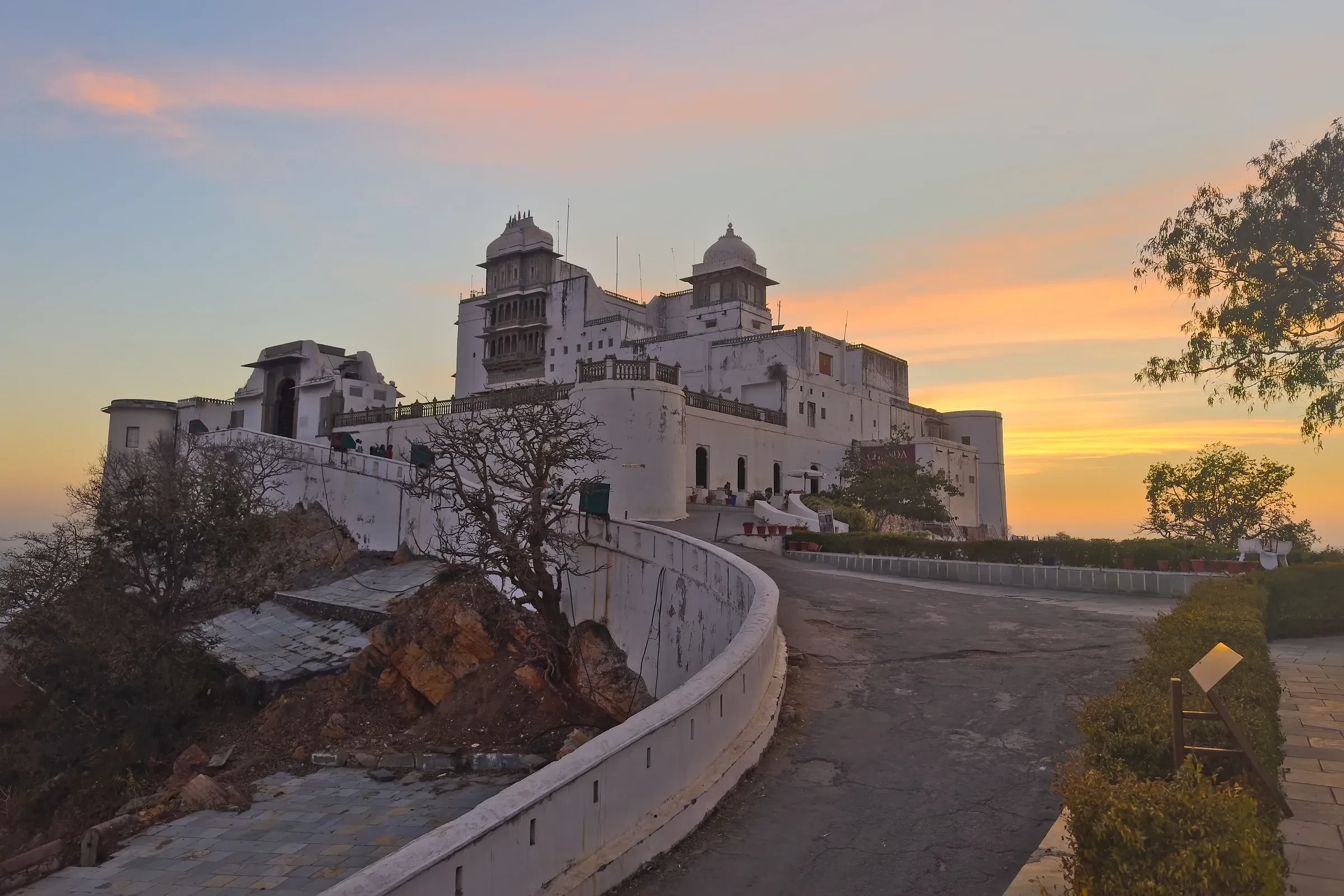
Catch the sunset from Sajjangarh (Monsoon Palace)
A hilltop palace outside the city, built as a monsoon retreat and now inside a wildlife sanctuary, with a sunset view over the lakes and the city below. The gate is open from about 9 am to 6 pm. Foreign-visitor fees range from about ₹300 to about ₹505 across 2026 listings, and vehicles pay an extra charge, so check at the gate. Go for the last hour before sunset. You'll need an auto-rickshaw or taxi, since it's a climb rather than a walk.
Day trip to Kumbhalgarh and Ranakpur
Two of Mewar's best-known sights sit an easy day trip from Udaipur, and most drivers combine them into one long day since they're roughly 40 km apart on the same road.
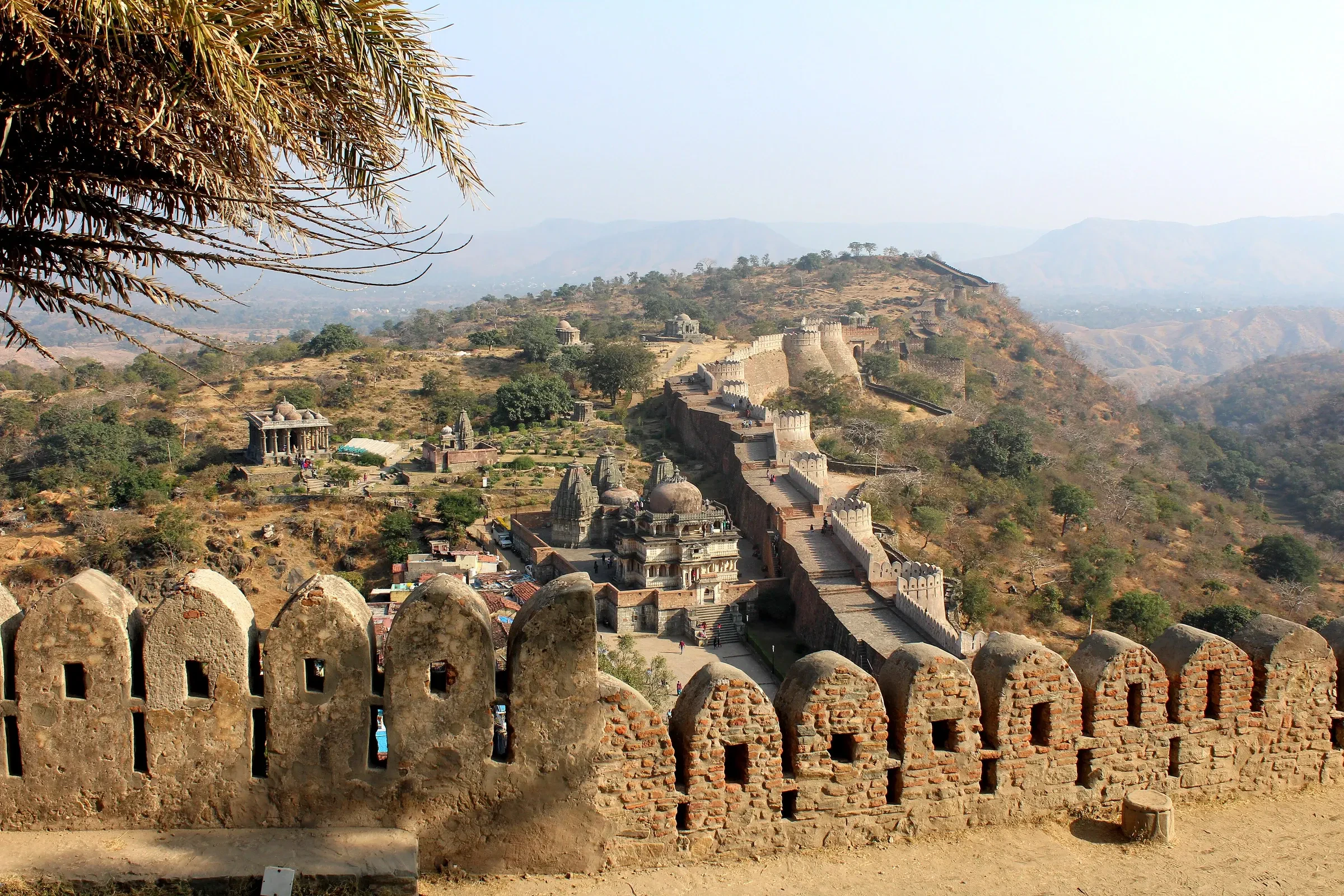
- Kumbhalgarh Fort is about 85 km from Udaipur, around 2 hours by road. Its wall, one of the longest fortified walls in the world, runs for many kilometres around the hilltop. Listings put the foreign-visitor ticket at about ₹200, and the fort is open from about 9 am to 5 pm.
- Ranakpur's marble Jain temple is about 90 km from Udaipur, 2 to 3 hours by road. Non-Jain visitors are let in only in the afternoon, roughly 12 noon to 5 pm, since the mornings are kept for prayer. Listings put the foreign-visitor ticket at about ₹200, and Indian visitors don't pay. Dress with shoulders and knees covered, and expect to leave shoes and any leather items (belts, bags) in a locker before going in.
Doing both in one day means an early start and a driver rather than public transport; if you'd rather take it slower, Ranakpur alone makes a shorter half-day trip.
Wander the old city and Hathi Pol market
The lanes around Jagdish Temple and Hathi Pol are the place for miniature paintings, block-printed textiles and silver jewellery, and for people-watching from a rooftop cafe as the light changes over the lake.
What to eat in Udaipur
Dal baati churma, Rajasthan's signature dish of baked wheat rolls, lentils and a sweet crumble, is the one dish worth ordering at least once. Udaipur's rooftop restaurants, mostly clustered around Lal Ghat and Hanuman Ghat with a direct line of sight to the City Palace, are as much the draw as the food itself, especially at dinner when the palace is lit up. For something quicker, the old city's cafes and stalls do the usual Rajasthani thali, and kachori and lassi make an easy breakfast. For the fuller regional list, see our planned Rajasthani food guide.
Best time to visit Udaipur
Late October to early March is best: daytime temperatures sit in the low to mid-20s°C, and evenings on the lake are comfortable rather than cold, unlike the desert towns further west. April to June gets hot, though Udaipur, at a higher elevation than Jaipur or Jaisalmer, doesn't reach quite the same extremes. How full the lakes look depends on that year's monsoon rain, so check recent local reports before you plan around a full lake. See our Rajasthan travel guide for the wider regional picture.
Getting to Udaipur and around
Most people arrive overland from elsewhere in Rajasthan. From Jodhpur, it's about 4 to 5 hours by road (about 260 km, often routed via Ranakpur), since there's no direct train and the rail route via Ajmer takes around 12 hours with a change. From Jaisalmer, the road is about 490 to 540 km and takes 8 to 10 hours, with no direct train, so many people split it with a night in Jodhpur. Udaipur's own Maharana Pratap Airport has good connections to Delhi and Mumbai, which makes it a natural place to fly out from at the end of a Rajasthan loop.
Around the city, the old town and the lake are walkable, and autos and taxis cover Sajjangarh and anywhere further out. Kumbhalgarh and Ranakpur need a car or taxi for the day, since there isn't a practical public-transport option for a there-and-back day trip. If you need somewhere to stay, our India hostels guide covers Udaipur's dorm options and prices.
How long to spend in Udaipur, and which route guide to use
Two days covers the City Palace, a lake boat ride, Jagdish Temple and the evening dance show. Three days adds a day trip to Kumbhalgarh or Ranakpur without feeling rushed. Udaipur is usually the last stop on a Rajasthan loop, since it has decent flight connections onward, and it also closes out several longer India routes. See our Rajasthan itinerary for the 10-day and 2-week versions that end here, or our 2-week India itinerary, which routes through Delhi, Varanasi and Agra first.