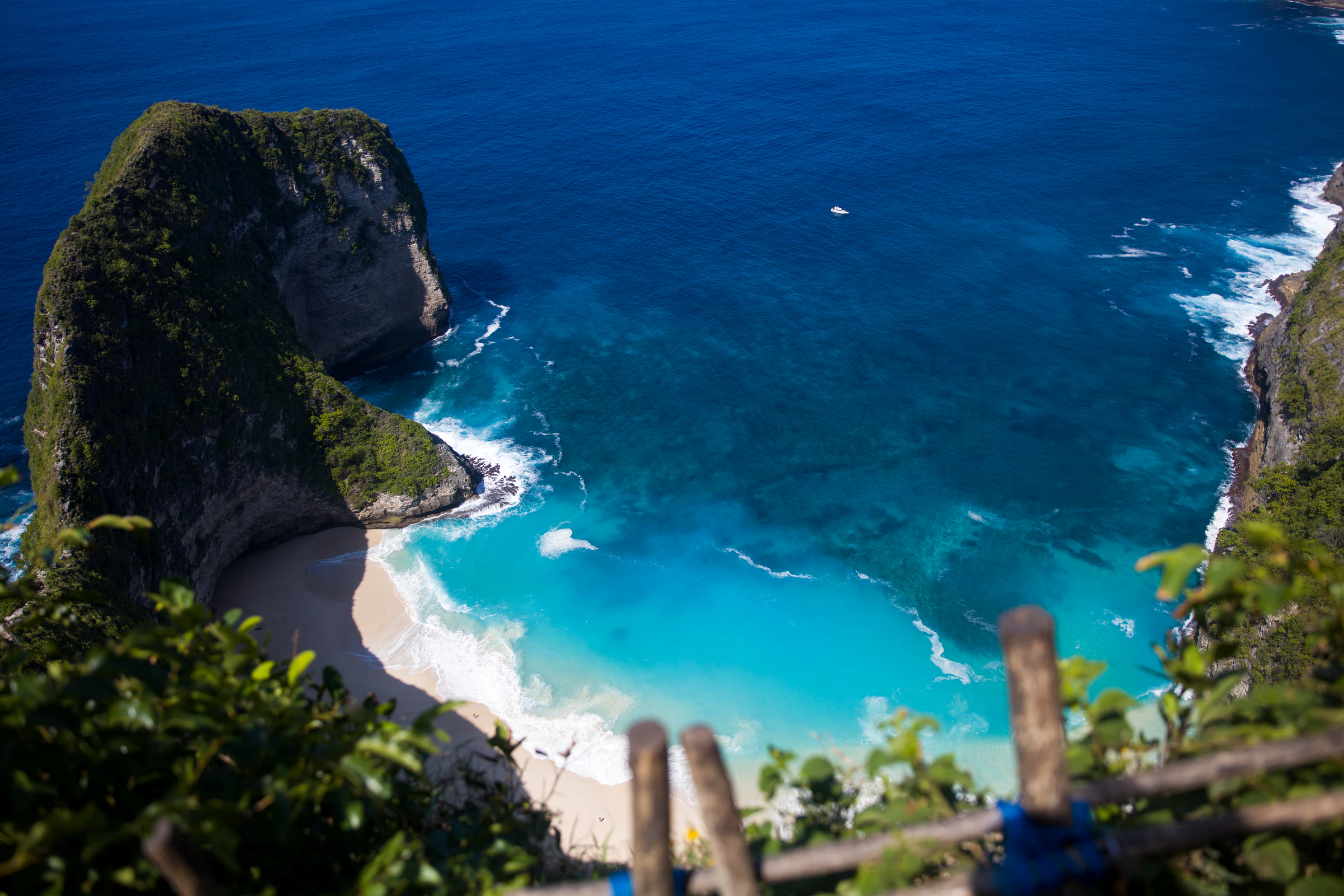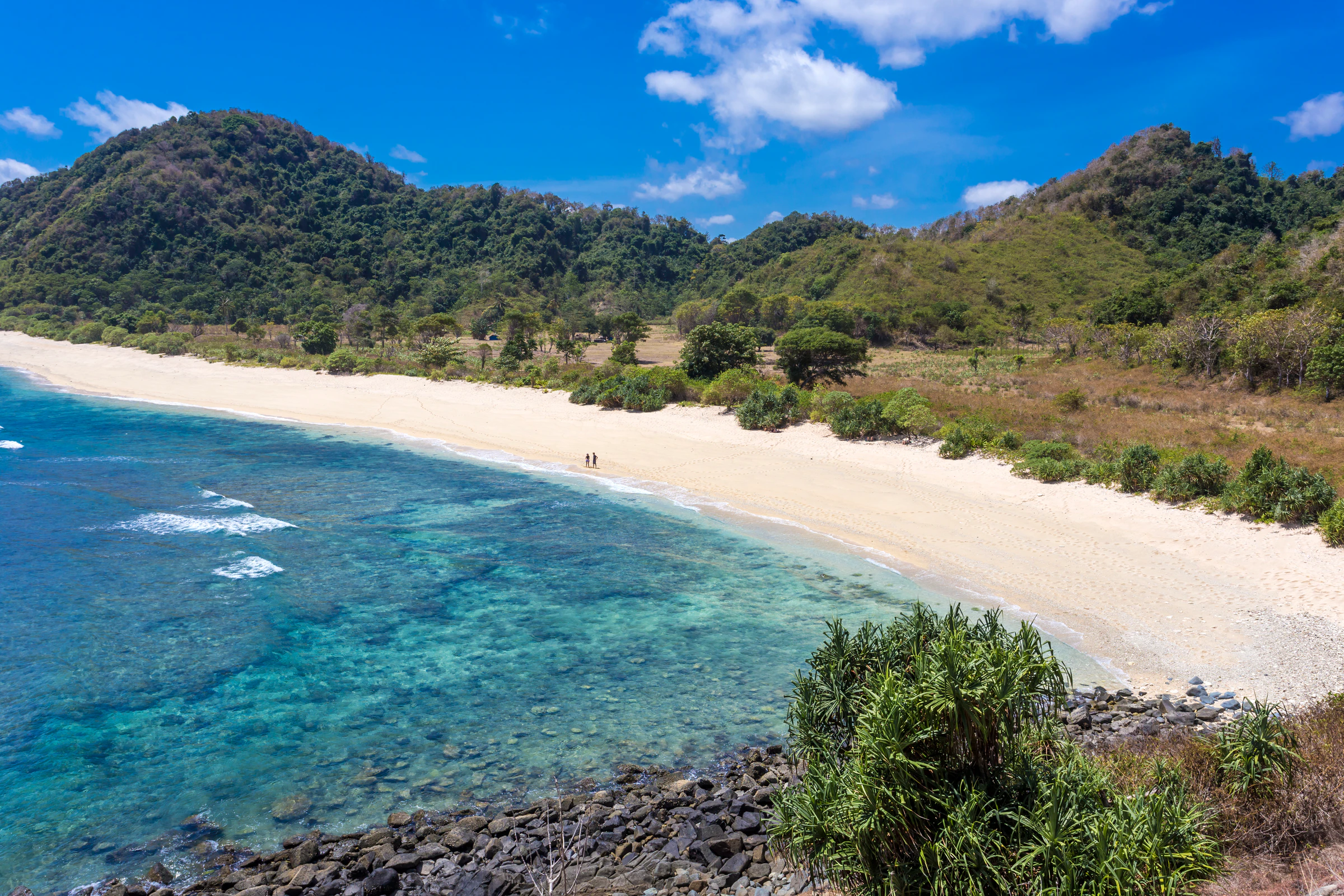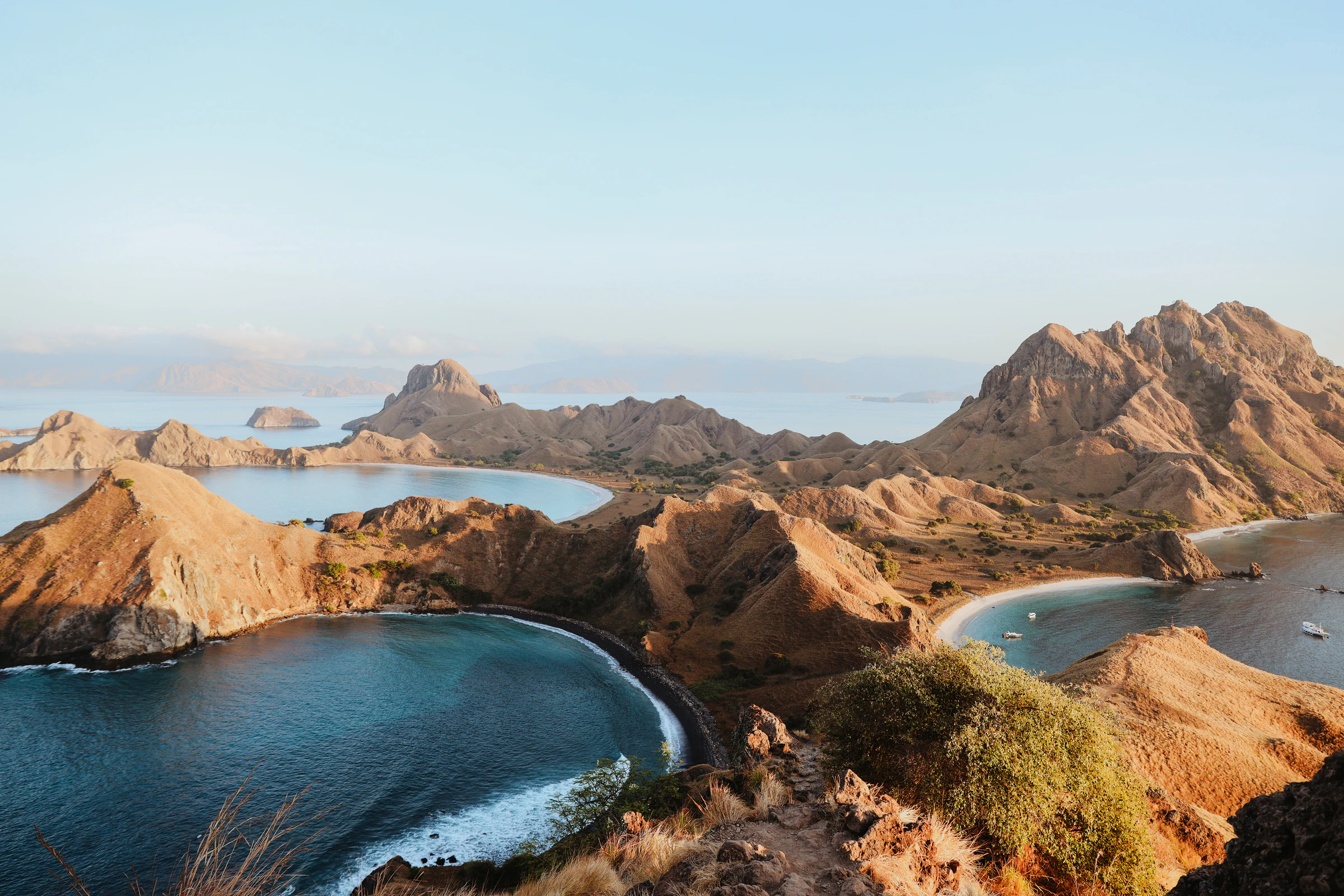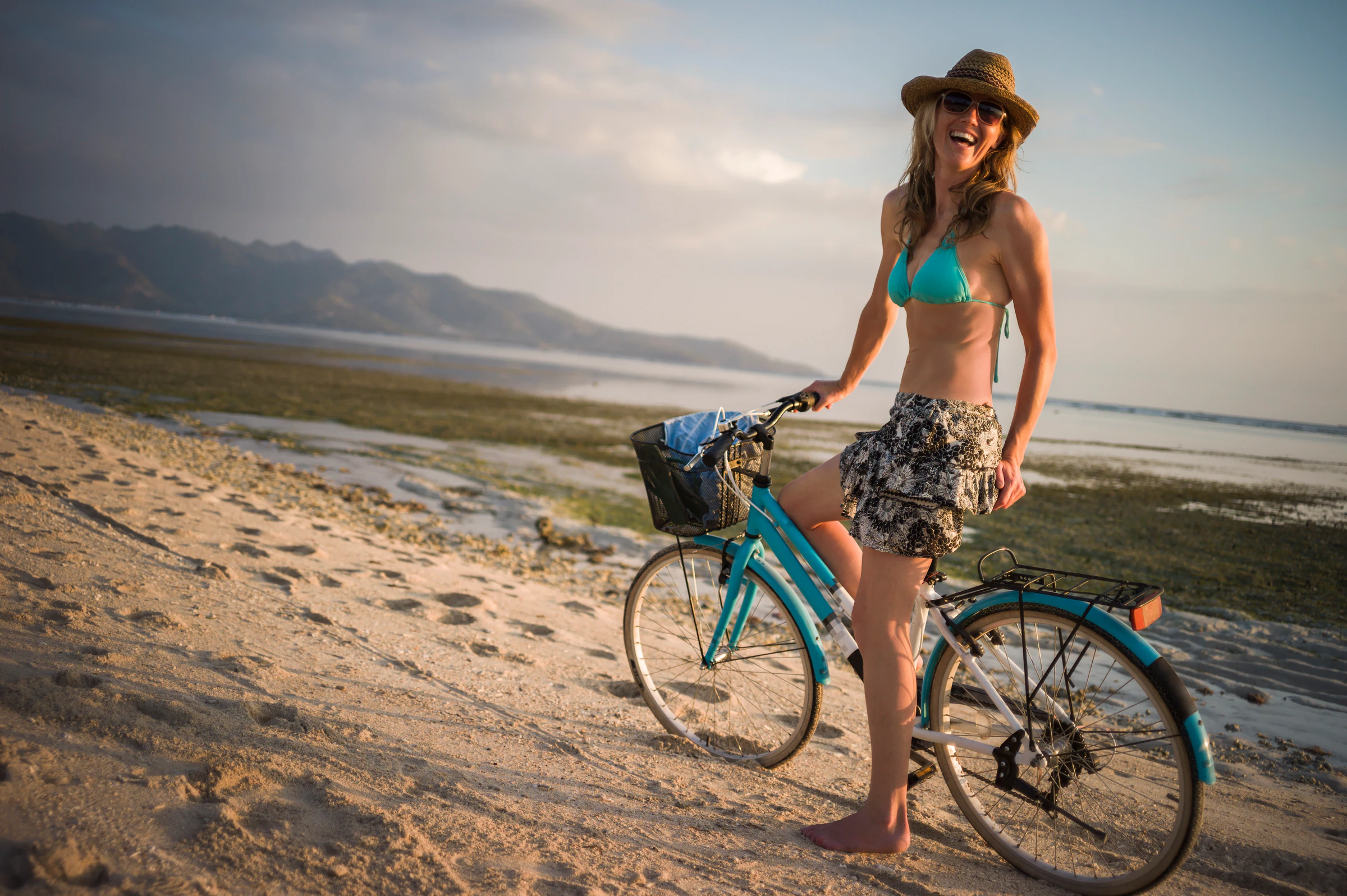
Gili Trawangan, Gili Air and Gili Meno are three small islands off Lombok, all reached by the same fast boats from Bali and linked by the same public boat once you're there. The decision most people are actually making is Trawangan versus Air: Trawangan for the social scene, Air if that sounds like too much. Meno tends to be a day trip or a one or two-night add-on rather than a full base, since it has the least going on after dark and the fewest places to stay.
Gili Trawangan vs Gili Air vs Gili Meno at a glance
| Gili Trawangan | Gili Air | Gili Meno | |
|---|---|---|---|
| Vibe | Busiest and most built up | Calmer, more wellness-leaning | Quiet, sparsely developed |
| Nightlife | Bars, a night market, by far the liveliest | A handful of low-key beach bars | Almost none; early nights |
| Beaches and snorkelling | Good reef off the north and east coast | Good reef, fewer people on it | The Nest underwater statues and quiet coral |
| Food | Widest choice, from warungs to beach clubs | Solid, more relaxed cafes | Limited to a few beachfront places |
| Diving | Largest concentration of dive shops in the Gilis | Dive shops too, a quieter learning environment | Fewer operators; most divers book through Trawangan or Air |
| Ease for first-timers | Easiest: crowds, signage, English everywhere | Easy, a little more legwork to find things | Trickiest: less infrastructure, book ahead |
| Solo-friendliness | Easiest to meet people, hostel-heavy | Good for one-on-one conversations over group energy | Quiet unless solitude is what you're after |
| Getting around | Bicycle or cidomo cart, no cars or motorbikes | Bicycle or cidomo cart, no cars or motorbikes | On foot or bicycle; small enough to walk |
| Getting there from Bali | Fast boat from Padang Bai or Serangan | Same ports; check your operator's stops | Same ports; check your operator's stops |
| Visa | Same Indonesian visa-on-arrival rules as the rest of the country | Same | Same |
| Typical daily cost | Depends mostly on how often you go out; we have no per-island price data | Same | Same |
Nightlife and atmosphere
Gili Trawangan is where the party is. Its night market and beachfront bars are the main reason it's the busiest of the three, and it's the natural first stop if you're travelling solo and want to meet people quickly. Gili Air has a handful of low-key beach bars and a much smaller crowd, better suited to a quiet dinner than a big night out. Gili Meno has almost no nightlife at all; most visitors are in bed early.
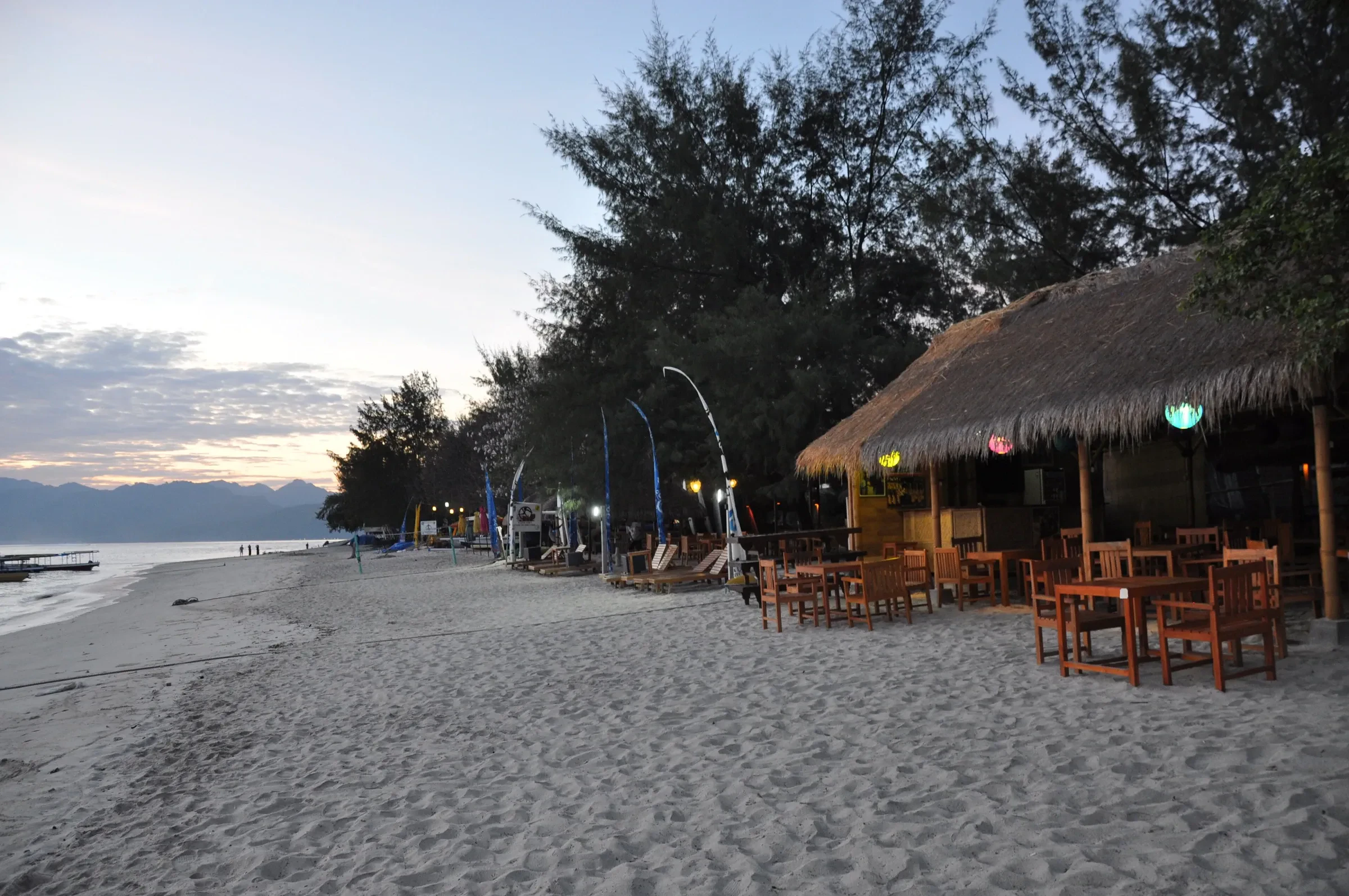
Winner: Gili Trawangan, if nightlife and meeting people is the point of your visit.
Beaches and snorkelling
All three islands have decent reef close to shore, and turtles turn up often enough on Trawangan and Meno that you don't need a boat trip to spot one. Gili Meno also has the Nest, a ring of 48 life-size underwater statues sunk in 3 to 6 metres of water, shallow enough to snorkel over. Trawangan's beaches are the busiest of the three, and Air and Meno are quieter. A shared glass-bottom boat around all three islands, usually stopping at the Nest and a turtle spot, is the easiest way to see all of it in a day. For the fuller diving picture, see our diving in the Gili Islands guide.
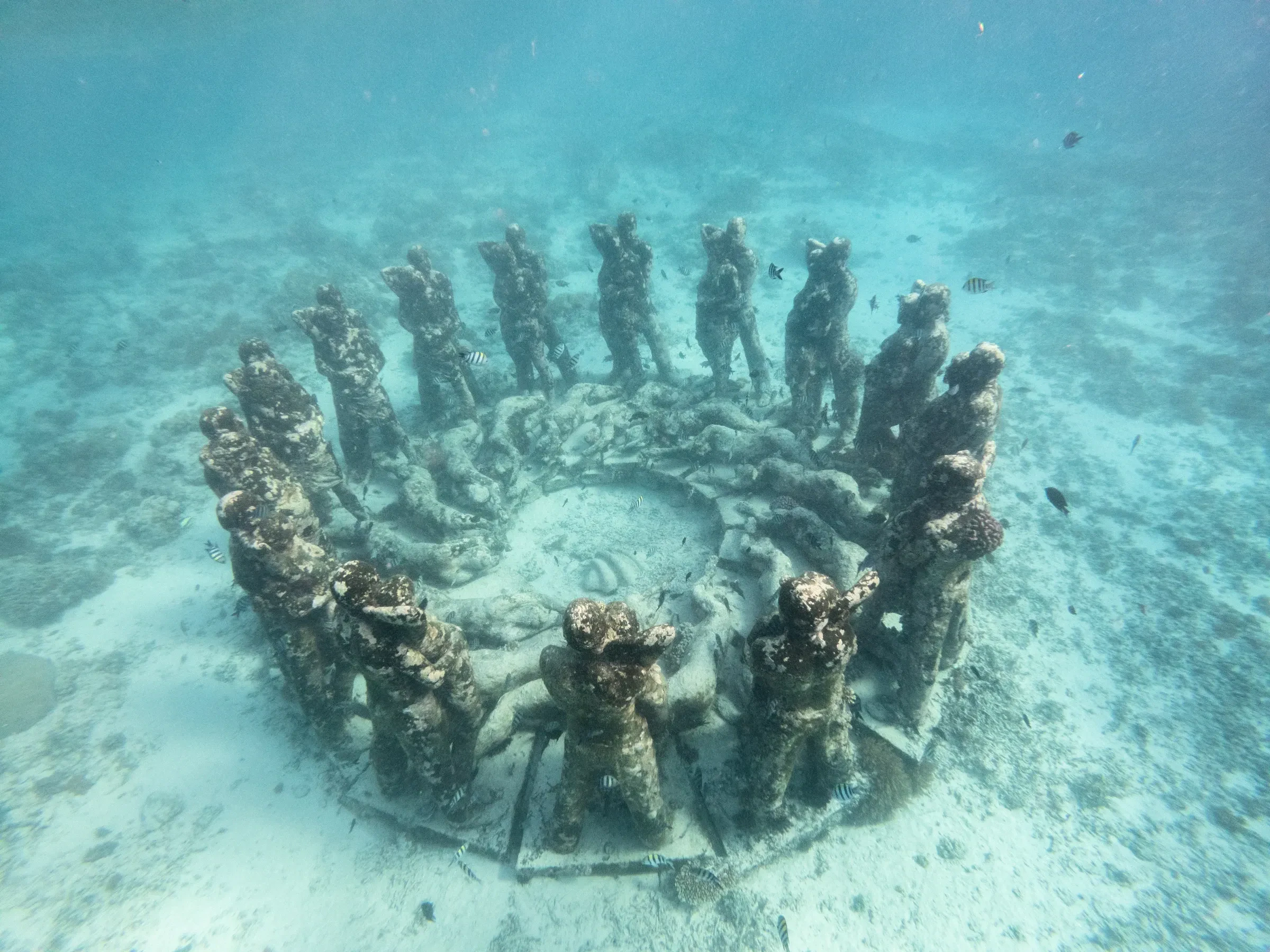
Keep a few metres from turtles, never touch or chase them, and don't stand on the coral. Currents run stronger around exposed spots such as Shark Point on Trawangan's north side, so stick to sheltered areas near the shore unless you're with a guide.
Winner: a tie between Trawangan and Meno, depending on whether you want turtles with crowds or turtles with quiet.
Food
Gili Trawangan has by far the widest choice, from cheap warungs to beachfront restaurants and bars serving Western food alongside Indonesian staples. Look out for ayam taliwang (Lombok's fiery grilled or fried spiced chicken) and plecing kangkung (water spinach in a chilli and shrimp-paste dressing); both are Lombok dishes, but easy to find on Gili T. Gili Air's food scene is smaller but still solid, with more relaxed cafes than late-night bars. Gili Meno's options are limited to a handful of beachfront places, so check your accommodation includes meals or a kitchen if you're staying more than a night or two.
Winner: Gili Trawangan, for choice; Gili Air if you'd rather eat somewhere calmer.
Diving and adventure
Gili Trawangan has the largest concentration of dive centres in the Gilis. Gili Air has dive shops too, generally in a quieter, less rushed setting that suits some first-time divers better. Gili Meno has fewer operators, so most divers based there still book trips through Trawangan or Air. Our PADI Open Water guide covers how the course itself works, wherever you learn it.
Winner: Gili Trawangan, for the number of operators; Gili Air if you'd prefer a calmer classroom.
Ease for first-timers
Gili Trawangan is the easiest of the three to simply turn up to: it has the most infrastructure, the clearest signage, and English is spoken everywhere. Gili Air takes a little more legwork to find things, since it's smaller and less signposted, but it's still straightforward. Gili Meno has the least infrastructure of the three, so book accommodation ahead rather than turning up and looking.
Winner: Gili Trawangan.
Solo-friendliness
Trawangan's hostels and night market make it the easiest island for a solo traveller to strike up conversations quickly, which is a big part of why it's the default first stop on most Gili itineraries. Gili Air suits solo travellers who'd rather have a few one-on-one conversations than a big group scene, and its dive schools and yoga spots are a natural way to meet people without the bar scene. Gili Meno is quiet enough that you should expect more solitude than socialising.
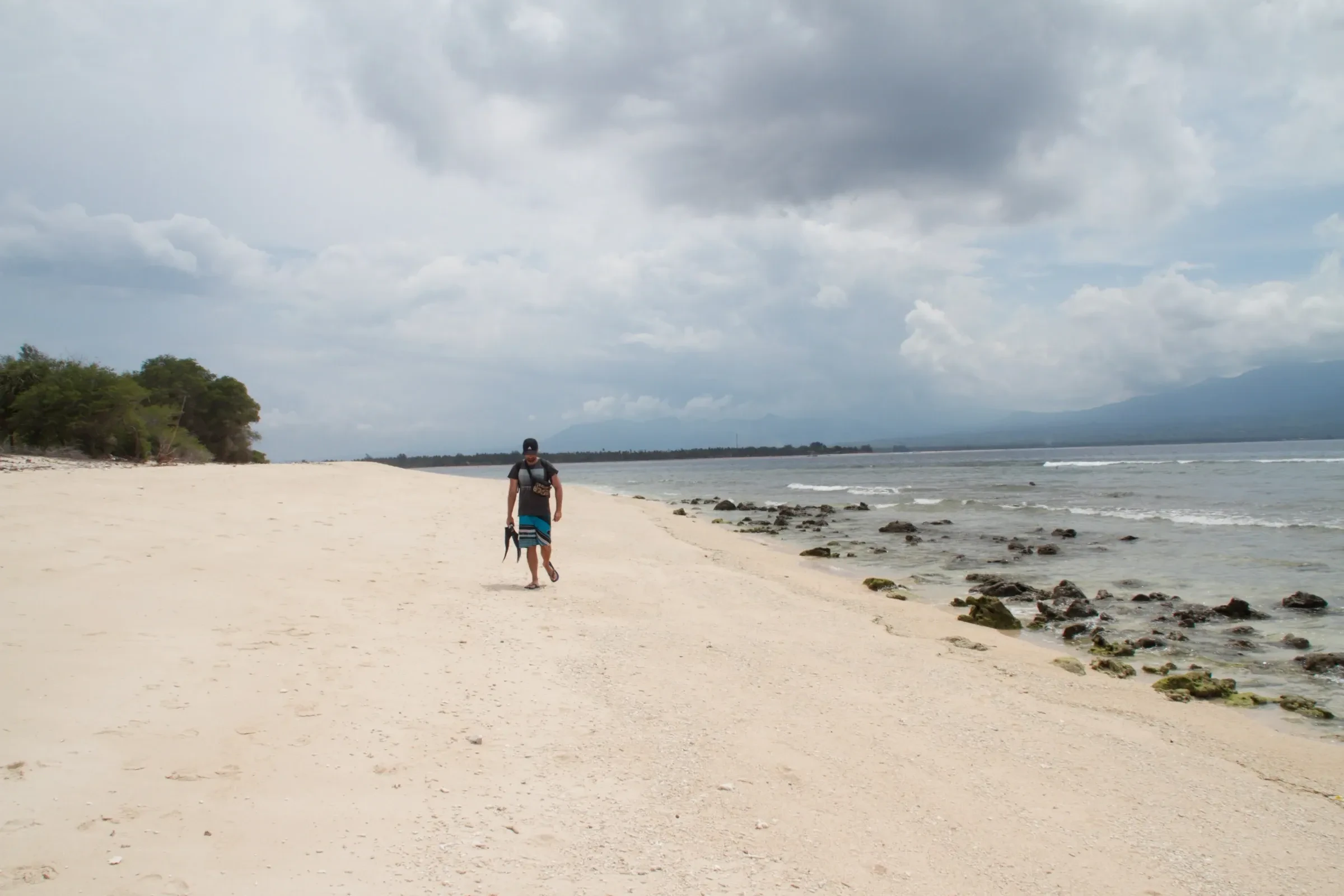
Winner: Gili Trawangan, for ease of meeting people; Gili Air for a calmer solo pace.
Getting there and between the islands
Fast boats to the Gilis leave Bali from Padang Bai and Serangan; we found no direct Sanur listing. Operator listings on ferry-booking sites (checked 6 October 2026) give about 1 hour 25 minutes to 2 hours from Padang Bai, with the first boat around 08:00 and the last around 13:45. From Serangan they list about 2 hours 15 minutes or more, with around three sailings a day between 08:00 and 14:00. The main operators' published fares run about IDR 550,000 to 700,000 one way. The same boats serve all three islands, so the crossing won't help you choose.
Crossings are sometimes cancelled at short notice in rough weather, especially from December to March, and July and August can bring swell too. Book a daylight sailing and check your operator has visible life jackets before you board.
Every visitor pays the Gili entry levy of IDR 20,000 at the harbour. North Lombok's council discussed raising it to IDR 50,000 in May 2026 but had not agreed, so carry a little spare cash. Bali's separate tourist levy of IDR 150,000 applies when you enter Bali, not when you travel to the Gilis.
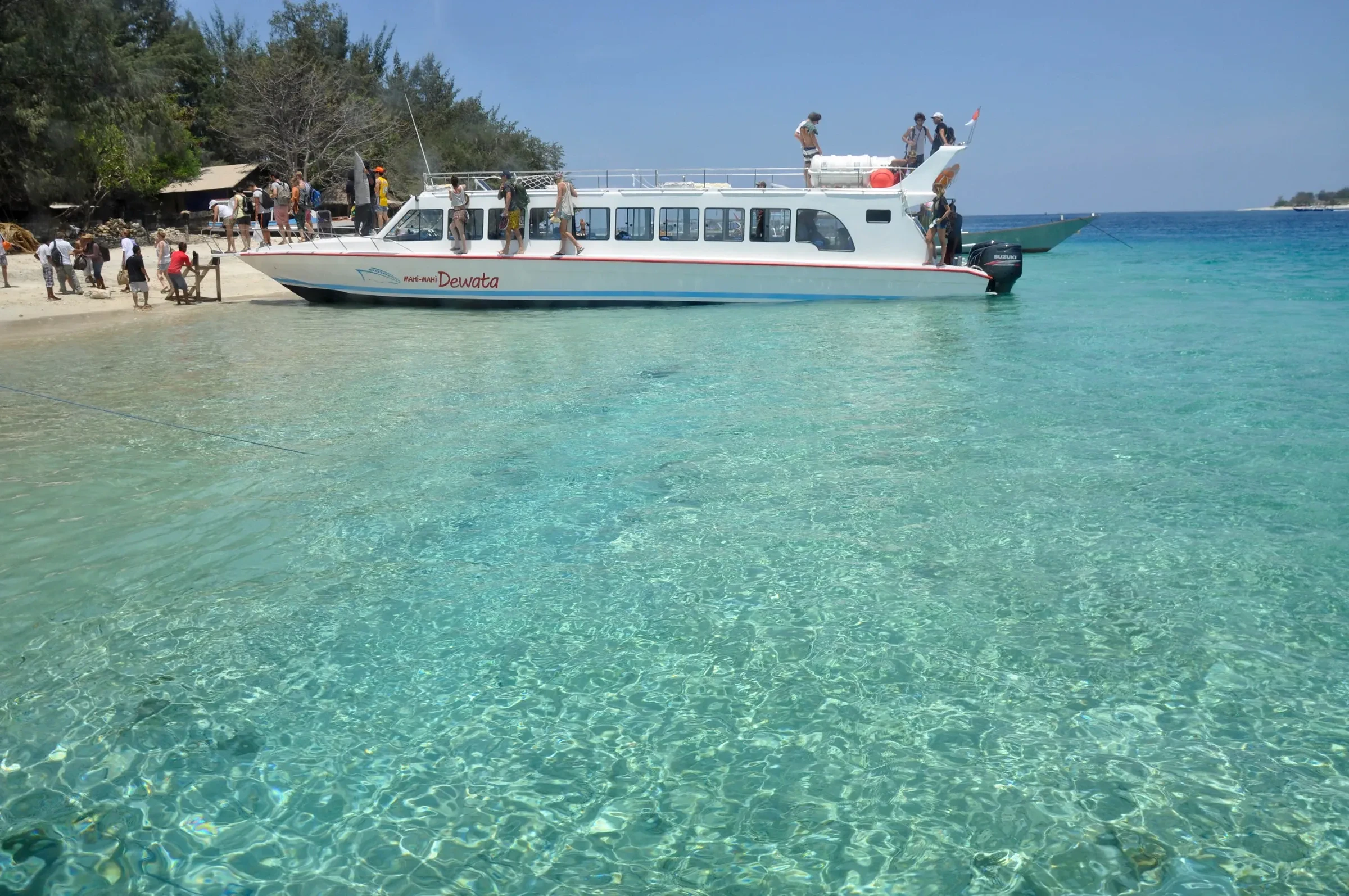
Once you're on the Gilis, a public boat links all three islands, for roughly IDR 25,000 to 40,000 per person, so switching islands for a day trip or a change of base is easy. Ask at the harbour for the day's times. None of the three islands allows cars or motorbikes, and e-bikes are officially banned too, though some are still used and the rule was under review in May 2026. You get around on foot, by bicycle (about IDR 50,000 to 75,000 a day) or by horse-drawn cidomo cart.
Winner: a tie. The boats are the same whichever island you pick.
Cidomo horses
Animal-welfare groups have criticised the working conditions of the cidomo horses. PETA UK's 2018 report described long hours, little water and rest, and asked visitors to refuse rides. The Gili Eco Trust and Horses of Gili run welfare programmes for the horses on all three islands. If you do take a cidomo, look at the horse first and skip it if it looks thin, sore or overloaded. Walking or cycling is easy on islands this small.
Alcohol, drugs and local customs
Trawangan's party reputation brings the main safety risks on the Gilis, and the same rules and risks apply on all three islands. The UK Foreign Office's Indonesia advice (updated 18 September 2026) warns that "even small amounts of methanol can kill" and that you can't identify methanol in a drink by taste or smell. It adds that counterfeit alcohol brands, including in licensed venues, can contain dangerous levels. Be cautious with cheap spirits and cocktails, and don't leave drinks unattended.
The same advice says Indonesia has a zero-tolerance policy on drugs, with long prison sentences or the death penalty for possession and trafficking. That applies at a beach bar on Gili T as much as anywhere else in the country.
Most residents of the Gilis are Muslim. Swimwear is fine on the beach, but cover up with a t-shirt and sarong or shorts when you walk inland through villages or near a mosque, and follow local dress codes as the UK advice suggests. During Ramadan the UK advice says not to eat, drink or smoke in public in daylight.
Cost per day
We don't have reliable per-island price data, so we don't rank the islands on cost. What you pay depends mostly on how often you go out, where you sleep and how often you take boats. The fixed costs are the same on all three: the fast boat from Bali, the IDR 20,000 Gili levy, bicycle hire of about IDR 50,000 to 75,000 a day, and the public boat between islands.
Which should you choose?
| If you're... | Choose |
|---|---|
| A solo traveller who wants to meet people fast | Gili Trawangan |
| Looking for a quieter base with decent food and diving | Gili Air |
| After the quietest possible island, even for just a night | Gili Meno |
| Learning to dive and want the most choice of schools | Gili Trawangan |
| Short on time and can only pick one island | Gili Trawangan, for the easiest first-timer experience |
Why not both?
The boats between the Gilis are cheap and frequent, so most travellers don't have to choose just one. A realistic route:
- 1 week: 3 nights on Gili Trawangan, 2 nights on Gili Air, and a day trip to Gili Meno for the Nest statues and a quieter beach.
- 10 days to 2 weeks: the same split, plus a few nights on Lombok itself for Kuta Lombok's surf beaches, or the Mount Rinjani trek if the season and permits allow. Our Lombok and Gili Islands route covers this day by day.
- 3 weeks to 1 month: fold the Gilis and Lombok into a wider Indonesia trip that also takes in Bali and Komodo. See our Bali and Indonesia guide for how the pieces fit together, and our Bali vs Lombok comparison if you're deciding whether to add Lombok's mainland at all.
Keep planning
For the fuller three-island picture, including where to stay and how many days to give each one, see our Gili Islands travel guide. If you're weighing the Gilis against Lombok's mainland beaches, read our Lombok travel guide, or against Bali's own coast in Bali vs Lombok. For the trek that often follows a Gili stay, see our Mount Rinjani guide.