Rinjani is the hardest thing most people do on a trip to Indonesia, and one of the most rewarding. You camp on the rim of a huge crater, look down at a lake with a smoking volcano in the middle of it, and wake at 2 in the morning to climb loose volcanic scree to the top for sunrise. It's tough and cold, and it isn't for everyone. This guide covers the routes, the rules, what it really takes and how safe it is.
For the wider picture of Bali, Lombok and the islands around them, start with our Bali and Indonesia travel guide.
What Mount Rinjani is
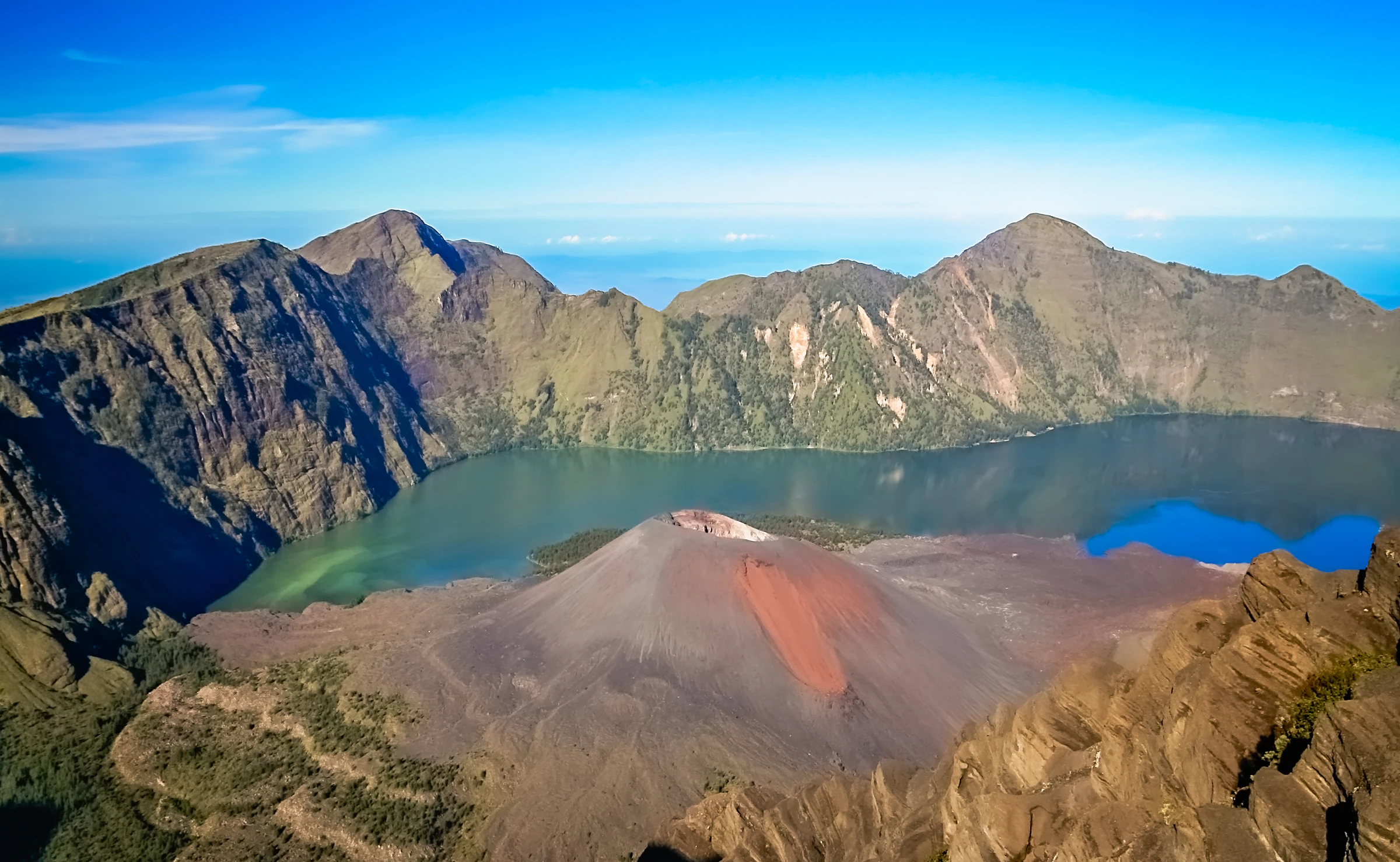
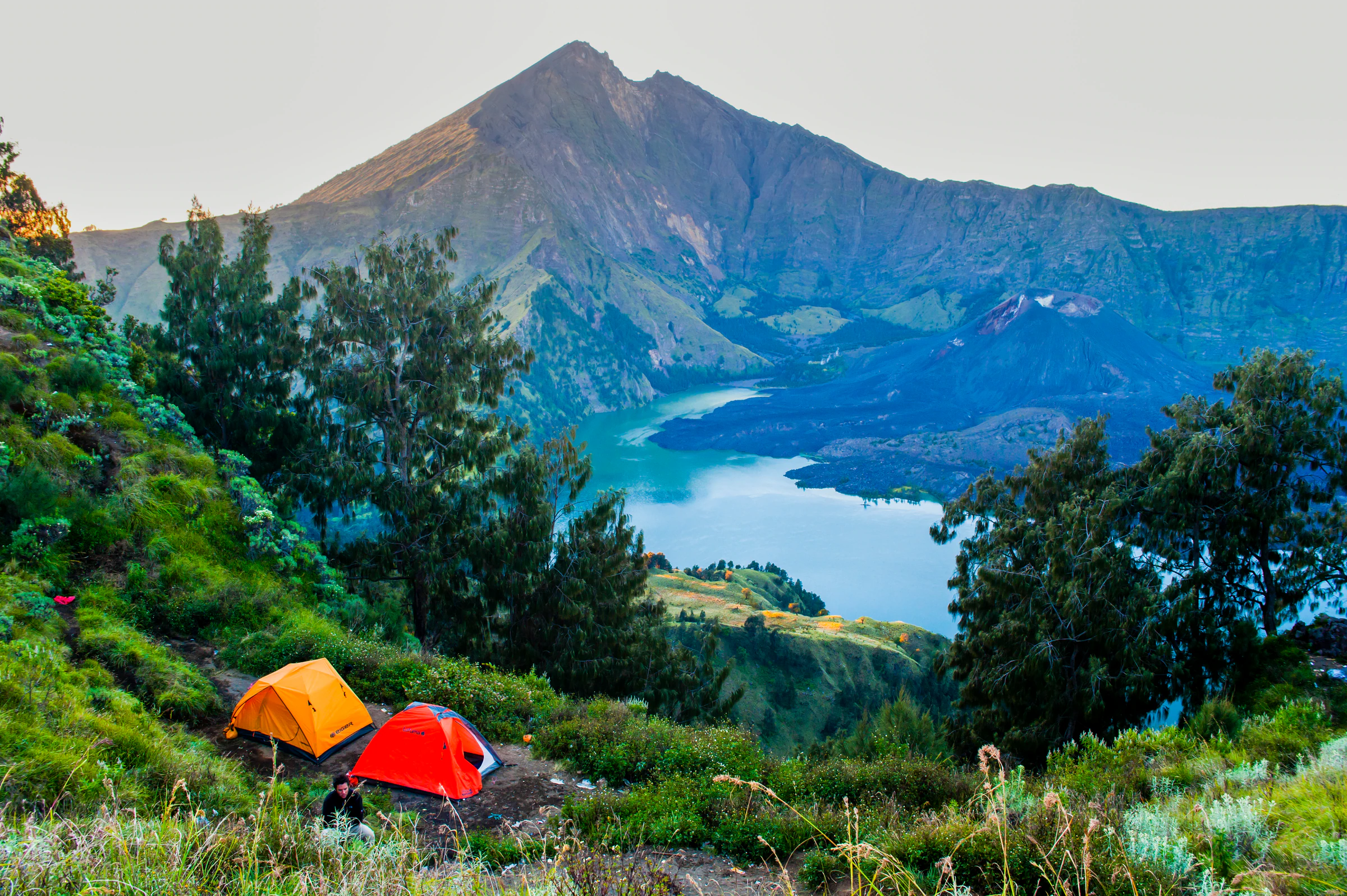
Rinjani fills the north of Lombok and, at 3,726 m, is one of the highest volcanoes in Indonesia. Its summit rises from the edge of a vast caldera. Inside the caldera is Segara Anak, a crescent-shaped crater lake at about 2,000 m, with hot springs on its shore. A young cone called Barujari grows out of the lake. It last erupted in 2015 and is still active. Seeing it smoke in the middle of a lake is a big part of why people make the climb.
The mountain sits in Mount Rinjani National Park, which manages the trails, sets the rules and closes them every rainy season.
Rinjani treks: which one to do
Almost everyone goes with an organised trek. Porters carry the tents, food and water, and a licensed guide leads the group. These are the standard options:
| Trek | What you do | Who it suits |
|---|---|---|
| 2 days, 1 night: crater rim | Up from Sembalun or Senaru to the rim, sunset and sunrise over the lake, then back down | The best choice for most people. You see the famous view without the summit push |
| 2 days, 1 night: summit | Rim on day 1, then summit at 2 a.m. and all the way down on day 2 | Fit, experienced hikers only. It's a very long second day |
| 3 days, 2 nights: summit and lake | Rim, summit at sunrise, down to Segara Anak and its hot springs, then up the other rim and out | The classic full trek, if you're fit |
| 4 days, 3 nights | The same as the 3-day trek at a gentler pace | People who want more time at the lake |
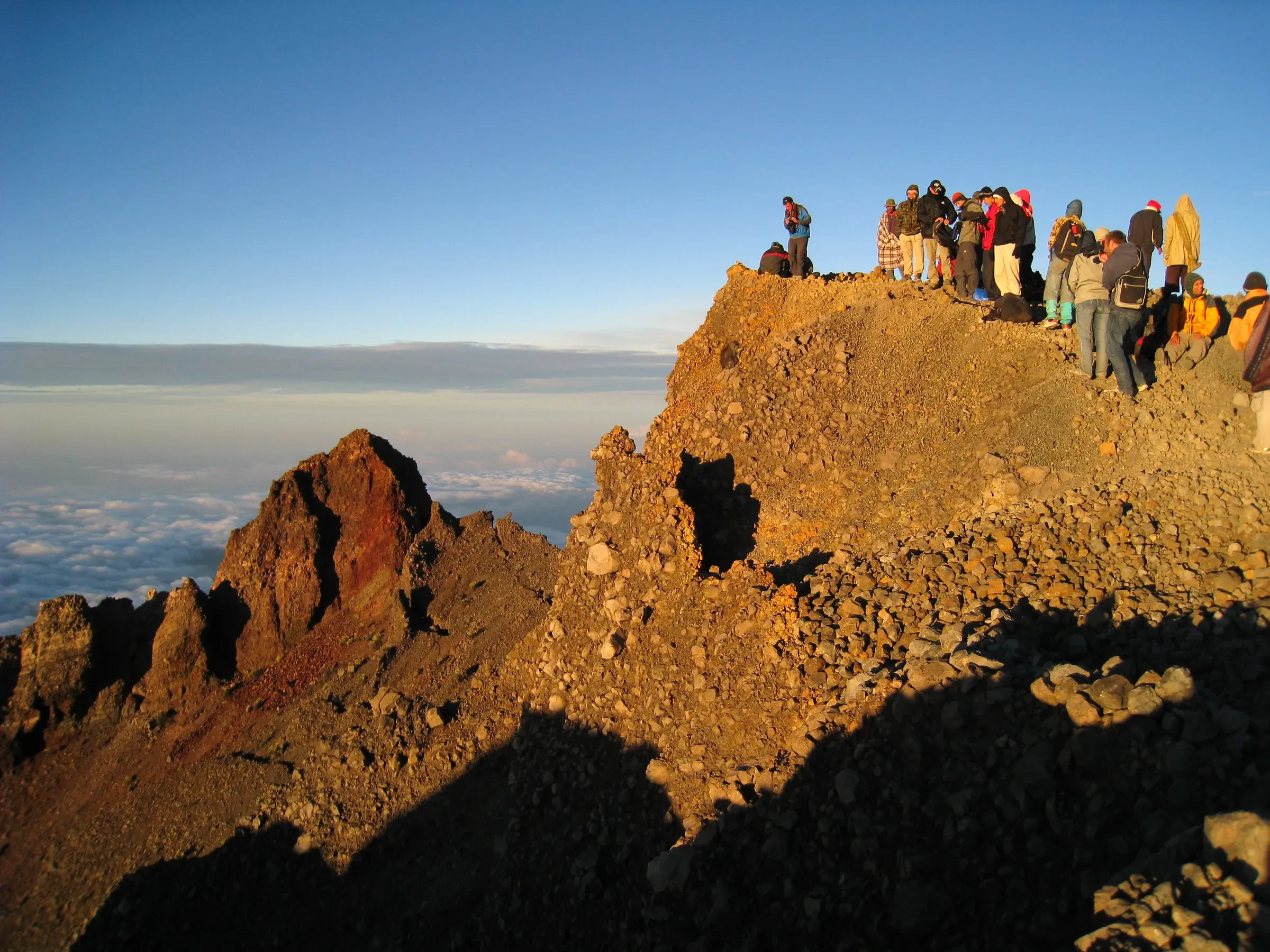
The summit push is the crux. It usually starts at about 02:00 to 03:00 from the Sembalun rim and takes three to four hours in the dark. The last stretch is loose volcanic sand where you slide back with every step. It's fine to decide at the rim that the sunrise from camp is enough. Many people do, and they still see the best of the mountain.
Sembalun, Senaru or Torean?
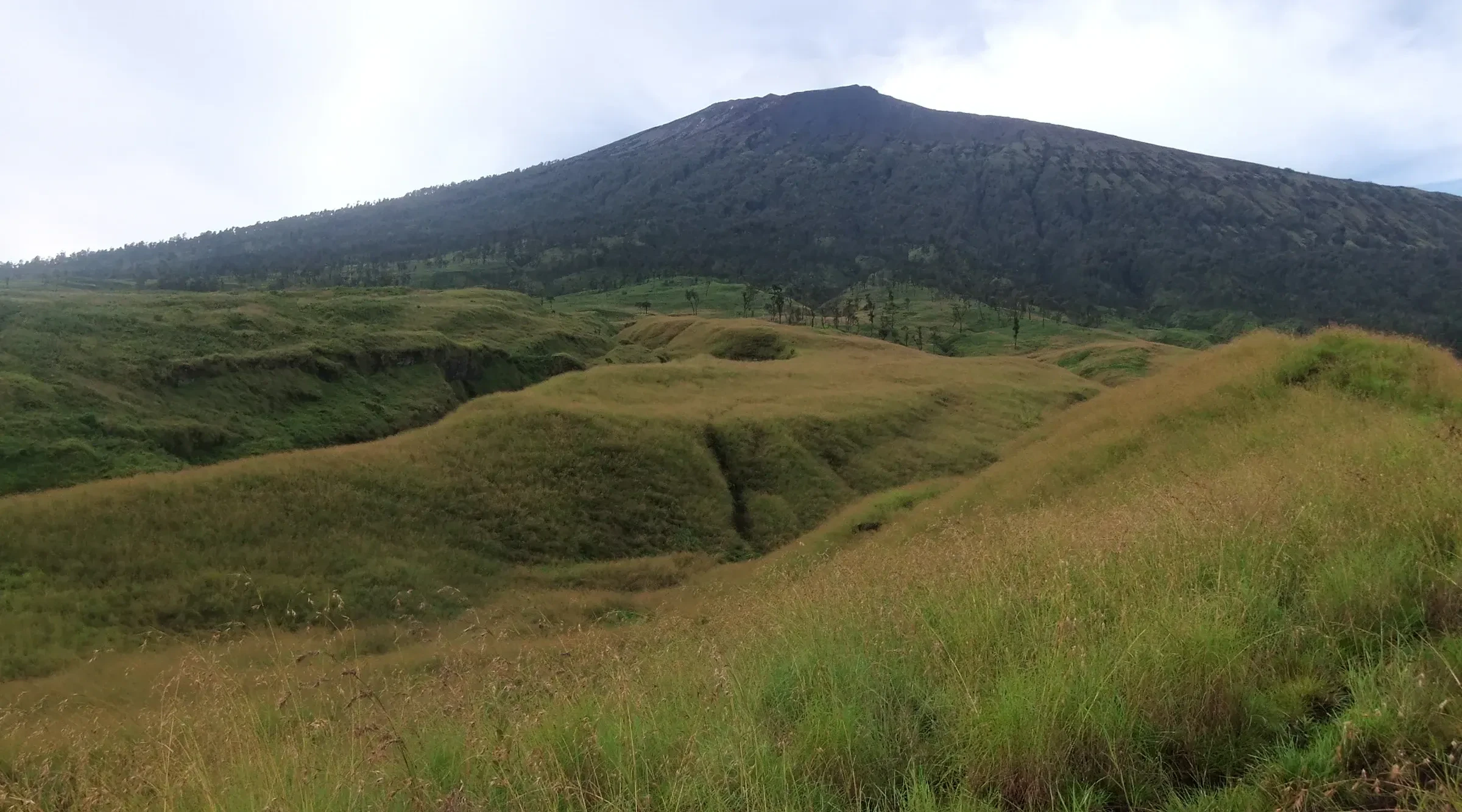
- Sembalun (east side) is the main route for summit treks. It starts at about 1,100 m, crosses open savannah and then climbs steeply to the rim at about 2,640 m. There's little shade, so start early.
- Senaru (north side) climbs through rainforest to the opposite rim. It's steeper but shadier, and it's closer to the Gili Islands.
- Torean (north) follows a river valley to the lake and is mostly used for the way down on longer treks.
Three smaller routes (Timbanuh, Aik Berik and Tetebatu) exist but see far fewer trekkers.
Rinjani rules for 2026
The rules tightened in 2025 and 2026, so older blogs are often out of date.
- Book through eRinjani. Every trekker needs a ticket from the park's online system, with a QR code checked at the gate. Your operator normally books it for you. From 1 September 2026 the park suspended new online bookings through the app while fire risk is high, though tickets already booked and paid for stay valid. We found no announcement of a full reopening by 3 October 2026.
- Licensed guide. Foreign trekkers must go with a licensed guide and a registered operator. Since January 2026, one guide can take no more than 4 foreign trekkers.
- Insurance. Basic cover is included in the park ticket. The park also sells a premium policy (IDR 290,000 per person per trek, valid for up to 4 days) that covers evacuation, and foreign trekkers are strongly advised to buy it. Check your own travel insurance covers trekking at this altitude too.
- Park fee. Since 3 November 2025, foreign trekkers pay IDR 250,000 a day on the main routes (Sembalun, Senaru and Torean) and less on the smaller ones. Operators usually include it in the price.
- Rubbish. Everything you carry up comes back down. Pick an operator that actually does this, because the rim campsites have had a rubbish problem for years.
- Dry-season fire restrictions. The dry months carry fire risk too. The park announced a limited reopening from 1 September 2026 under a Forestry Ministry circular, with more patrols, bag checks for anything that could start a fire and a ban on careless use of fire. Expect your bags to be checked, and follow your guide's instructions on fire.
- Seasonal closure. All six routes close in the wet season. In 2026 they were closed from 1 January to 31 March and reopened on 1 April with daily quotas. The 2027 dates hadn't been announced when we checked on 3 October 2026.
Is Mount Rinjani safe?
Rinjani is a serious mountain, and people have died on it. In June 2025, a 26-year-old Brazilian trekker, Juliana Marins, fell from the trail near the summit. Rescuers found her dead three days later. In May 2025 a Malaysian hiker died in a fall. Indonesian climbers also died on the mountain in 2026, including a 17-year-old who fell about 100 metres on the Torean route in July. Most accidents happen on the summit trail, in the dark, on loose ground and near steep drops.
The 2026 rules above (licensed guides, smaller groups per guide, evacuation insurance) came in partly because of these deaths. What keeps you safe on the day is mostly up to you and your operator:
- Choose the operator carefully. Look for recent reviews that mention the guides by name, a clear turnaround time for the summit, proper tents and sleeping bags, and a plan for anyone who wants to stop.
- Know your limit. If you're struggling on the way up to the rim, skip the summit. Turning back is normal and the guides expect it.
- Stay with your guide on the summit push, and don't leave the trail for photos.
- Bring real warm clothes. Nights at the rim are about 5 to 12°C, and the summit can be around freezing before dawn, with wind.
- Check the volcano. Barujari is active. Look at MAGMA Indonesia (magma.esdm.go.id) for the latest alert level before you go.
Best time to climb Rinjani
| Months | Conditions | Verdict |
|---|---|---|
| January to March | Trails closed for the wet season | Not possible |
| April | Trails reopen. Green and fresh, some showers | Good, and quieter |
| May to June | Dry, clear mornings, cool nights | One of the best times |
| July to August | Driest and clearest, and the busiest months | Great views, crowded campsites |
| September | Dry and less busy | One of the best times |
| October to November | Rain and cloud increase as the wet season starts | Possible, but views aren't guaranteed |
| December | Wet, and the closure usually starts at the turn of the year | Not recommended |
In our view, May, June and September are the sweet spot: dry weather without the July and August crowds. Dry weather also brings fire risk, so access can be restricted late in the season, as it was from September 2026. Our best time to visit Bali guide explains how the same seasons work across Bali, the Gilis and Lombok.
How to get to Rinjani
- From Bali. Fly to Lombok (about 40 to 50 minutes) or take a fast boat to Lombok or the Gilis (about 1.5 to 2.5 hours). Treat boat safety seriously: pick an established operator, check the life jackets and avoid rough weather.
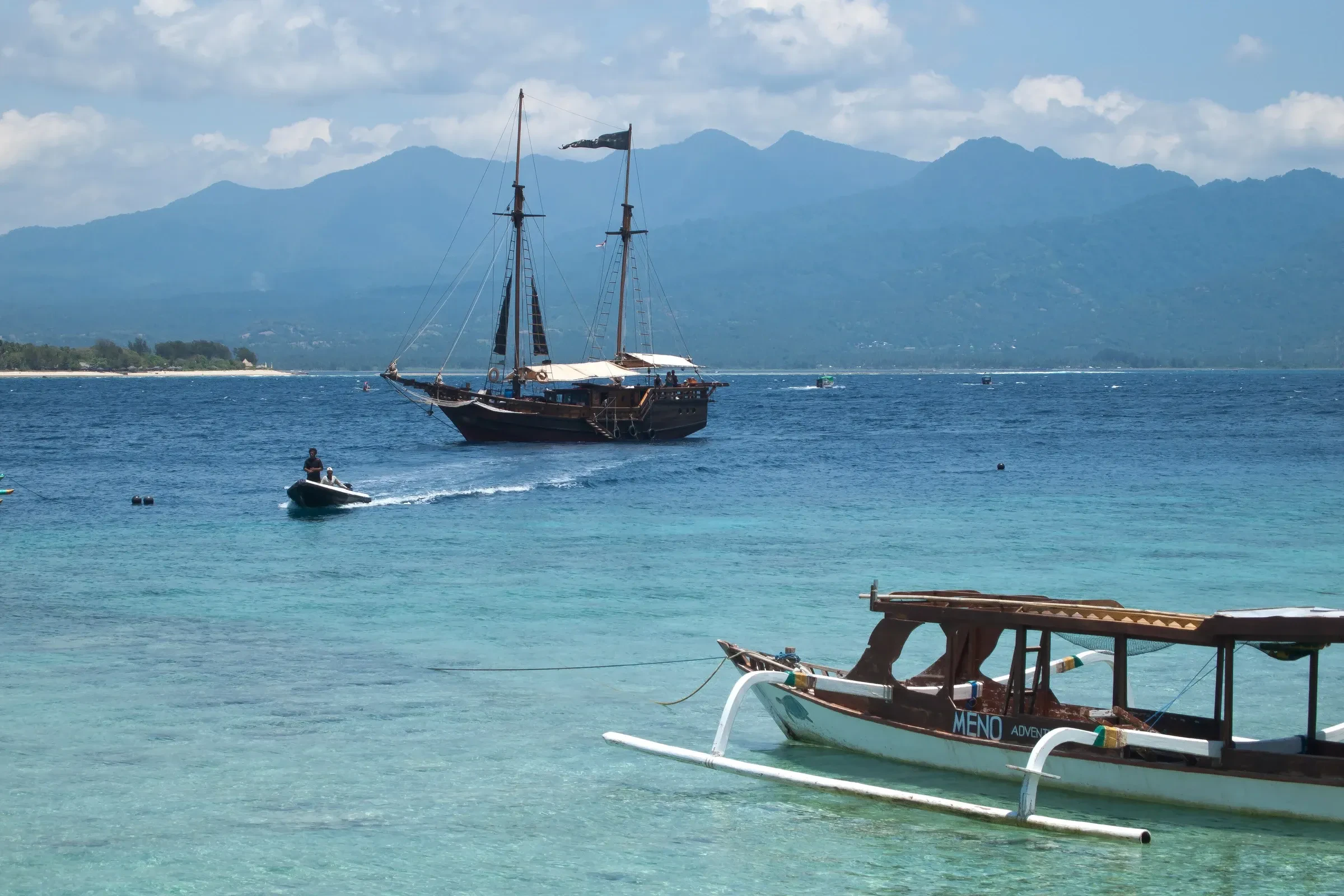
- From the Gili Islands. Take the short boat to Bangsal harbour on Lombok. From there it's about an hour or more by road to Senaru. Many operators include the transfer, so you can walk off the beach and onto the mountain.
- From Lombok airport. It's about 2.5 hours by road to Sembalun.
Most treks include pick-up from Senggigi, the Gilis or Kuta Lombok, and a night in Senaru or Sembalun beforehand. Our Lombok guide covers the rest of the island.
How much does a Rinjani trek cost?
With a reputable operator, prices in 2026 run roughly:
| Trek | Price per person (shared group) |
|---|---|
| 2 days, 1 night | about US$160 to US$275 |
| 3 days, 2 nights | about US$235 to US$325 |
| 4 days, 3 nights | about US$365 to US$395 |
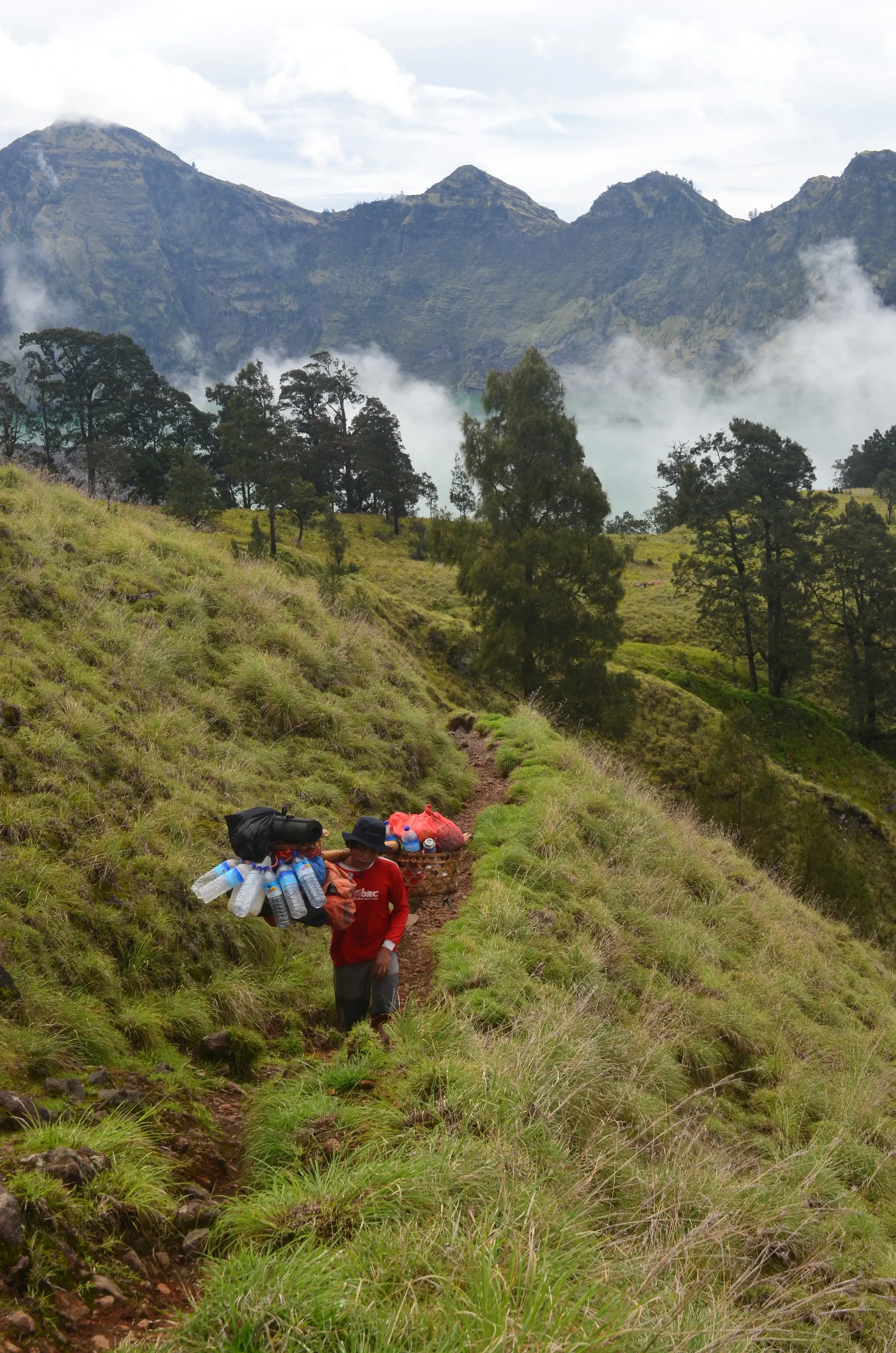
Prices usually include the park fee, the guide and porters, camping gear, meals and transfers from nearby towns. Check whether the premium insurance is included. Budget extra for tips for the guide and porters, who carry heavy loads for low pay. Be wary of treks much cheaper than this range. The savings usually come from the gear, the food or the porters' wages.
What to pack for Rinjani
- A warm down or synthetic jacket, a hat and gloves for the summit
- Good trail shoes or boots with grip. Gaiters help on the scree
- A head torch with spare batteries
- Layers for a hot day that turns into a cold night
- Sunscreen, sunglasses and a cap for the open Sembalun savannah
- A refillable water bottle and any snacks you like
- Cash for tips
Rinjani as part of a bigger trip
Our Bali, Lombok & Rinjani Trek is built around this exact climb: 12 days from Ubud to a licensed 2-day, 1-night trek to the crater rim, with Gili Air and Kuta Lombok either side to rest before and recover after. The guide, porters, camping gear and park fees are all included, and the summit push beyond the rim is an optional add-on you arrange with your guide on the mountain.
If you'd rather treat Rinjani as something to add on afterwards, our other two Bali trips end close enough to start from. The Bali and Gili Islands trip already takes you to Gili Trawangan, just off Lombok's north-west coast.