Komodo's reefs sit where the Flores Sea meets the Indian Ocean, and the currents that result are exactly what makes the diving here so good: they carry in the plankton that feeds the mantas, the schooling fish and the sharks that pull divers here from all over the world. Those same currents are why Komodo isn't really a place to learn from scratch. Most people who dive Komodo already have some experience, or they get certified here and then dive the calmer sites while they build it up.
This guide covers liveaboards against day trips, the park's best-known dive sites and who they suit, the currents and certification you need, the best months, and what a course or a day of diving costs in 2026. For the rest of the park, including the dragons, Padar and Pink Beach, see our Komodo Island guide, and for the certification itself, our PADI Open Water guide covers how the course works anywhere in the world.
Liveaboard or day trip diving in Komodo?
A day trip from Labuan Bajo is the cheaper, faster way to dive Komodo, and a liveaboard is the better way to reach the park's most current-dependent sites at the right moment.
Day trips run by speedboat, usually with 2 or 3 dives, lunch on board and a small group of divers per guide. Because the boat has to be back in Labuan Bajo by the afternoon, it's committed to a fixed schedule regardless of how the current is running that day, which matters more here than at most dive destinations.
Liveaboards spend several days and nights moving slowly through the park on a wooden phinisi, with 3 or 4 dives a day. The real advantage isn't just more diving, it's flexibility: the boat can wait out a slack tide or reposition to the calmer side of a site instead of diving it on a fixed timetable. That matters at sites like Castle Rock and Crystal Rock, where conditions swing from manageable to properly difficult within the same day.
If you're short on time or new to diving in general, a day trip to one of the calmer sites is the sensible start. If Komodo is the main reason for your trip and you already have some current experience, a liveaboard gets you to more of what the park is actually known for.
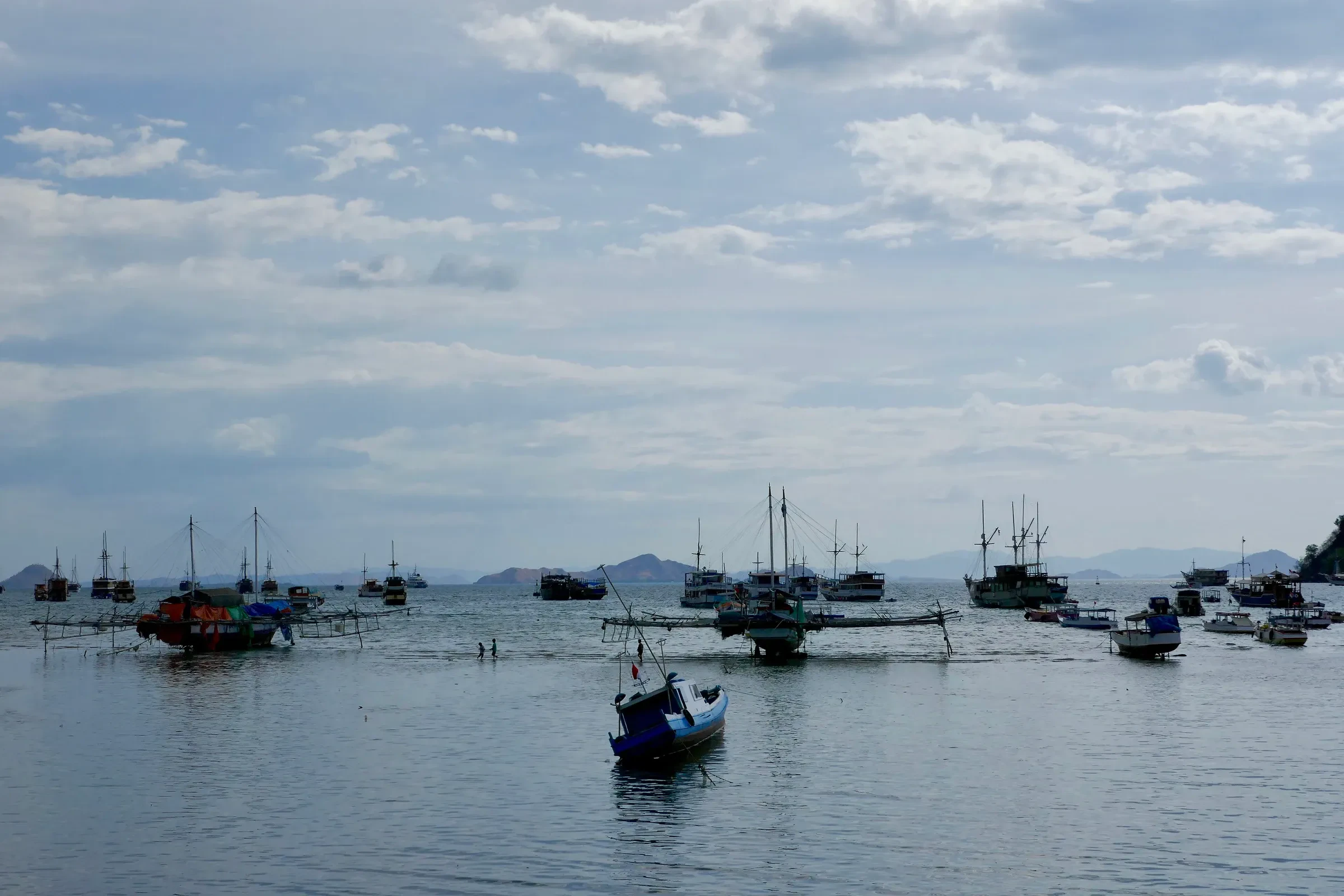
Komodo's dive sites by level
| Site | Where | Typical depth | Current | Level |
|---|---|---|---|---|
| Manta Point (Karang Makassar) | South of Komodo Island | About 5 to 16 m | Mild to moderate, tide-dependent | Operators rate it Open Water and above, with a current briefing |
| Batu Bolong | Between Komodo and Rinca | Down to about 25 m or more | Strong, splits around the pinnacle | Advanced, strong buoyancy and drift experience needed |
| Castle Rock | Lintah Strait, off Gili Lawa | About 5 to 30 m, with deeper edges | Strong to very strong, often downward | Advanced; operators recommend 30 or more logged dives |
| Crystal Rock | North Komodo, near Gili Lawa Laut | About 1 to 30 m | Strong, 2 to 4 knots at peak | Advanced only |
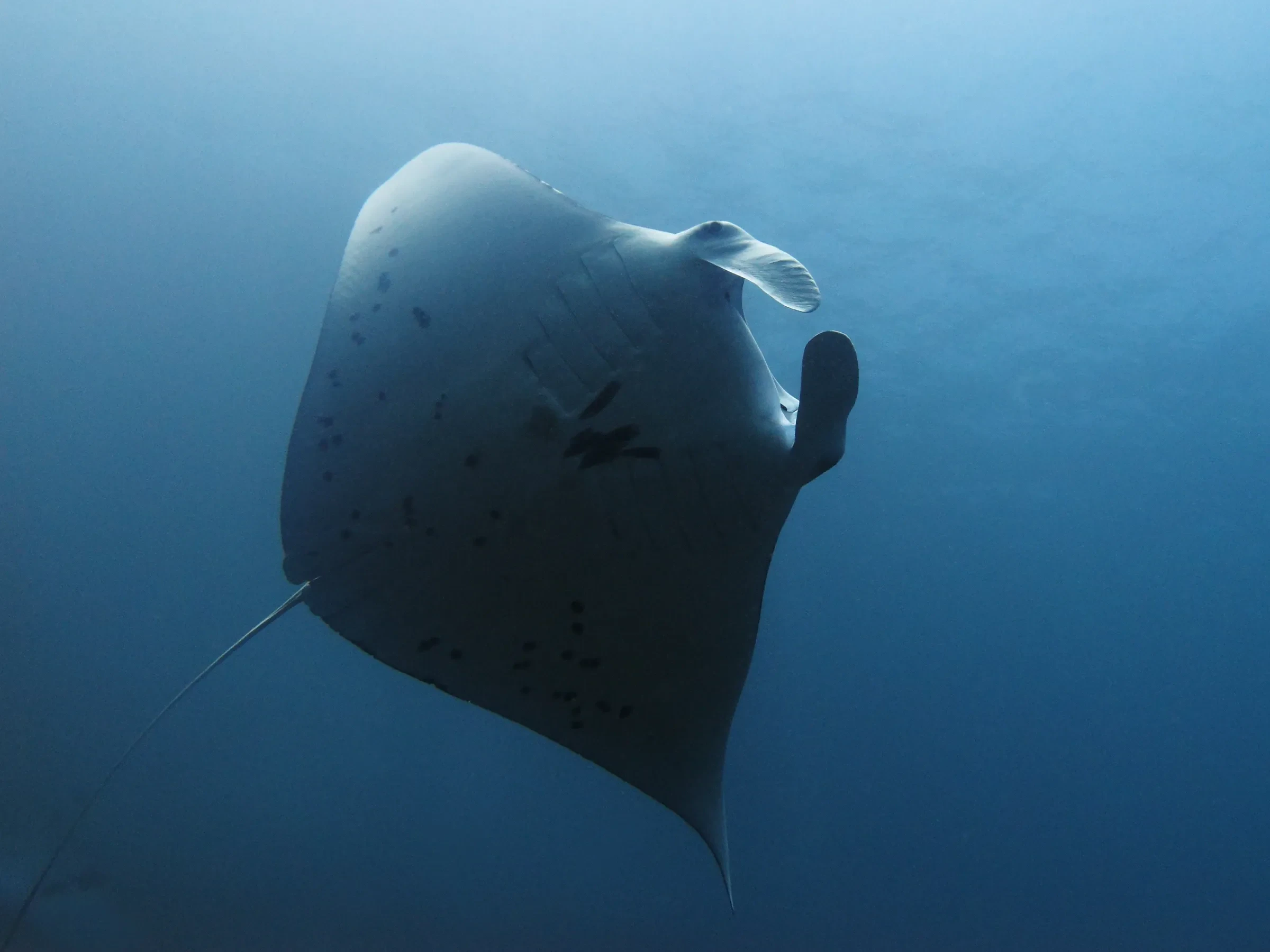
Manta Point, also called Karang Makassar, is a gentle, sloping reef where reef mantas gather to feed and be cleaned. Operators rate it as suitable for Open Water divers and above with a current briefing, but the current changes with the tide, so the guide's call on the day decides whether it suits you. Mantas are seen here all year.
Batu Bolong is a small rocky outcrop between Komodo and Rinca that looks unremarkable from the surface, just a pinnacle with a tunnel through it, but underwater it's one of the most densely packed dive sites in Indonesia, with the current splitting around the rock to create a fish magnet on one side. It's an advanced site: currents run year round regardless of season, and even a confident Open Water diver needs solid buoyancy and drift experience to enjoy it rather than fight it.
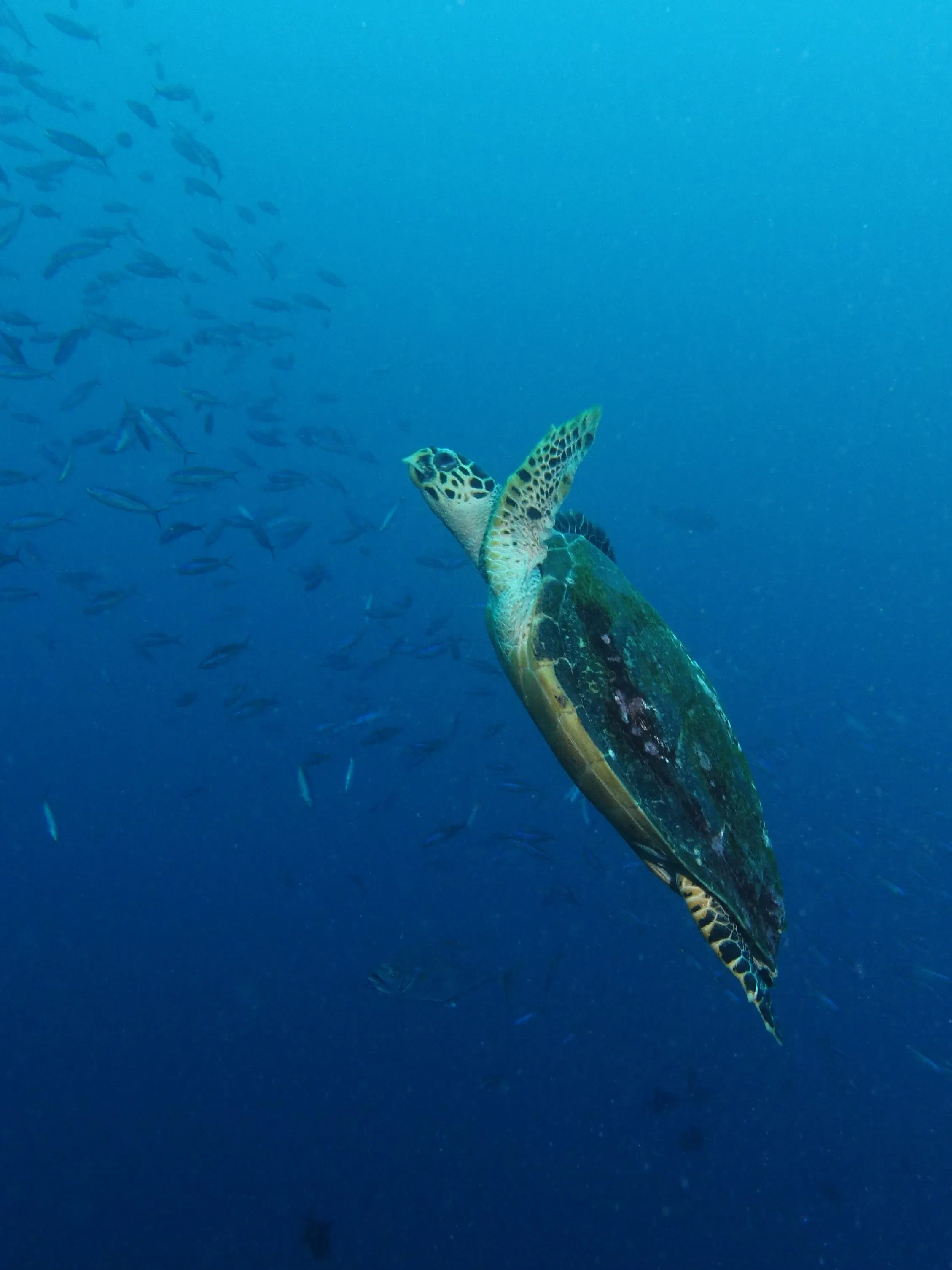
Castle Rock, a submerged pinnacle in the Lintah Strait between Komodo and Gili Lawa, is Komodo's best-known site for sharks: whitetip and grey reef sharks are routine, often several circling the pinnacle at once on a strong incoming current. The currents here can run strong and downward, which is why it's an advanced-only dive.
Crystal Rock, nearby in the north of the park, is named for its clear water and pairs a photogenic reef with the same kind of current-driven pelagic action as Castle Rock: reef sharks, schooling trevally and tuna, and reef-hook diving on the strongest days. Like Castle Rock, it's for divers with real current experience, and liveaboards usually dive the two together on the same day.
Currents and experience levels
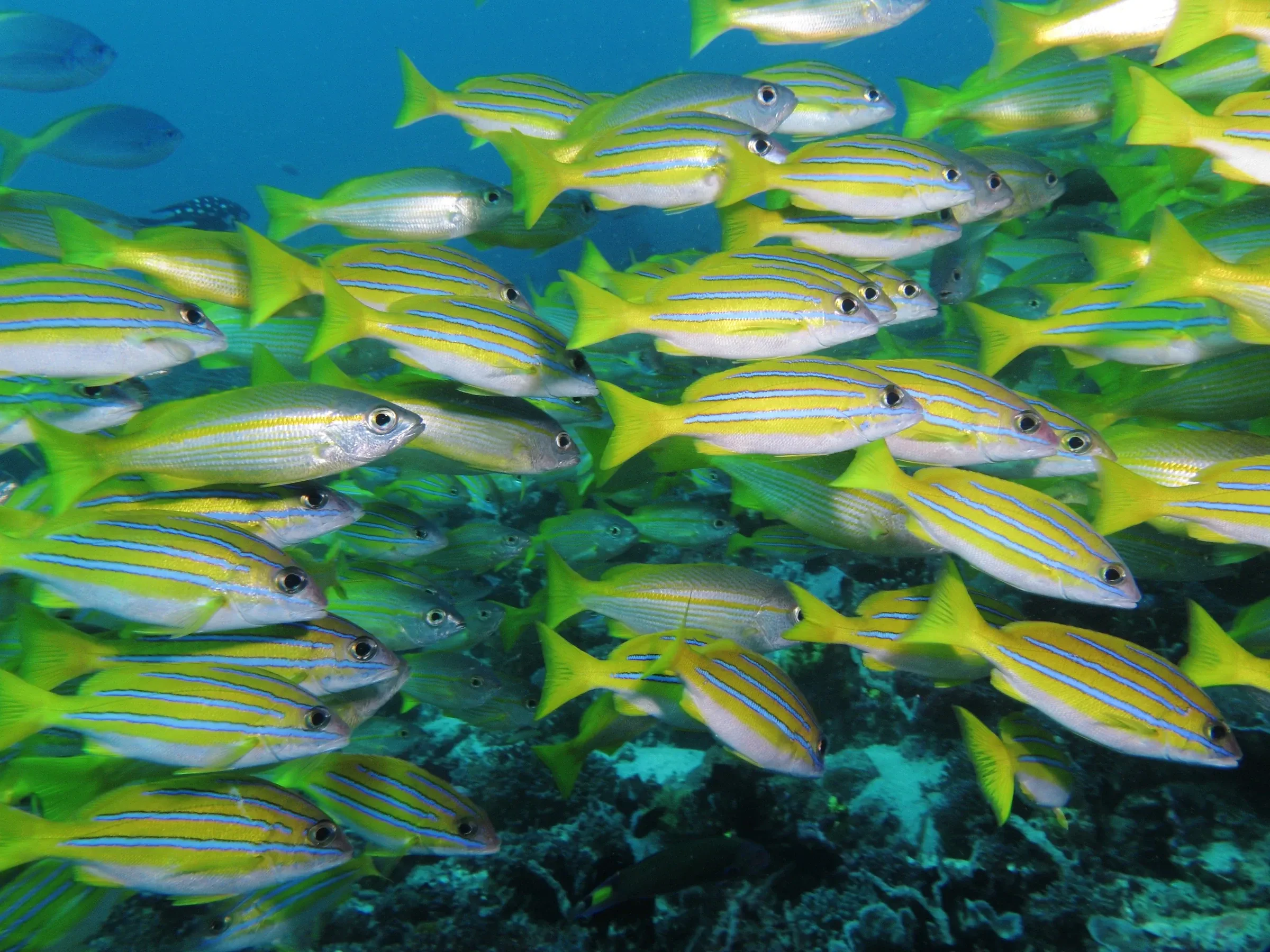
Currents are the single biggest factor in Komodo diving, and they're also what makes it worth doing. The park's visitor rules say you must be certified to dive, and operators' own requirements are stricter: Batu Bolong, Castle Rock and Crystal Rock are listed as Advanced Open Water sites by the operators we checked, and some will only take an Open Water diver to Batu Bolong with a lot of logged dives and close supervision.
- Open Water divers are generally limited to Manta Point and a handful of other sheltered, current-light sites, always with a guide. Ask your operator which sites they will take you to before you pay.
- Advanced Open Water divers can dive most of the park, including Batu Bolong, Castle Rock and Crystal Rock, though a good operator still reads the day's current before committing.
- Reef-hook diving, where you clip onto a rock to watch the action in strong current without fighting it, is common practice at the stronger sites and worth asking your operator about before you go.
If you're not yet Advanced certified, doing the course before or during your trip (see below) is the difference between diving a fraction of the park and diving most of it.
Best time to dive Komodo
| Months | Conditions | Good for |
|---|---|---|
| April to November (dry season) | The clearest water, especially in the park's north | The best overall window for visibility at Batu Bolong, Castle Rock and Crystal Rock |
| December to March (wet season) | Rougher seas, but operators report peak manta numbers in the south of the park | Manta-focused trips around Manta Point, if the boat schedule holds |
| July to October | Peak season on land and water | Book your boat well ahead, since the park admits at most 1,000 visitors a day |
Conditions can shift quickly either way. Since 1 April 2026 the park has admitted at most 1,000 visitors a day, and entry is booked through a licensed operator, so arrange your trip before you arrive. The harbourmaster also closed the park's waters on several dates in 2026: tourist boats were stopped for most of January and again from 23 to 26 May, and voyages to Komodo and Padar were closed from 6 to 8 August, on 9 and 10 September and from 13 to 15 September (Rinca stayed open during the August closure and on 9 and 10 September). Keep a spare day in Labuan Bajo. A magnitude 7.7 earthquake struck Flores on 15 August 2026, and reports from 18 to 21 August said Komodo National Park and its Padar and Komodo Island sites were operating again; see our Flores itinerary for the overland picture. Our Komodo Island guide covers the boat-safety and closure risks that affect any trip into the park, not just diving.
PADI courses in Komodo
Komodo isn't the easiest place to start from zero, but you can. PADI Open Water courses run from Labuan Bajo dive centres, using the sheltered, current-light sites while you learn, and cost from about IDR 8.5 million, with national park fees on top. See our PADI Open Water guide for how the course itself works: the theory, the pool sessions and the four open-water dives.
PADI Advanced Open Water is worth prioritising if you're already an Open Water diver, since it's what unlocks most of the park's sites. It typically runs over 2 days with 5 adventure dives, including the required Deep and Underwater Navigation dives, and costs roughly IDR 6.5 to 6.85 million in 2026, with park and harbour fees usually charged separately at about IDR 275,000 per person per day. Our PADI Open Water guide also covers what Advanced adds and how it works.
Park fees and diving costs in 2026
| Item | Price |
|---|---|
| Park charges for a diver, per person per day | about IDR 275,000 to 300,000 (see below) |
| Day trip, 3 dives from Labuan Bajo | about IDR 2.6 to 2.8 million |
| PADI Open Water course | from about IDR 8.5 million, plus park fees |
| PADI Advanced Open Water course | about IDR 6.5 to 6.85 million, plus park and harbour fees (about IDR 275,000 per person per day) |
| Dive liveaboard, 3 nights | from about US$1,200 (one operator's 2026 listing) |
| Dive liveaboard, 6 nights | about US$2,500 to 5,500 (same listing), more for luxury boats |
Park fees are the shakiest line in this table. Our Komodo Island guide lists IDR 250,000 a day for entry plus IDR 25,000 for diving, while a dive operator's 2026 page quotes IDR 300,000 per diver per dive day covering entry, conservation tax, the diving surcharge, rangers and harbour fees, and another operator page lists a different breakdown. Ask your operator for a written list of what is included, and note that the 1,000-a-day cap since 1 April 2026 means your operator registers you through the park's SiOra booking system. Prices change often in Komodo, so treat the rest of this table as a 2026 guide and confirm figures before you book.
Choosing a dive operator in Komodo
The currents that make Komodo's diving so good also make the operator you choose more important than almost anywhere else in Southeast Asia.
- Small groups. Four or five divers per guide is a reasonable maximum, especially on the current-heavy sites.
- Honesty about conditions. A good operator reads the tide and current before committing to Batu Bolong, Castle Rock or Crystal Rock, and changes the plan rather than pushing a dive that's running too strong.
- Recent reviews that mention the guides by name, not just the boat or the scenery.
- Proper safety kit: oxygen and a first aid kit on board, and a clear briefing on what to do if you're swept off a site in a strong current.
- A liveaboard with a clean safety record. Indonesian dive liveaboards have had fires and sinkings: dive-industry news sites reported a liveaboard fire off Labuan Bajo on 2 May 2024 (everyone was evacuated), another fire in Raja Ampat on 30 November 2023, and a Komodo-operated liveaboard that sank off Sorong on 3 February 2025 (all 17 on board were rescued). In the same waters, a sightseeing phinisi sank in the Padar Strait on 26 December 2025. We can't vouch for any named boat, so check fire and lifejacket equipment, the crew's safety briefing and recent reviews yourself. The safety checks in our Komodo Island guide, on life jackets, registered operators and no night sailing between islands, apply to a dive liveaboard just as much as a sightseeing one.
Mantas, dragons and flying home
Don't touch mantas and don't chase them when they swim away. Operators brief divers to keep a few metres' distance, hold position and let the manta come back. The park's visitor rules also say not to touch or feed any animal, and dragons are watched on land from behind your ranger or guide, never approached for a photo.
Don't fly too soon after your last dive. DAN's workshop guidance is a minimum surface interval of 12 hours after a single no-decompression dive and at least 18 hours after repetitive or multi-day diving, so keep your last dive well before an afternoon flight out of Labuan Bajo. Batik Air and Indonesia AirAsia fly nonstop between Bali and Labuan Bajo (about 1 hour 5 minutes to 1 hour 20 minutes), but timetables change, so check the airline's current schedule.
Diving on our trips
Neither of our Komodo trips is built around diving, since both are priced and paced for snorkelling. If you're already certified, ask your Trip Host before you book whether a dive can be arranged on either trip. It would be at your own cost.