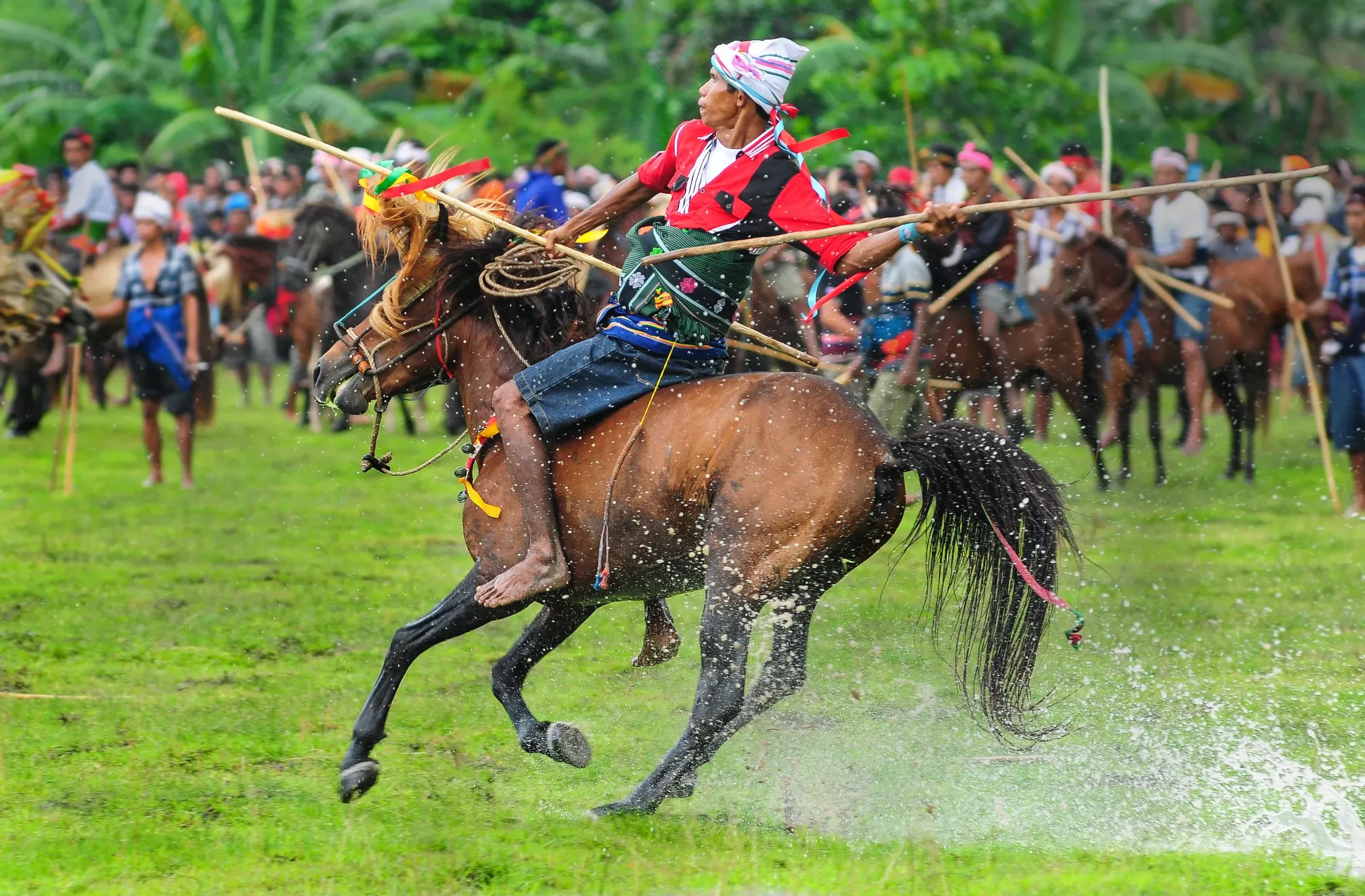
Few visitors have heard of Pasola, and fewer still have seen it: teams of horseback riders from rival villages throw blunted wooden spears at each other in a ritual battle meant to bless the coming harvest. It's a genuine ceremony, not a show staged for visitors, which is exactly why seeing it takes more planning than most festivals do.
What Pasola is
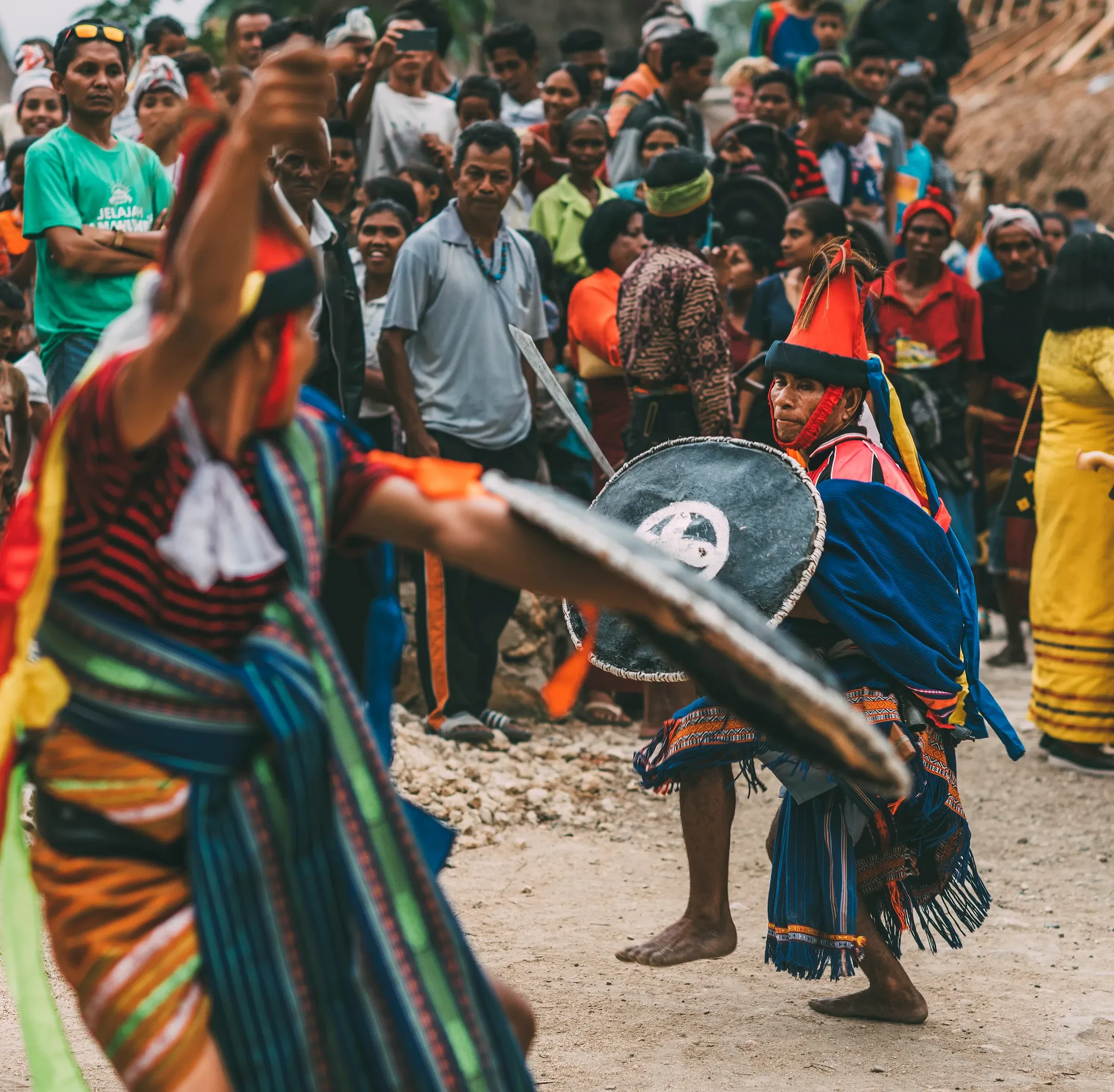
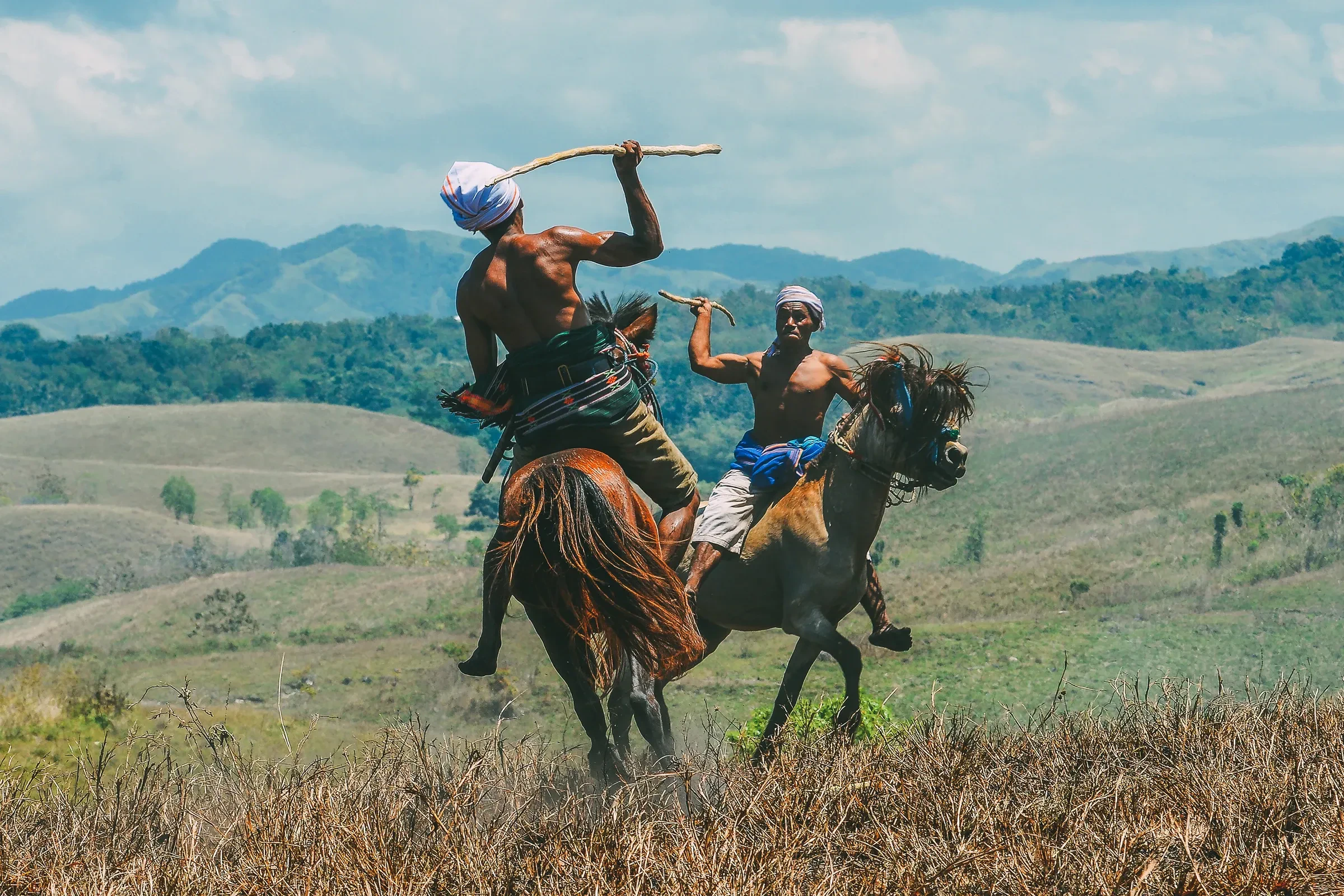
Pasola comes from the Sumbanese word for the spear used, and the ritual is tied to Marapu, the island's indigenous ancestral belief system. Two groups of riders from neighbouring villages charge each other on an open field and throw spears, with the aim of spilling blood to fertilise the soil and secure the Marapu spirits' blessing on the year's harvest. It's held in West Sumba's four traditional districts, Lamboya, Kodi, Wanokaka and Gaura, each of which stages its own Pasola on a separate morning decided by its own Rato.
The spears were once sharpened bamboo and caused frequent serious injury and occasional deaths; they're now required to be blunted. Even blunted, Pasola remains genuinely dangerous: riders have lost eyes, been thrown from horses or struck hard enough to need treatment, and the ceremony is treated seriously by everyone on the field rather than staged for effect. Injuries are traditionally treated by the Rato using local methods rather than at a hospital, and Sumbanese belief holds that wounds heal within two to three days. As a visitor, that belief isn't a reason to take a risk yourself: watch from where your guide places you.
What happened at Pasola 2026
The Rato set the 2026 days in January. In Kodi, the Rato Nale of the Bhuku Bani and Tohik adat villages published a schedule on 21 January: three days in February (9 to 11) and three in March (9 to 11), at six different fields. Lamboya's Pasola was set for 10 February at Hobakalla field, and Wanokaka's for Monday 9 March, preceded by the Pajura rites the evening before. Before Lamboya, the West Sumba tourism head asked visitors to avoid alcohol, violence and revenge. Police and local officials ruled out alcohol and sharp weapons or machetes at Wanokaka.
Only Wanokaka has detailed reporting. According to Waingapu and Sumba iNews, a stone allegedly thrown from among the spectators set off a fight in the crowd around 10am. Horses ran loose and the panic grew. Police used tear gas and water cannon, order returned after roughly an hour, and the Pasola was not resumed that day. Neither report gives injury or arrest figures. The Lamboya and Kodi days were scheduled, but no reports on how they went turned up, and none on Gaura either.
Few festivals still work the way Pasola does. The Rato read the nyale worms to set each day, rival villages ride out against each other on horseback, and the point is a blessing on the harvest, not a performance. The Wanokaka stoppage also shows where a visitor's risk can lie: in the crowd as much as with the riders.
Bau Nyale on Lombok: a gentler relative
A related but distinct ritual, Bau Nyale, happens on Lombok's south coast around the same time of year, tied to the same nyale sea worms and the Sasak legend of Princess Mandalika. It's a calmer, more festive event: locals gather at dawn to harvest the worms, alongside ritual mock combat with rattan sticks and shields, horse races on the beach, and a parade of Sasak costume, but no Pasola-style jousting. If Sumba's logistics or intensity put you off, Bau Nyale is a far easier way to see a related tradition, since Lombok already has an established tourist infrastructure that Sumba doesn't.
Getting there
Sumba has two small airports: Tambolaka (TMC) in the west, with daily flights from Bali (about 90 minutes), and Waingapu (WGP) in the east, reached via a few flights a week from Lombok. Tambolaka is the practical gateway for Pasola, since all four host districts are in West Sumba. From the airport, expect up to about 2.5 hours by road to reach whichever village's field is active that year, depending on the district.
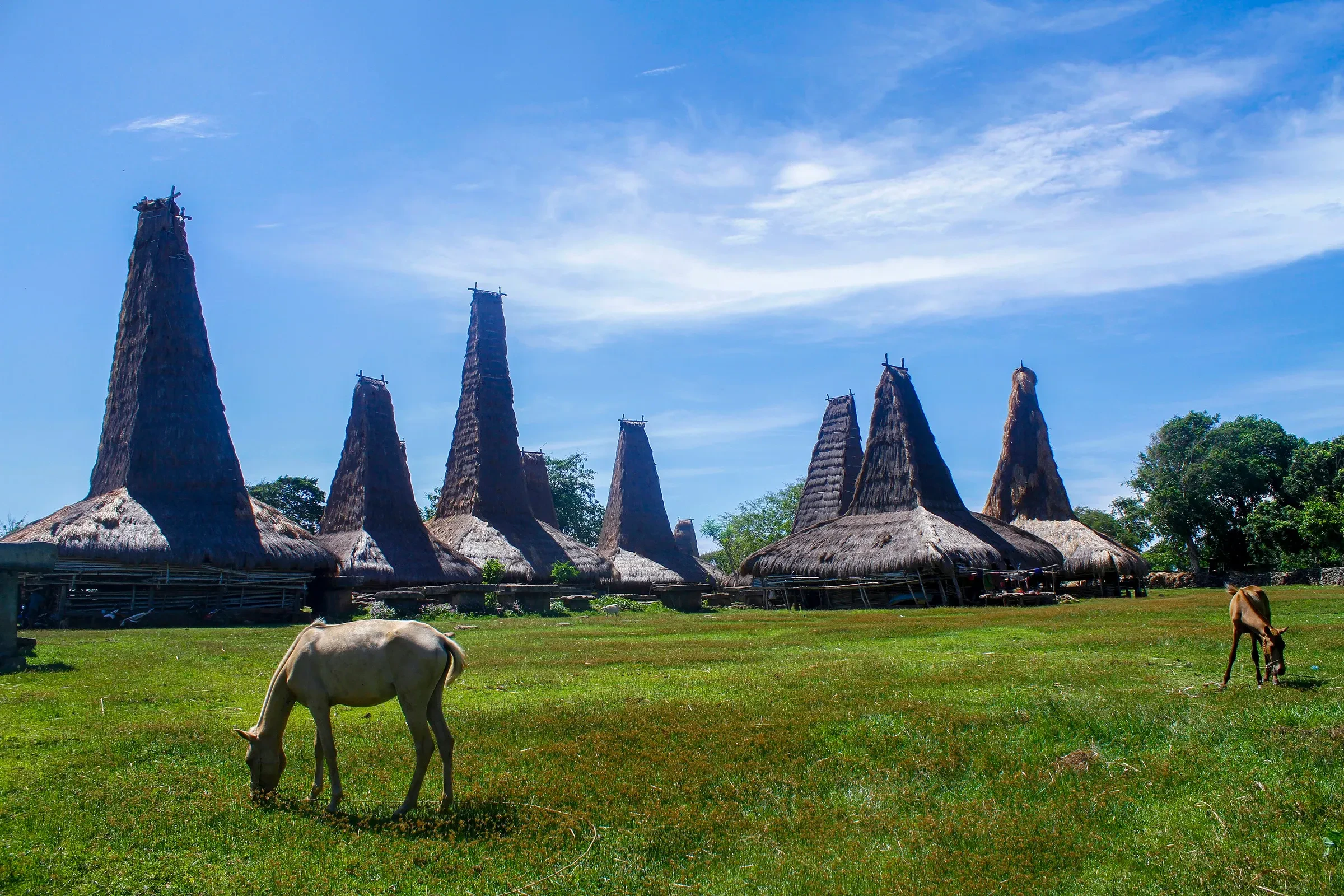
Public transport on Sumba is minimal, and on the day itself, timing and location both matter: fields are decided close to the date, and knowing where to stand safely isn't obvious to a first-time visitor. Hiring a local driver or guide for the day, rather than trying to self-drive, is close to essential, both for the logistics and for someone who can read the crowd and the Rato's cues.
Safety
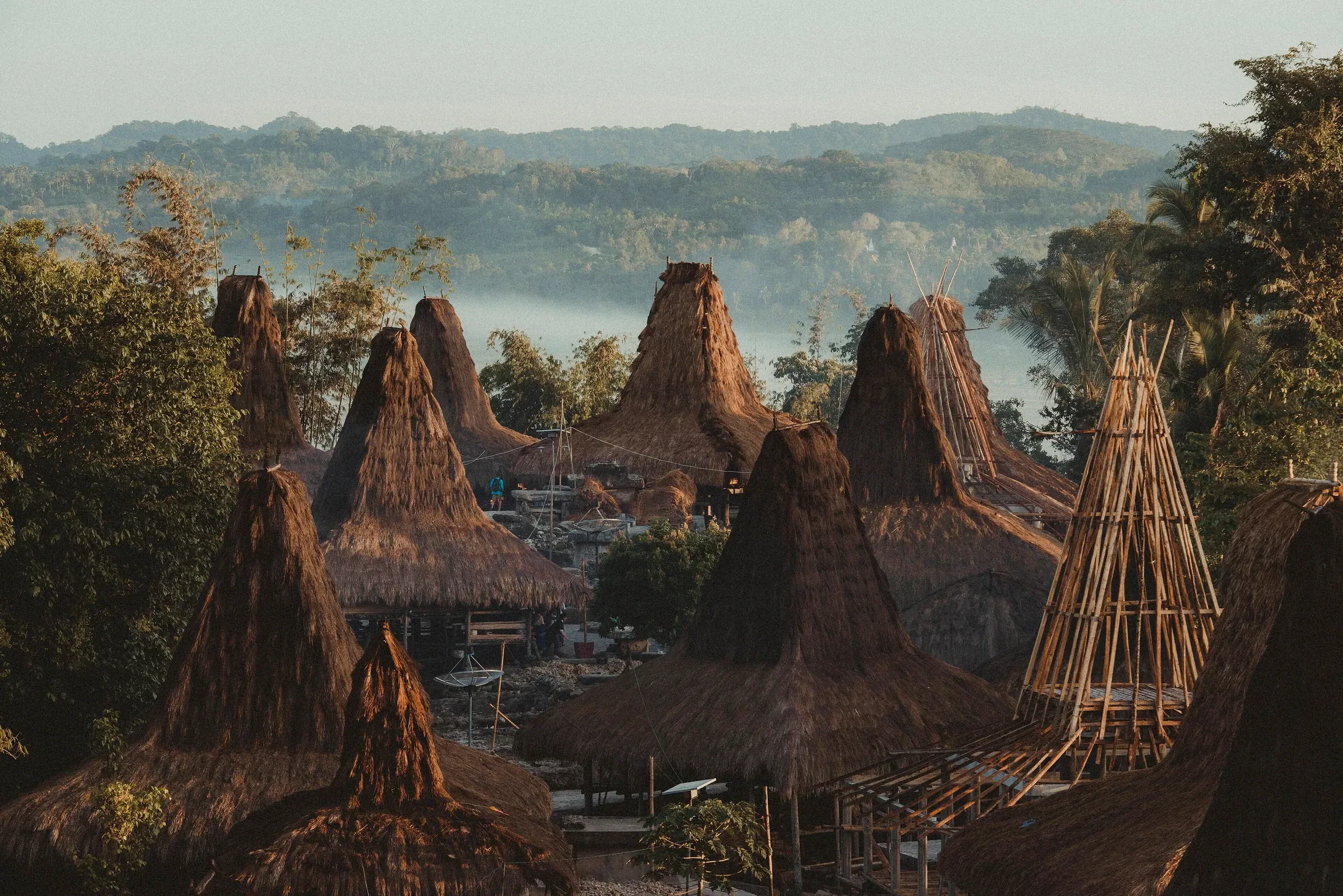
This is real ritual combat, not a re-enactment, and the usual crowd-safety assumptions don't fully apply. Horses can veer off the field into the crowd, and spears occasionally fly beyond the intended area. The Wanokaka stoppage in March 2026 showed that a crowd can turn too, and loose horses made the panic worse. Stay where your guide positions you rather than pushing closer for a photo, stay clear of any argument or shoving, and be ready to leave if the mood changes. Rural Sumba has limited medical facilities, so travel insurance that covers medical evacuation matters more here than on a typical trip, and it's not the place to take unnecessary risks as a spectator.
A trip around it
None of our trips reach Sumba; the closest is our Indonesia Complete: Java to Komodo trip, which ends at Komodo and Labuan Bajo, still a separate flight from Sumba. If Pasola's dates are announced during a trip you're already planning around eastern Indonesia, Tambolaka is reachable from Bali on your own, before or after a group departure elsewhere.
For more on Bali and the wider archipelago, see our Bali and Indonesia travel guide and festivals in Bali calendar.