What Vesak commemorates
Vesak marks three events Buddhists believe fell on the same full moon day: the Buddha's birth, his enlightenment and his death, or Parinirvana. Because it covers all three, people sometimes call it the "thrice-blessed day", and it's the most widely observed festival in Sri Lanka, more so than the famous Kandy Esala Perahera, since Vesak is marked by Buddhist households and temples right across the island rather than concentrated in one city.
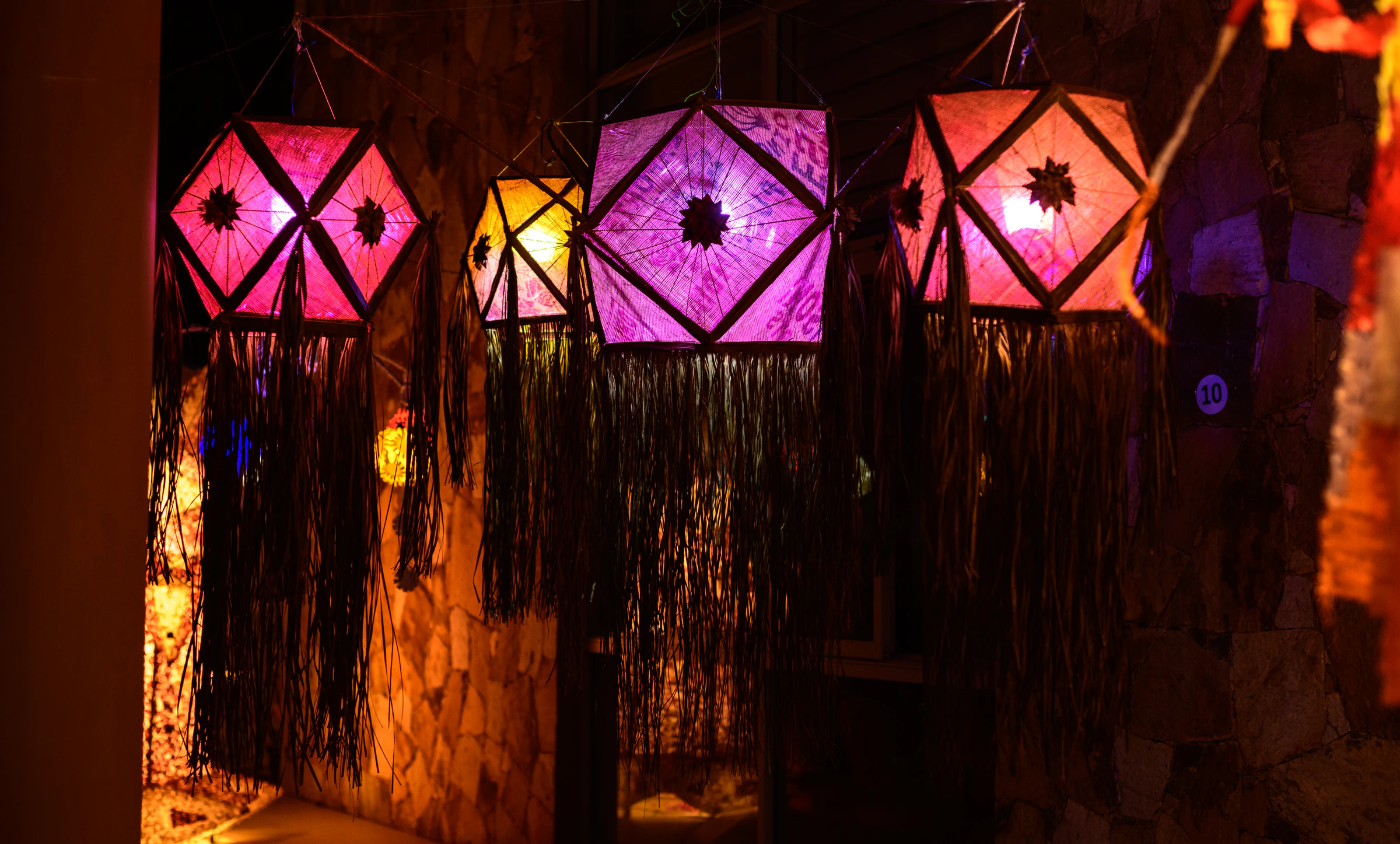
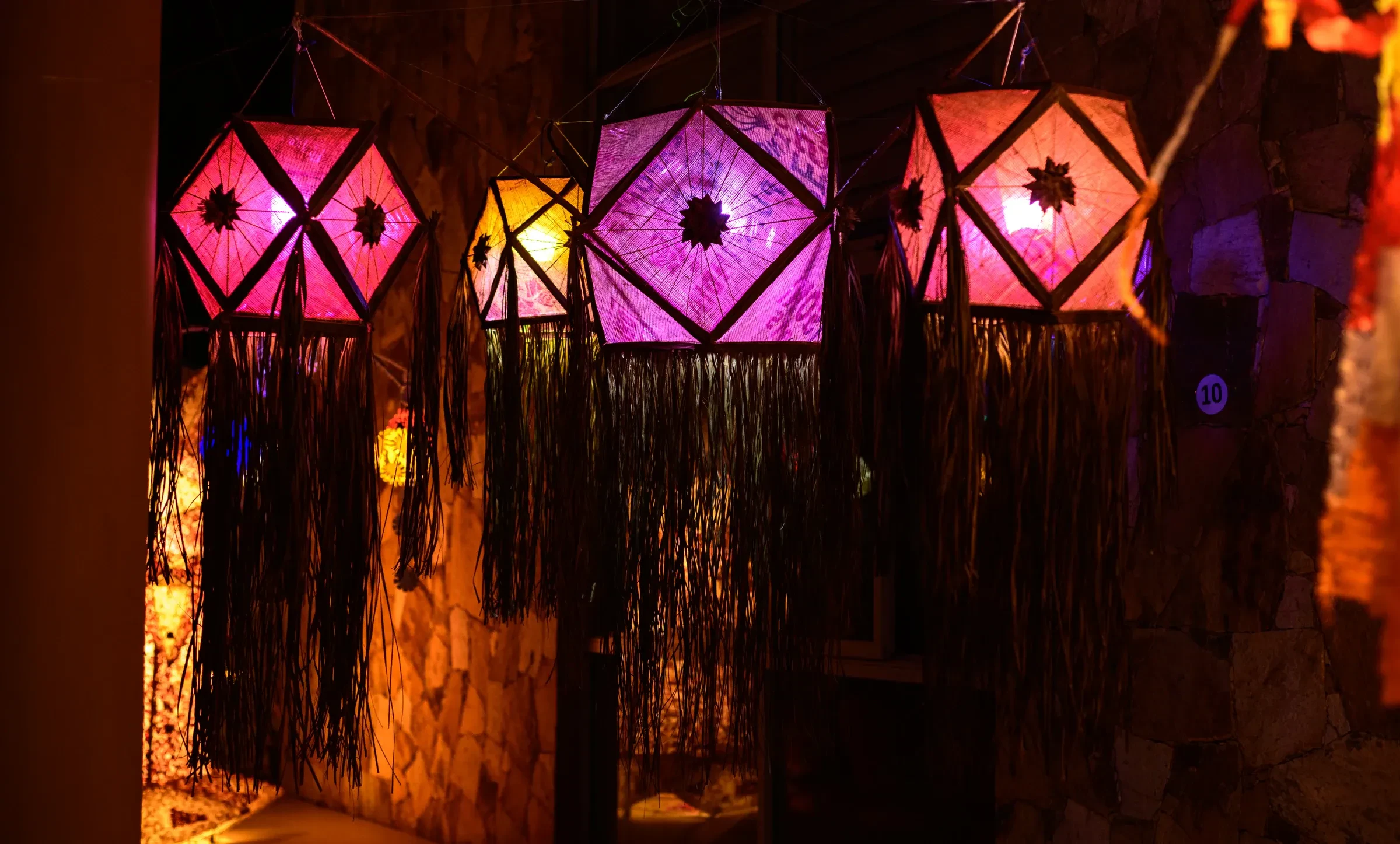
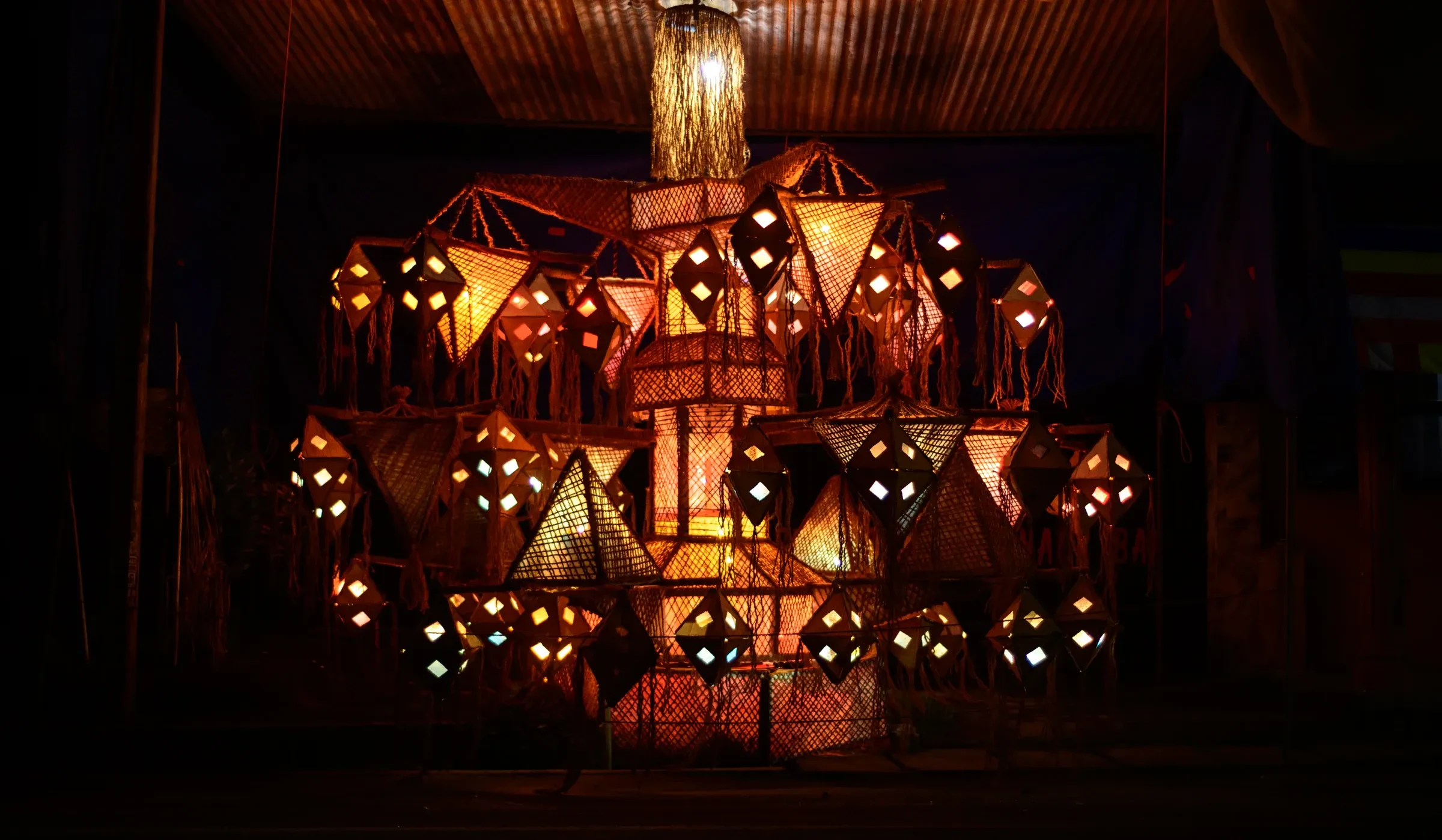
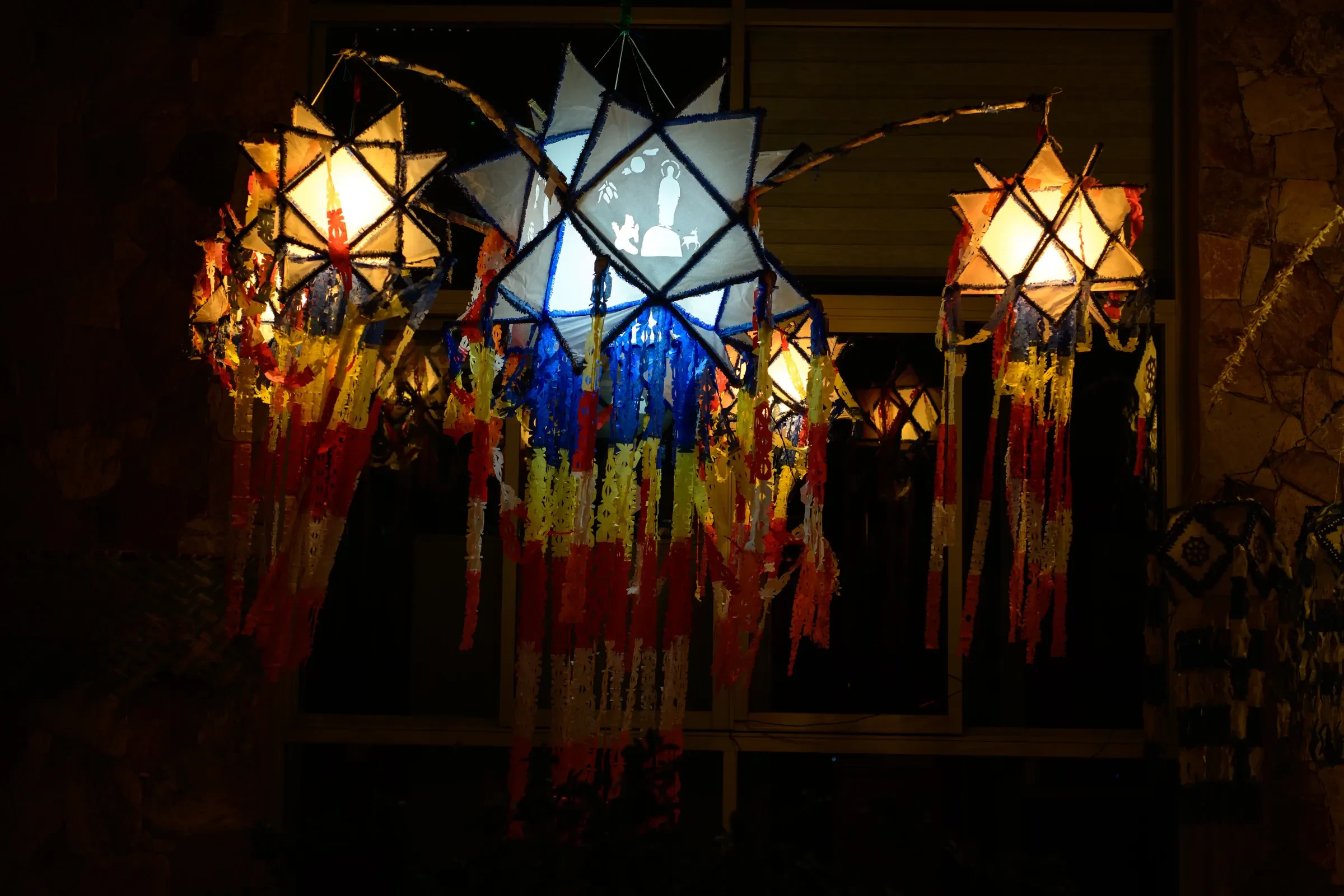
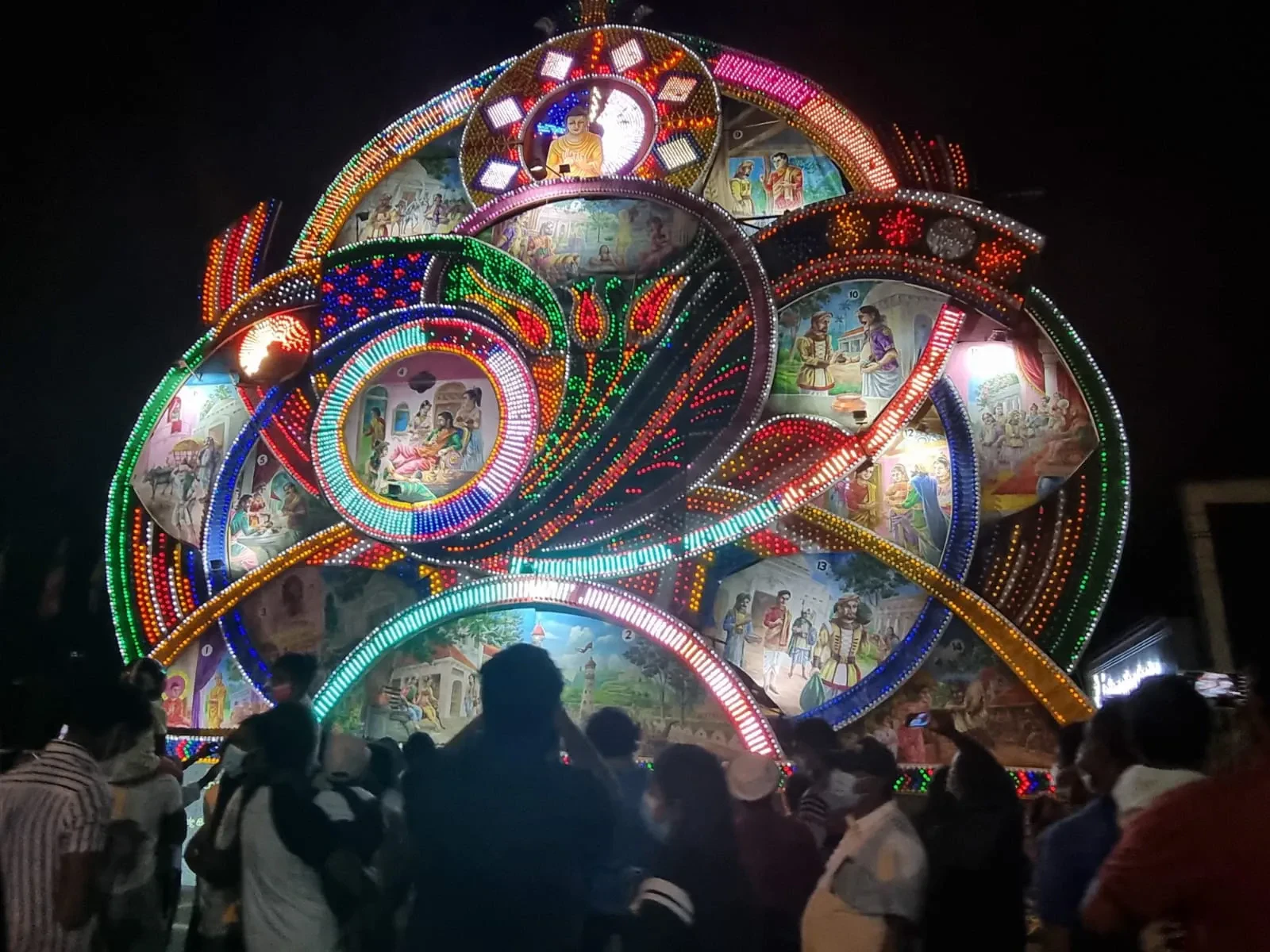
What a visitor actually sees is the public side of that observance: bamboo-and-paper lantern towers called koodu strung above streets and gardens, large illuminated pandals (thoranas) that temples and community groups build to depict scenes from the Buddha's life, and dansal, stalls where ordinary families and businesses give away food and drink for free. None of it is aimed at tourists. It's an act of merit-making, and outsiders are welcome to join in the same spirit as everyone else.
What happened at Vesak 2026
The 2026 Poya day was Saturday 30 May. Two full moons fell in May that year, on the 1st and the 30th, and Vesak Poya was gazetted for the second. Sunday 31 May was declared a public holiday as the "day following Vesak", and Vesak Week ran from 27 May to 2 June. The State Vesak Festival, the official national programme, opened in Matara in the south under the patronage of President Anura Kumara Dissanayake, for Buddhist year 2570. The theme was reported as "Let us unite for the common good", according to the Sunday Times.
In Colombo there were about 20 pandals, and the main lantern zones were the Buddha Rashmi Vesak Zone around Gangaramaya Temple and the 25th Bauddhaloka Vesak Zone, lit from 30 May to 1 June. Police ran a special traffic plan from 30 May, with road closures and one-way routes around the zones and pandals. The Public Health Inspectors' Association counted more than 15,000 dansal across the island, as Hiru News reported on the day. We couldn't find a crowd figure for Colombo.
Vesak stands out because Buddhists mark the Buddha's birth, enlightenment and death on this one day, and because so little of it is staged for visitors. Households and businesses give away food for free, and neighbourhoods build the lanterns and pandals themselves.
Where to see it
Colombo has the biggest and most elaborate display by some distance. The area around Gangaramaya Temple and Beira Lake, sometimes called the Buddha Rashmi Vesak Zone, is organised jointly by the temple and the government and draws thousands of hand-crafted lanterns hung along the lakeshore, plus a corridor of towering koodu that rival neighbourhood groups build leading up to the temple. Roads through the zone close to traffic in the evenings, and it's easily the most crowded spot on the island during Vesak.
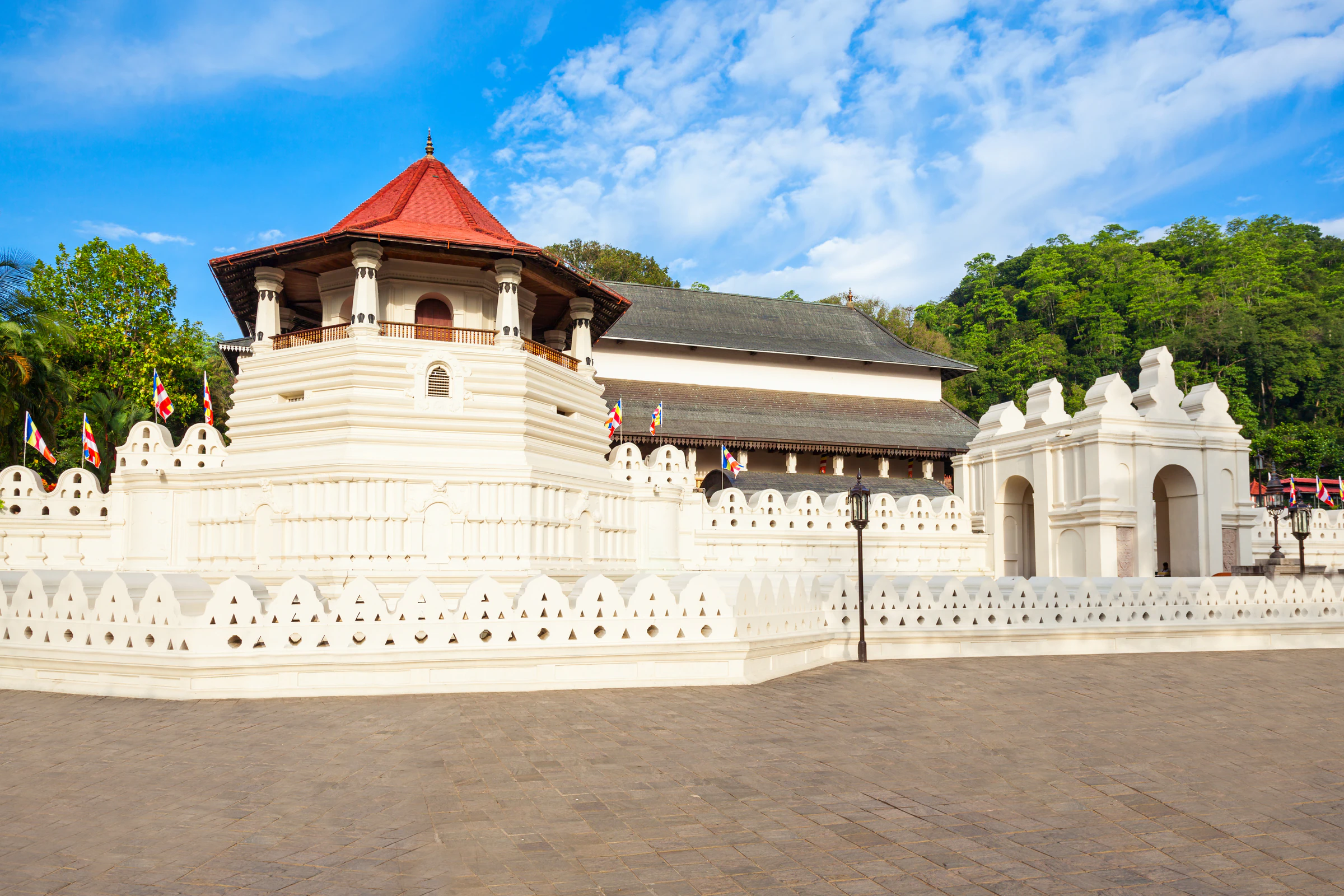
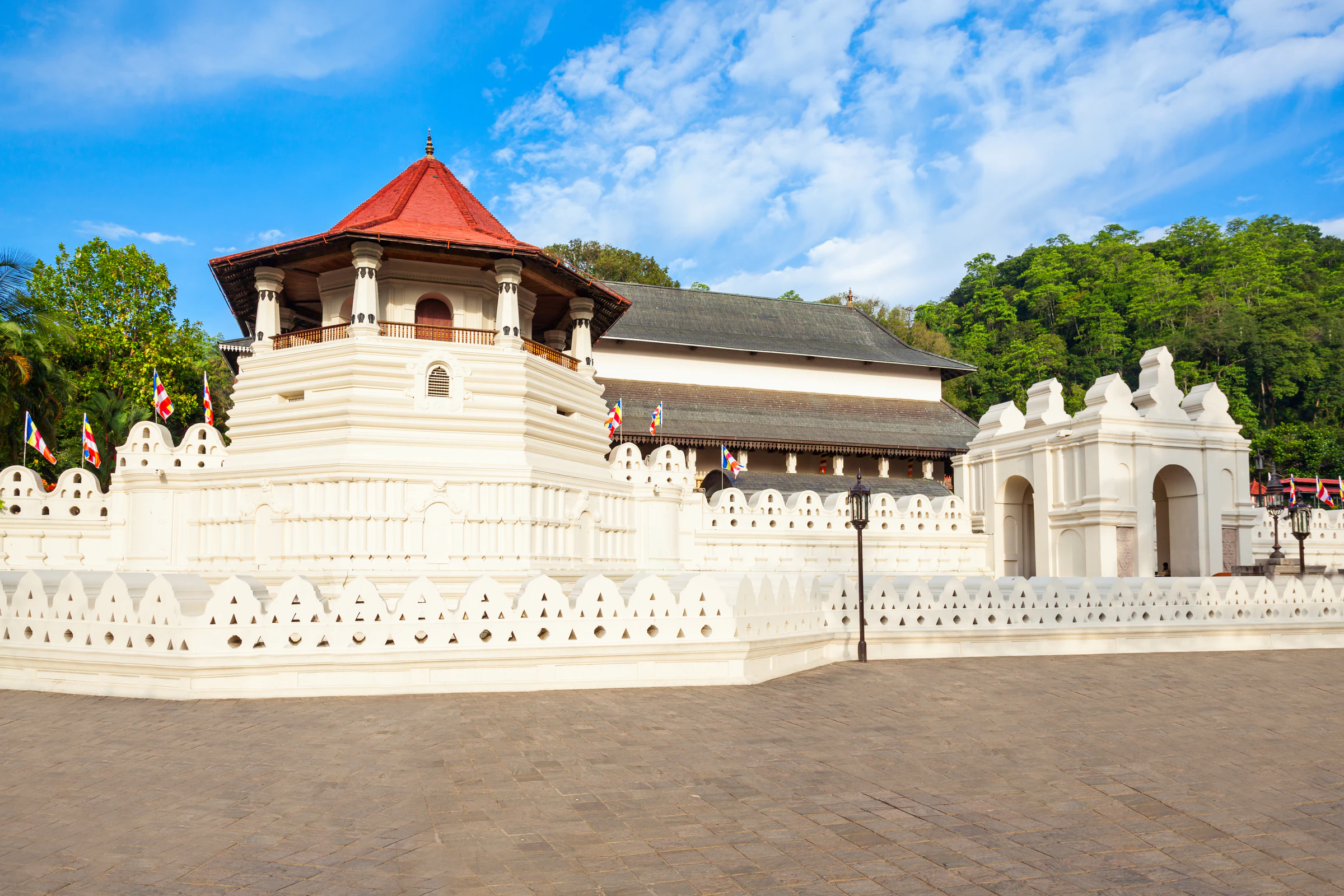
Kandy runs a quieter but still striking version, with the Temple of the Tooth and the lake it sits beside lit up, and dansal set up along the main routes into town. It fits well if you're already working through the hill country and want the atmosphere without Colombo's crowds.
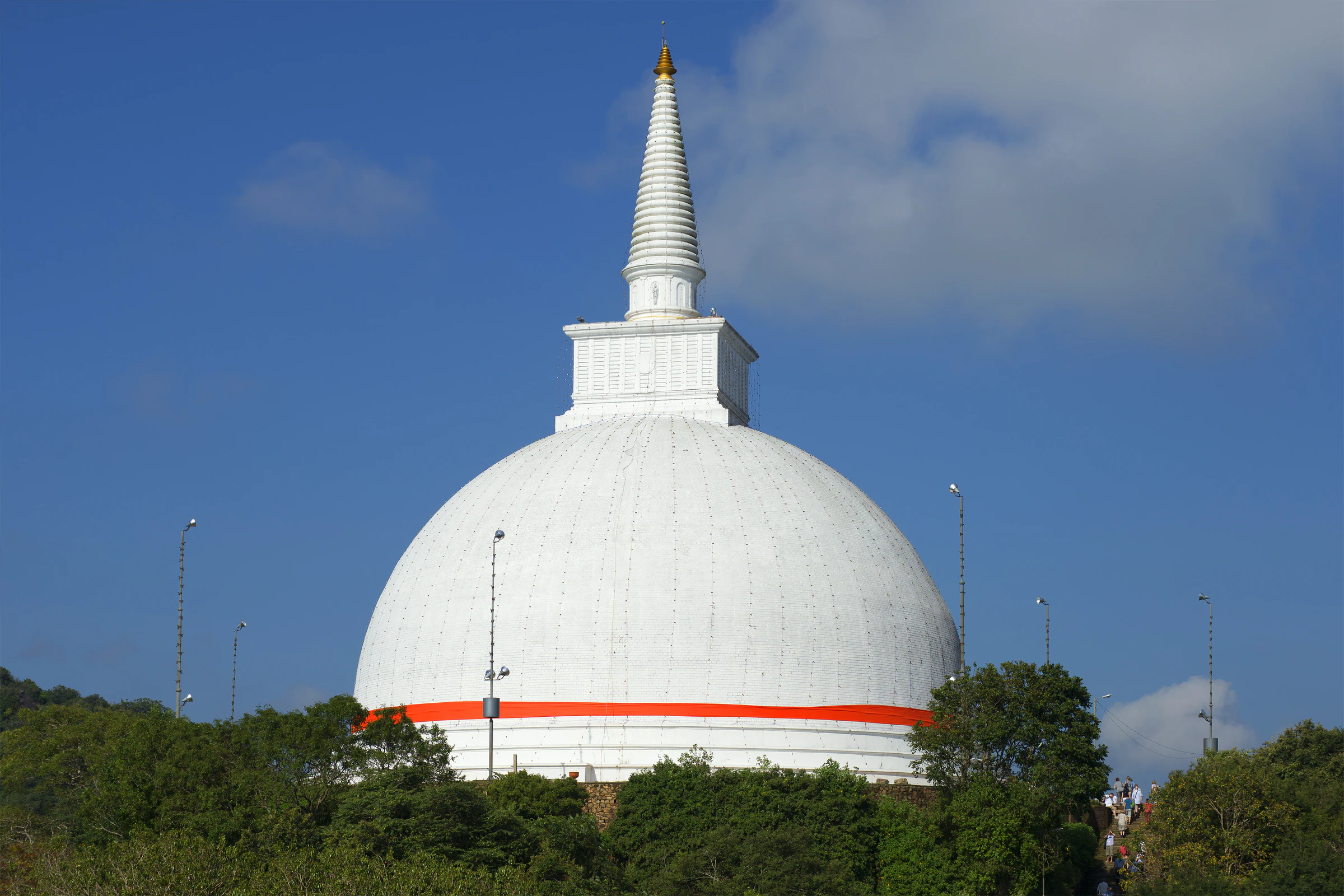
Anuradhapura, Sri Lanka's ancient sacred capital, gives Vesak a more pilgrimage-focused feel. Its stupas and monastic ruins lit up at night draw devotees rather than sightseers, so it suits travellers who'd rather see the religious side of the festival than Colombo's street-party atmosphere.
What happens, day by day
The build-up starts well before the Poya day itself. In the week or so beforehand, households and temples put up lanterns, and community groups start assembling their pandals, sometimes working through the night to finish in time. By the time Vesak Week begins (it ran 27 May to 2 June in 2026), the lantern zones are lit every evening for several nights running, not just the one.
On the Poya day itself, government offices, schools and most shops close for the public holiday, and alcohol sales stop nationwide by law, at bars, restaurants, hotels and supermarkets alike. Meat sales are also curtailed at butchers and in supermarket meat counters around the same days, though exactly how many days varies from year to year, so don't count on meat being off the menu everywhere for a full week. In 2026 the government also gave the Sunday after, 31 May, as a public holiday. Dansal stalls run for the day and often into the evening, and the lantern zones fill up after dark as families come out to walk through the displays.
What to wear and bring
Cover your shoulders and knees if you step into any temple grounds, including Gangaramaya itself. White is the customary colour for Buddhists visiting a temple on a Poya day, but you don't need to match it as a visitor; modest, comfortable clothing is enough. Wear shoes you can walk a long way in, since the lantern zones are pedestrianised and often mean covering a fair distance on foot, and bring a light layer for the evening. You won't need cash at a dansal, since it's free, but keep some on hand for a tuk-tuk or taxi home, since buses can run reduced hours on the day.
Safety
Building a trip around Vesak
None of our Sri Lanka trips is built around Vesak, so there's no trip card to point you to here. If you want to time an independent trip around it, Sri Lanka is small enough that a 1 week or 10 day itinerary through the Cultural Triangle and hill country can shift a few days either way to land in Colombo for the Poya day, or in Kandy if you'd rather skip the biggest crowds. Vesak also falls right at the end of Adam's Peak's pilgrimage season, which runs from December's full moon through to Vesak's, so travellers doing both can combine a final-week climb with the lantern displays a few days later.
If a group trip suits you better, take a look at our Sri Lanka group trips; none currently times to Vesak, but a few pass through Colombo and Kandy on other dates.
Keep planning
Vesak is one of five festivals worth building a Sri Lanka trip around; see the full festival calendar for the others, including the Sinhala and Tamil New Year in April and Poson, the pilgrimage to Mihintale that follows a month after Vesak on its own full moon Poya. For the practical side of a trip, see our best time to visit and Sri Lanka cost guides.