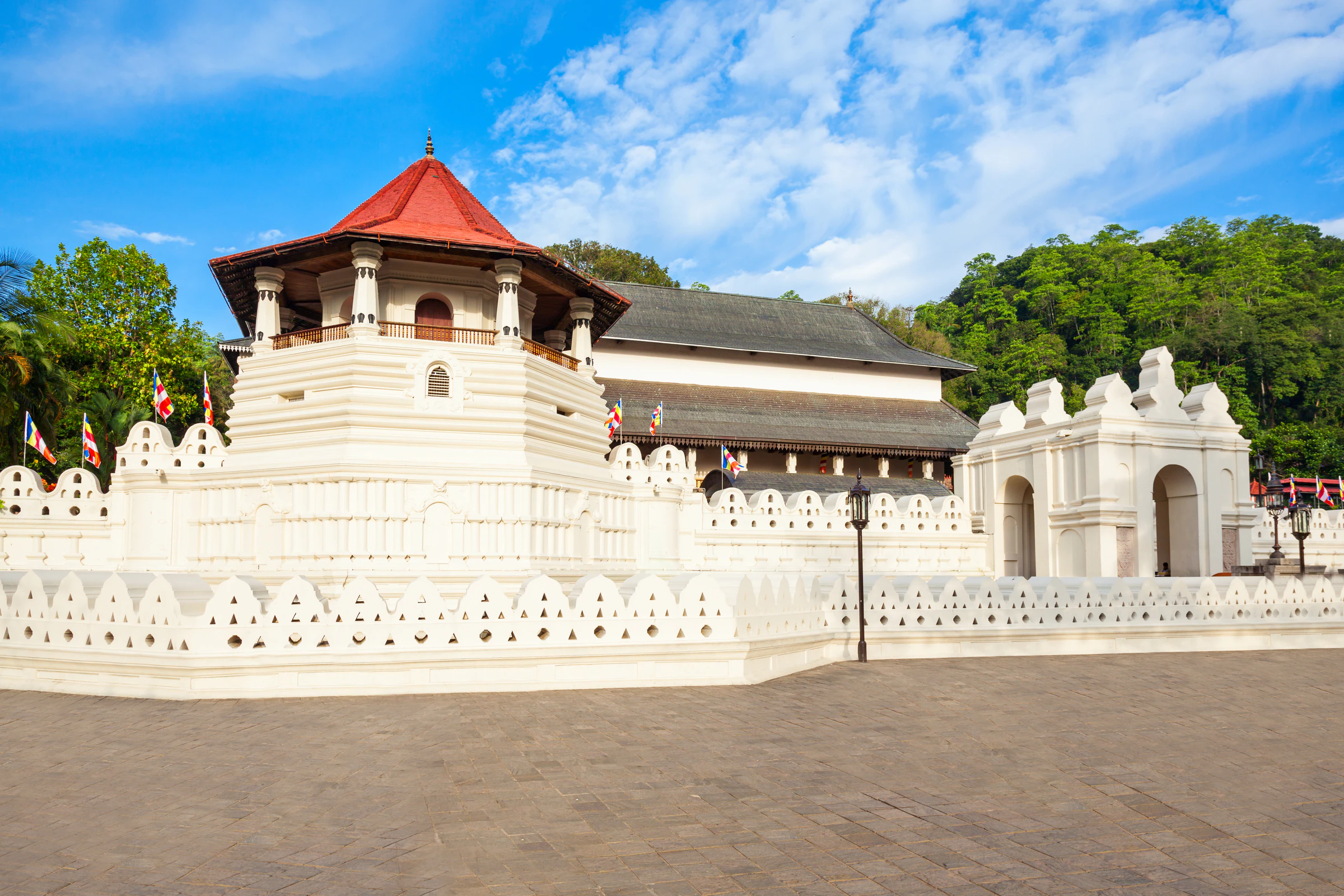
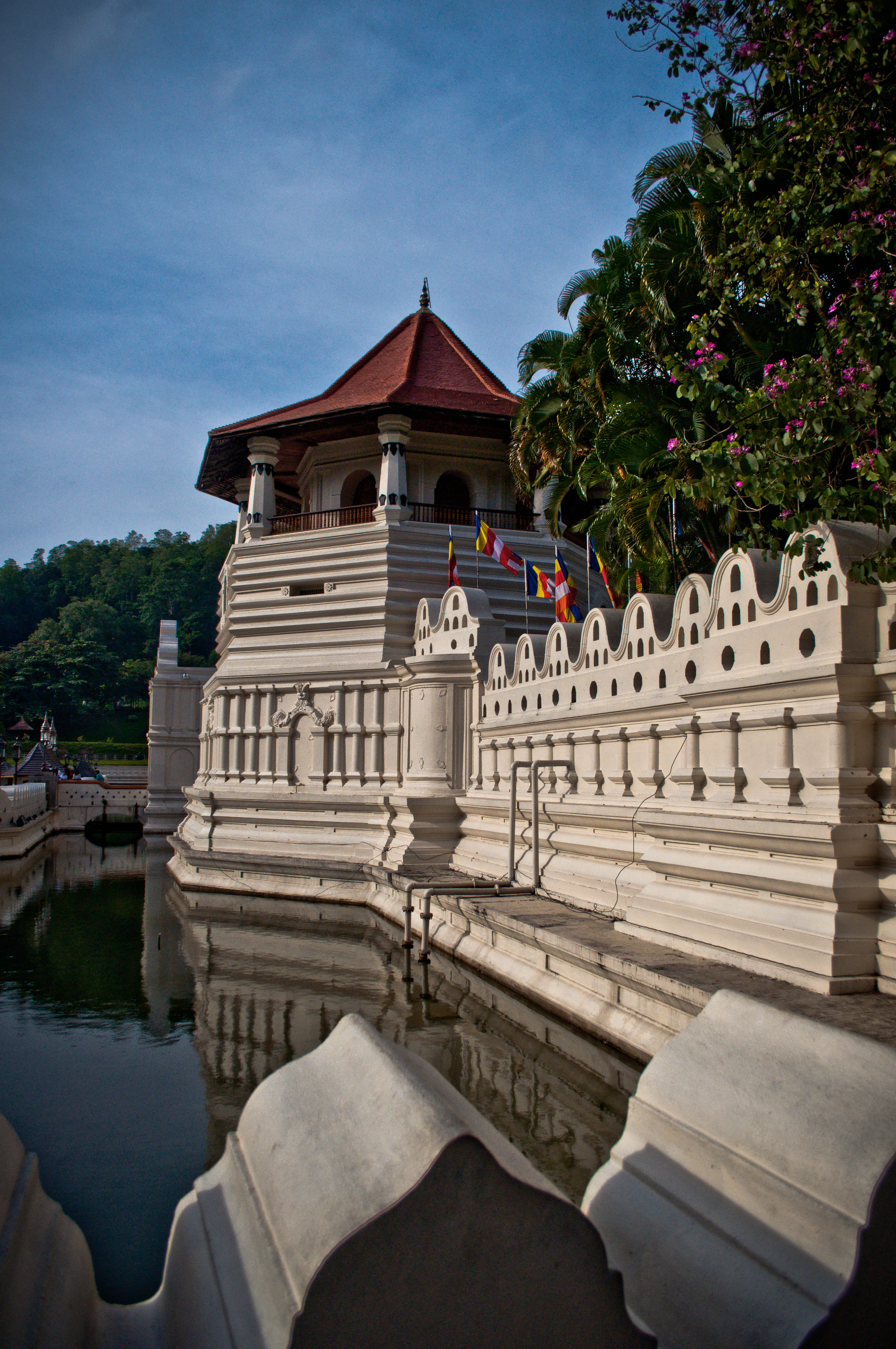
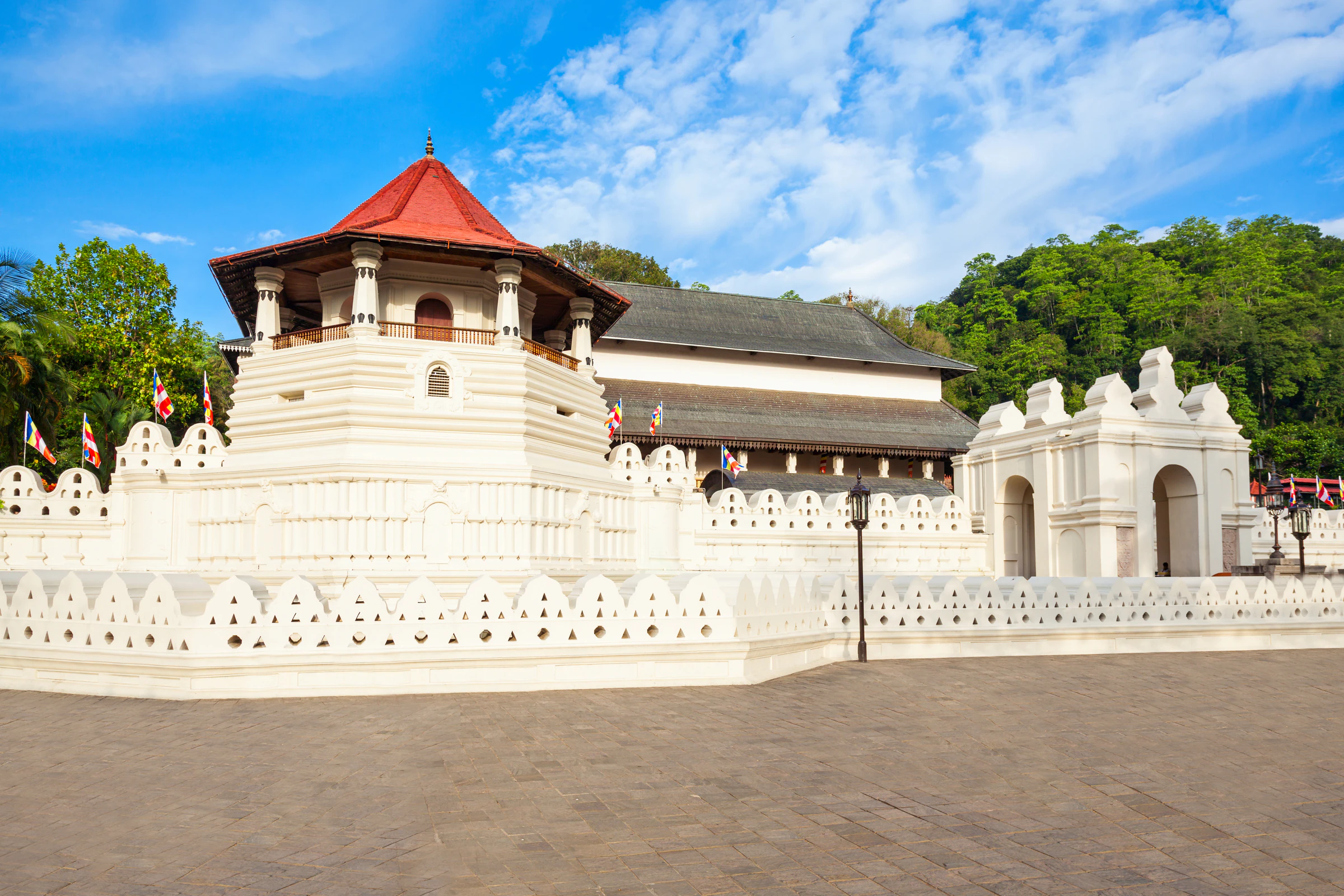
For ten nights every July or August, Kandy's streets fill with fire dancers, drummers, whip-crackers and elephants dressed in illuminated cloth, all moving toward the Temple of the Sacred Tooth Relic. The Esala Perahera has run in some form for centuries, and it's still the closest thing Sri Lanka has to a single, unmissable national event. This guide covers what happens on each night, the dates, what happened in 2026, where to watch from, and the elephant welfare question that any honest guide to this festival has to address.
What is the Esala Perahera?
The Esala Perahera is a ten-night Buddhist festival held in Kandy, built around the Temple of the Sacred Tooth Relic and its most sacred possession, a tooth believed to be the Buddha's. Each night, a procession of elephants, traditional dancers, drummers and fire performers moves through the city, growing larger and more elaborate as the ten nights go on toward a grand finale. It's the largest and most famous of Sri Lanka's peraheras, and by far the one most visitors plan a trip around.
What happened at the Kandy Esala Perahera 2026
The 2026 festival followed the usual order. The kap planting ceremony took place on 13 August, followed by processions inside the temple's shrines until 17 August. The Kumbal Perahera ran from 18 to 22 August and the Randoli Perahera from 23 to 27 August. The final Randoli procession on 27 August set off at 6.43 pm and covered about 2.15 km, according to Ada Derana. The water-cutting ceremony and the daytime procession followed on 28 August, the Poya full-moon day. Ada Derana described it as the 1,716th Sri Dalada Perahera, using the temple's own count.
The Daily Mirror reported nearly 8,000 security personnel, made up of about 6,200 police, 564 Special Task Force officers, 1,200 from the armed forces and 29 civil security officers, with tracker dogs, 13 designated parking areas and 14 roadblocks at entry points to the city. The Sunday Times reported that the chairman of Kandy City Centre donated the costume for the Randoli casket tusker for the 32nd time. About 70 members of the diplomatic corps attended over 26 to 28 August, according to Sri Lanka's foreign ministry. The elephants' treatment came up again during the festival, in a Sunday Times column on 23 August about the fight over the Animal Welfare Bill (more on that below).
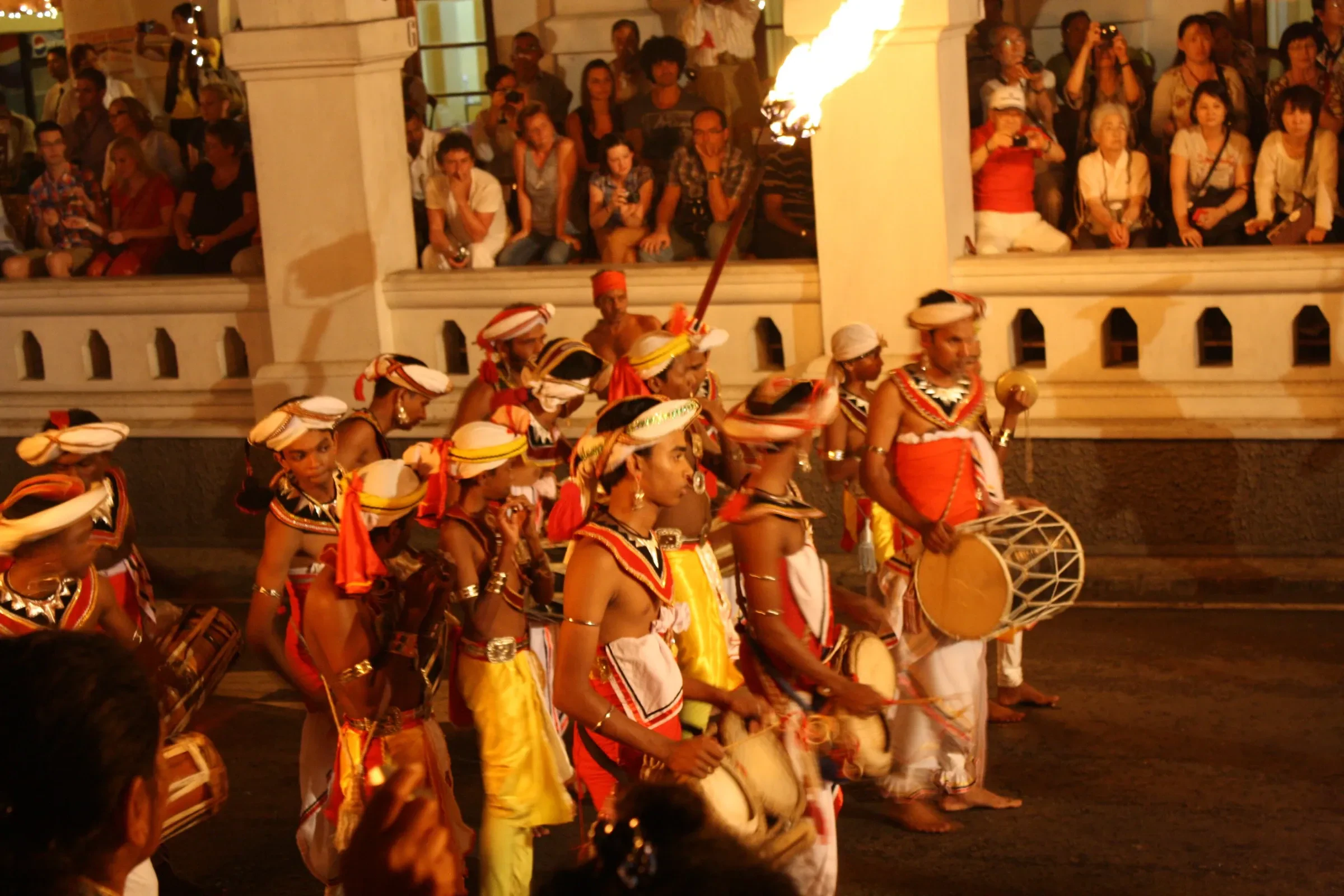
It's an old festival with two traditions folded together. The Esala rain-blessing ceremonies are said to date back to the 3rd century BC, and the procession honouring the tooth relic is over 1,500 years old. Fire dances, whip dances, drummers and caparisoned elephants share the route, and the final Randoli night is reported to draw crowds in the hundreds of thousands.
When is the Kandy Esala Perahera?
The festival runs on Sri Lanka's Buddhist lunar calendar rather than a fixed date, which is why it lands in late July or August each year. The 2026 edition was held from 18 to 28 August.
For 2027, the temple hasn't announced dates yet. The finale follows the Nikini Poya full moon, which is gazetted as a public holiday on 16 August 2027. In 2025 and 2026 the last Randoli procession was held the evening before the Poya, with the Kumbal Perahera starting ten nights before it. Applying that pattern gives 6 to 16 August 2027: Kumbal from about 6 August, the last Randoli on 15 August, and the water cutting on 16 August. That is a calculation, so check the temple (sridaladamaligawa.lk) before you book flights around it. Dates have usually been announced in July.
The ten nights split into two halves:
- Kumbal Perahera, the first five nights, a smaller procession that grows night by night as more dancers, drummers and elephants join.
- Randoli Perahera, the final five nights, the full-scale procession, including the Maligawa Tusker carrying a replica of the relic casket and, in a normal year, more than 100 elephants in total across the parade.
The festival closes with the Diya Kapeema, a water-cutting ceremony performed before dawn at the Mahaweli River, and the Dahawal Perahera, a daytime procession later that same day. Both usually fall on the day after the last night procession.
Where to see it
Every night's procession follows the same set route through the city, past the temple, along the lake and down the main streets, so the choice isn't really which street to pick but which night and how close to the front.
- Roadside, anywhere on the route. Free, and the standard way most people watch. Get there earlier for a spot near the temple, later for a spot further out.
- A seat near the temple end of the route. The procession is freshest here, but it's also the most crowded and the hardest place to arrive late.
- Further along the route, away from the temple. Easier to reach, easier to leave once the parade has passed, and still a full view of the same procession.
The Kumbal and Randoli processions
Each of the ten nights starts after dark and runs for a few hours, moving along the set route through the city past the temple, the lake and the main streets. The Kumbal Perahera nights are quieter and smaller, a reasonable choice if you want the atmosphere without the biggest crowds. The Randoli Perahera nights, especially the last two or three, draw the largest processions and the largest crowds to match, including whip-crackers who clear the route ahead of the elephants, troupes of Kandyan dancers in traditional dress, and drummers whose rhythms change from group to group along the parade.
Seats and prices
You can watch for free by finding a spot along the route, though the closer you get to the temple and the later in the festival you go, the earlier you'll need to claim your spot and the more the crowd will press in around you. For a seated view, hotels, businesses and private operators along the route sell tickets for reserved viewing galleries or roadside grandstands, roughly banded like this:
| Seat type | Roughly | When |
|---|---|---|
| Roadside standing | Free | Any night, earlier nights are easier |
| Basic reserved seat or grandstand | US$15 to $30 | Kumbal Perahera nights |
| Premium hotel balcony or gallery seat | US$90 to $150+ | Randoli Perahera nights, highest for the final two |
Prices climb toward the final nights and drop the earlier you book, and some sellers offer a discount for booking well ahead of the festival. If you only see one night, most people pick one of the last two or three Randoli nights for the fullest procession, accepting the higher price and bigger crowd that comes with it.
What to wear and bring
Comfortable shoes matter more than anything else, since most nights mean standing or sitting on the roadside for a few hours. Bring water and a hat or light layer, since even the evening heat in Kandy can wear you down over a long procession, and cash in Sri Lankan rupees or US dollars if you're buying a seat on the night rather than booking ahead. If you're planning to visit the Temple of the Sacred Tooth Relic itself before the procession, cover your shoulders and knees, as you would at any Sri Lankan temple.
Crowds and elephant welfare
Being honest about this festival means saying plainly that the elephants' role in it is contested, not a footnote.
Documented welfare concerns include elephants walking Kandy's tarred streets in the heat, chains used to control their pace and movement during the procession, and visible scarring reported around some elephants' legs from repeated use of those chains. Conservation and welfare groups, including the OURANOS Project, have formally raised these concerns. Sri Lanka's Animal Welfare Bill, gazetted in 2026, initially included language that critics said would have restricted the practice. After objections from traditionalist politicians who argued it would effectively end the perahera itself, the bill's language was changed to "regulate" the practice rather than curtail it, and the debate over how far that regulation should go was still active in August 2026. Temple authorities, for their part, say participating elephants are selected and monitored for their health.
The 2024 incident mentioned above, in which an elephant became agitated mid-procession, was investigated by Sri Lankan fact-checkers and traced to a spectator setting off a loud noise (reportedly a toy trumpet) close to the animal. Officials said no one was injured, and no evidence turned up of a wider stampede or attack on handlers, despite some social media claims to the contrary. Separately, the festival has also faced a practical squeeze in recent years from a shortage of elephants trained and available to take part. That is a logistics story rather than a welfare one, but it shows how much this single event depends on a limited number of animals.
None of this means the festival isn't worth seeing. It means going in with accurate expectations rather than a postcard version of it, and forming your own view of the elephants' role rather than having it decided for you by either side of the debate.
Where to stay for the festival
Kandy's hotels and guesthouses along or near the procession route fill up months ahead of the festival, and prices rise sharply as the dates approach, more so for rooms with a direct balcony view of the route. For the next edition, booking as early as you can is the single most useful piece of practical advice: budget accommodation that would normally cost well under US$50 a night can multiply several times over for a well-placed room during the ten nights, and the best-located hotels sell out first. Because the 2027 dates are an estimate, choose a booking you can change or cancel until the temple confirms them.
Kandy beyond the festival
Outside festival season, Kandy is worth visiting for its own sake: the Temple of the Sacred Tooth Relic, Kandy Lake and the botanical gardens at Peradeniya are all there year round. See our Kandy guide for the temple's regular visiting hours and fees, Kandy Lake, the viewpoints and getting there.
Our 12-Day Sri Lanka Tour includes a Kandy stop on every departure. It is sometimes planned around the Esala Perahera, but that timing stays provisional until the temple confirms its dates. The trip page lists current dates.