Java is how a lot of overland trips into Bali actually start: a royal city with two of Southeast Asia's biggest temple complexes, then two pre-dawn mountain mornings before a short ferry hop across to the islands. It's a point-to-point journey rather than a loop, run the length of East Java, and the two headline sights both demand starts in the middle of the night from basecamp towns that are themselves hours apart. That's worth knowing before you book: this is a trip built around two alarm clocks, not a relaxed island add-on.
4 stops
- Minibus
Is this route for you?
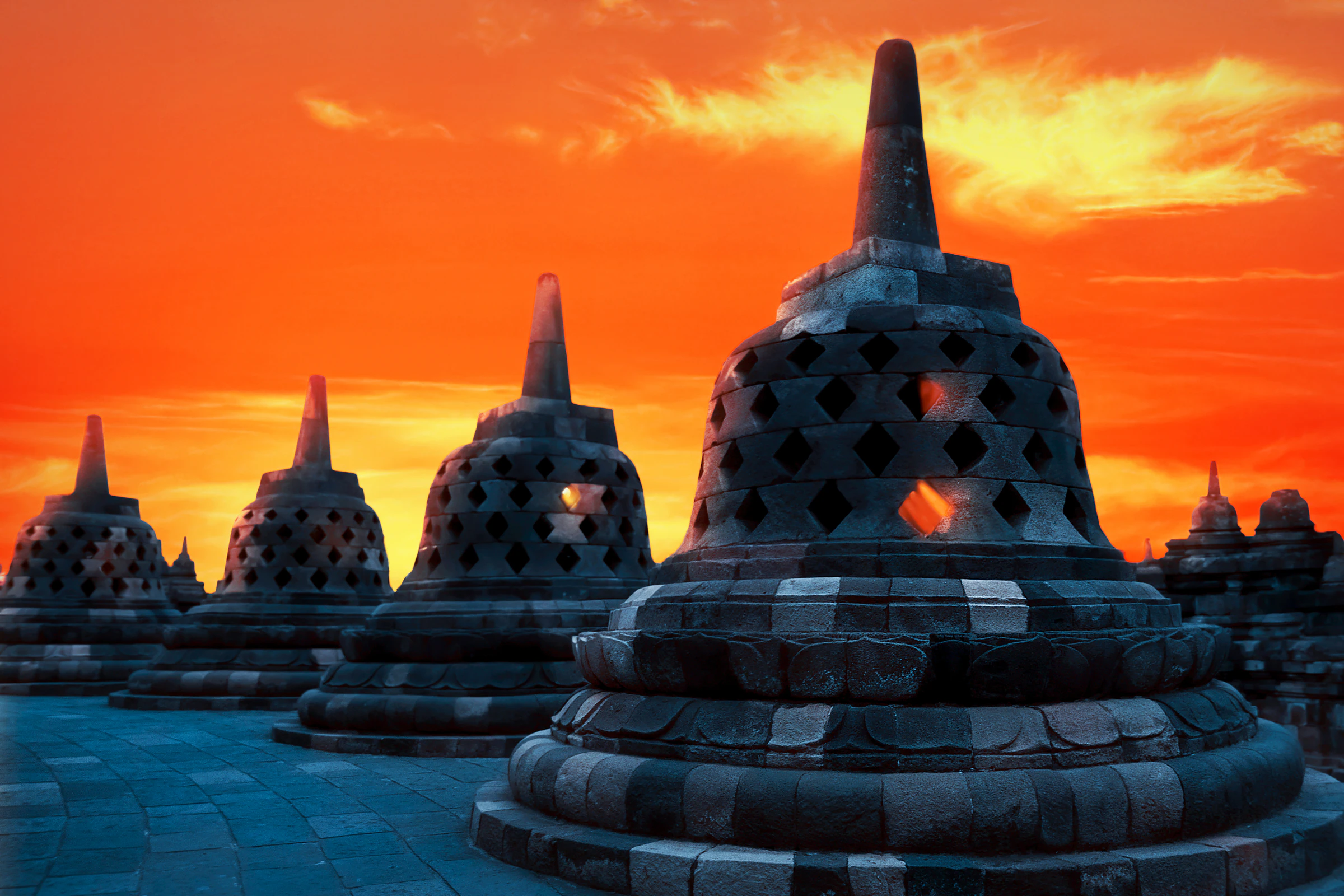
This suits adventure and photography travellers chasing Bromo's sunrise-over-the-caldera shot and Ijen's crater scene, and anyone doing Indonesia overland rather than flying straight into Bali. It also suits culturally curious travellers who want Borobudur and Prambanan, the world's largest Buddhist temple and Indonesia's largest Hindu temple complex, before the volcano legs begin.
It's a poor fit if pre-dawn starts aren't for you: both headline mornings begin in the small hours (Ijen's hiking gate opens at 2am, and the Bromo jeeps leave around 3am), on top of a long travel day between them. It's also not the route to pick if the blue flames are the one thing you're coming for. Two travel blogs (backindo.com, 29 July 2026, and panoramalenstrip.com, 12 January 2026) report that the blue fire hasn't been reliably visible this year, and we found no official statement either way. Go for the crater lake and the sunrise, and count the blue fire as luck if it shows. If Java doesn't appeal at all, our Ubud and central Bali itinerary is a gentler way to start a Bali trip instead.
Day by day
Arrival and the old sultan's city
Yogyakarta
Getting there fly into Yogyakarta International Airport (YIA), with connections via Jakarta, Bali and other Indonesian hubs, then the airport train into the city
- Afternoon
- the Kraton, the Sultan's Palace, if you land early enough (the official tourism site lists it as open 08:30 to 14:30 and closed on Mondays), and the old town streets around it
- Evening
- Malioboro Street's night market and food stalls
Eat gudeg, Yogyakarta's signature dish: young jackfruit stewed for hours in coconut milk and palm sugar, served with rice, chicken and a boiled egg
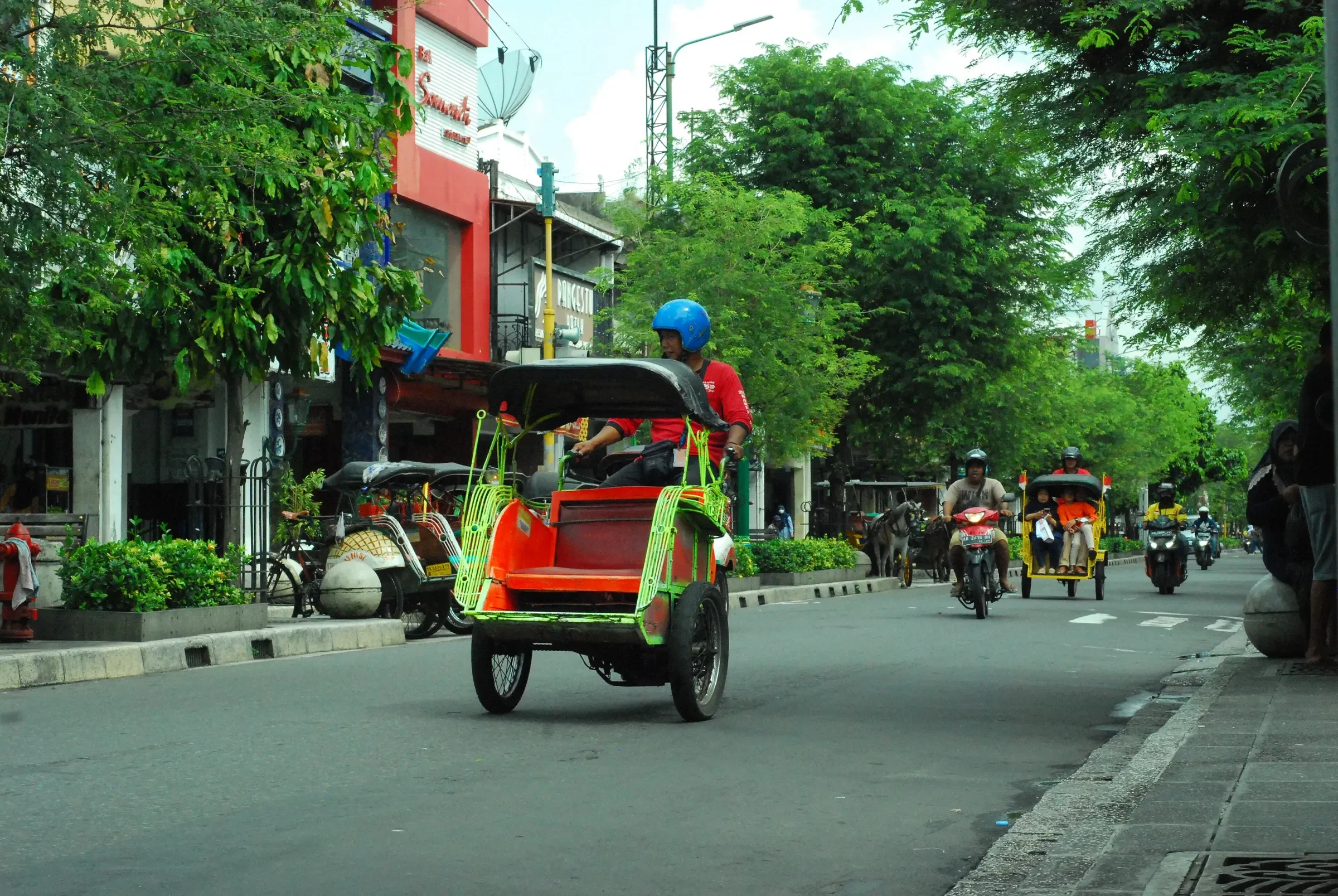
Local tip agree a becak (cycle rickshaw) fare before you get in; most drivers are straightforward, but it's normal practice to settle the price first
Borobudur at sunrise and Prambanan
Yogyakarta
- Morning
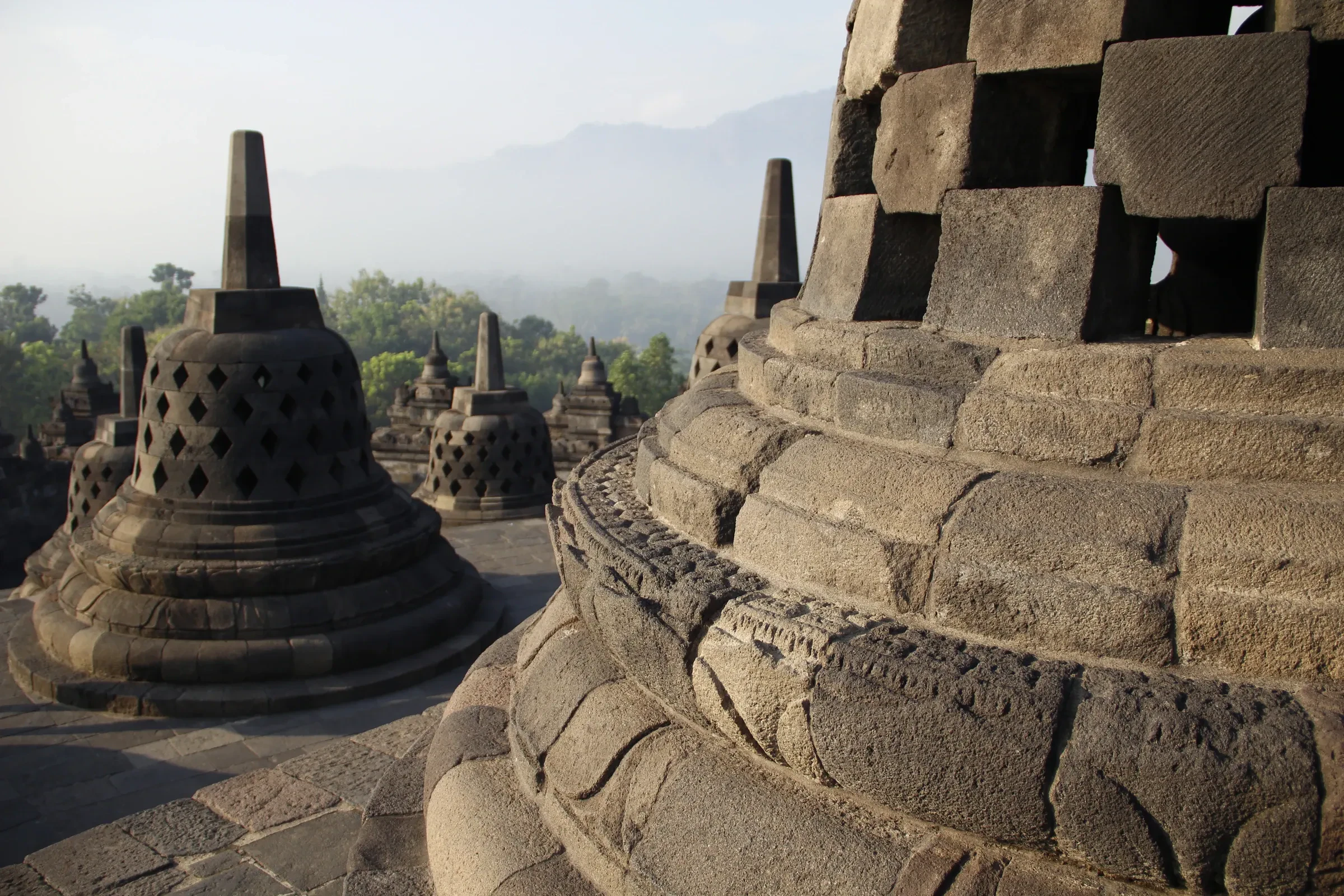
- Borobudur, the world's largest Buddhist temple, about an hour outside the city. The operator's (InJourney Destination Management) official sunrise ticket starts at 04:00 and costs IDR 1,000,000 for international visitors, limited to 100 people a day. It includes a guide, a flashlight, special temple sandals (upanat) and breakfast. The standard climb ticket, for the temple's upper levels, is listed with a start time of 08:30 and includes a guide, a wristband and the sandals. Everyone climbing wears the sandals, to protect the stone
- Afternoon
- Prambanan, a 9th-century Hindu temple complex with tall, carved towers, a sharp contrast to Borobudur's flat, stepped mass. The ticket also covers the Lumbung, Bubrah and Sewu temples and the museum
- Evening
- the Ramayana ballet at Prambanan. The official schedule for May to October 2026 lists open-air shows on Tuesday, Thursday and Saturday evenings, with indoor shows in the other months, and says the schedule can change without notice
Eat sate klathak, Yogyakarta's own goat satay, skewered on bicycle spokes rather than bamboo
Local tip book the sunrise ticket early, since only 100 are sold a day, and check the official ticket site (ticket.injourneydestination.id) for the climb ticket rules on your dates
The long transfer to Bromo
Cemoro Lawang
Getting there a train from Yogyakarta (Lempuyangan) to Probolinggo, about 8 hours 30 minutes on the economy-class Sri Tanjung (about IDR 88,000, roughly £4 or US$5, on a tiket.com listing for 10 June 2026), then a taxi or minibus on to Cemoro Lawang, the village on Bromo's caldera rim, about 1 hour 30 minutes to 2 hours
- Afternoon
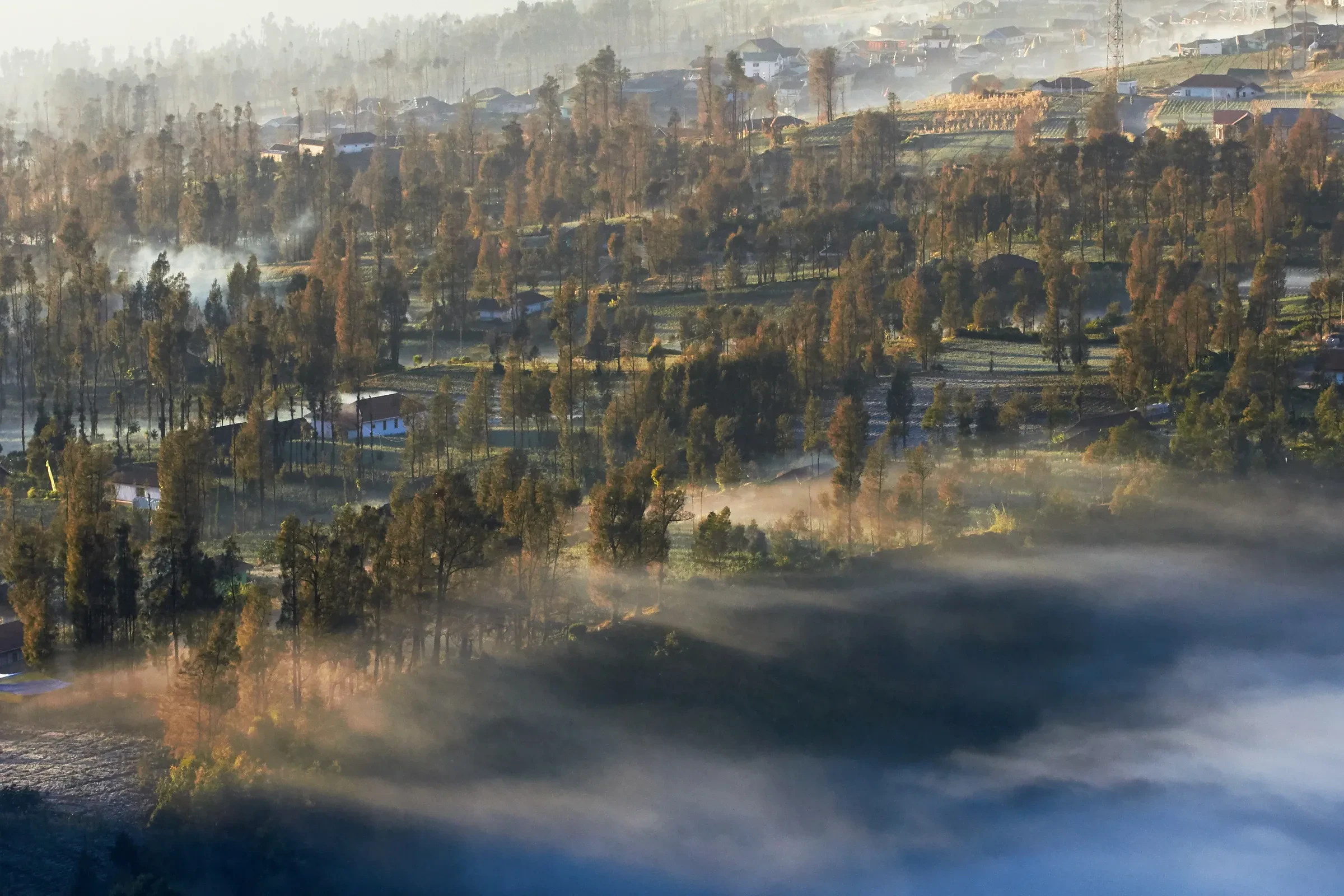
- arrive and settle in; there's little to do in Cemoro Lawang itself but rest before a very early start
- Evening
- an early dinner and bed
Eat simple East Javanese mountain food: rice, fried tempeh and vegetable soup, plainer than Yogyakarta's palace-city cooking
Local tip it's properly cold here before dawn despite Java's tropical latitude; bring a warm layer for tomorrow's jeep ride
Bromo sunrise, then on toward Ijen
Cemoro Lawang
Getting there after the Bromo morning, a road transfer toward the Ijen basecamp near Banyuwangi, about 5 to 6 hours
- Morning
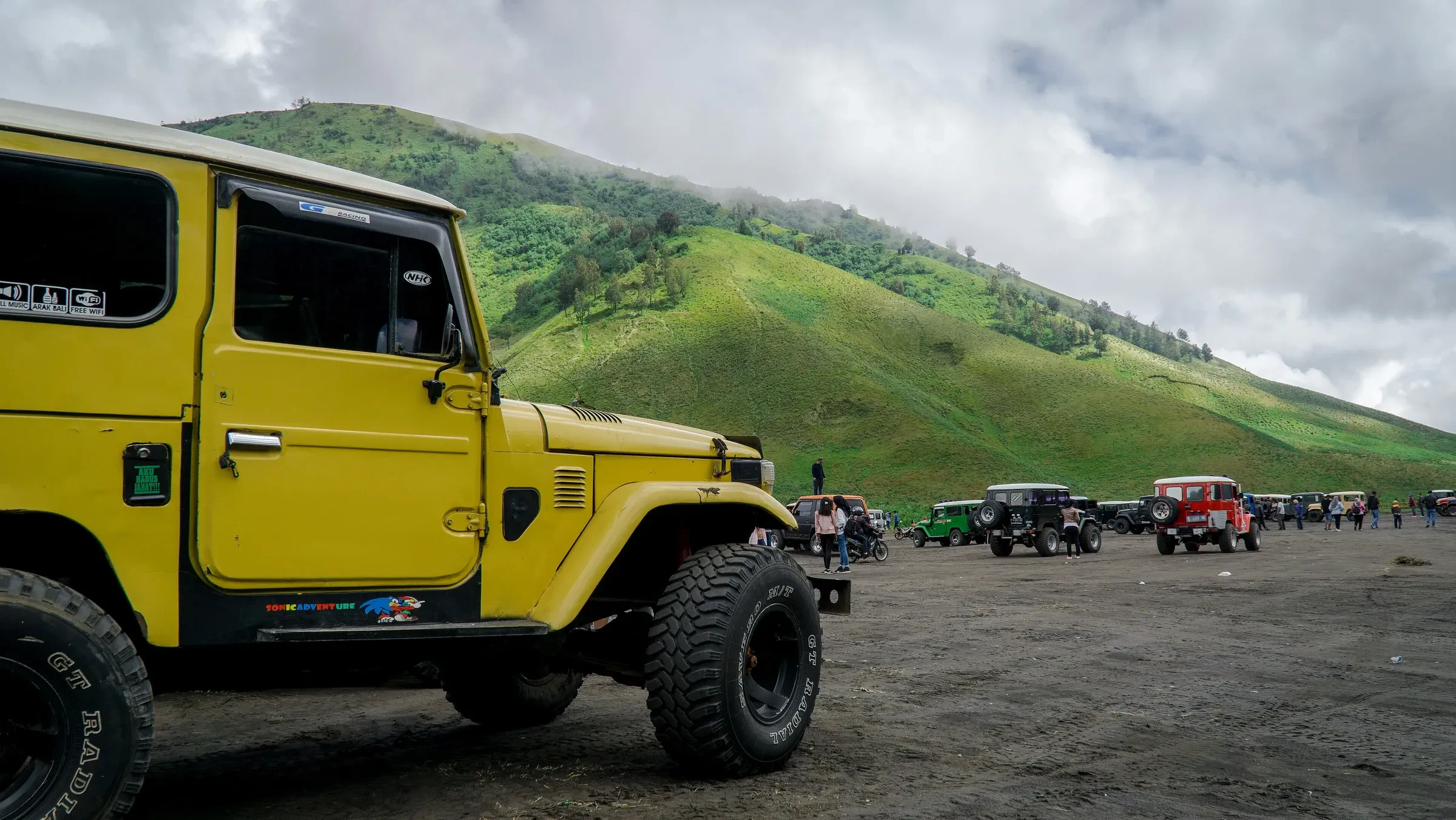
- a 3am pickup by 4WD jeep to the Mount Penanjakan viewpoint for sunrise over Bromo's crater and the surrounding sea-of-sand caldera, then down onto the caldera floor to walk, or ride a horse, partway up Bromo's own crater
- Afternoon
- the drive to the Ijen basecamp
- Evening
- an early dinner and bed before another pre-dawn start
Eat whatever the jeep tour or basecamp guesthouse offers; this isn't a day for a big meal given the early starts on both sides of it
Local tip the park (Bromo Tengger Semeru) sells entry tickets online only at bromotenggersemeru.id, with a daily cap of 2,752 visitors, so book well ahead. It's about IDR 255,000 a person for foreign visitors. Jeeps are arranged through your guesthouse or a tour; we found no current official jeep tariff, so agree the price first and ask whether it's per jeep or per person
The crater lake and, with luck, the blue fire
Ijen
- Morning
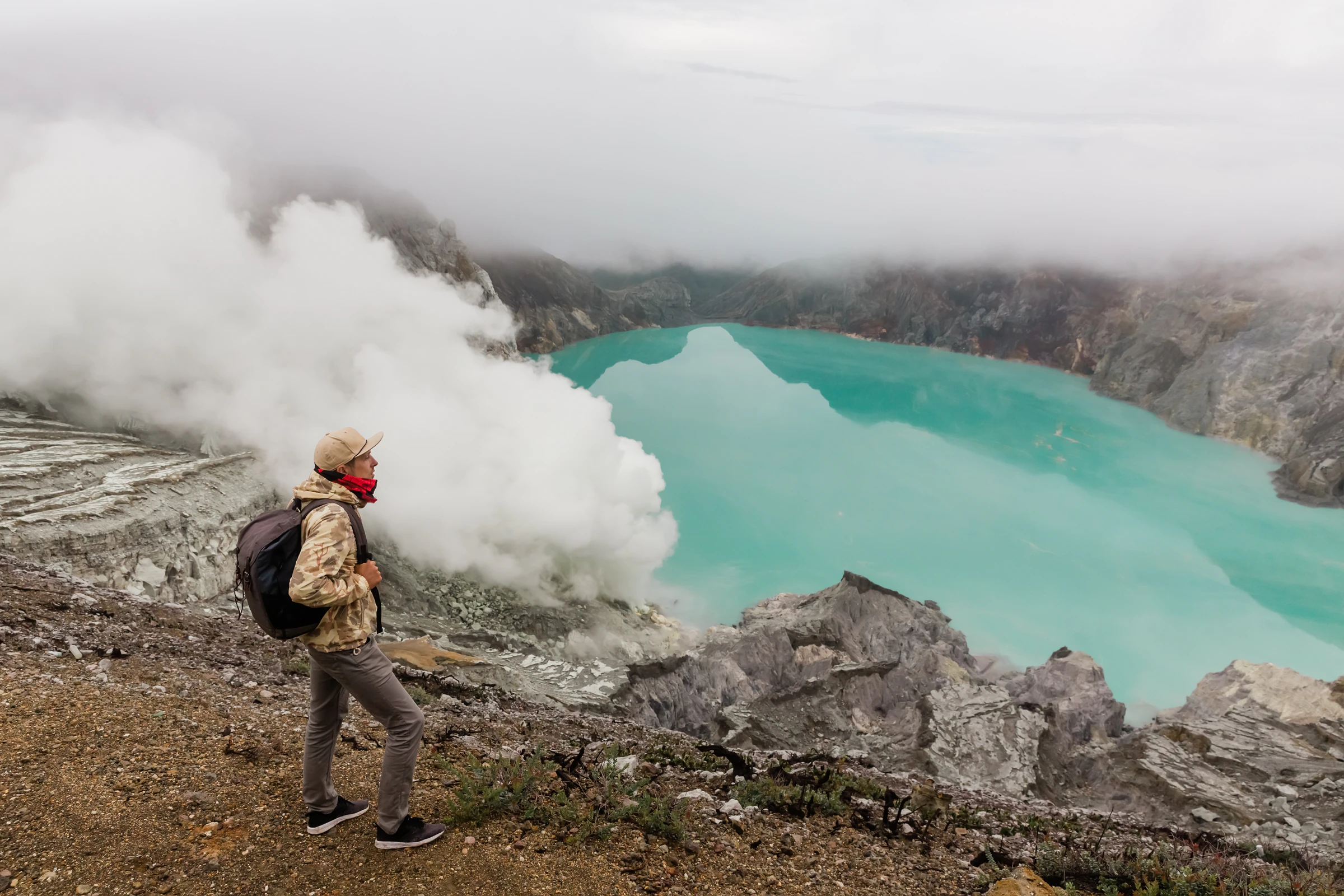
- a pre-dawn start, with the park's hiking gate open from 2am to noon, for the roughly 2-hour climb to the crater rim. The park was closed from 4 to 27 September 2026 after wildfires and reopened on 28 September, with online booking through the official site, and its reopening notice lists a mask, a torch and warm clothing as required gear. The park's booking page requires a doctor's health certificate issued no more than 3 days before your visit, advises against the hike for anyone with heart disease, asthma or a breathing disorder, closes the park on the first Friday of each month and doesn't refund or reschedule tickets. On the rim you get sunrise over the turquoise, highly acidic crater lake and, at a distance, the sulphur miners working the crater by hand with woven baskets, a hard and hazardous job, so watch respectfully rather than photographing up close. Reports say the blue fire isn't reliably visible this year, so don't count on it
- Afternoon
- descend and rest at the basecamp
- Evening
- free
Eat whatever the basecamp guesthouse serves; save a proper meal for Bali
Local tip foreign visitors pay IDR 150,000 for entry (a fee in force since 30 October 2024), and a mask is part of the park's listed gear whether or not the crater floor is open
The ferry crossing
Bali
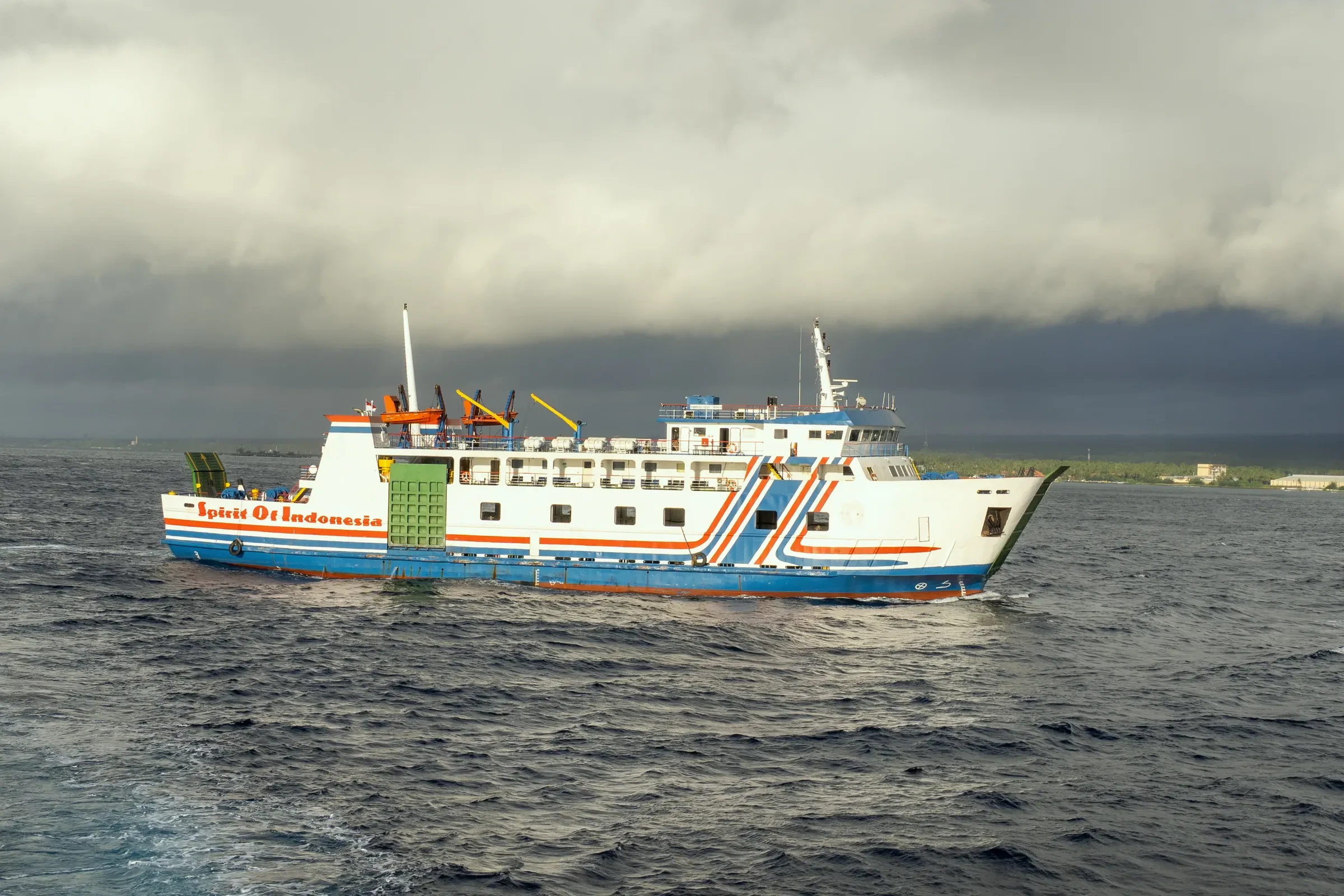
Getting there Ijen basecamp to Ketapang port near Banyuwangi, about 1 hour 30 minutes by road, then the ferry to Gilimanuk on Bali's western tip, about 45 minutes (the crossing runs 24 hours, and the adult foot-passenger fare was IDR 10,600 in 2026 coverage), then an onward transfer to Ubud or the south coast, about 2 to 3 hours
- Afternoon
- arrive in Bali and settle in
- Evening
- free, your first night back on the islands
Eat nasi goreng or mie goreng at whichever warung your driver rates, a return to Bali-style cooking after Java's mountain food
Local tip the ferry operator, ASDP, has sold tickets through its Ferizy e-ticket system since 2021, so buy through ASDP's own channels rather than from anyone touting outside the port gate, and check how foot-passenger tickets are sold on the day
A buffer day, or straight into your Bali plans
Bali
- Morning
- free
- Afternoon
- free
- Evening
- free
Eat whatever your Bali base offers, the start of a different kind of trip
Local tip keep this day free rather than booking it up. Both Bromo and Ijen are weather-dependent, and this is the slack in the schedule if either morning gets fogged out or needs a second attempt
What it costs
| Item | Typical price (IDR) | About |
|---|---|---|
| Dorm bed or basic guesthouse room | 150,000 to 300,000 | £6 to £13, or $8 to $17 |
| Yogyakarta to Probolinggo, Sri Tanjung train | about 88,000 | £4, or $5 |
| Borobudur climb ticket, with guide | about 455,000 | £19, or $25 |
| Borobudur sunrise ticket (limited to 100 a day) | 1,000,000 | £42, or $56 |
| Bromo Tengger Semeru park entry (foreign visitor) | about 255,000 | £11, or $14 |
| Ijen crater entry (foreign visitor) | about 150,000 | £6, or $8 |
| Gilimanuk to Ketapang ferry, adult foot passenger | 10,600 | under £1, or under $1 |
The IDR 455,000 climb price comes from a Metro TV report of 23 November 2025, because the official ticket site shows prices only at checkout; the IDR 1,000,000 sunrise price is on the official site. Prambanan's foreign adult ticket was reported near IDR 400,000 in June 2026, but other listings quote about US$25, so check before you go. We found no current official Bromo jeep tariff, so there's no jeep row. At September 2026 rates, US$1 is about IDR 17,880 and £1 is about IDR 23,850. Java doesn't have a dedicated SoloNomads cost guide yet; generally it runs cheaper per day than Bali, once you're past the entrance fees and jeep tours above. Our Bali cost guide has the wider Indonesia picture.
Getting there, away and around
Fly into Yogyakarta International Airport (YIA), which took over the city's scheduled commercial flights in March 2020. The airport train runs to Tugu station in the city: Metro TV (2 June 2026) lists a regular service, about 44 minutes with a stop at Wates, at IDR 20,000, and a non-stop Xpress, about 35 minutes, at IDR 40,000 to 50,000. Most international visitors need a visa on arrival: see our Bali visa guide for the e-VOA, the arrival card and the IDR 150,000 Bali tourist levy, which you'll pay once at the end of this route. The Sri Tanjung train covers Yogyakarta to Probolinggo (for Bromo) in about 8 hours 30 minutes; from there, taxis and minibuses handle the last leg up to Cemoro Lawang. There's no train between Bromo and Ijen: it's a road transfer of about 5 to 6 hours, usually arranged through your guesthouse or a shared tour operator. The Gilimanuk to Ketapang ferry runs around the clock, so the Java-to-Bali crossing itself is the easy part of this route.
Best time for this route
April to October, the dry season, is best for both volcanoes: clearer sunrise views at Bromo and safer footing on Ijen's steep, loose crater-rim path. Avoid January and February, the peak of the wet season, when Bromo's sea-of-sand caldera floor can flood or become impassable and Ijen's trail gets more hazardous underfoot. Both sites are also actively monitored volcanoes, and access can close at short notice in any season: Bromo closed for a wildfire from 8 to 19 August 2026, for the Yadnya Kasada ritual from 30 May to 2 June 2026 and, in January 2025, for the Tengger Wulan Kapitu ritual (17 to 28 January), and Ijen closed for a wildfire from 4 to 27 September 2026. Check each park's notices close to your trip rather than relying on a seasonal rule of thumb alone.
What to eat on this route
Yogyakarta's palace-city cooking (gudeg, sate klathak, and the cart-based angkringan scene) gives way to plainer East Javanese mountain food around Bromo and Ijen: rice, fried tempeh and vegetable soup. Our Indonesian food guide covers the wider archipelago, island by island.
Our Indonesia Complete trip runs almost exactly this route as its opening week, before continuing on through Bali, the Gilis and Lombok to a Komodo boat trip.