What Phi Ta Khon actually is
Phi Ta Khon (roughly "ghosts with eyes") is the popular name for a bundle of events that Dan Sai holds together each year under Bun Luang, a Buddhist merit-making festival. Locals dress as spirits and parade through town, a rocket festival asks for good rains, and a long temple sermon on Prince Vessantara's life closes the whole thing out.
The story behind the ghosts is local legend: when Prince Vessantara returned from years of exile, the forest spirits were supposedly so happy that they came out to join in. Dan Sai's residents, mostly young men, still play that role every year, and the costumes have become the thing the festival is known for well beyond Loei province.
What happened at Phi Ta Khon 2026
The 2026 edition ran from Saturday 20 June to Monday 22 June, based at the Dan Sai District Office and Wat Phon Chai. Events began on 20 June, the main ghost parade came on 21 June and the merit-making on 22 June. According to the Thai government's public relations department, Prime Minister Anutin Charnvirakul opened the festival at 10am on 21 June from the main stage in front of the district office. The government and the Tourism Authority of Thailand framed it as a "soft power" showcase of local culture.
The numbers we found before the festival were forecasts. Organisers expected at least 100,000 visitors and about 188 million baht in local spending, and said hotels were close to fully booked. Final attendance and spending totals weren't published in anything we could find. On the parade itself, Bangkok Biznews reported more than 1,000 masked performers from about 50 groups on 21 June. A separate Tourism Authority of Thailand event in Loei, reported on 12 July, drew about 5,000 tourists to a dance battle and mask-painting contests, spending around 7 million baht.
Dan Sai is a district of roughly 35,000 people, and travel sites put the parade crowd at over 100,000 in a good year. That is a lot of visitors for a town that size, and the masks are still made by local families.
The masks and costumes
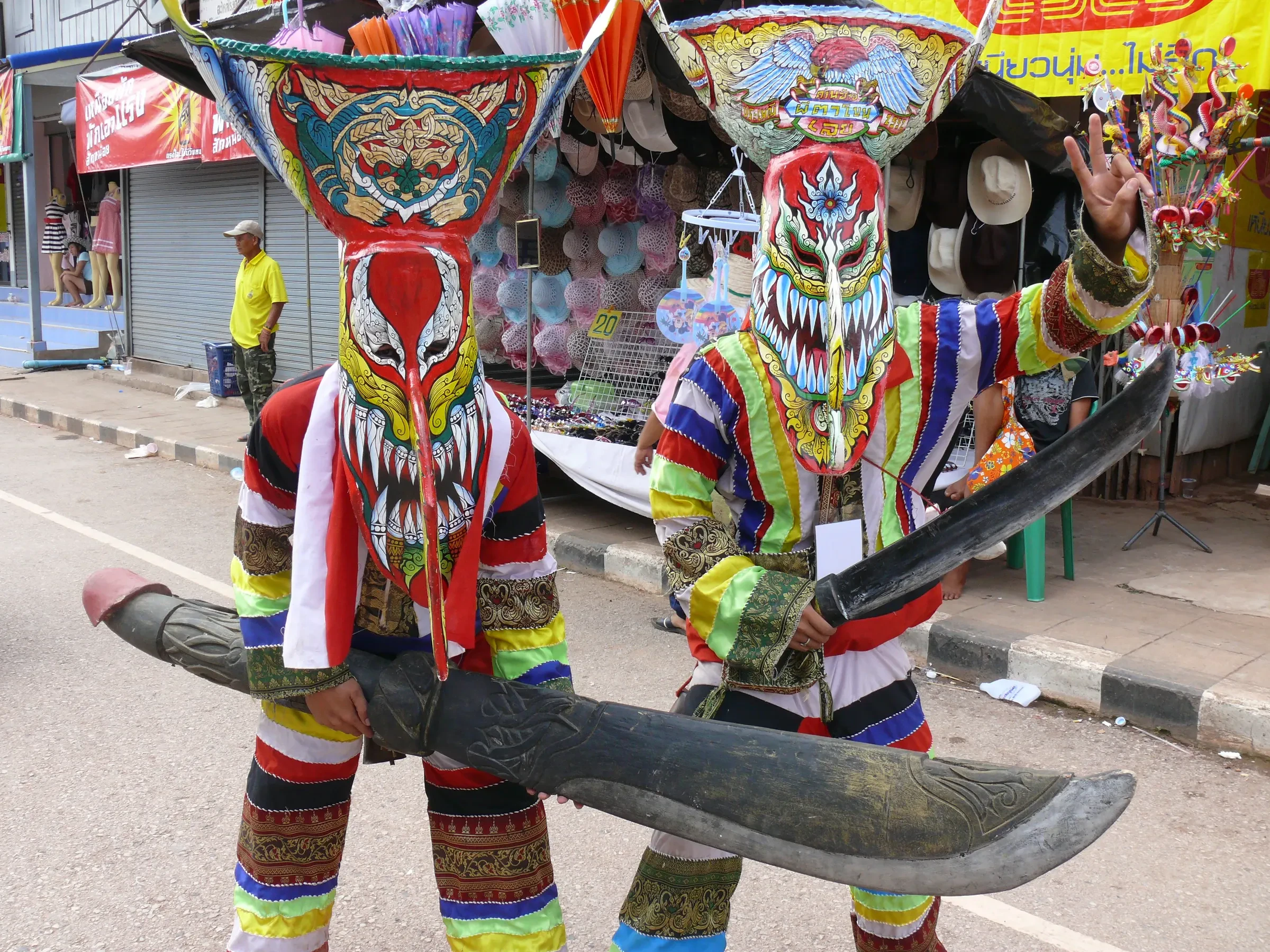
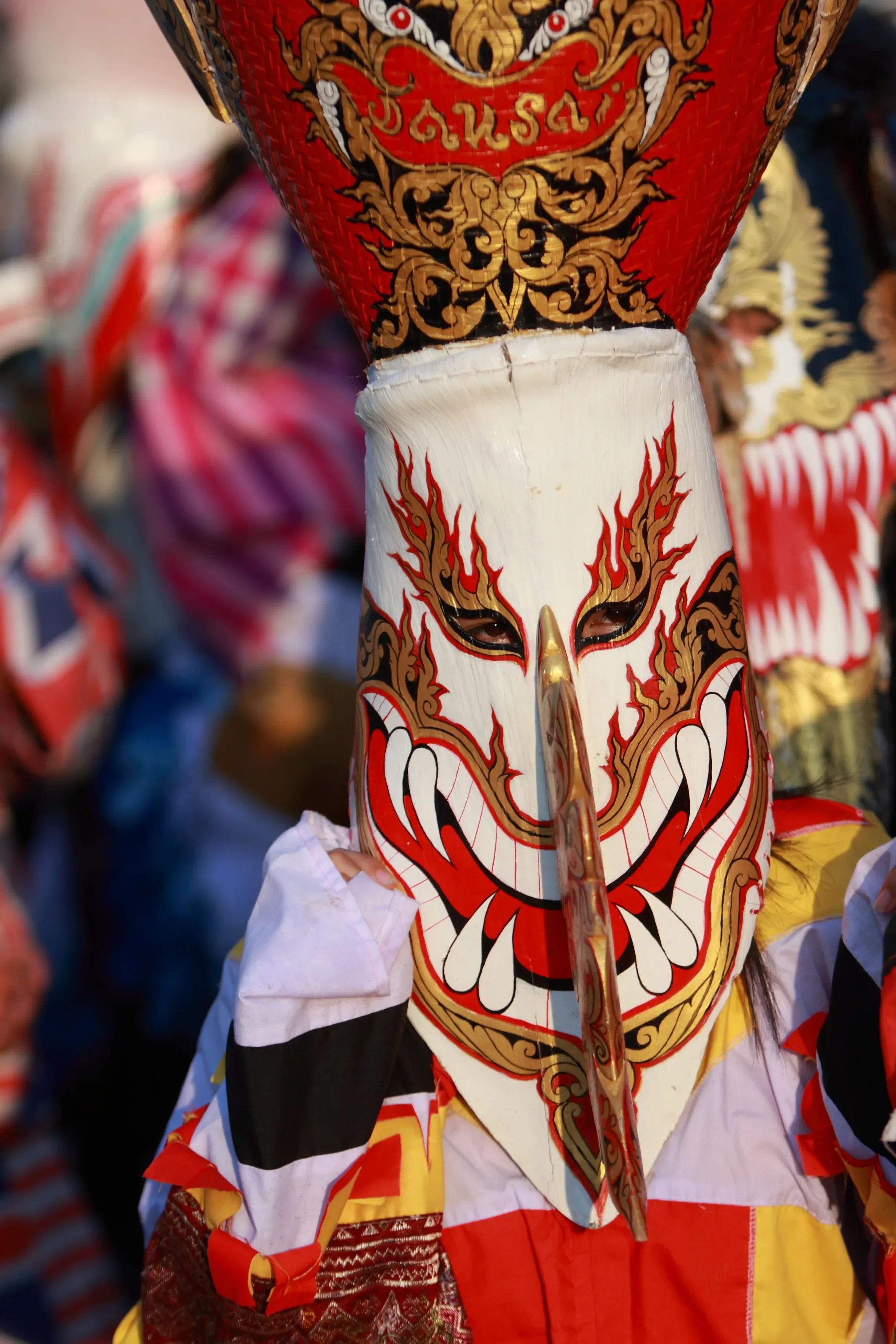
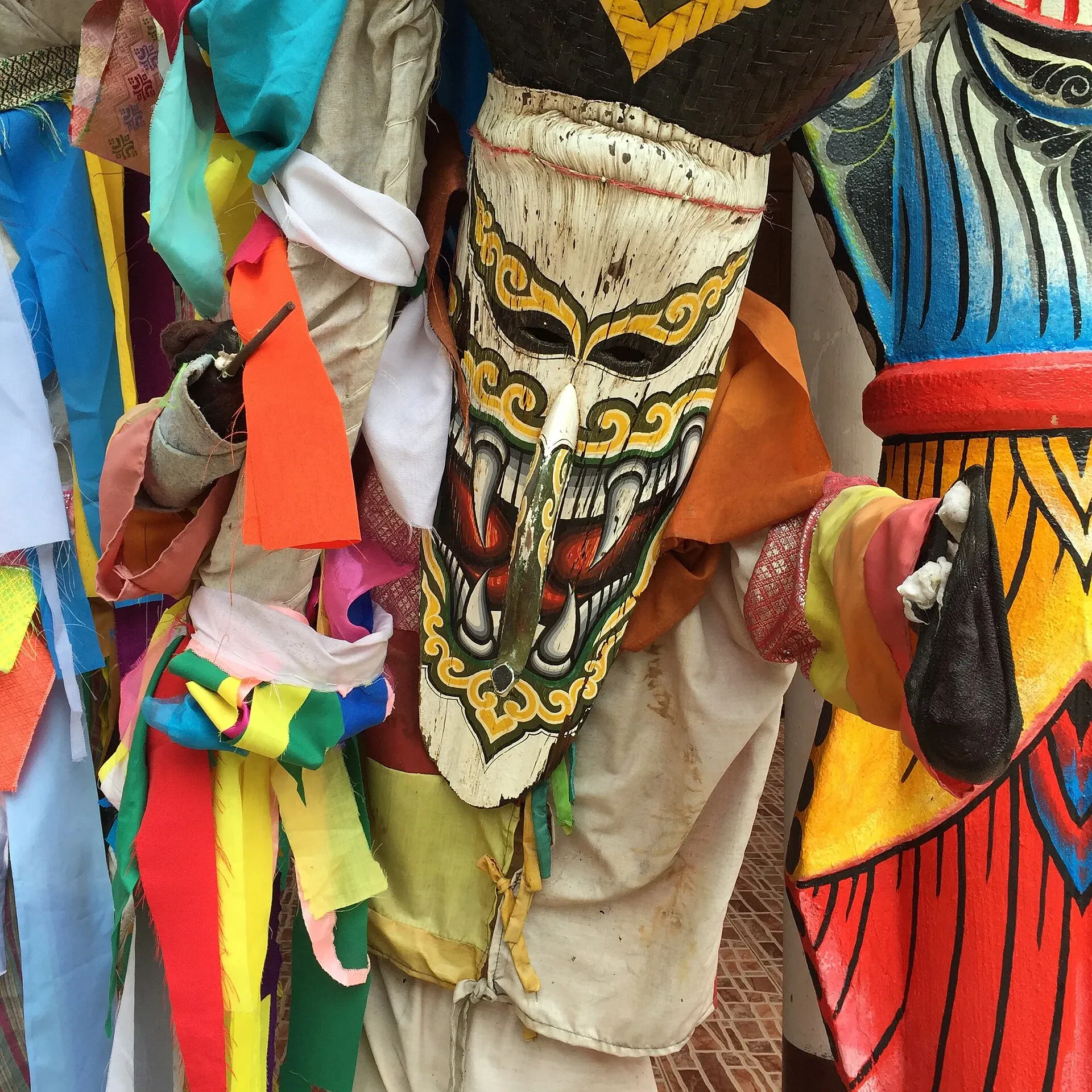
The masks are carved from the trunk of a coconut palm, hollowed out and topped with the woven basket normally used to steam sticky rice. Painters add huge grins, jutting ears and whatever colours the maker fancies, and the wearer's own clothes disappear under bright rag costumes sewn from scraps. Most village families make new masks each year, so no two are ever quite the same, though a handful of oversized "king and queen" figures, Phi Ta Khon Yai, are kept and reused as the parade's stars.
One old detail surprises first-time visitors: some costumes carry a carved wooden sword, and a few participants carry a wooden phallic charm, an old fertility symbol tied to the rains and the harvest. It isn't there to shock anyone locally, and most visitors just take it in with the same good humour as everyone else.
The festival, day by day
Day 1: Wan Ruam, the ghost parade
The opening day, Wan Ruam ("assembly day"), is the one most visitors come for. Costumed villagers form up early and spend the day parading through Dan Sai's streets with drums, home-made noisemakers and a lot of good-natured teasing of the crowd. It's loud, it's as much a street party as a ritual, and this is where nearly every photo of the festival online comes from. Programmes shift between years: in 2026 the biggest parade and the Prime Minister's appearance fell on the second day, 21 June, so check the schedule once the next dates are out.
Day 2: the procession and the rocket launch
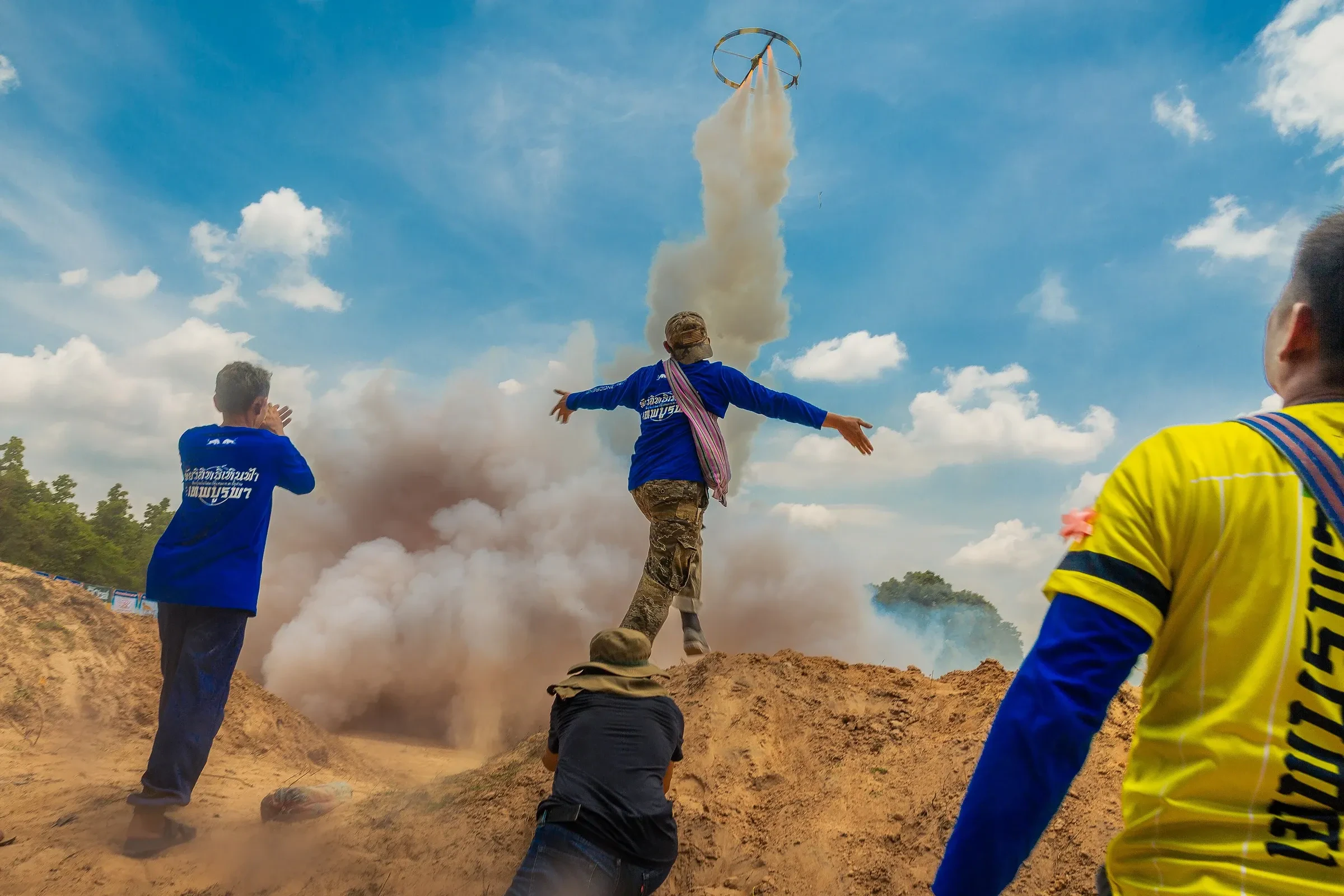
The second day carries a Buddhist image through town, representing Prince Vessantara's return, before the town lets off home-made bamboo rockets (Bun Bang Fai). The rockets are a request to the rain gods for a good growing season, and the launches draw their own crowd of onlookers keeping a respectful distance.
Day 3: Bun Phawet, the sermon
On the final day the masks and costumes come off and the mood turns properly religious. Villagers gather at Wat Phon Chai to listen to monks deliver the Vessantara Jataka, the long sermon telling the prince's story, sometimes running through much of the day. Some of the year's masks are thrown into the Man River that runs past town, a symbolic way of casting off bad luck before the next harvest.
The Phi Ta Khon Museum
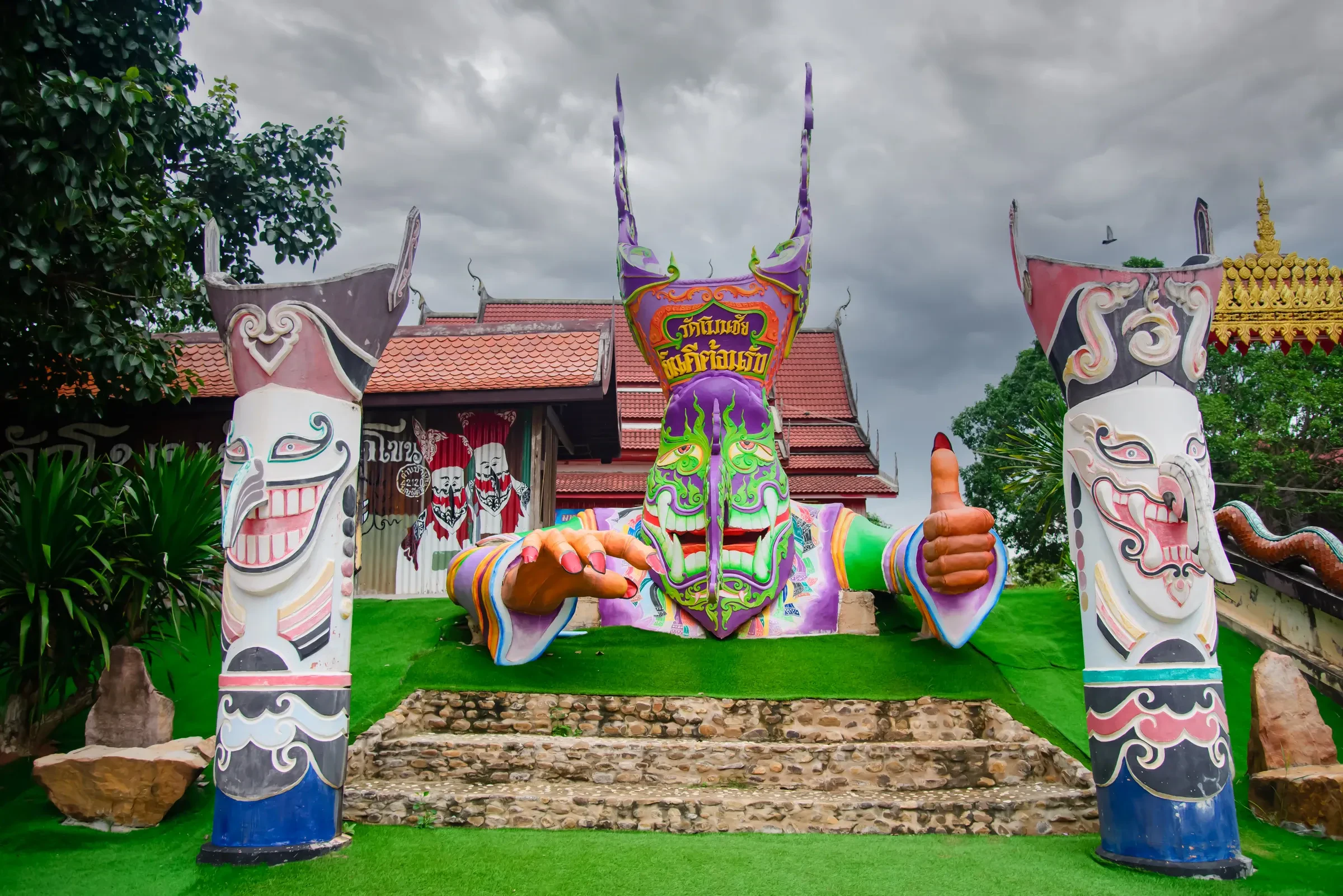
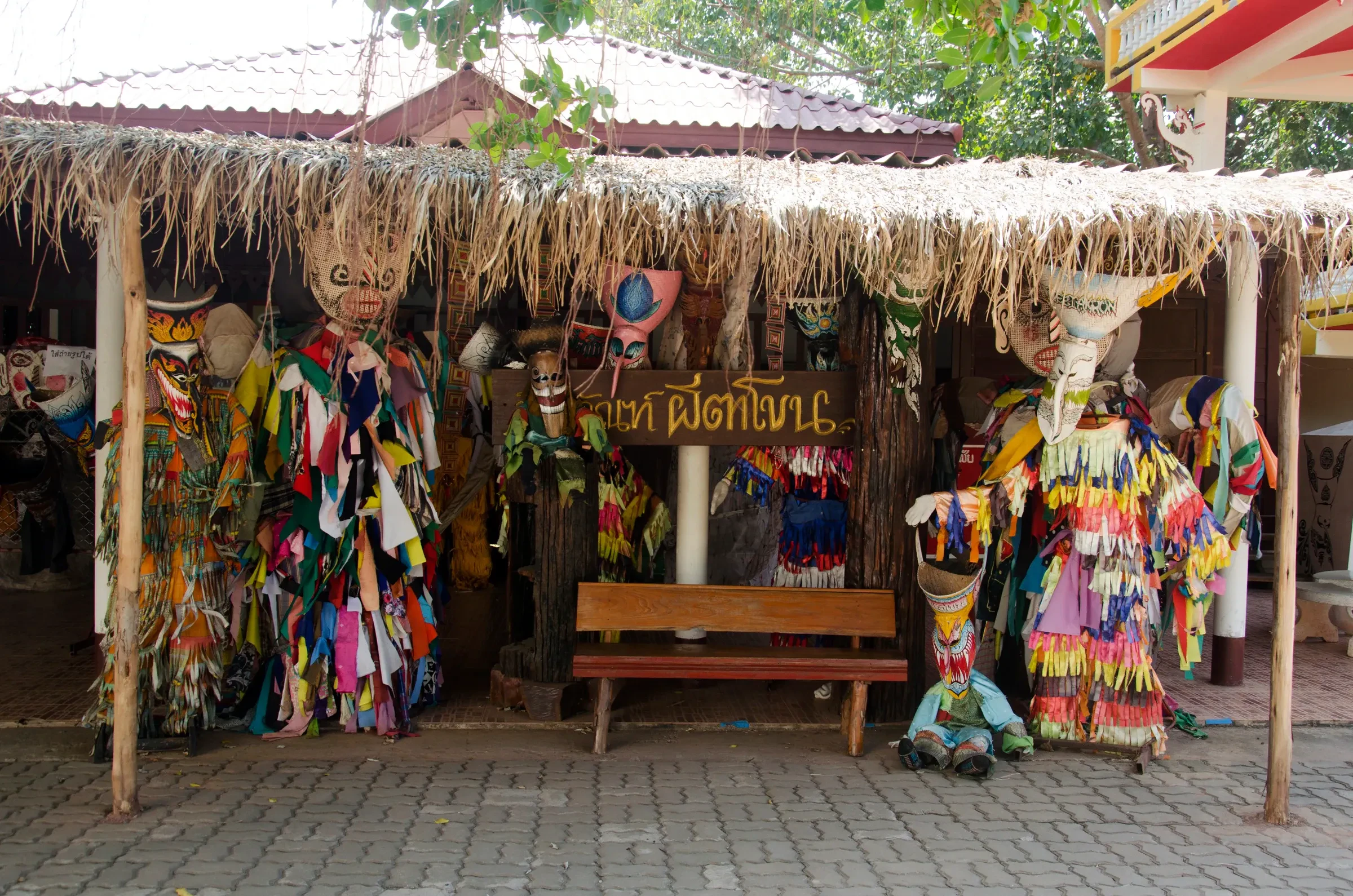
Inside the grounds of Wat Phon Chai, the Phi Ta Khon Museum is worth seeing if you're in Dan Sai outside festival season, or want the background before the parade starts. It's a small, free museum (there's a donation box by the door) with English information boards, a walkthrough of how the masks are made, and a room of past costumes and masks set up as if mid-parade. A few of the giant Phi Ta Khon Yai figures, the ones normally thrown into the river, are kept here rather than lost each year. It's open year round, so it's a reasonable stand-in if your dates don't line up with the festival itself.
How the dates are set
Phi Ta Khon doesn't run on a fixed date. Dan Sai's hereditary spirit medium, Jao Pho Kuan, sets the days each year, traditionally through divination tied to the sixth lunar month, and the town doesn't lock them in until relatively close to the event. Recent editions: 7 to 9 July in 2024, 28 to 30 June in 2025, and 20 to 22 June in 2026. For 2027 we're using an estimated window of 15 June to 15 July, which covers all three of those years and matches what other festival calendars list, but it's a window, not an announcement. A mid to late June date is the safer bet when you're roughing out a trip, but hold off on booking anything non-refundable until Loei's tourism office or the Tourism Authority of Thailand confirms the actual days, usually a few months out at best.
How to join in and etiquette
What to wear and bring
Loei in June sits at the start of the rainy season, so pack for heat, sun and the chance of a downpour: light clothes, a hat, sunscreen and a compact rain jacket or poncho. Check our Thailand visa guide before you fly, and see our best time to visit Thailand guide for how June compares with the rest of the country's weather. Bring cash: Dan Sai is a small town and card machines are scarce, especially at festival stalls. Comfortable closed shoes matter more than sandals, since the parade route gets crowded and the streets aren't always even underfoot.
Getting to Dan Sai
Dan Sai has no railway station, and neither does Loei province, so it comes down to flying or a long bus ride.
- By air: fly into Loei Airport from Bangkok's Don Mueang. Both Nok Air and Thai AirAsia run several flights a day, taking a little over an hour. From Loei town, minivans to Dan Sai run roughly every two hours from a stop near the Tesaban Market, taking about 1.5 hours.
- By bus from Bangkok: long-distance coaches leave the Mo Chit terminal for Loei fairly often through the day, taking around 8 hours. Some continue on and stop at Dan Sai itself, or you can change to a Dan Sai minivan in Loei town.
- By bus from Khon Kaen: if you're coming from the north, or have flown into Khon Kaen, buses to Loei run regularly and take around 3.5 hours, then it's the same short minivan hop on to Dan Sai.
Dan Sai itself is small, with limited guesthouse beds, so book accommodation as soon as the 2027 dates are announced, and be ready to move fast. In 2026 organisers said local hotels were close to fully booked.
Where Phi Ta Khon fits in a Thailand trip
Loei sits well off the routes most first-time visitors follow between Bangkok, Chiang Mai and the islands, so Phi Ta Khon works best as a deliberate detour rather than a stop bolted onto an existing loop. Our Thailand trips don't run through Isaan or Loei province, so this one is for independent travel: pair a few days in Dan Sai with Khon Kaen, or a loop back through Phitsanulok and Sukhothai. Our Thailand itineraries hub has more on slotting extra days like this into a longer trip. If you'd rather travel with a group for the rest of your time in Thailand, our trips cover the north and the islands.
Keep planning
Phi Ta Khon is one entry on our full Thailand festivals calendar, which covers the country's other big dates month by month, including Songkran, Loy Krathong and Yi Peng. If you're building the rest of a trip around it, start with our Thailand itineraries hub.