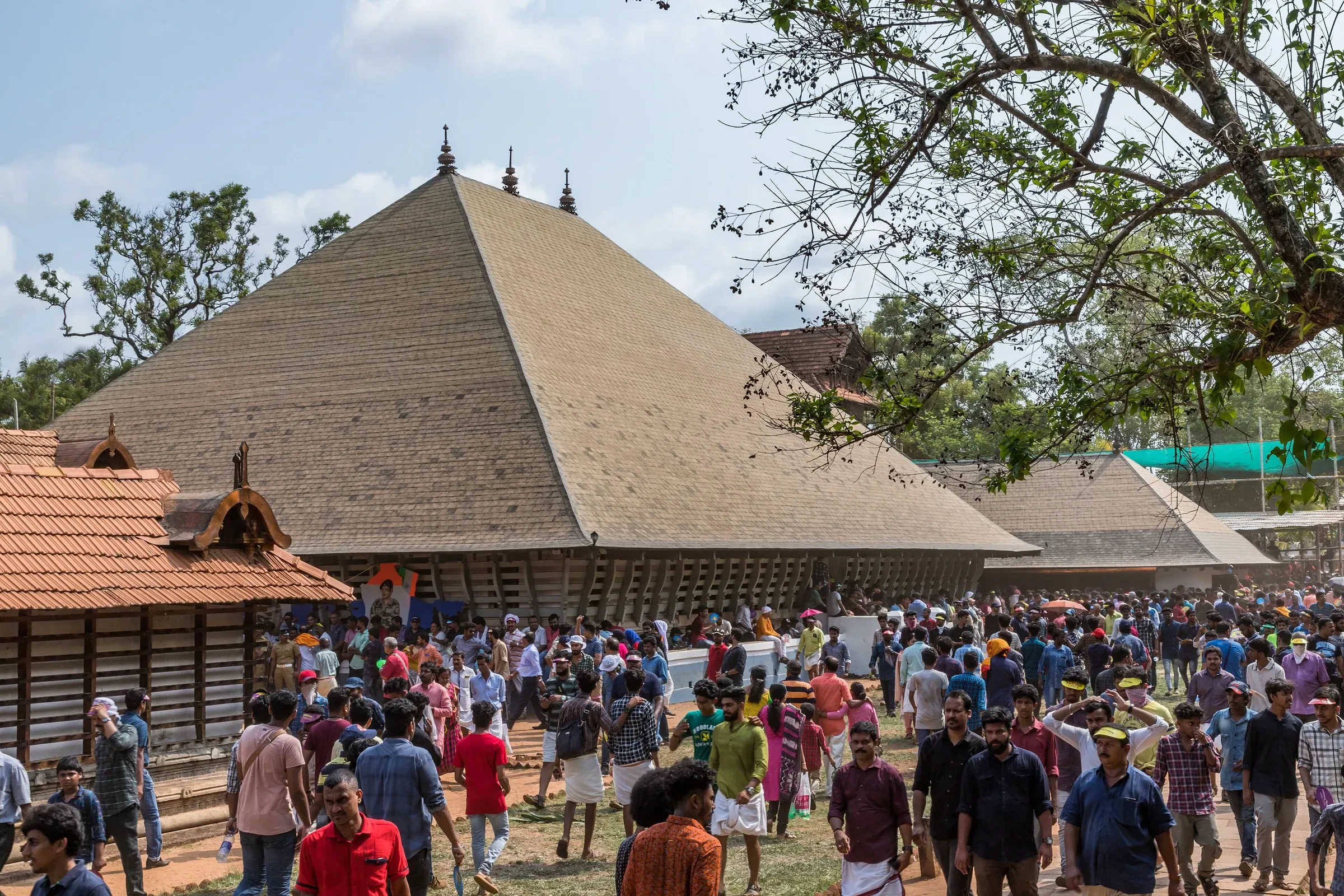
Every November, Vientiane's quiet streets fill up. Pilgrims arrive from every province, monks travel in from across the country, and a nationwide fair takes over the esplanade around Pha That Luang, the gold-covered stupa that's Laos's best-known national symbol. It's a different kind of festival to the water fights and lantern floats elsewhere in the region: reverent, candlelit, and easy to watch respectfully from the edge of the crowd. This guide covers when it happens, what happens across the week, and how to see it well.
What Boun That Luang is
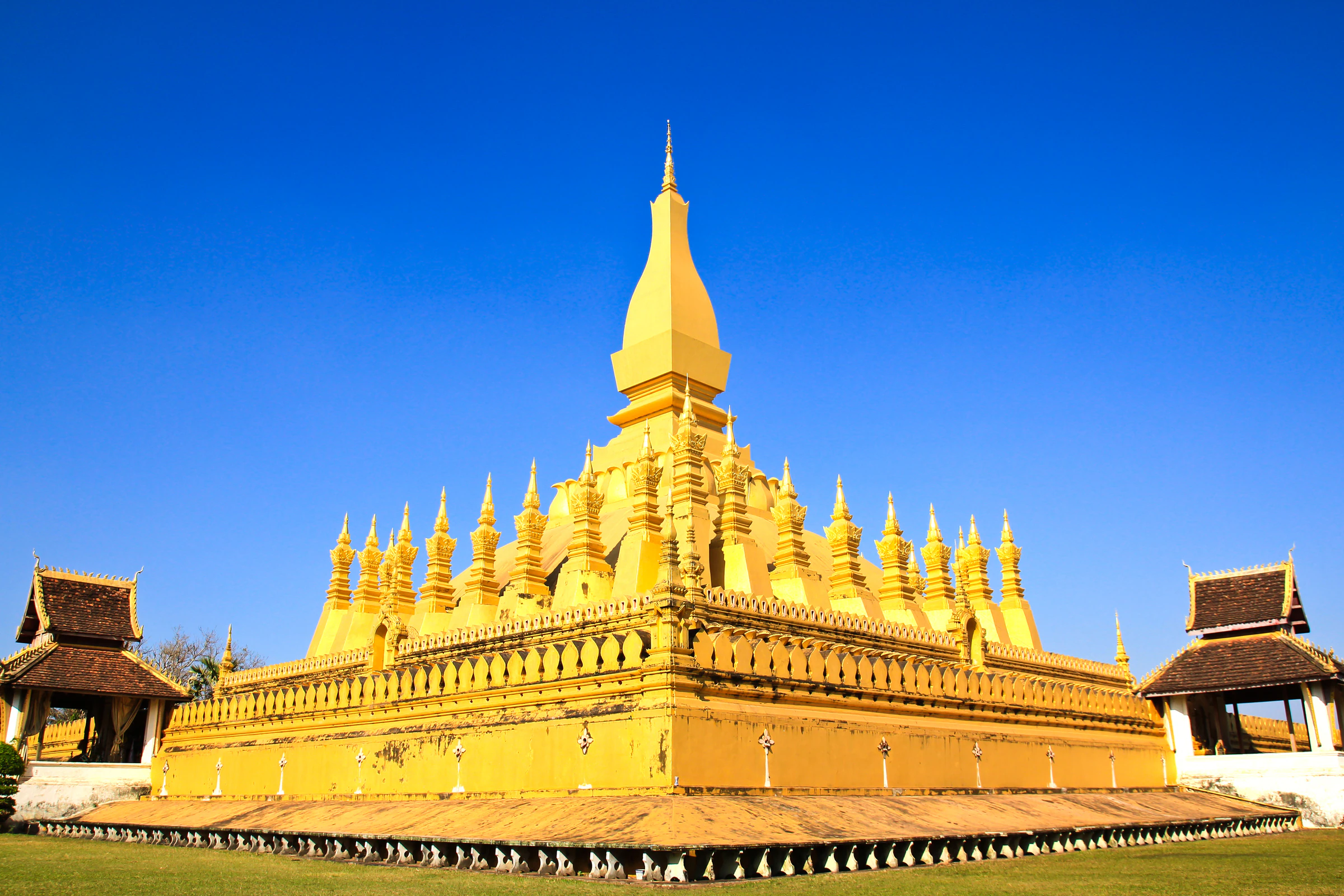
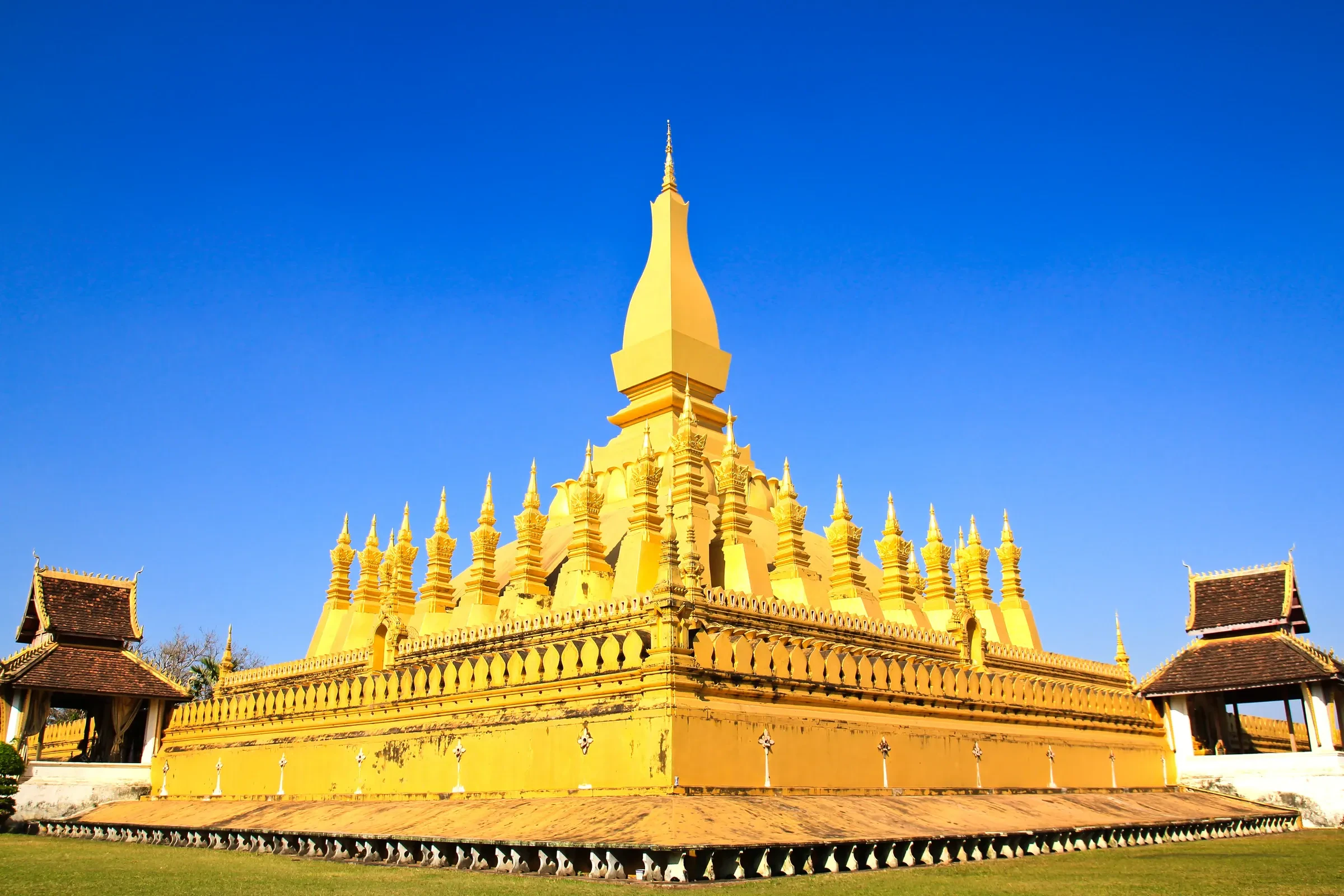
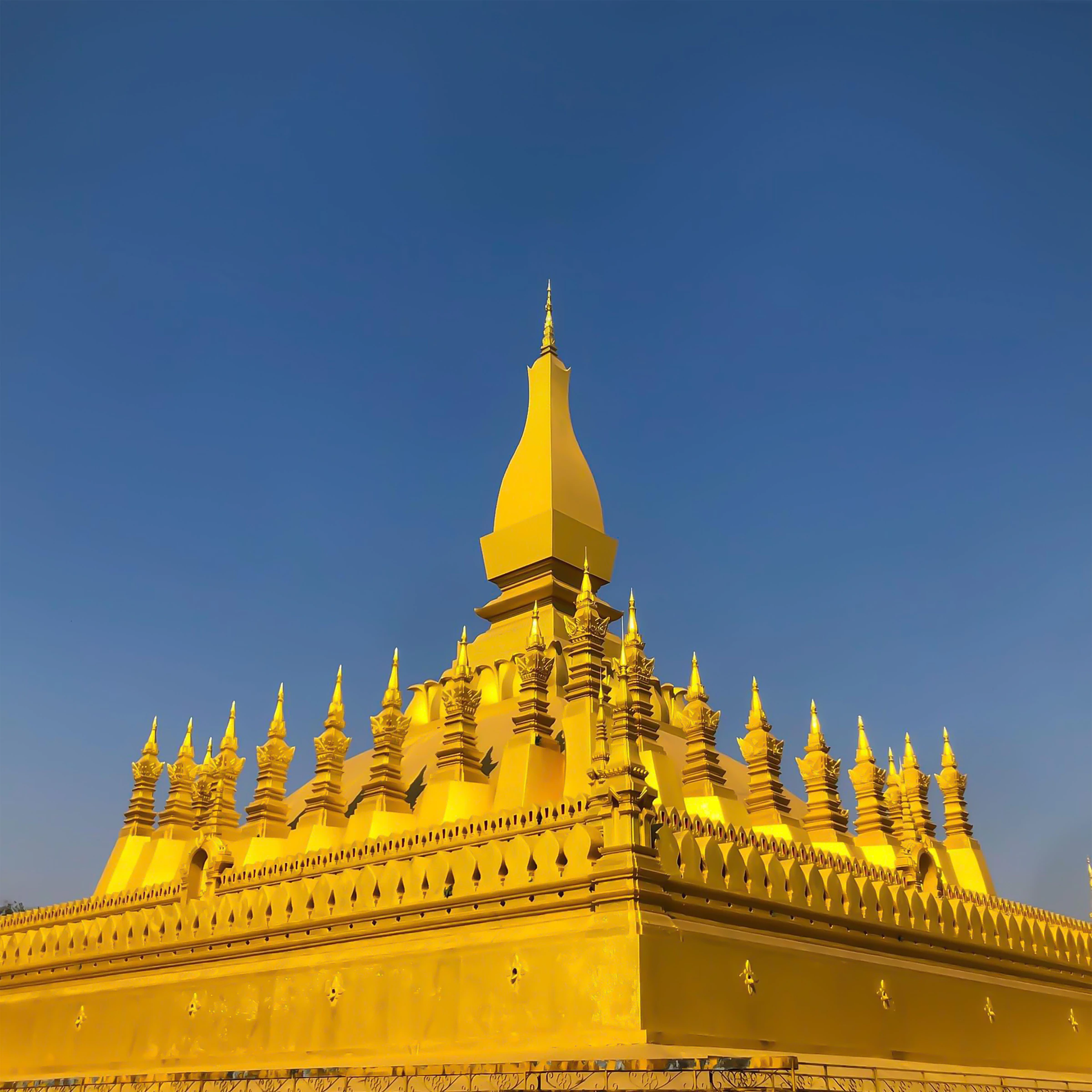
Pha That Luang was first built in 1566 under King Setthathirat, on the site of an older Khmer temple. It was destroyed by an invading army in 1828 and left in ruins for decades, before the French rebuilt it around 1900 and it was reconstructed again in the 1930s after an earlier restoration attempt failed. The stupa now stands about 45 metres tall and is said to hold a relic of the Buddha, which is why it draws pilgrims from across the country every year, not just at festival time.
Boun That Luang is the biggest of the ceremonies held there. It's part religious festival, part national gathering, and part county fair: alongside the processions and alms-giving, the fair brings food stalls, funfair rides, live music and stalls selling handicrafts from every Lao province.
How the week unfolds
The trade fair, in the days before
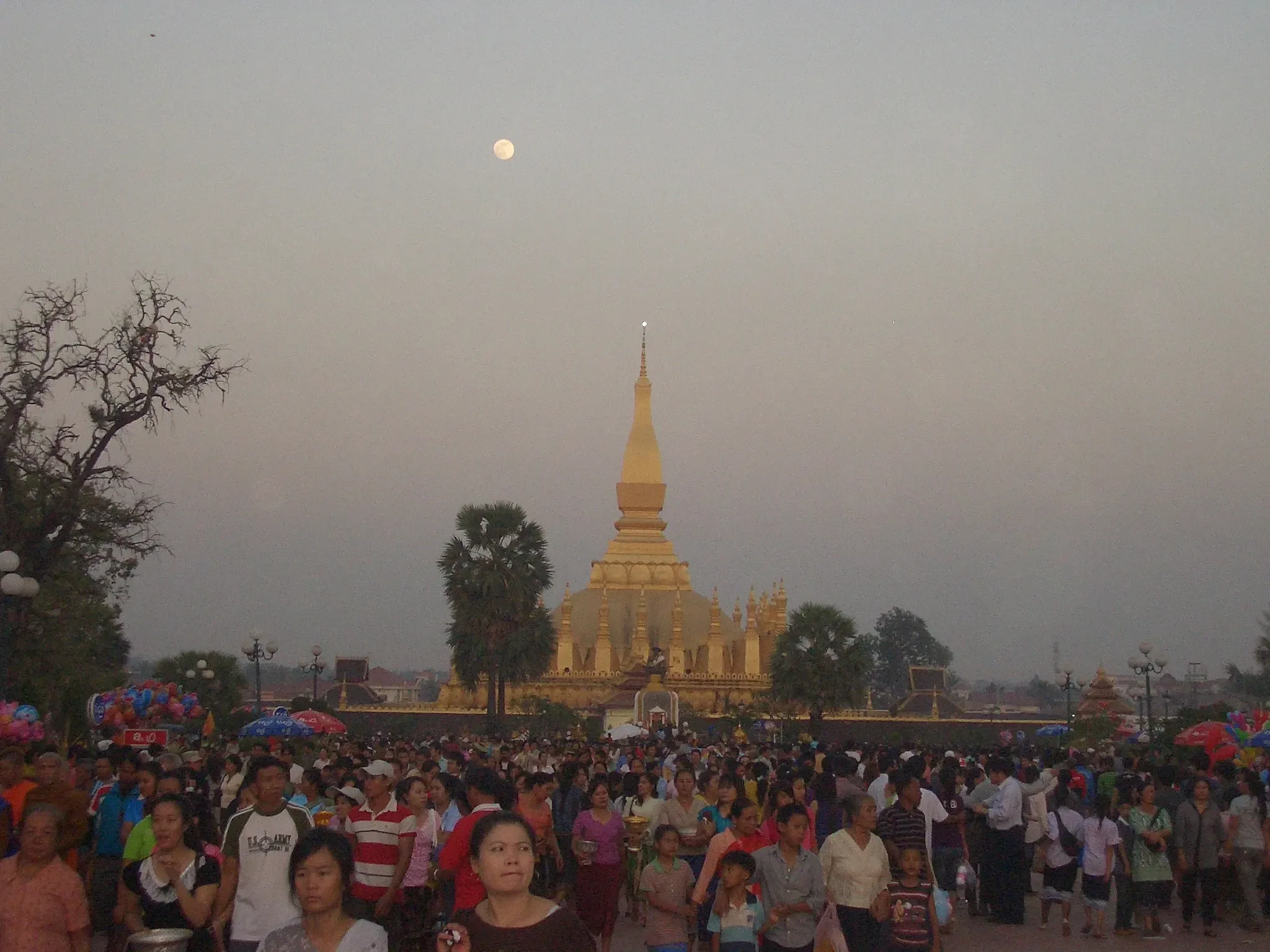
Stalls start filling the esplanade around the stupa days before the main ceremonies. Tourism listings give 21 to 24 November for the festival and trade fair in 2026, and some accounts describe festivities stretching about a week around the main day. It has the feel of a nationwide carnival: food vendors, provincial handicraft stalls, funfair rides and evening concerts, and it keeps running alongside the more solemn events later in the week.
Dawn: Tak Bat, the alms-giving
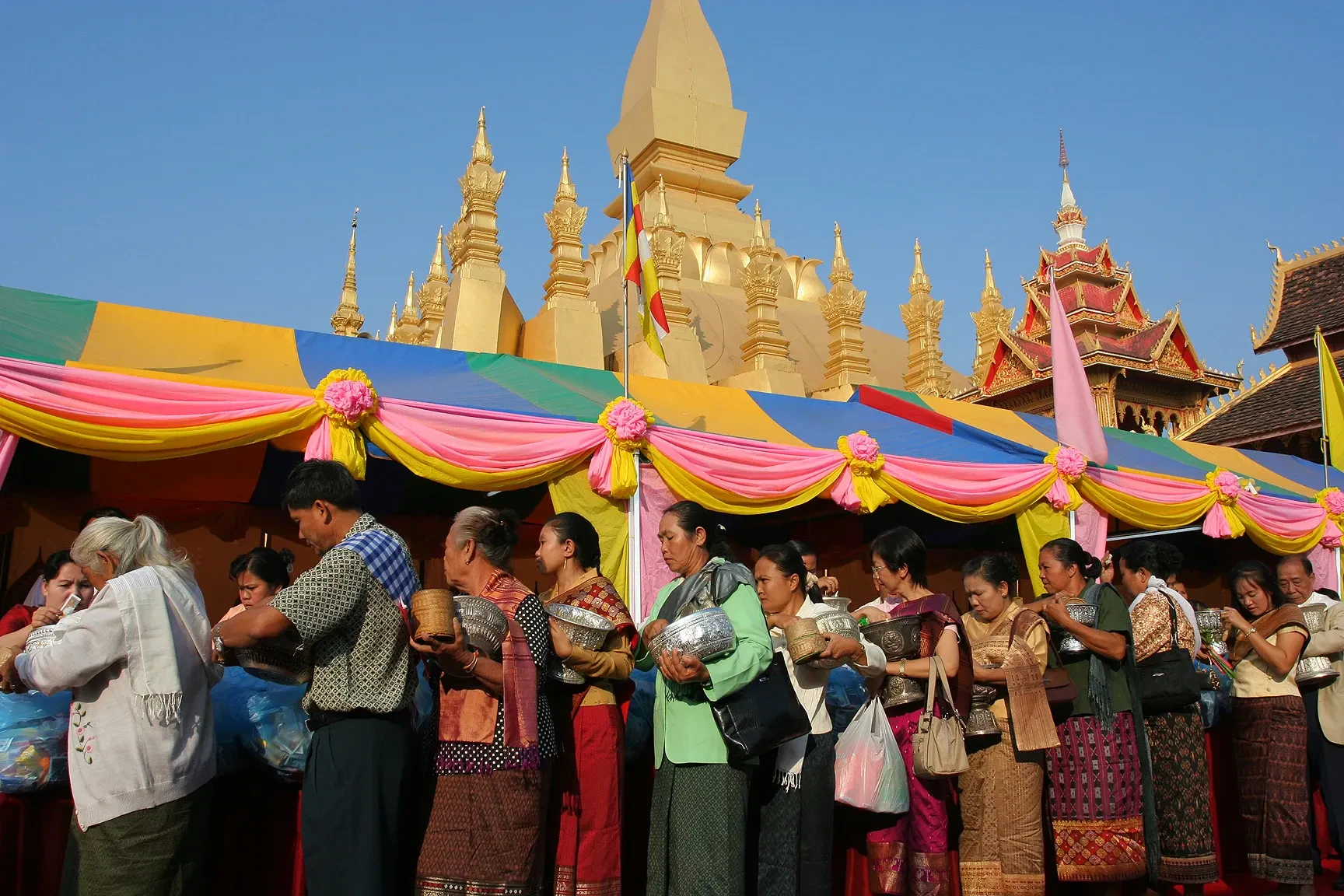
On the main morning, monks from monasteries across Laos sit in long rows around the stupa to receive alms from pilgrims. Sources disagree on the numbers, from hundreds of monks to thousands. Go early: it happens at first light, before the day's heat sets in.
Evening before and daytime: the wax castle processions
Families and communities build ornate "wax castles", structures decorated with wax flowers and offerings of money, and carry them in procession around the stupa three times to music and dancing before presenting them at the temple. Tourism listings say the procession starts the evening before at Wat Si Muang, with a candlelit parade, and carries on the next afternoon from there to the stupa. It's one of the more photogenic parts of the week, and a good afternoon to just walk the grounds.
Night: Vien Thien, the candlelit walk
On the final evening, pilgrims buy candles and flowers and join a slow procession three times around the illuminated stupa, so that the golden tower is ringed by a moving line of flame. Fireworks follow the final procession, according to Mekong Tourism. It's the single moment most people come for, and the best reason to time a visit for the last night specifically rather than earlier in the week.
The Tikhi match
Alongside the religious side, a traditional match resembling field hockey is played on the esplanade between government officials and local villagers. Tradition holds that a villager win is a good omen for the year ahead.
Where to see it
Everything happens in one place: the grounds around Pha That Luang, about 4km northeast of central Vientiane. The temple's outer walls and the esplanade in front give the best view of both the daytime processions and the night-time candle walk. The wax castle procession starts across town at Wat Si Muang, so it's worth asking locally on the day if you want to follow it from the start.
Etiquette and what to wear
- Cover shoulders and knees. This is a religious site as much as a public festival, and modest dress matters more here than at a beach party.
- A sinh, the traditional Lao wraparound skirt, is appreciated but not expected of visitors. Plenty of Lao women wear one for the occasion.
- Remove your shoes before stepping onto temple platforms, as you would at any Lao wat.
- Join the candle walk rather than just photographing it. Buying a candle and flowers from one of the stalls and walking the three circuits is a better way to experience the evening than watching from the side.
- Ask before photographing monks and pilgrims up close, especially during the dawn alms-giving.
Safety
Boun That Luang draws big, dense crowds, especially on the final night, so keep valuables close and agree a meeting point if you're with a group. The candle walk involves thousands of people carrying open flames at once, so watch your step and keep a sensible distance from anyone else's candle. Beyond that, it's a calm, family-oriented festival, and Vientiane itself is a small, easy capital to get around.
A trip around it
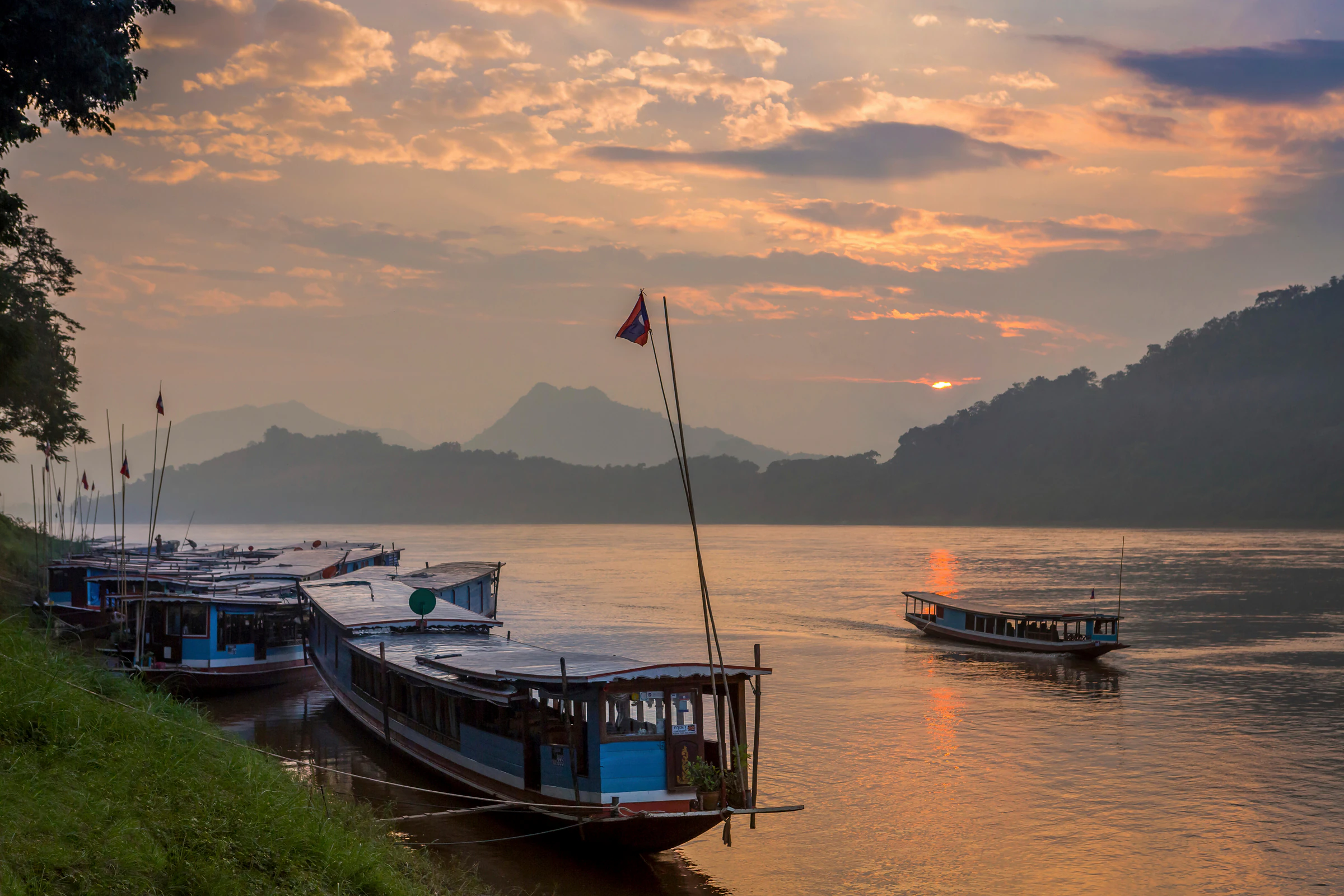
None of our Laos trips is built around Boun That Luang, but our Laos routes all pass through Vientiane. Laos Explorer ends there, with a free last evening by the Mekong; Northern Thailand & Laos also finishes in the city; and Laos Adventure starts there before heading south on the Thakhek Loop. Check the trip pages for current dates. If your trip overlaps festival week, ask your Trip Host about building in time to see the stupa and, if it's the last night, the candle walk.
Keep planning
- Laos travel guide
- Laos itinerary planner
- Laos visa guide
- Loy Krathong in Thailand, the same lunar month's festival across the border
- Yi Peng lantern festival