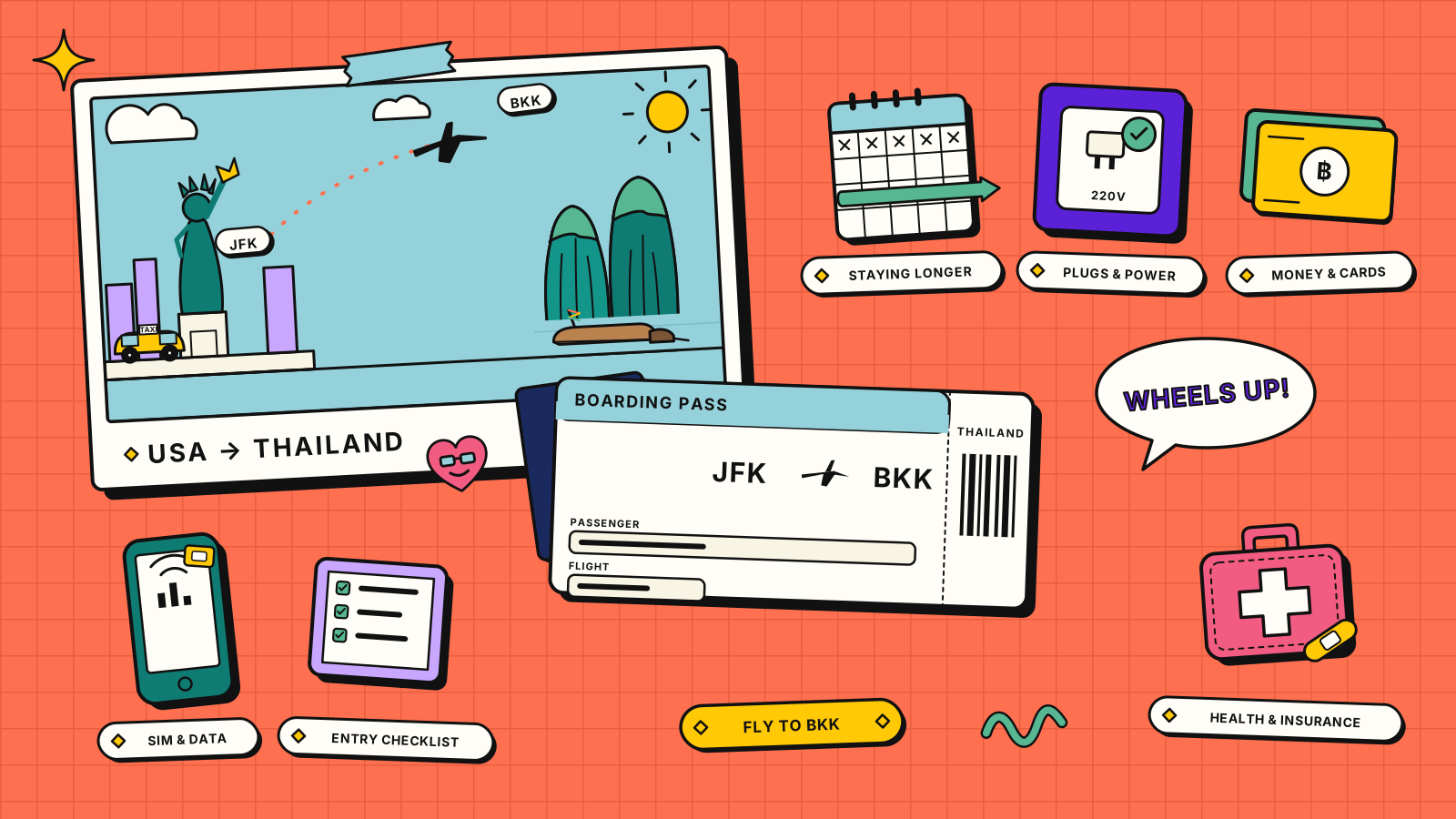
The mistake I expect to see most from Americans this year is planning around 60 days. That exemption ended for anyone entering Thailand on or after 15 September 2026, and the new 30-day rule comes straight from the Tourism Authority of Thailand's announcement. If a website or a friend tells you 60, trust the Thai rule. The rules for other passports are in our Thailand entry requirements guide.
Do US citizens need a visa for Thailand?
No. The US is one of 60 countries and territories on Thailand's 30-day visa-exempt list. There's nothing to apply for before you go; the immigration officer stamps you in for up to 30 days when you land.
The fine print:
- The exemption is for tourism only. Business trips need a Non-Immigrant "B" visa.
- Visa-exempt entries by land (for example, coming back overland from Laos or Malaysia) are limited to 2 per calendar year, according to the Tourism Authority of Thailand. Some official sources include sea arrivals too. The cap doesn't cover air arrivals, though the UK government words it more broadly, so check with a Thai consulate if you plan several trips in one year.
- If you entered before 15 September 2026, you keep whatever stay you were given on arrival.
Don't count the days yourself. Your entry stamp shows the last date you can stay (the "admit until" date), so check it before you leave the immigration desk.
Staying longer: extension or tourist visa
The easy route is to extend in Thailand. You can do it once, by up to 30 days, at a Thai immigration office: fill in form TM.7 and pay 1,900 THB. It's the officer's decision. The Thai Embassy in Washington says extensions are still available under the new rules, at the immigration officer's discretion. That gets you to about 60 days.
Or apply for a Tourist Visa before you fly. It gives you 60 days, extendable by 30 in Thailand. All Thai visa applications now go through thaievisa.go.th, and you have to be outside Thailand when you apply.
- Register with an email and password. The activation link lasts 30 minutes.
- Pick the Thai mission that covers where you live, then the Tourist Visa. Los Angeles covers the West and Mountain states, Alaska and Hawaii. Chicago covers most of the Midwest plus Arkansas, Kentucky and Oklahoma. New York covers New England, New York, New Jersey, Pennsylvania and Ohio. Washington DC covers the South and Mid-Atlantic, Texas and Puerto Rico. The portal lists every state.
- Enter your details. The site scans your passport photo page.
- Upload a passport scan (all four corners and the machine-readable zone), a photo (JPG, max 200 KB, white background, under 6 months old), bank statements, flights, accommodation and proof of your US address, such as a utility bill.
- Sign the online declaration and pay by card.
- Your approval arrives by email as a PDF. Print it for check-in and immigration.
The Washington embassy says to apply at least 30 days before you fly and not more than 90 days ahead, and to expect a status update within 3 to 5 business days after you upload your documents. The Thai missions in the US charge US$40 for a single-entry Tourist Visa and US$200 for multiple entry. You'll also need bank statements for the last three months, each showing an ending balance of at least US$700 per person (US$2,000 per family).
Don't overstay: it's 500 THB a day up to 20,000 THB, plus possible detention, deportation and a ban of up to 10 years.
Entry checklist
- US passport valid for 6 months from arrival, with at least one blank page
- Return or onward ticket
- TDAC completed at tdac.immigration.go.th in the 3 days before you land (free; ignore sites that charge)
- Proof of funds: the Thai Embassy in Washington says 20,000 THB per person (40,000 per family). Carry about that in cash, or be ready to show a card or bank balance
- Your first accommodation address
- Travel insurance
- No Adderall, no vape, and a Thai FDA permit if you carry codeine or other opioids
- Tourist Visa PDF, if you applied for one
There's no tourist entry fee in 2026. A flat 450 THB fee for foreign visitors is only a proposal: it still needs Cabinet approval and publication in the Royal Gazette, and collection would start 180 days after that, for air arrivals first. That puts it in early 2027 at the earliest.
Flights from the US to Thailand
There are no nonstop flights between the US and Thailand as of October 2026. Thai Airways stopped flying to Los Angeles in 2015. Thailand got back its FAA Category 1 safety rating in 2025, but we found no airline with a nonstop scheduled.
So you'll stop at least once. The usual connecting hubs are:
| Region | Hubs |
|---|---|
| East Asia | Tokyo, Seoul, Taipei, Hong Kong |
| Southeast Asia | Singapore, Manila |
| Middle East and Europe | The Gulf hubs, Istanbul |
On Kayak, the most-booked airlines are United, Asiana and Etihad. Kayak's route data (23 September 2026) shows the pattern by coast: from Los Angeles the most common stop is Seoul, Taipei is the quickest (about 19.5 hours) and Guangzhou the cheapest. From New York, Doha is the most common stop.
Cheapest months and typical fares
All figures are indicative, from Kayak US data read on 23 September 2026.
| Return fare to Bangkok (indicative) | |
|---|---|
| Average | About US$1,036 |
| Cheapest month | September, about US$930 |
| Most expensive | December, about US$1,421, then June, about US$1,363 |
| Cheapest US airport | Los Angeles, about US$690-730 |
| Best time to book | About 8 weeks ahead (saves about 9%) |
In general Thailand's high season (November to February, plus Songkran in mid-April) costs most and the wet season (roughly May to October) costs least. See our best time to visit Thailand guide for the weather each month.
What to bring from the US
Plugs and power. Thai sockets take types A, B, C and O, so standard US plugs (types A and B) fit. Voltage is the catch. Thailand runs at 220 V, 50 Hz, so check the label on each charger and appliance. Anything that only runs on 110 V needs a converter, not just an adaptor.
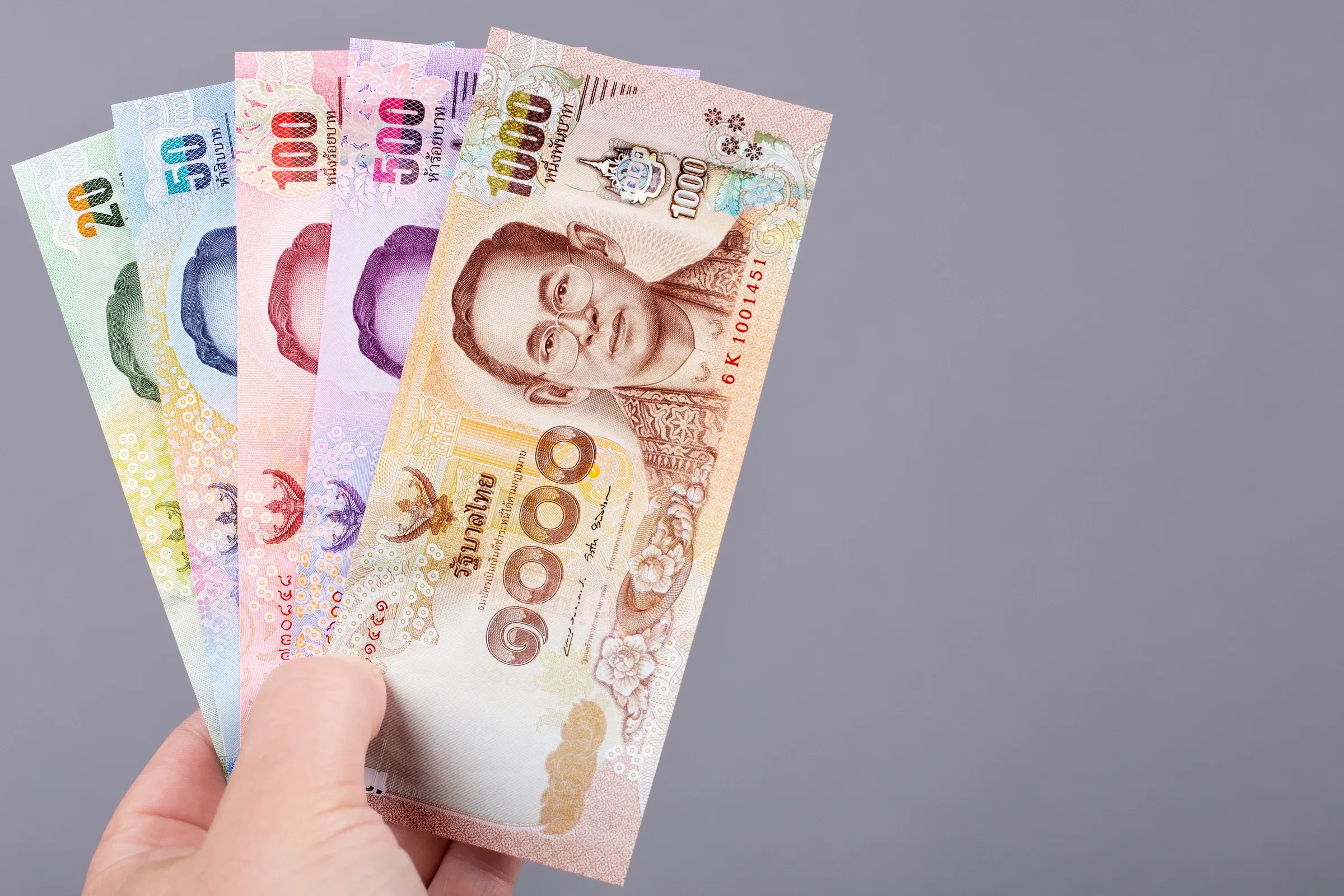
Money and cards. Thai ATMs charge foreign cards 220-250 THB per withdrawal, and up to 350 THB at some machines. AEON ATMs charge about 150 THB. Make fewer, larger withdrawals, and when a machine or card terminal offers to bill you in dollars, decline and pay in baht.
Insurance. You don't need it for entry, but private hospitals in Thailand ask for a payment guarantee before treating you. Get a travel policy with medical and evacuation cover. Medicare generally doesn't cover care outside the US, and medical evacuation can be very expensive. If you have private insurance, check with your insurer what it pays abroad.
Medicines. Americans need to read this bit carefully:
- Adderall, Vyvanse, Dexedrine and other amphetamine-based ADHD drugs are banned in Thailand. There is no permit that lets you bring them. Methylphenidate (Ritalin) is allowed for up to 30 days' supply with a doctor's letter or prescription, and atomoxetine is another legal option. Talk to your doctor months ahead, not weeks.
- Codeine, tramadol and other opioids need a Thai FDA permit from permitfortraveler.fda.moph.go.th. Apply at least 14 days before you arrive.
- Benzodiazepines are fine up to 30 days' supply with a prescription. More than that needs a permit.
- Keep medicines in the original packaging and declare permit medicines at the red channel.
Vape and cannabis. Don't bring either. Vapes are illegal to bring in, own or use, with fines typically 5,000-30,000 THB. Cannabis is medical-only in Thailand and needs a Thai prescription. A US medical card doesn't count.
Everything else. Pack reef-safe sunscreen, DEET or picaridin repellent, and clothes that cover shoulders and knees for temples. The full list is in our Southeast Asia packing list.
Arrival day, step by step
- Before your first flight: file your TDAC and save the confirmation. Set up a travel eSIM if you want data straight away.
- At your connection: on a single ticket your bag is normally checked through to Bangkok, so check the tag says BKK. If you booked separate tickets, you'll have to clear immigration at the hub, collect your bag and check in again, so allow plenty of time.
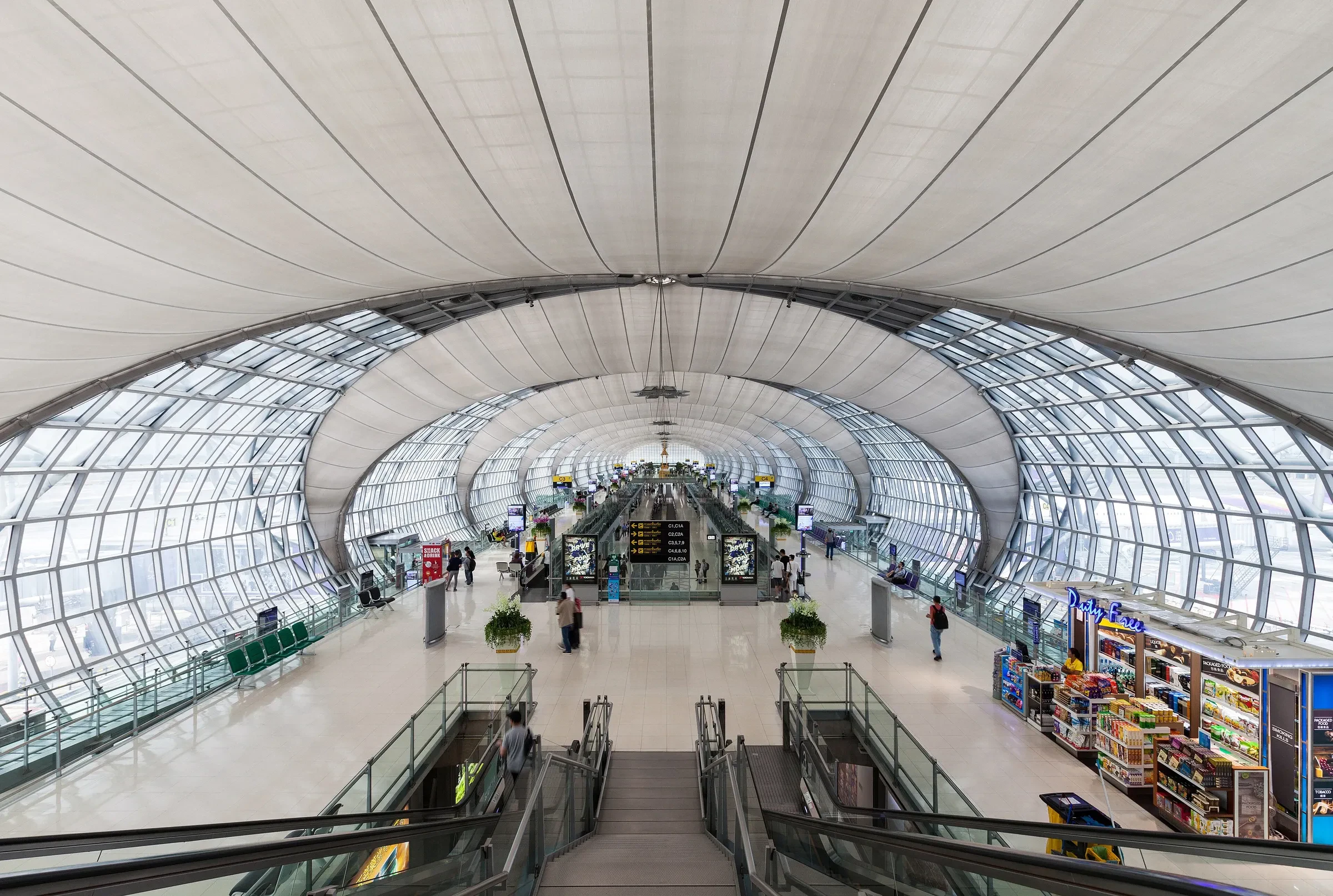
- Immigration at Suvarnabhumi (BKK): hand over your passport. You may be asked about your onward ticket or funds. You'll be stamped in for 30 days.
- Customs: green channel unless you have permit medicines, more than 200 cigarettes or 1 litre of alcohol, or more than US$15,000 in cash, in which case use the red channel.
- SIM and cash: AIS, TrueMove H and dtac have counters in arrivals, with tourist SIMs at about 299-599 THB (bring your passport). Use an AEON ATM if you can find one.
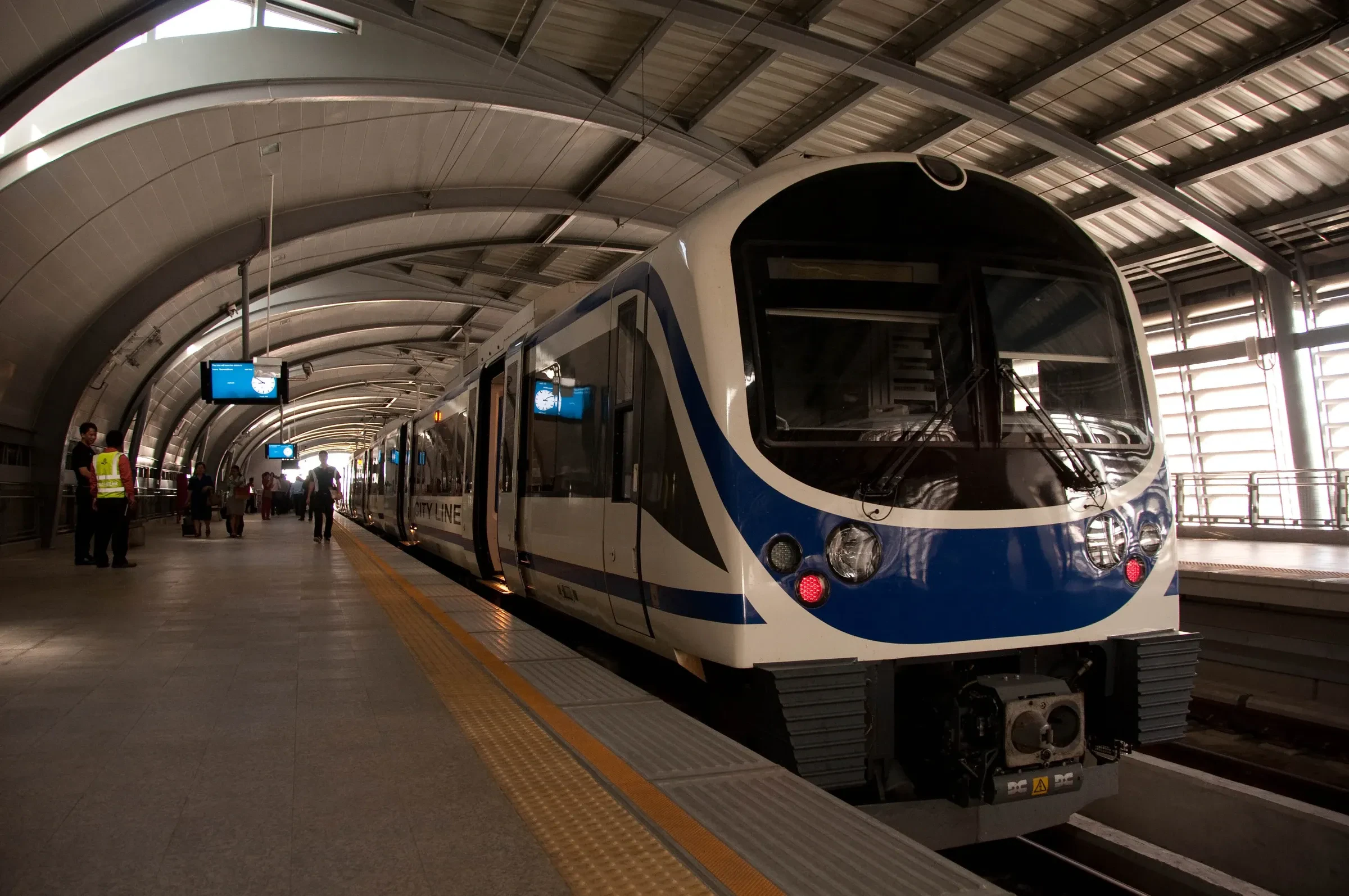
- Into Bangkok: the Airport Rail Link runs from the basement (level B1) to Phaya Thai, from 05:30 to midnight, for about 45 THB. Public metered taxis leave from Level 1: meter plus a 50 THB airport charge plus expressway tolls, usually 400-600 THB in total. Grab picks up from Level 1, Gate 4. If you're flying on from Don Mueang (DMK), there's a free shuttle bus between the airports for passengers with an onward boarding pass. Budget 1-1.5 hours by road.
Travel Thailand with us
Short on vacation days? Thailand Express covers the highlights in 8 days. Thailand in 2 Weeks takes in the north and the islands. Either one fits inside the 30-day visa-free stay, even with a few days on your own either side. Ages 18 to 40, and I'm with the group the whole way as your Trip Host.